Normal Short Vowels Worksheets for Ages 5-8
12 filtered results
-
From - To
Welcome to our engaging collection of Normal Short Vowels Worksheets designed specifically for ages 5-8! Our worksheets offer young learners a fun and interactive way to master short vowel sounds through a variety of activities, including matching, fill-in-the-blank, and coloring exercises. Perfect for classrooms or at-home learning, these resources reinforce phonetic skills that are foundational for reading and writing. Easily printable and user-friendly, each worksheet encourages children to sound out words, enhancing their phonemic awareness while keeping them entertained. Dive into this vibrant assortment of learning materials and help your child thrive in their literacy journey today!
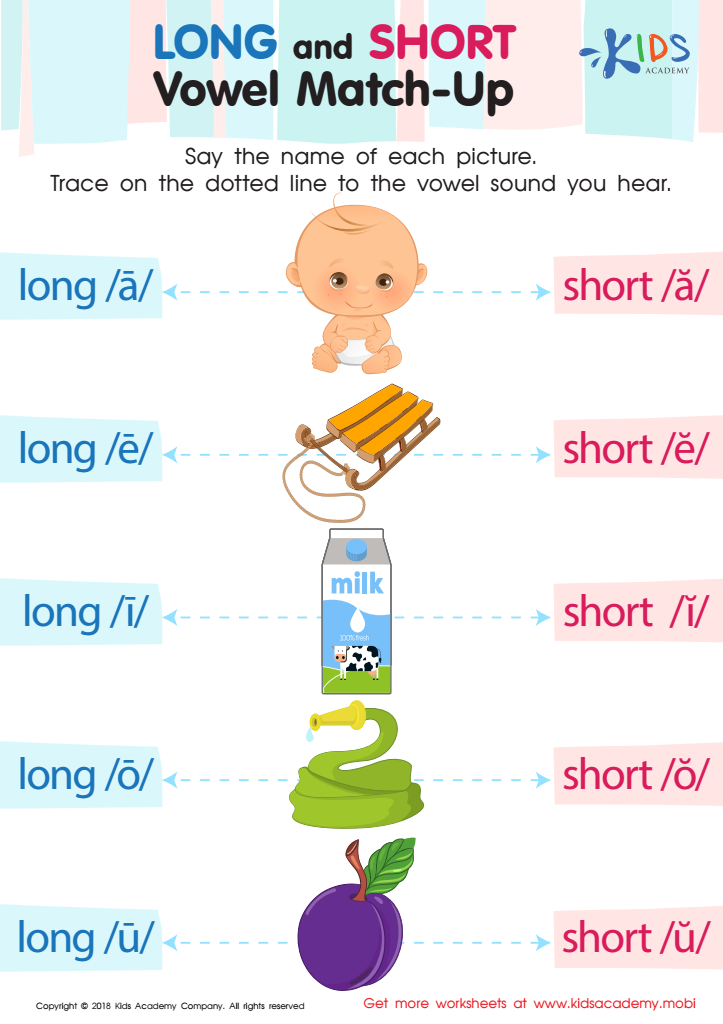
Long and Short Vowel Match up Reading Worksheet
 Assign to My Students
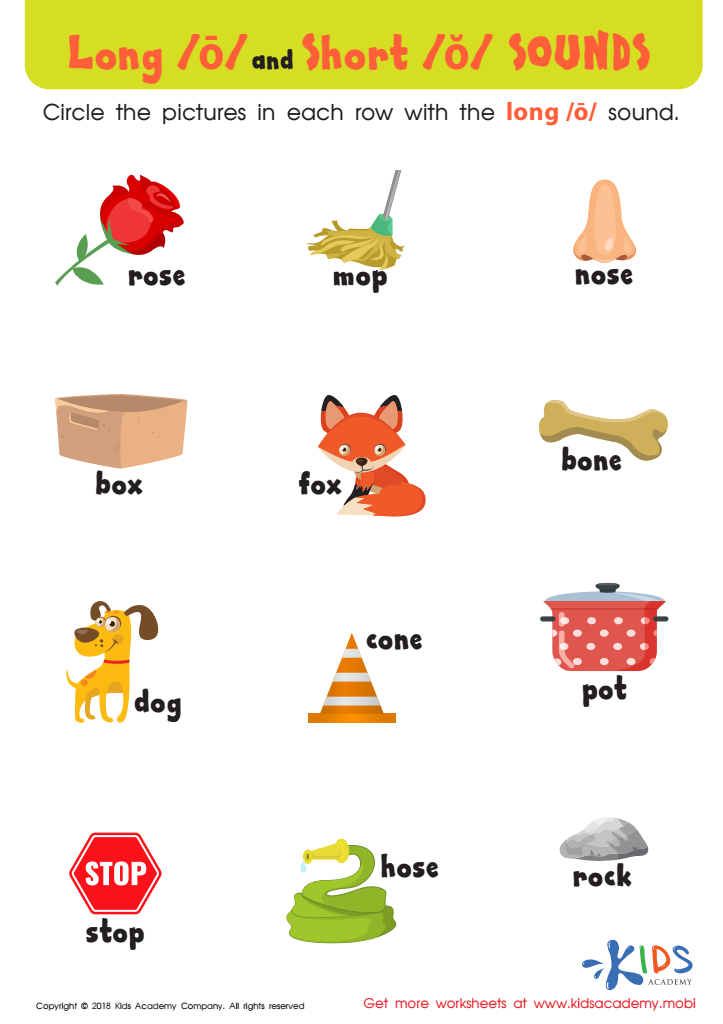
Reading: Long O and Short O Sounds Worksheet
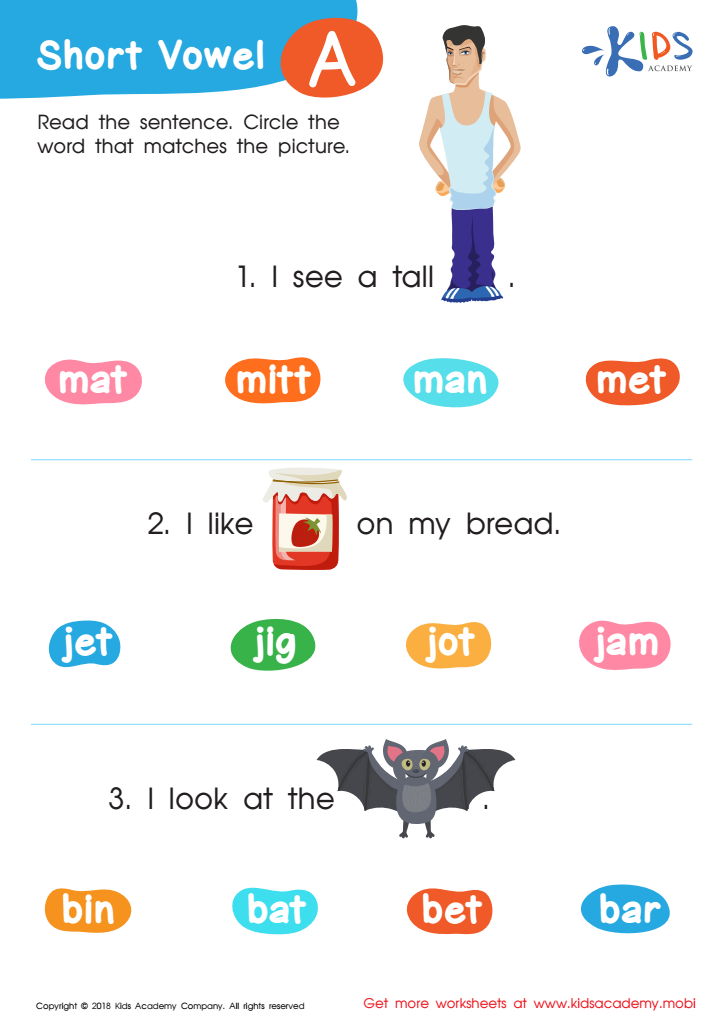
Short Vowel /a/ Worksheet
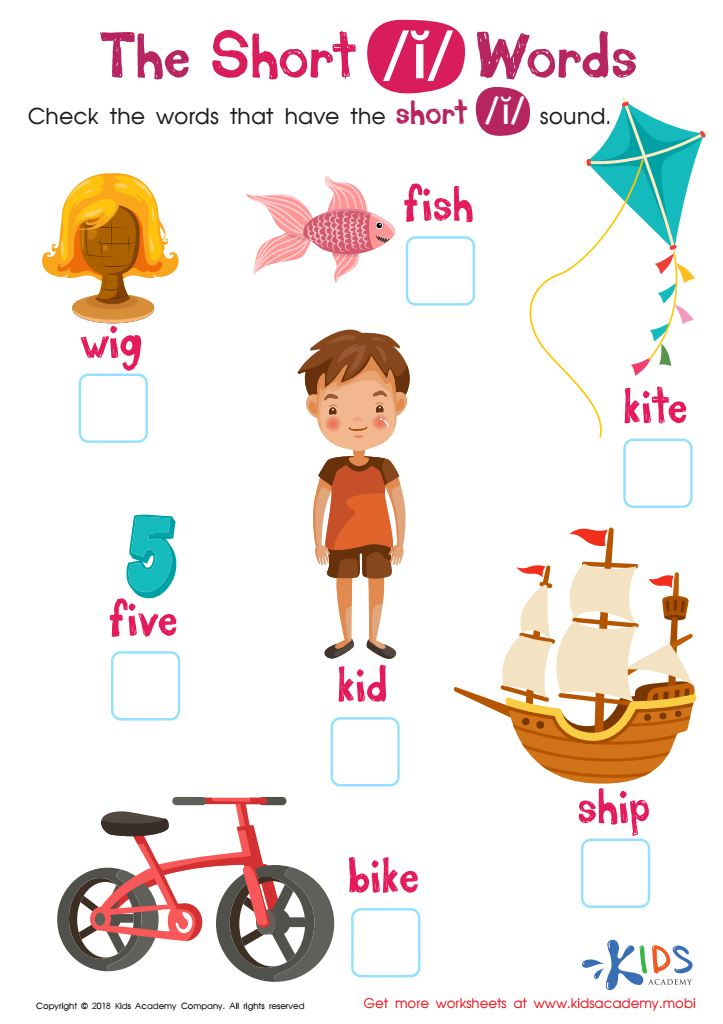
The Short I Words Reading Worksheet
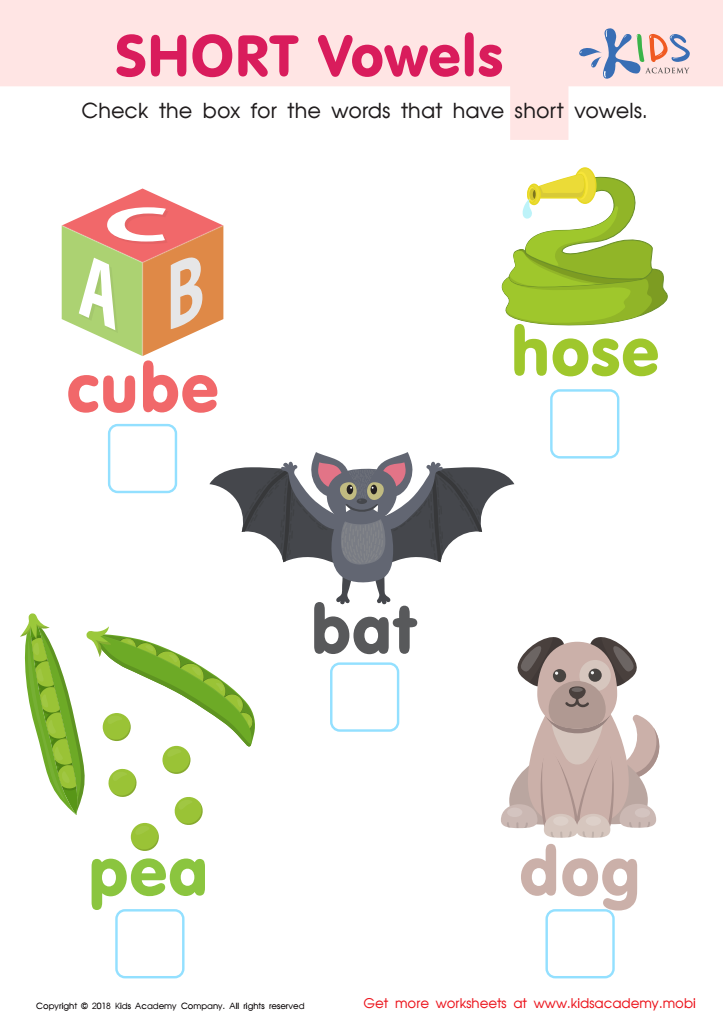
short vowels Worksheet
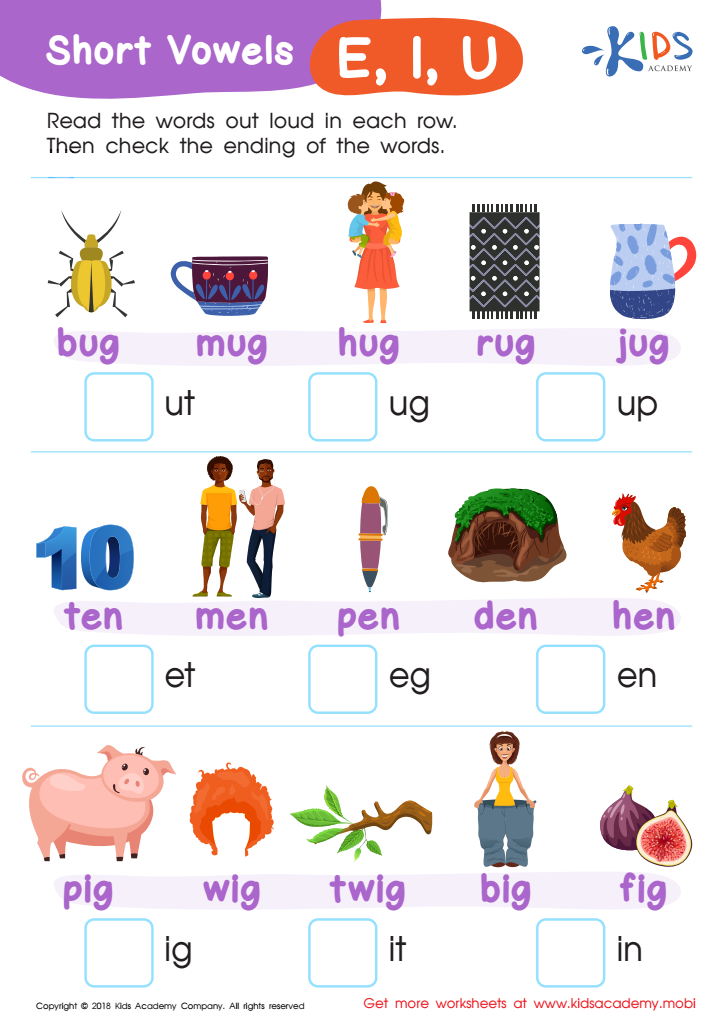
Short Vowels /e/, /i/, and /u/ Worksheet
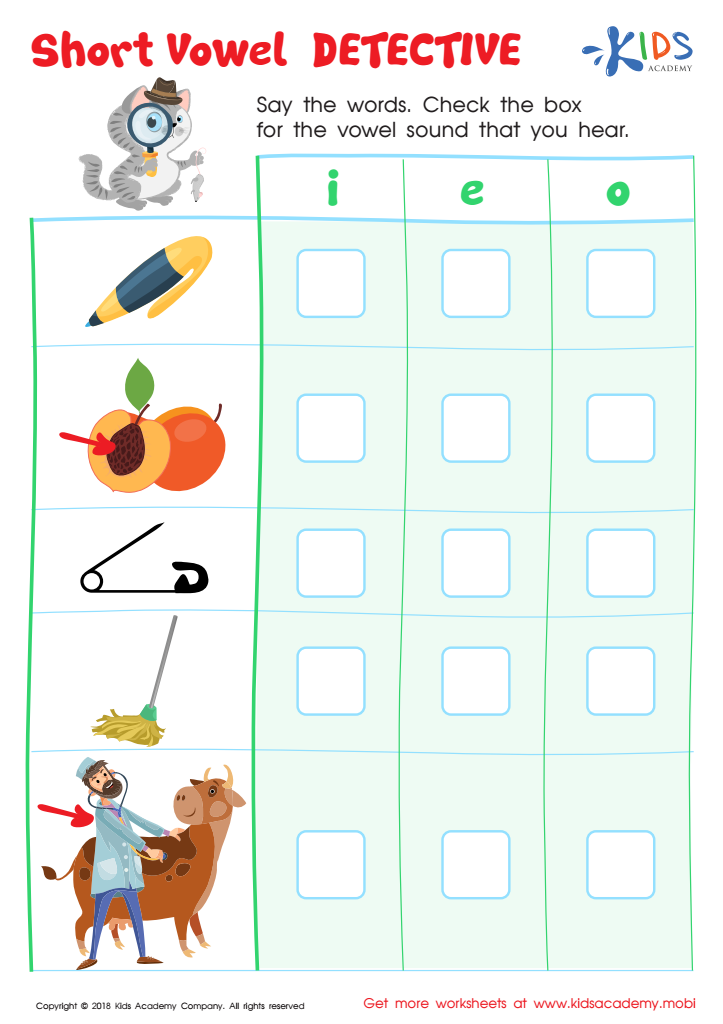
Short Vowel Detective Worksheet
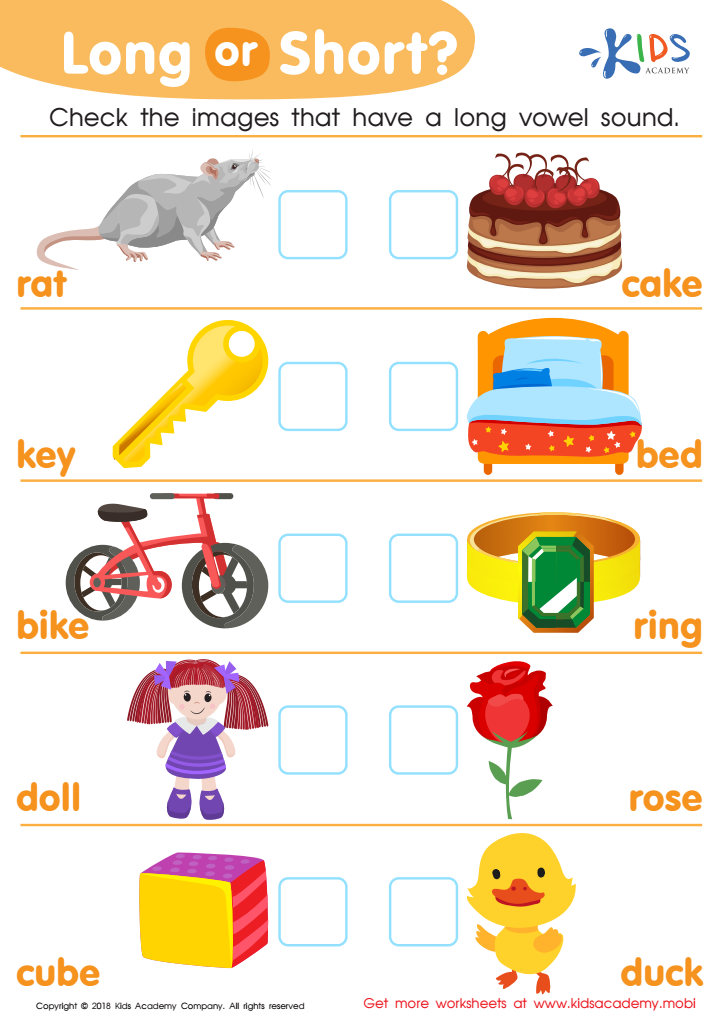
Long or Short Reading Worksheet
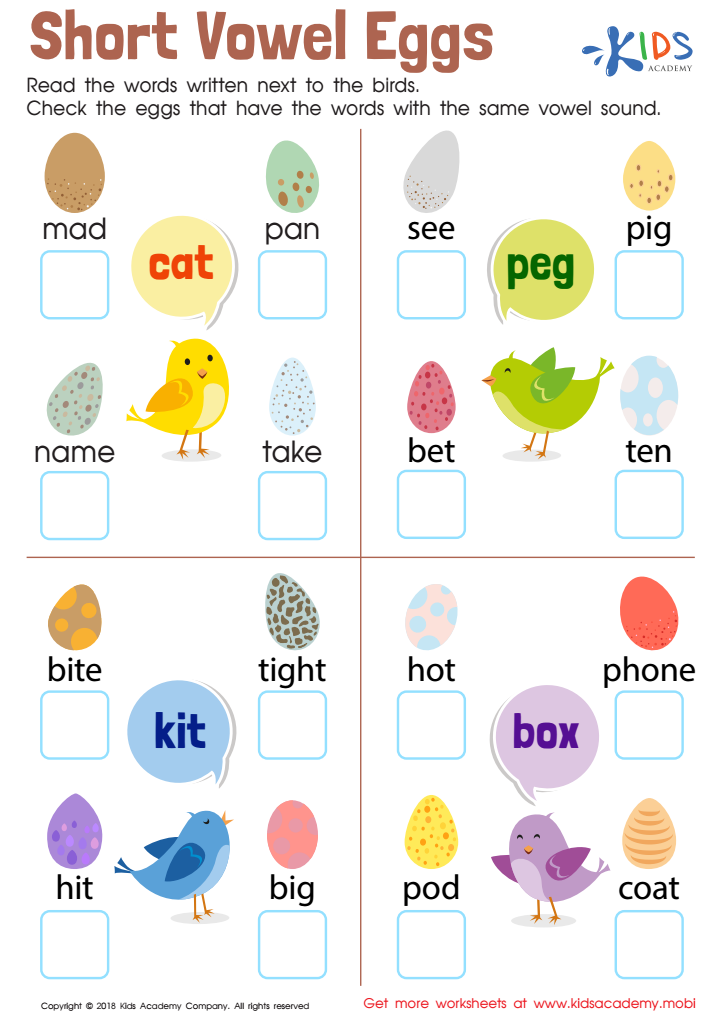
Short Vowel Eggs Worksheet
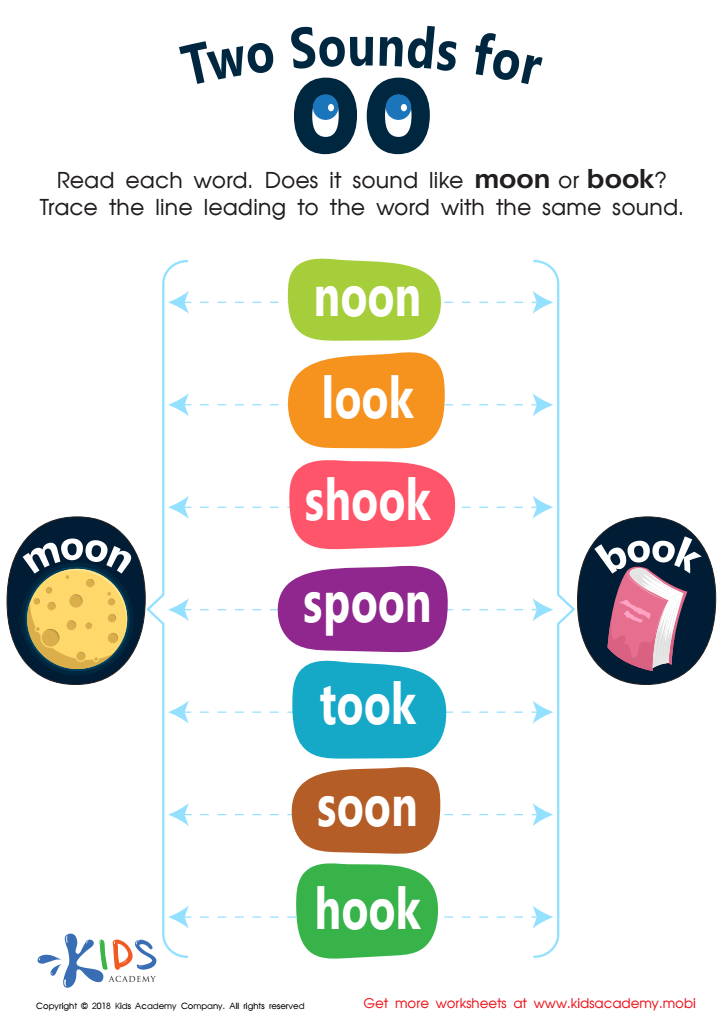
Two Sounds for OO Worksheet
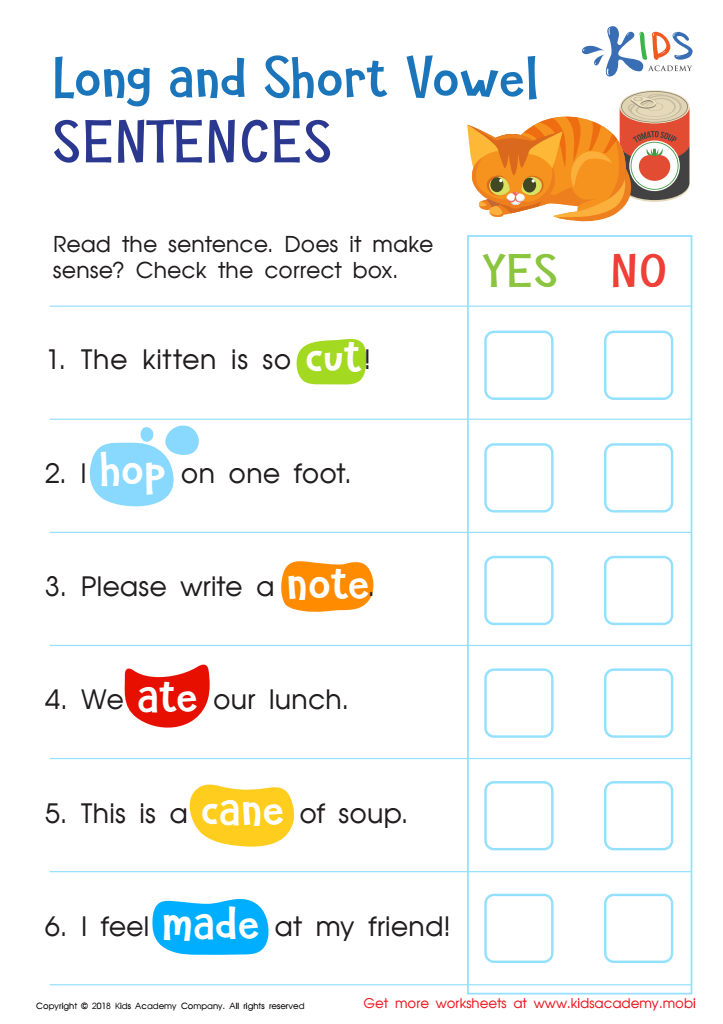
Long and Short Vowel Sentences: Assessment Worksheet
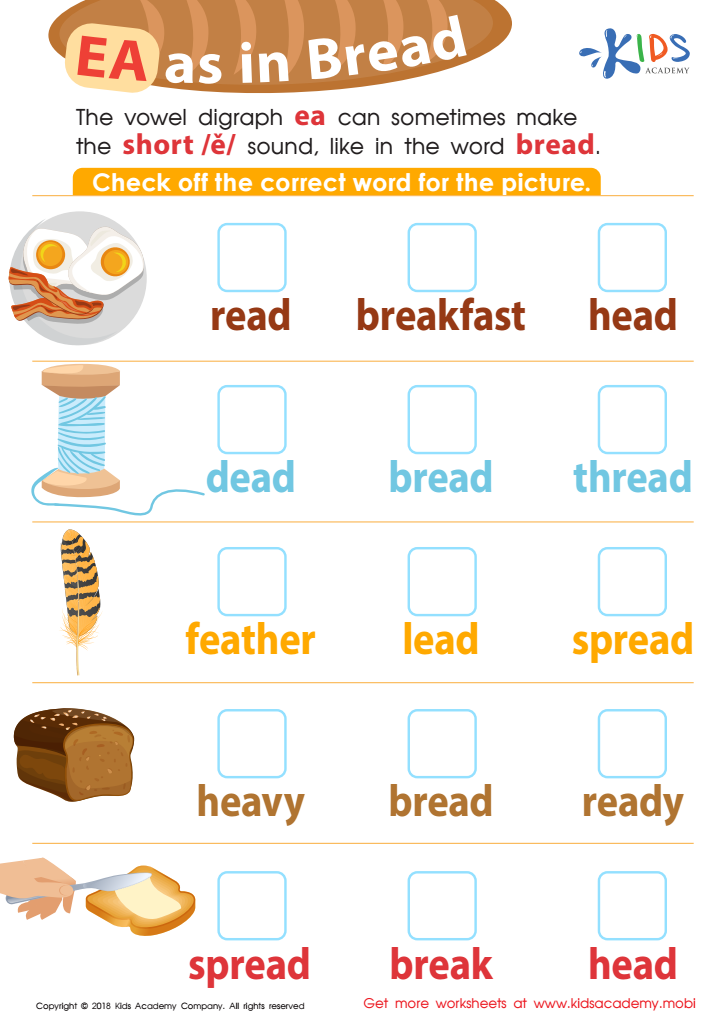
Reading: EA as in Bread Worksheet



Normal short vowels are crucial for young learners aged 5-8 as they form the foundation of early reading and writing skills. At this stage, children are developing phonemic awareness—the ability to recognize and manipulate sounds in words. Short vowels (a, e, i, o, u) are often the building blocks of many sight words and are key to decoding more complex words in the future.
When children grasp short vowels, they enhance their ability to blend sounds, which contributes to better reading fluency. This proficiency boosts confidence in their reading capabilities, encouraging a positive attitude toward literacy. Furthermore, understanding short vowels reduces confusion in spelling, aiding earlier writing efforts.
Teachers and parents should also recognize that this skill is not isolated. It connects with spelling, reading comprehension, and overall language development. Engaging children in activities that emphasize short vowel recognition—like phonics games or storytelling—creates a supportive environment for cultivating a love of reading.
Ultimately, a solid grasp of short vowels lays a vital groundwork for lifelong literacy skills, making it essential for parents and teachers to prioritize this learning in the early years. Investing time in this area will reap rewards in their educational journey.