Normal Patterns Worksheets for Ages 5-9
5 filtered results
-
From - To
Discover our engaging "Normal Patterns Worksheets for Ages 5-9" designed to enhance young learners' understanding of patterns through fun and interactive activities! Ideal for early grade students, these worksheets provide a variety of exercises that challenge children to identify, create, and extend patterns using colors, shapes, and numbers. Each worksheet encourages critical thinking and boosts cognitive skills while making learning enjoyable. Perfect for classroom use or at-home practice, our resources align with educational standards and are easy to follow. Help your child build a strong foundation in math concepts and develop their problem-solving skills with our colorful and captivating worksheets today!
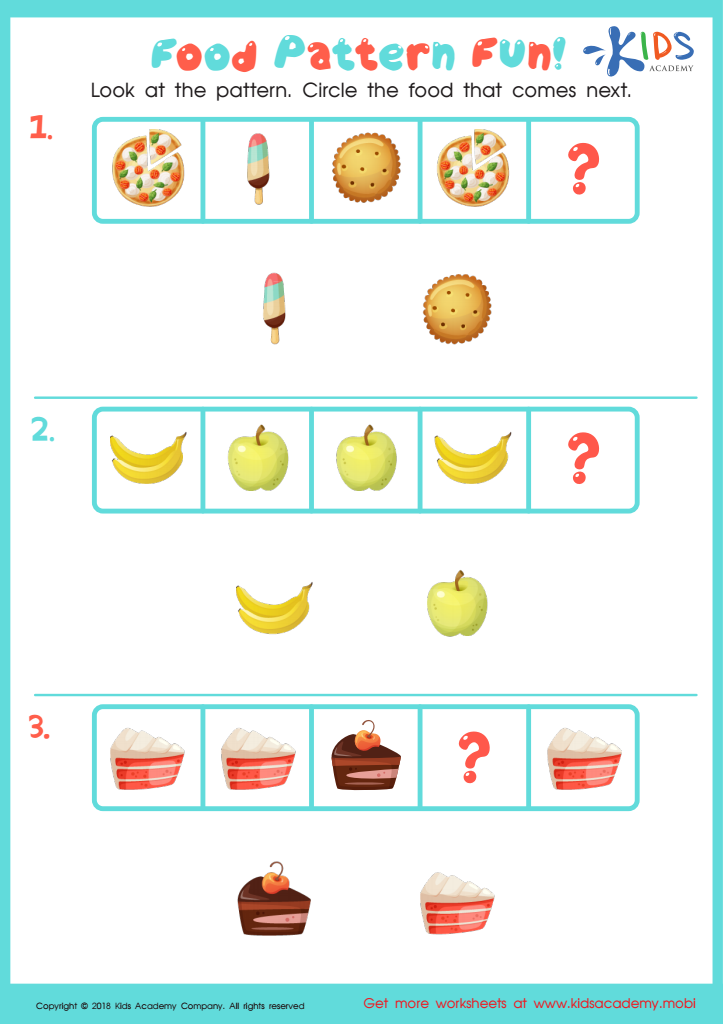
Food Pattern Fun Worksheet
 Assign to My Students
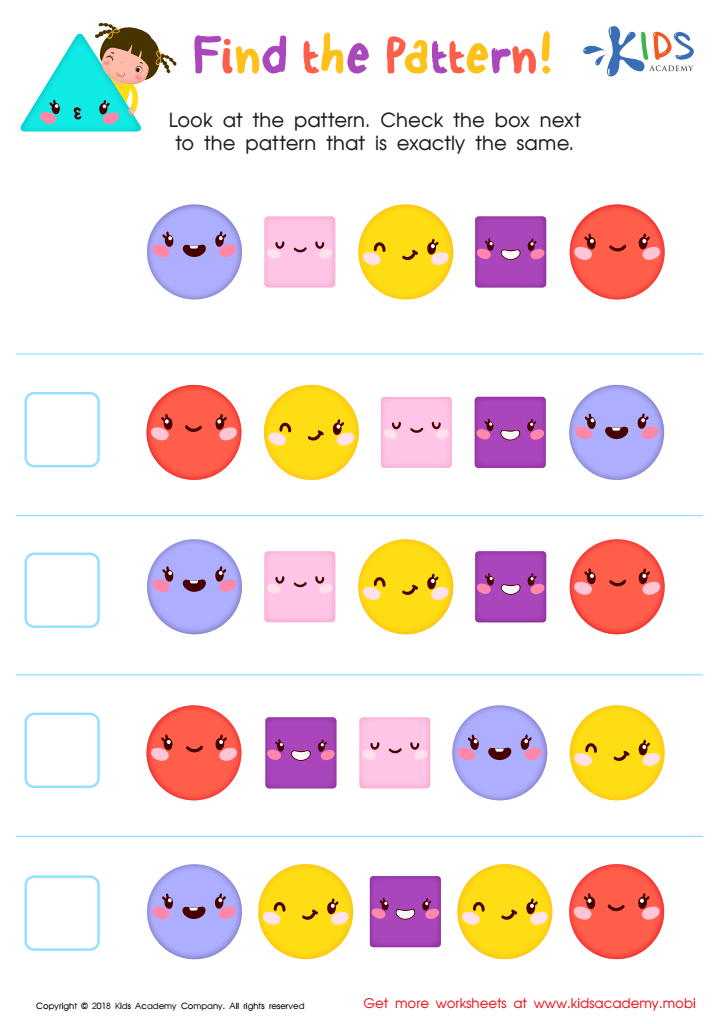
Find the Pattern Worksheet
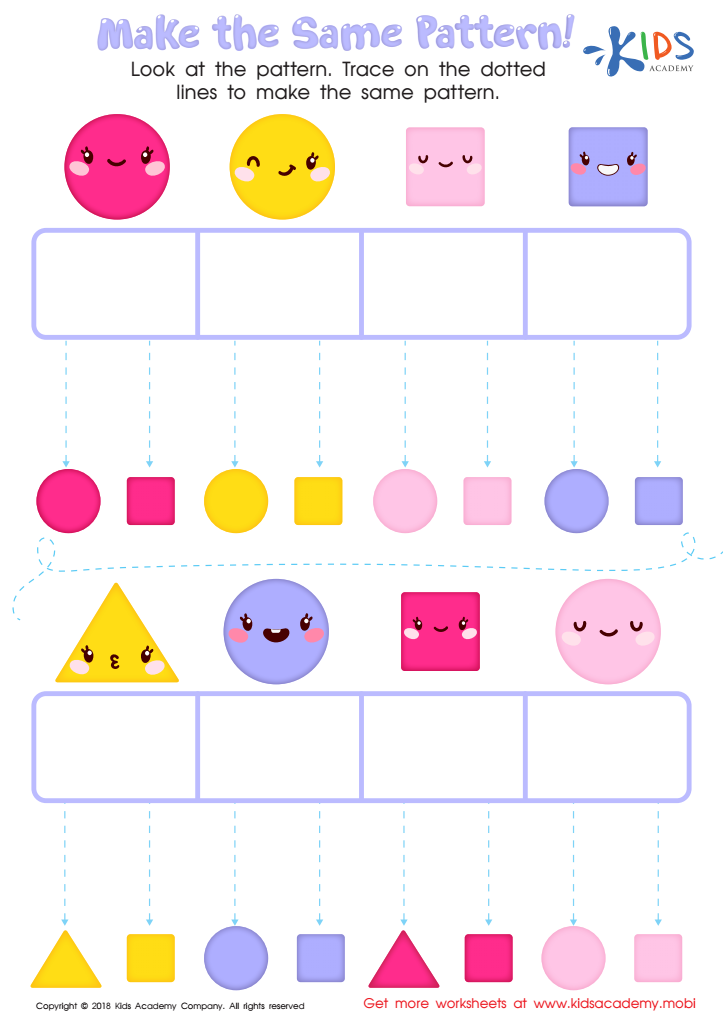
Make the Same Pattern Worksheet
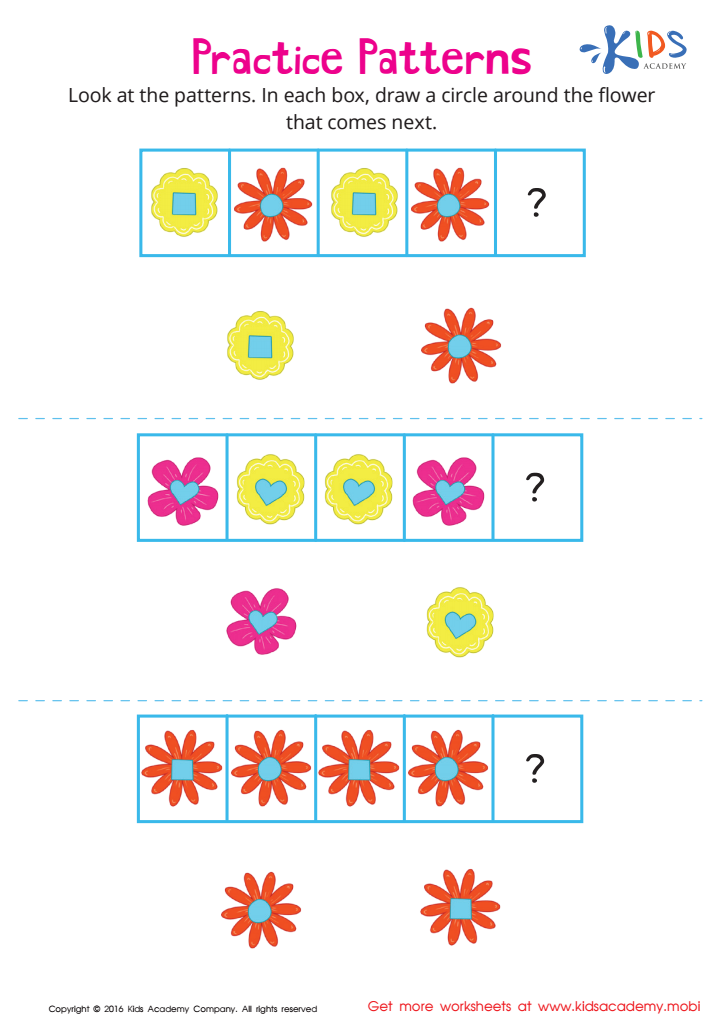
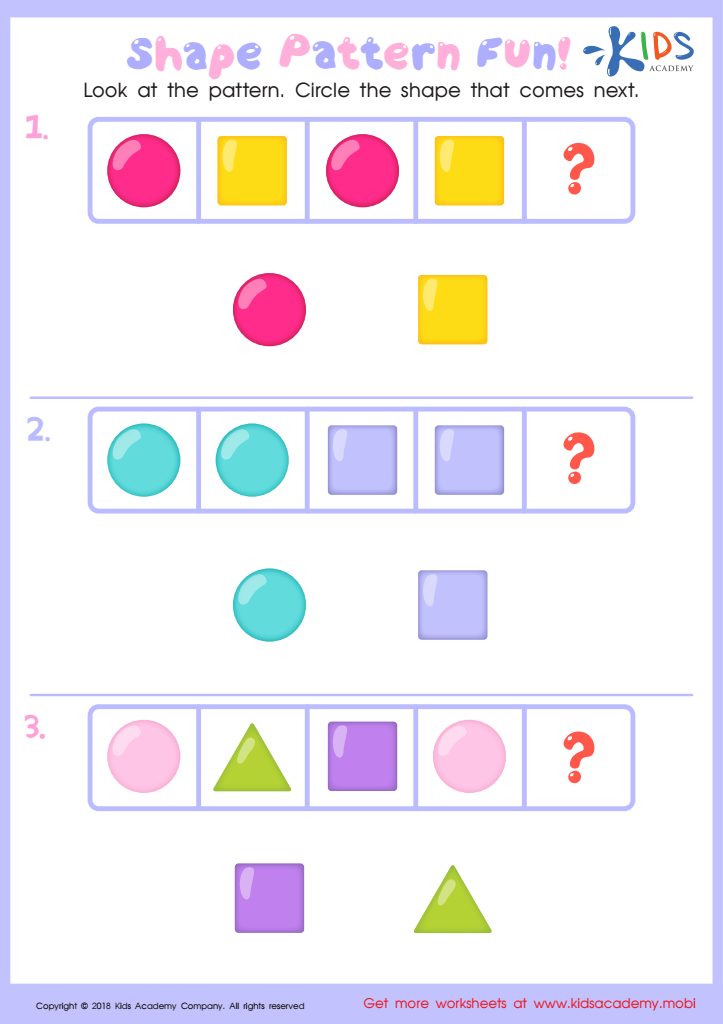
Shape Pattern Fun Worksheet








Understanding normal patterns of development for children ages 5-9 is crucial for both parents and teachers, as it directly impacts a child's educational and emotional growth. During these formative years, children undergo significant cognitive, social, and emotional changes that shape their future learning experiences. By being aware of typical developmental milestones, caregivers can effectively support children's individual needs, recognizing when a child is thriving or might be struggling.
For instance, children in this age group develop essential skills, such as reading comprehension, problem-solving, and social interactions. Knowing if a child is meeting these milestones can guide personalized instruction, enabling teachers to adjust their teaching strategies or provide additional resources. Likewise, parents equipped with this knowledge can foster supportive home environments, reinforcing what children learn at school.
Moreover, understanding these patterns helps identify potential developmental issues early on, which can lead to timely interventions. This proactive approach contributes to children's overall well-being, ensuring they remain engaged and confident learners. In essence, being informed about normal patterns empowers parents and teachers to create a nurturing and empowering atmosphere conducive to holistic development during this critical stage of a child's life.








