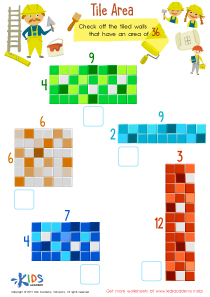
Normal Comparison Worksheets for Ages 6-7
7 filtered results
-
From - To
Discover our engaging "Normal Comparison Worksheets for Ages 6-7" at Kids Academy, designed to enhance young learners' math skills. Our printable worksheets introduce fundamental comparison concepts such as greater than, less than, and equal to, making math fun and accessible. Through colorful illustrations and interactive problems, children develop critical thinking and problem-solving abilities. These worksheets are perfect for classroom use or additional practice at home. Equip your 6-7 year old with the tools to excel in math with our expertly crafted comparison activities. Visit the page to download and start building strong math foundations today!
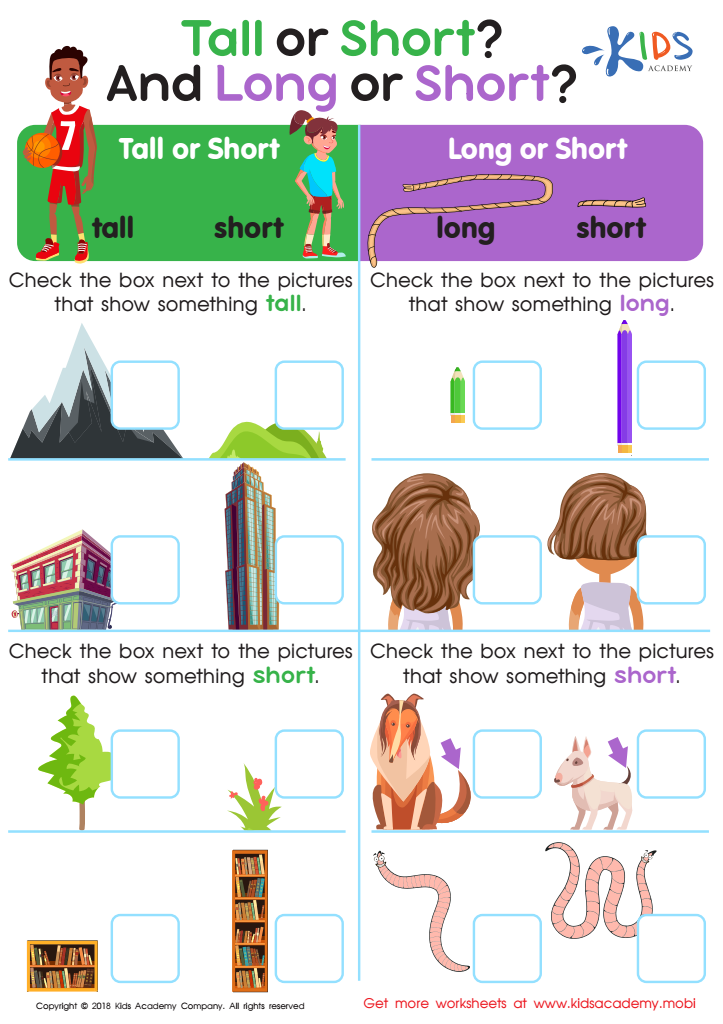
Tall or Short and Long or Short? Worksheet
 Assign to My Students
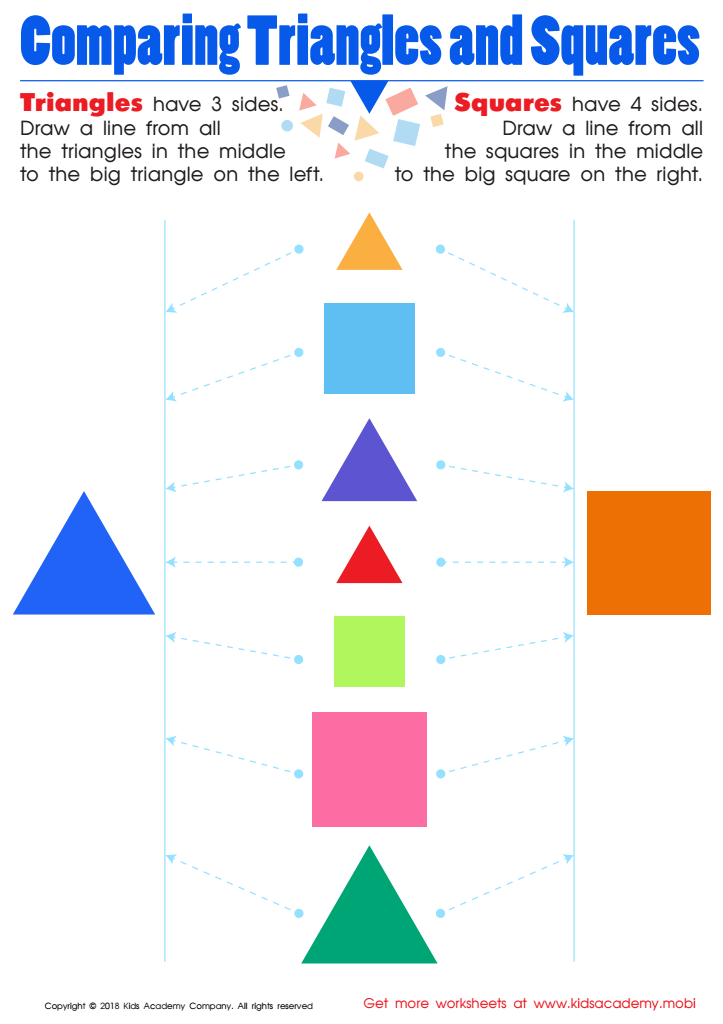
Comparing Triangles Squares Worksheet
Matching: Classifying Toys by Size Worksheet
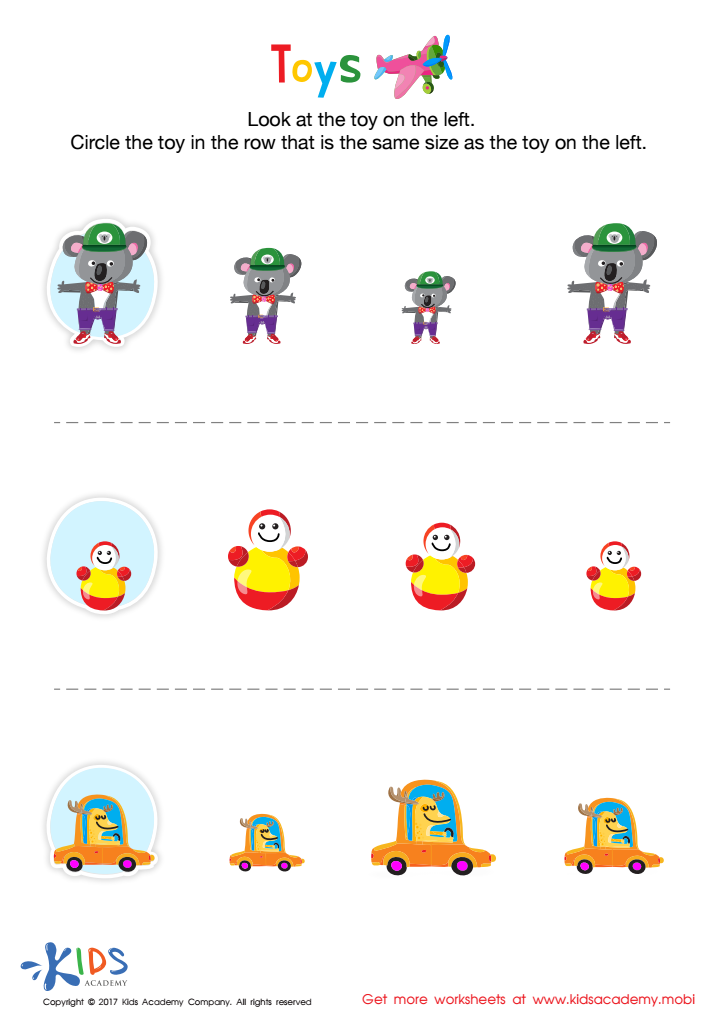
Matching: Classifying Toys by Size Worksheet
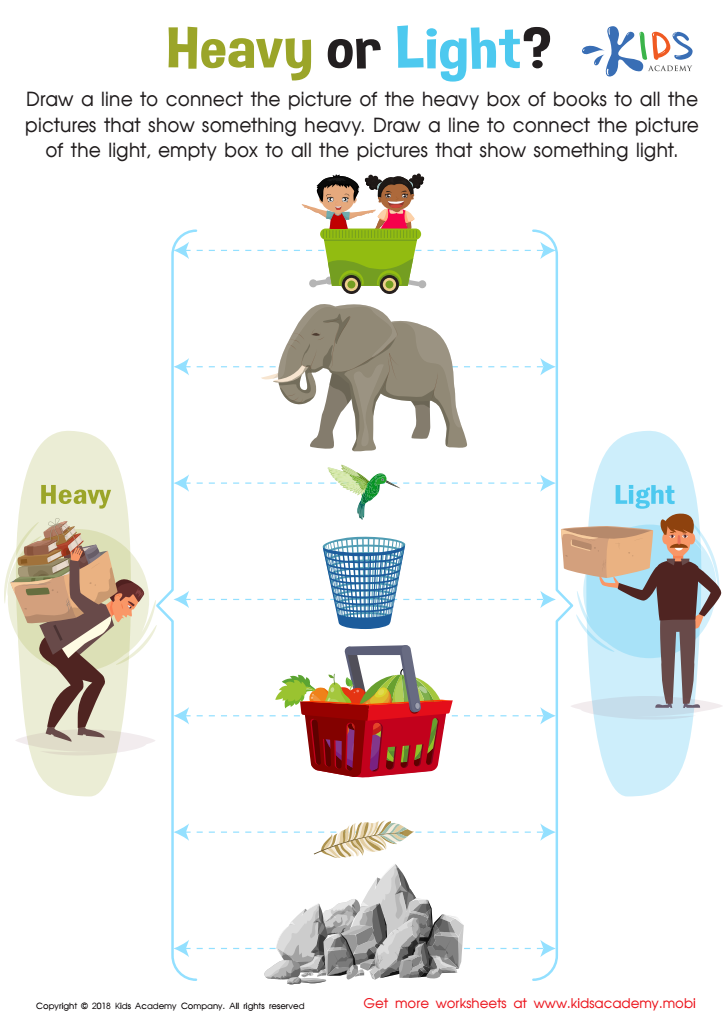
Heavy or Light? Worksheet
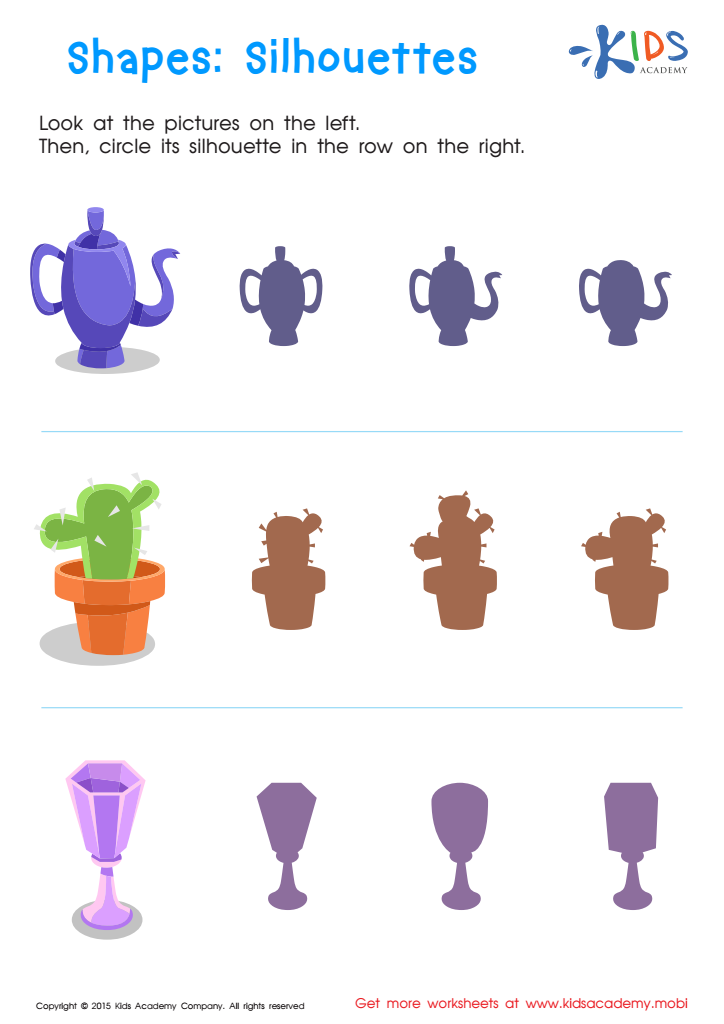
Silhouettes – Shapes Worksheet
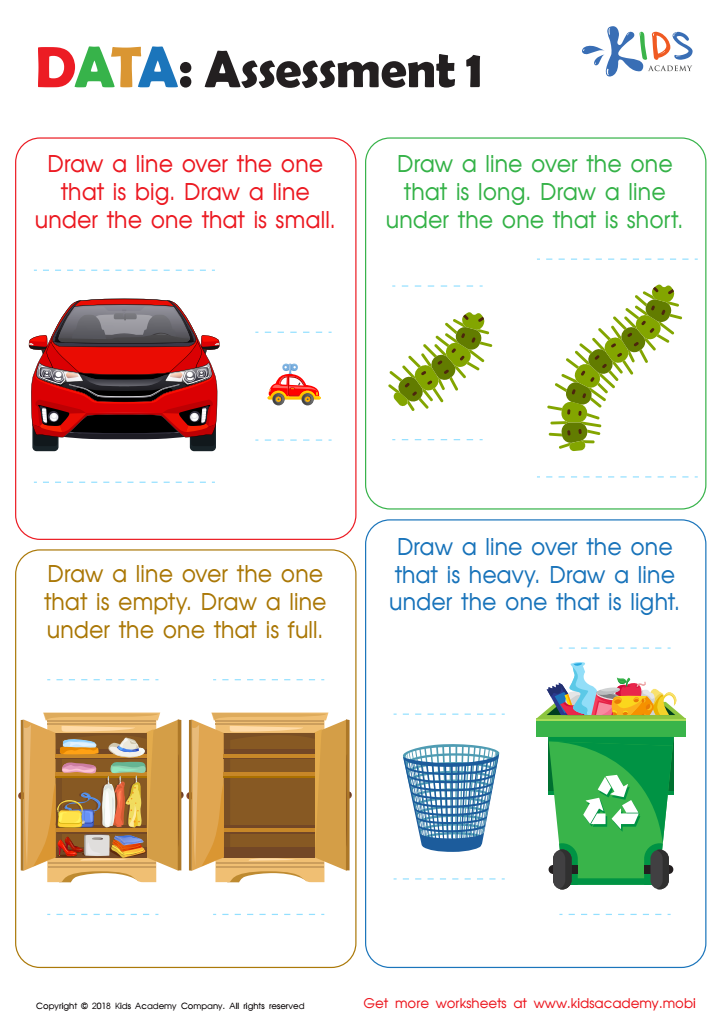
Data: Assessment 1 Worksheet







Understanding normal comparison for ages 6-7 is crucial for parents and teachers as it directly impacts children's developmental support and educational strategies. At this age, children experience significant growth in cognitive, social, and emotional domains. Normal comparisons help identify if a child is meeting typical developmental milestones or if there are areas needing attention.
These comparisons serve as benchmarks that help parents and educators gauge whether students are on track with peers, allowing for early detection of potential learning or developmental delays. Identifying these issues early enables timely intervention, which can significantly improve outcomes. For example, if a child struggles with reading skills compared to classmates, targeted interventions can be implemented to support their literacy development.
Moreover, understanding developmental norms helps in setting realistic expectations. If a child is developing skills at a typical pace, parents and teachers can tailor activities that challenge yet don't overwhelm the child. It ensures that a balanced approach is taken in nurturing each child's unique abilities, bolstering self-esteem and promoting a positive attitude toward learning.
In summary, normal comparison provides a framework for identifying needs, validating developmental progress, and fostering an environment where each child can flourish academically, emotionally, and socially. This informed perspective enables a proactive, supportive approach, ultimately laying a strong foundation for future learning and personal growth.