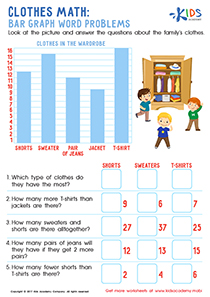
Normal Two-step Word Problems Worksheets for 7-Year-Olds
13 filtered results
Difficulty Level
Grade
Age
-
From - To
Subject
Activity
Standards
Introduce your seven-year-old to the engaging world of math with our Normal Two-step Word Problems worksheets. Perfectly tailored for young learners, these worksheets are designed to sharpen problem-solving skills through fun and accessible challenges. Ideal for school homework sheets, they help children practice and master the concepts of addition and subtraction with real-world scenarios. Each worksheet encourages critical thinking and enhances numerical fluency, making them a great tool for in-class activities or at-home practice. Boost your child's confidence and skills in mathematics with these thoughtfully crafted worksheets. Suitable for all young students eager to excel in their math journey!
Favorites
With answer key
Interactive
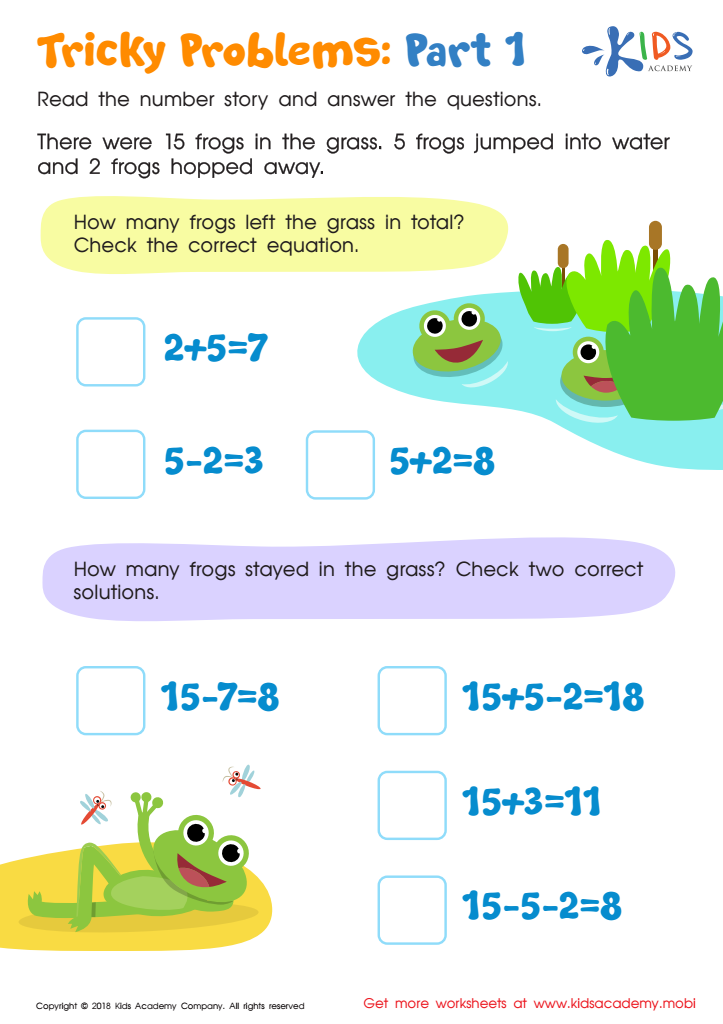
Tricky Problems Worksheet: Part 1
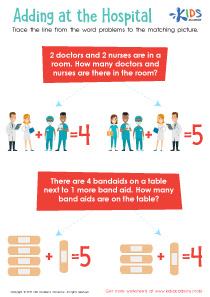
Visualizing word problems can help students solve them. This fun PDF worksheet encourages students to create mental images using math facts, then check boxes to match the equations for basic addition problems. It's a great way to build confidence in solving math.
 Assign to My Students
Tricky Problems Worksheet: Part 1
Worksheet
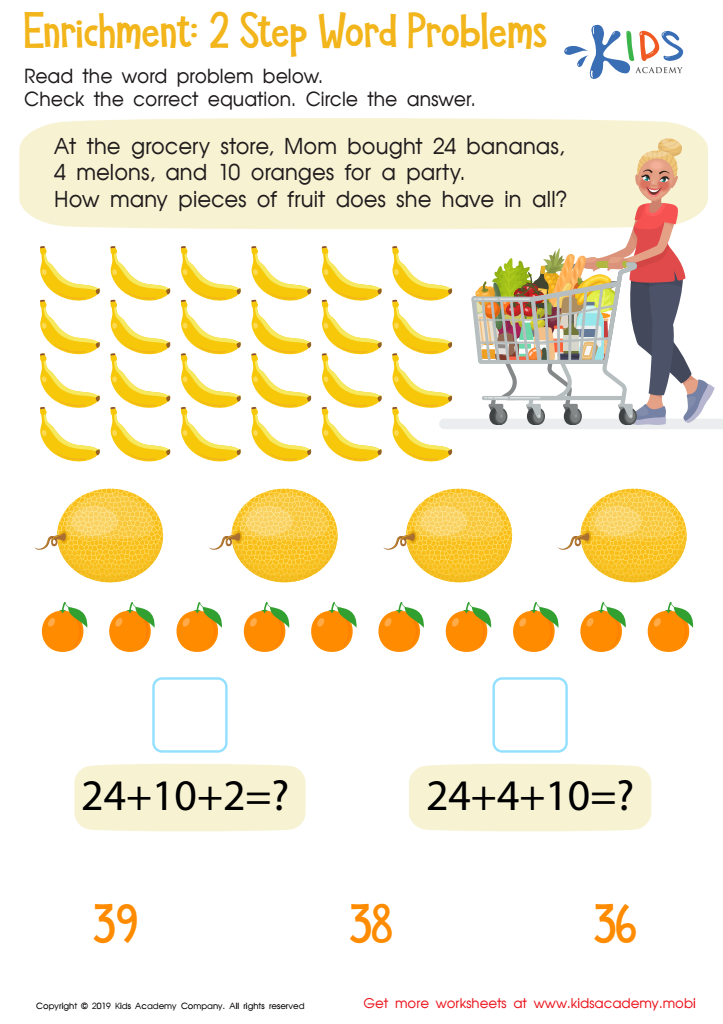
Enrichment -2 Step Word Problems Worksheet
Help your students learn math easier and faster with this colorful worksheet. Read the word problem and then guide them in checking the correct equation and finding the answer. Your students will benefit from the extra help, as they work through new concepts each day.
Enrichment -2 Step Word Problems Worksheet
Worksheet
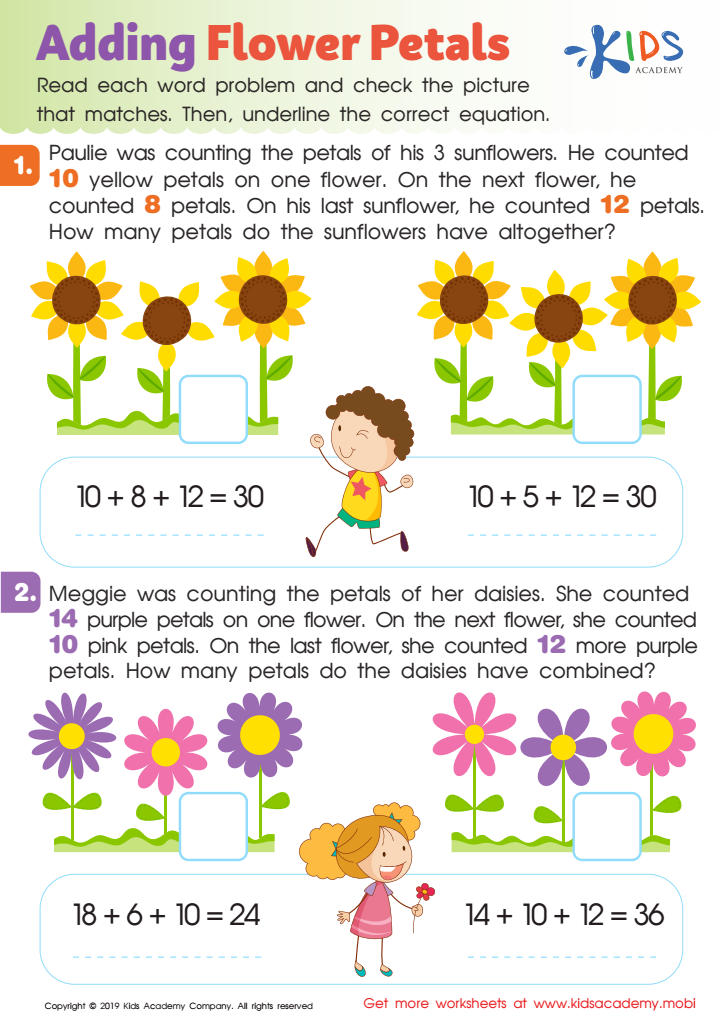
Adding Flower Petals Worksheet
This free worksheet helps little mathematicians learn to understand word problems. They'll read each one and match it to the corresponding picture. Important info is highlighted, teaching kids to look for key info when solving problems. Then they'll underline the correct number equation that matches the picture. A great way to practice problem-solving skills!
Adding Flower Petals Worksheet
Worksheet
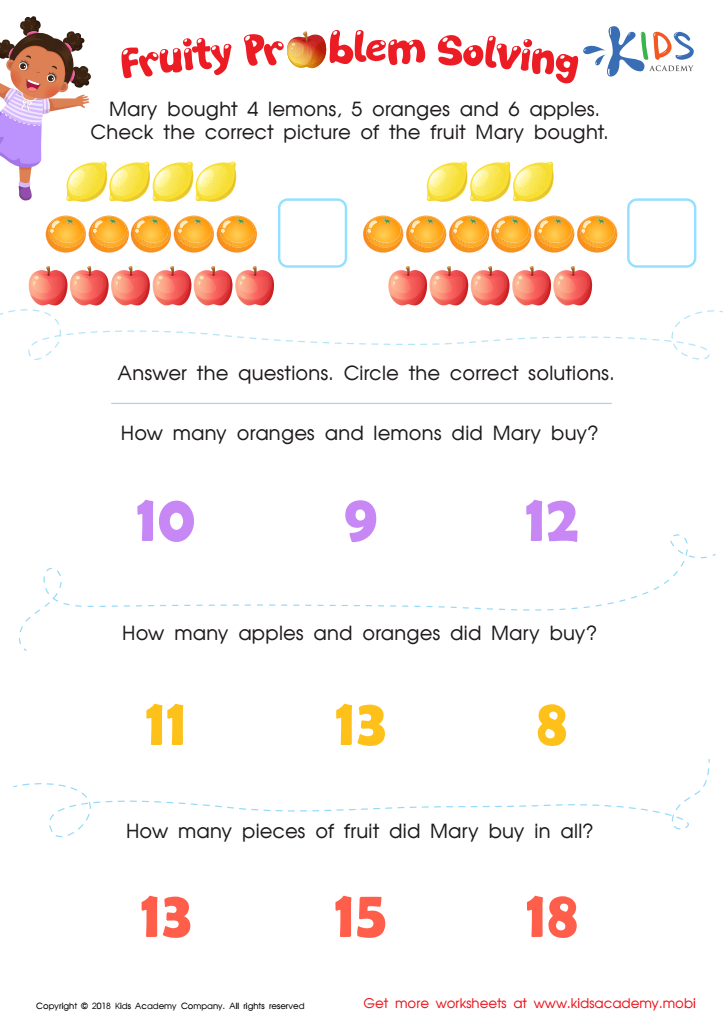
Fruity Problem Solving Worksheet
Practice addition word problems with young mathematicians using this PDF worksheet featuring fruit. As they read each problem carefully and circle the correct sums, they'll reinforce attention to detail and fine motor skills. Tangible representations are key to helping them with basic addition.
Fruity Problem Solving Worksheet
Worksheet
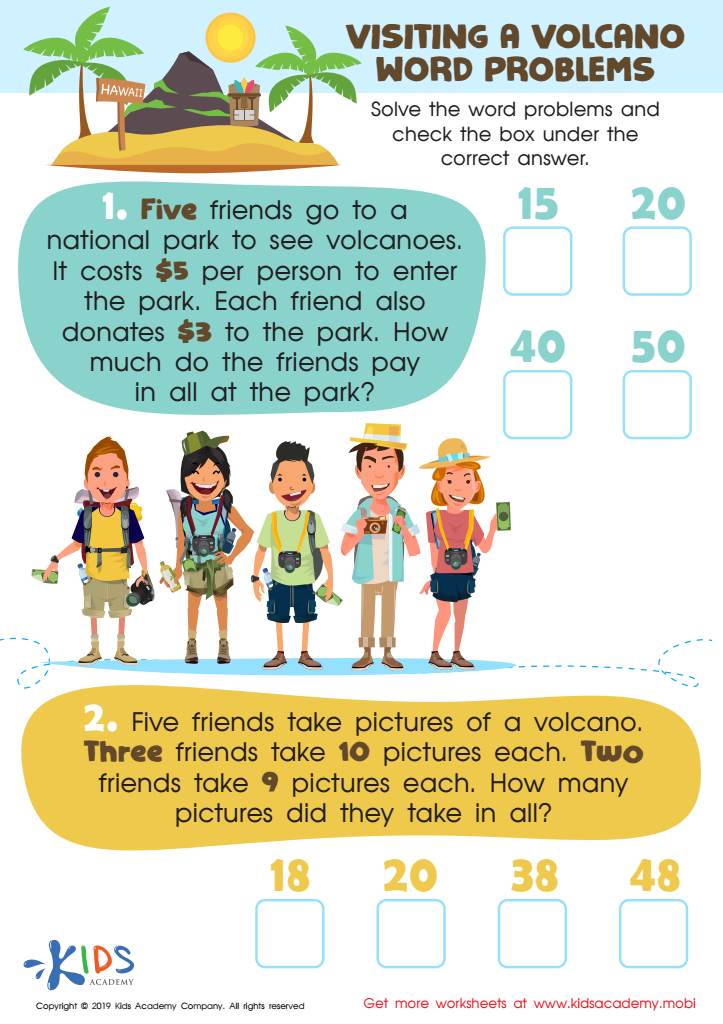
Visiting a Volcano Word Problems Worksheet
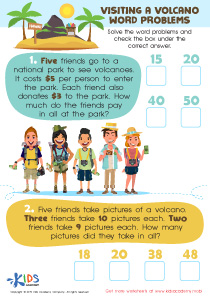
Read the word problems to your kids, note down the numbers and help them solve. Check the box under the correct answer. Word problems are sentences posed as math problems; just like regular number problems, first you must understand and interpret the sentence.
Visiting a Volcano Word Problems Worksheet
Worksheet
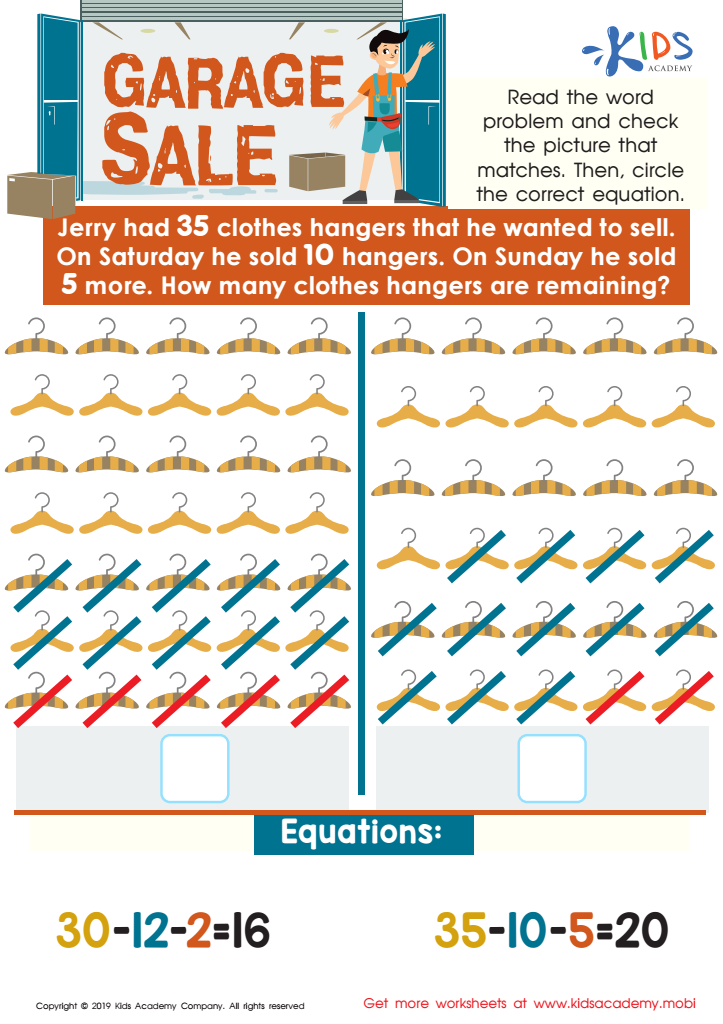
Garage Sale Worksheet
Help Jerry at his garage sale! With this worksheet, your child can practice subtraction word problems with multiple subtrahends. They'll read the problem, identify important info, circle the equation and solve it. Let your little math star have fun while helping Jerry out!
Garage Sale Worksheet
Worksheet
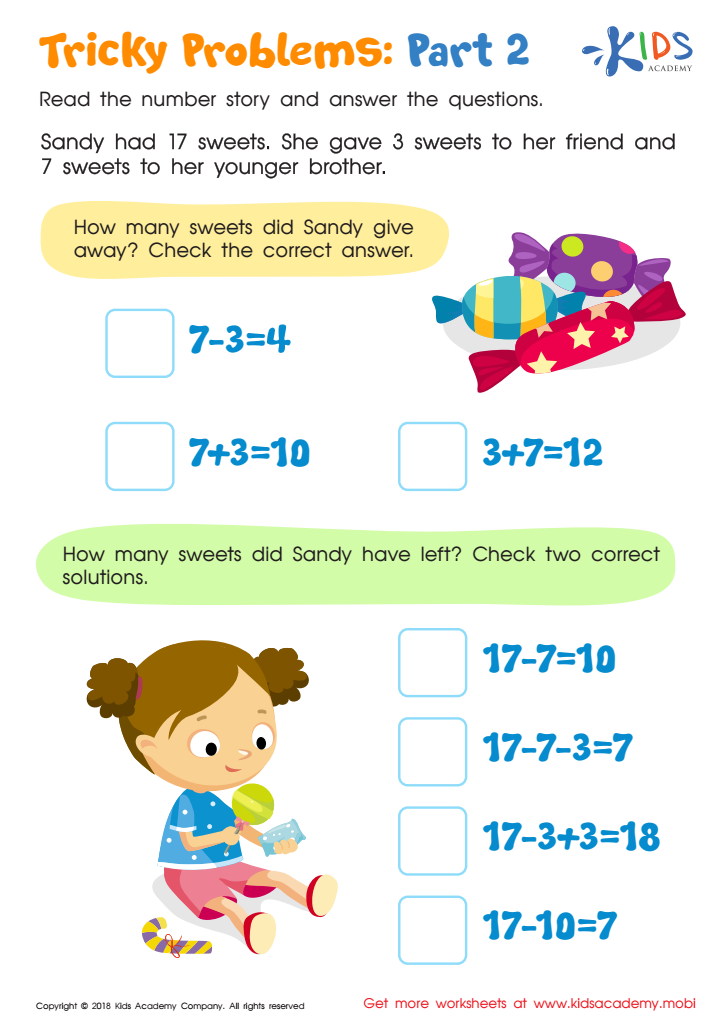
Tricky Problems Worksheet: Part 2
Help your little math learner visualize number stories with this engaging worksheet. They'll connect pictures to the story and use math facts to find the sums. After that, they'll be able to identify the correct number sentences to match. Let them practice and get better at problem solving!
Tricky Problems Worksheet: Part 2
Worksheet
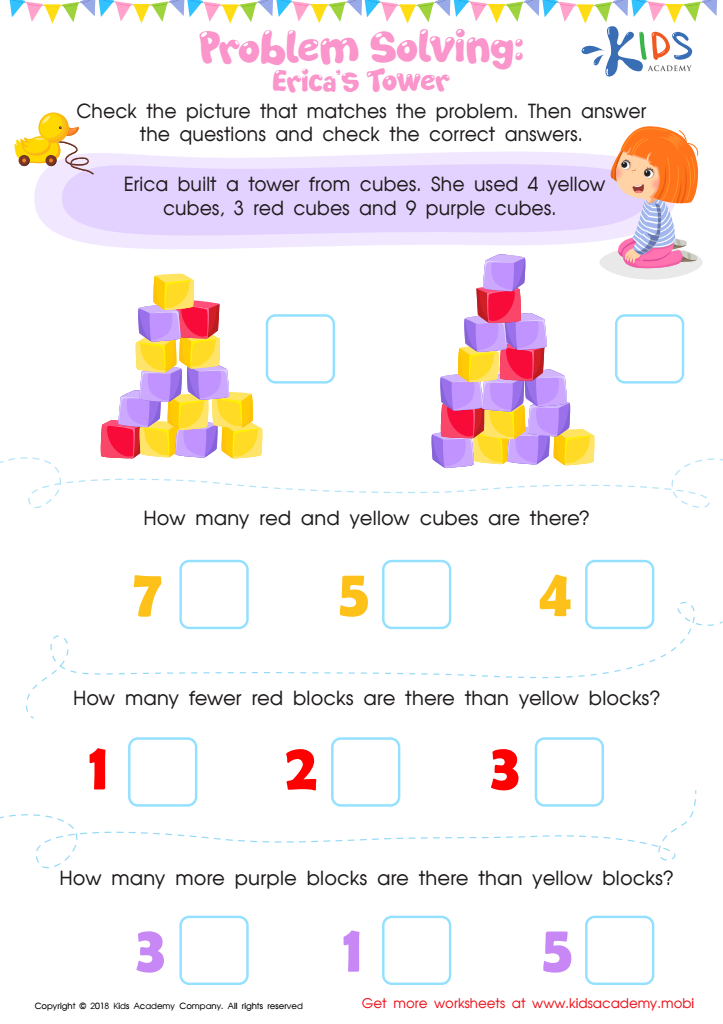
Problem Solving: Erica's Tower Worksheet
Sweet Erica needs your math student's help! Download the PDF worksheet and have your little math whiz read the word problems, match the pictures and solve basic addition/subtraction problems with two/three addends, minuends and subtrahends. They'll be having fun while strengthening their math fact skills!
Problem Solving: Erica's Tower Worksheet
Worksheet
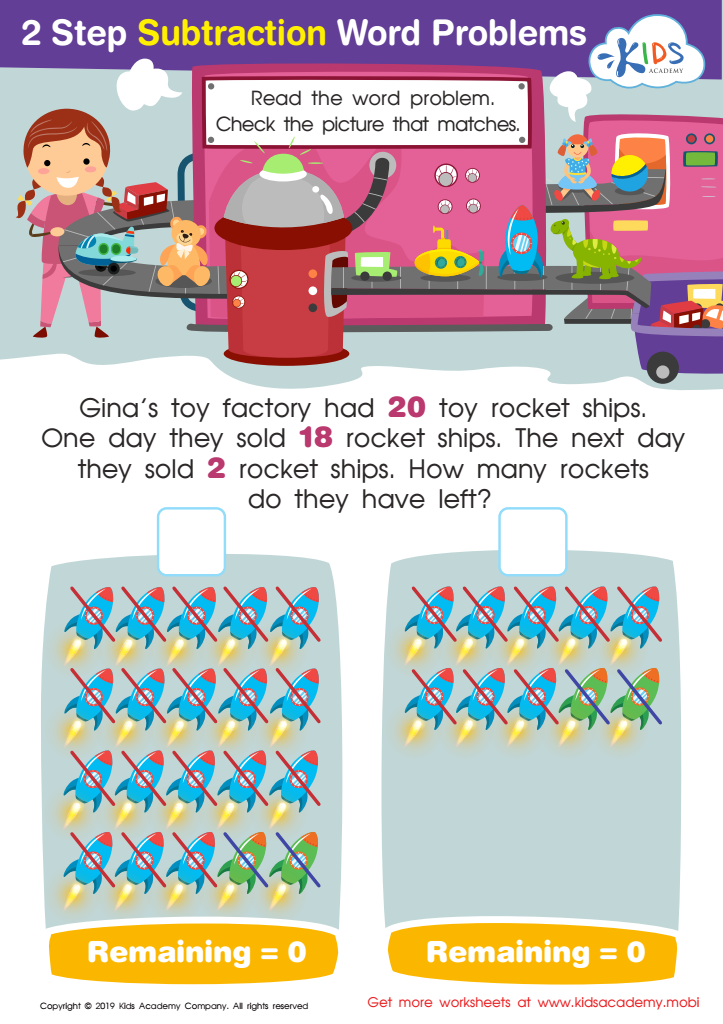
Step Subtraction Word Problems Worksheet
With this worksheet, kids can solve a multi-step subtraction problem with one-to-one number representation, helping Gina figure out her rocket count. Visualizing word problems is key, and this PDF will give your child a concrete image to work with. They'll be successful problem solvers in no time!
Step Subtraction Word Problems Worksheet
Worksheet
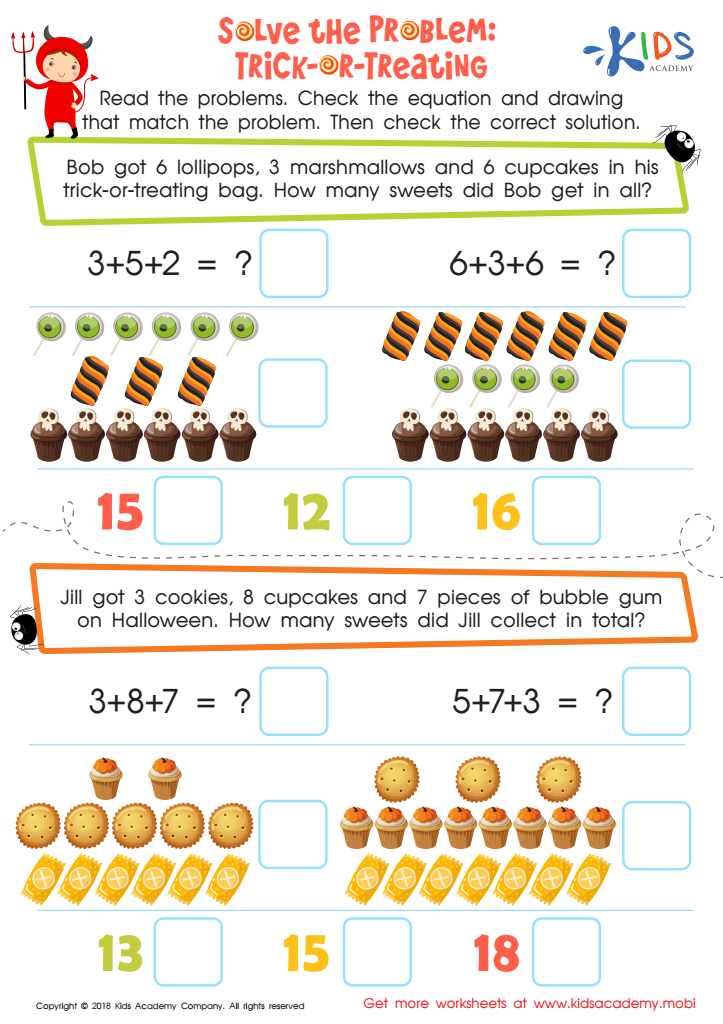
Solve the Problem: Trick–or–treating Worksheet
Kids will love this fun PDF worksheet for trick-or-treating! It's packed with yummy images and math practice. They can read the word problems, count and add numbers, check their answers, and match the addition equations with the pictures. Math made delicious!
Solve the Problem: Trick–or–treating Worksheet
Worksheet
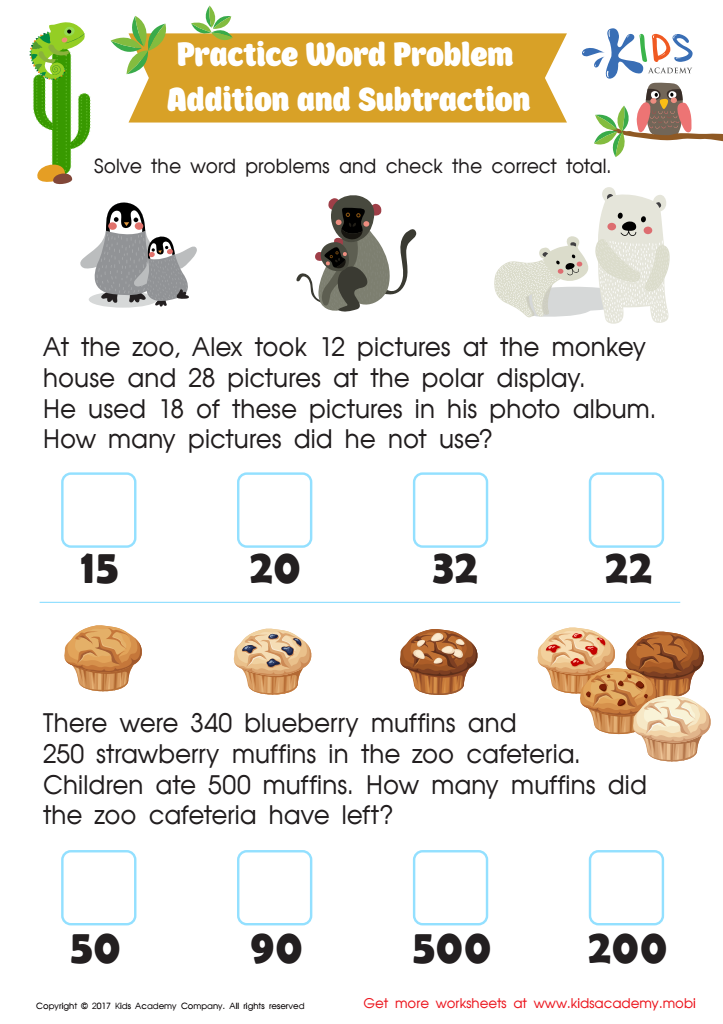
Addition and Subtraction: Word Problems Worksheet
Word problems can be difficult, but they offer another way to understand math. Our 3rd grade worksheet takes your child to the zoo; two intriguing word problems will test their thinking skills and help them find the total.
Addition and Subtraction: Word Problems Worksheet
Worksheet
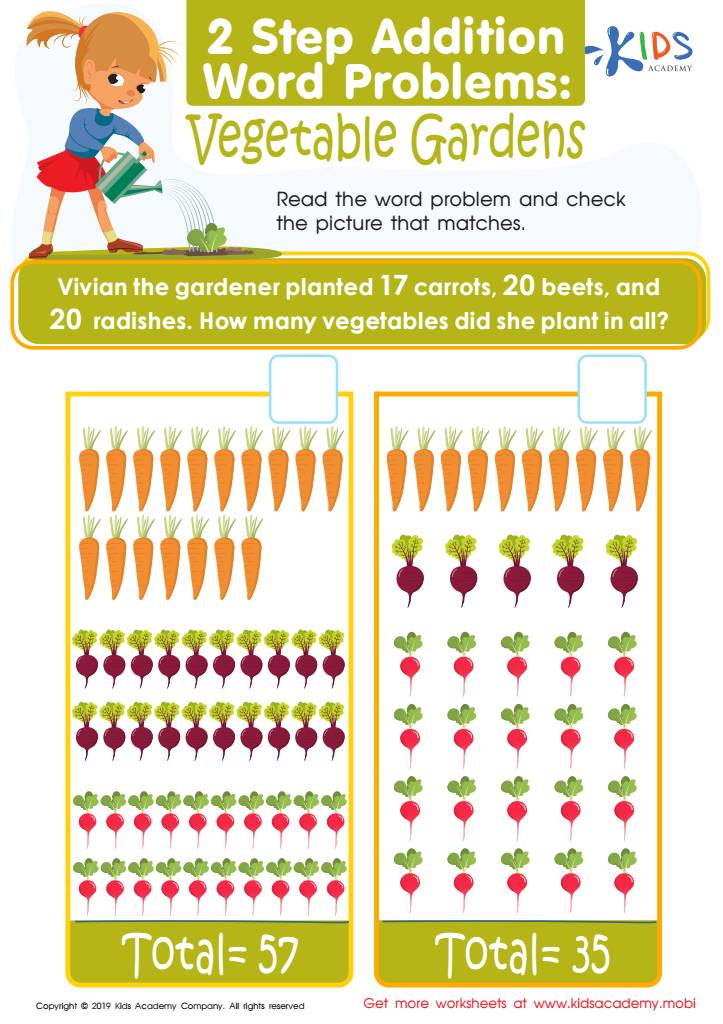
Vegetable Gardens Worksheet
Kids will have fun helping their buddy Vivian solve the addition word problems. Using one-to-one representation, they'll count the beets, carrots and radishes, then figure out the multi-step word problems. After, they'll check the picture that matches the answer, boosting their understanding of adding multiple numbers for one answer.
Vegetable Gardens Worksheet
Worksheet
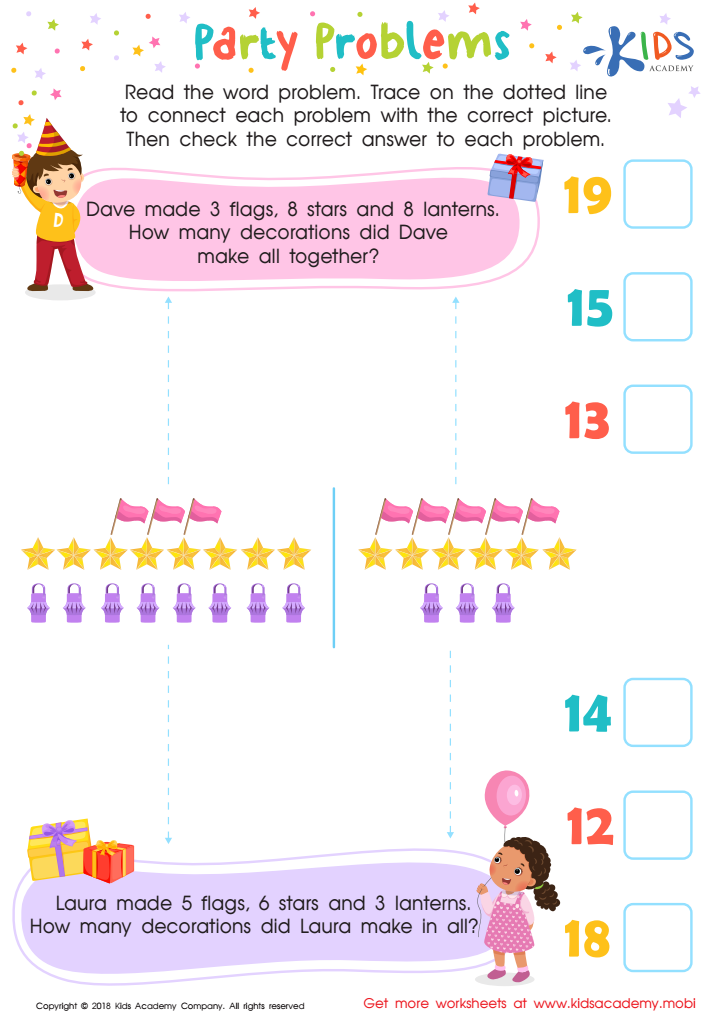
Party Problems Worksheet
Problems at parties? No problem! With this engaging PDF worksheet, your student can connect word problems to pictures, check correct answers, and find the sum of 3 addend problems. They'll be a party-saving hero in no time!
Party Problems Worksheet
Worksheet
Join Kids Academy for Free
Who is primarily going to use this learning content?



Exploring the Benefits of Normal Worksheets on Two-Step Word Problems for Seven-Year-Olds
In the realm of early education, particularly for seven-year-olds, the introduction of two-step word problems can play a pivotal role in enhancing analytical and mathematical skills. These problems require children to engage multiple cognitive processes, such as comprehension, reasoning, and calculation. Utilizing homeschool worksheets for these kinds of exercises offers a structured approach that can significantly benefit young learners.
Fostering Cognitive Development
At the age of seven, children are at a crucial stage of cognitive development. They are beginning to move beyond basic arithmetic and are ready to tackle more complex mathematical concepts. Two-step word problems are an excellent tool for fostering this development because they require a child to perform two sequential operations based on the information given in a text format. This pushes them to think logically and extend their comprehension beyond surface-level understanding.
Enhancing Problem-Solving Skills
Homeschool worksheets focused on two-step word problems are particularly useful in enhancing problem-solving skills. These worksheets provide a controlled yet challenging environment for children to practice the application of mathematics in varied contexts. By solving two-step problems, children learn to break down complex tasks into manageable parts, a skill that is invaluable in both academic and real-life situations.
Building Confidence and Independence
Working through homeschool worksheets allows children to work at their own pace, which is crucial for building confidence. As they solve each problem and arrive at the correct answers independently, their self-assurance in handling challenging questions grows. This confidence can translate into other areas of their academic and personal life, promoting a more resilient and independent mindset.
Practical Applications
The use of two-step word problems on homeschool worksheets helps illustrate the practical application of mathematics. Children at the age of seven are naturally curious about the world around them, and these problems can be designed to relate to real-world scenarios, such as shopping, cooking, or planning activities. This not only makes learning more engaging but also shows them the relevance of mathematics in everyday life.
Customizable Learning
One of the key advantages of homeschool worksheets is their adaptability. Parents and educators can tailor the difficulty and context of the problems to suit the individual learning needs and interests of the child. Whether the child is a visual learner, prefers hands-on activities, or enjoys stories, two-step word problems can be customized to enhance their learning experience.
Continuous Learning Assessment
Lastly, homeschool worksheets provide an excellent opportunity for continuous assessment. By regularly working through these worksheets, parents and educators can track the child’s progress and identify areas where they may need more support or further challenge. This ongoing assessment is crucial for adapting teaching strategies and ensuring that each child can achieve their full potential in mathematics and beyond.
Conclusion
In conclusion, normal worksheets on two-step word problems are incredibly beneficial for seven-year-olds, especially in a homeschool setting. They not only foster cognitive development by enhancing comprehension and reasoning skills but also improve problem-solving abilities and build confidence. The customizable nature of homeschool worksheets makes it possible to tailor learning experiences to the specific needs of each child, making mathematics both accessible and enjoyable.
By integrating this type of learning material into their curriculum, parents can provide their children with a strong foundation in math that will serve them well throughout their academic careers and into their everyday lives. Encouraging children to tackle two-step word problems at an early age prepares them to handle more complex challenges in the future, promoting a lifelong engagement with learning and problem-solving.