Easy Problem Solving Worksheets for Ages 3-7
4 filtered results
-
From - To
Discover our collection of Easy Problem Solving Worksheets tailored specifically for children aged 3 to 7! These engaging worksheets encourage young minds to think critically and creatively while developing essential problem-solving skills. Featuring fun illustrations and age-appropriate challenges in science and everyday situations, your child will enjoy learning as they tackle each task. Our printable resources promote independent thinking, collaboration, and confidence in young learners. Whether at home or in the classroom, these worksheets are perfect for building foundational skills in a playful and interactive way. Start your child’s journey to becoming a confident problem solver today!

Identifying a Problem Worksheet
 Assign to My Students
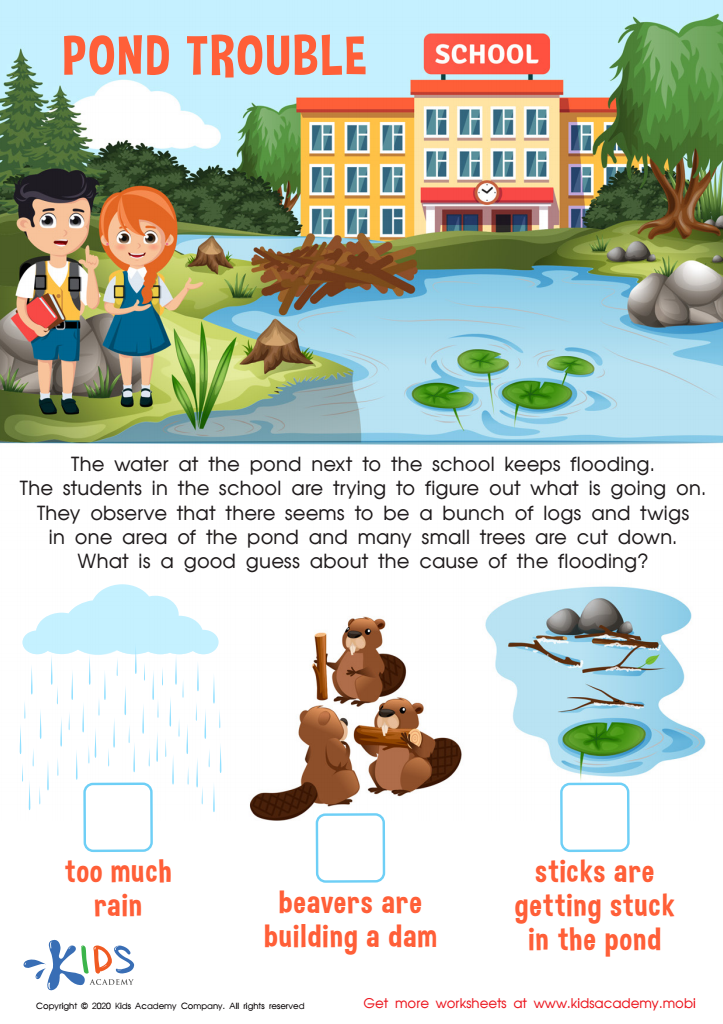
Pond Trouble Worksheet
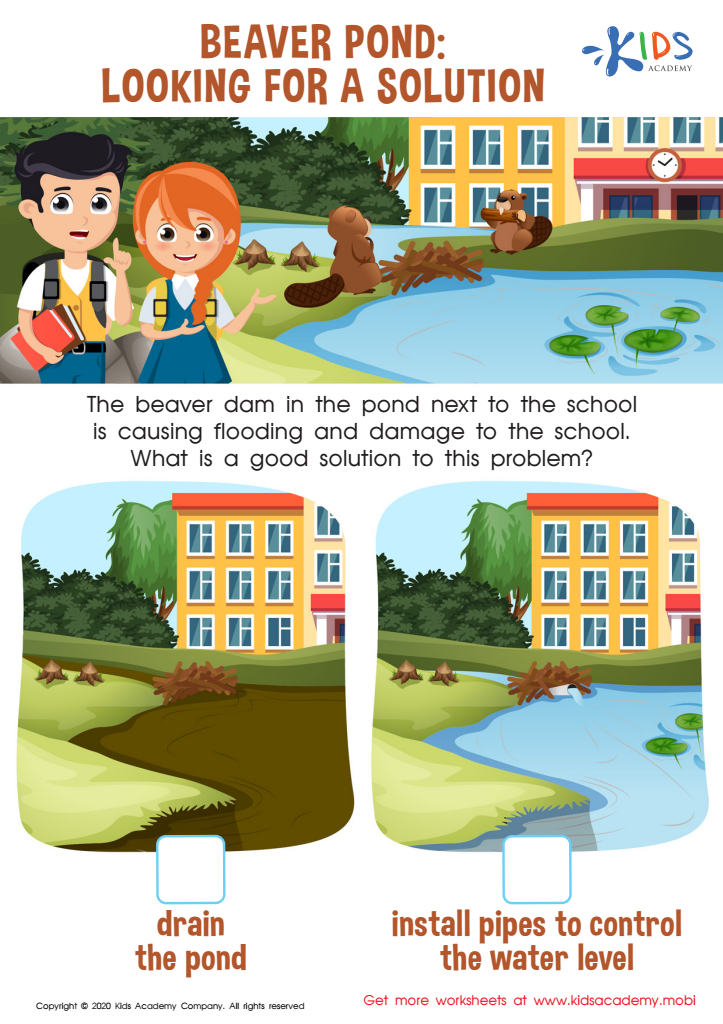
Beaver Pond: Looking for a Solution Worksheet

Developing Solution Worksheet








Easy Problem Solving for Ages 3-7 is crucial for young children’s development, as it lays a foundational skill set that enhances cognitive abilities and fosters critical thinking. During these formative years, children are naturally curious and tend to explore their environments. By introducing them to simple, structured problem-solving scenarios, parents and teachers can encourage this curiosity and guide it constructively.
Engaging children in easy problem-solving activities helps them develop essential cognitive skills, such as reasoning and decision-making. As they encounter challenges, they learn to analyze situations, weigh potential solutions, and evaluate consequences. This process promotes independence and resilience, teaching them that setbacks are part of learning.
Moreover, problem-solving enhances social skills. Young children often work in groups, allowing them to collaborate, negotiate, and communicate effectively. These interactions are vital for building self-esteem and confidence in their abilities.
From a practical perspective, fostering these skills early on can lead to academic success. Children who are adept at problem-solving are better equipped to tackle more complex subjects later in life.
In summary, prioritizing Easy Problem Solving equips children with crucial tools for learning, social interactions, and emotional growth, ensuring they are well-prepared for future challenges.