Counting skills Easy Worksheets for Ages 4-6
79 filtered results
-
From - To
Help your child master their counting skills with our Easy Worksheets for Ages 4-6! At Kids Academy, we offer engaging and educational activities designed to make learning numbers fun and effective. Our worksheets cover basic counting, number recognition, and sequencing, tailored perfectly for young learners. Each colorful sheet is created by experts to ensure a comprehensive and enjoyable educational experience. These printable worksheets are great for practice at home or in the classroom, and they help build a solid mathematical foundation. Join Kids Academy today and watch your child’s counting skills soar!

Christmas Tree Tracing Winter Words Worksheet
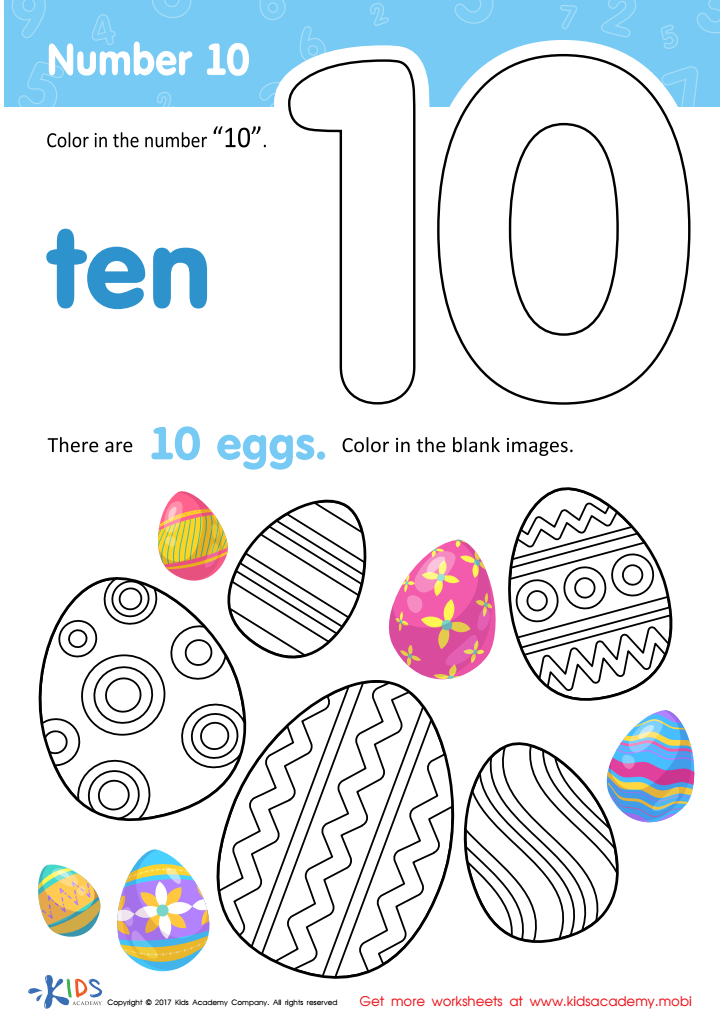
Number 10 Printable
 Assign to My Students
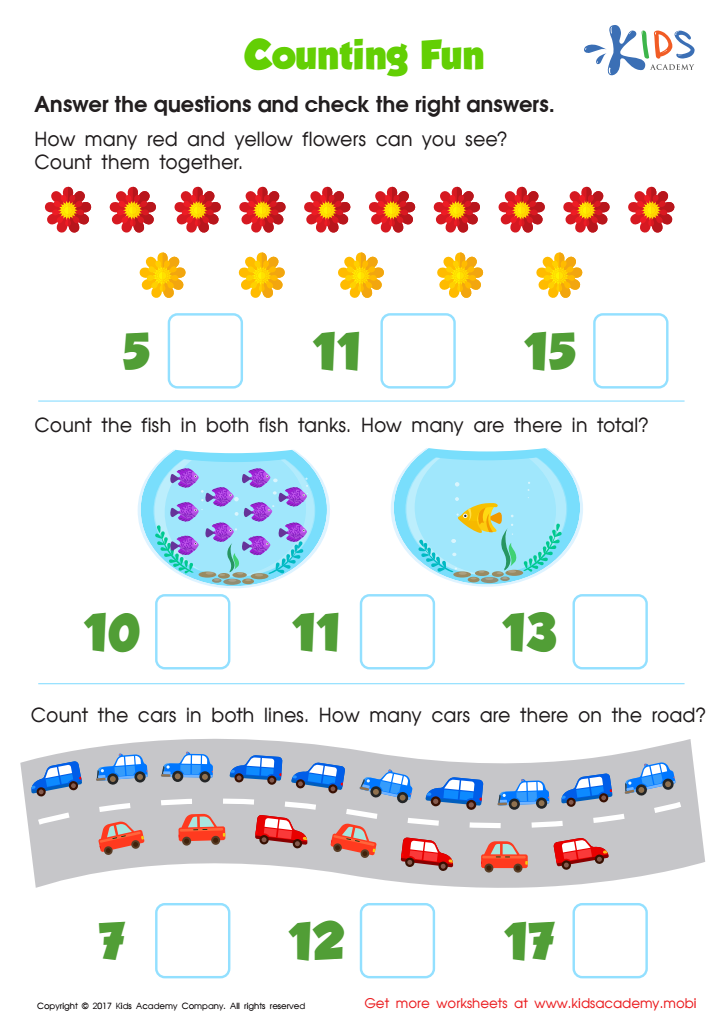
Counting Fun Worksheet
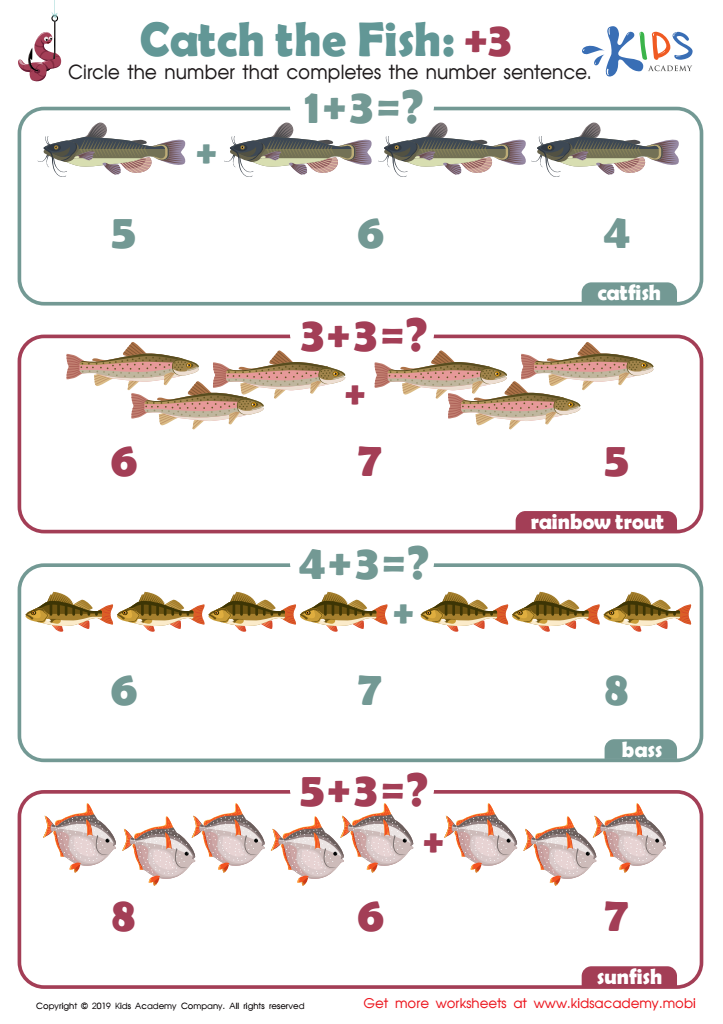
Catch the Fish: +3 Worksheet
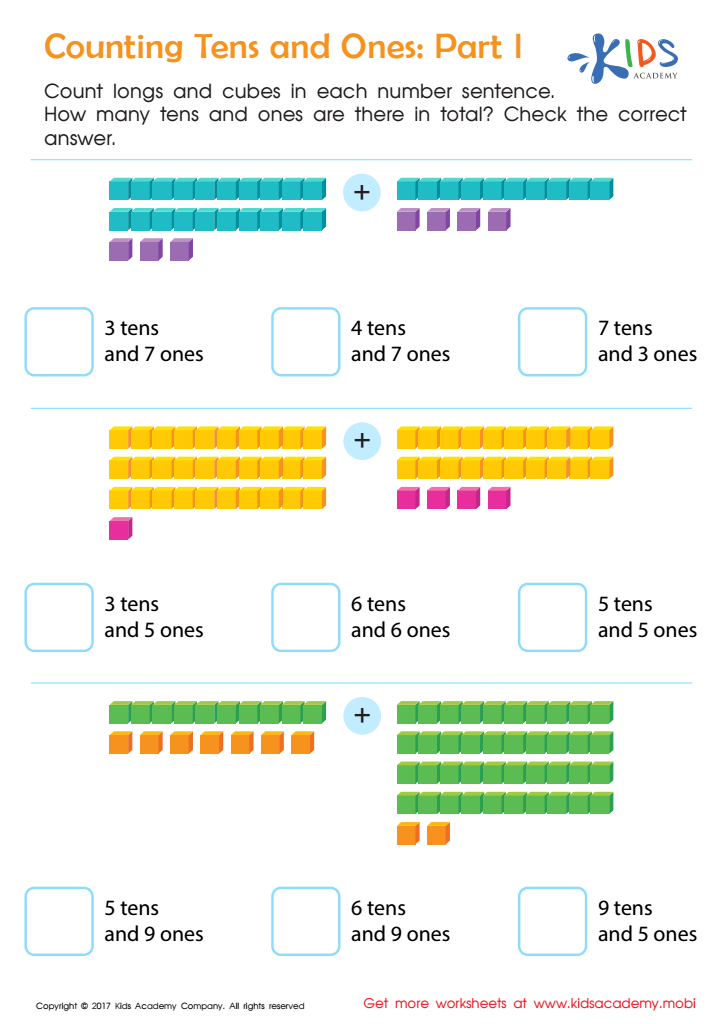
Counting Tens and Ones: Part 1 Worksheet
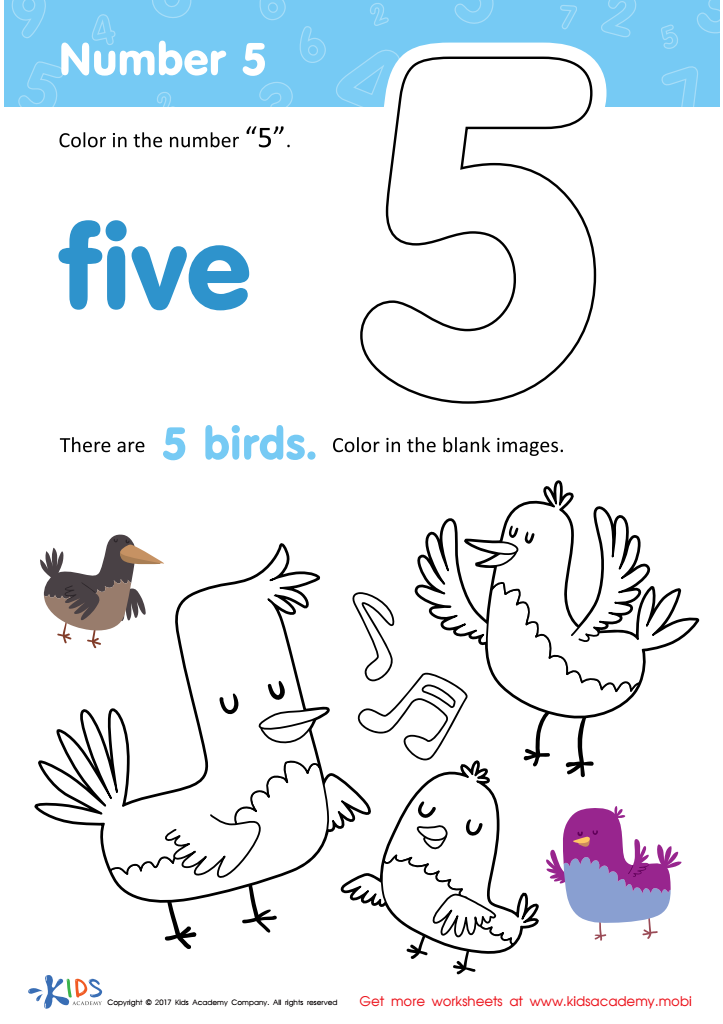
Number 5 Printable
Assign to My Students
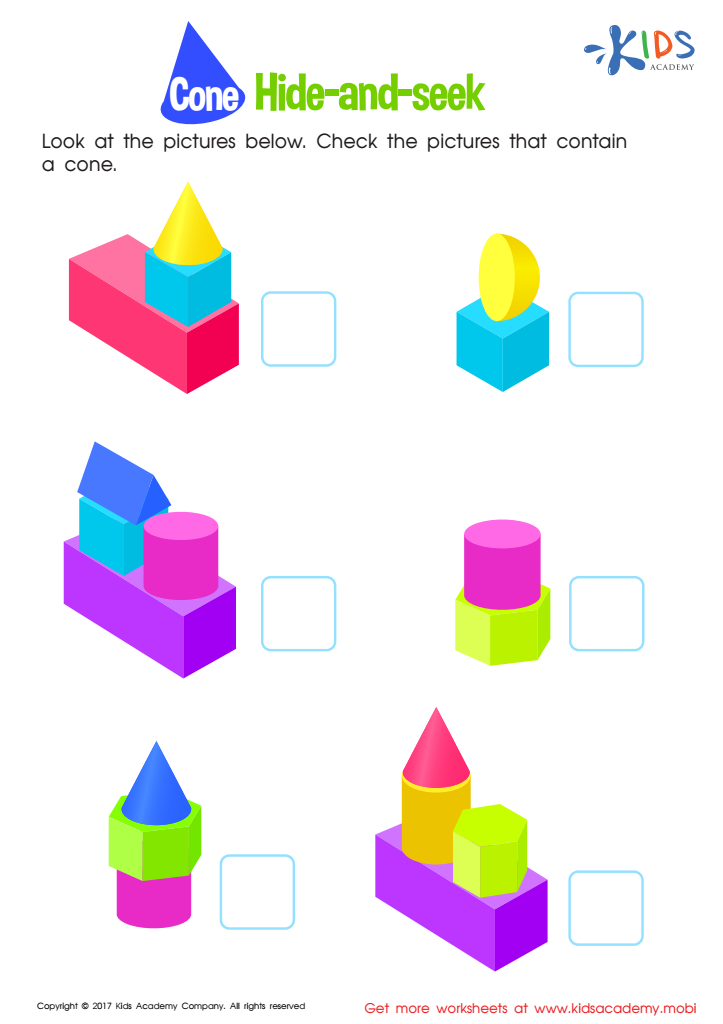
Cone Hide-and-Seek Worksheet
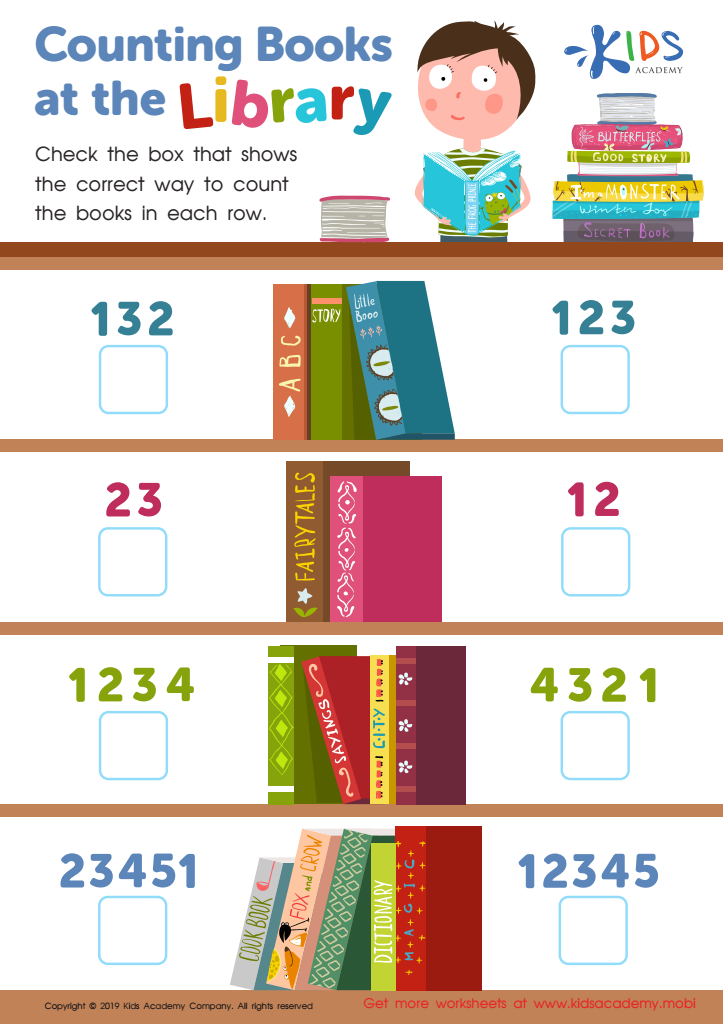
Counting Books at the Library Worksheet
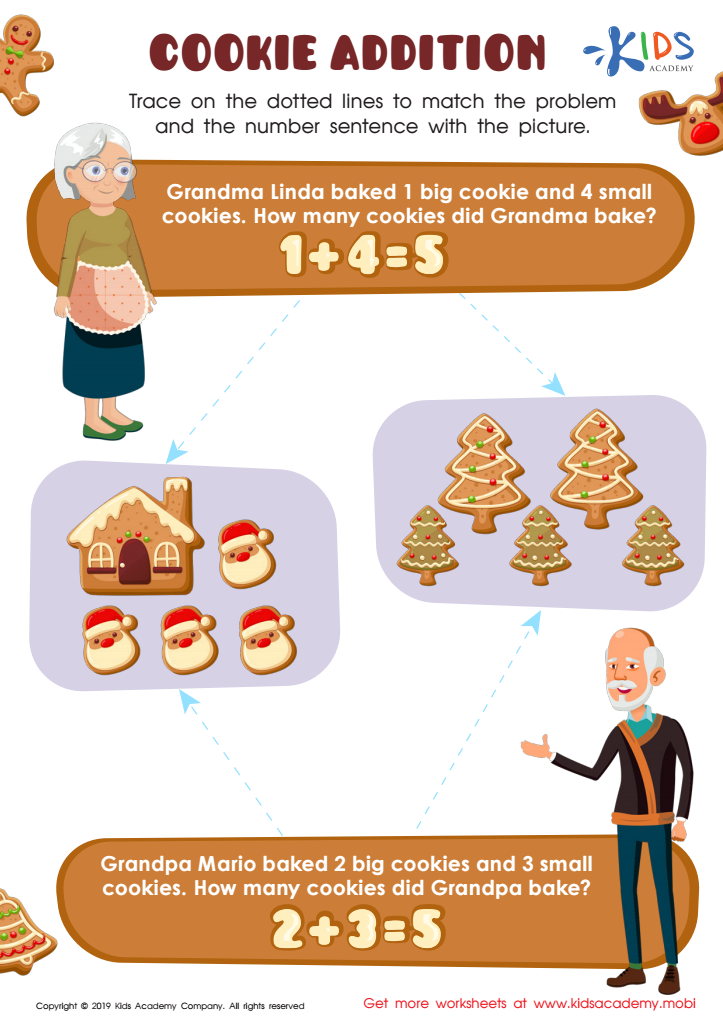
Cookie Addition Worksheet
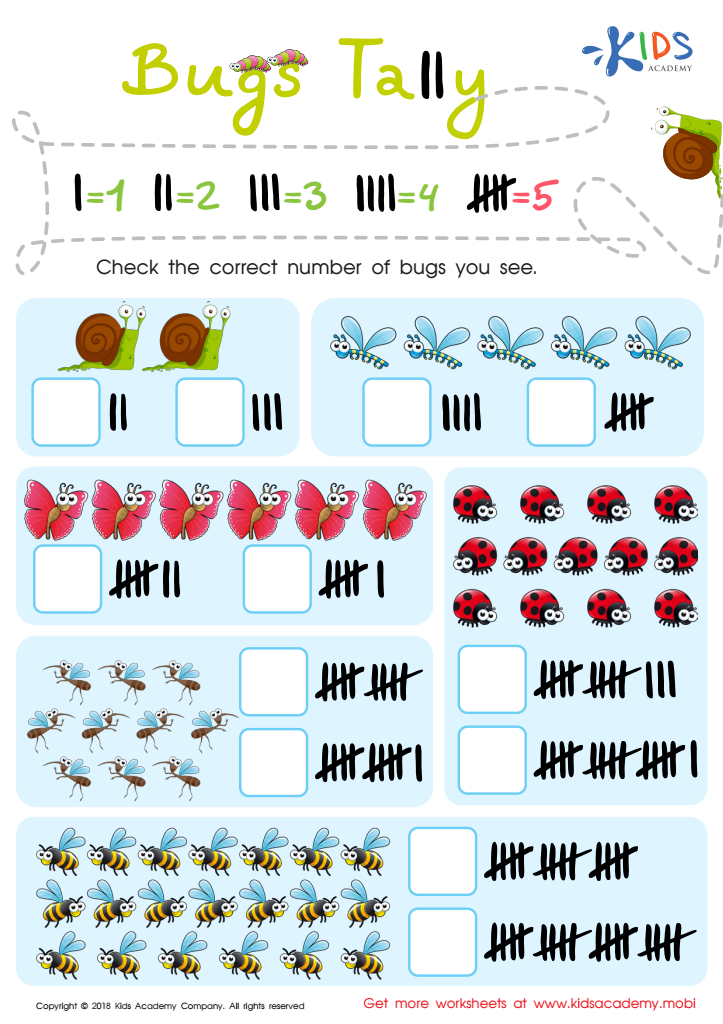
Bugs Tally Worksheet
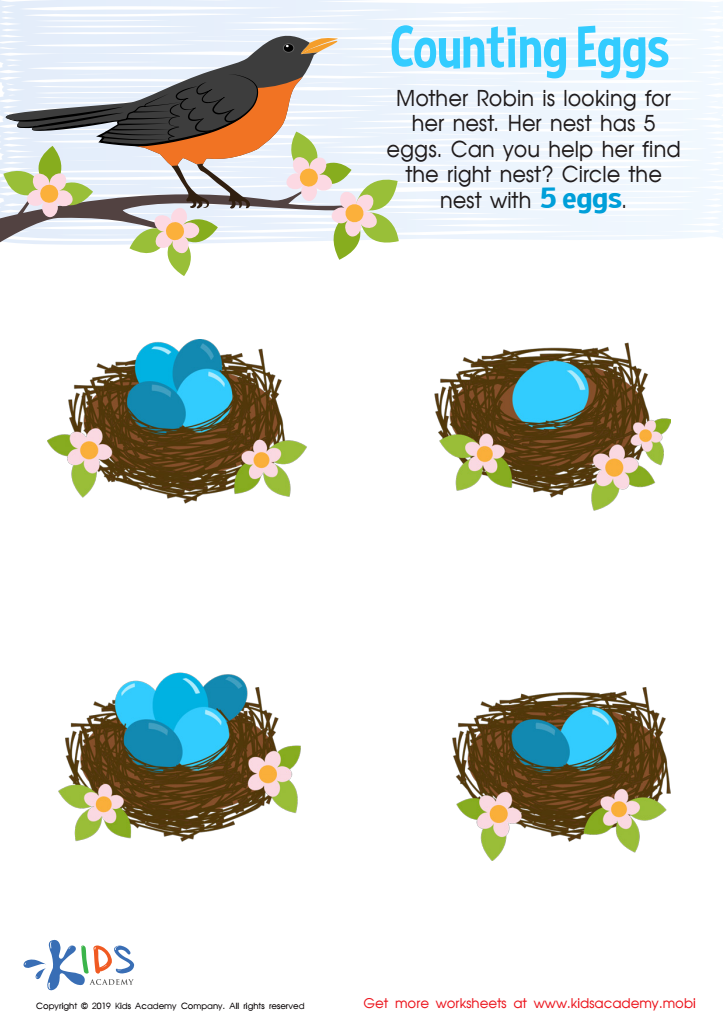
Counting Eggs Worksheet
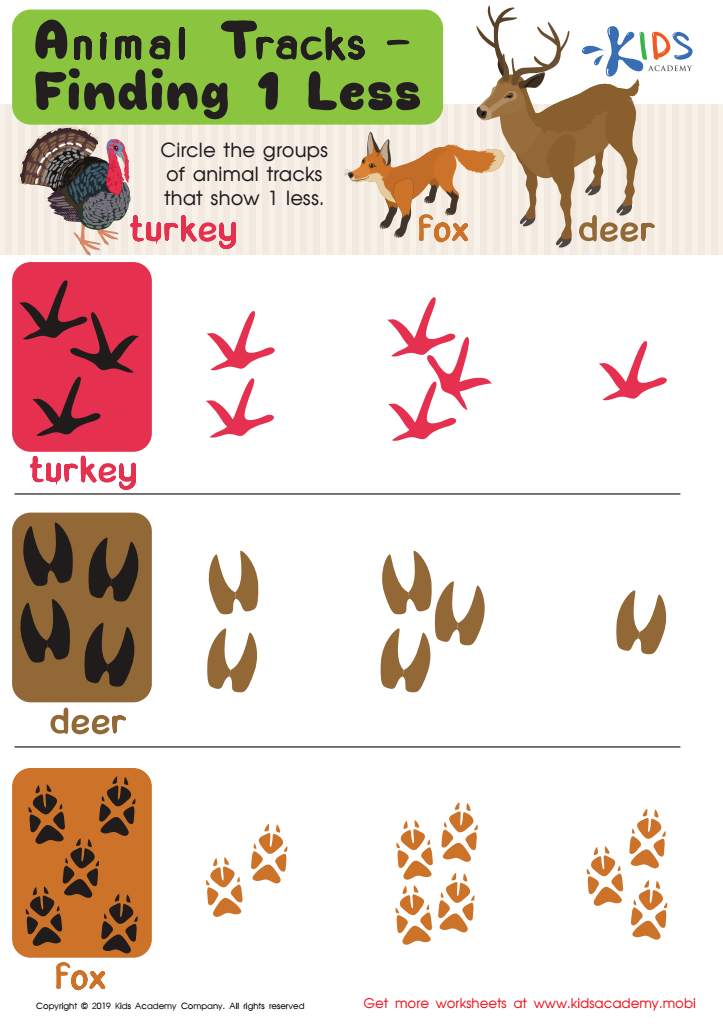
Animal Tracks: Find 1 Less Worksheet
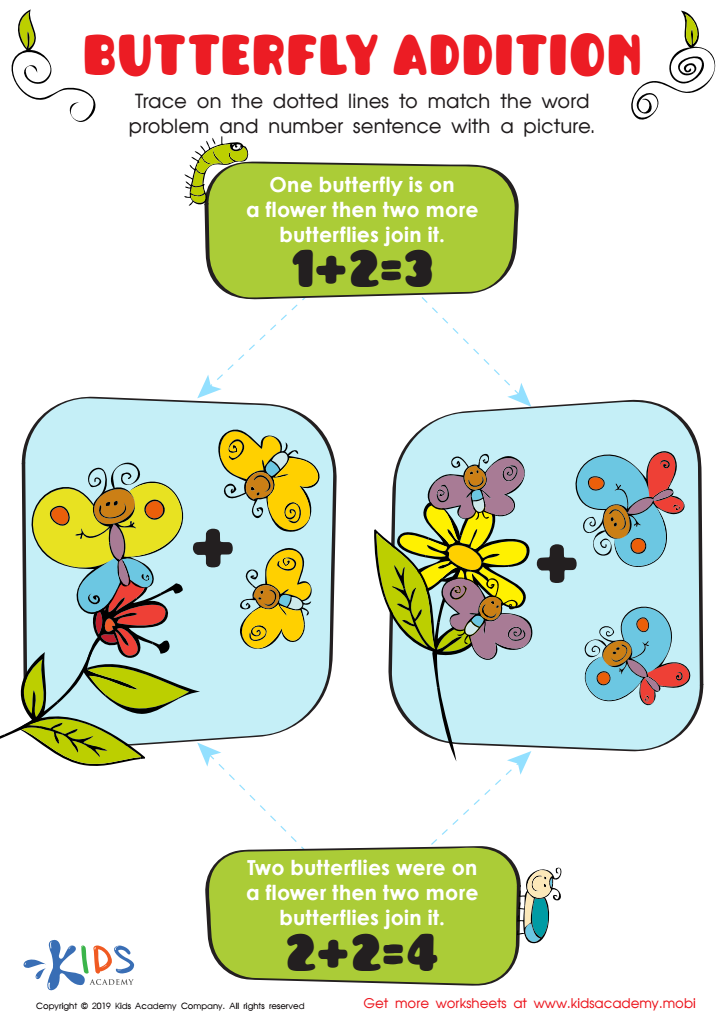
Butterfly Addition Worksheet

Find 9 Worksheet
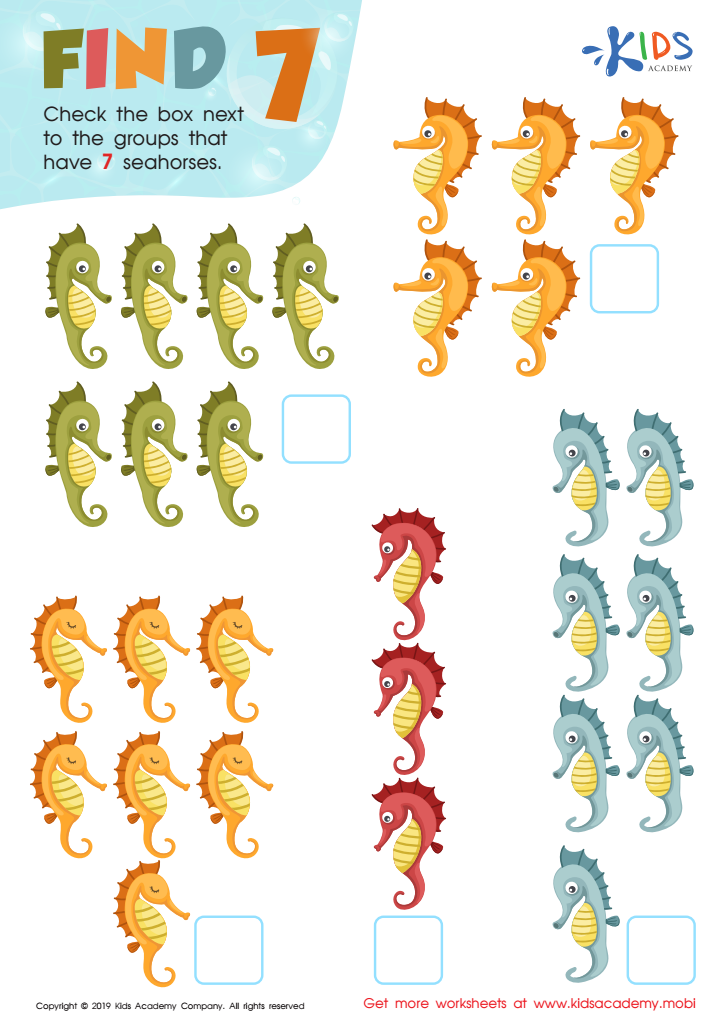
Find 7 Worksheet
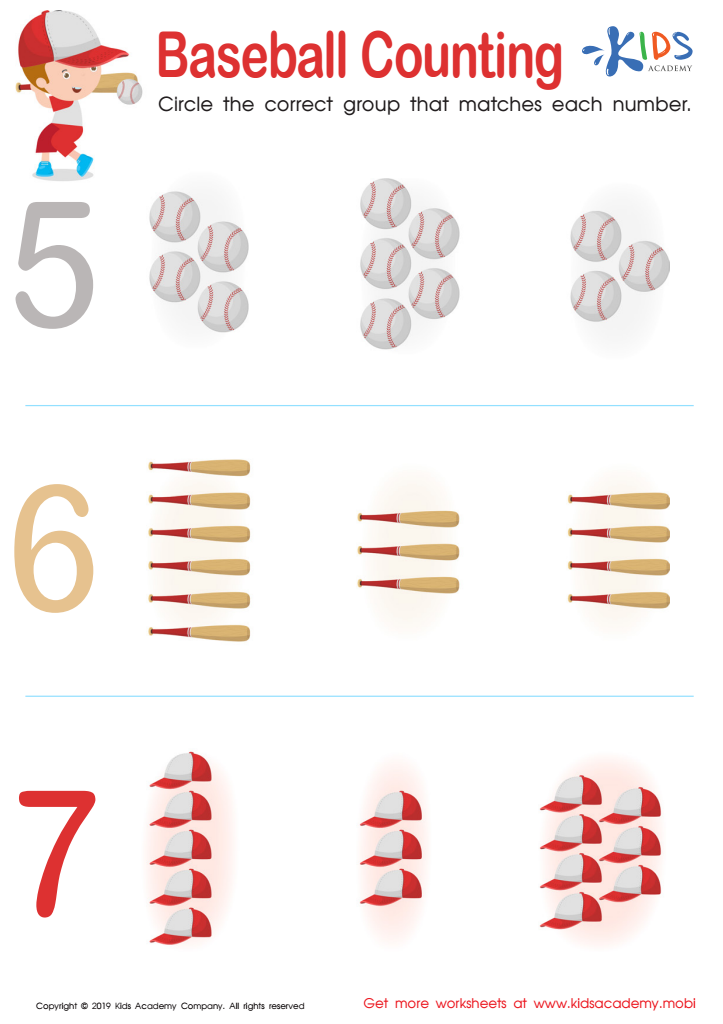
Baseball Counting Worksheet
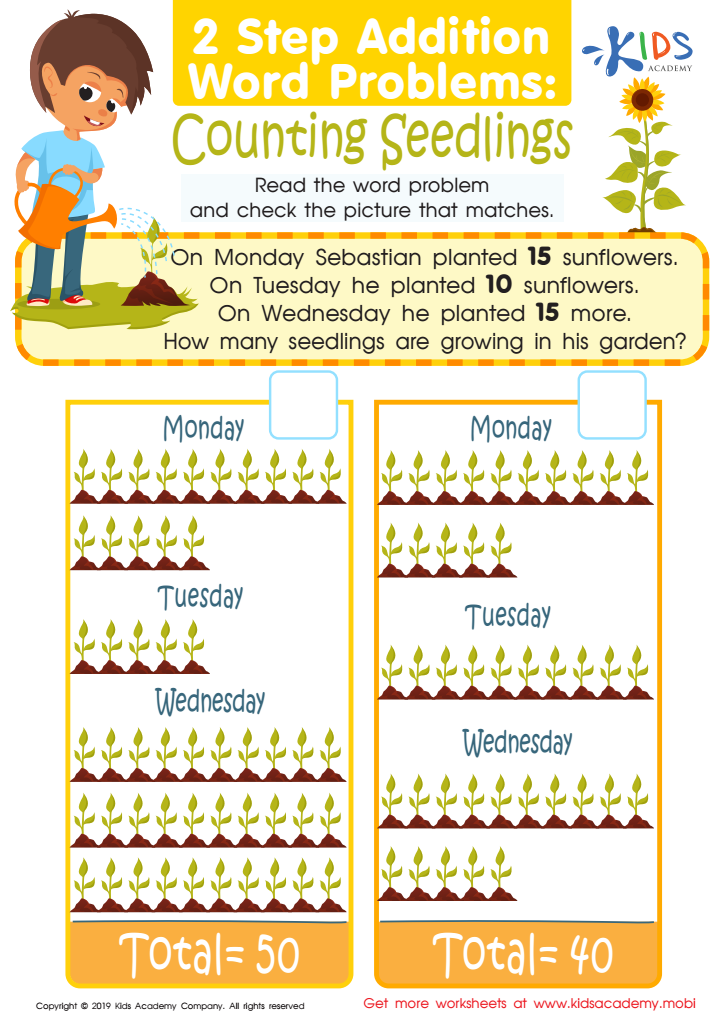
Counting Seedlings Worksheet
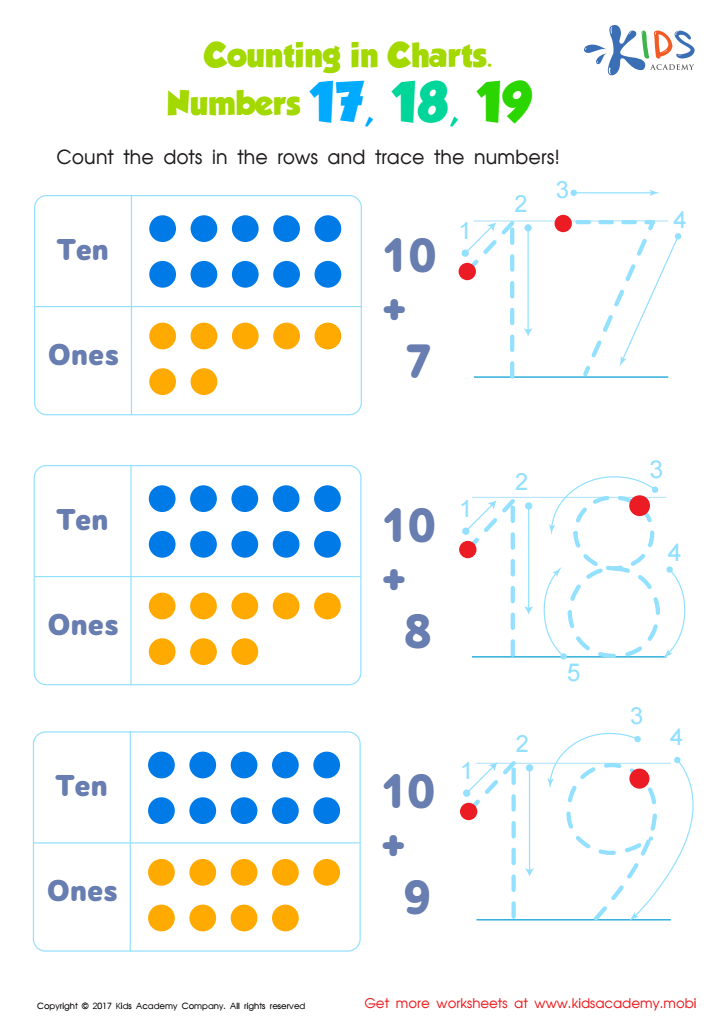
Kindergarten Number Tracing: Counting in Charts Worksheet
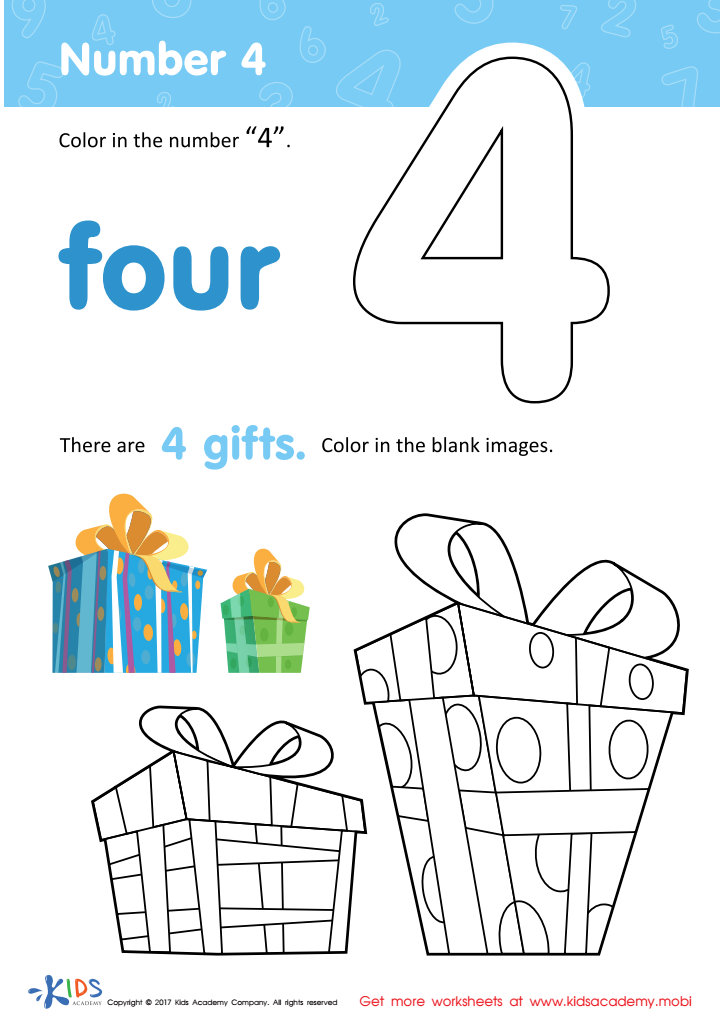
Number 4 Printable
Assign to My Students
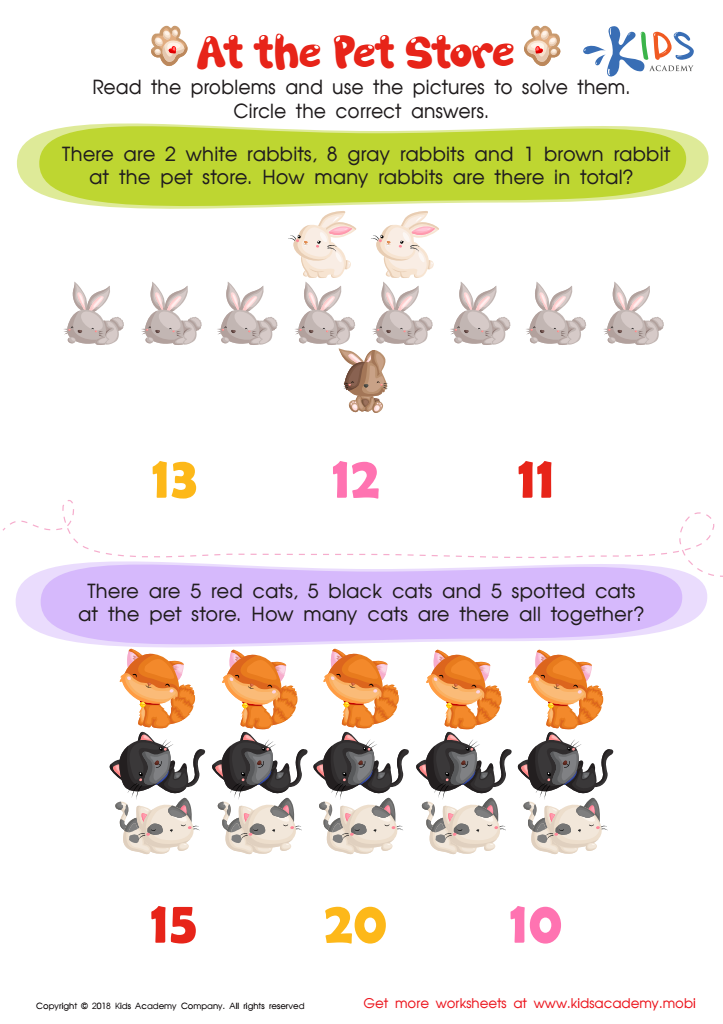
At the Pet Store Word Problems Worksheet
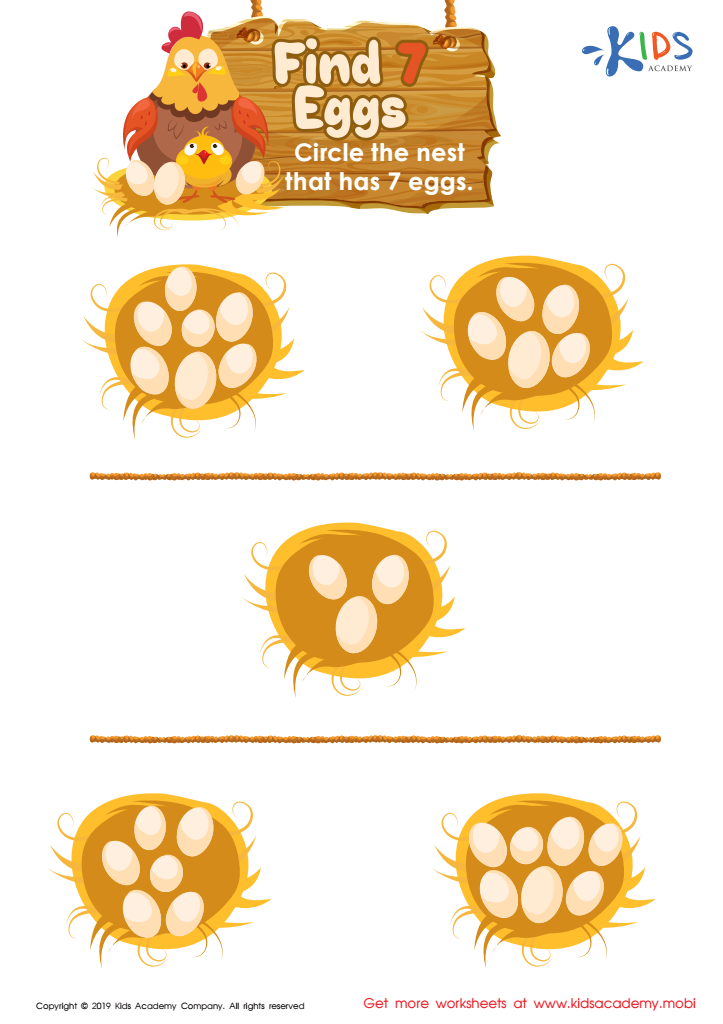
Find 7 Eggs Worksheet
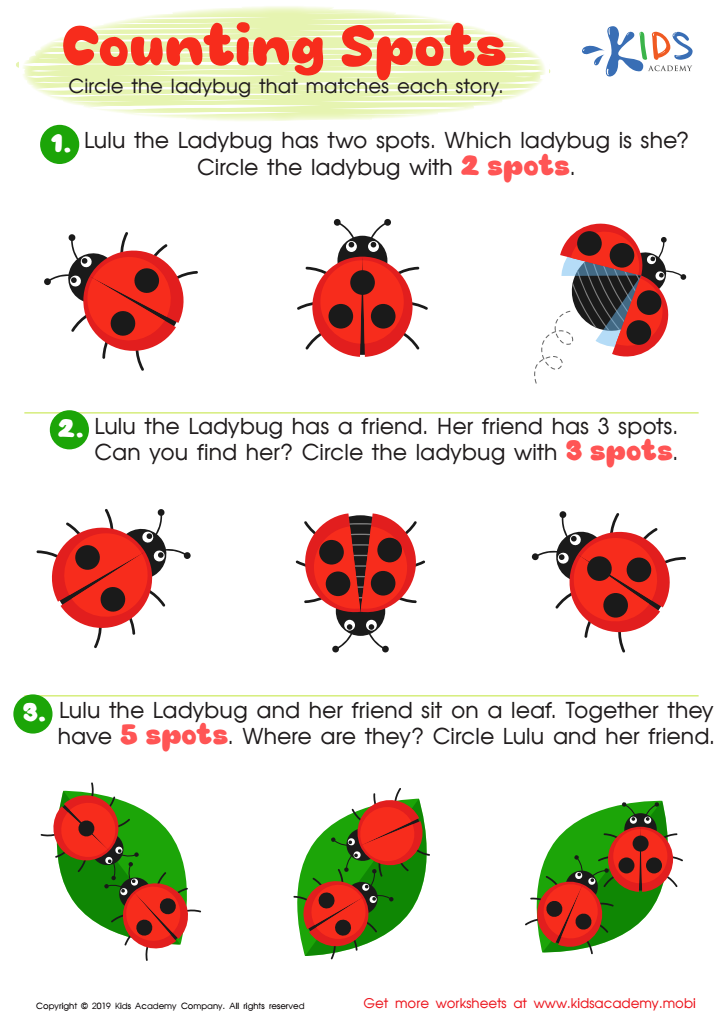
Counting Spots Worksheet
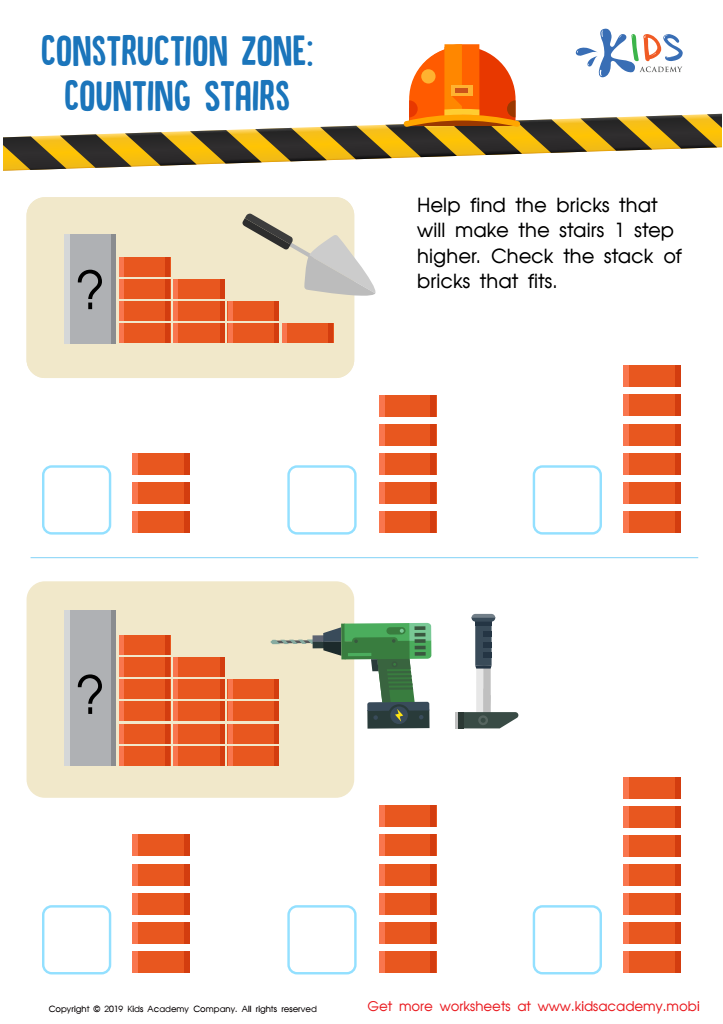
Construction Zone: Counting Stairs Worksheet
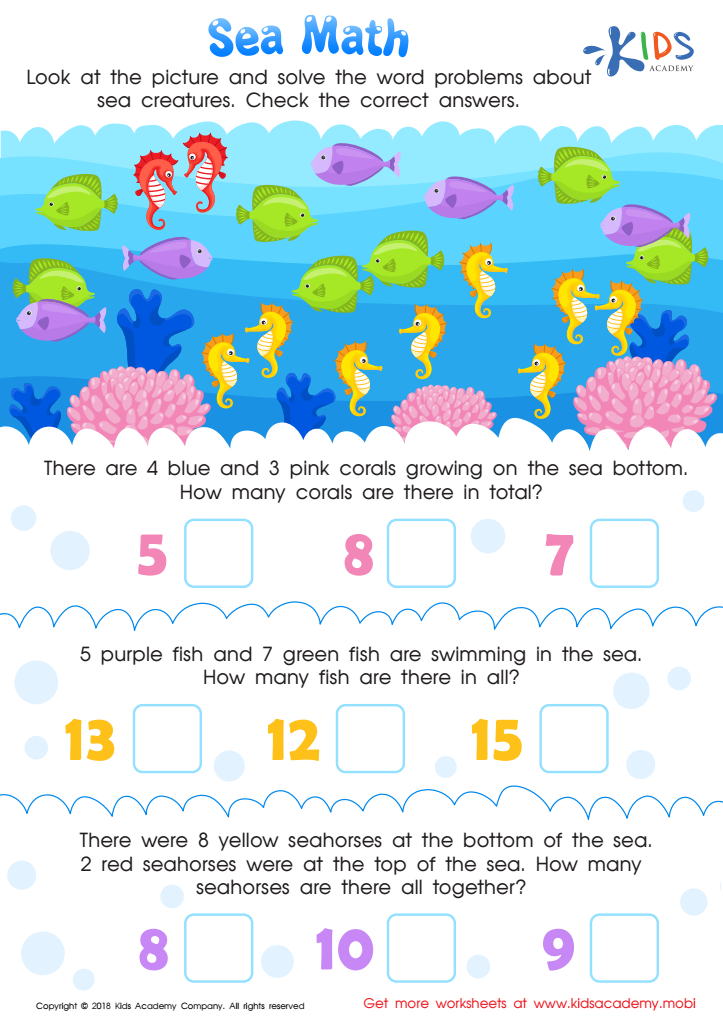
Sea Math Worksheet


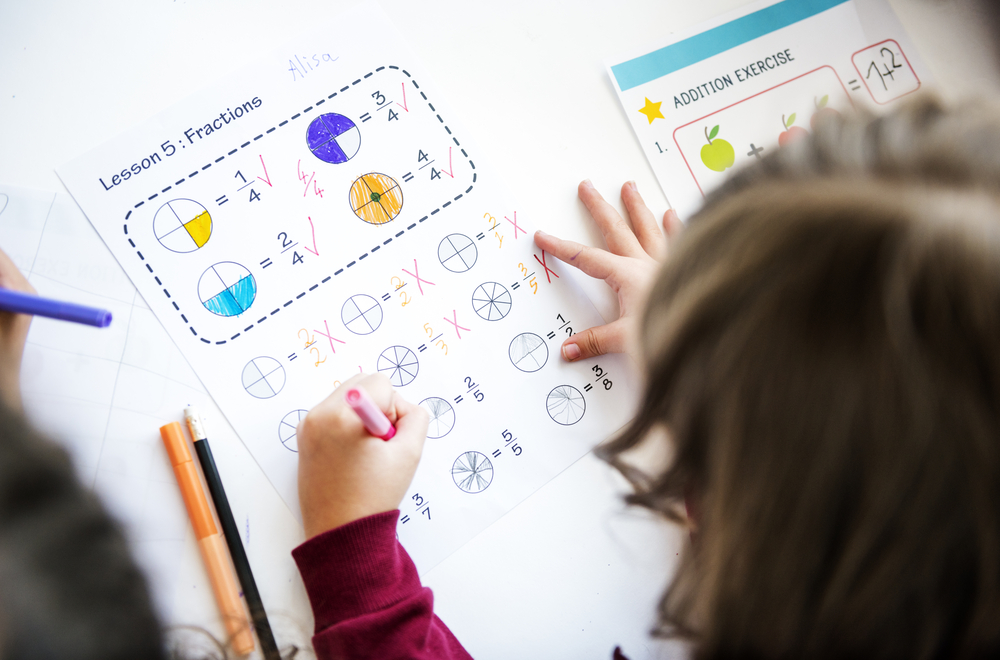





Counting skills are a critical foundation for young children's mathematical development, and parents and teachers should prioritize nurturing these abilities in ages 4-6. During this formative period, children are highly receptive to learning and absorbing new concepts. Counting is not just about reciting numbers; it involves understanding one-to-one correspondence, number magnitude, and the sequential order of numbers. Mastery of these concepts builds the groundwork for more advanced mathematical skills, such as addition, subtraction, and problem-solving.
Developing counting skills in early years promotes cognitive development, enhancing a child's memory, attention, and reasoning abilities. It also encourages the development of fine motor skills when manipulative tools like counting blocks are used. Socially, engaging in counting activities with peers or adults fosters collaboration, turn-taking, and communication skills.
Moreover, counting is a practical life skill. It enables children to understand daily routines (like distributing snacks or measuring ingredients) and navigate their environment more independently. Integrating counting into fun, everyday activities can make learning seamless and enjoyable, further reinforcing these skills outside a formal learning setting.
In essence, strong counting skills are a cornerstone of a child's educational journey, contributing significantly to their overall intellectual and social growth. Prioritizing this skill in early childhood sets a positive trajectory for lifelong learning.








