Vocabulary expansion Easy Reading Comprehension Worksheets for Ages 4-9
7 filtered results
Difficulty Level
Grade
Age
-
From - To
Subject
Activity
Standards
Enhance your child's reading skills with our Vocabulary Expansion Easy Reading Comprehension Worksheets designed for ages 4-9! These engaging worksheets provide young learners with the tools they need to grow their vocabulary and improve their understanding of texts. Each activity is tailored to promote critical thinking and comprehension, making learning both fun and effective. Children will encounter age-appropriate words in various contexts, helping them to connect meanings and use new vocabulary in everyday conversations. Our thoughtfully crafted worksheets foster a love for reading while building essential skills that lay the foundation for future academic success. Start expanding your child's vocabulary today!
Favorites
With answer key
Interactive
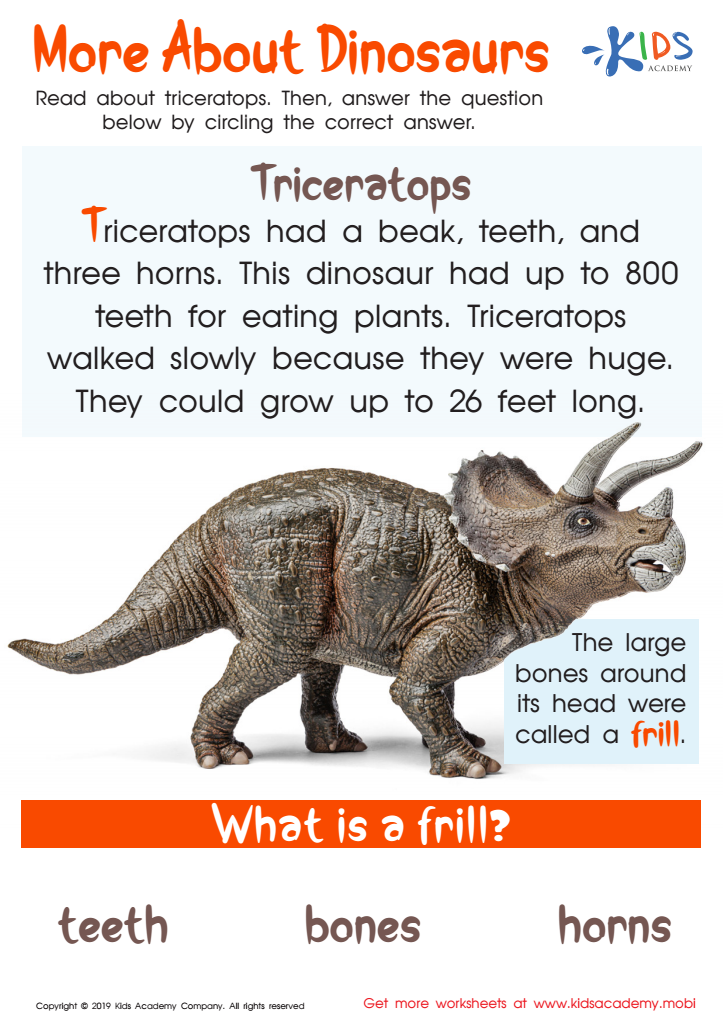
More About Dinosaurs Worksheet
Let your little archaeologist have a blast with this Kids Academy worksheet! They’ll explore the past and learn more about the triceratops while practicing their informational text skills. Be sure to highlight the textbox and show them how the frill is explained. Finish the worksheet by answering the question!
 Assign to My Students
More About Dinosaurs Worksheet
Worksheet
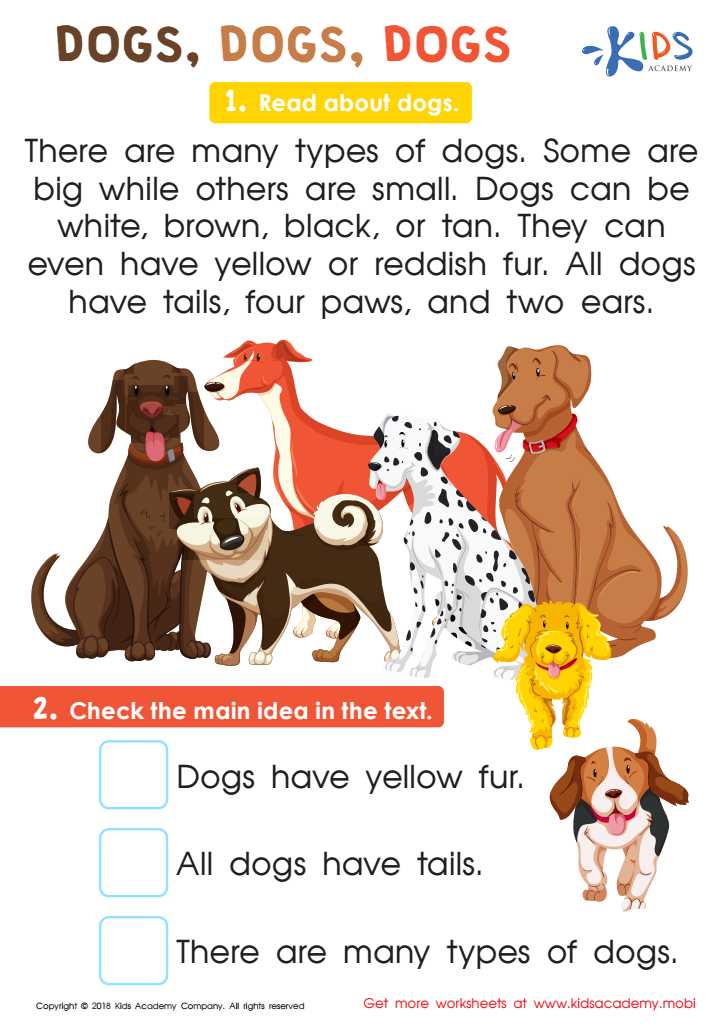
Dogs, Dogs Worksheet
Help your child understand main ideas with this fun doggy worksheet from Kids Academy! Have them read the passage and then discuss the main idea. After that, have them read the answer choices and pick the right one. This will help your kiddo hone their critical reading comprehension skills!
Dogs, Dogs Worksheet
Worksheet
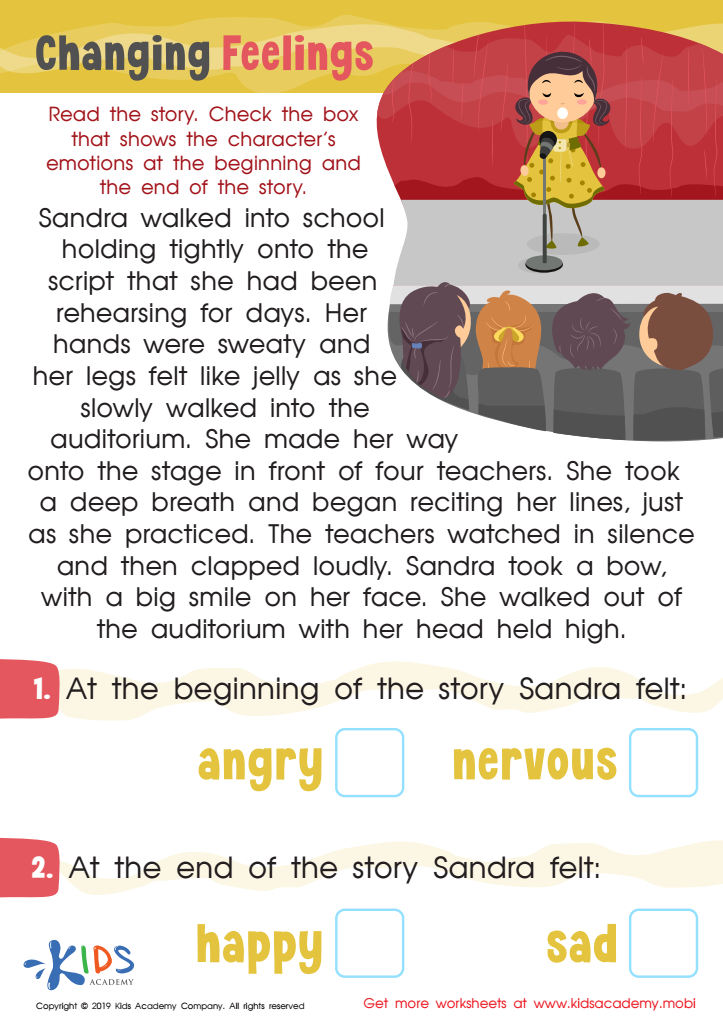
Changing Feelings Worksheet
Help your kids practice reading skills with this exercise. Ask them to read the short passage, then check the boxes showing the character's emotions at the start and end. This will help them improve their reading and understanding.
Changing Feelings Worksheet
Worksheet
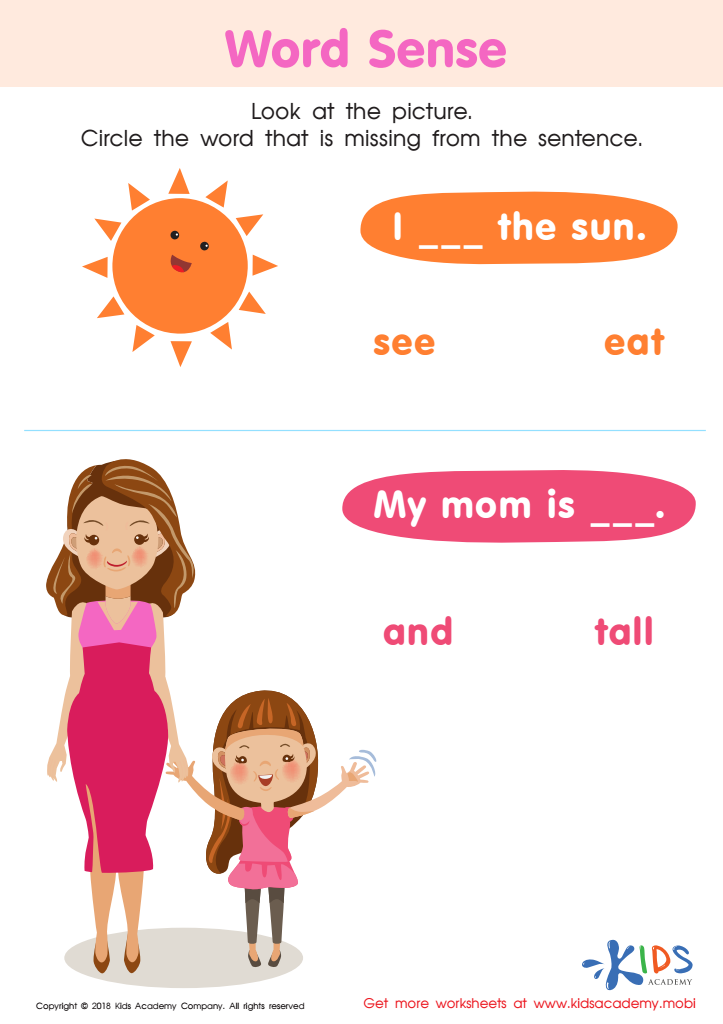
Word Sense Worksheet
Expose your child to common high-frequency words with this free and colorful worksheet. It will help them use picture clues to choose the correct word for each phrase. The more they're exposed, the stronger their fluency will become when reading. This process is an important part of the emerging reader's learning-to-read journey.
Word Sense Worksheet
Worksheet
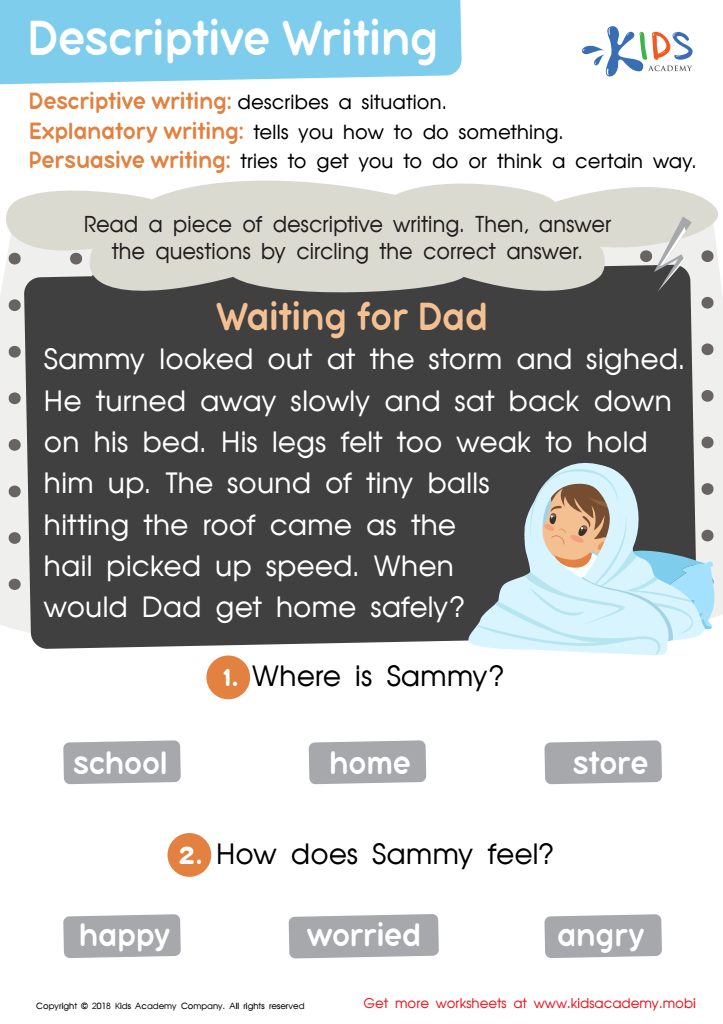
Descriptive Writing Worksheet: Part 2
In this worksheet, your kids will explore writing styles like descriptive, explanatory and persuasive. Read them the descriptive text, then have them answer the questions. Writing is an art – it's a way to express emotions, tell stories and share information.
Descriptive Writing Worksheet: Part 2
Worksheet
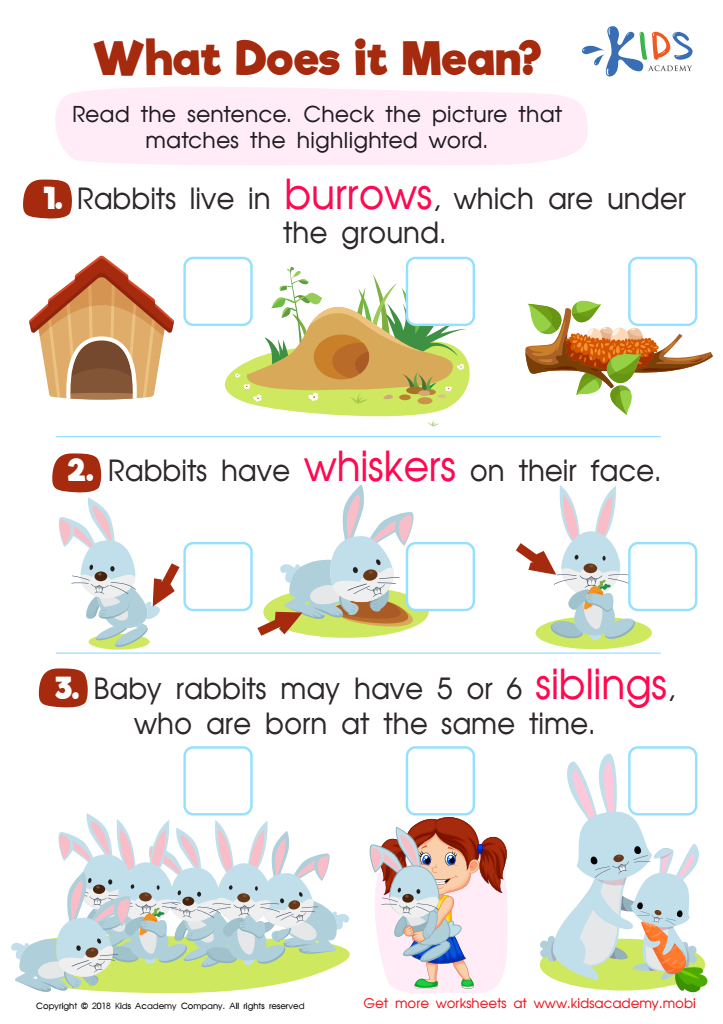
What Does It Mean? Worksheet
Teach your child to use context clues with this engaging Kids Academy worksheet. Read the sentences and find the pink-highlighted word. Use the other words in the sentence to figure out the meaning, then check the box next to the picture that represents it.
What Does It Mean? Worksheet
Worksheet
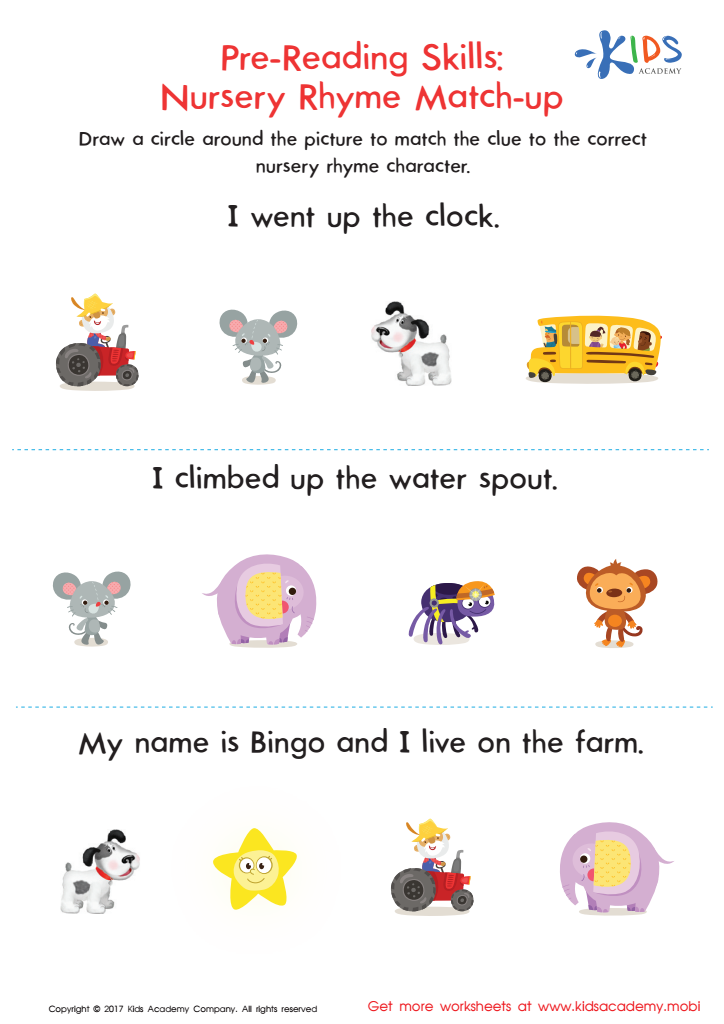
Nursery Rhyme Match–Up Worksheet
This worksheet helps kids build pre-reading skills using stories they know and love! By connecting with prior knowledge, kids can develop ideas about characters and set the stage for reading strategies.
Nursery Rhyme Match–Up Worksheet
Worksheet
Join Kids Academy for Free
Who is primarily going to use this learning content?







Parents and teachers should prioritize vocabulary expansion and easy reading comprehension for children aged 4-9 because these skills lay the foundation for lifelong learning. At this age, children are like sponges, eagerly absorbing language and concepts. A broad vocabulary helps kids express themselves clearly and understand the world around them. When students can read and comprehend texts competently, they are more likely to engage in learning activities, boost their confidence, and develop a love for reading.
Expanding vocabulary not only enhances communication but also supports critical thinking and problem-solving skills. When children encounter new words, they learn to infer meaning through context, which fosters analytical skills essential for academic success. Furthermore, a strong vocabulary improves overall literacy, allowing students to tackle more complex subjects in the future.
Lastly, focusing on vocabulary and comprehension creates a solid base for effective communication, essential for success in social situations and later academic settings. By emphasizing these skills early on, parents and teachers can help cultivate curious, knowledgeable, and confident learners who are equipped to navigate their educational journey and beyond. Therefore, investing time in these areas is crucial for developing well-rounded, capable individuals.