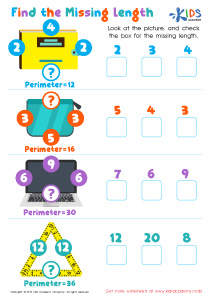
Subtraction practice Easy Subtraction Worksheets for 4-Year-Olds
19 filtered results
-
From - To
Welcome to our Subtraction Practice page, designed specifically for 4-year-olds! Our easy subtraction worksheets introduce young learners to the foundational concept of subtraction through engaging and enjoyable activities. Each worksheet is crafted with colorful illustrations and age-appropriate questions that encourage children to explore numbers while developing essential math skills. Perfect for parents, teachers, or caregivers looking to reinforce subtraction concepts at home or in the classroom, these resources promote a fun and interactive learning experience. Start your child’s journey in math with our simple, effective worksheets and watch their confidence grow as they practice subtraction with ease!
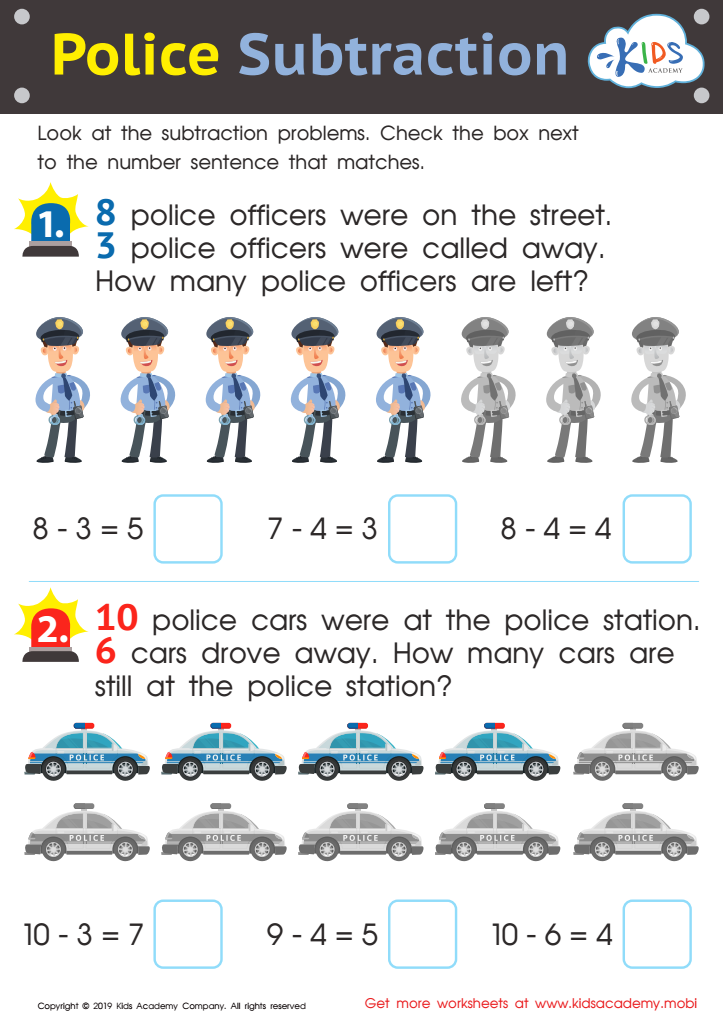
Police Subtraction Worksheet
 Assign to My Students
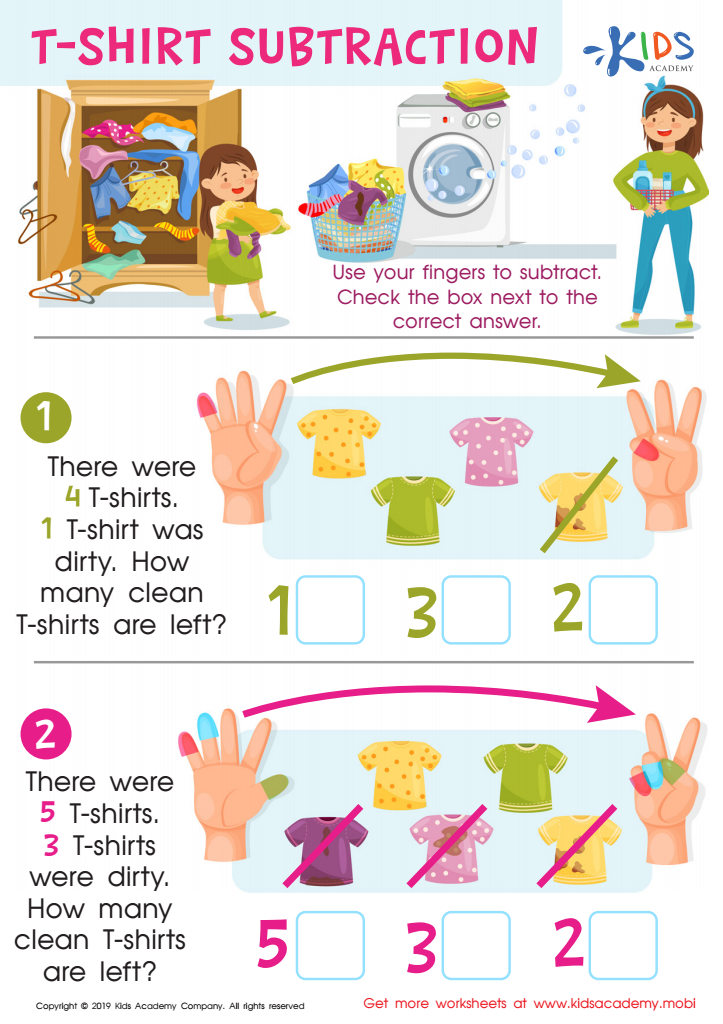
T-shirt Subtraction Worksheet
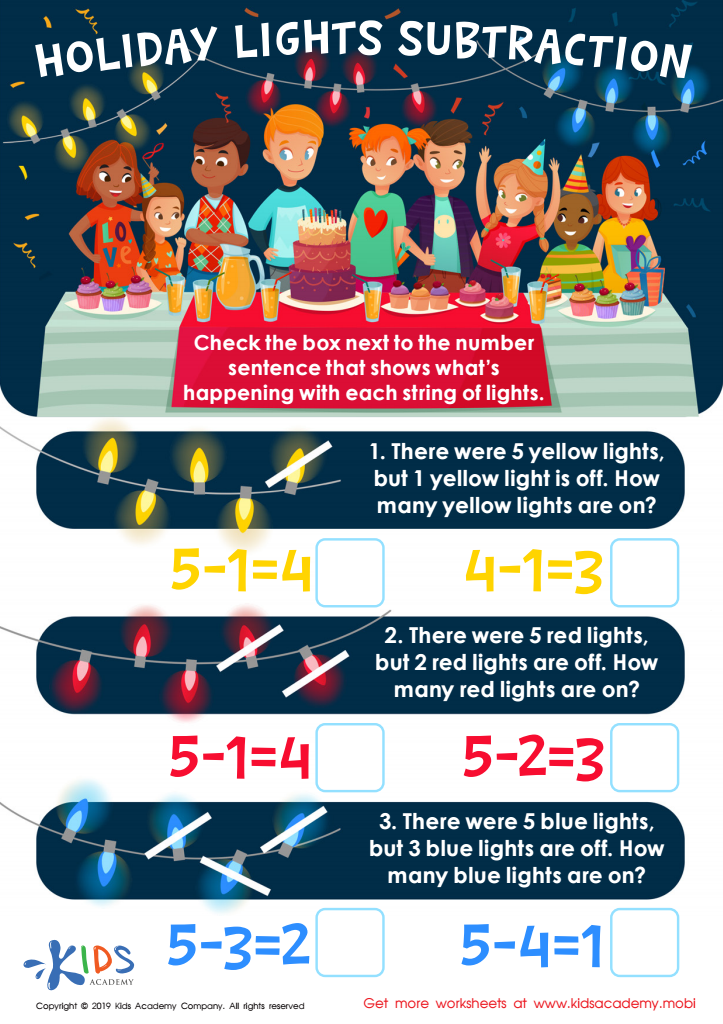
Holiday Lights Subtraction Worksheet
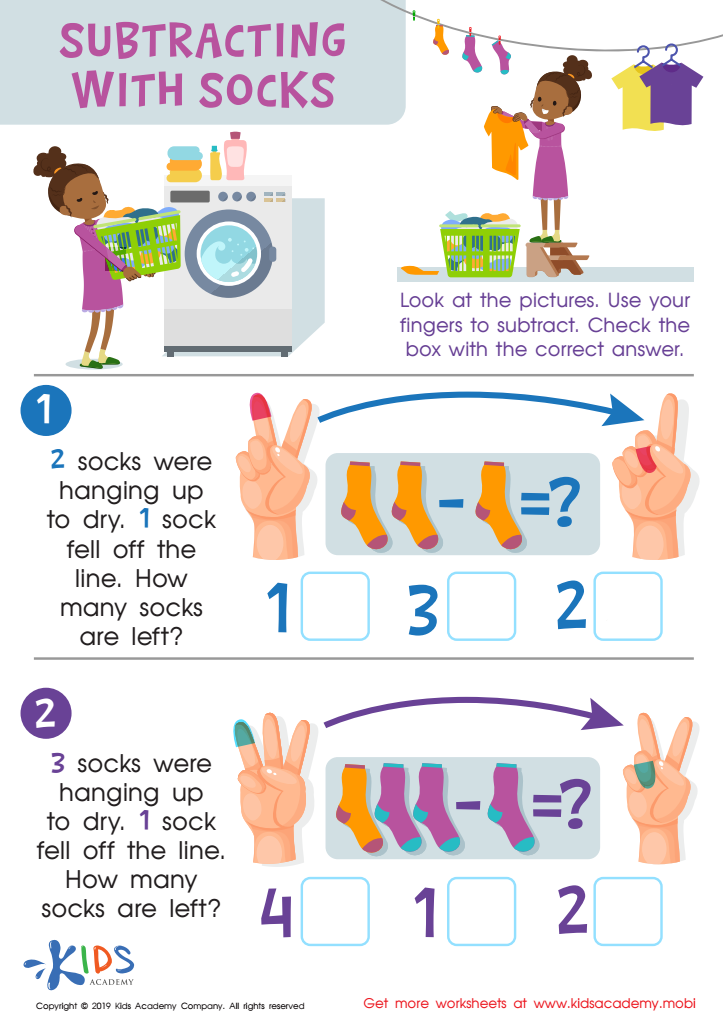
Subtracting Socks Worksheet
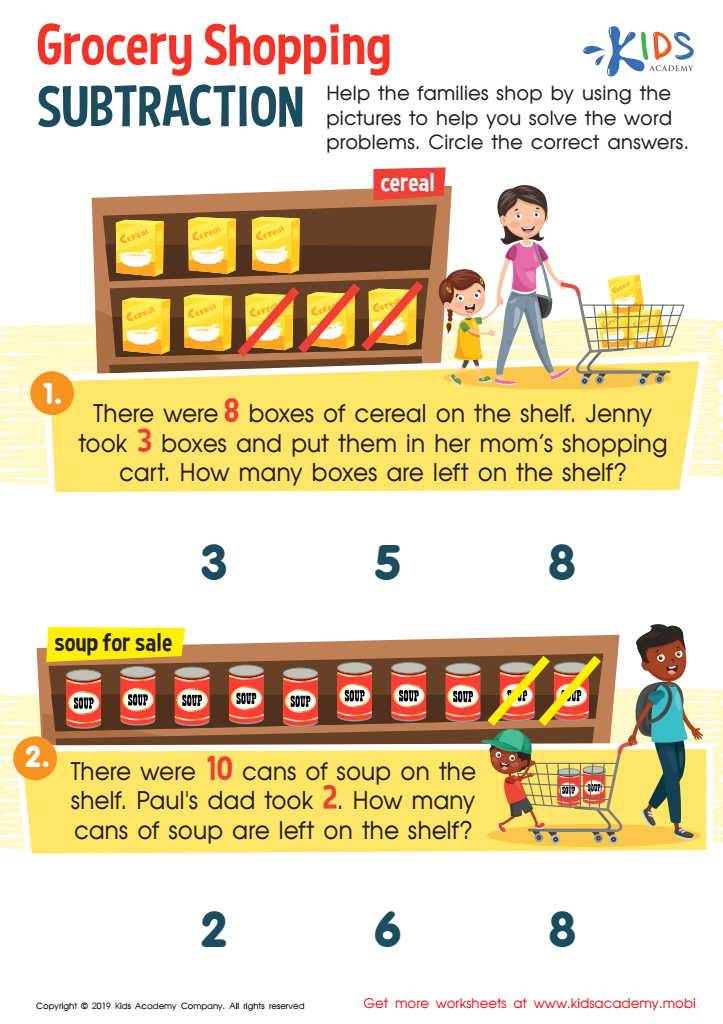
Grocery Shopping Subtraction Worksheet
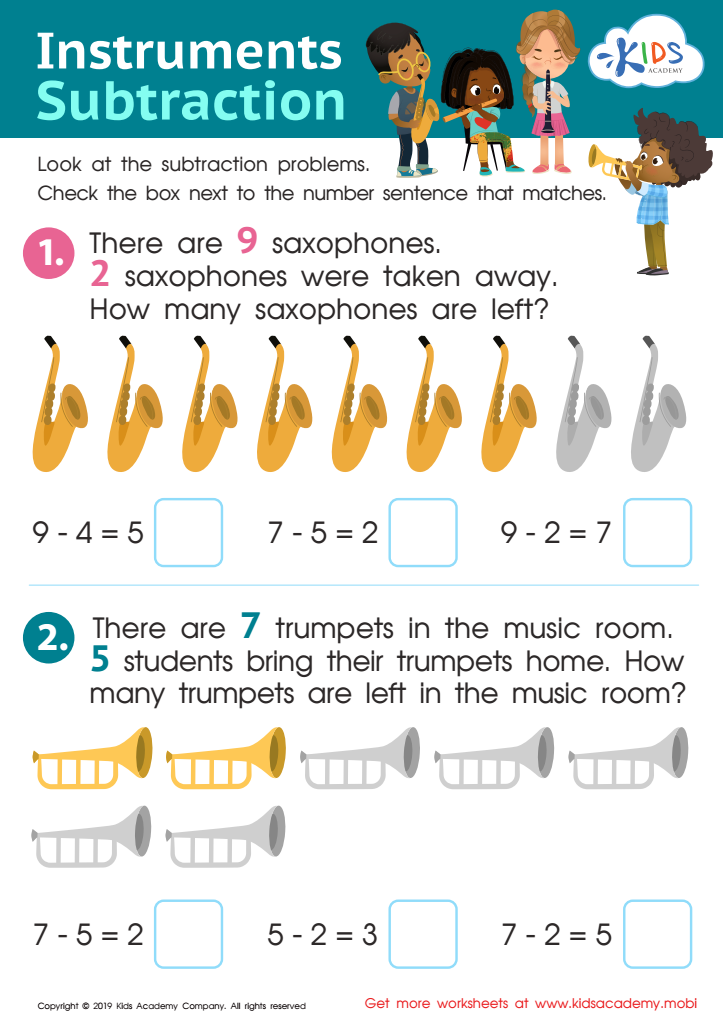
Instrument Subtraction Worksheet
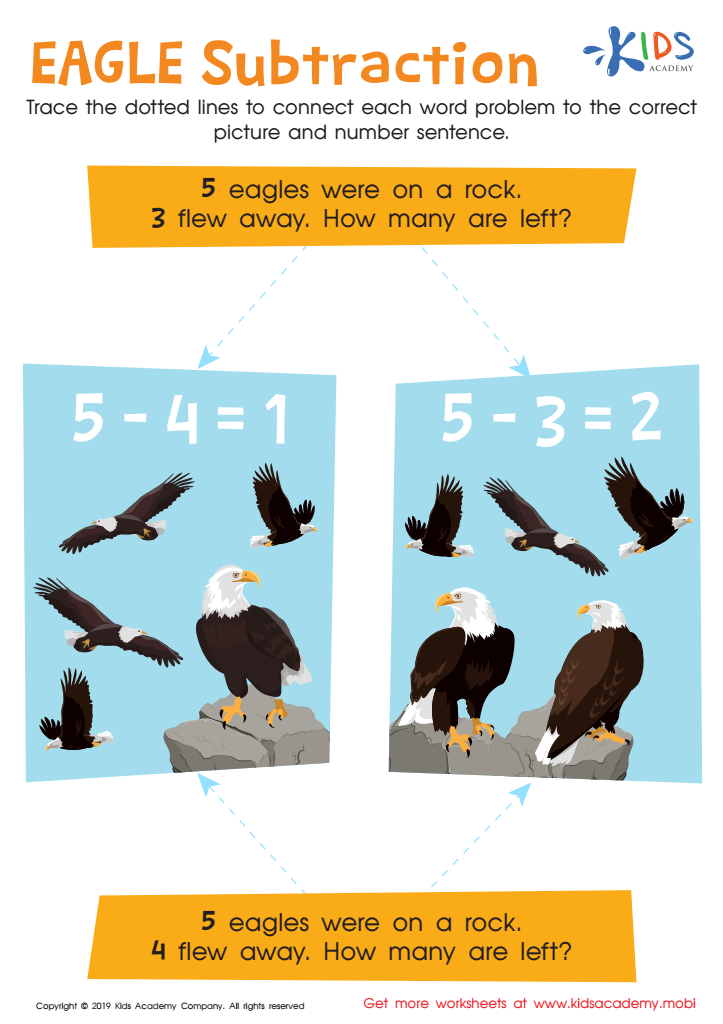
Eagle Subtraction Worksheet
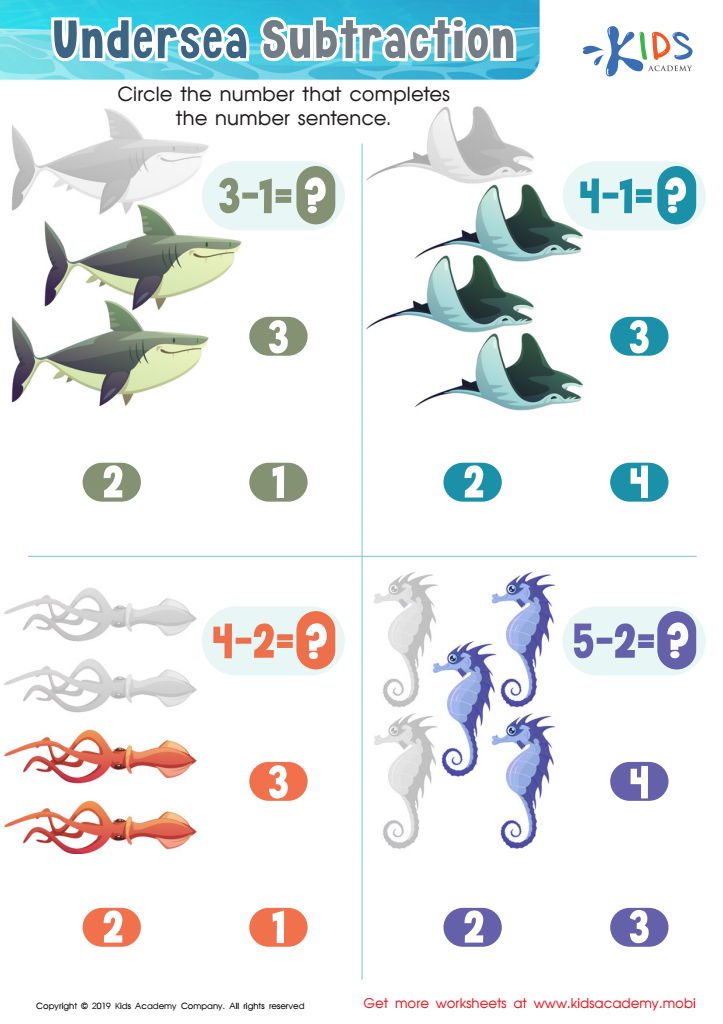
Undersea Subtraction Worksheet
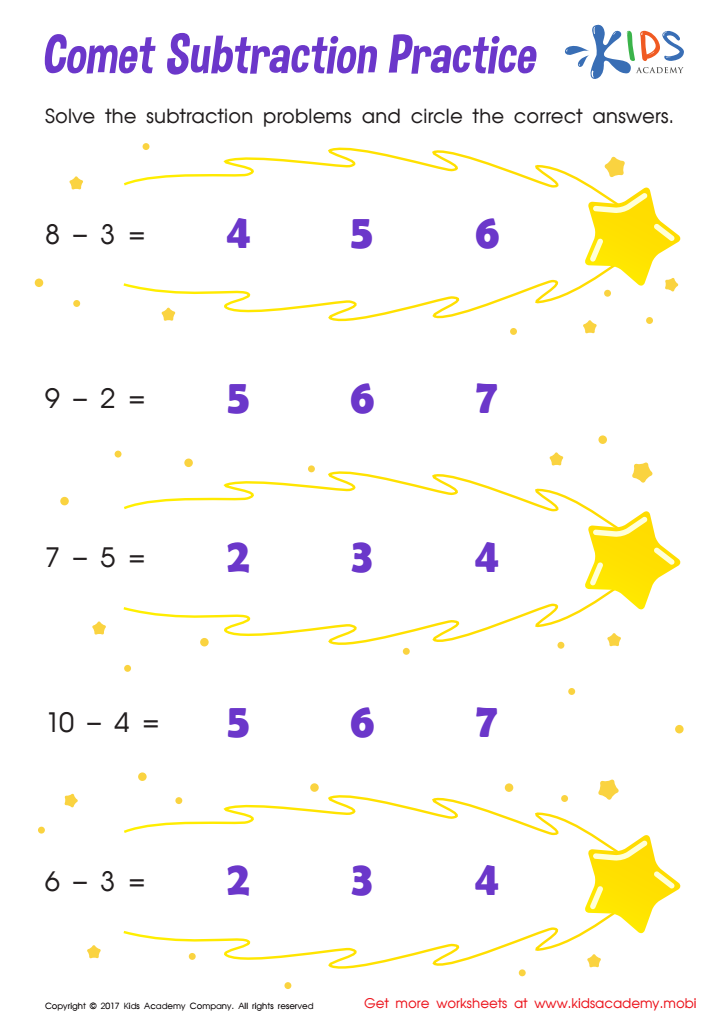
Comet Subtraction Practice Substraction Worksheet
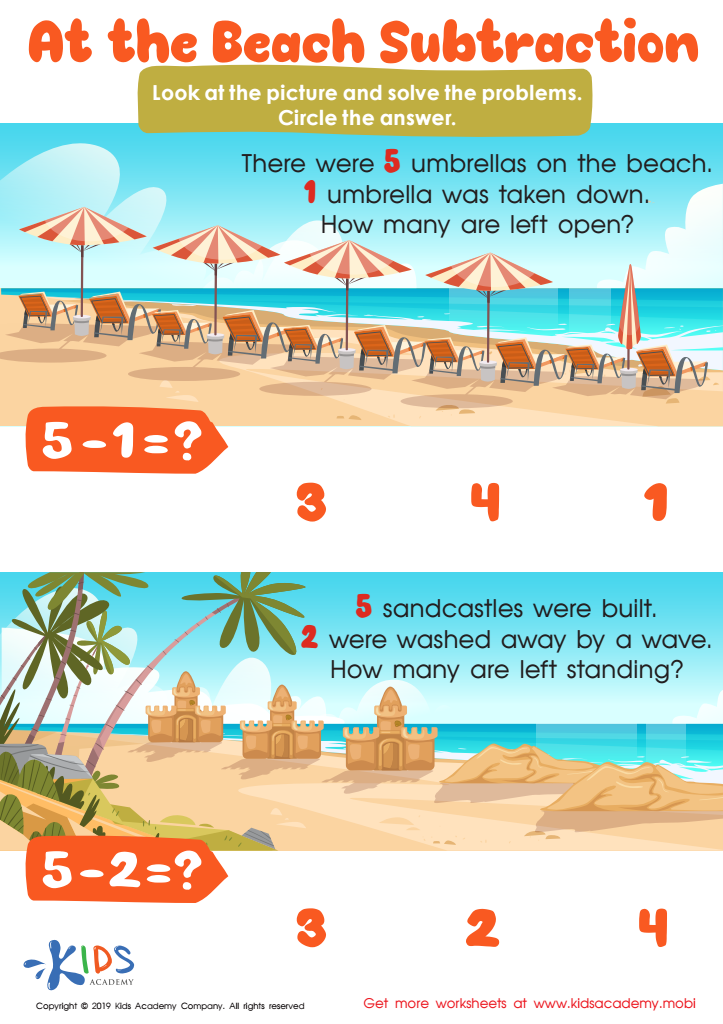
At the Beach Subtraction Worksheet
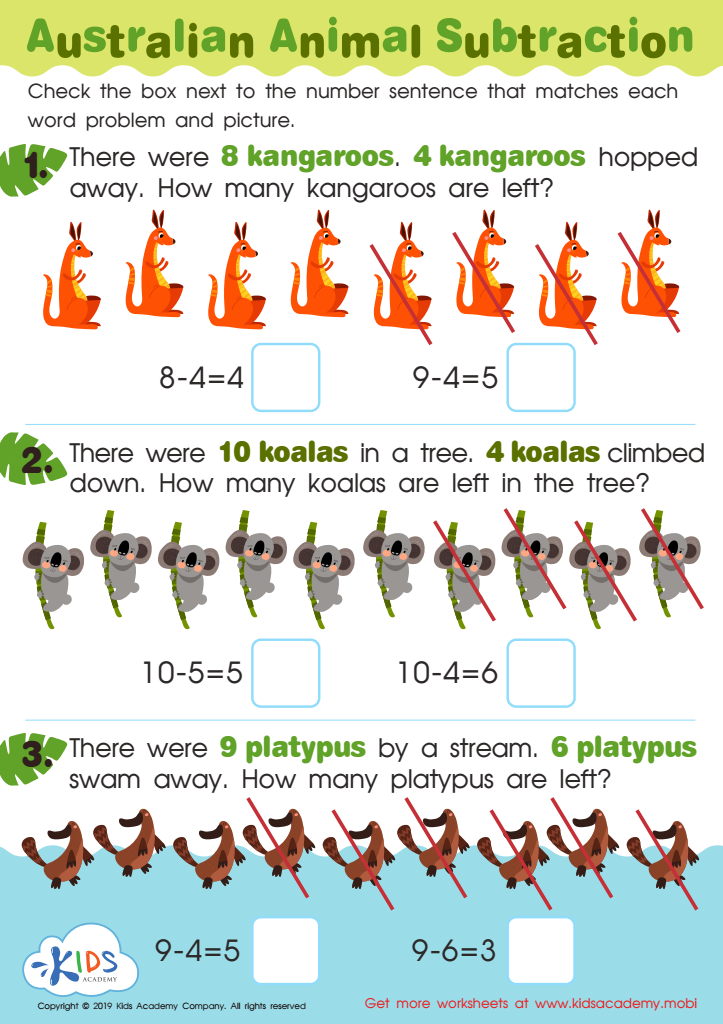
Australian Animal Subtraction Worksheet
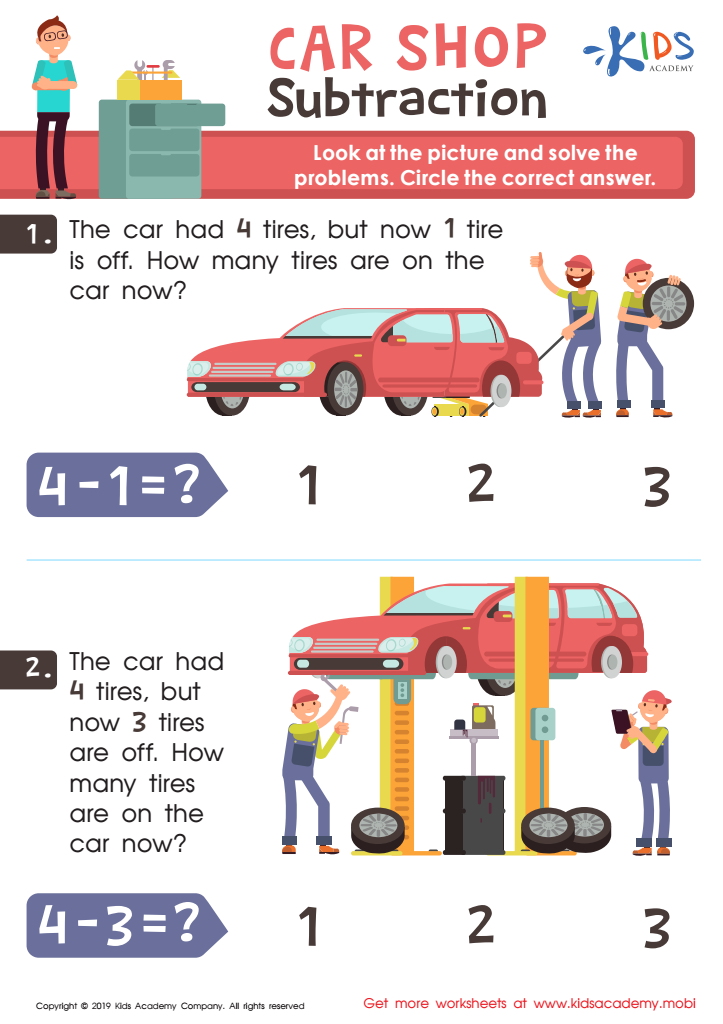
Car Shop Subtraction Worksheet
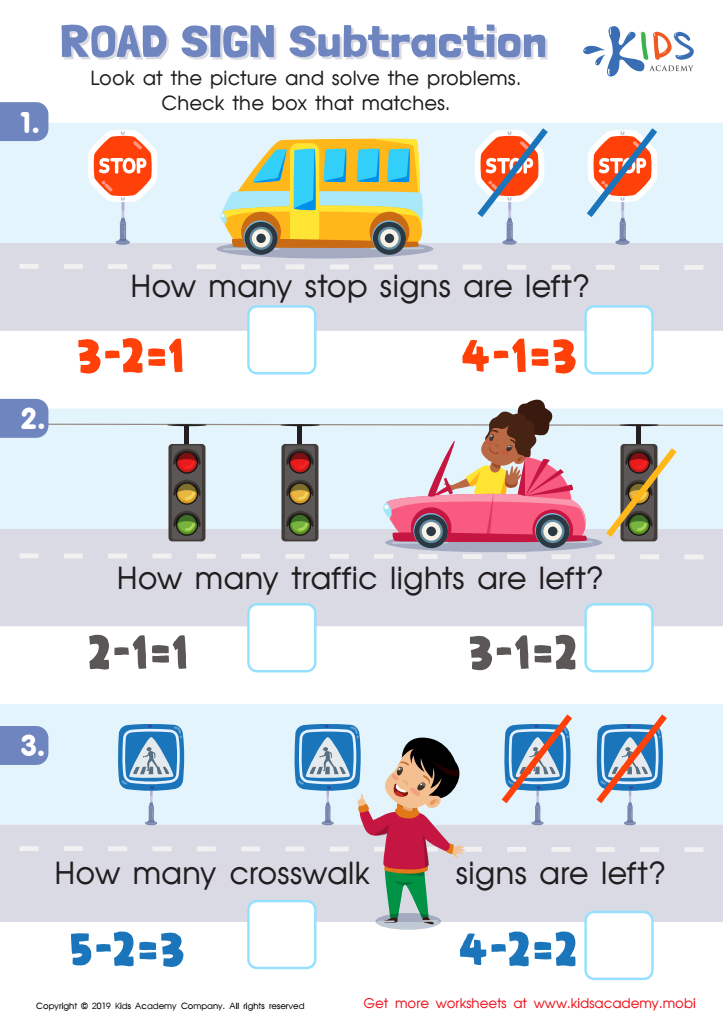
Road Sign Subtraction Worksheet
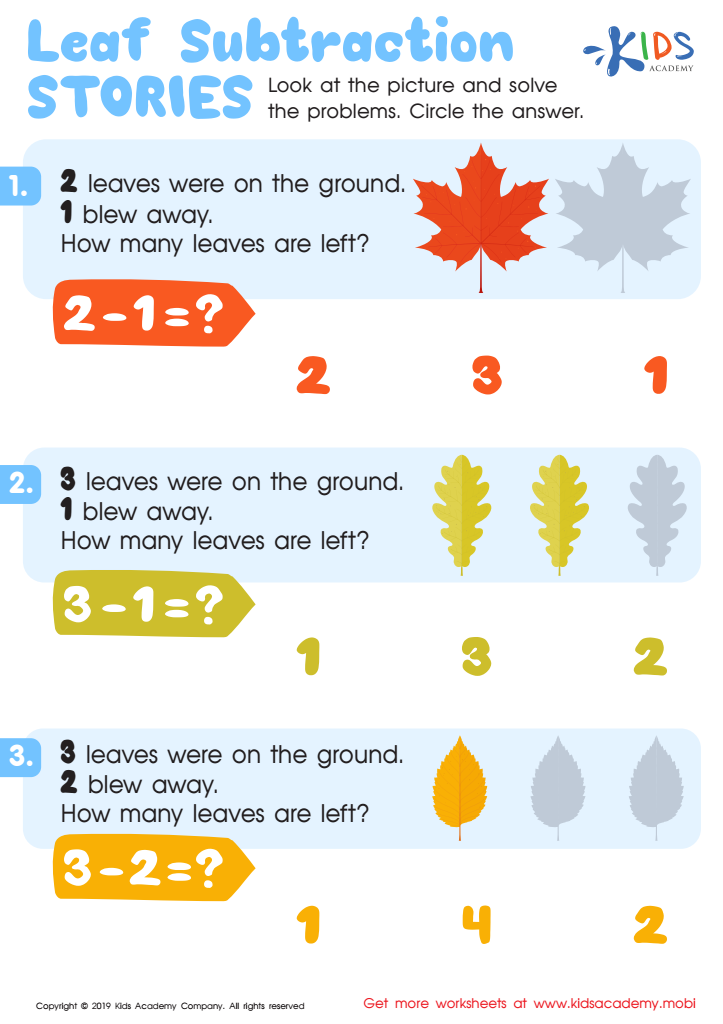
Leaf Subtraction Stories Worksheet
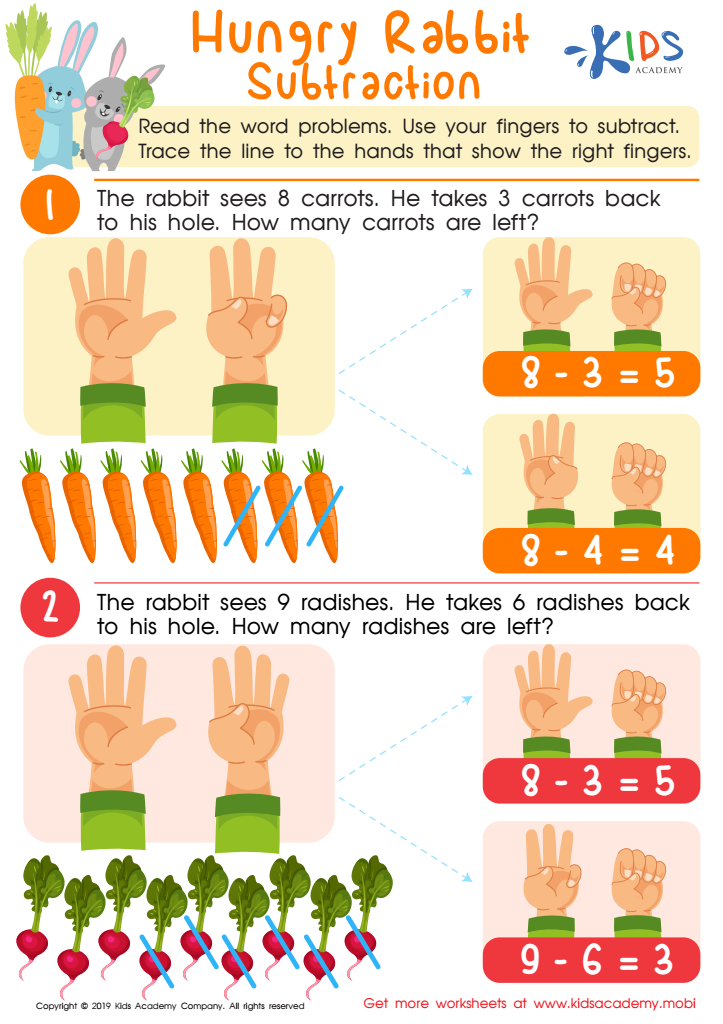
Hungry Rabbit Subtraction Worksheet
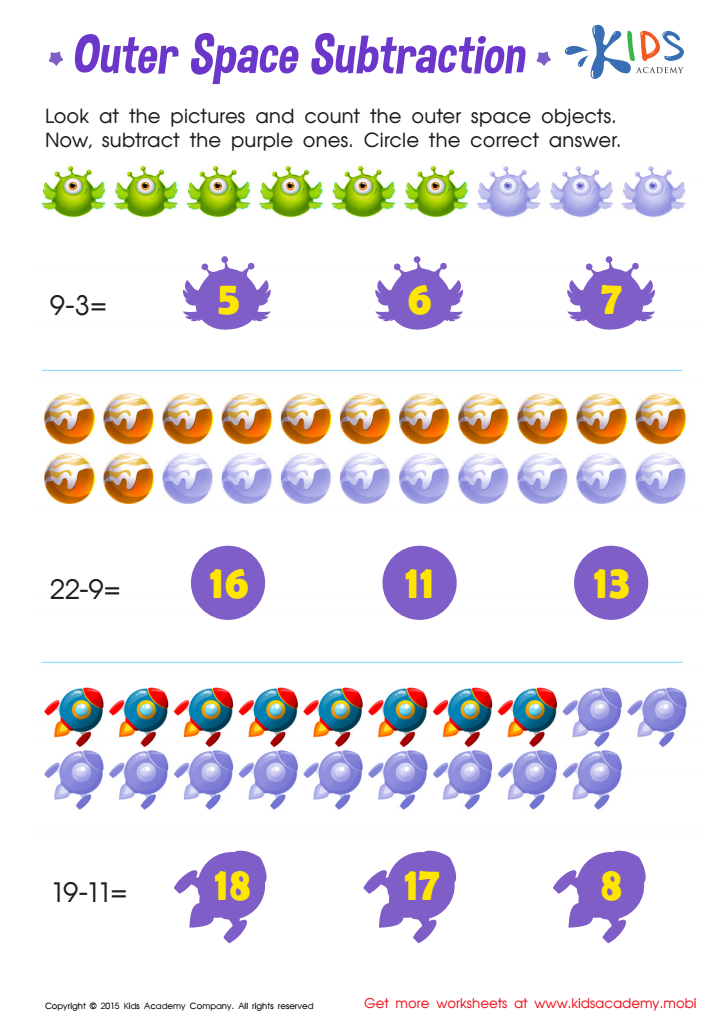
Outer Space Substraction Worksheet
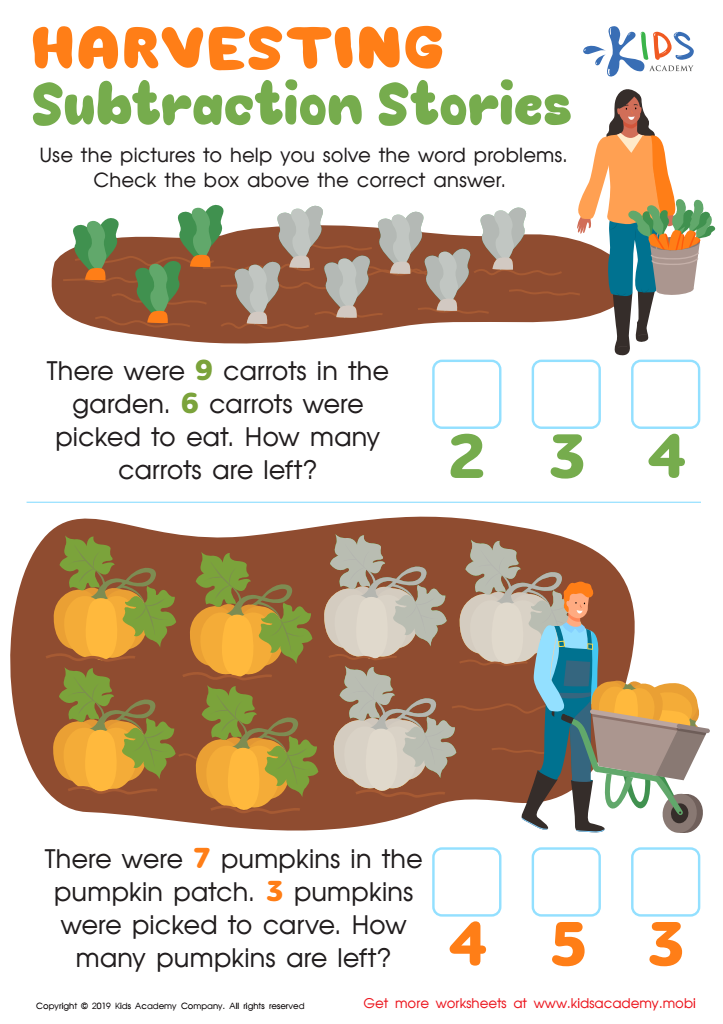
Harvesting Subtraction Stories Worksheet
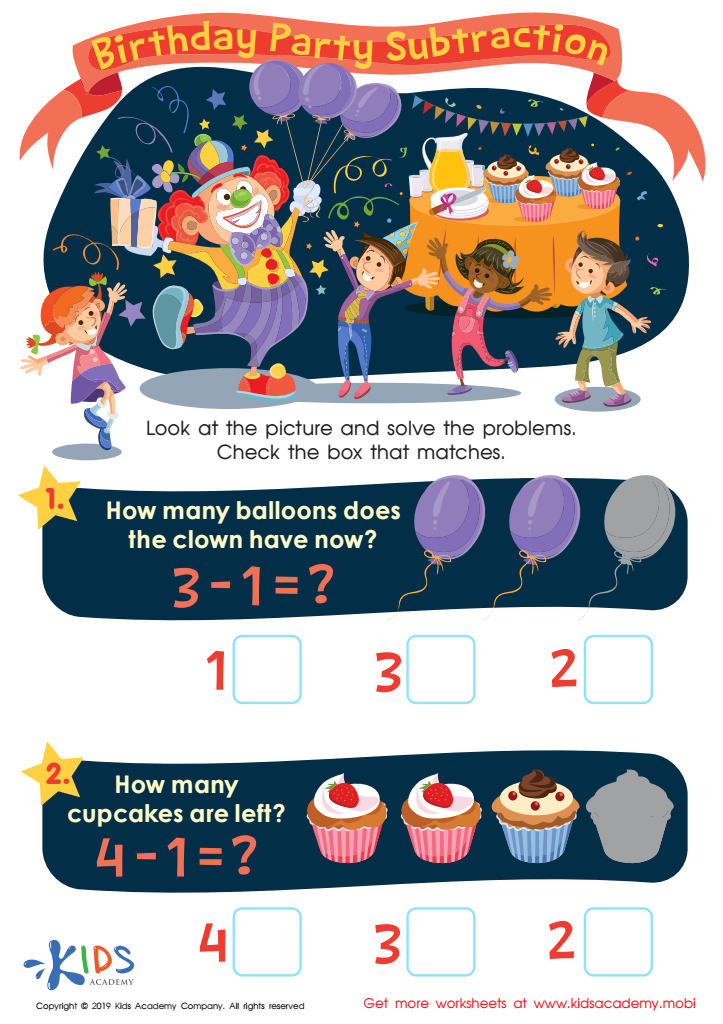
Birthday Party Subtraction Worksheet
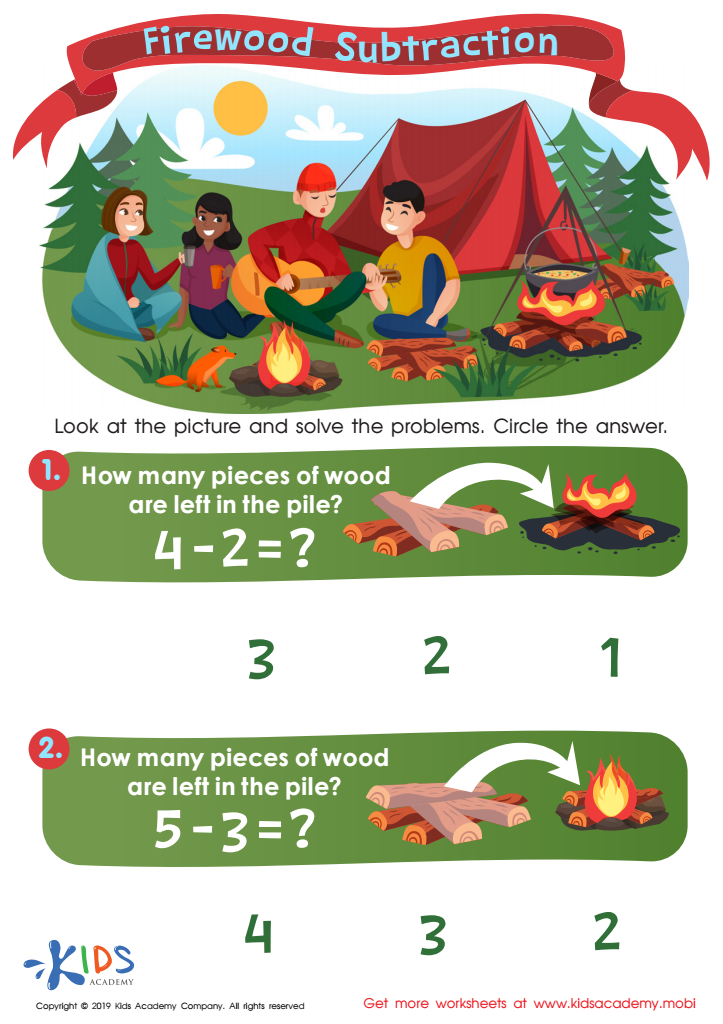
Firewood Subtraction Worksheet








Subtraction practice is crucial for 4-year-olds as it lays the foundation for early mathematical skills. At this age, children's cognitive abilities are rapidly developing, and engaging them in activities that involve subtraction can enhance critical thinking and problem-solving skills. Easy subtraction activities introduce children to the concept of taking away, fostering a deeper understanding of numbers and their relationships.
Practicing subtraction helps children with number recognition and strengthens counting abilities, which are essential for their future academic success. As they learn to differentiate between "more" and "less," children develop a sense of quantity and can apply these skills in real-life situations, such as sharing snacks or playing games.
Moreover, learning subtraction in a fun and engaging way can boost children's confidence, instilling a positive attitude towards mathematics. When parents and teachers prioritize subtraction practice at this formative age, they contribute to a child’s overall mathematical literacy, setting the stage for more complex math concepts in the future. Ultimately, encouraging subtraction practice promotes a strong foundation in math, which correlates with academic success in later years, making it a crucial focus for both parents and educators.