Number comprehension Easy Worksheets for Ages 5-8
8 filtered results
-
From - To
Enhance your child’s numerical understanding with our "Number Comprehension Easy Worksheets" designed for ages 5-8. These engaging, printable sheets make learning fundamental math skills fun and effective. From counting and number recognition to basic addition and subtraction, our worksheets cater to early learners, promoting confidence and retention. Each activity is thoughtfully crafted to match kids' developmental stages, ensuring they are both educational and enjoyable. Suitable for classroom or home use, these worksheets are an excellent resource for parents and teachers aiming to bolster children's early math proficiency. Start building strong numeracy foundations today!
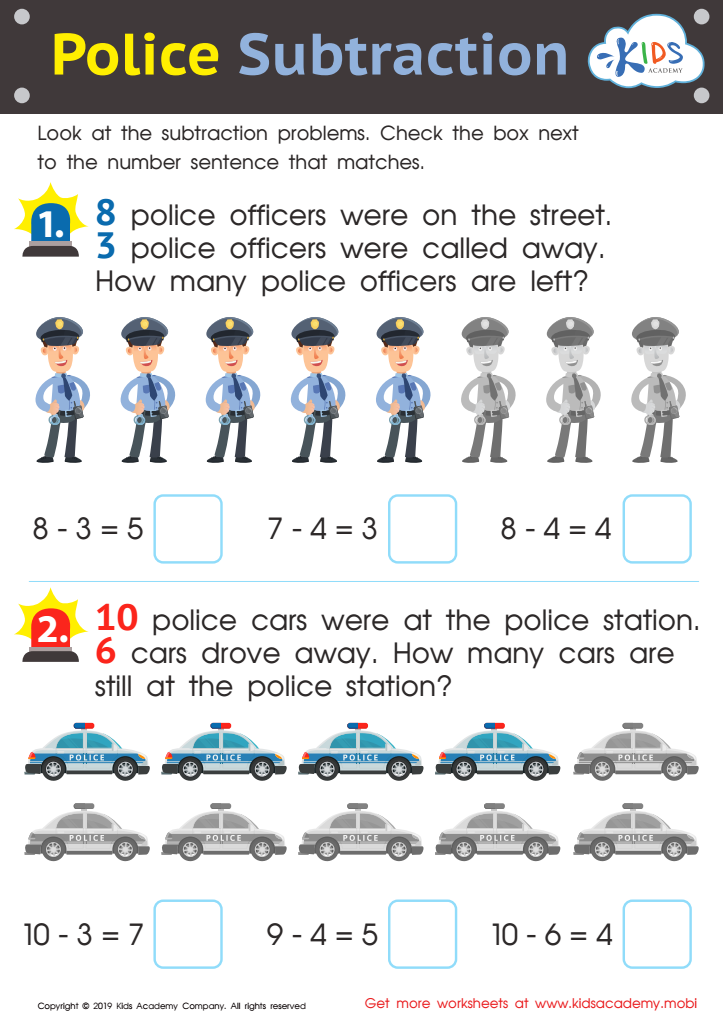
Police Subtraction Worksheet
 Assign to My Students
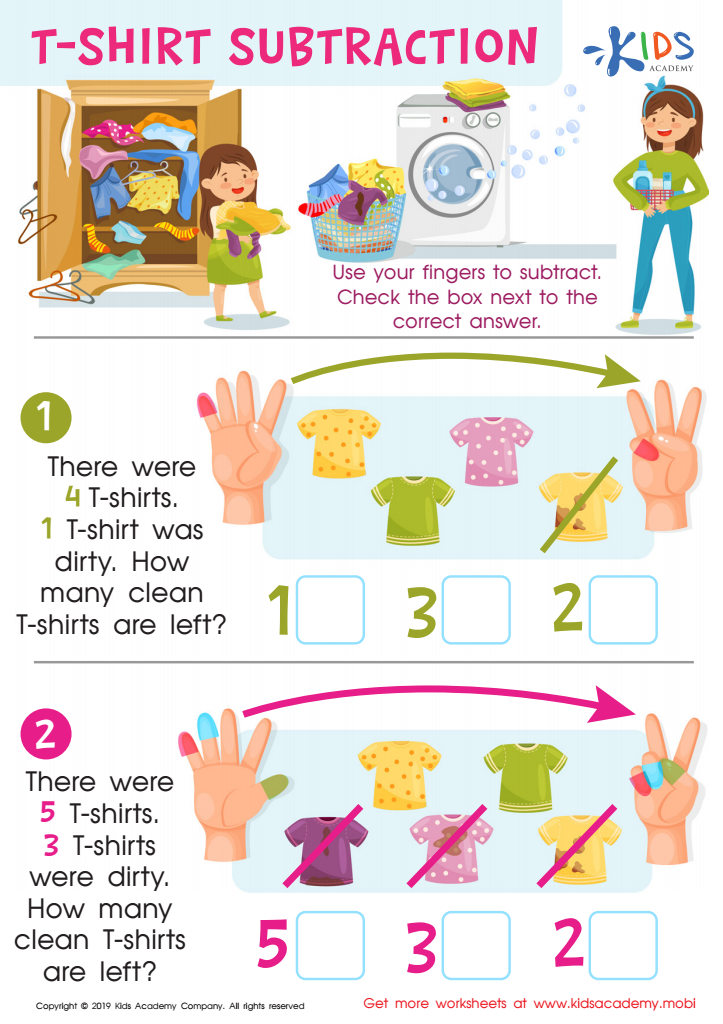
T-shirt Subtraction Worksheet
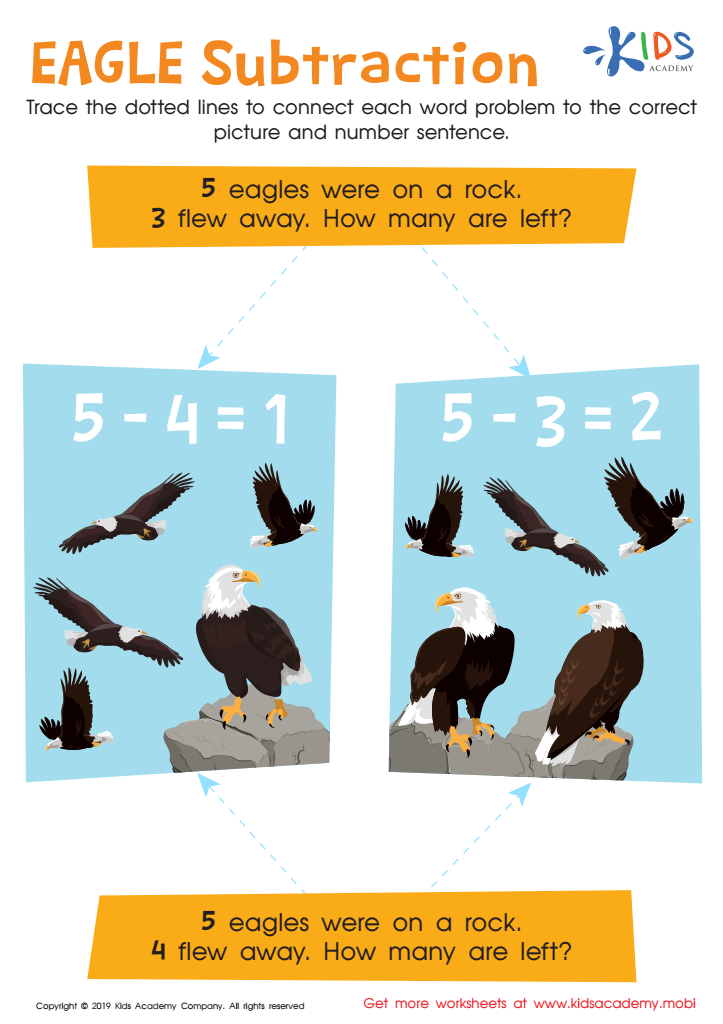
Eagle Subtraction Worksheet
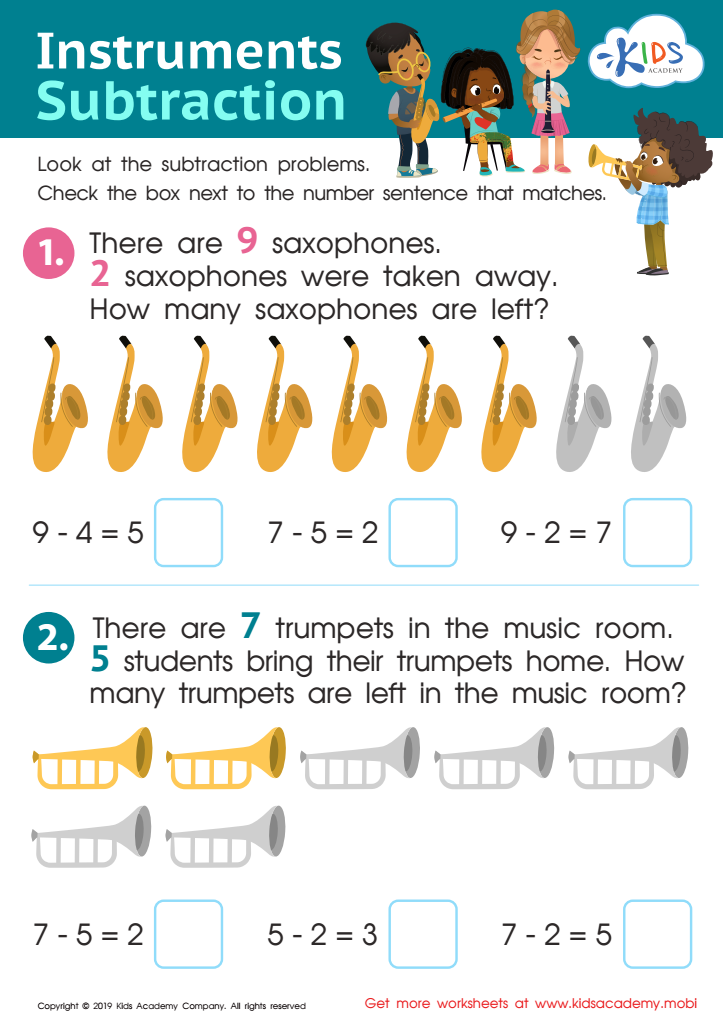
Instrument Subtraction Worksheet
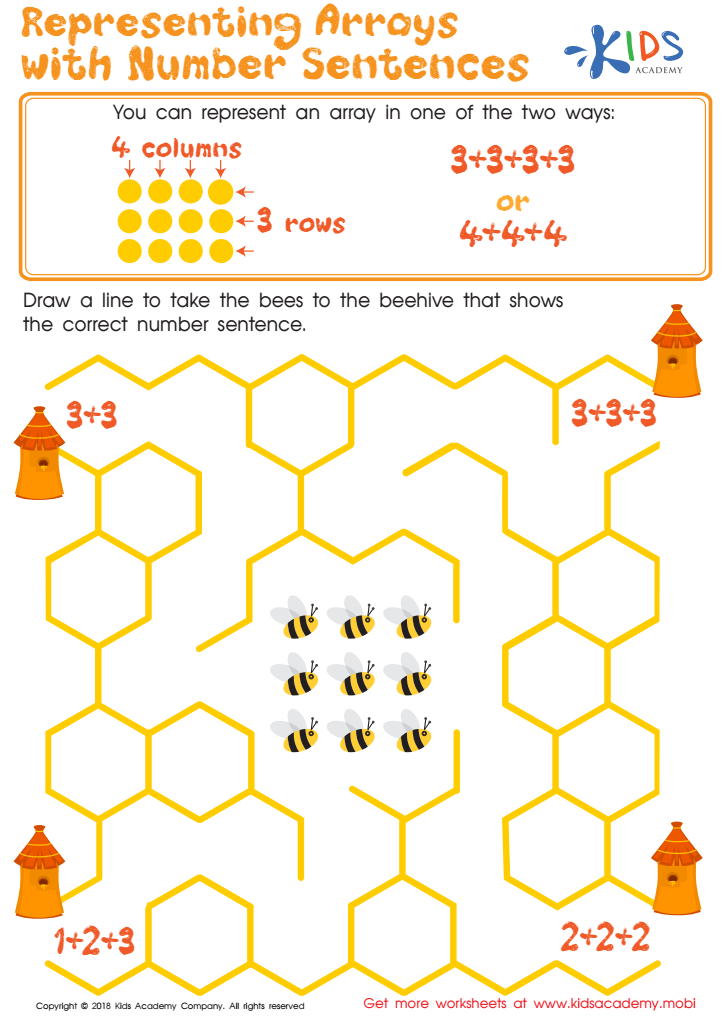
Representing Arrays with Number Sentences Worksheet
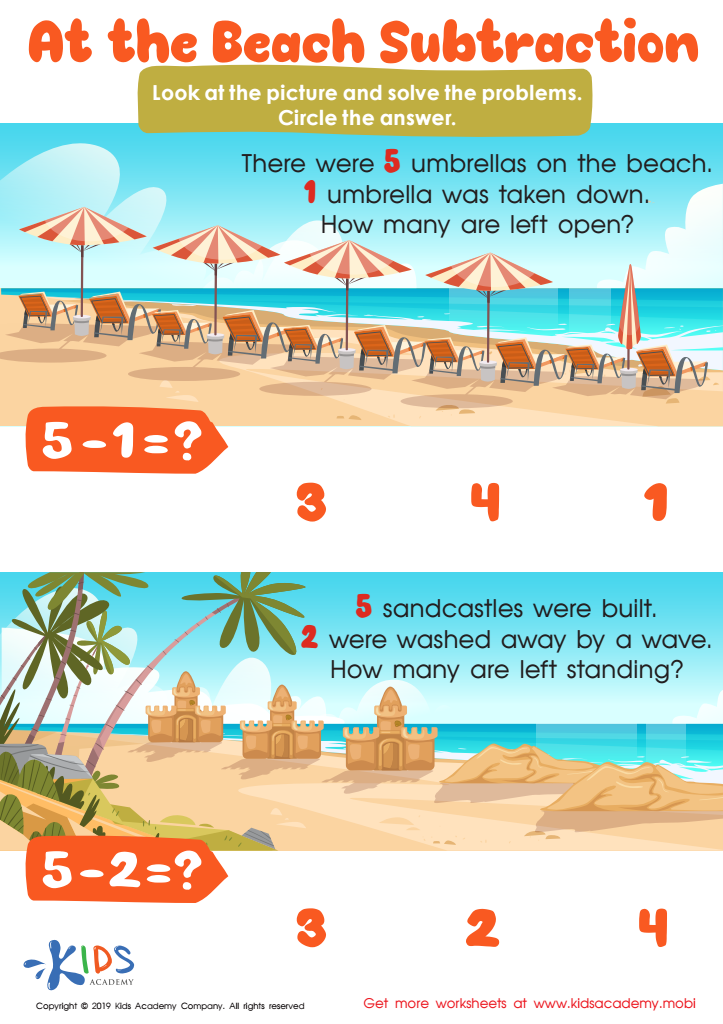
At the Beach Subtraction Worksheet
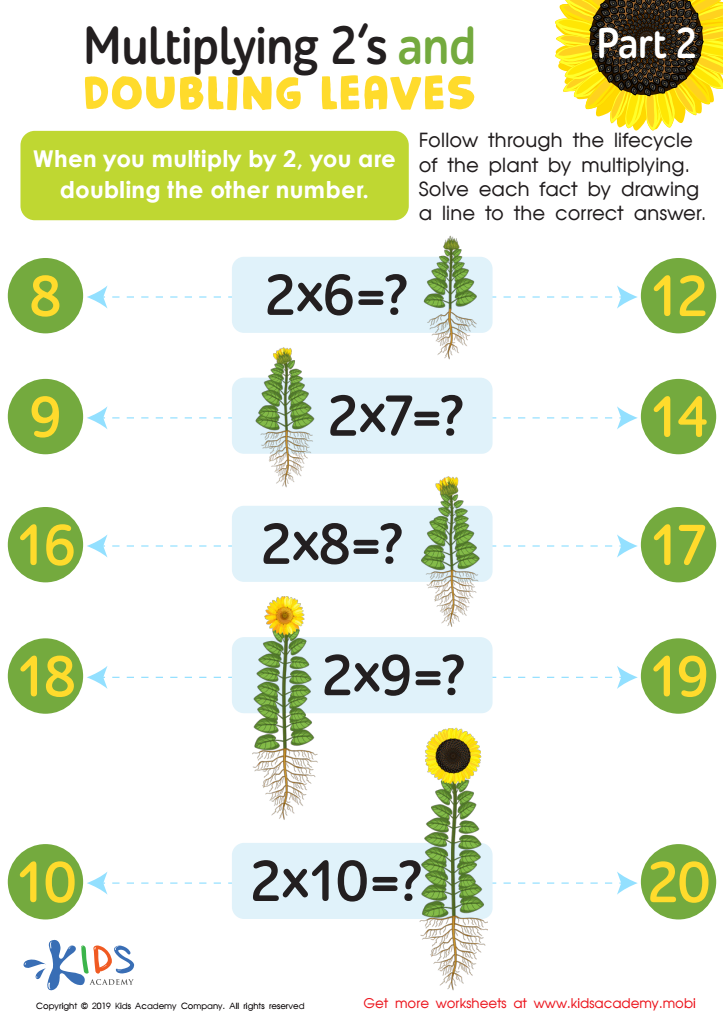
Multiplying 2’s and Doubling Leaves Part 2 Worksheet
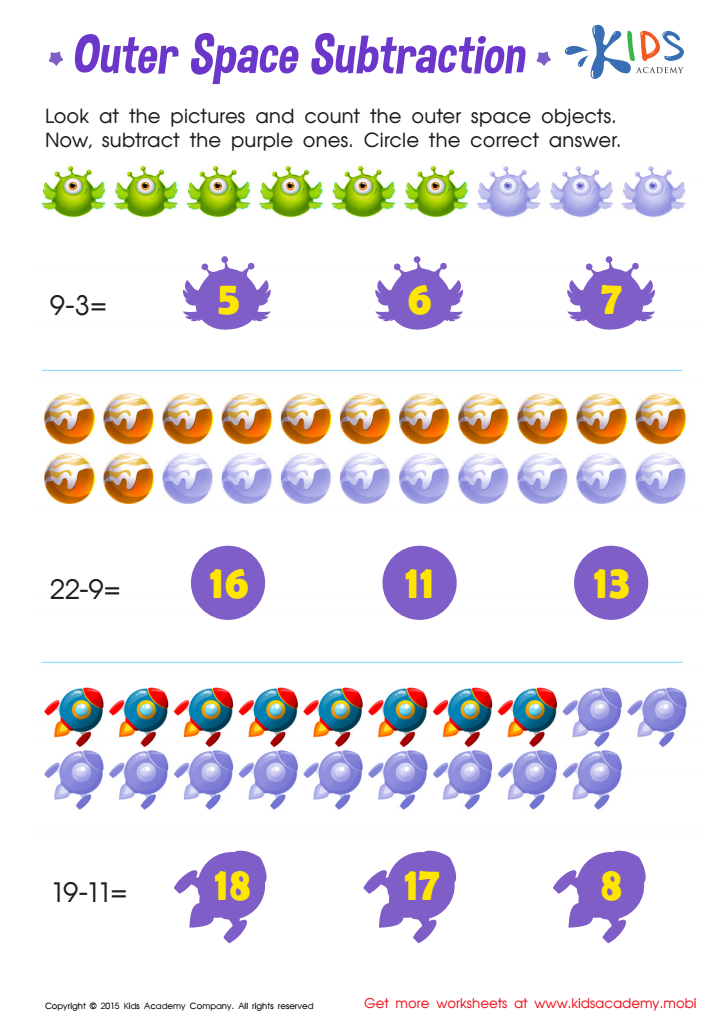
Outer Space Substraction Worksheet




.jpg)


Parents and teachers should prioritize number comprehension for children aged 5-8 because it forms the foundation for future mathematical skills and overall cognitive development. At this critical stage, young minds are particularly receptive to learning basic math concepts, which are essential for problem-solving and logical thinking. Mastering number comprehension early boosts confidence and sets a positive attitude towards learning, reducing anxiety around math in later years.
Understanding numbers involves more than just counting; it includes recognizing patterns, understanding relative sizes, and grasping basic operations like addition and subtraction. These skills are crucial for everyday tasks, such as telling time, measuring ingredients in recipes, and managing money. Furthermore, early proficiency in math supports academic success across subjects, because math concepts often intertwine with science, reading comprehension, and even creative projects.
Engaging children in fun and interactive activities like games, puzzles, and hands-on projects can make learning about numbers enjoyable and accessible. When parents and teachers emphasize the importance of number comprehension early on, they help nurture curious, well-rounded learners who are better equipped to handle more complex mathematical concepts and other academic challenges in the future. This early investment in math education lays the groundwork for lifelong learning and critical thinking skills.








