Problem-Solving Skills Easy Addition Worksheets for Ages 5-8
9 filtered results
-
From - To
Discover our "Problem-Solving Skills Easy Addition Worksheets" designed specifically for children aged 5-8! These engaging resources not only foster essential math skills but also enhance critical thinking and problem-solving abilities. With colorful illustrations and age-appropriate challenges, kids will find learning addition both fun and rewarding. Each worksheet encourages learners to approach problems creatively, helping them build confidence as they navigate various addition scenarios. Perfect for home or classroom use, our worksheets support early learners in developing a solid mathematical foundation. Unlock your child’s potential with these interactive activities that make mastering addition an enjoyable adventure! Start exploring today!
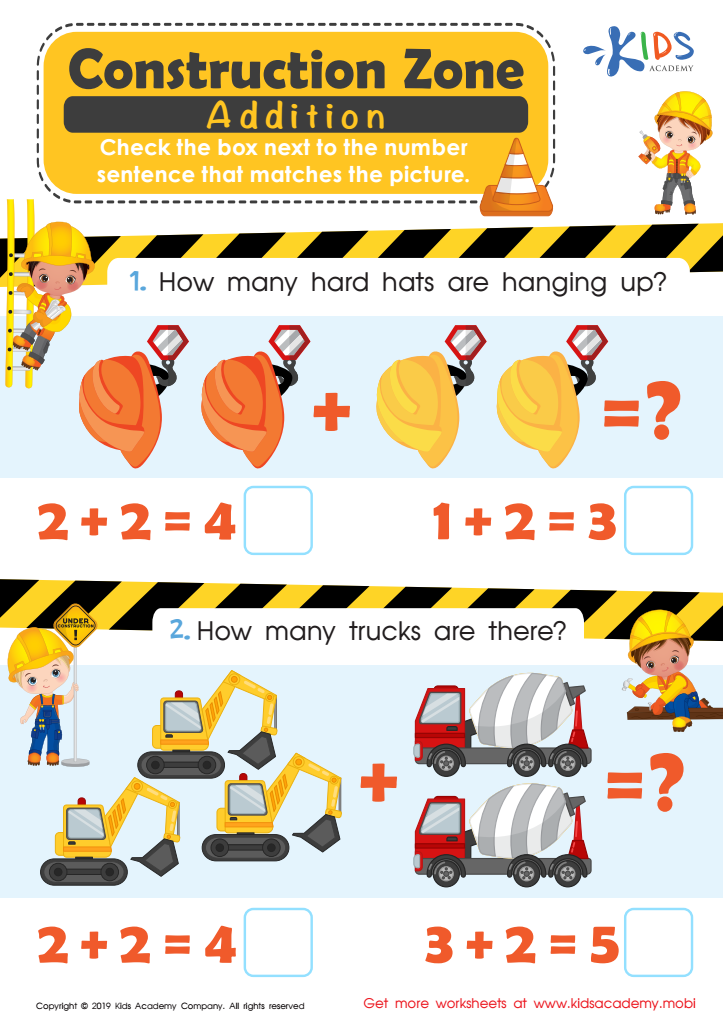
Construction Zone Addition Worksheet
 Assign to My Students
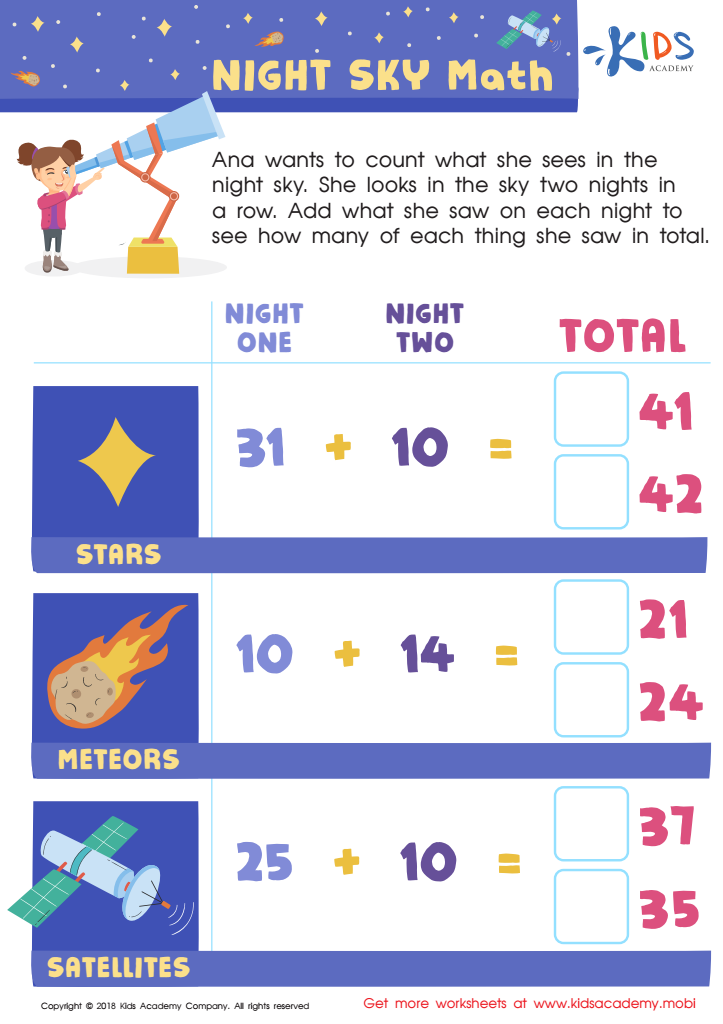
Night Sky Math Worksheet
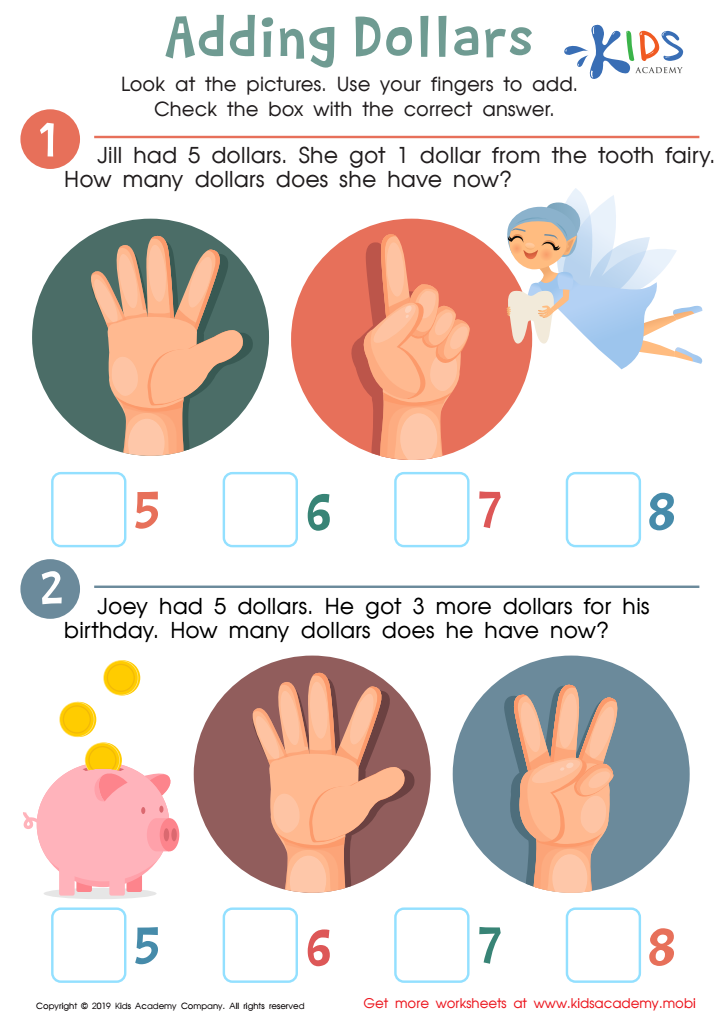
Tooth Fairy Addition Worksheet
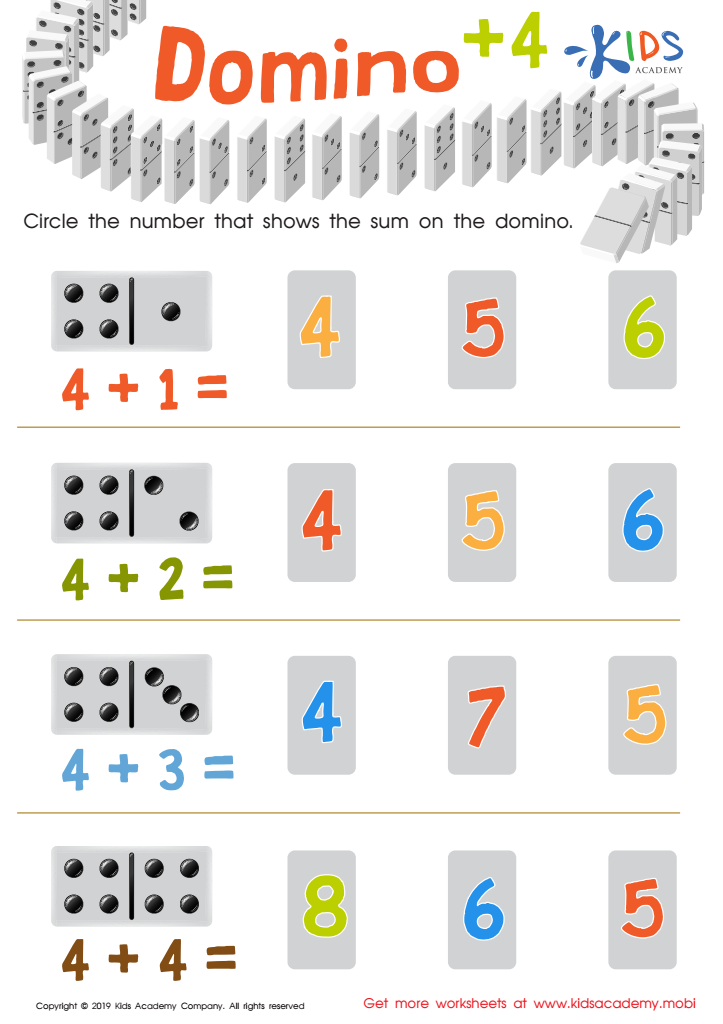
Domino +4 Worksheet
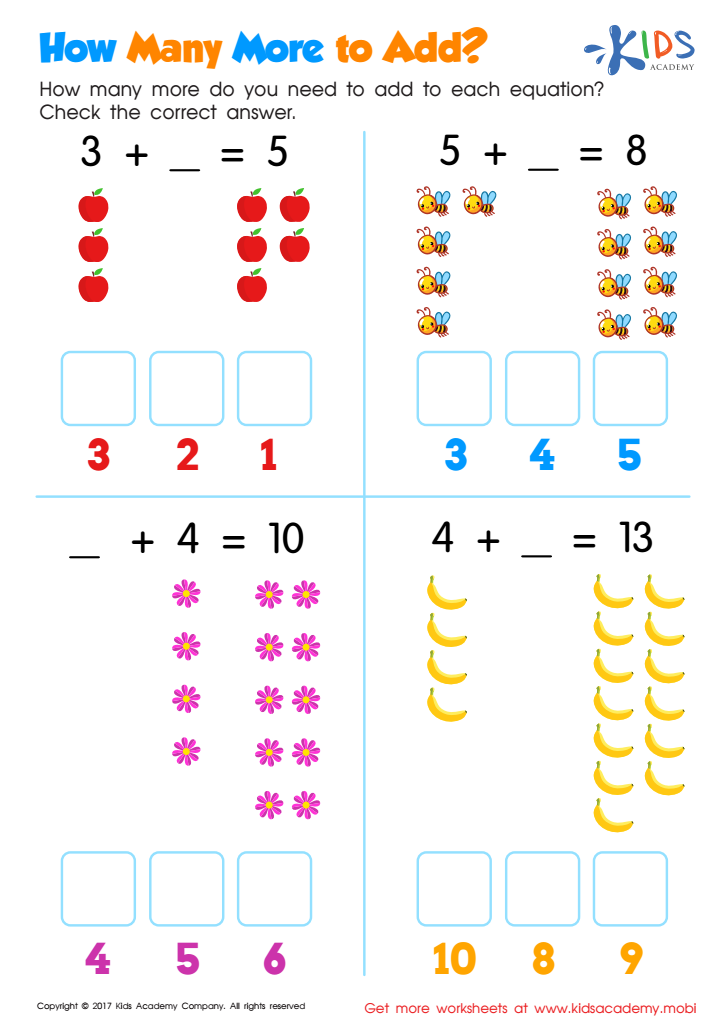
How Many More to Add Worksheet
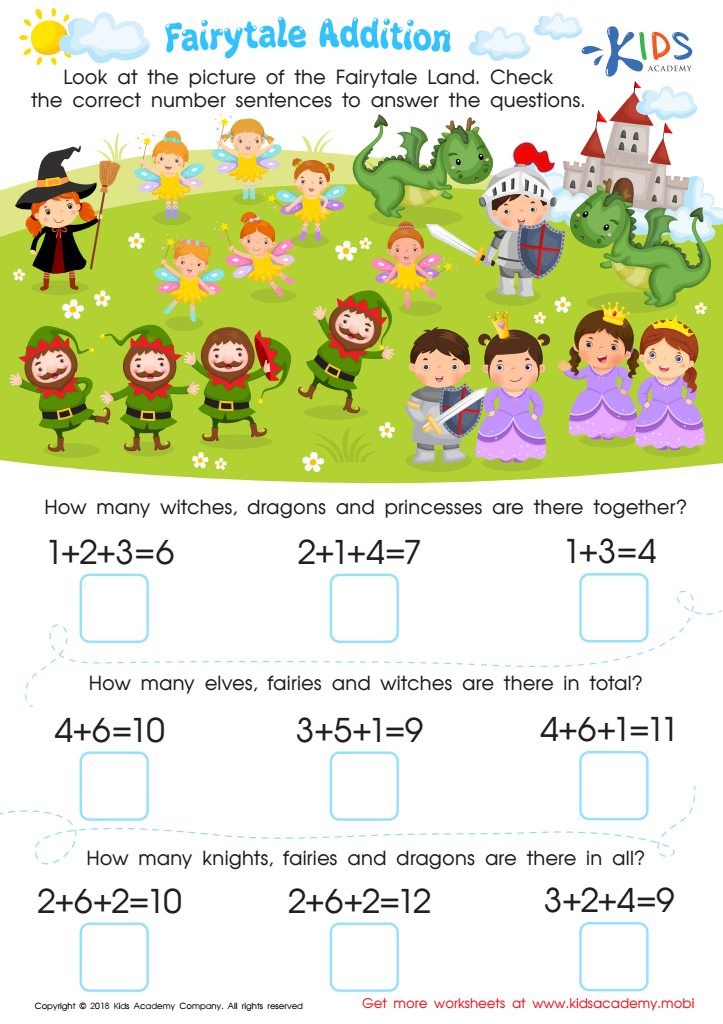
Fairytale Addition Worksheet
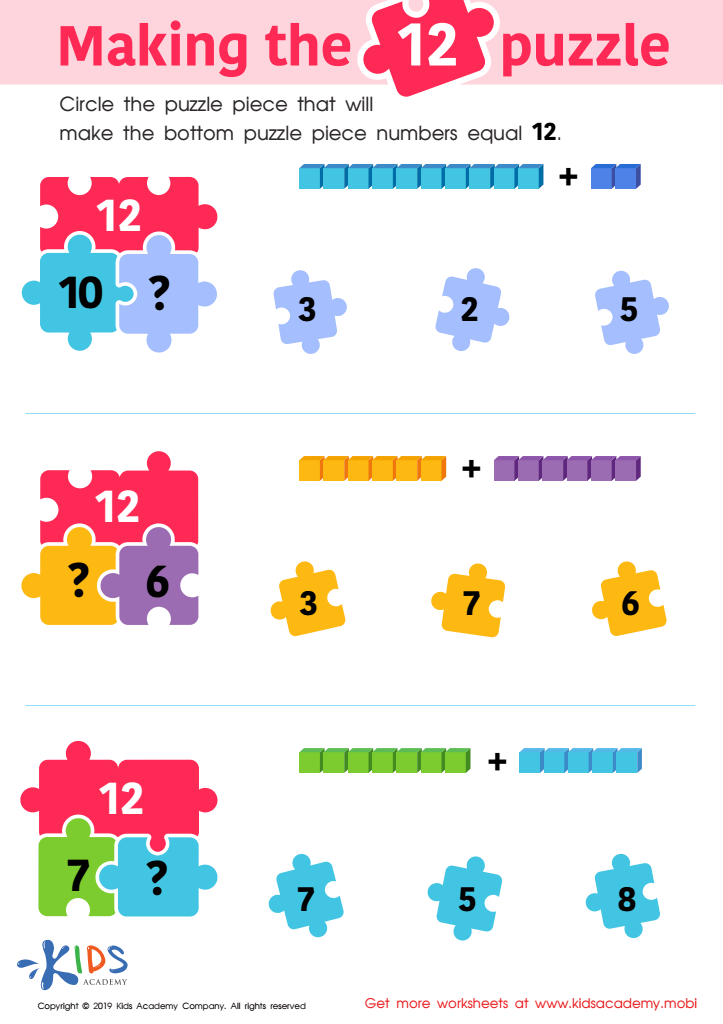
Making the 12 Puzzle Worksheet

Haystack Steps Worksheet
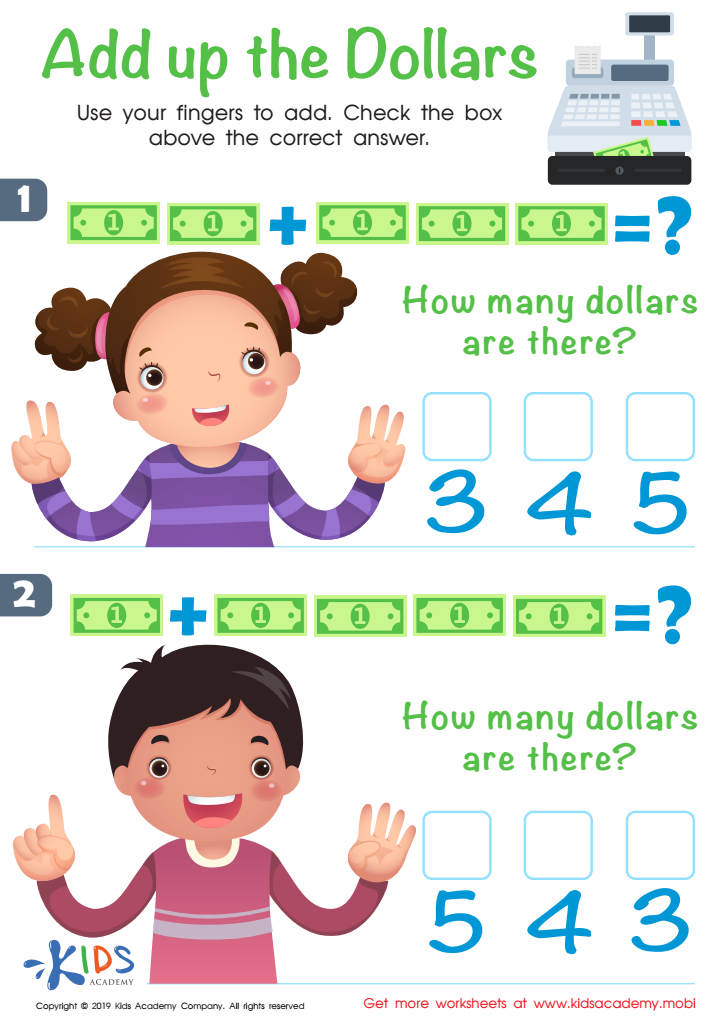
Add up the Dollars Worksheet








Problem-solving skills, particularly in easy addition for ages 5-8, are critical for young learners and their development. First, these skills lay the foundation for future mathematical concepts, helping children to understand addition as more than rote memorization; it becomes a logical and intuitive process. Parents and teachers should care because early math fluency contributes to overall cognitive development.
Moreover, problem-solving enhances critical thinking and reasoning, vital skills both academically and in everyday life. As children encounter challenges in addition, they learn to analyze situations, experiment with different strategies, and persevere even when faced with difficulties, fostering resilience and adaptability.
Additionally, mastering these foundational skills boosts self-esteem. Children who confidently approach math are more likely to engage actively in learning, leading to a more positive attitude toward education overall. Collaborative activities, often found in problem-solving contexts, also foster social interaction and communication skills among peers, promoting teamwork and collaboration.
Ultimately, nurturing problem-solving skills in easy addition positions children for academic success while equipping them with essential life skills. By investing attention and resources in this area, parents and teachers empower young learners to enjoy mathematics and develop critical life competencies.








