
Basic counting skills Easy Math Worksheets for Ages 6-8
5 filtered results
Difficulty Level
Grade
Age
-
From - To
Subject
Activity
Standards
Discover a fun and engaging way for kids ages 6-8 to develop essential counting skills with our Easy Math Worksheets. Designed to make learning enjoyable, our worksheets feature colorful illustrations and interactive activities that captivate young learners while reinforcing their understanding of numbers. Children will practice counting objects, identifying quantities, and solving simple math problems, enhancing their numerical confidence. Ideal for both classroom and home use, these worksheets cater to various learning styles, ensuring every child can grasp basic counting concepts with ease. Jumpstart your child's math journey today with our delightful and effective worksheets tailored for early learners!
Favorites
With answer key
Interactive
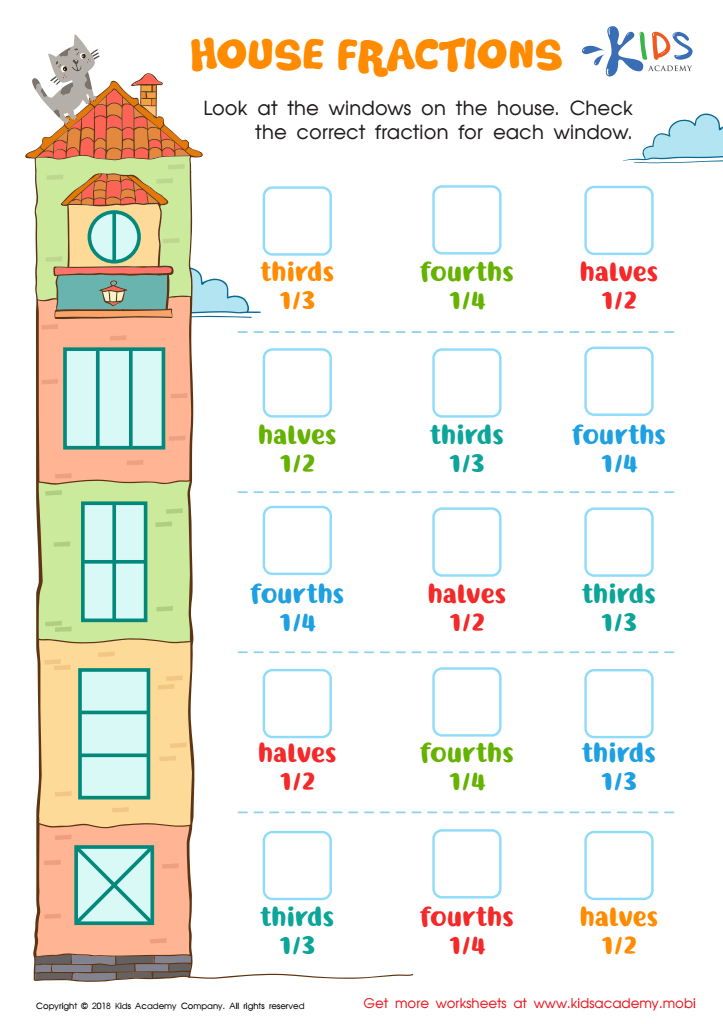
House Fractions Worksheet
Test your child's knowledge of fractions with this worksheet! Have them examine the windows of a house and select the correct fraction from the options given. This is a great way to see how much they understand about wholes, fractions, halves, one thirds, and one fourths.
 Assign to My Students
House Fractions Worksheet
Worksheet
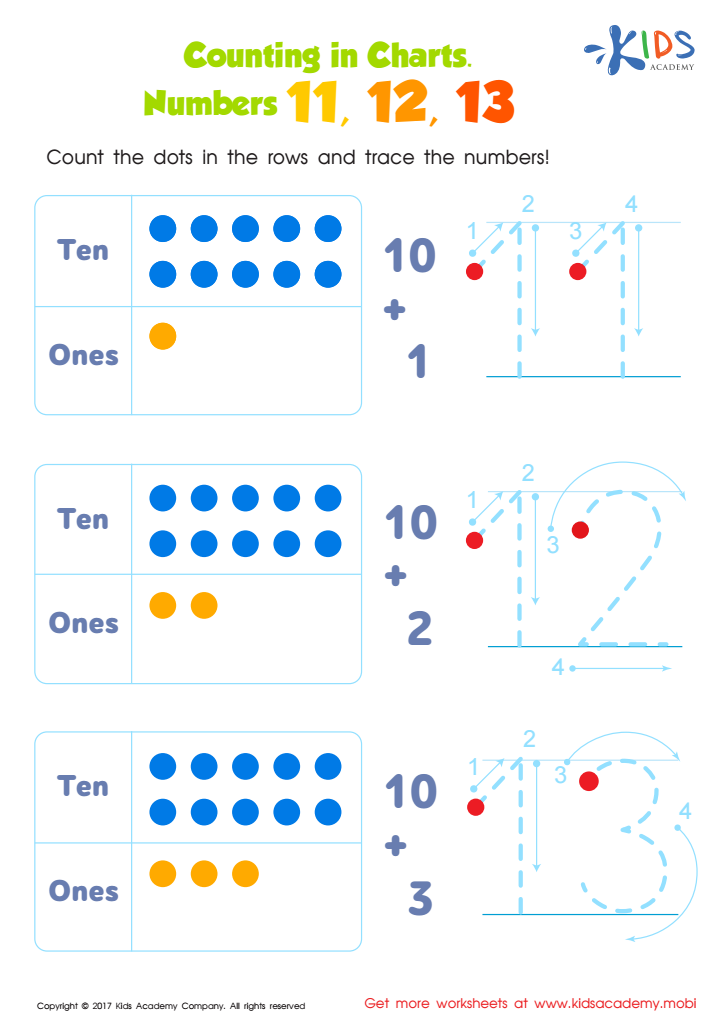
Number Tracing Worksheet For Kindergarten
Help your child develop addition skills and improve number recognition with this easy-to-use worksheet. Have them count the dots and add to solve each problem. Then, trace over the number to complete each row! It's a fun and simple way for kindergarteners to practice their math skills.
Number Tracing Worksheet For Kindergarten
Worksheet
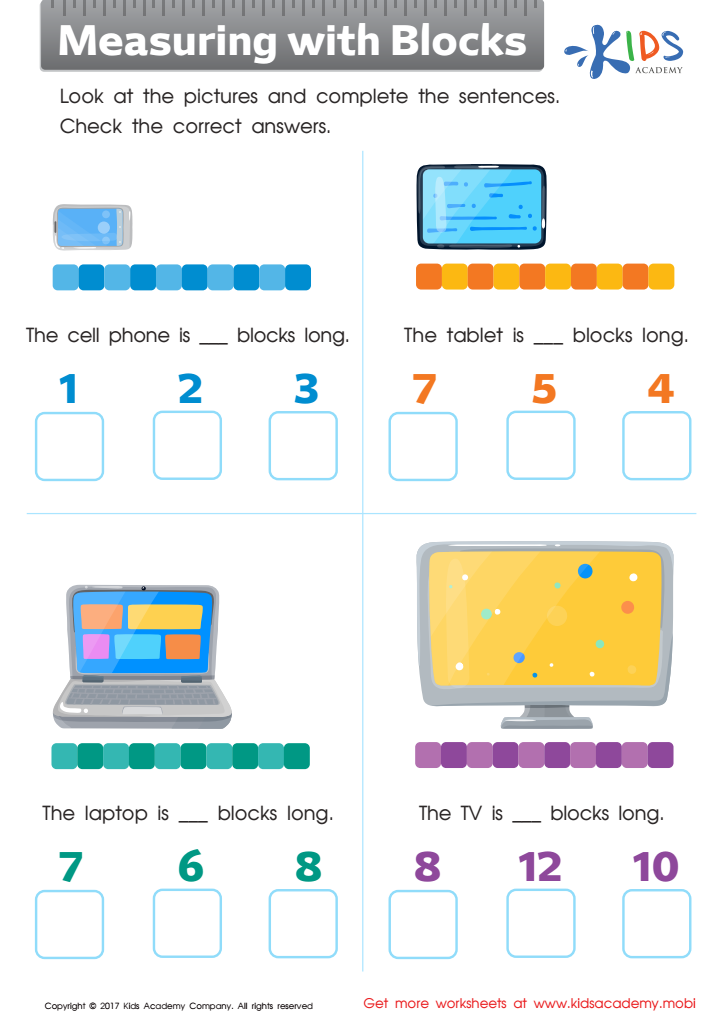
Measuring with Blocks Worksheet
Help your child get ready for math success with this Kids Academy worksheet. It provides colorful blocks to practice measuring objects. Coach them to count the boxes under each picture, then check the box with the right answer. It's a fun way to get acquainted with rulers!
Measuring with Blocks Worksheet
Worksheet
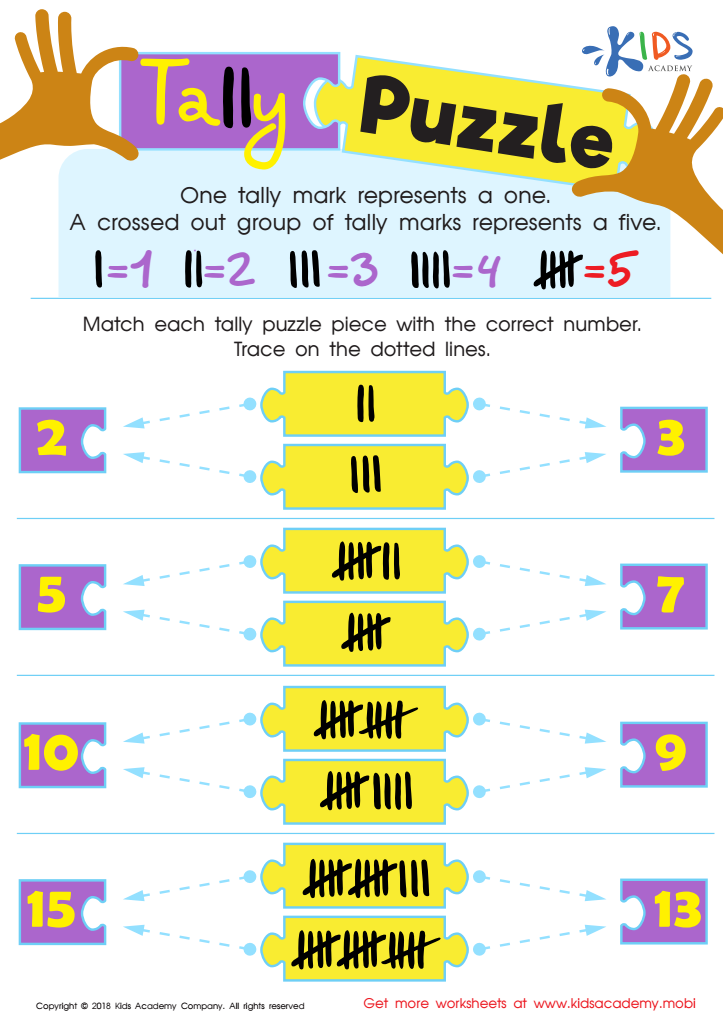
Tally Puzzle Worksheet
Kids love puzzles, and this bright worksheet will let them practice tallies and matching numbers. It teaches them to count and assign values, critical for doing math problems quickly and accurately later. It also leads to strategies like counting by 5s.
Tally Puzzle Worksheet
Worksheet
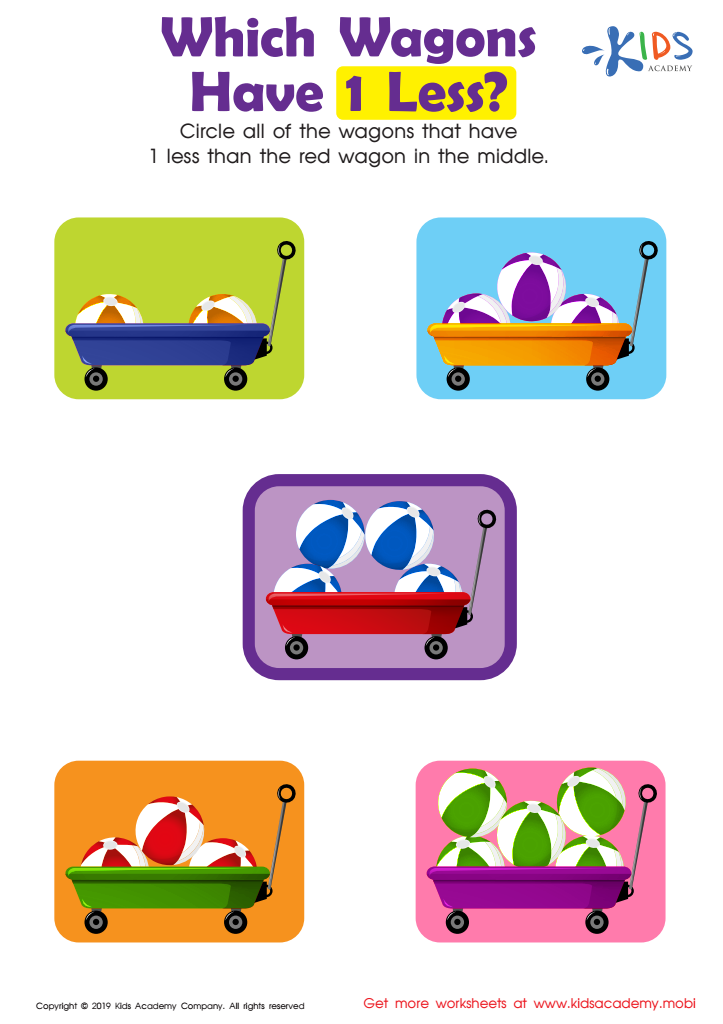
Which Wagons Have 1 Less? Worksheet
Test your kid's counting skills with a simple exercise. Ask them to count the balls in the five wagons shown and to circle the wagons with one less than the red wagon in the middle. This will give their brains a simple task that tests their knowledge of numbers.
Which Wagons Have 1 Less? Worksheet
Worksheet
Join Kids Academy for Free
Who is primarily going to use this learning content?





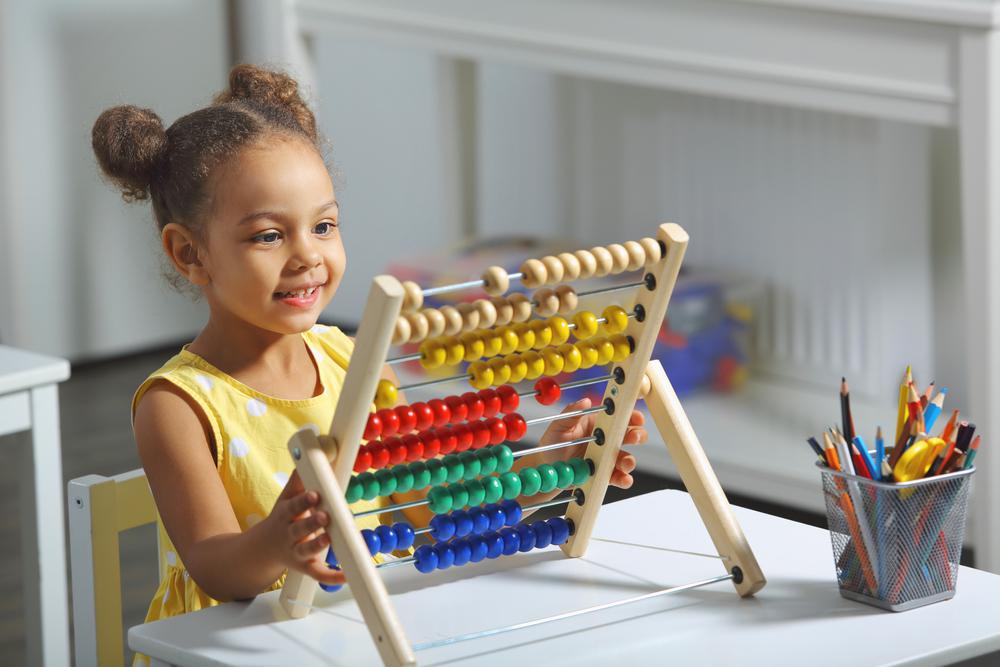
Basic counting skills are foundational for children aged 6-8, serving as critical building blocks for all future mathematical learning. At this age, children are not only learning to count but also to understand quantities, patterns, and relationships between numbers. Mastery of these skills boosts their confidence and fosters a positive attitude toward math, reducing anxiety in later more complex math topics.
Parents and teachers should prioritize counting skills because they aid in cognitive development and enhance problem-solving abilities. Engaging in activities that promote counting can be both educational and fun, making learning enjoyable and memorable. Counting also helps strengthen fine motor skills when children manipulate objects to count, reinforcing their overall development.
Furthermore, strong counting abilities lay the groundwork for essential life skills, such as budgeting and time management. In a world where numerical literacy is crucial, equipping children with these skills early on ensures they are prepared for the complexities of adulthood. Teachers and parents who prioritize counting skills can support children's learning journey, making a significant impact on their academic success and lifelong relationship with mathematics. Ultimately, nurturing these skills during ages 6-8 can set the stage for a brighter future in both math and critical thinking.








