
Counting practice Easy Math Worksheets for Ages 6-8
21 filtered results
Difficulty Level
Grade
Age
-
From - To
Subject
Activity
Standards
Welcome to our Counting Practice Easy Math Worksheets for Ages 6-8! Designed to make math fun and engaging, these worksheets help young learners master counting skills through colorful and interactive activities. Each worksheet emphasizes number recognition, counting objects, and simple addition concepts, tailored specifically for early learners. With a variety of exercises, including counting fruits, animals, and everyday objects, children can build confidence while enhancing their math abilities. Perfect for classroom use or at-home learning, our printable resources offer a playful way to develop essential math skills. Dive into the world of numbers and watch your child's proficiency grow!
Favorites
With answer key
Interactive
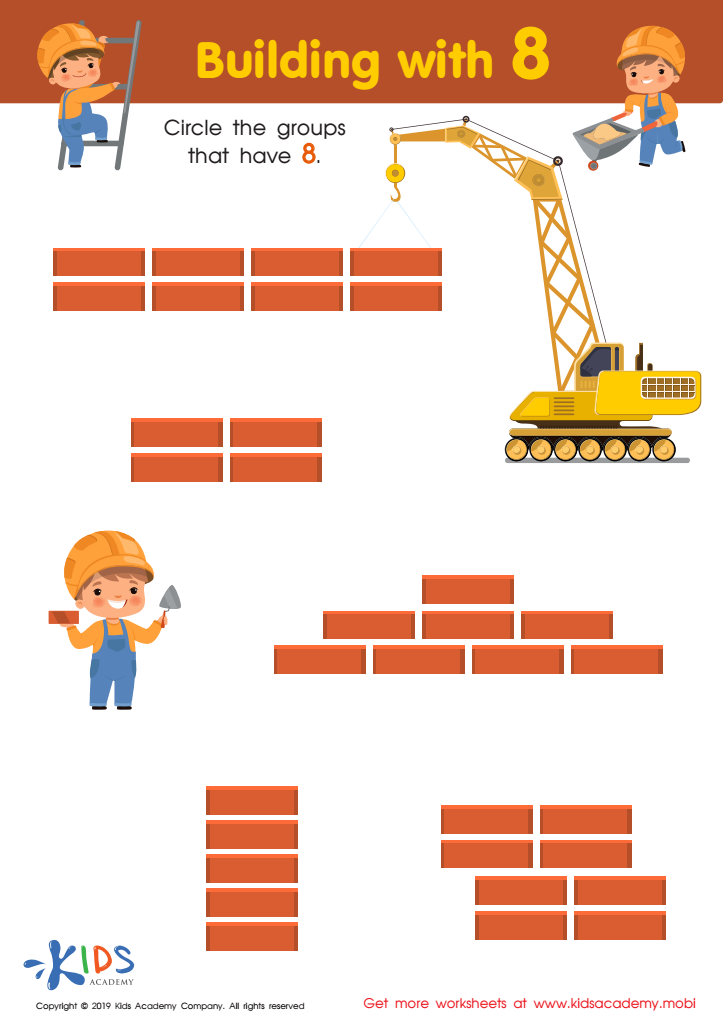
Building with 8 Worksheet
Your child can learn more with this simple exercise! Get them counting and help them circle the groups of 8 bricks. It's a great addition to their post-school lessons, supporting their counting skills. Plus, it's a fun way to learn!
Building with 8 Worksheet
Worksheet
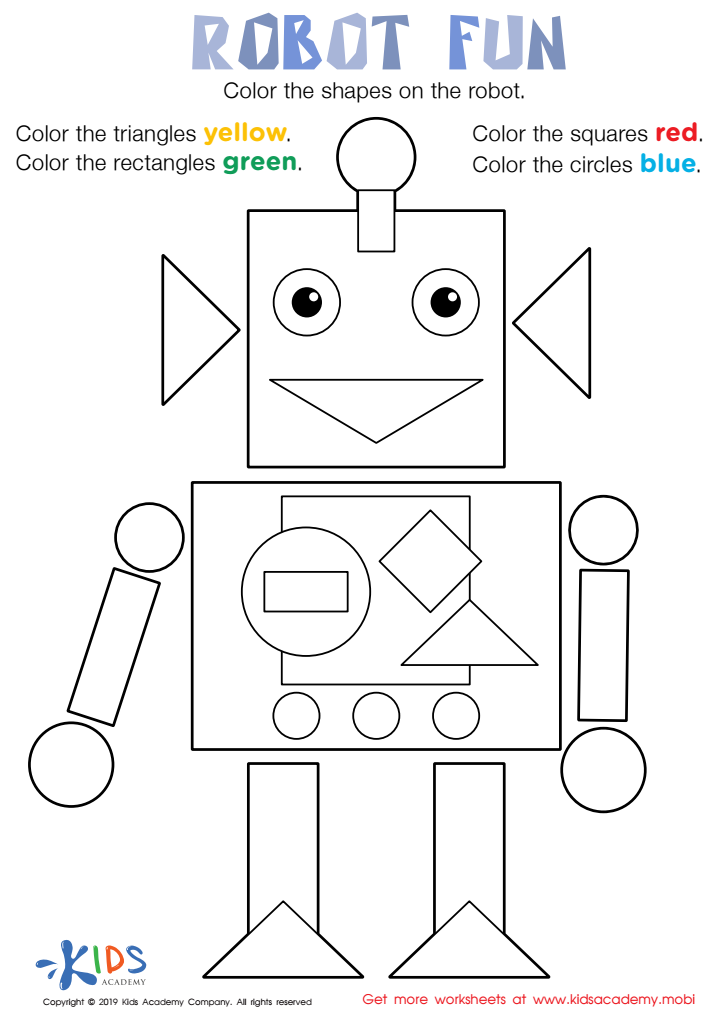
Robot Fun Worksheet
Help your child learn about basic shapes with this fun robot worksheet! Kids practice identifying circles, squares, rectangles and triangles, then color each shape according to directions. Make math practice enjoyable with this coloring page that teaches all four basic shapes - it's an important math skill!
Download (PDF)
 Assign to My Students
Assign to My Students
Robot Fun Worksheet
Worksheet
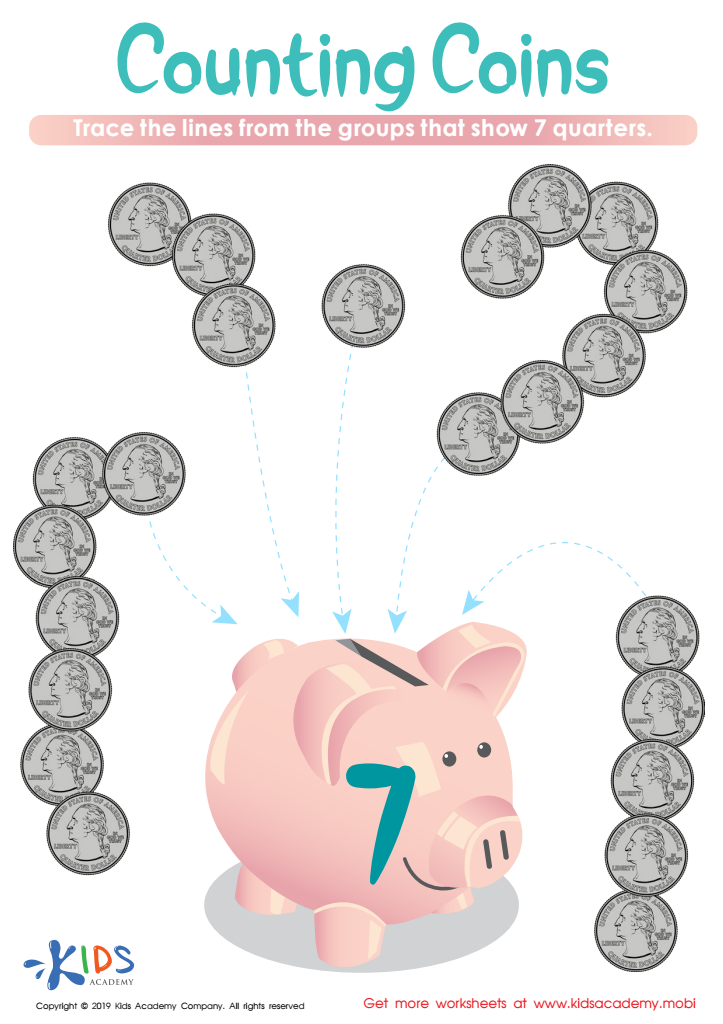
Counting Coins Worksheet
Help your students overcome their fear or aversion of counting and learning numbers with this fun worksheet! It features colorful pictures with four groups of coins. Ask the students to count each group, then trace the lines to the piggy bank. Show them it's easy to count and learn numbers!
Counting Coins Worksheet
Worksheet
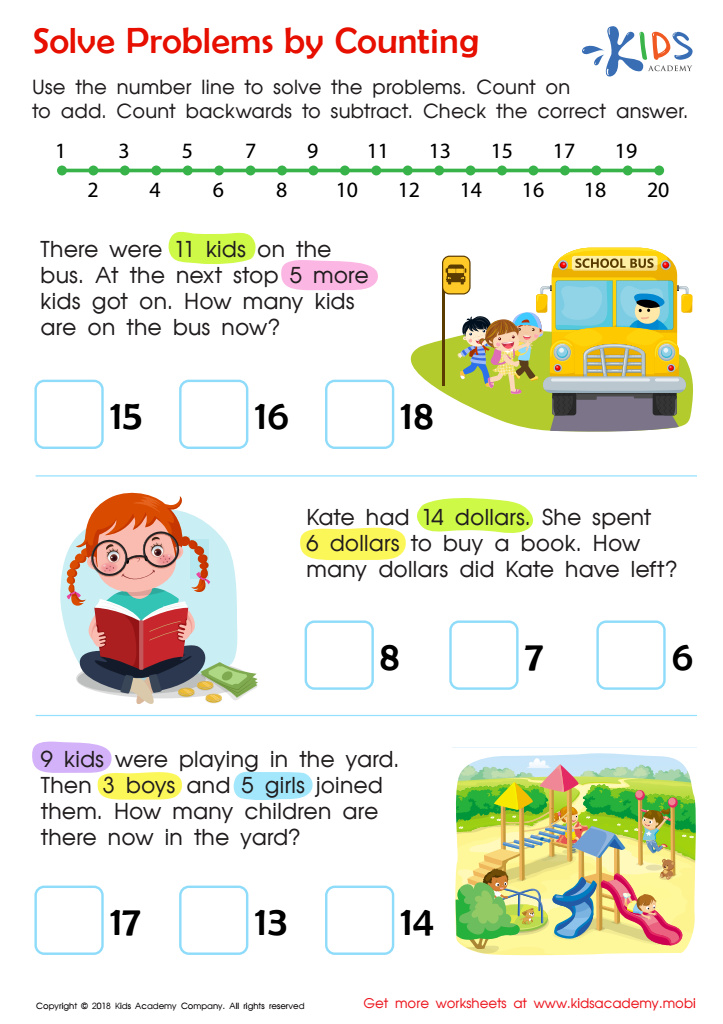
Solve Problems by Counting Worksheet
Download this free colorful worksheet and give your young math student practice with a number line. Counting on or back, they will learn to solve basic addition and subtraction word problems with ease. Ultimately, it will help them develop automaticity for later efficiency with addition and subtraction.
Solve Problems by Counting Worksheet
Worksheet
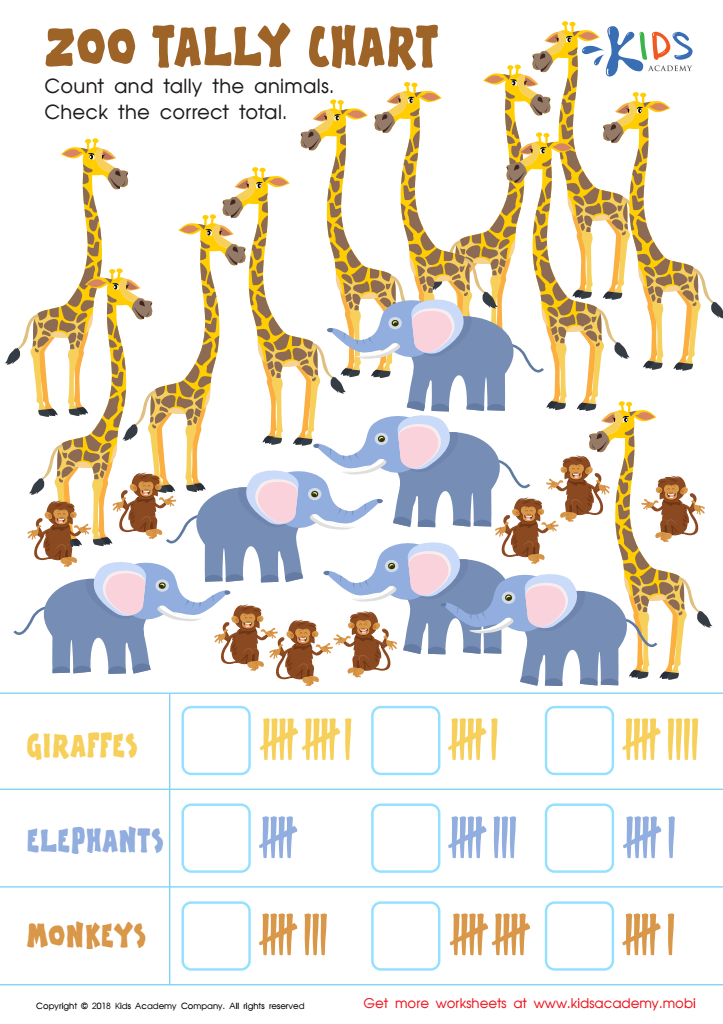
Zoo Tally Chart Worksheet
Your young mathematician will have fun counting and tallying zoo animals on this worksheet! Giraffes, elephants and monkeys - all accurately tallied at the bottom. They will assign values to each animal group to find the answer. It's math but they won't know it - it's a zoo out there!
Zoo Tally Chart Worksheet
Worksheet
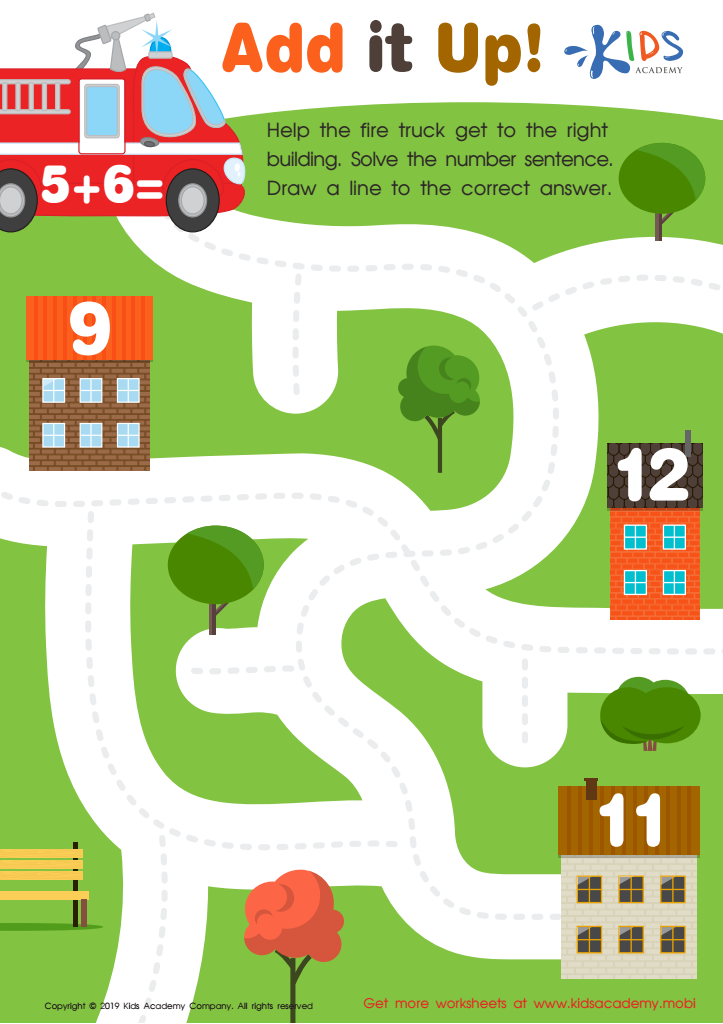
Add it Up Worksheet
The fire service is the right number to call in case of a fire. Test your children's safety knowledge by asking them other emergency numbers. Have them identify the fire truck in the worksheet and solve the number sentences. Guide them in drawing a line to the right answer.
Add it Up Worksheet
Worksheet
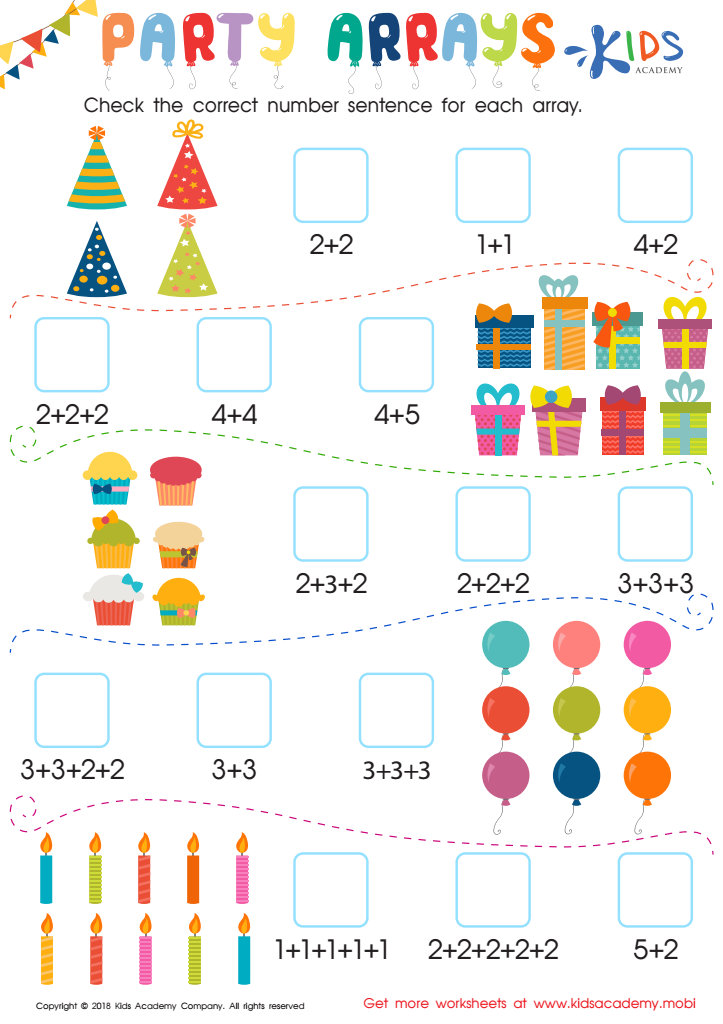
Party Arrays Worksheet
Help your child count the objects in each of the five arrays, then check the correct number sentence for each. This exercise will test their math skills and understanding of number sentences. Guide them to select the appropriate boxes.
Party Arrays Worksheet
Worksheet
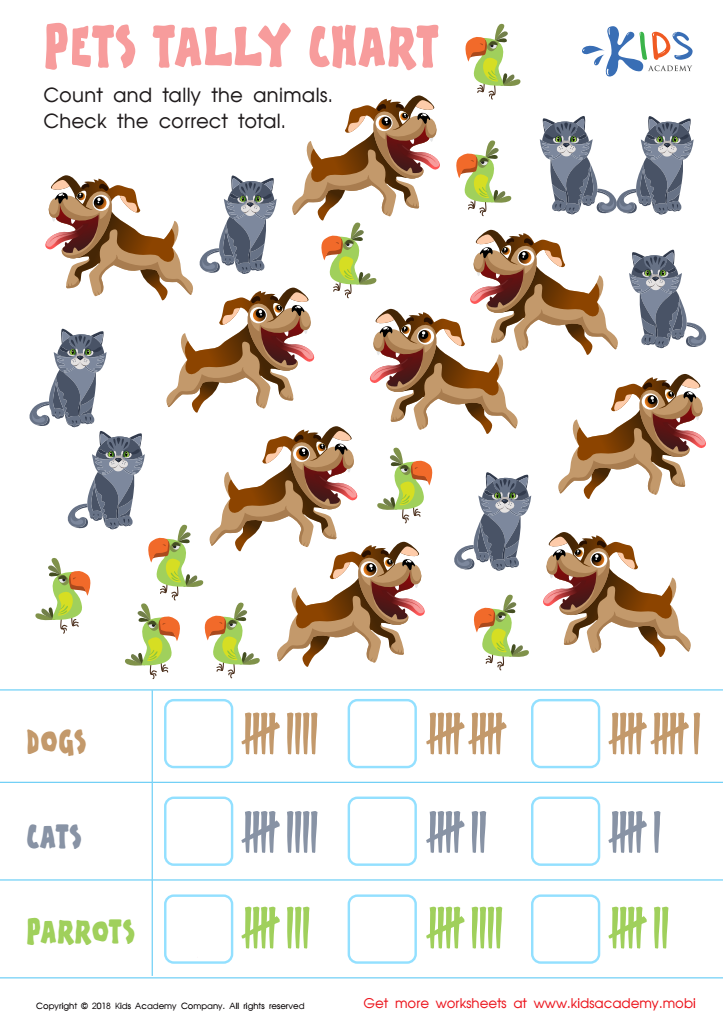
Pets Tally Chart Worksheet
Let your little mathematician count and tally the animals with this fun PDF worksheet. They'll assign value to each pet type and select the correct answer. It's a great way to practice number reasoning and learn how tallying helps keep math organized and efficient when solving equations.
Pets Tally Chart Worksheet
Worksheet
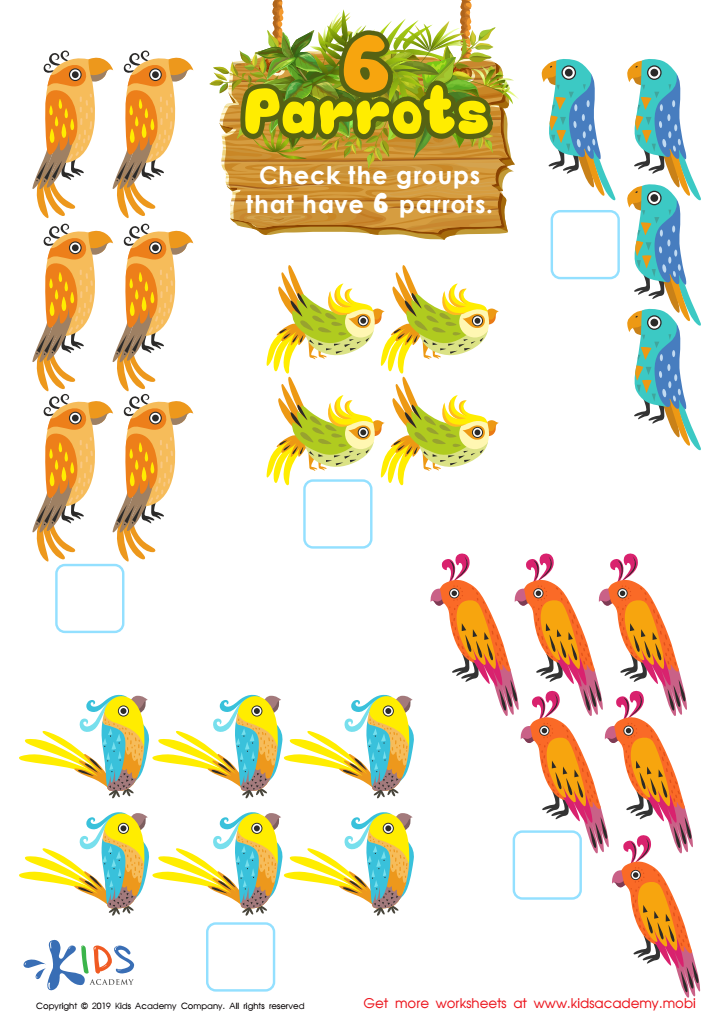
6 Parrots Worksheet
Love parrots? Here's a free worksheet to help your children practice counting to six with colorful parrot representations! Kids will adore counting the parrots and checking off groups of six - and it won't even feel like math! Just a fun way to make some new and exciting friends.
6 Parrots Worksheet
Worksheet
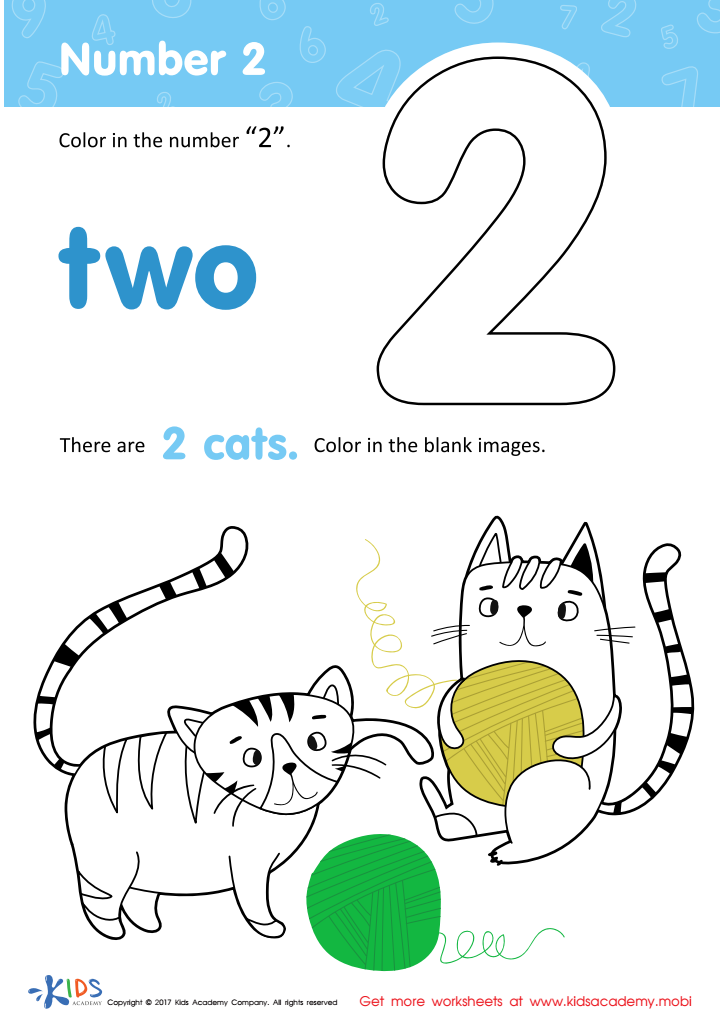
Number 2 Printable
Help your child learn to recognize the number two with these cats and their yarn balls. Print this coloring page – it's great for counting and coloring fun! Your child will develop basic numeracy skills as they visually see numbers in action.
Download (PDF)
Assign to My Students
Assign to My Students
Number 2 Printable
Worksheet
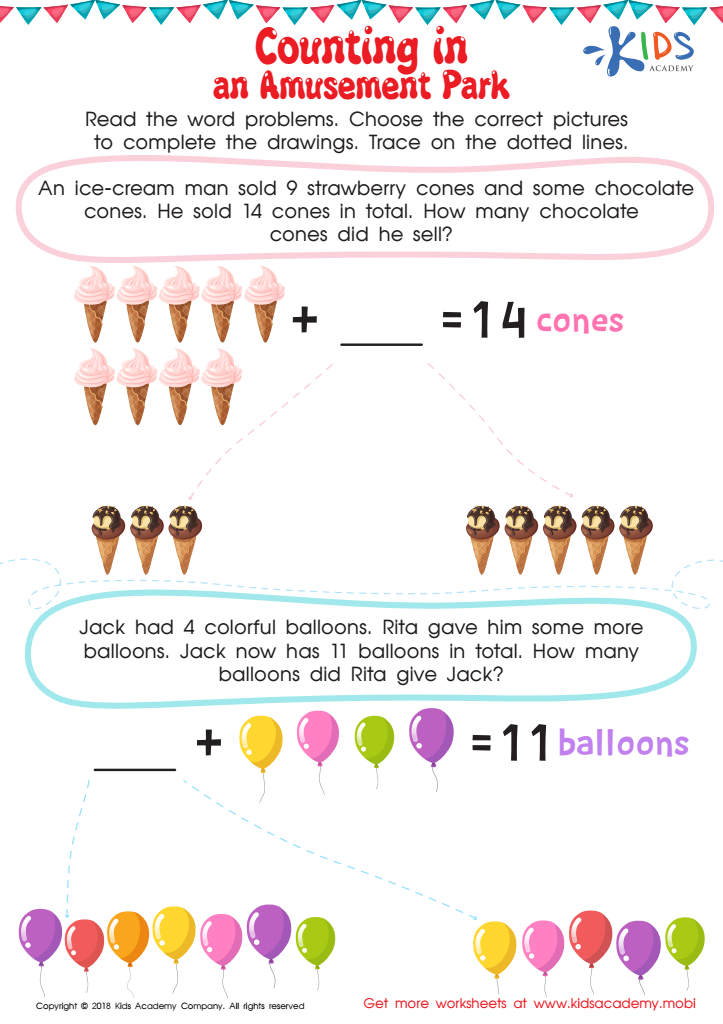
Counting in an Amusement Park Worksheet
Love amusement parks? This colorful worksheet is sure to delight your child as they solve basic addition problems with missing addends. Picture representations help them solve the math equations, while traceable lines help them accurately complete the drawings. No roller coaster ride here, but still loads of fun!
Counting in an Amusement Park Worksheet
Worksheet
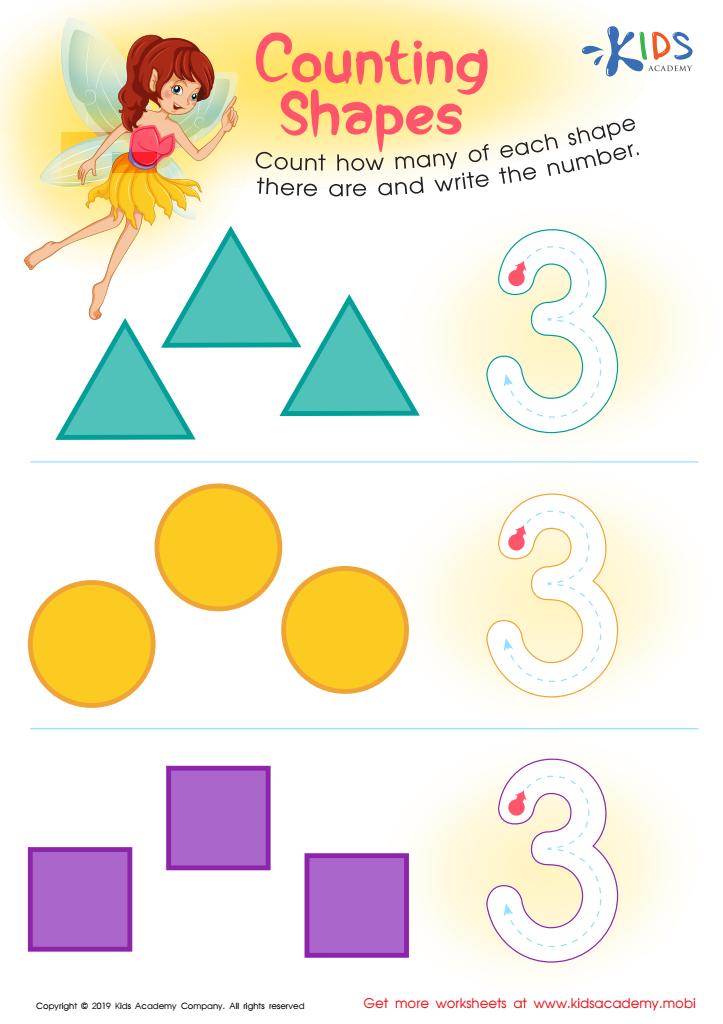
Counting Shapes Worksheet
Counting and number sense are essential skills. Picture representation helps kids understand and remember concepts. This free worksheet is perfect for introducing numbers and counting in groups of three. It also helps kids to practice writing numbers with traceable lines and guiding dots. It's an easy and fun way to give little mathematicians a successful start.
Counting Shapes Worksheet
Worksheet
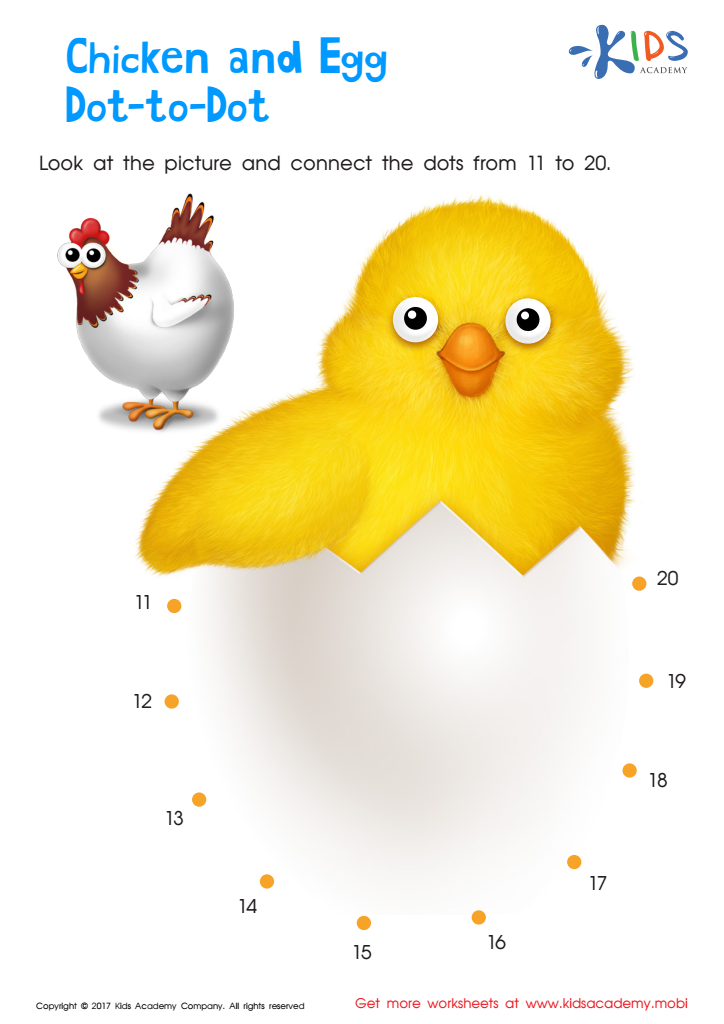
Ordering 11–20: Chicken & Egg Dot–to–dot Worksheet
Help your child hatch the chick and practice their counting skills with this dot to dot worksheet – the chicken came first! Connect the dots 11-20 to have fun and learn at the same time. Experience meaningful practice and gain confidence while drawing great pictures.
Ordering 11–20: Chicken & Egg Dot–to–dot Worksheet
Worksheet
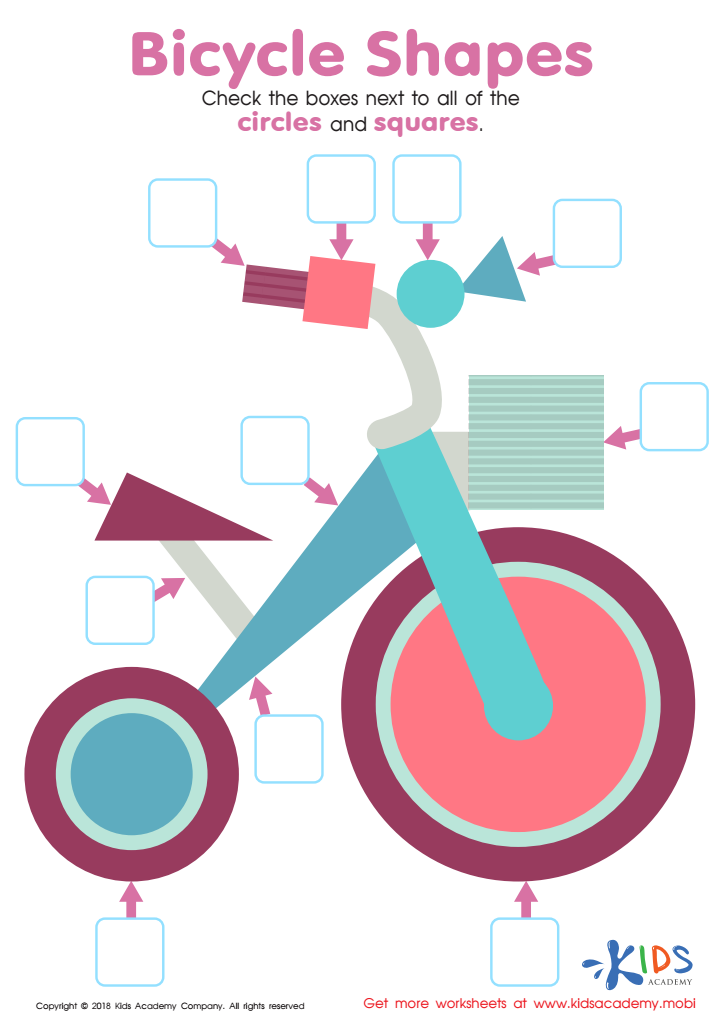
Bicycle Shapes Worksheet
This fun geometry worksheet for preschoolers asks the child to spot hidden shapes (circles, squares) in a colorful bicycle. Each shape varies in size and the child checks the box when it's found. It's a visual way to teach shapes.
Bicycle Shapes Worksheet
Worksheet
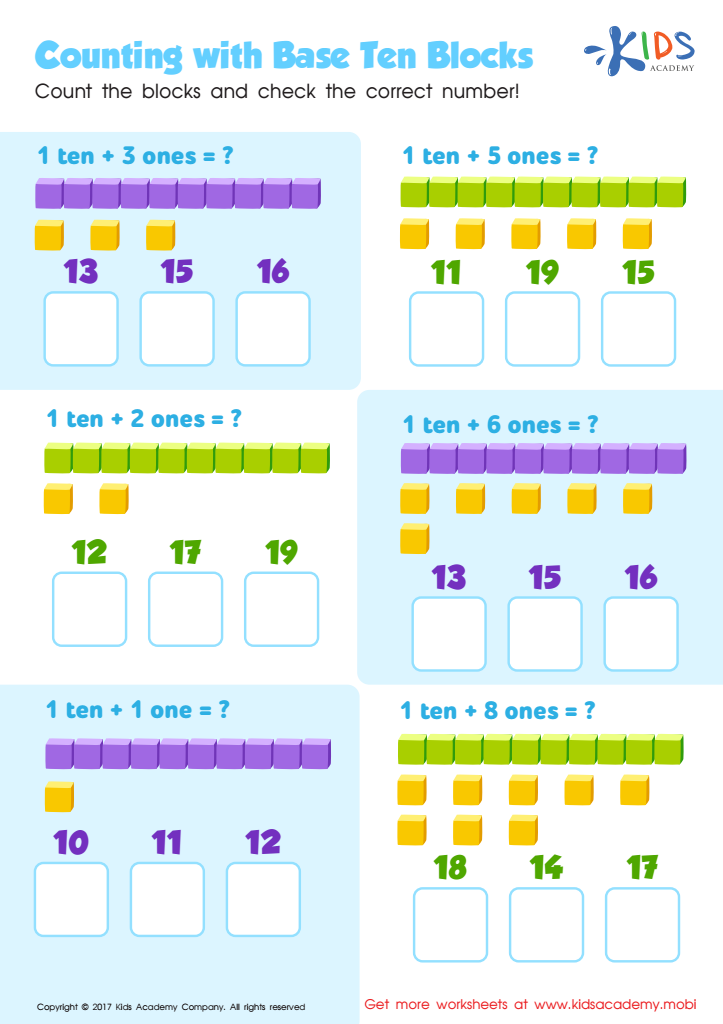
Counting with Base Ten Blocks Worksheet
Math has different levels and gets harder as your child progresses. Don't be surprised when they bring home an algebra worksheet! In this one, they will add 1 tens to varying numbers and fill in the total. This builds their understanding of base tens.
Counting with Base Ten Blocks Worksheet
Worksheet
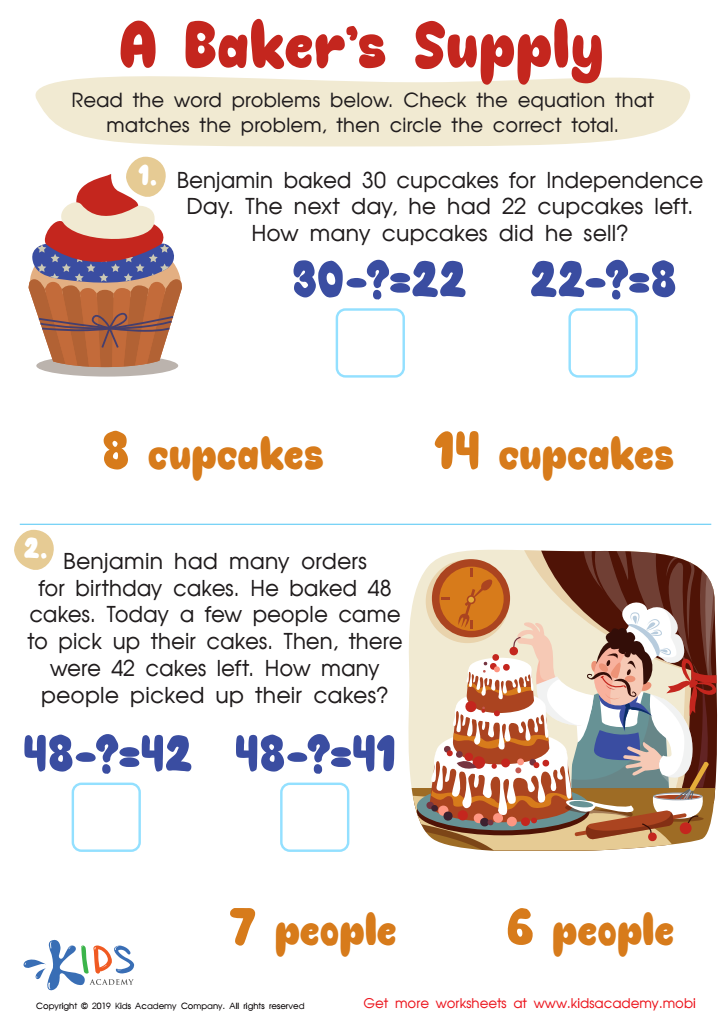
A Baker's Supply Worksheet
A visit to the baker's shop is thrilling! Your kids will love it! From scrumptious goodies to the mouthwatering aroma, it's a magical experience. Ask your kids what they're most eager to see and do. Now, read the word problems in this worksheet to them. Help them choose the correct answer for each problem and circle the correct total.
A Baker's Supply Worksheet
Worksheet
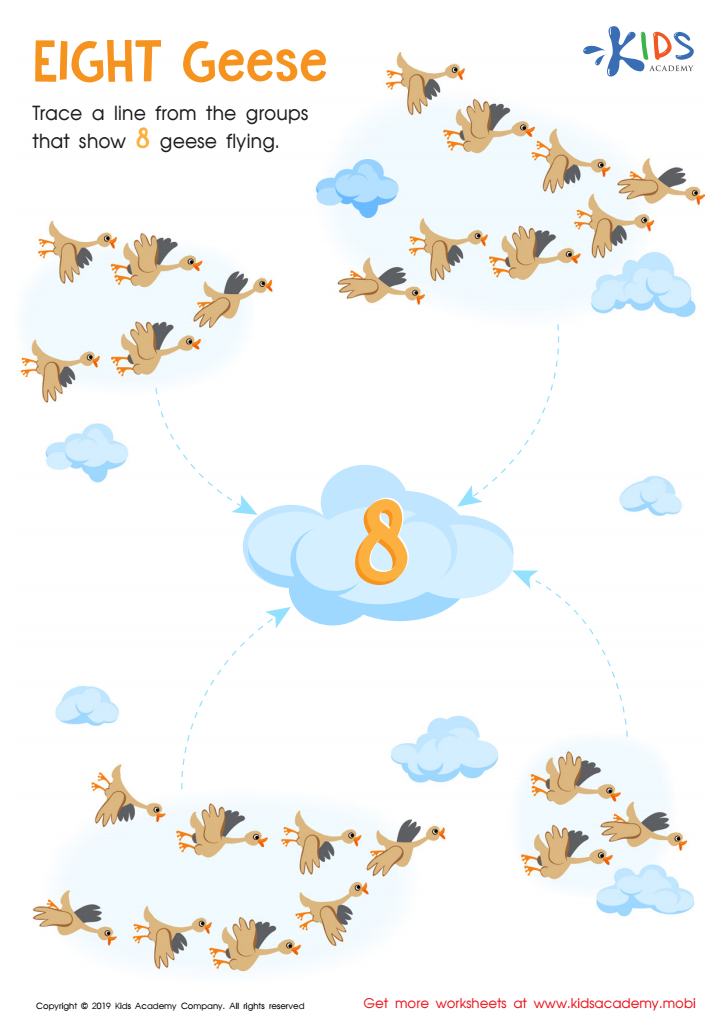
Eight Geese Worksheet
Assess your child's counting skills with this worksheet. Help them count the geese in each group, then trace a line from the groups showing 8. Give your kids a boost by providing lots of exercises and learning aids to help with counting. They likely count objects they come across, like spoons and stones. Use this opportunity to give them practice and help them learn.
Eight Geese Worksheet
Worksheet
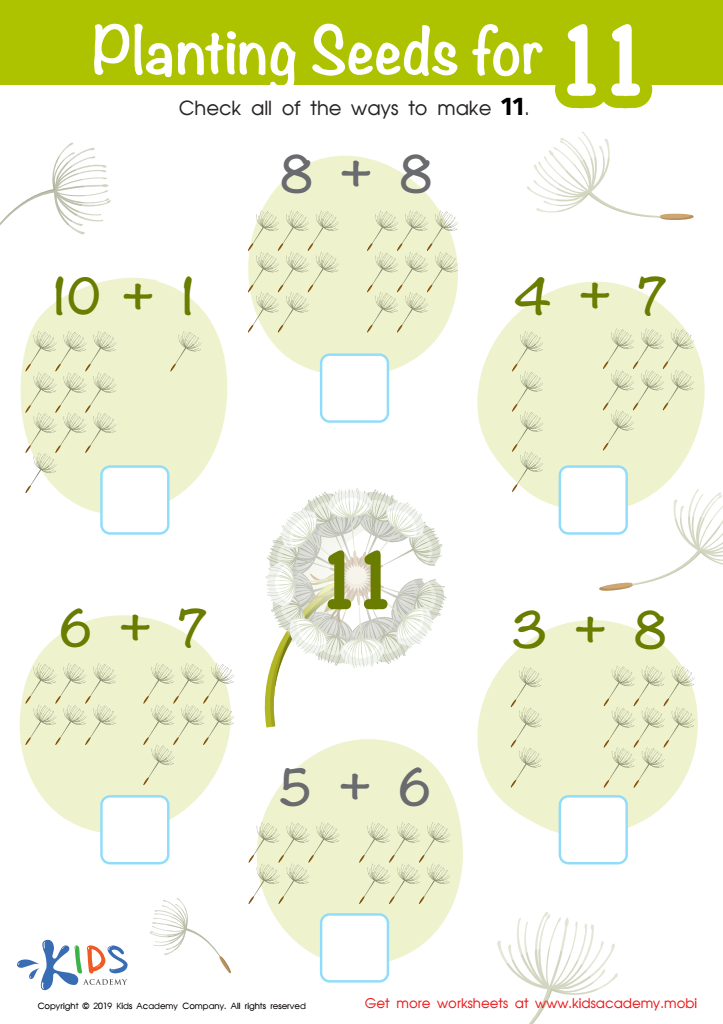
Planting Seeds for 11 Worksheet
Before starting, ask your students to count as high as they can. Explain that different numbers can add up to the same total. Give examples like 2+2 =4 and 3+1 =4. Ask if they can think of other examples. Then have them work through the equations in the printout and circle all that add up to 11.
Planting Seeds for 11 Worksheet
Worksheet
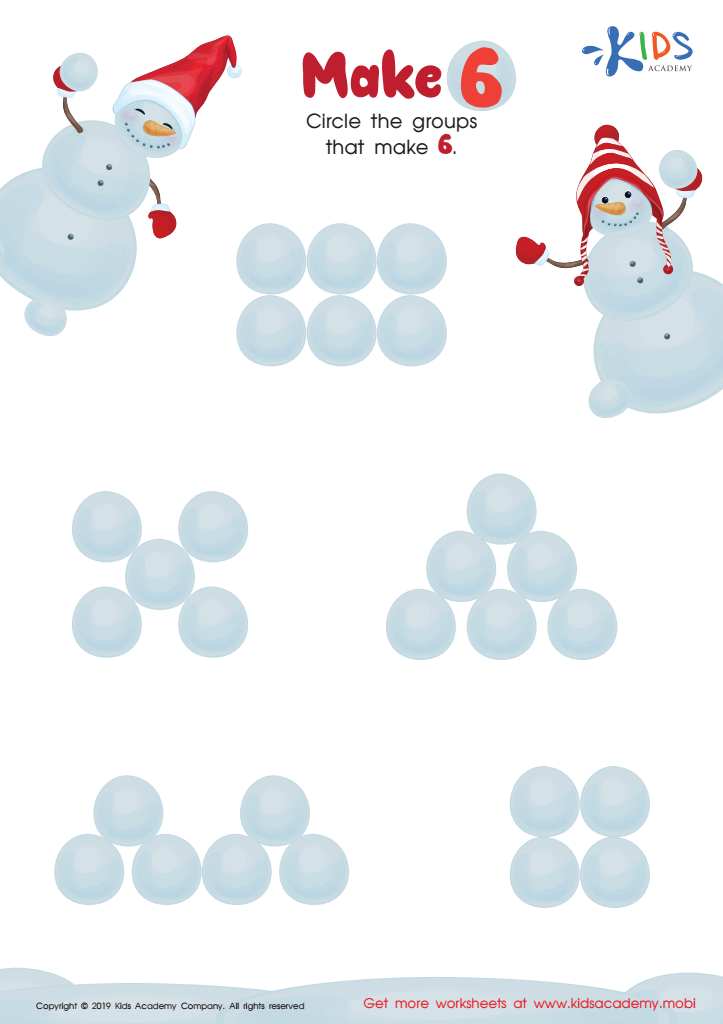
Make 6 Worksheet
Fun snowball fights are great! With lots of ammo, kids can join their snowman friends and count out groups of six. Through number sense practice, and seeing one-to-one picture representation, your child can strengthen their skills while having a blast. Don't forget to bundle up as they may ask for more!
Make 6 Worksheet
Worksheet
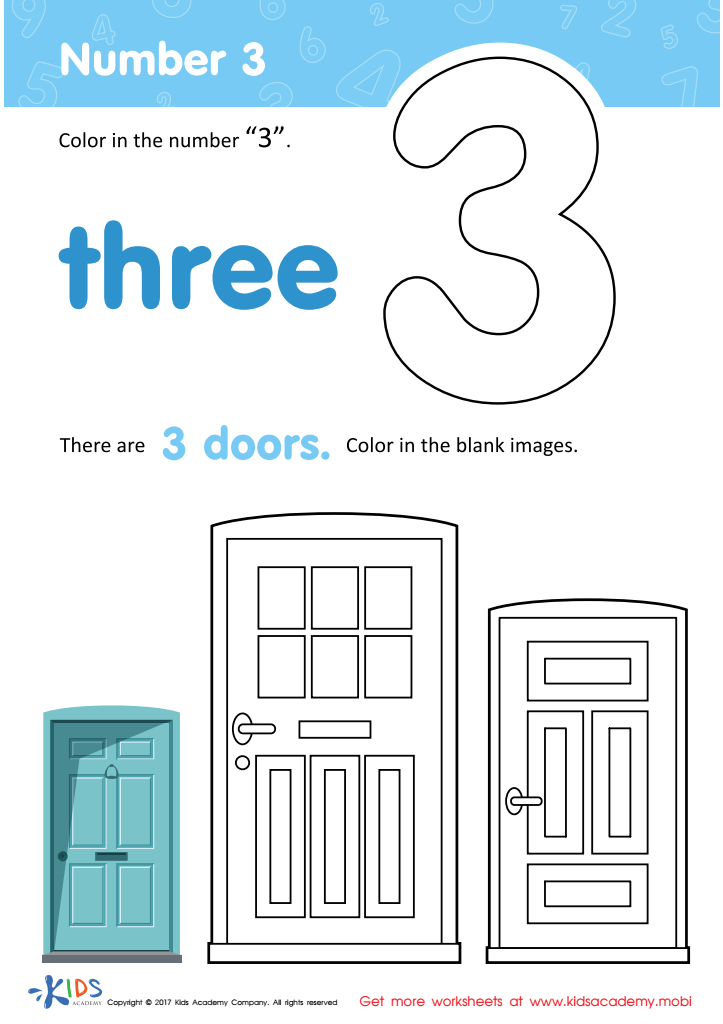
Number 3 Worksheet
Open the door to learning numbers! This counting coloring page helps kids recognize and count to 3, while using imagination and creativity to design lovely doors. It's a fun way to learn numbers!
Download (PDF)
Assign to My Students
Assign to My Students
Number 3 Worksheet
Worksheet
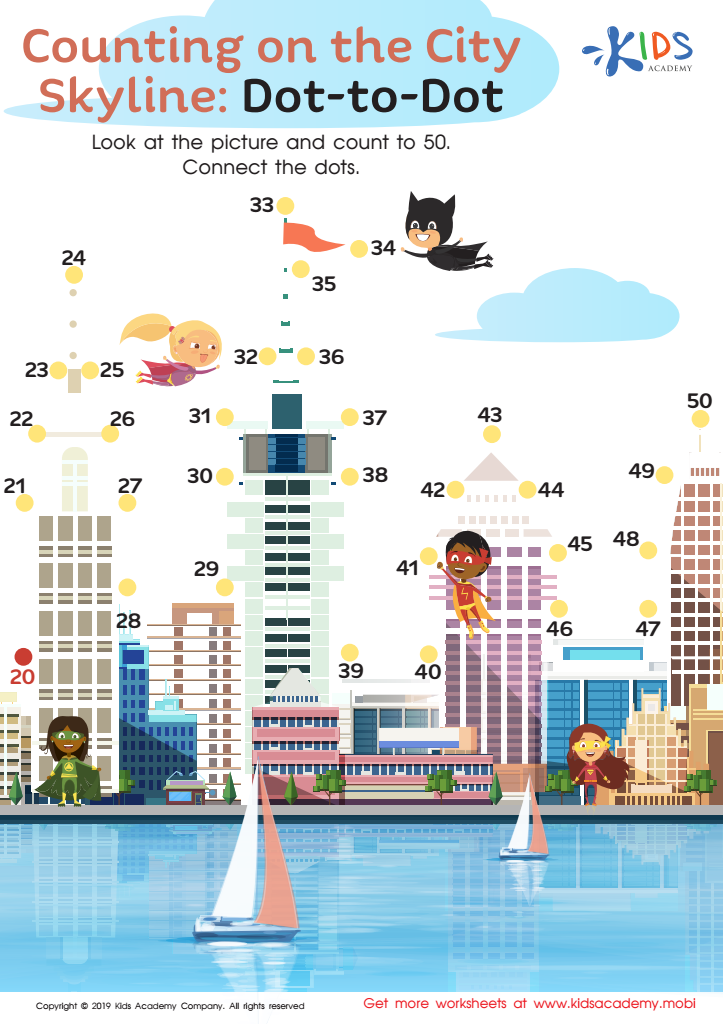
Counting on the City Skyline: Dot-to-Dot Worksheet
Kids will love connecting the dots to make a superhero skyline! They'll reinforce their number line thinking and number sense while building fine-motor skills. Watch them beam with pride as the cityscape reveals itself, all thanks to some math practice.
Counting on the City Skyline: Dot-to-Dot Worksheet
Worksheet
Join Kids Academy for Free
Who is primarily going to use this learning content?








Counting practice in early mathematics is crucial for children aged 6-8, as it lays the foundation for numerous cognitive and academic skills. At this age, children transition from concrete to more abstract mathematical concepts, making counting an essential skill for their development. It enhances their number sense, improving their ability to understand quantities, comparisons, and numerical relationships, which are vital in everyday life.
Parents and teachers should care about counting practice because it fosters critical thinking skills. Engaging in counting activities promotes problem-solving and logical reasoning, helping children make connections between numbers and real-world applications. Moreover, incorporating counting into fun games and activities increases motivation and engagement, making learning enjoyable.
Additionally, counting practice helps build confidence in children's mathematical abilities. As they master counting, they feel more competent in tackling more complex mathematical concepts, paving the way for success in higher grade levels. Supporting counting practice through consistent practice allows parents and teachers to create a strong mathematical foundation for children, setting them up for future success in academics and beyond. Investing time in these early skills is a powerful way to contribute to children's lifelong learning and development.








