Understanding fractions Easy Worksheets for Ages 6-9
21 filtered results
-
From - To
Discover fun and engaging worksheets designed to help children ages 6-9 master the concept of fractions. Tailored for young learners, these worksheets simplify complex ideas using playful illustrations and interactive activities. Each sheet breaks down fractions into manageable parts, allowing kids to easily grasp halves, thirds, and quarters. Through visual representations and hands-on exercises, students build their confidence and improve their math skills seamlessly. Perfect for both classroom use and home study, these easy worksheets align with educational standards, ensuring kids stay ahead. Give your child the tools they need to succeed in understanding fractions effortlessly!
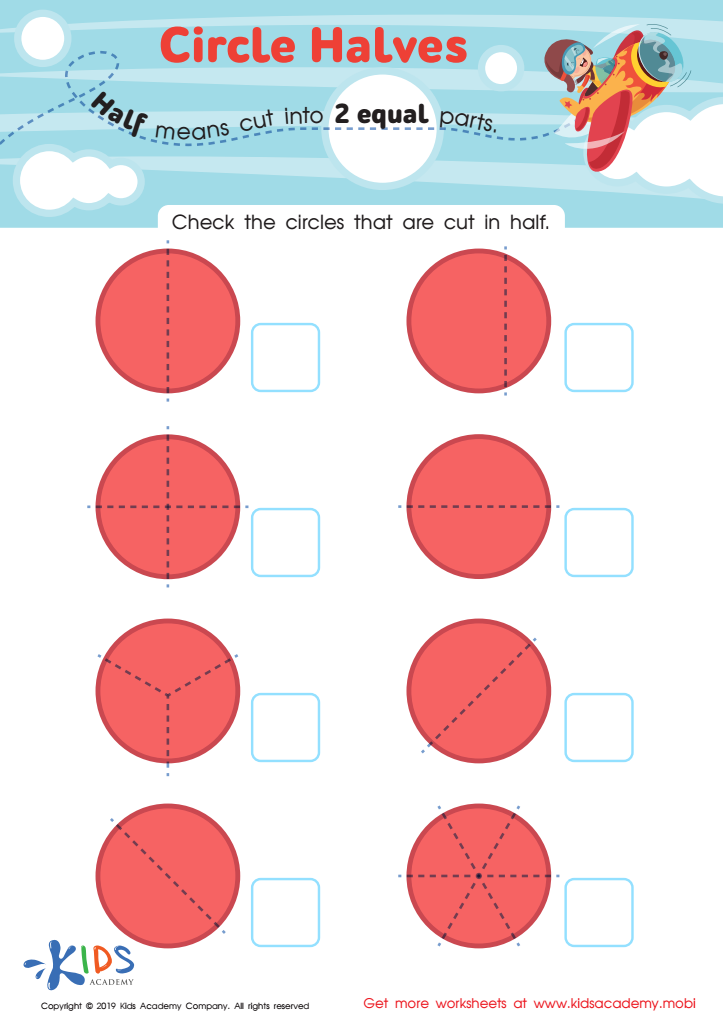
Circle Halves Worksheet
 Assign to My Students
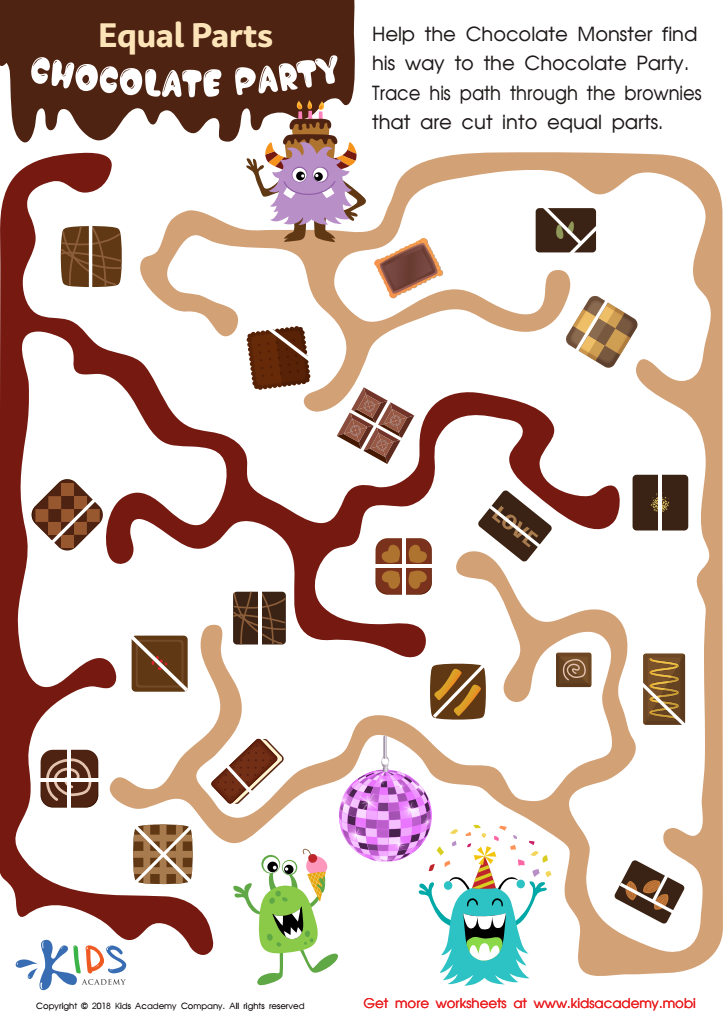
Equal Parts: Chocolate Party Worksheet
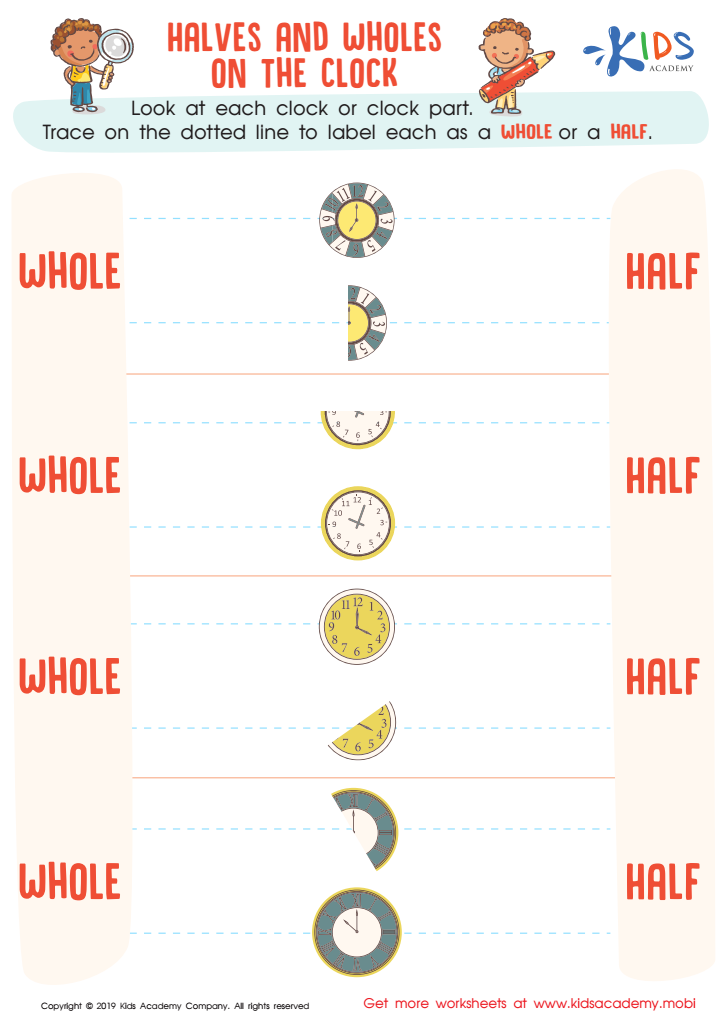
Halves and Wholes on the Clock Worksheet
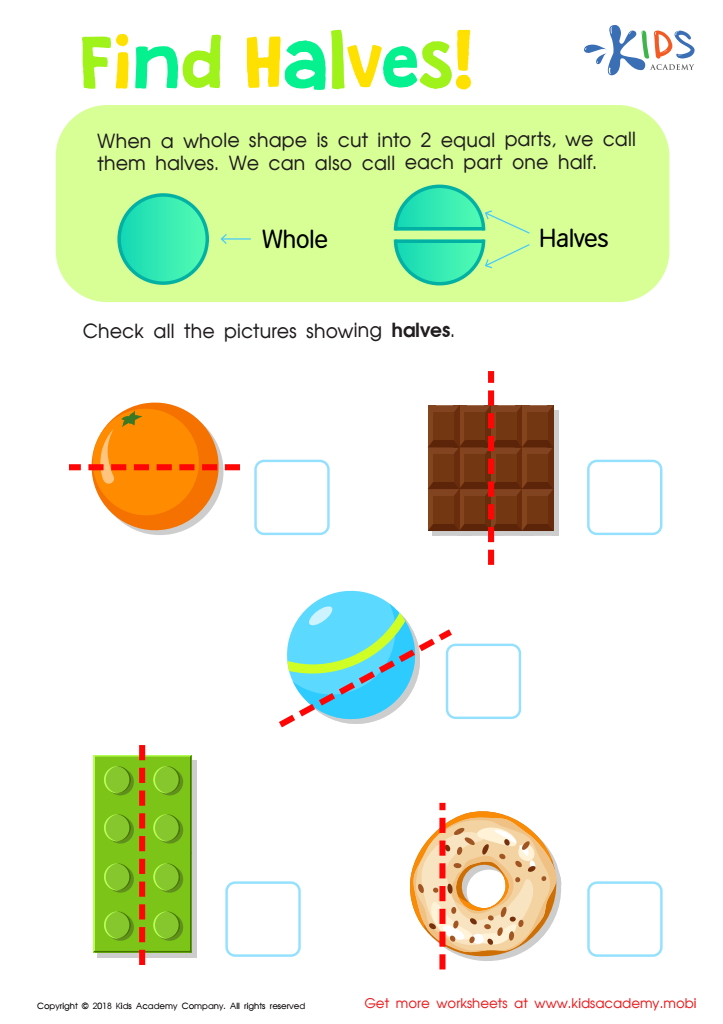
Find Halves Worksheet
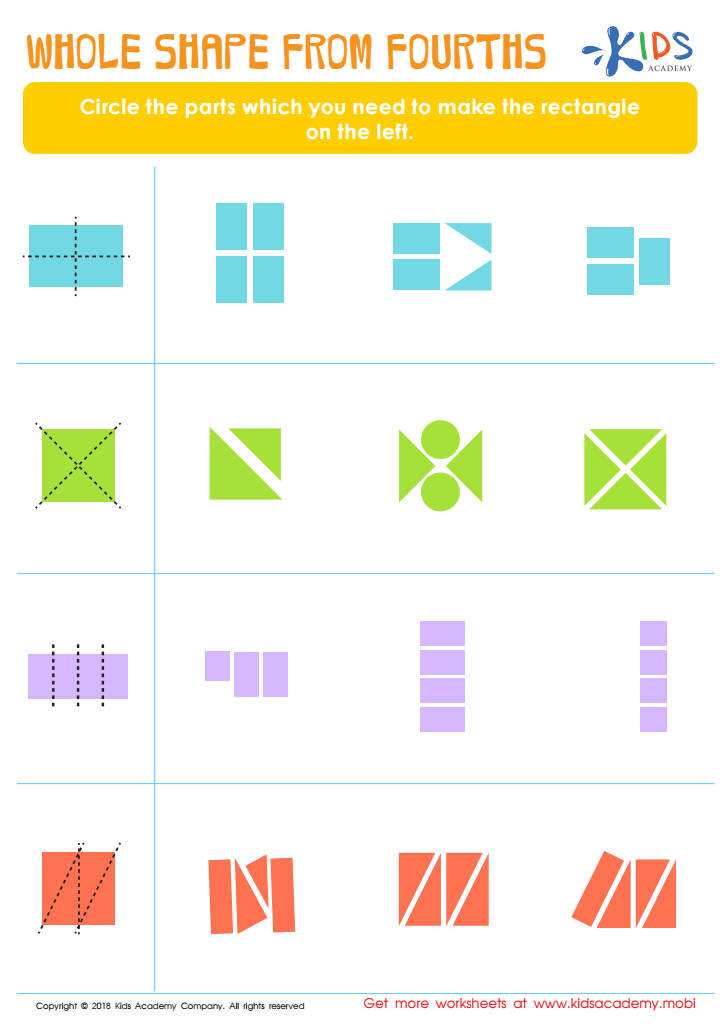
Whole Shape from Fourths Worksheet
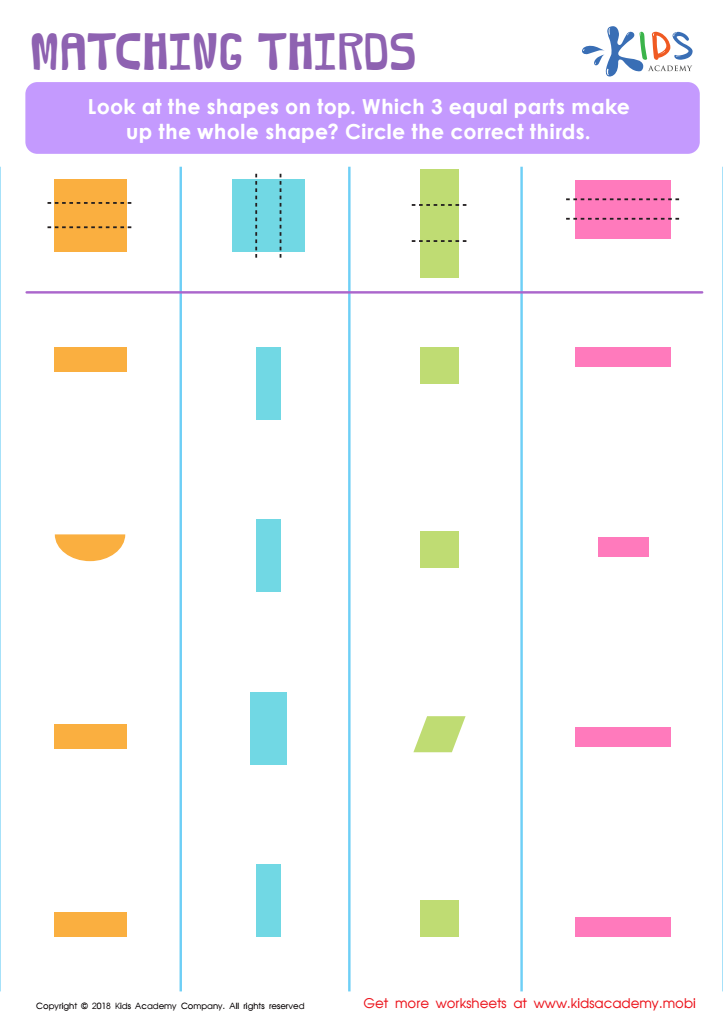
Matching Thirds Worksheet
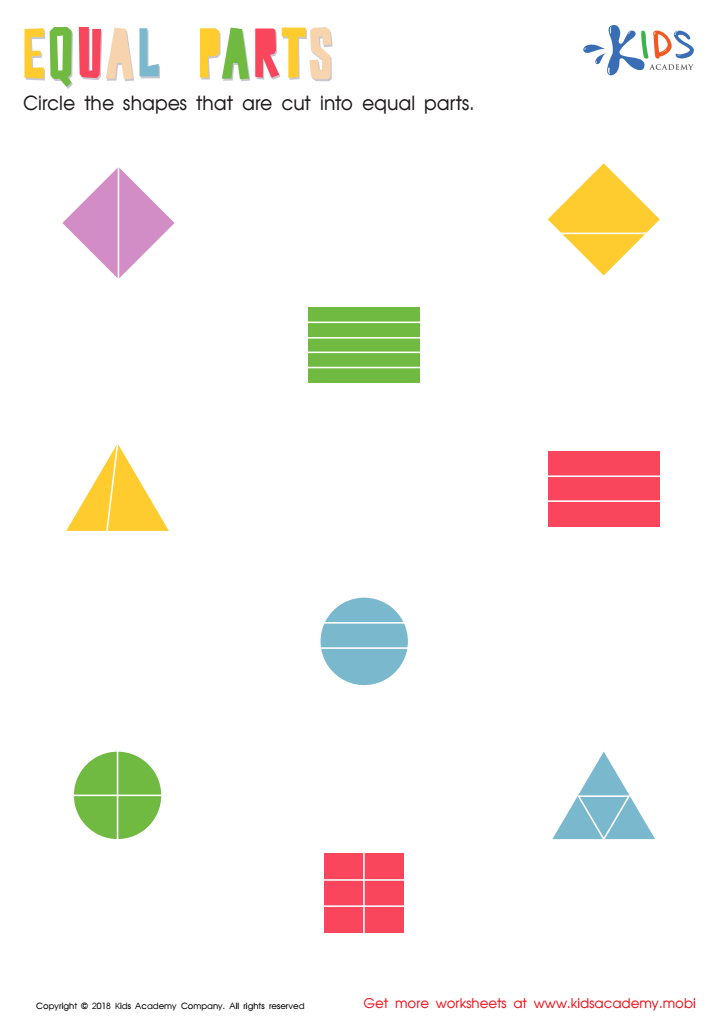
Equal Parts: Shapes Worksheet
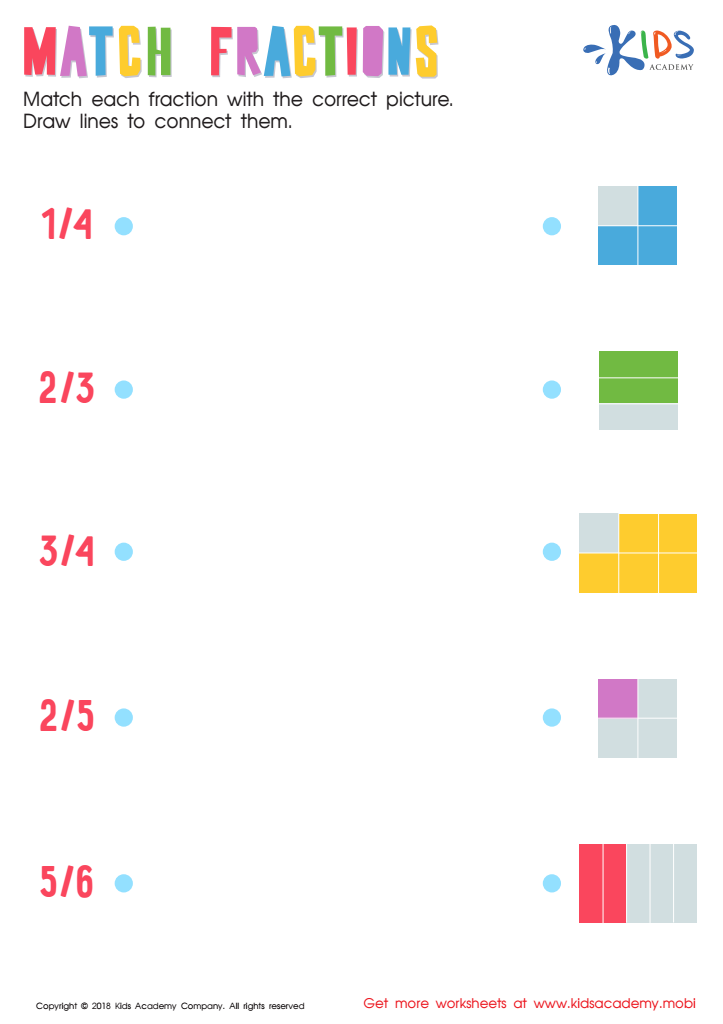
Match Fractions Worksheet
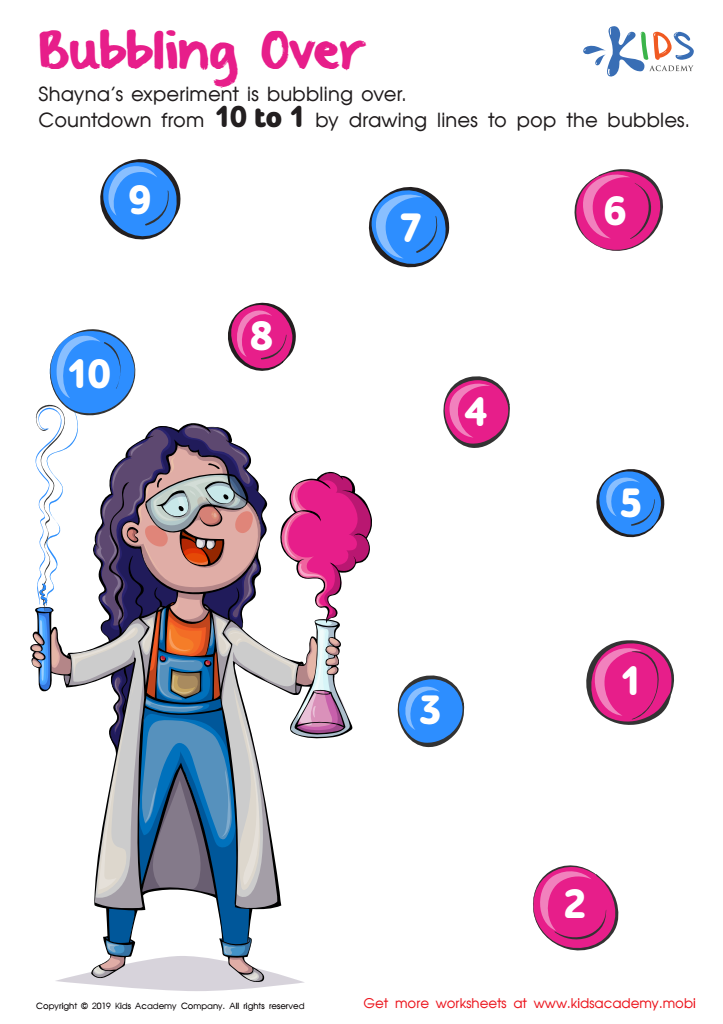
Bubbling Over Worksheet
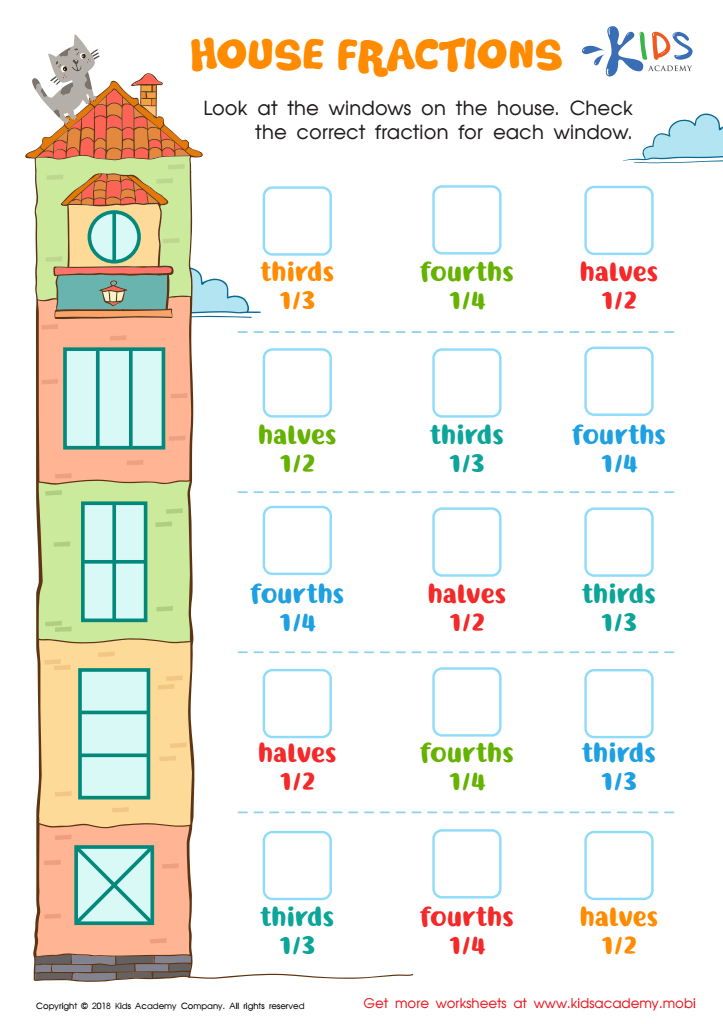
House Fractions Worksheet
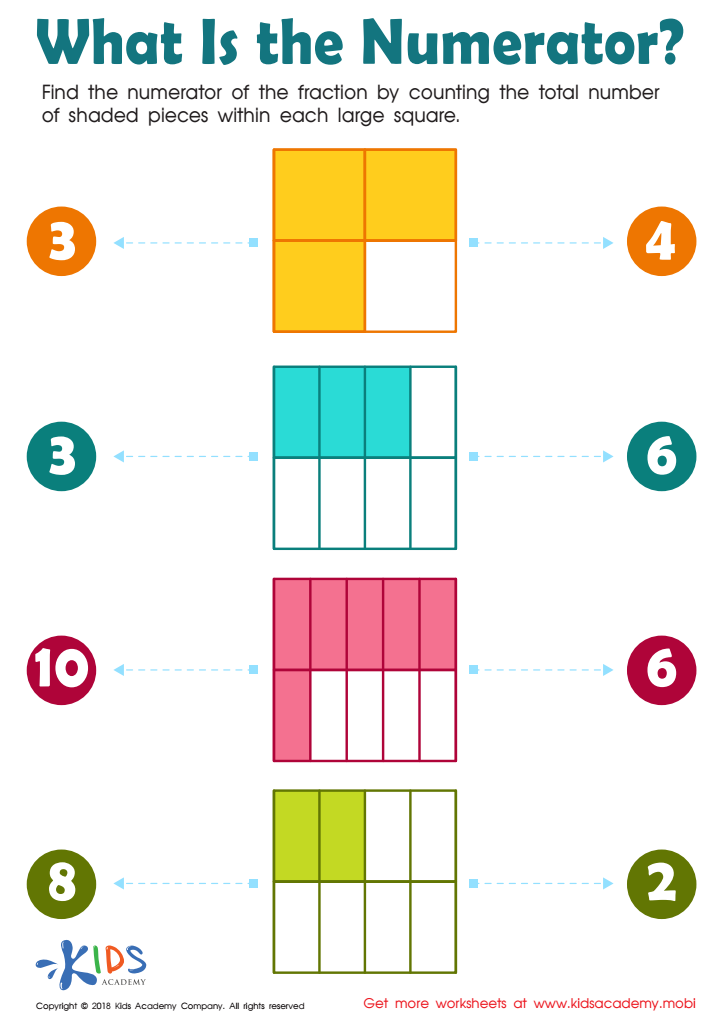
What Is the Numerator? Worksheet
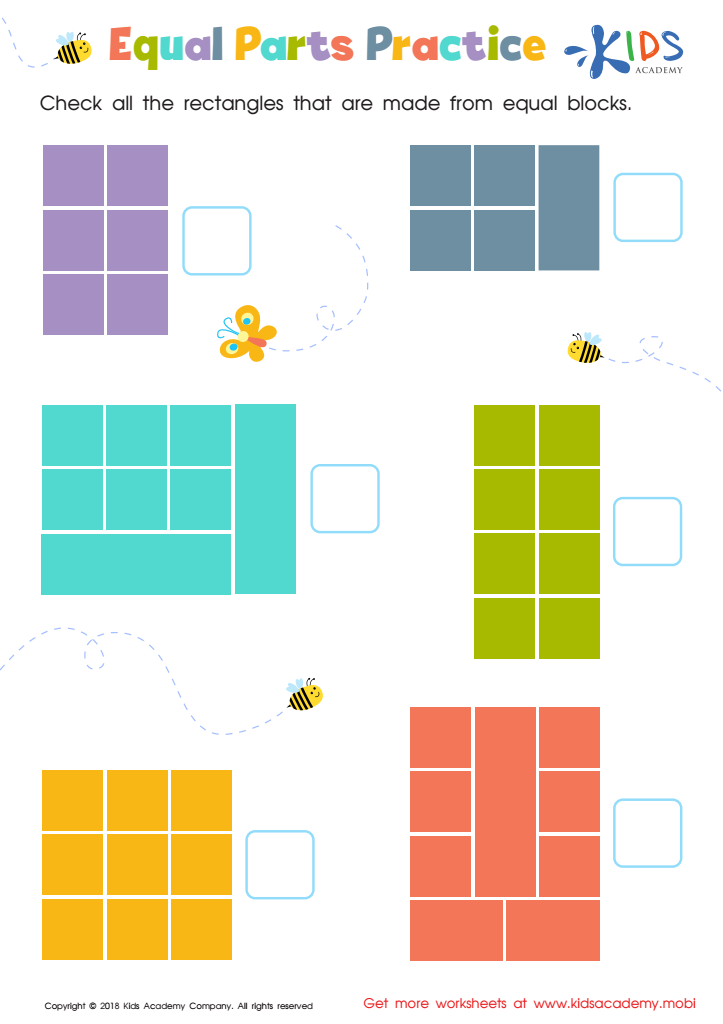
Equal Parts Practice Worksheet
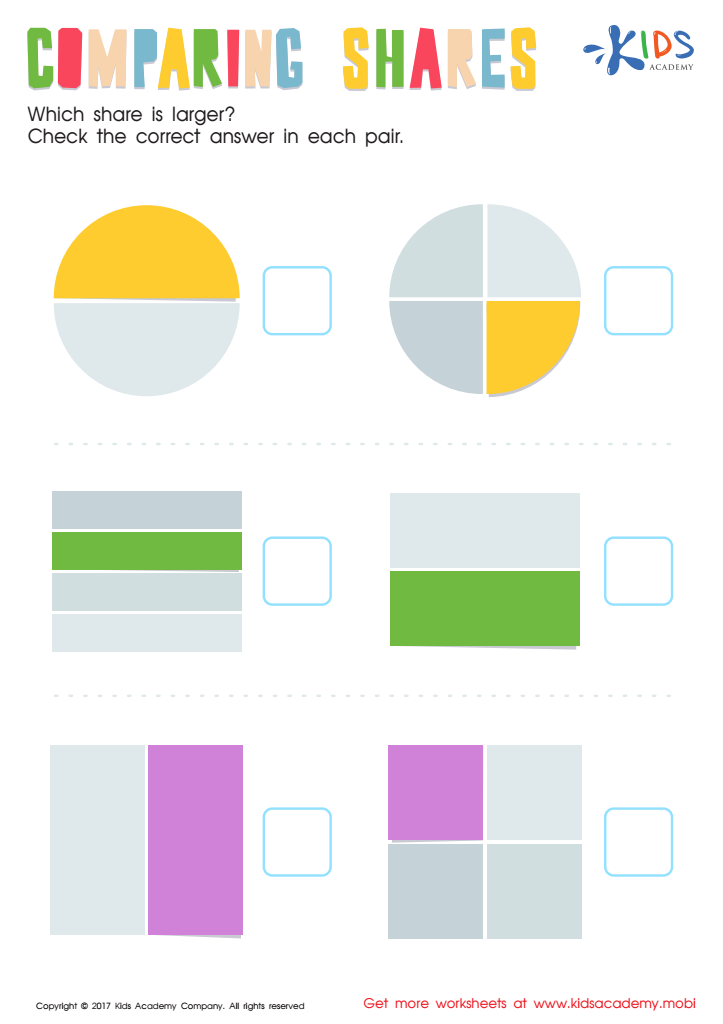
Comparing Shares Worksheet
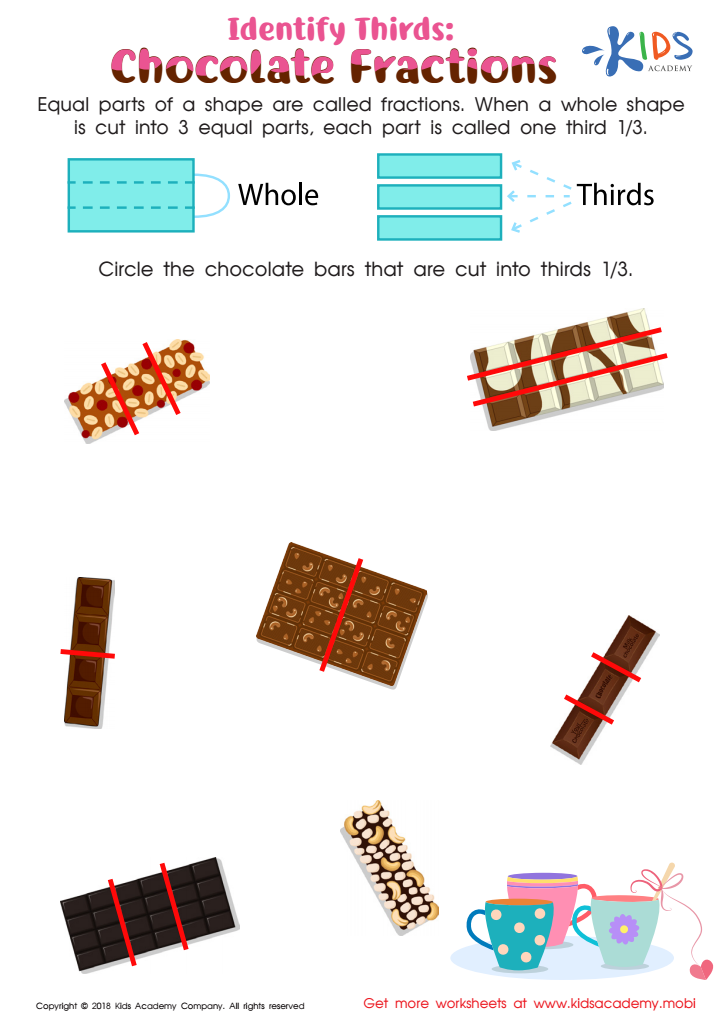
Identify Thirds: Chocolate Fractions Worksheet
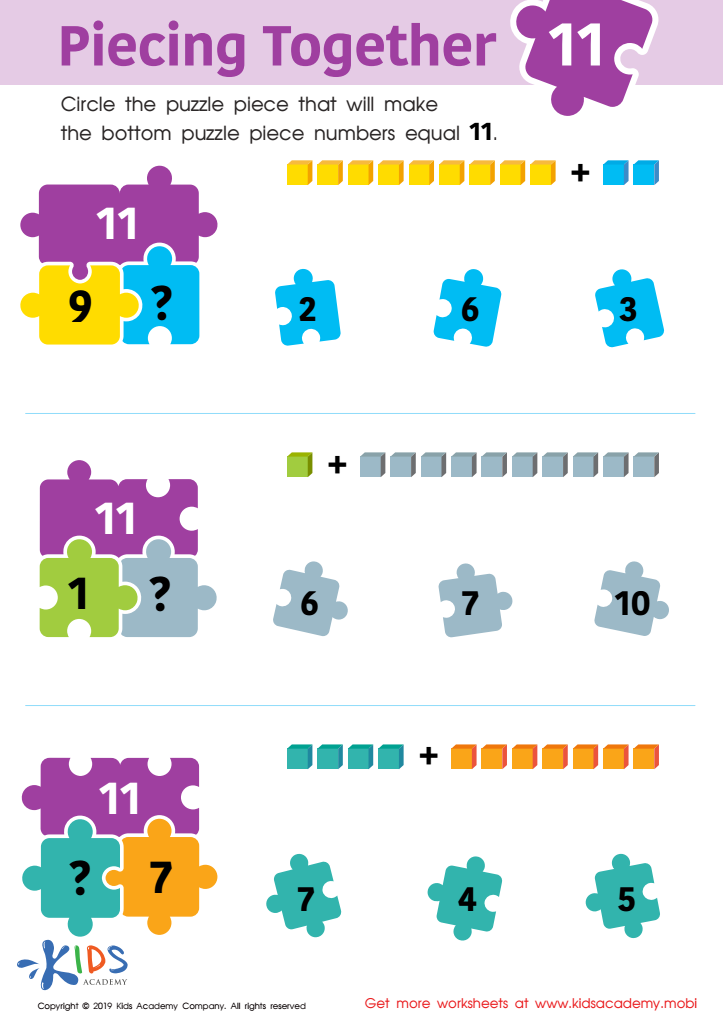
Piecing Together 11 Worksheet
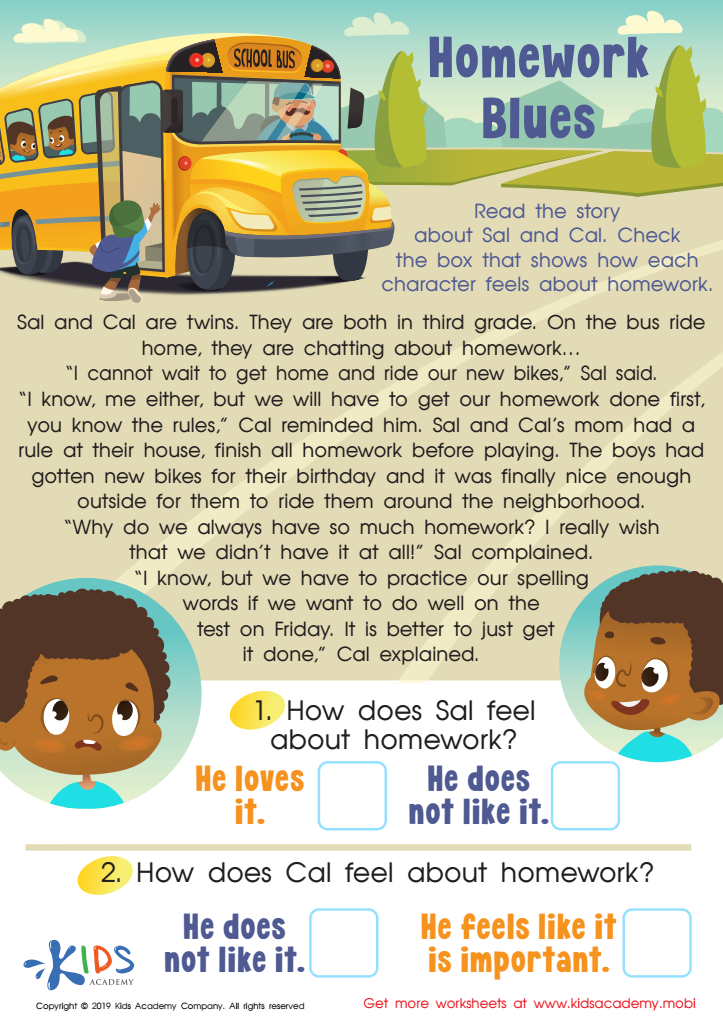
Homework Blues Worksheet
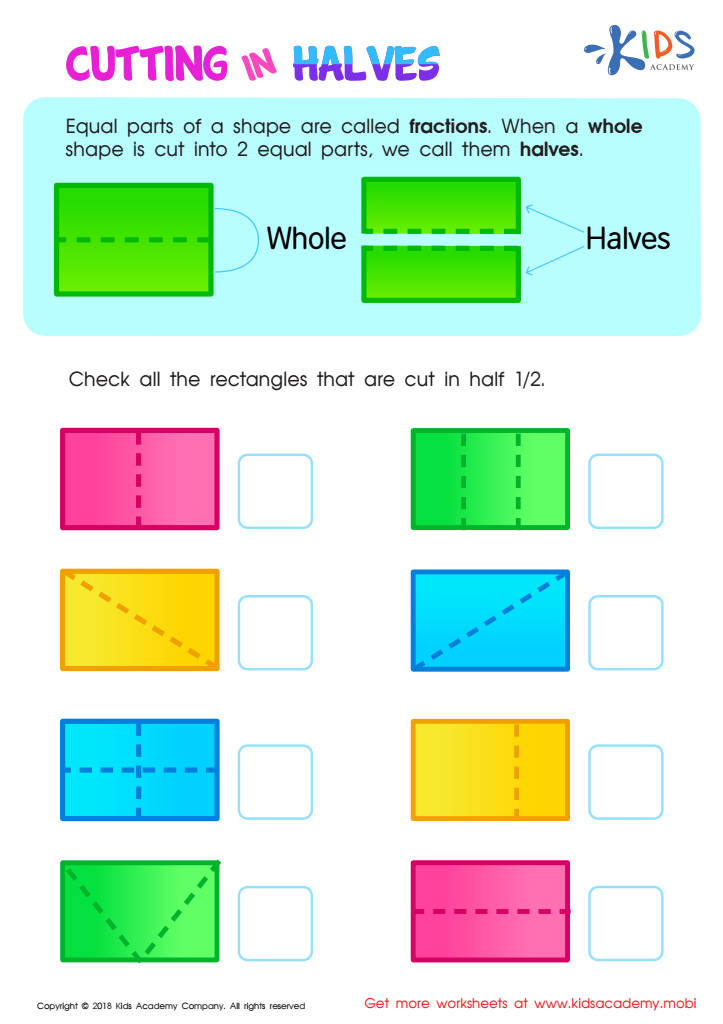
Cutting in Halves Worksheet
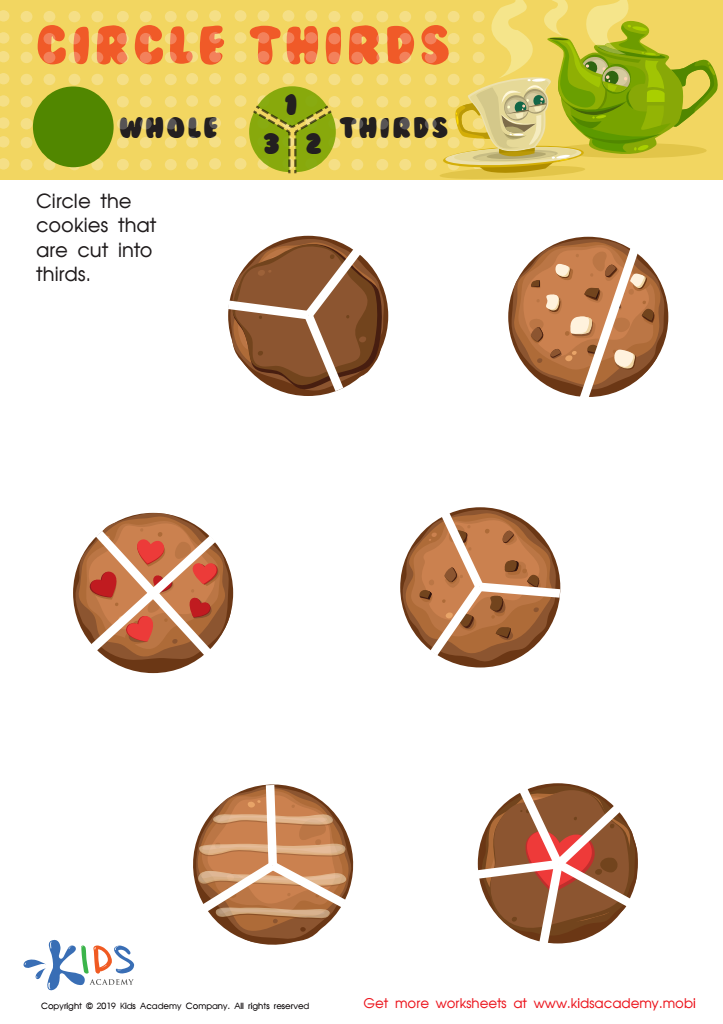
Circle Thirds Worksheet
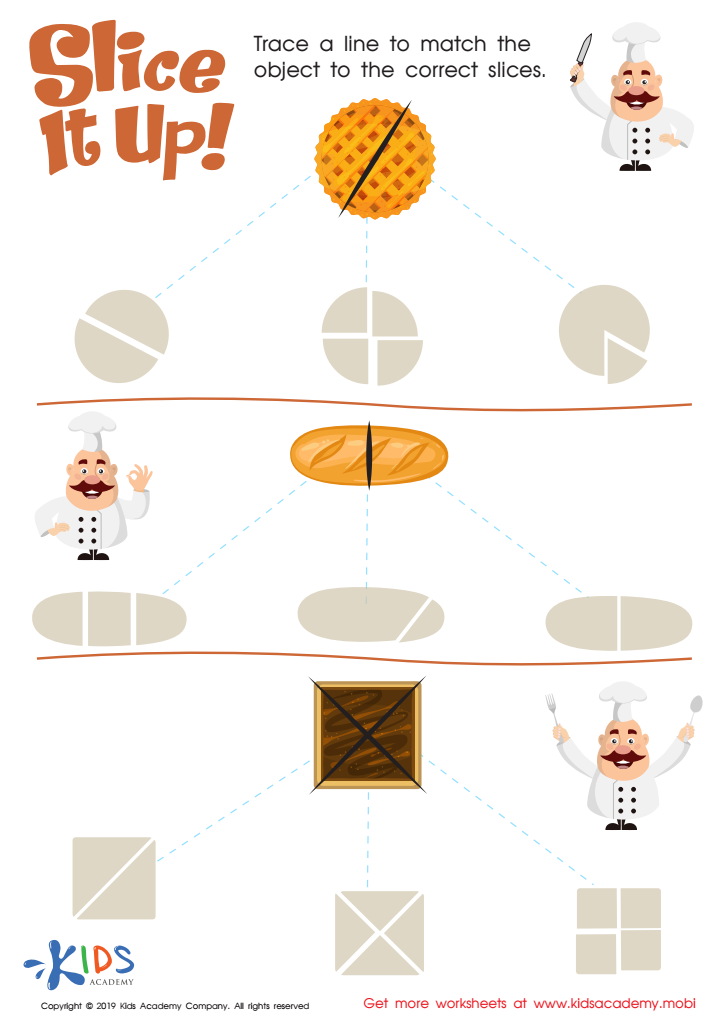
Slice It Up Worksheet
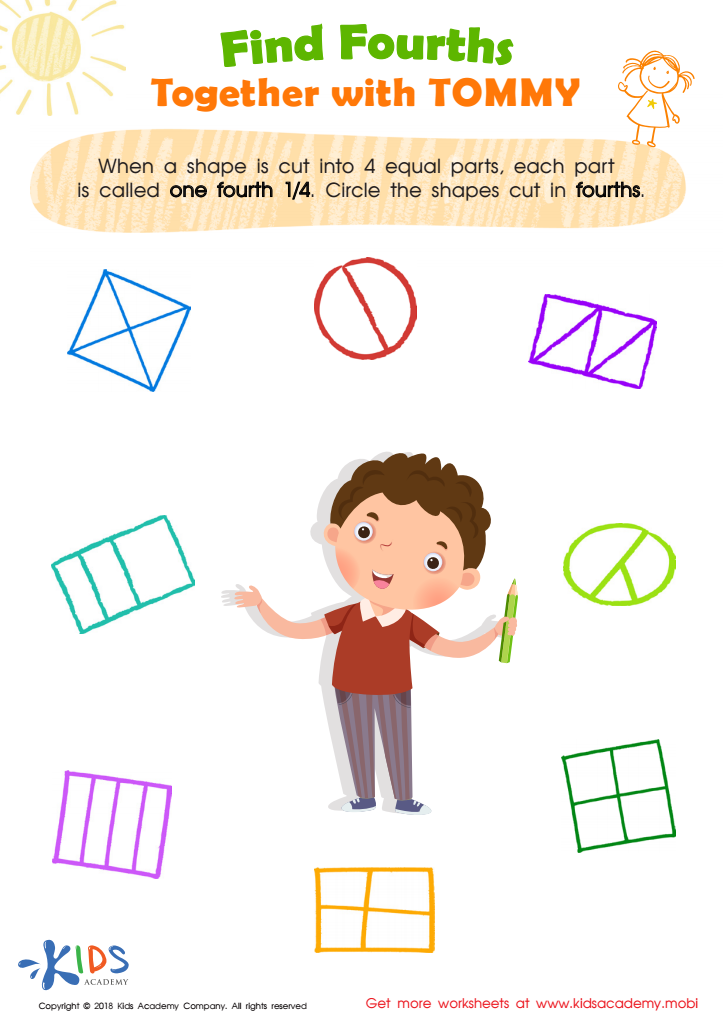
Find Fourths Together with Tommy Worksheet
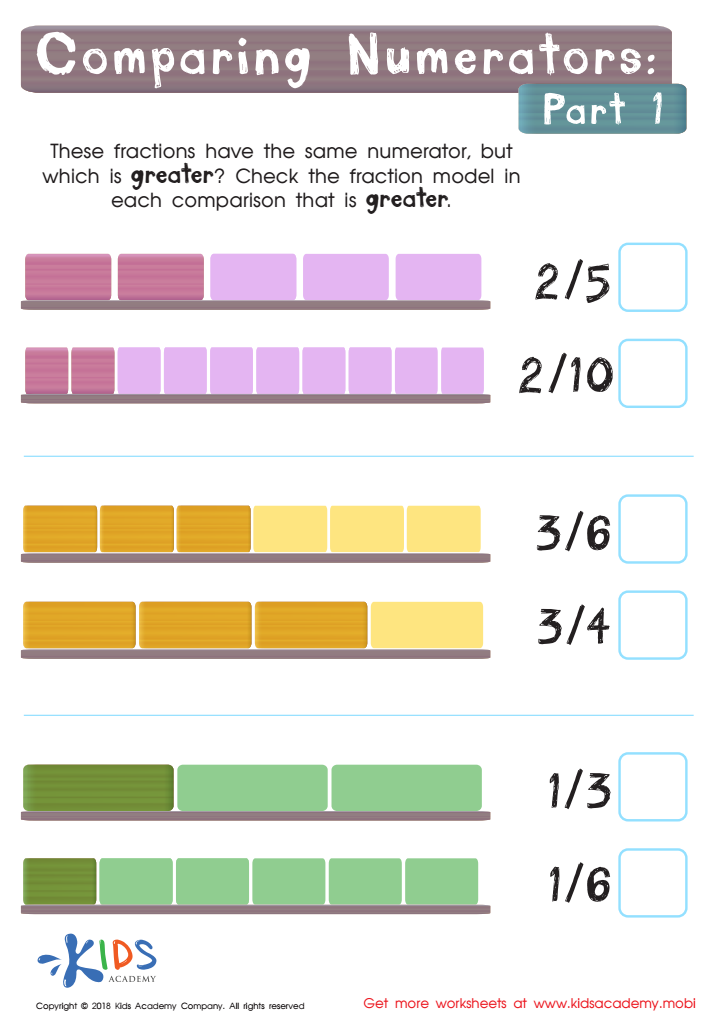
Comparing Numerators Part 1 Worksheet







Understanding fractions at an early age is crucial for children in the 6-9 age group because it lays the foundational skills needed for more advanced math concepts. First and foremost, a solid grasp of fractions helps improve overall numerical literacy. Fractions are everywhere in daily life - from measuring ingredients in a recipe to dividing up treats among friends. When kids develop a strong understanding of fractions, they are better prepared to approach and solve practical problems confidently.
Moreover, early comprehension of fractions aids in smoother progression through later stages of math education. Fractions serve as building blocks for algebra, percentages, ratios, and advanced geometry. If children are introduced to fractions in a simple and engaging manner, they are more likely to develop a positive attitude towards math, rather than seeing it as a tough and daunting subject.
From a cognitive perspective, learning fractions also enhances problem-solving skills and promotes logical thinking. It teaches children how to weigh different parts of a whole, helping them to better understand balance, proportions, and relationships between numbers.
Therefore, by introducing fractions early and making the learning process easy and enjoyable, parents and teachers are not only aiding in children's academic journey but also bolstering their critical thinking and real-life problem-solving skills.








