Easy Area and Perimeter Worksheets for Ages 7-9
4 filtered results
-
From - To
Discover engaging Easy Area and Perimeter Worksheets designed specifically for children aged 7-9. Our worksheets help young learners explore the concepts of area and perimeter through fun and interactive exercises. Tailored to reinforce math skills, these worksheets feature various shapes and scenarios that captivate students' imaginations while promoting critical thinking. Perfect for classroom practice or home study, our resources provide clear instructions and visual aids to support comprehension. Foster a love for math and build foundational skills with our printable worksheets that make learning about area and perimeter enjoyable and straightforward. Start helping your child excel in math today!
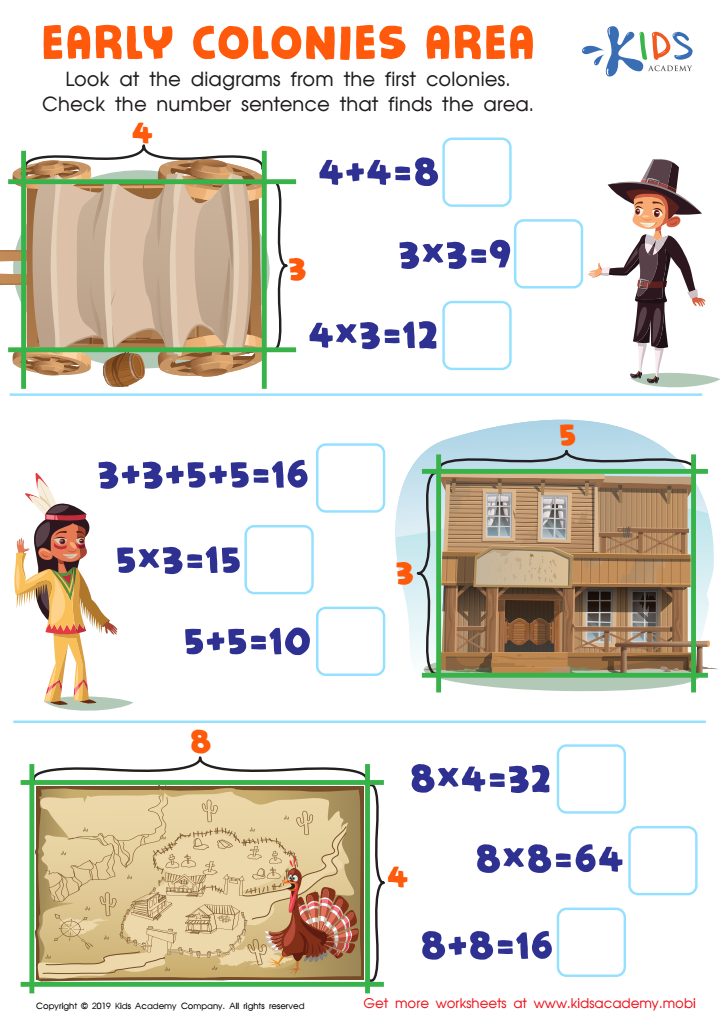
Early Colonies Area Worksheet
 Assign to My Students
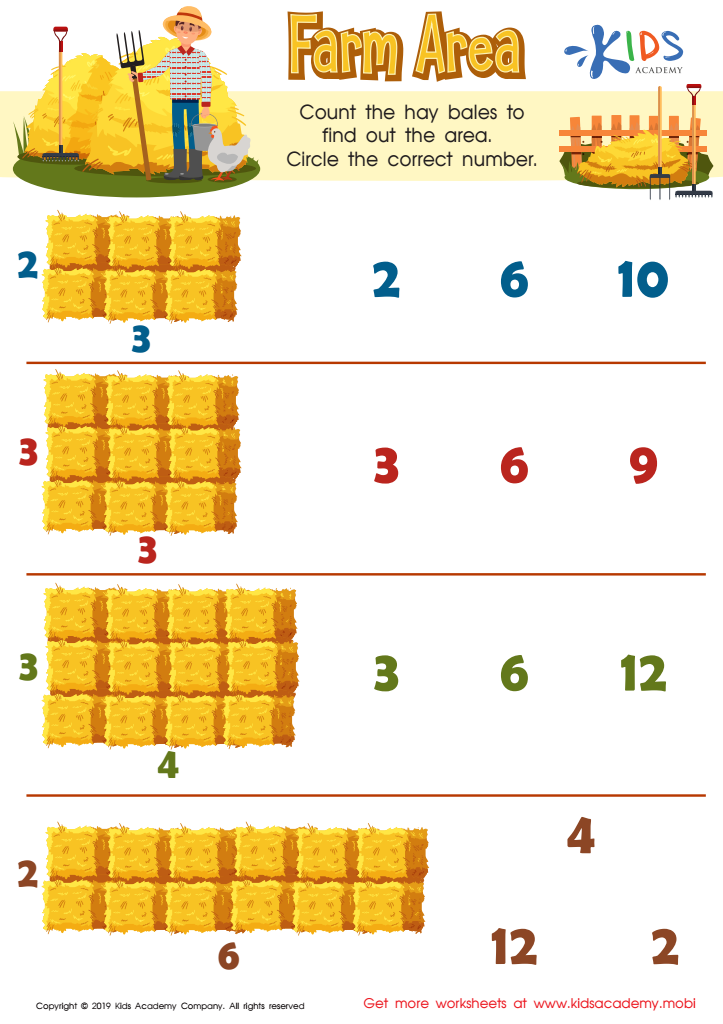
Farm Area Worksheet
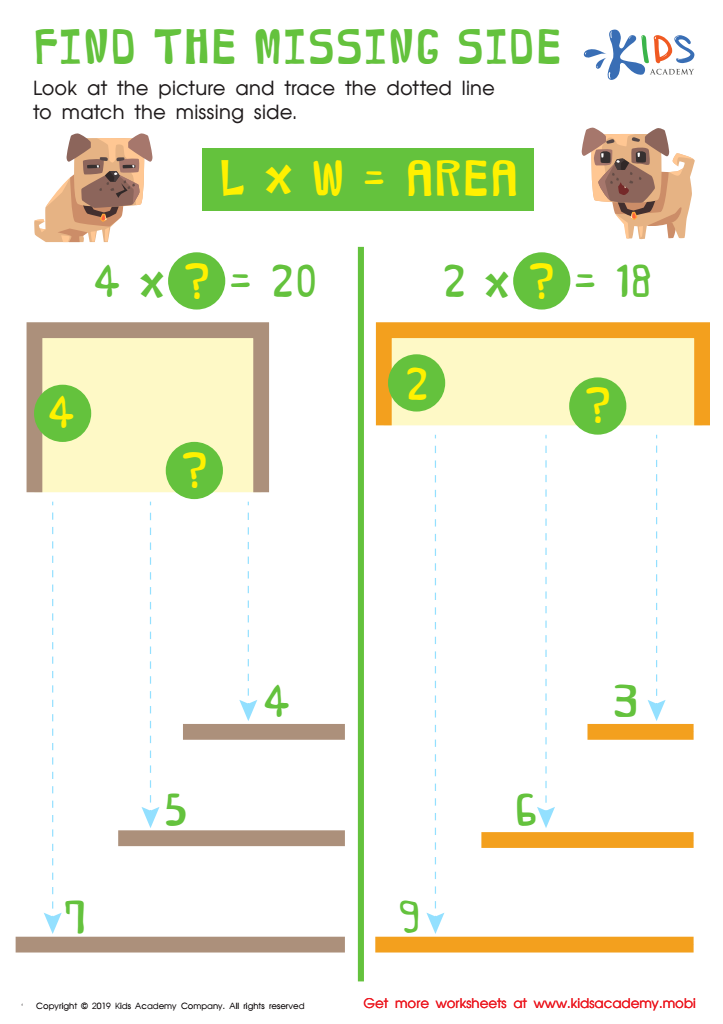
Find the Missing Side Worksheet
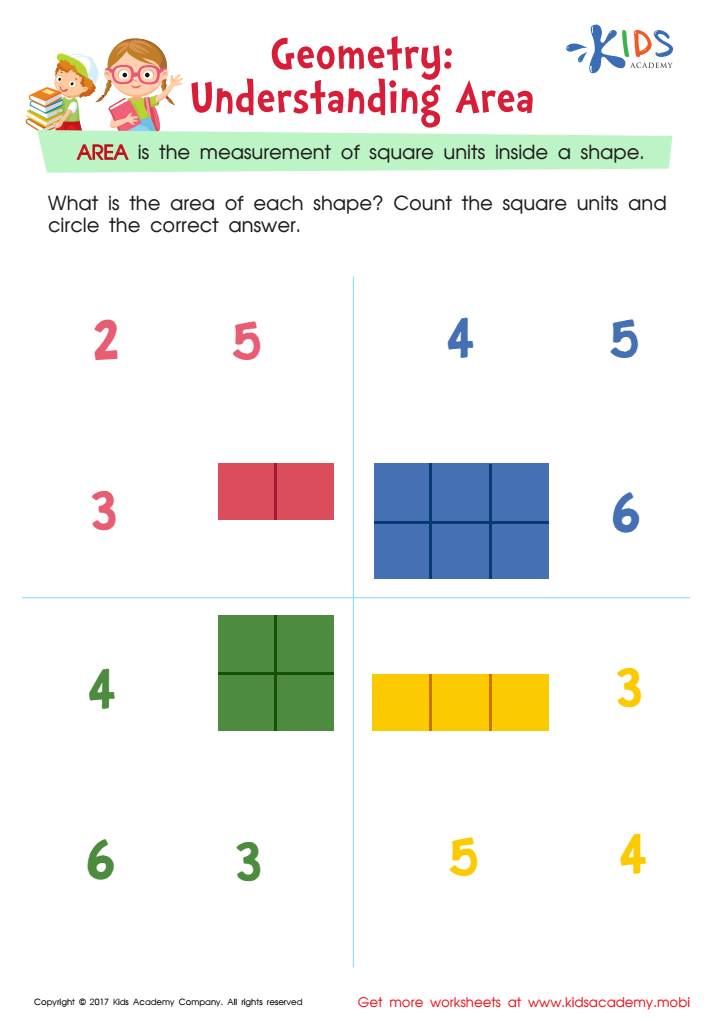
Understanding Area Worksheet








Understanding area and perimeter is crucial for children aged 7-9 as these fundamental concepts lay the groundwork for advanced mathematical learning. Mastering these concepts helps children develop spatial awareness and critical thinking skills. Area, which represents the space inside a shape, and perimeter, which measures the distance around a shape, are practical skills used in everyday life—from calculating how much carpet one needs to cover a room to knowing how much fencing is required for a garden.
Engaging with area and perimeter also enhances problem-solving abilities. When children work on these concepts, they're required to interpret, compare, and analyze different shapes and sizes, fostering a deeper understanding of mathematics. This improved comprehension directly contributes to their overall academic performance, as math concepts are interconnected.
Moreover, learning area and perimeter builds confidence in young learners. When they can apply these skills—either in math class or real-life scenarios—they gain a sense of achievement. For parents and teachers, investing effort into teaching these concepts can offer long-lasting benefits, helping children develop a positive relationship with math and equipping them with essential skills they will use for years to come. Encouraging curiosity and engagement with geometry at this age can spark a lifelong interest in mathematics.