Comparing Fractions Extra Challenge Worksheets for Ages 3-8
5 filtered results
-
From - To
Unlock the joy of learning fractions with our "Comparing Fractions Extra Challenge Worksheets for Ages 3-8." Specially crafted for young learners, these worksheets provide exciting, engaging activities that make comparing fractions both fun and educational. Designed to build foundational math skills, each worksheet offers a variety of exercises to help children master fraction comparison in a stimulating way. Ideal for both classroom settings and at-home practice, these challenges cater to different learning styles, ensuring every child can succeed. Lay the groundwork for future math excellence with our expertly developed worksheets that turn fractions into a favorite math topic!
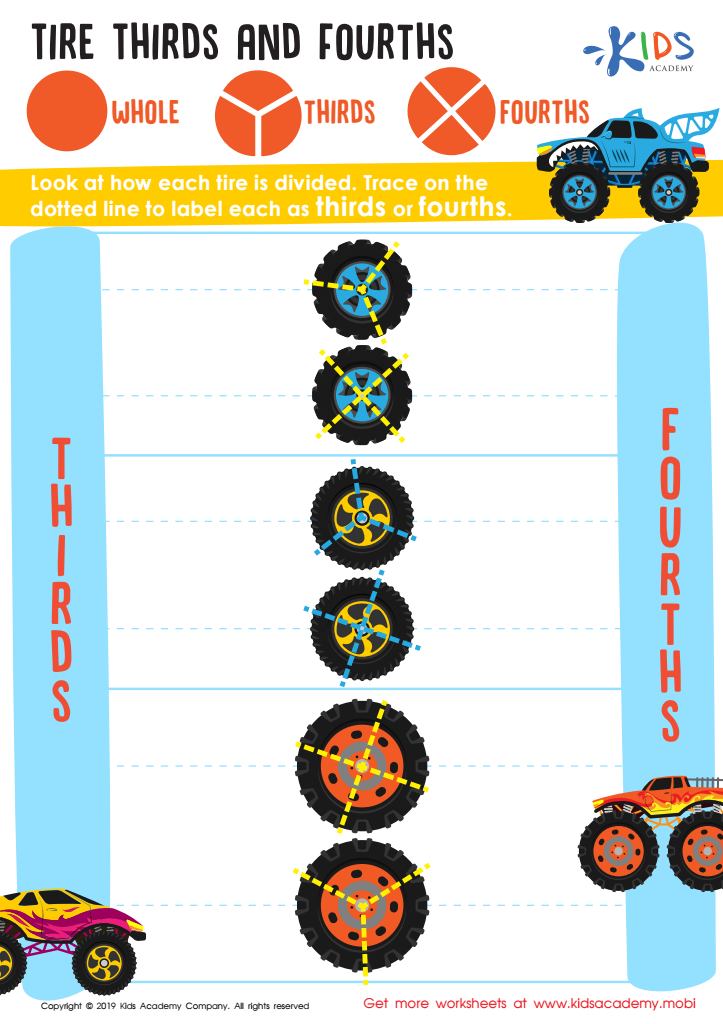
Tire Thirds and Fourths Worksheet
 Assign to My Students
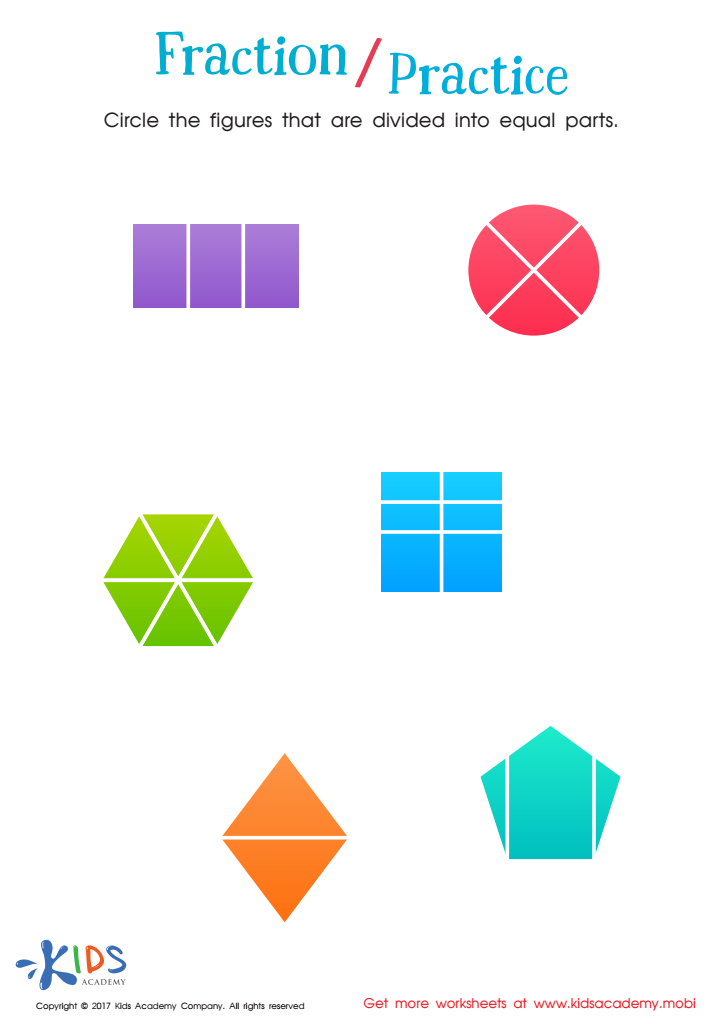
Fractions: Shapes Worksheet
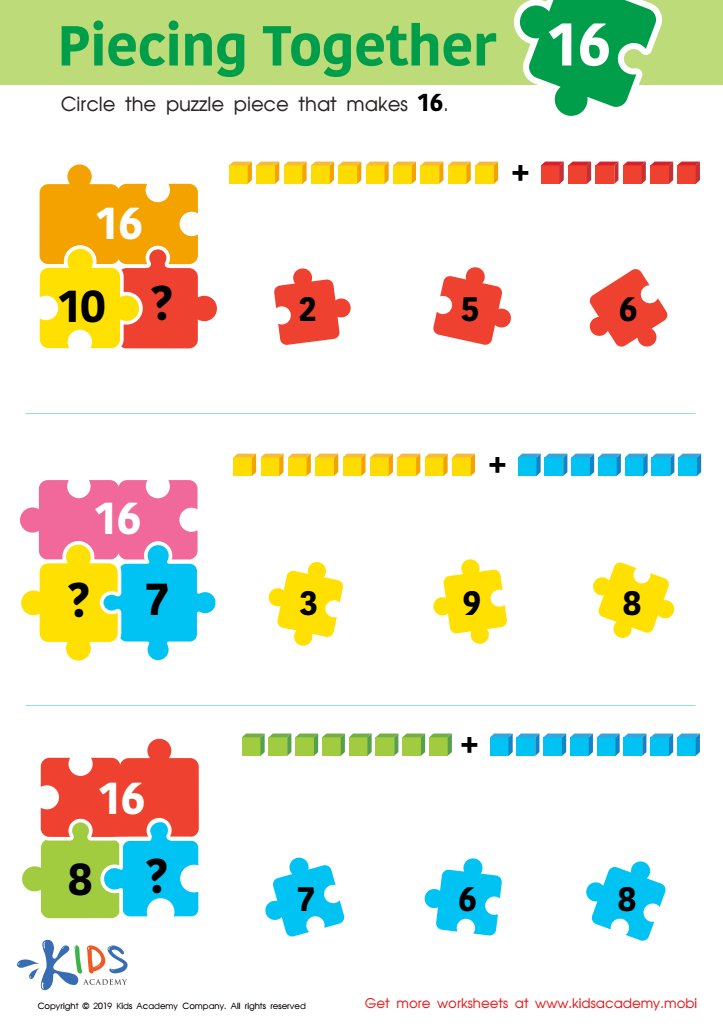
Piecing Together 16 Worksheet
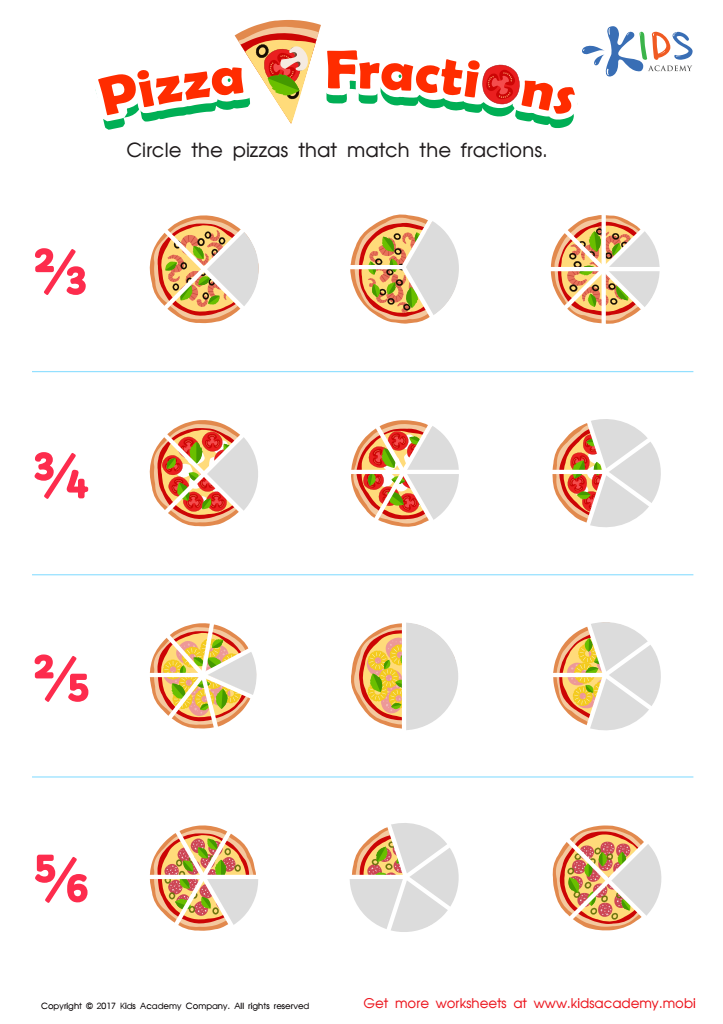
Fractions: Pizza Printable
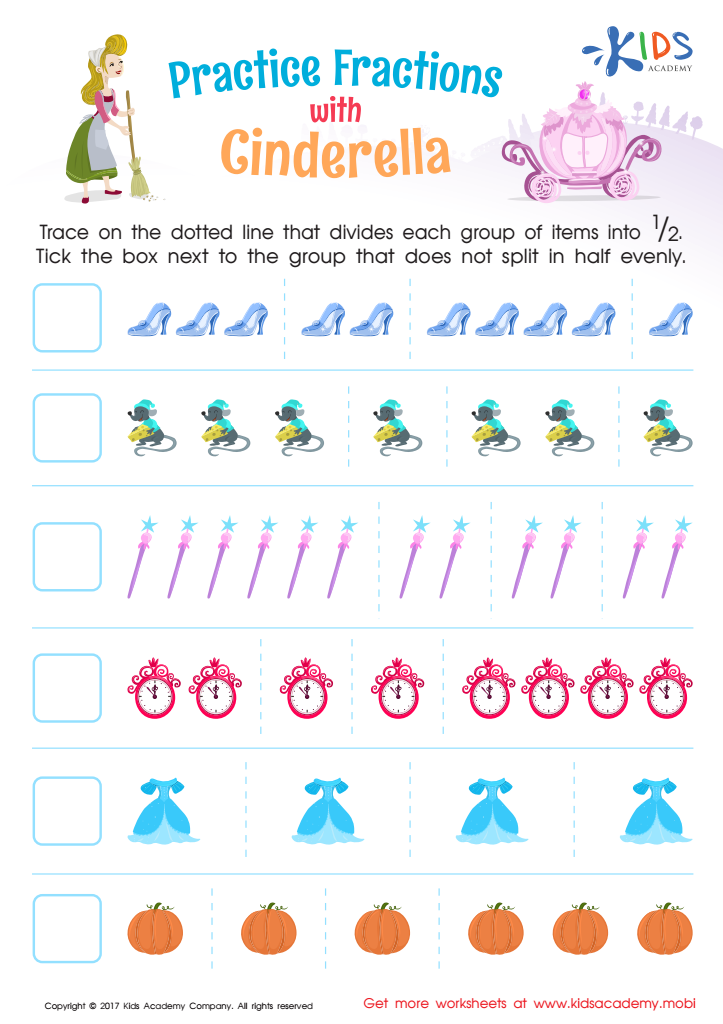
Fractions: Cinderella Printable






Parents and teachers should care about engaging children in comparing fractions challenges for ages 3-8 because foundational math skills, such as understanding fractions, are crucial for later academic success and everyday life. Introducing fractions at an early age helps students develop strong number sense and problem-solving abilities. Children who explore fractions learn how to think more logically and critically, setting the stage for higher-level math concepts and operations they will encounter as they progress in their education.
Comparing fractions using visual aids or interactive tools makes learning fun and accessible, ensuring young learners remain intrigued and motivated. Early exposure also helps demystify what can often be considered a challenging math topic, fostering a growth mindset and confidence in their mathematical abilities.
Additionally, comparisons involving fractions encourage children's abilities to reason and articulate their thoughts, which is crucial for cognitive development. These skills translate to other areas, including understanding portions and ratios, useful in real-life scenarios such as cooking, sharing, and financial literacy.
By prioritizing these extra challenges, parents and teachers help children build a firm mathematical foundation, enhance their logical reasoning capabilities, foster a positive attitude towards math, and ensure they have the necessary skills to tackle complex mathematical problems confidently in the future.








