Basic Math Skills Extra Challenge Geometry Worksheets for Ages 3-8
5 filtered results
Difficulty Level
Grade
Age
-
From - To
Subject
Activity
Standards
Discover our engaging "Basic Math Skills Extra Challenge Geometry Worksheets" designed specifically for kids ages 3-8. These worksheets provide a fun and interactive way for young learners to delve into fundamental geometry concepts. With activities tailored to reinforce shapes, patterns, and spatial awareness, your child will enhance their math skills while experiencing the joy of learning. Ideal for both classroom and home use, these resources support early mathematical understanding through visual aids and hands-on practice. Encourage critical thinking and problem-solving abilities as children explore the wonderful world of geometry! Start their educational journey today with our vibrant and stimulating worksheets.
Favorites
With answer key
Interactive
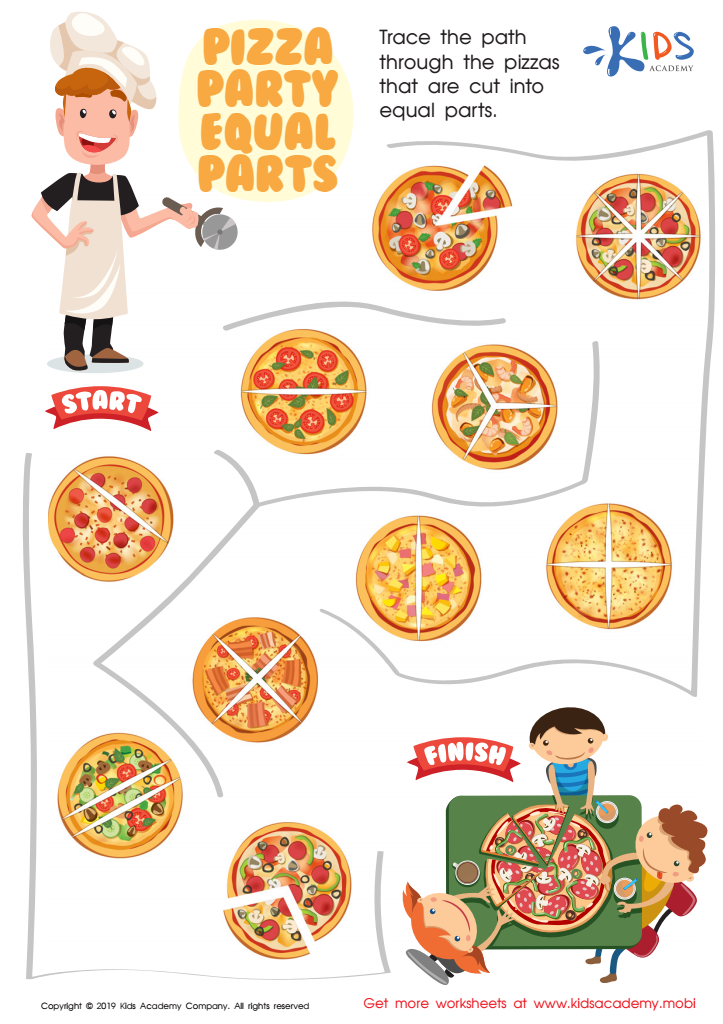
Pizza Party Equal Parts Worksheet
Love pizza? This printout is a great way to help kids learn about equal parts! Kids must identify pizzas cut into equal parts, then trace the path through the pizzas. It's an exciting maze - and a great way to help kids learn! Get the traceable pdf today and let the fun begin!
 Assign to My Students
Pizza Party Equal Parts Worksheet
Worksheet











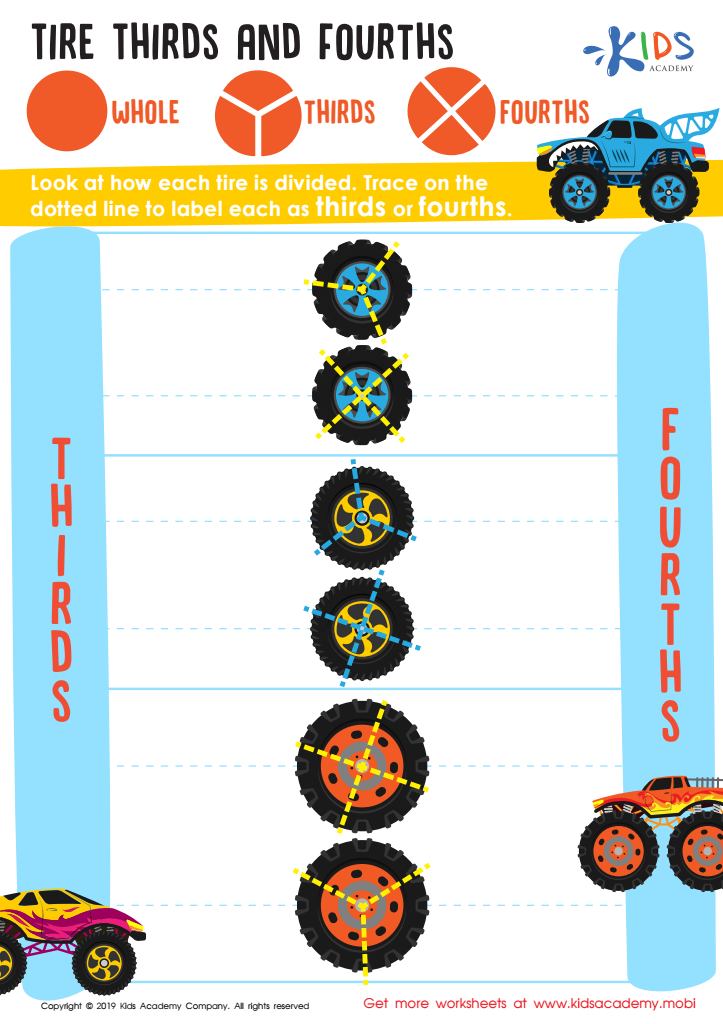
Tire Thirds and Fourths Worksheet
Learning geometry is key in your child's education. Have them identify and name shapes cut into 2, 3 and 4 parts. Test their knowledge with this worksheet - trace the dotted line to label each as third or fourth. Encourage them to keep learning!
Tire Thirds and Fourths Worksheet
Worksheet
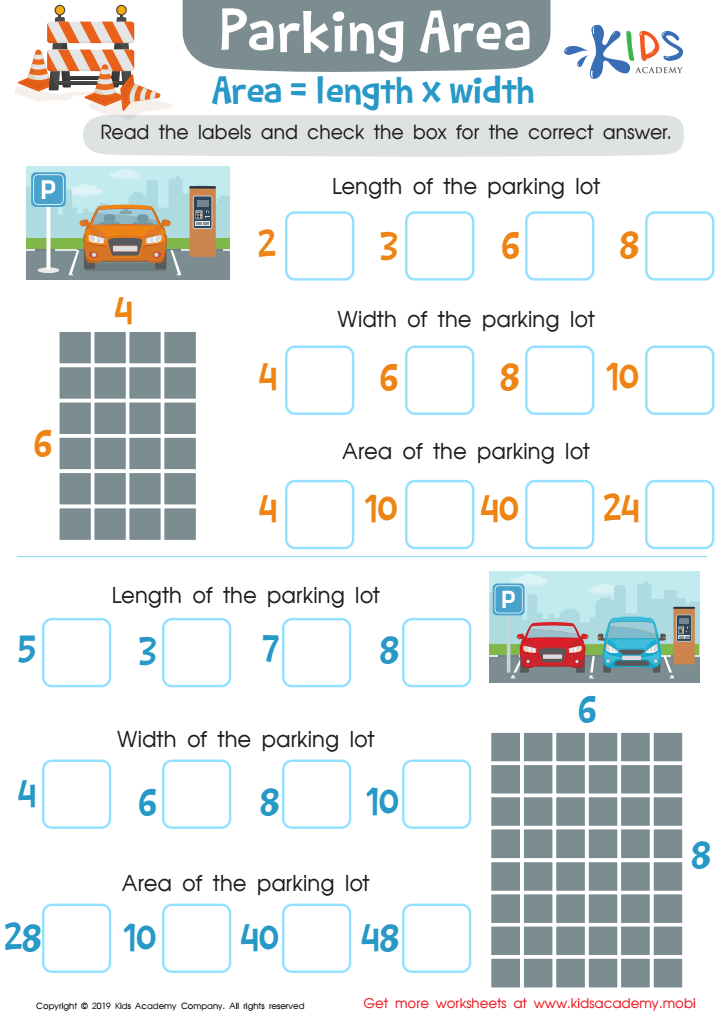
Parking Area Worksheet
Math may not be your child's favorite, but that doesn't mean they can't excel. Math can seem intimidating, but with practice, they can learn it's not so hard. In this worksheet, your kids will calculate the area of a parking lot, by adding length and width. Help them read the labels and select the correct answer.
Parking Area Worksheet
Worksheet
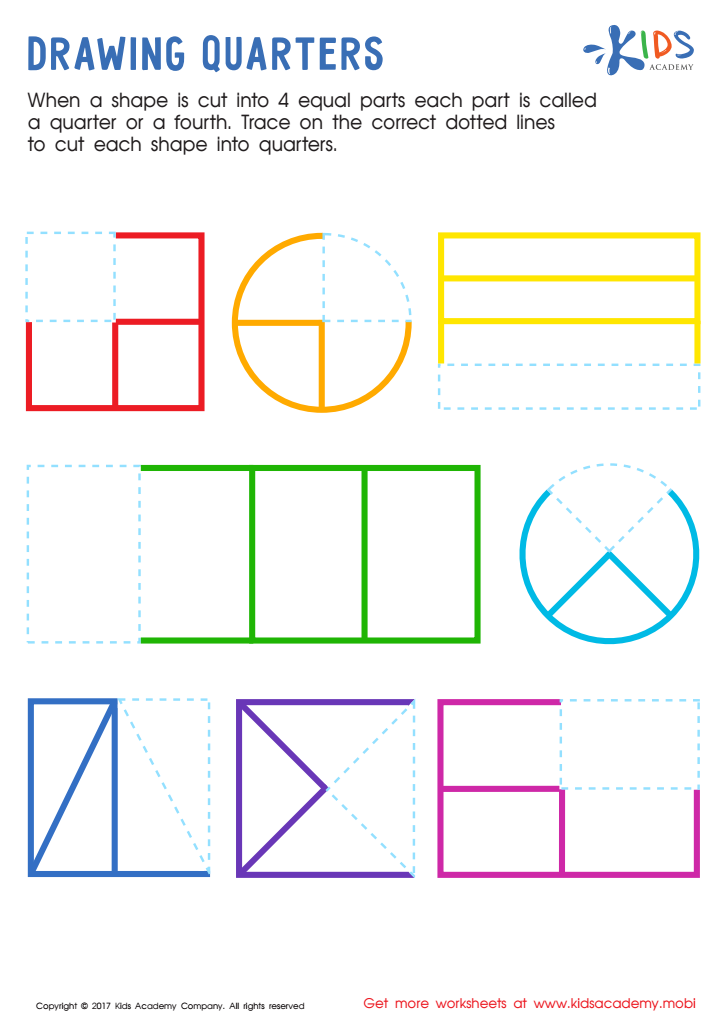
Drawing Quarters Worksheet
Help your kids divide shapes into quarters! Have them trace dotted lines to cut each shape into 4 equal parts. Each of the 4 parts is called a quarter or a fourth. This worksheet will help kids learn more about dividing shapes into four equal parts.
Drawing Quarters Worksheet
Worksheet
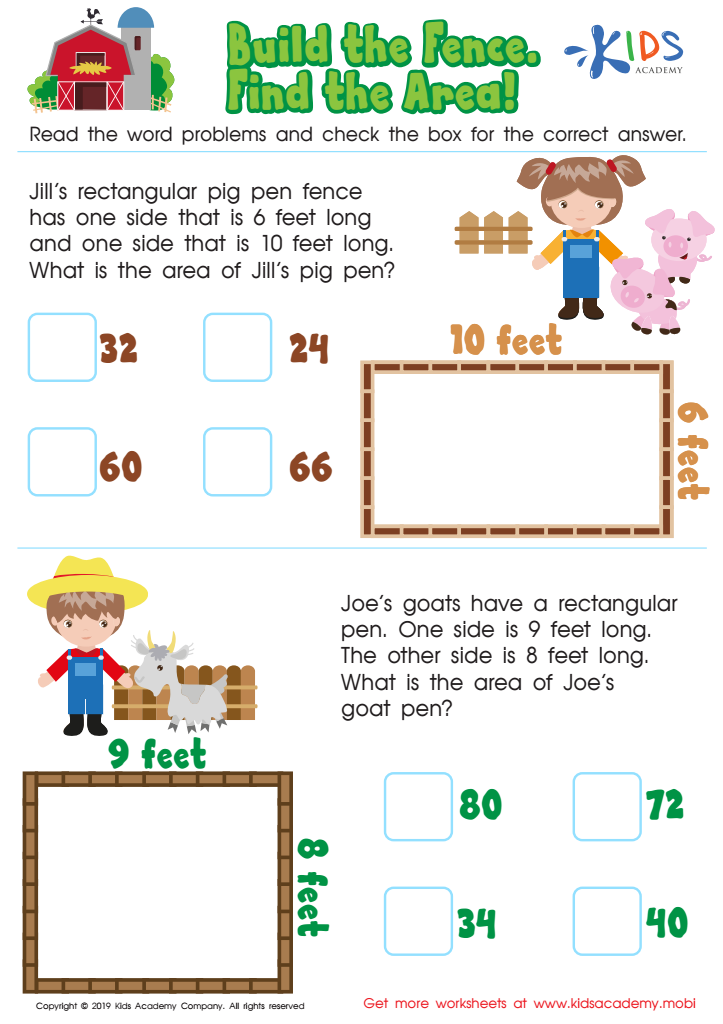
Build the Fence, Find the Area Worksheet
Help your kids gain skills in mathematics with this simple worksheet. Kids can refresh their addition and subtraction to solve geometry problems. Read the word problems and then help them check the box for the correct answer if they need extra help. This worksheet is great for improving kids' familiarity with basic equations.
Build the Fence, Find the Area Worksheet
Worksheet
Join Kids Academy for Free
Who is primarily going to use this learning content?








Basic math skills are foundational for a child’s cognitive development and future academic success. The “Basic Math Skills Extra Challenge Geometry” program for ages 3-8 is crucial for several reasons. First, it introduces children to geometric concepts early, fostering spatial awareness and critical thinking. Through hands-on activities and engaging challenges, children learn to differentiate shapes, understand size and symmetry, and explore concepts like pattern recognition, enhancing their problem-solving skills.
Second, early exposure to geometry cultivates a sense of curiosity and encourages exploration. Children are naturally inquisitive, and a structured approach to math challenges supports their desire to learn in a fun manner. This positive interaction with math at a young age often leads to increased confidence and a more favorable attitude towards the subject as they progress through school.
Lastly, strong foundational skills in geometry help prepare students for more complex math concepts later in their education. As geometric thinking is essential in various fields, including science, technology, engineering, and mathematics (STEM), by nurturing these skills early, parents and teachers set the stage for future success. Investing in such programs supports overall child development and enhances their readiness for the academic challenges to come.