
Shape identification Extra Challenge Math Worksheets for Ages 4-8
6 filtered results
Difficulty Level
Grade
Age
-
From - To
Subject
Activity
Standards
Enhance your child's learning experience with our "Shape Identification Extra Challenge Math Worksheets" designed specifically for ages 4-8! These engaging worksheets offer an exciting way to help young learners master their shape recognition skills. Packed with vibrant illustrations and fun activities, children will explore circles, squares, triangles, and more while solving challenging problems that encourage critical thinking. Perfect for both classroom and home settings, these supplemental worksheets help reinforce essential math concepts in a playful and interactive manner. Give your child the confidence they need in math by intertwining learning with creativity! Get started today with our memorable shape identification challenges!
Favorites
With answer key
Interactive
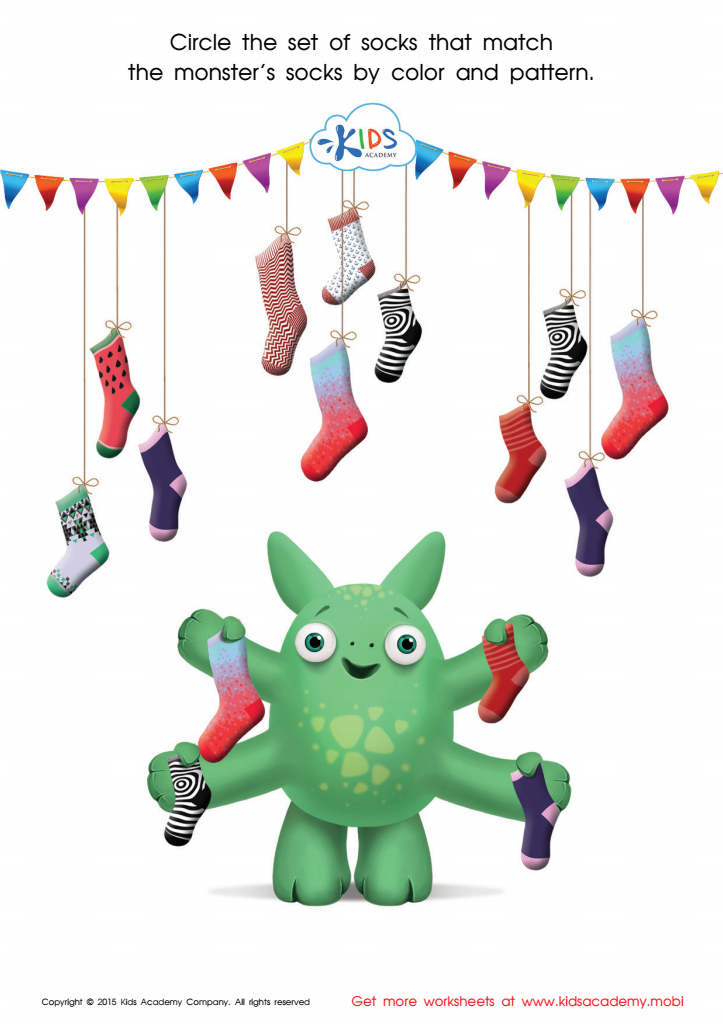
Sort the Monster's Socks Worksheet
Let your little one challenge herself and practice with matching Monster socks. She must be very attentive to match the same socks and draw a line connecting them!
 Assign to My Students
Sort the Monster's Socks Worksheet
Worksheet
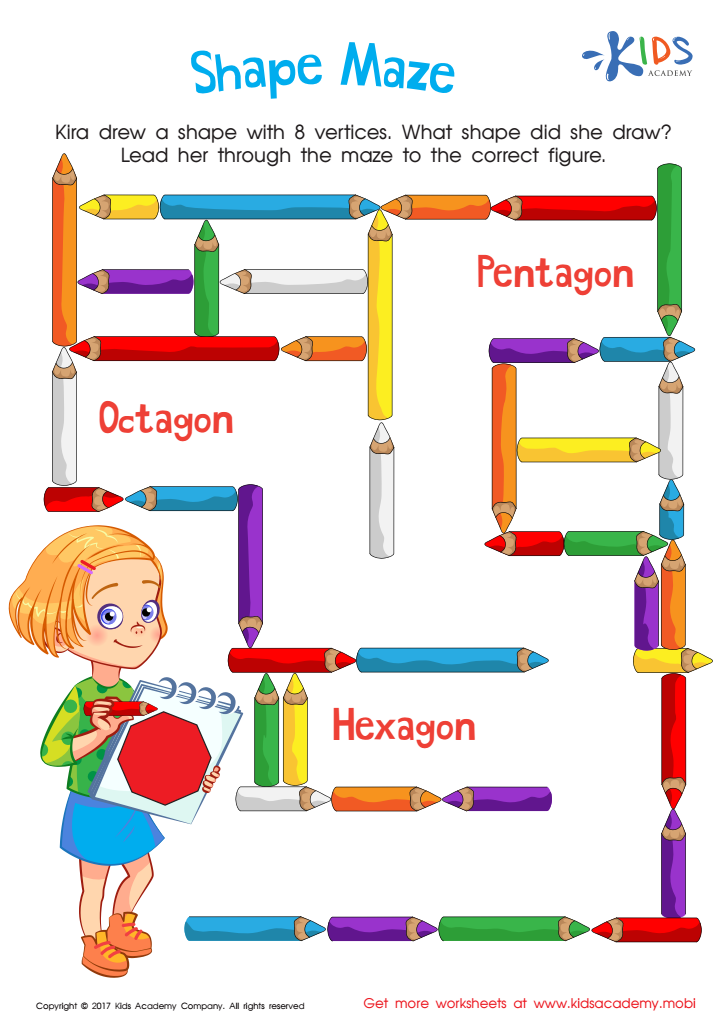
Shape Maze Worksheet
Test your child's geometry knowledge with this fun printable maze! They'll need to identify shapes with 8 vertices to find their way through the maze and get the correct answer.
Shape Maze Worksheet
Worksheet
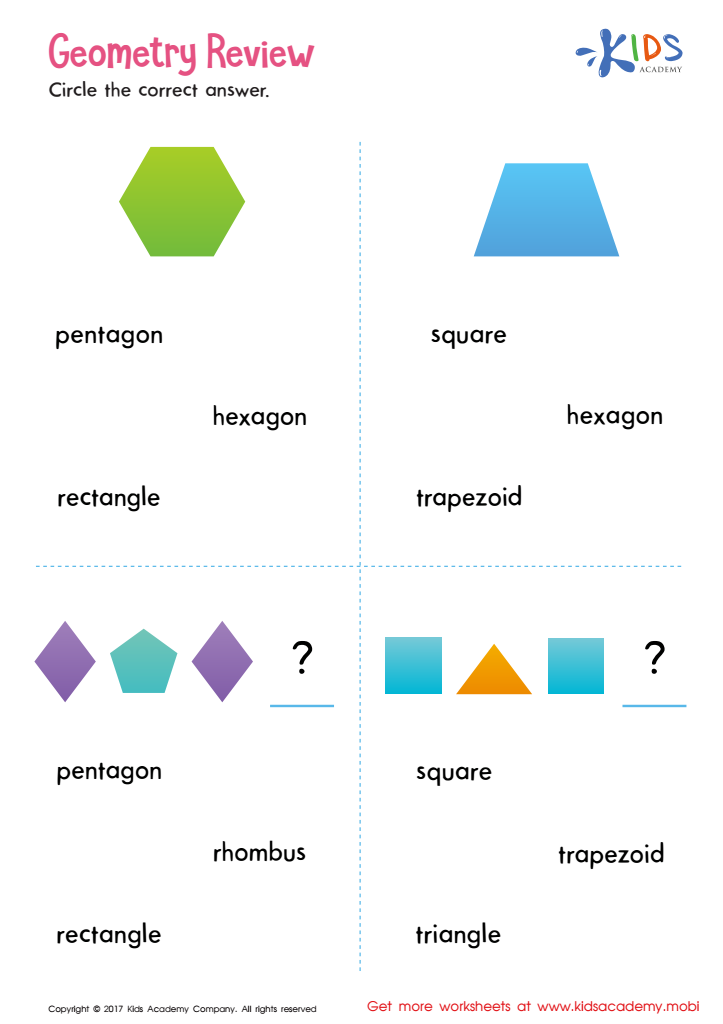
Geometry Review Printable
Repetition is key to success; give your child the practice they need with this geometry worksheet.
Geometry Review Printable
Worksheet
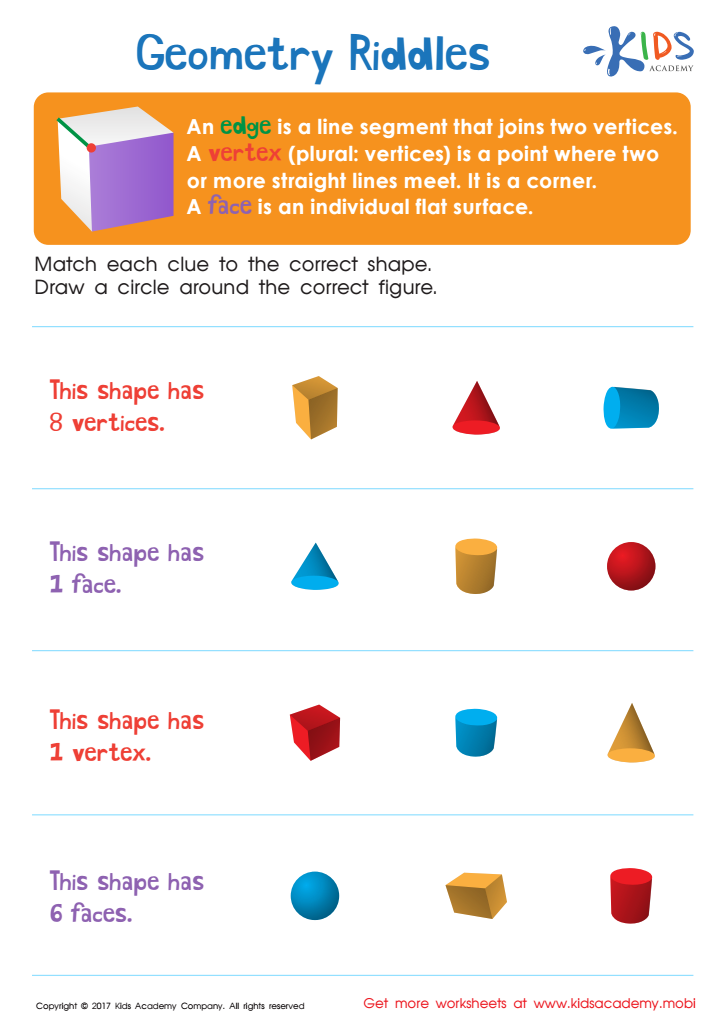
Geometry Riddles Printable
Review geometry terms with your child using this challenging worksheet of tricky riddles. Identifying and counting vertices, edges, and faces of shapes becomes fun as they solve the riddles!
Geometry Riddles Printable
Worksheet
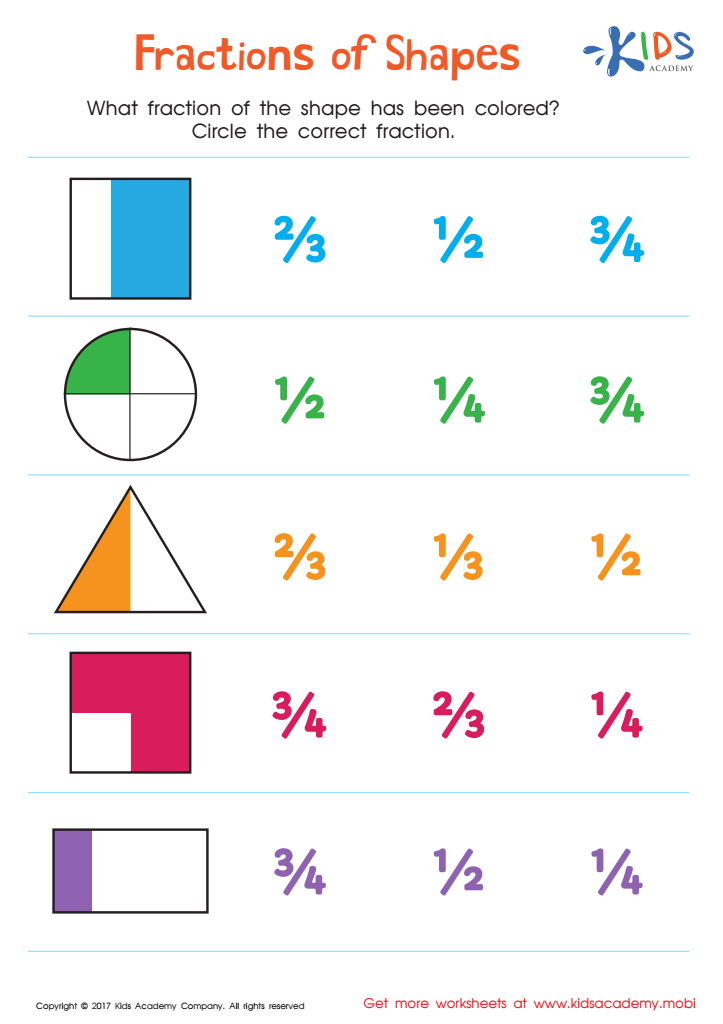
Fractions of Shapes: Math Concept Worksheet
Fractions can be tricky, but with pictures to illustrate them, they become much easier to understand. Our fractions of shapes worksheet is a great way to help children visualize fractions and gain a better understanding of them.
Fractions of Shapes: Math Concept Worksheet
Worksheet
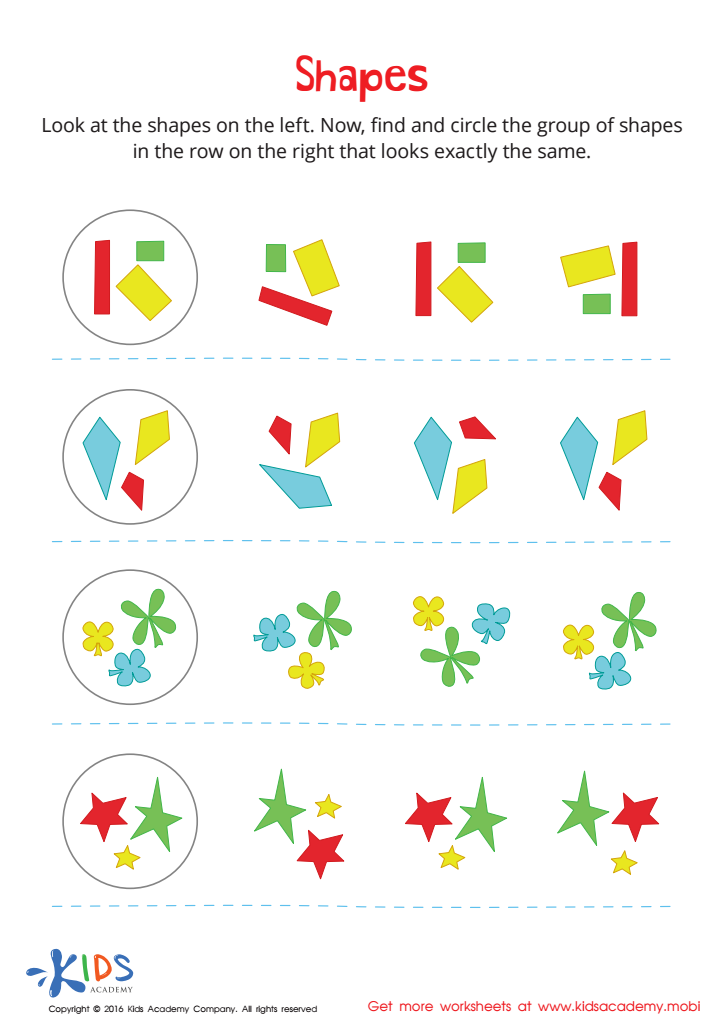
Shapes Worksheet
This fun worksheet will challenge your child to recognize tricky patterns, sort through similar ones, and create strategies to get the right answer. It'll also help them to strengthen problem-solving skills and build confidence. With more challenging tasks, your child will be ready to tackle higher level math and sequencing skills.
Shapes Worksheet
Worksheet
Join Kids Academy for Free
Who is primarily going to use this learning content?








Shape identification is a foundational skill in early mathematics that plays a crucial role in a child's cognitive development. For parents and teachers of children aged 4-8, incorporating an extra challenge in shape identification can significantly enhance spatial awareness and problem-solving abilities.
Understanding shapes helps children categorize and interpret their surroundings, laying the groundwork for more complex mathematical concepts. Engaging activities that promote shape identification sharpen critical thinking and foster reasoning skills. When children recognize and manipulate shapes, they also improve their fine motor skills and boost hand-eye coordination.
Moreover, an extra challenge encourages resilience and a growth mindset. As children tackle more advanced shape recognition tasks, they learn to cope with difficulties and embrace new learning opportunities. These skills not only contribute to academic success but also equip children to overcome obstacles in other areas of life.
Additionally, collaborative activities, such as group games and discussions, promote social skills and teamwork, essential attributes in today’s interconnected world. In essence, reinforcing shape identification through extra challenges can enrich children’s learning experience, preparing them for a bright academic future while fostering a lasting love for mathematics. Parents and teachers who advocate for these practices are investing in their children’s holistic development.








