Identification skills Extra Challenge Worksheets for Ages 4-9
3 filtered results
-
From - To
Unlock your child's potential with our Identification Skills Extra Challenge Worksheets, designed for ages 4-9! These engaging worksheets foster essential observational and analytical skills, encouraging young learners to identify, compare, and categorize various objects. Each worksheet features colorful illustrations and age-appropriate activities that make learning fun and interactive. Perfect for both home and classroom use, these challenges promote critical thinking and problem-solving abilities essential for future academic success. Explore a wide range of topics and boost your child's confidence as they master identification skills in a playful and stimulating environment. Start your learning adventure today with Kids Academy!
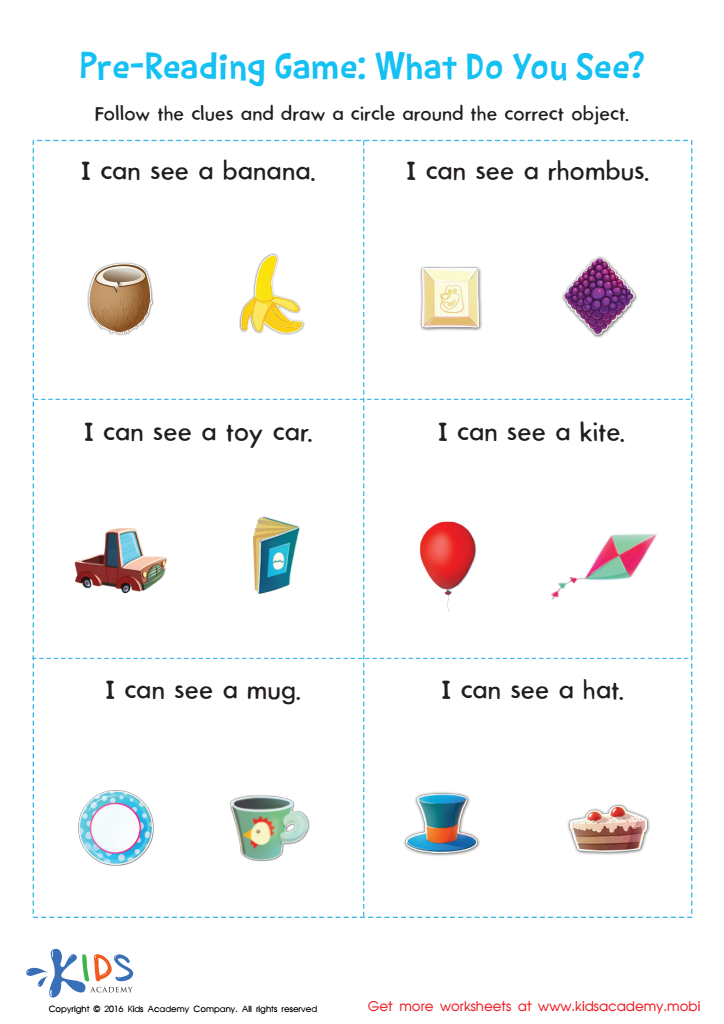
Pre–reading Worksheet: What Do You See?
 Assign to My Students
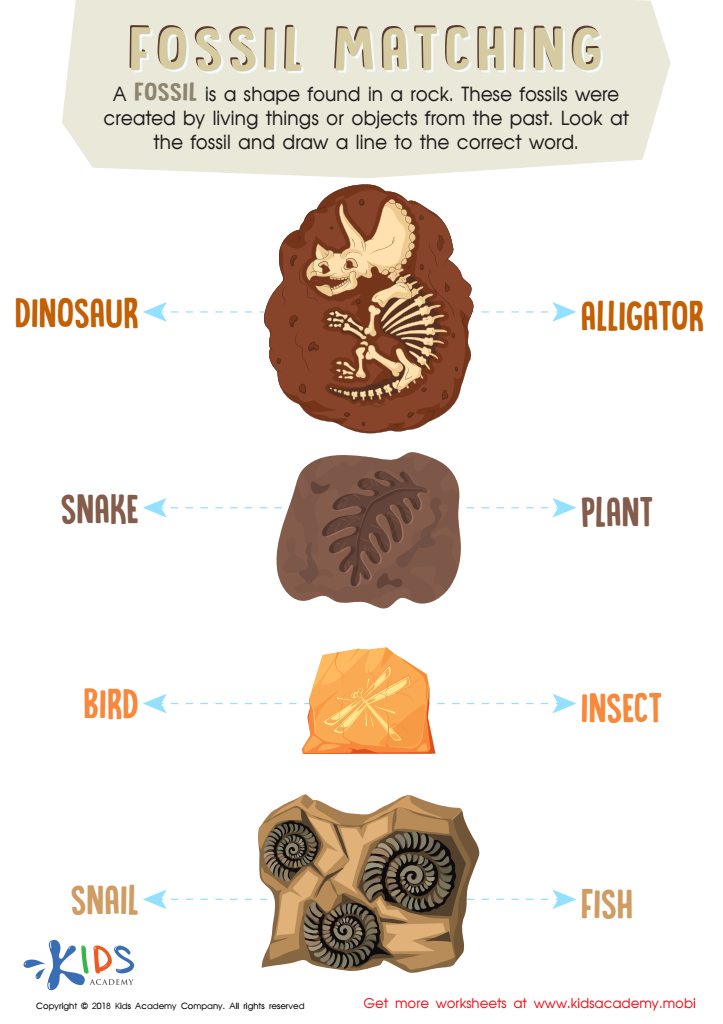
Fossil Matching Worksheet
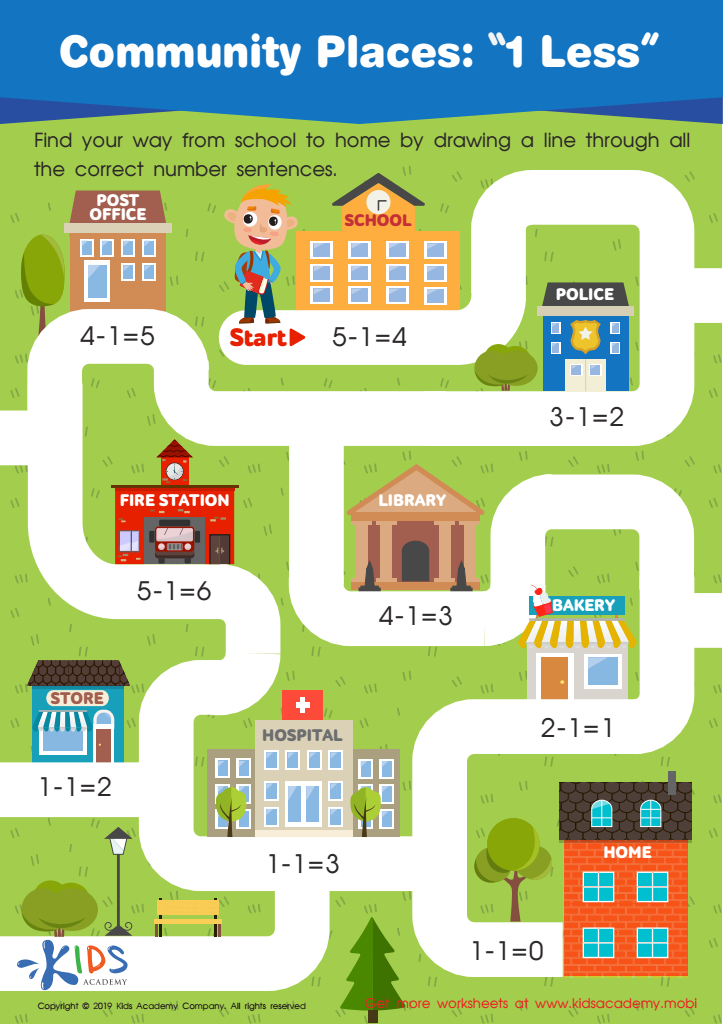
Community Places: 1 Less Worksheet






Identification skills are crucial for children aged 4-9 as they form the foundation for further learning and cognitive development. During this crucial developmental stage, children learn to identify colors, shapes, letters, numbers, and even social cues, which are essential for their daily interactions and academic success. Parents and teachers should care about enhancing these skills because they directly influence a child's ability to navigate their environment and engage with educational content effectively.
Improving identification skills promotes critical thinking and observation, allowing children to make connections between concepts more readily. Early mastery of these skills is linked to better performance in reading, math, and other core subjects. Additionally, strong identification skills help boost a child's confidence and self-esteem as they recognize and articulate what they observe and learn.
In an increasingly digital and fast-paced world, where distraction is rife, nurturing identification skills encourages mindfulness and attentiveness. It creates a solid rapport between children, parents, and teachers, fostering an understanding of different perspectives. Overall, focusing on identification skills during these formative years equips children not only for academic success but also for interpersonal relationships and lifelong learning. It prepares them to face future challenges with resilience and adaptability.








