Number Sequencing Extra Challenge Worksheets for Ages 5-7
10 filtered results
-
From - To
Explore our "Number Sequencing Extra Challenge Worksheets for Ages 5-7" designed to elevate young learners' math skills. These engaging worksheets provide a stimulating way for children to master number sequences, boosting their confidence and proficiency. Crafted to align with early grade curriculums, each activity blends fun with educational rigor, ensuring kids enjoy while learning. With a focus on numbers 1-100, these worksheets include dynamic patterns and missing number challenges, promoting critical thinking and problem-solving abilities. Ideal for enhancing classroom learning or as additional practice at home, set the foundation for numerical fluency with our expertly designed resources.
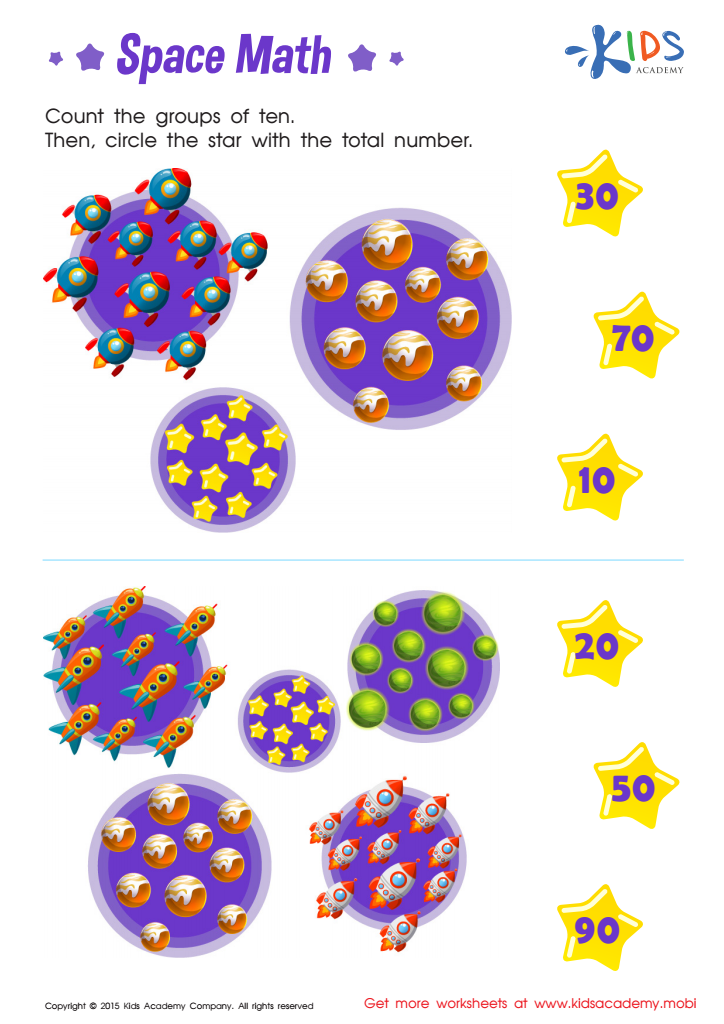
Learn dozens: Space math Worksheet
 Assign to My Students
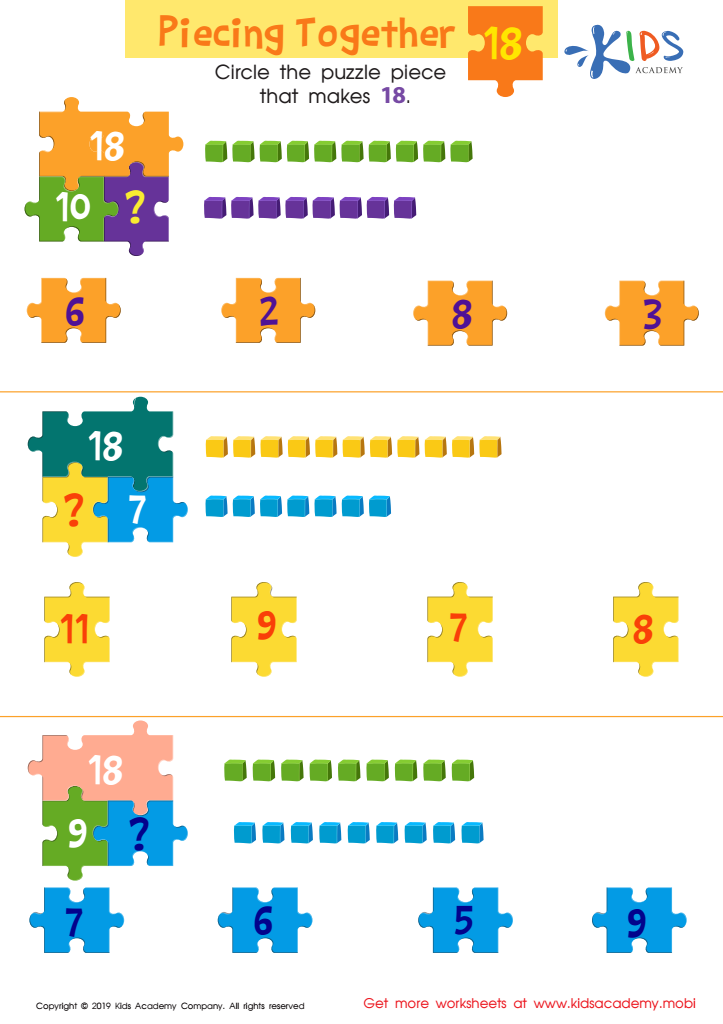
Piecing Together 18 Worksheet
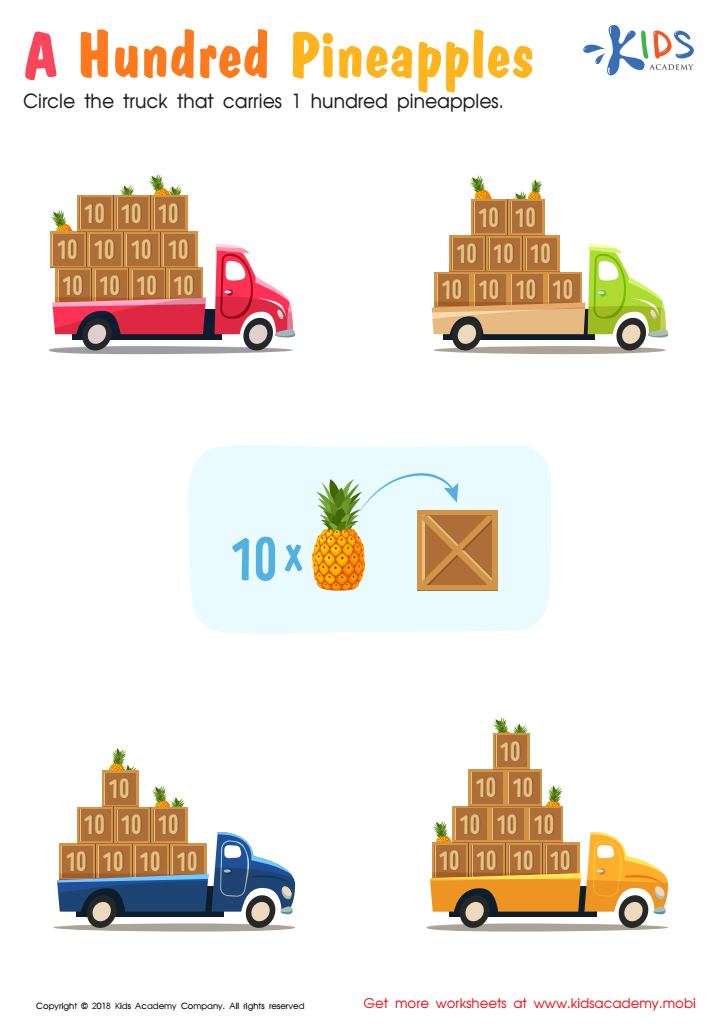
A Hundred Pineapples Worksheet
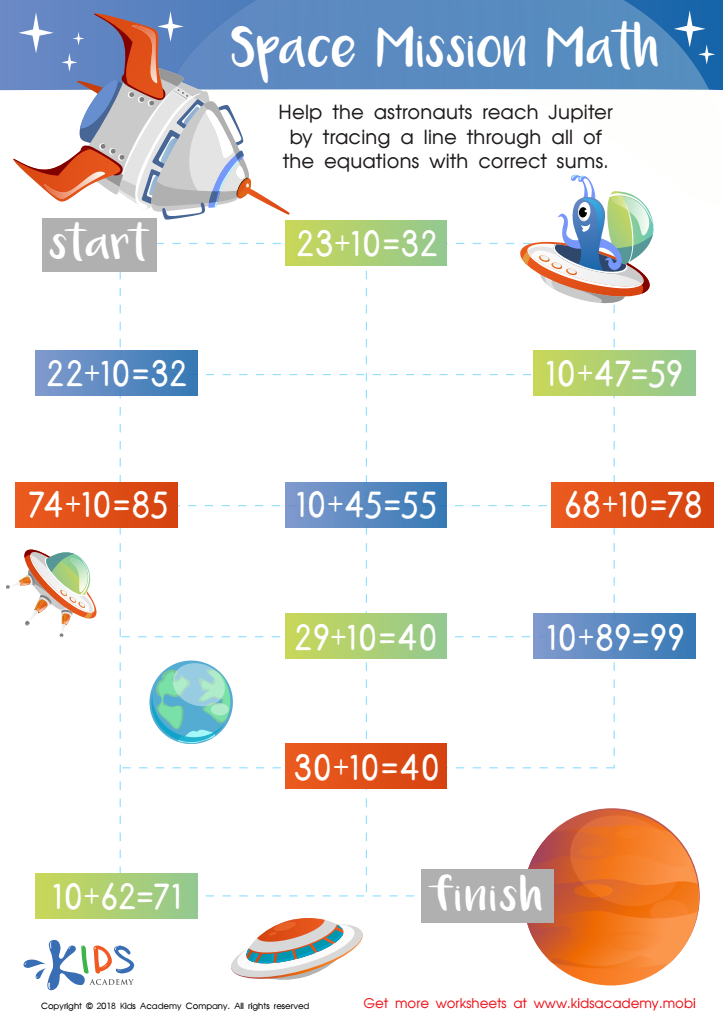
Space Mission Math Worksheet

Pirate Ship Connect Dots Worksheet
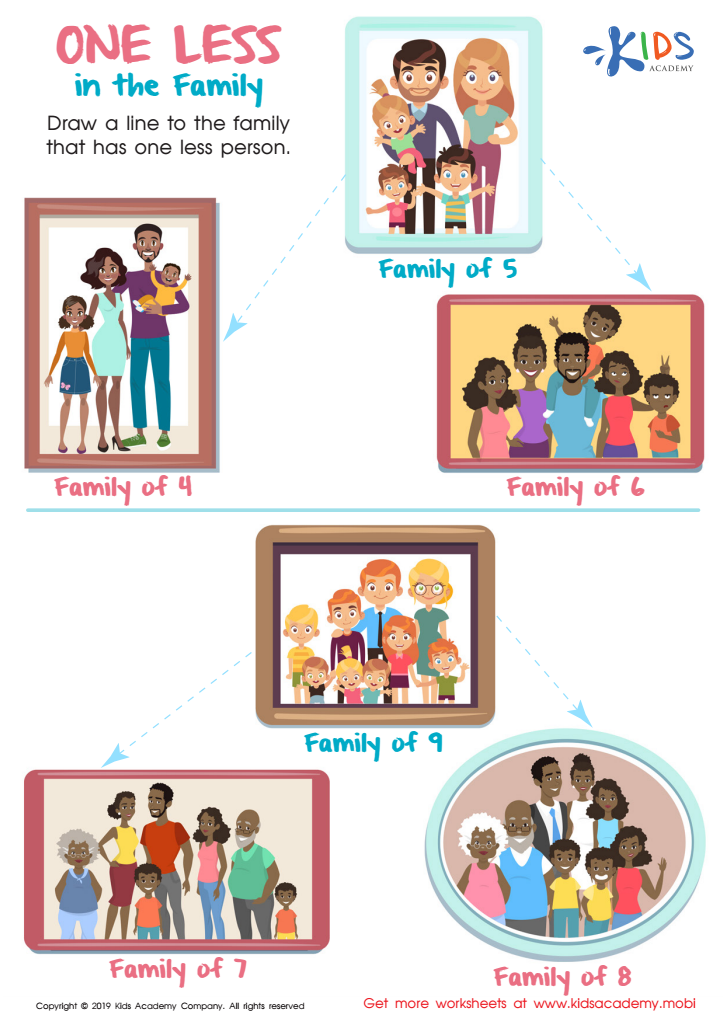
One Less in the Family Worksheet
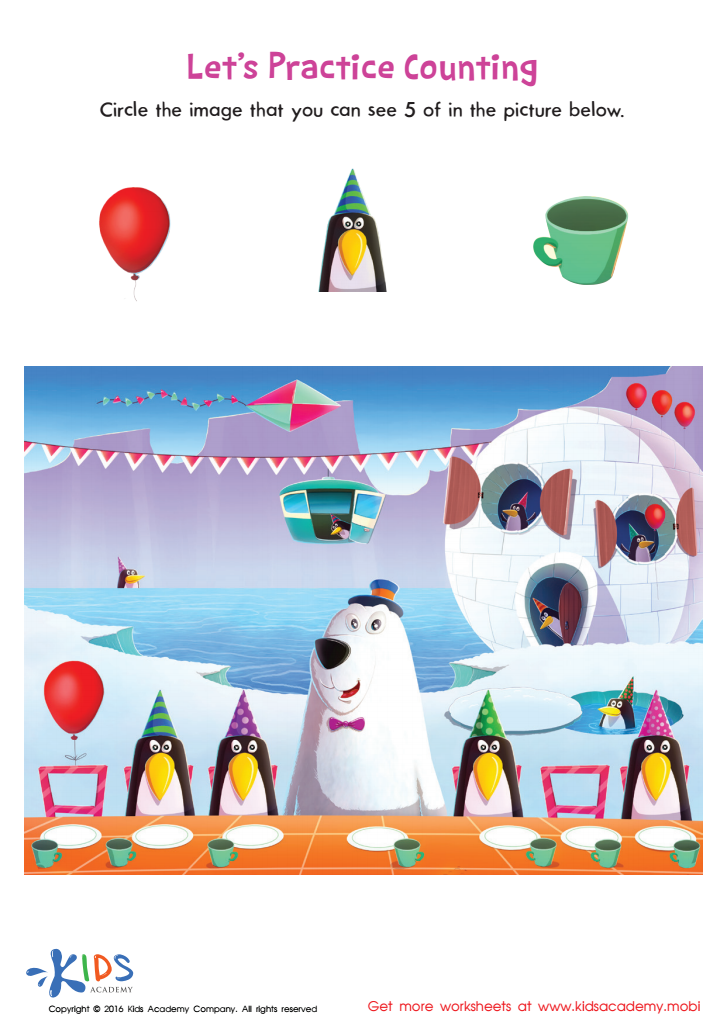
Counting Worksheet: Let's Practice Counting
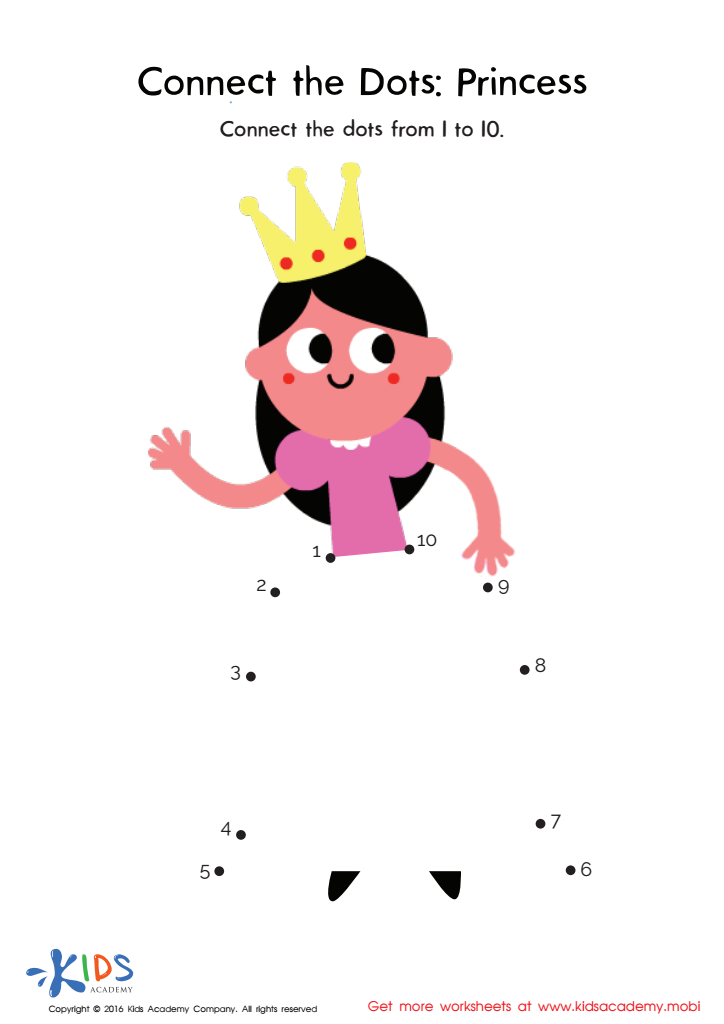
Princess Connect Dots Worksheet







Number sequencing is a fundamental skill that lays the groundwork for many complex mathematical concepts. For children ages 5-7, engaging in extra challenges related to number sequencing can significantly enhance their cognitive development and numeracy skills. At this developmental stage, kids are transitioning from recognizing and writing numbers to performing basic arithmetic operations. Hence, strong number sequencing skills are crucial.
Firstly, practicing number sequencing helps in developing a child's logical thinking and problem-solving abilities. As they figure out patterns and sequences, they learn to think critically and make connections between numbers.
Secondly, sequencing is directly tied to understanding mathematical concepts such as addition, subtraction, and even multiplication and division. Recognizing patterns within sequences aids in predicting what comes next, which is a vital skill in tackling more advanced mathematics later on.
Additionally, number sequencing can improve memory and attention span, as children need to remember the order and recognize sequences over time. This is particularly useful in a school setting where multitasking and quick recall are required.
Moreover, mastering number sequencing boosts a child’s confidence. Success in these challenges translates to a positive attitude towards mathematics as a whole, making them more likely to enjoy and engage with the subject in the future.
Therefore, parents and teachers should prioritize number sequencing challenges to build a strong mathematical foundation and to foster essential cognitive skills.








