Strategic thinking development Extra Challenge Worksheets for Ages 5-7
3 filtered results
-
From - To
Enhance your child’s critical reasoning skills with our "Strategic Thinking Development Extra Challenge Worksheets" designed for ages 5-7. These thoughtfully crafted activities encourage young learners to think creatively and solve problems effectively. By engaging in fun exercises such as puzzles, matching games, and scenario-based challenges, children will develop essential skills in planning, analysis, and decision-making. Suitable for home or classroom use, these worksheets foster independent thinking and boost confidence. Ideal for parents and educators aiming to provide an enriching learning experience, our resources promote cognitive growth in a playful and interactive way. Prepare your little ones for future academic success today!
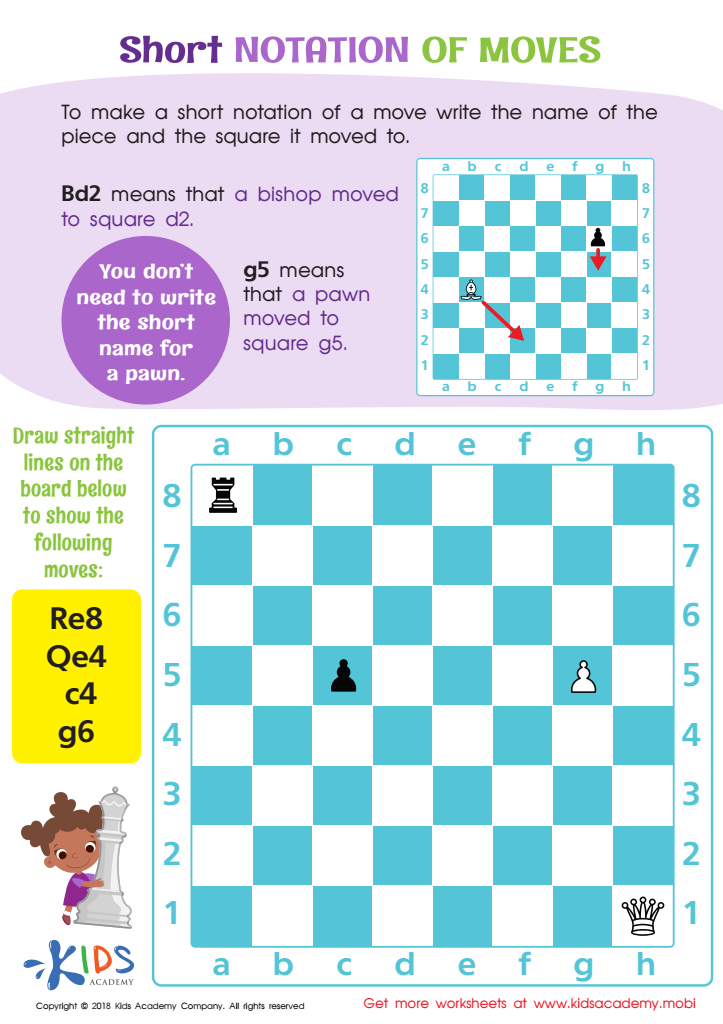
Short Notation of Moves Worksheet
 Assign to My Students
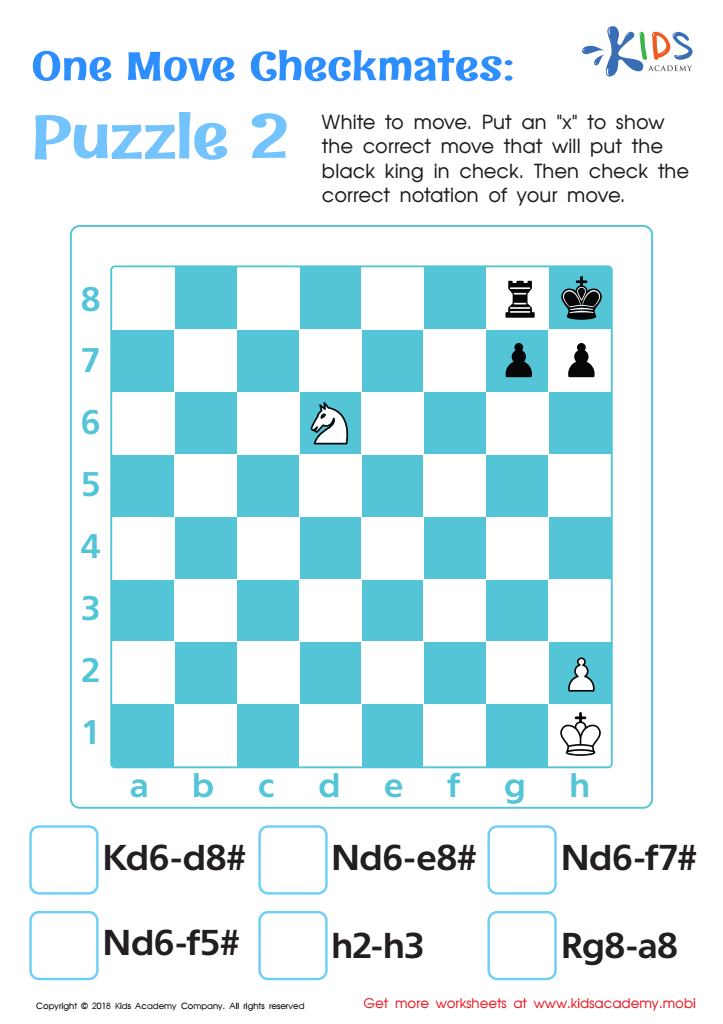
One Move Checkmates: Puzzle 2 Worksheet
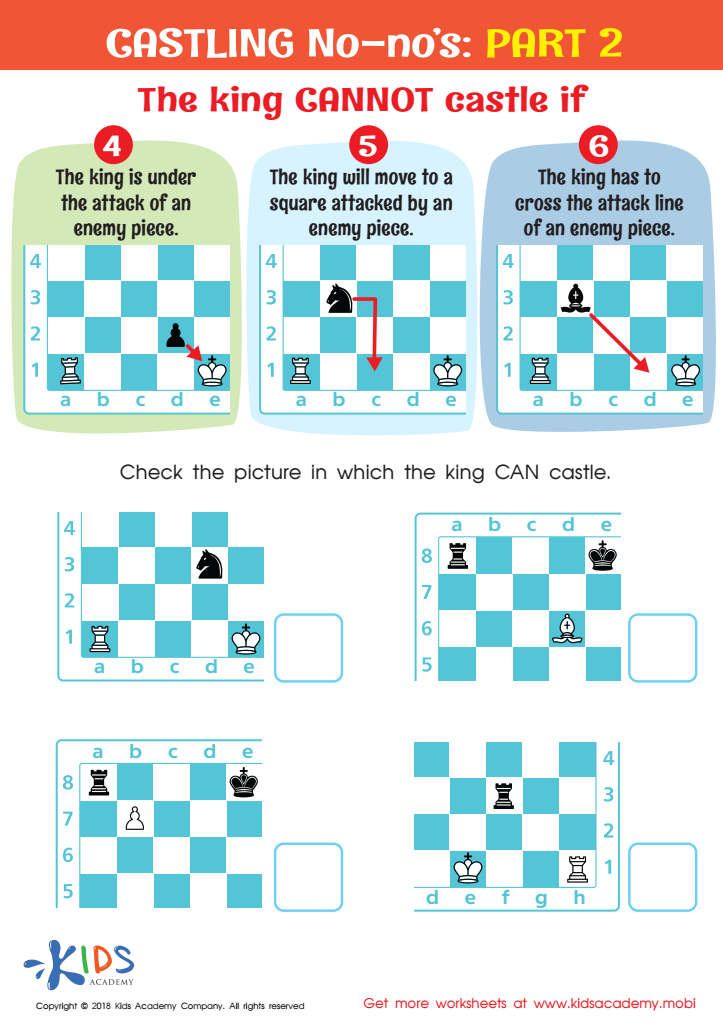
Castling No - no's: Part 2 Worksheet







Strategic thinking is a crucial skill that enables children aged 5-7 to approach complex problems and make decisions effectively. As parents and teachers, fostering this skill in young learners is essential as it lays the foundation for critical thinking, creativity, and independence. Children who engage in strategic thinking learn to brainstorm, evaluate options, and anticipate the outcomes of their actions. This not only enhances their cognitive development but also improves their ability to collaborate and communicate with others, which are vital skills in both academic settings and everyday life.
Incorporating strategic thinking exercises creates an enriching educational environment, encouraging children to explore different perspectives and solutions. Activities like puzzles, games, and collaborative projects can stimulate this thinking process, making learning interactive and enjoyable. Additionally, engaging children in setting personal goals teaches them the value of planning and perseverance.
Moreover, strategic thinking helps children adapt to rapidly changing environments, equipping them with the resilience and confidence to tackle future challenges. Parents and teachers play an essential role in nurturing this development, ensuring children not only excel in school but also grow into thoughtful and capable adults. In essence, investing in strategic thinking at an early age is investing in a child's lifelong success.








