
Comparing Fractions Extra Challenge Worksheets for Ages 7-9
4 filtered results
Difficulty Level
Grade
Age
-
From - To
Subject
Activity
Standards
Unlock the fun of learning with our "Comparing Fractions Extra Challenge Worksheets," designed specifically for children ages 7-9! These worksheets provide engaging, hands-on activities that encourage young learners to master the art of comparing fractions. With a variety of challenges ranging from simple comparisons to more complex scenarios, students will develop critical thinking skills and confidence in their math abilities. Perfect for reinforcing classroom lessons or providing extra practice at home, our worksheets inspire collaboration and creativity. Watch your child's fraction skills soar as they complete these stimulating exercises, tailored to meet the needs of curious and eager learners!
Favorites
With answer key
Interactive
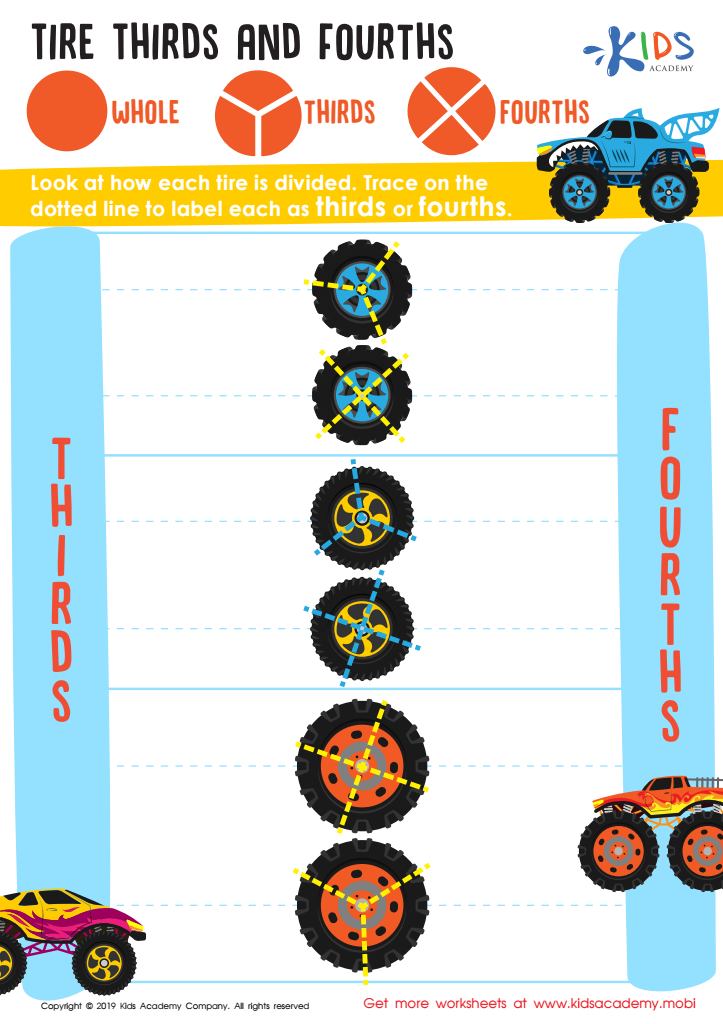
Tire Thirds and Fourths Worksheet
Learning geometry is key in your child's education. Have them identify and name shapes cut into 2, 3 and 4 parts. Test their knowledge with this worksheet - trace the dotted line to label each as third or fourth. Encourage them to keep learning!
 Assign to My Students
Tire Thirds and Fourths Worksheet
Worksheet
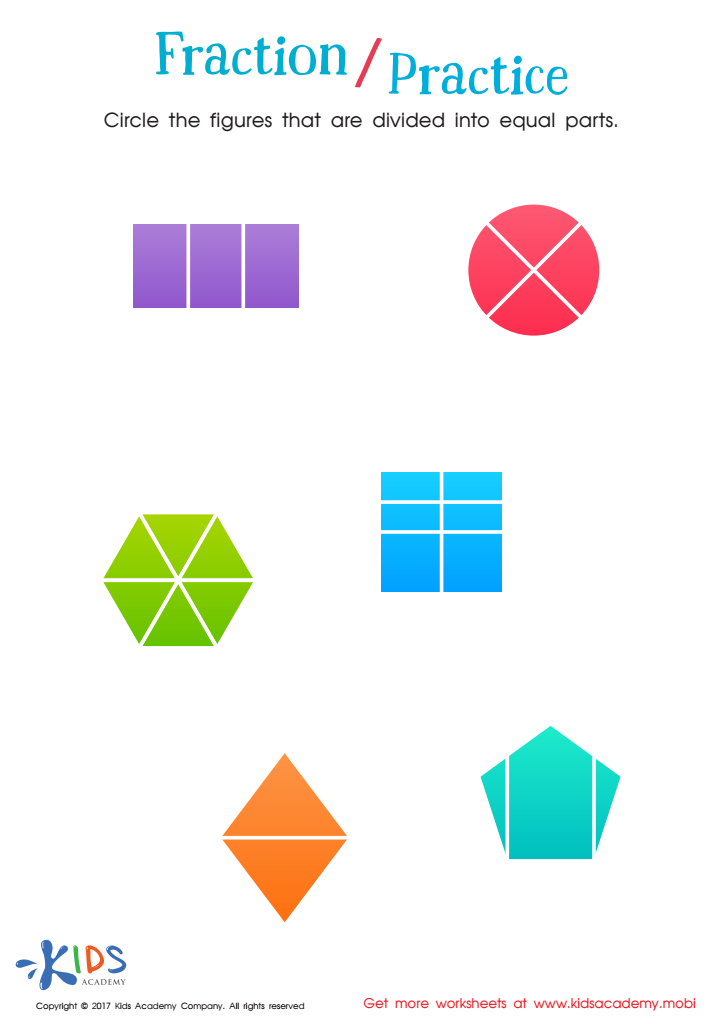
Fractions: Shapes Worksheet
Get your printable now.
Kids learn math differently today than you did in school; understanding concepts rather than memorizing facts. Help your child understand fractions with this printable worksheet. It'll help your child recognize parts of a whole, identify equal parts and build a foundation for numeracy. A better understanding sets kids up for math success! Get your printable now.
Fractions: Shapes Worksheet
Worksheet
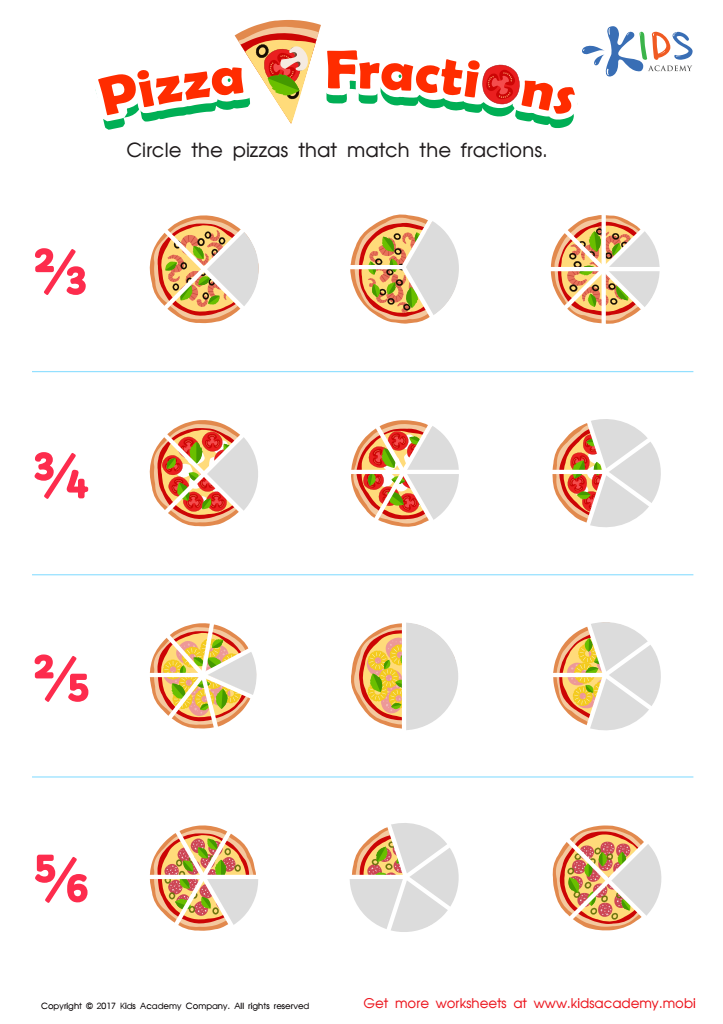
Fractions: Pizza Printable
Fractions can be tricky for kids, but this pizza fractions printable can help! Kids can understand fractions by seeing them, as they use one of their favorite foods. It helps them grasp the concept and gain a deeper understanding of what fractions represent. Extend their learning by quizzing them when you order pizza next time.
Fractions: Pizza Printable
Worksheet
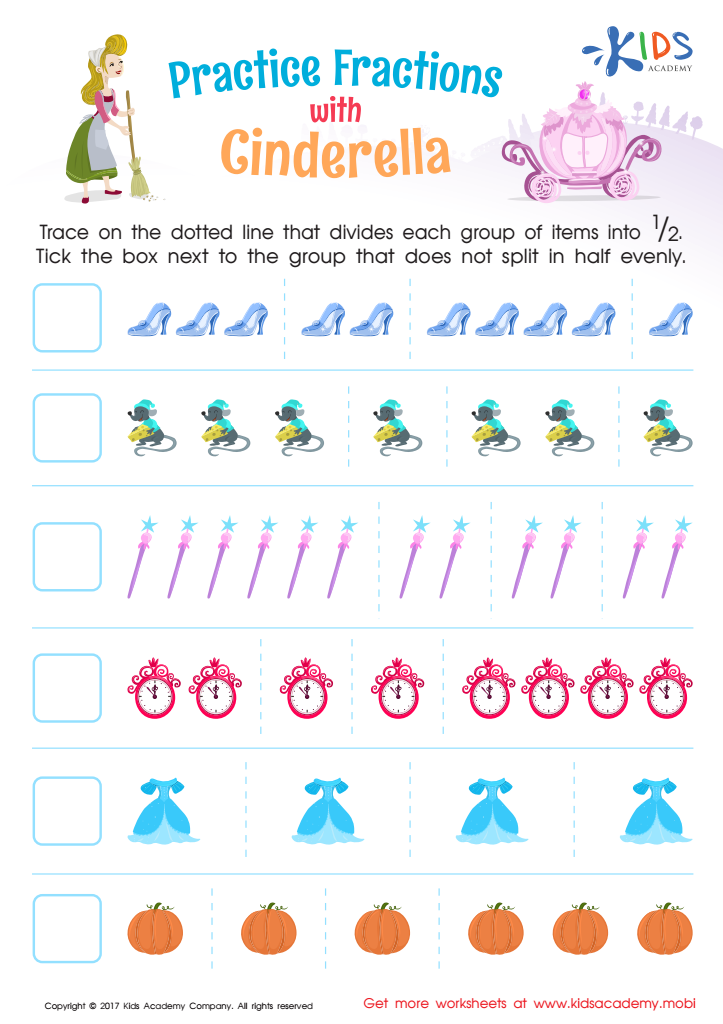
Fractions: Cinderella Printable
Cinderella and ½ are the perfect pair to excite your child about learning fractions.
Fractions: Cinderella Printable
Worksheet
Join Kids Academy for Free
Who is primarily going to use this learning content?




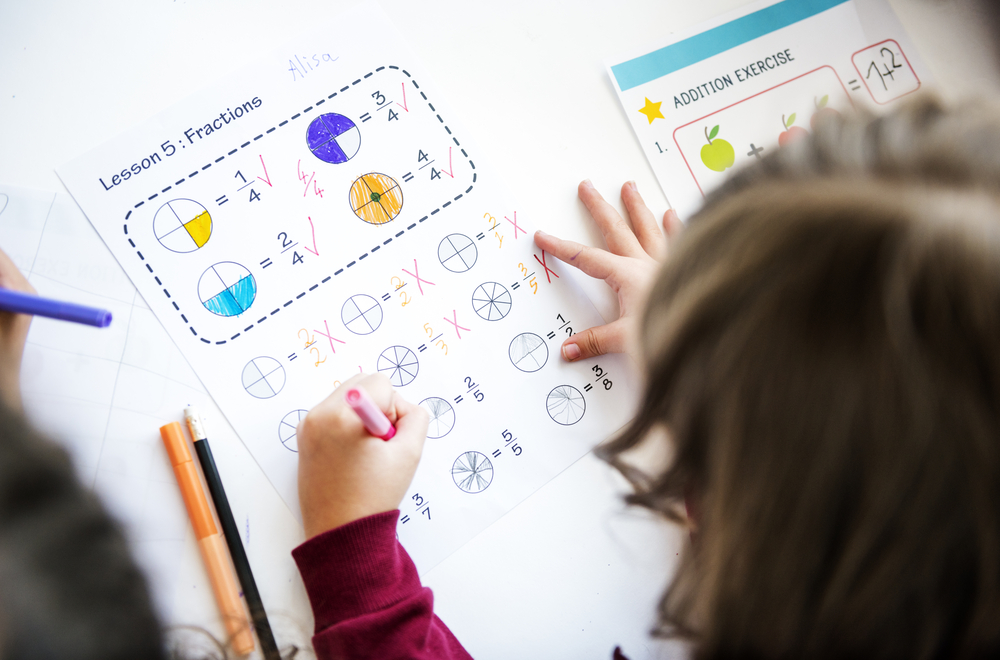


Parents and teachers should care about comparing fractions for children aged 7-9 because it lays a foundational understanding of mathematical concepts that are crucial for future learning. At this age, children are developing their number sense and critical thinking skills. Comparing fractions introduces them to concepts of part-to-whole relationships, equivalence, and the significance of denominators and numerators. This knowledge is essential for grasping more complex mathematical operations, such as addition, subtraction, and multiplication of fractions later on.
Moreover, mastering fractions instills confidence in young learners, encouraging them to engage with mathematics without fear. It fosters a proactive attitude towards problem-solving and helps them make sense of real-world scenarios, such as sharing food or understanding measurements in recipes. Through engaging and challenging activities, children can strengthen their analytical skills, improving their performance in school.
By focusing on comparing fractions, educators and parents nurture important cognitive abilities in their children. This subject not only prepares them for higher mathematics but also instills the resilience needed to tackle challenging concepts in the future, ensuring a solid academic and personal growth trajectory. Therefore, emphasizing this area is vital for a well-rounded education in today's increasingly numerically driven world.








