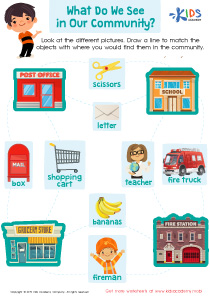
Shape identification Extra Challenge Math Worksheets for Ages 7-9
4 filtered results
Difficulty Level
Grade
Age
-
From - To
Subject
Activity
Standards
Discover our "Shape Identification Extra Challenge Math Worksheets" designed specifically for children aged 7 to 9. These engaging worksheets enhance learning through fun challenges, helping students deepen their understanding of geometric shapes. Each worksheet promotes critical thinking and problem-solving skills with activities that encourage kids to identify, categorize, and analyze various shapes in different contexts. Perfect for classroom use or at-home practice, these worksheets will captivate young minds while reinforcing important math concepts. Unlock your child's potential as they navigate through shapes and develop a strong foundation in geometry. Get ready for fun-filled learning adventures in shape identification!
Favorites
With answer key
Interactive
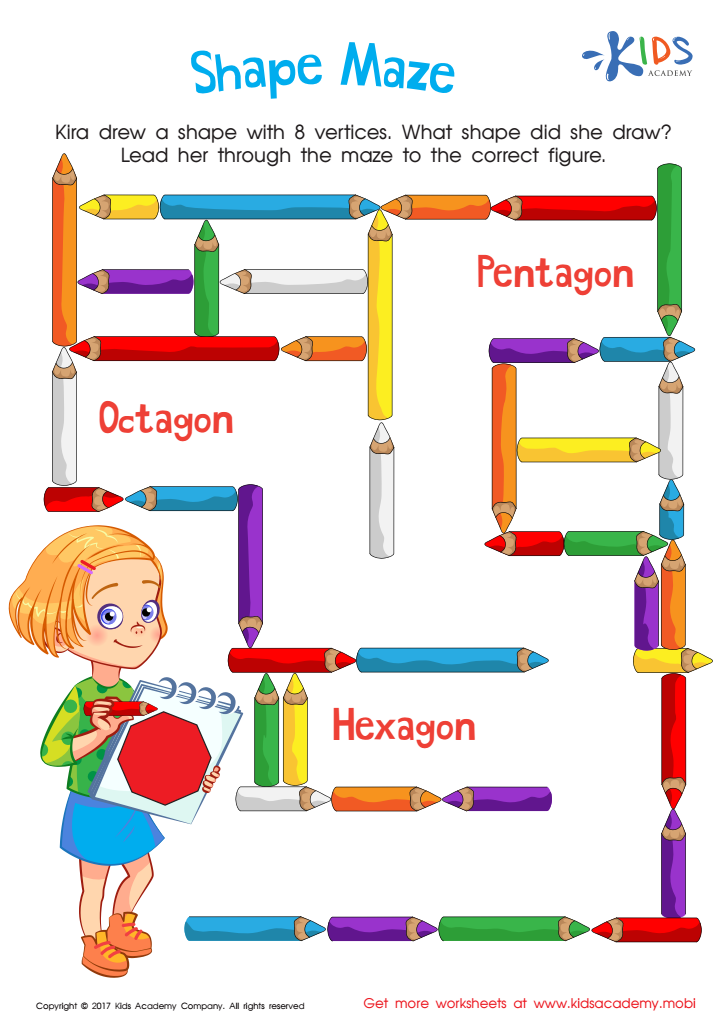
Shape Maze Worksheet
Test your child's geometry knowledge with this fun printable maze! They'll need to identify shapes with 8 vertices to find their way through the maze and get the correct answer.
 Assign to My Students
Shape Maze Worksheet
Worksheet
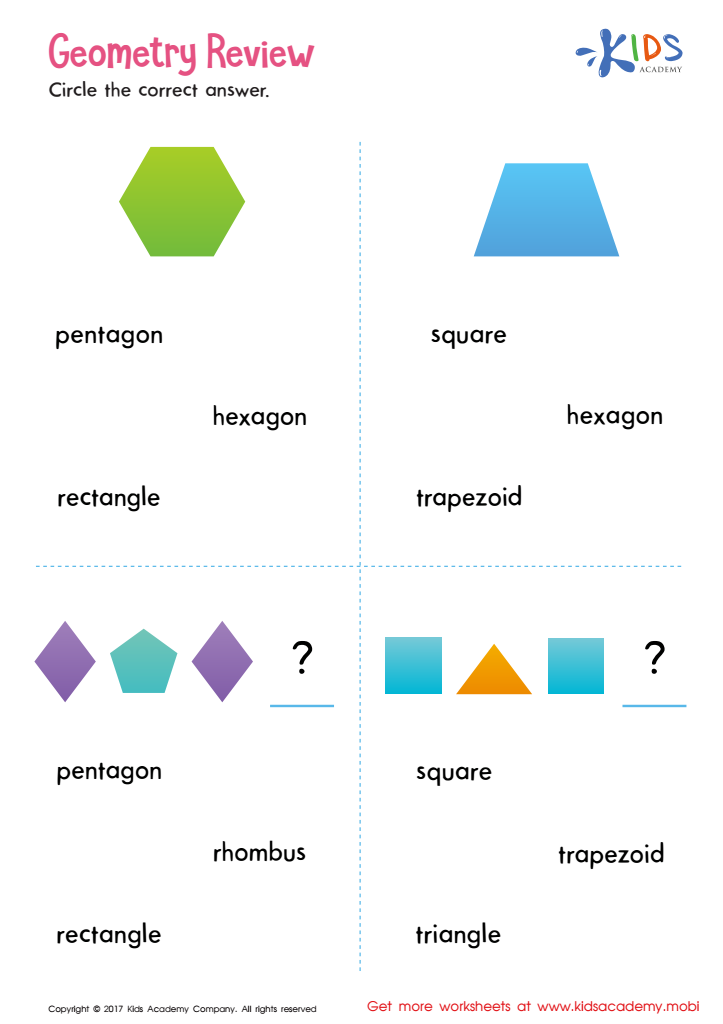
Geometry Review Printable
Repetition is key to success; give your child the practice they need with this geometry worksheet.
Geometry Review Printable
Worksheet
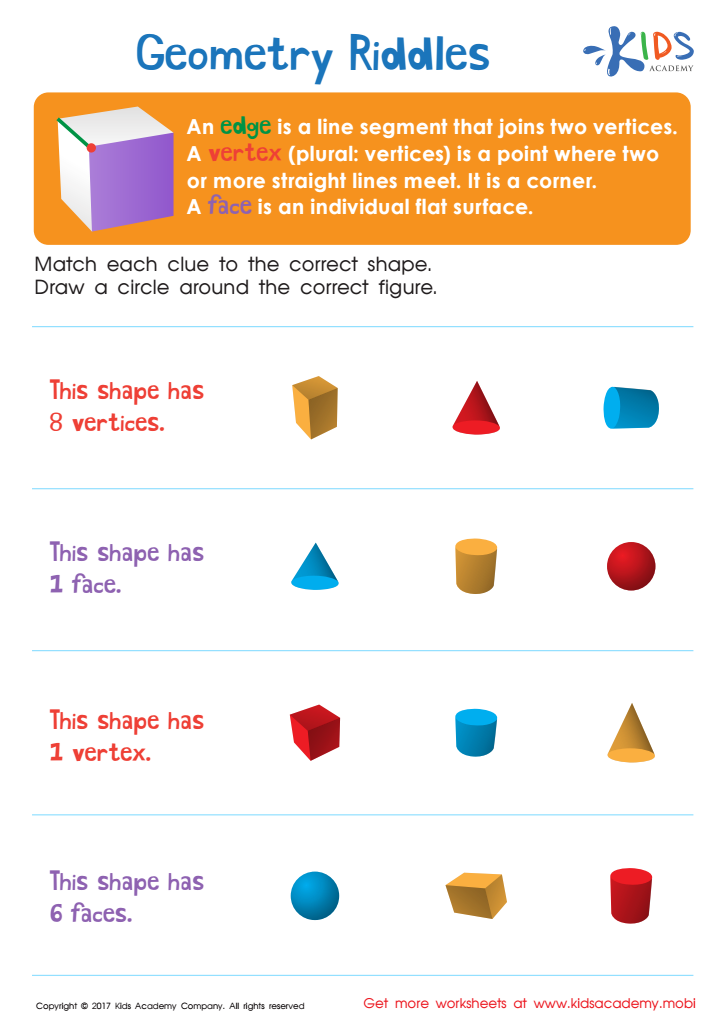
Geometry Riddles Printable
Review geometry terms with your child using this challenging worksheet of tricky riddles. Identifying and counting vertices, edges, and faces of shapes becomes fun as they solve the riddles!
Geometry Riddles Printable
Worksheet
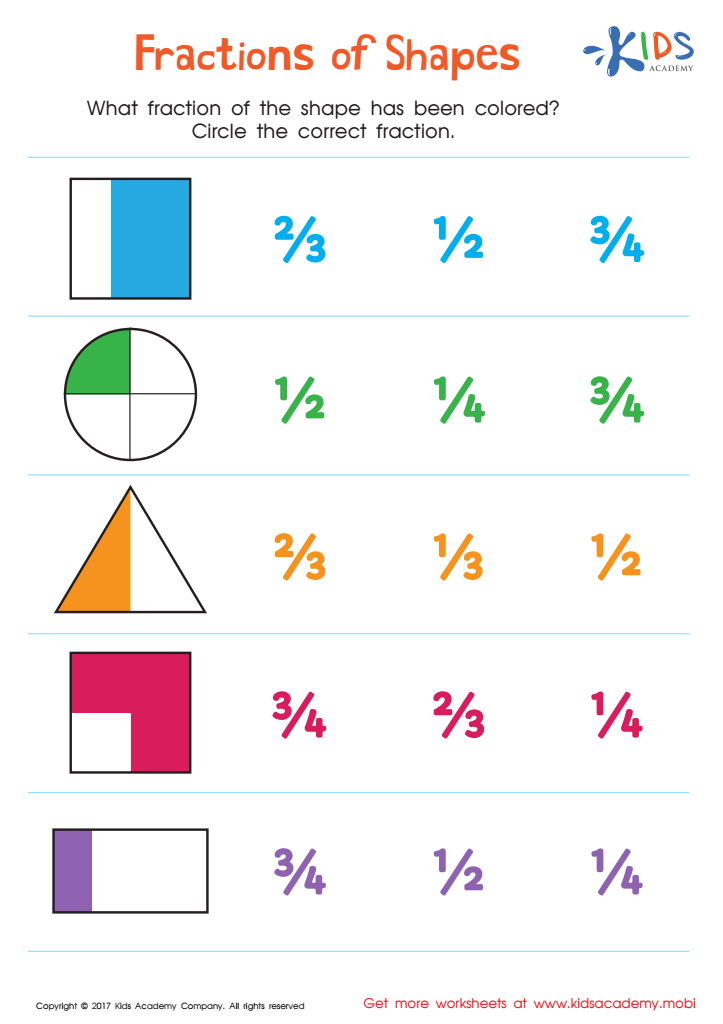
Fractions of Shapes: Math Concept Worksheet
Fractions can be tricky, but with pictures to illustrate them, they become much easier to understand. Our fractions of shapes worksheet is a great way to help children visualize fractions and gain a better understanding of them.
Fractions of Shapes: Math Concept Worksheet
Worksheet
Join Kids Academy for Free
Who is primarily going to use this learning content?






Shape identification is a fundamental skill that lays the groundwork for various mathematical concepts in children aged 7-9. By incorporating Extra Challenge Math, parents and teachers can enhance this learning experience and foster critical thinking, problem-solving, and spatial awareness.
Firstly, understanding shapes goes beyond mere recognition; it promotes analytical skills as children learn to classify, compare, and manipulate different geometric forms. For example, extra challenges can encourage kids to explore how shapes relate to one another, engaging them in discussions about symmetry, angles, and boundaries.
Moreover, mastering shape identification gives children confidence in their abilities, encouraging a positive attitude toward math. The challenges also allow for differentiated learning, catering to various skill levels within the classroom, ensuring that every child remains engaged and motivated.
In addition, effectively teaching shape identification can tie into real-life applications, from architecture and art to nature and problem-solving scenarios. By nurturing these skills early on, we equip students with a strong foundation for future math topics, such as fractions, area, and volume.
Ultimately, shape identification through Extra Challenge Math promotes cognitive development, creativity, and self-assurance in children, making it essential for parents and teachers to take interest in this critical area of learning.