Shape identification Extra Challenge Worksheets
6 filtered results
-
From - To
Unlock your students' potential with our Shape Identification Extra Challenge Worksheets! Designed for early learners, these engaging resources boost shape recognition and critical thinking skills through fun exercises that go beyond basic identification. Each worksheet presents a variety of challenges, from matching shapes to analyzing patterns, keeping students motivated and eager to learn. Perfect for differentiation in the classroom or for reinforcing concepts at home, these worksheets inspire kids to explore the world of geometry creatively. Let your students excel and gain confidence in their abilities with our thoughtfully crafted shape challenges today! Explore, learn, and shape their future!
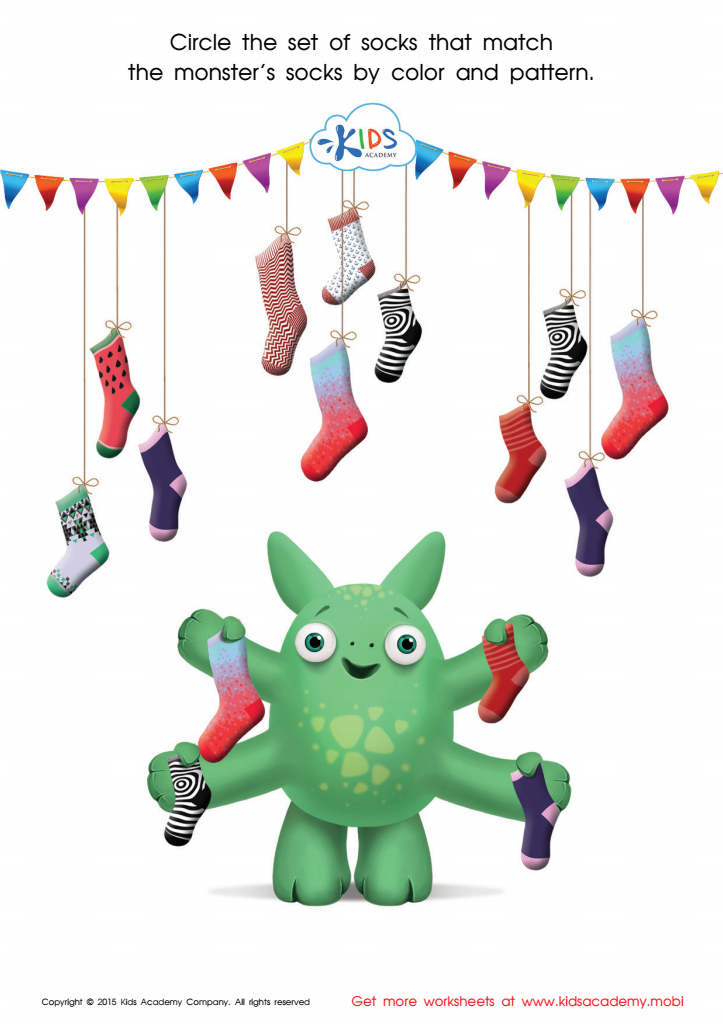
Sort the Monster's Socks Worksheet
 Assign to My Students
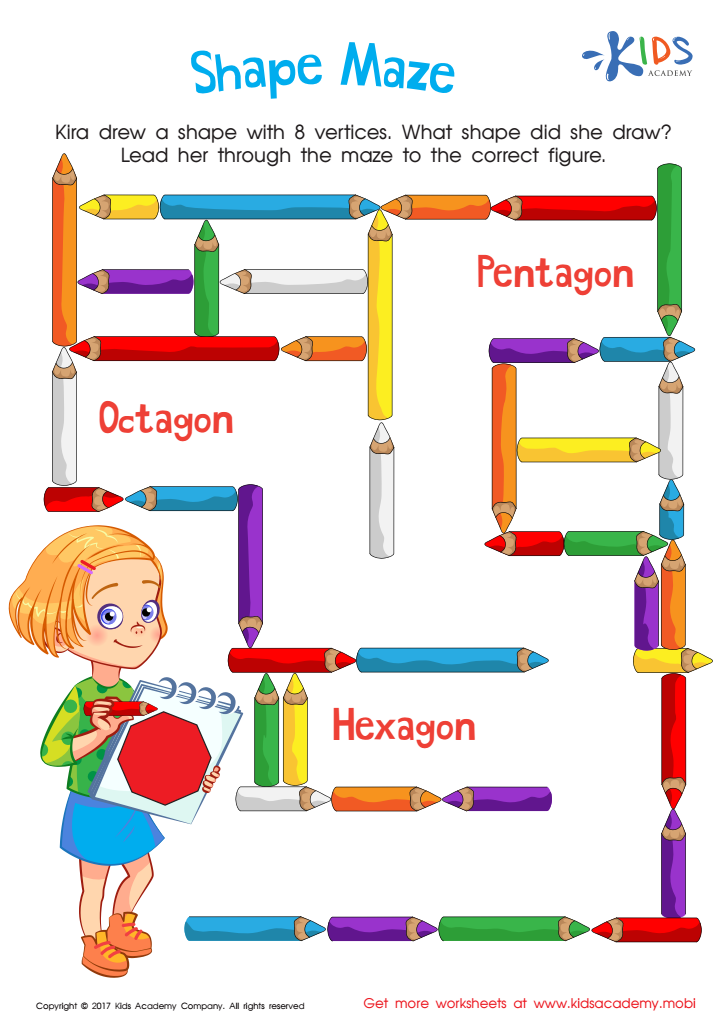
Shape Maze Worksheet
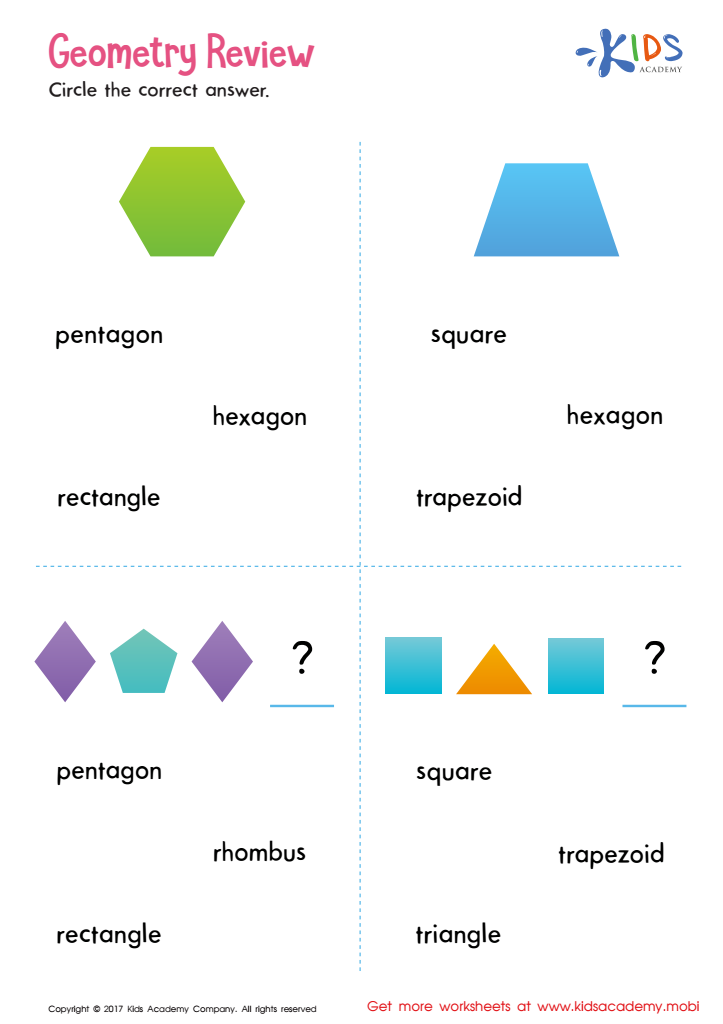
Geometry Review Printable
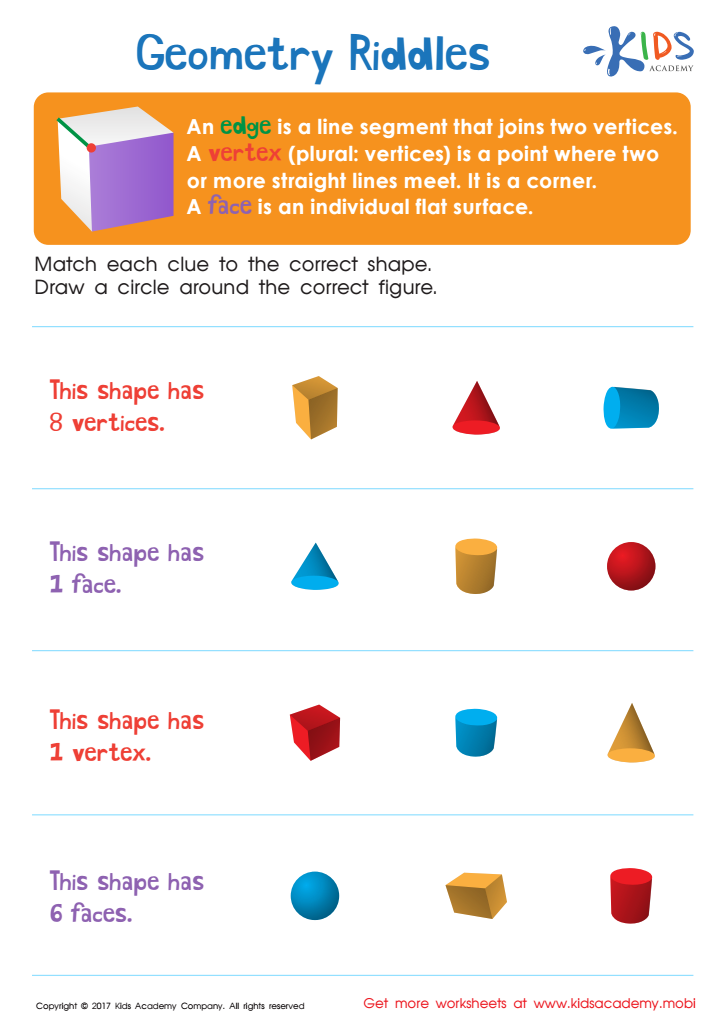
Geometry Riddles Printable
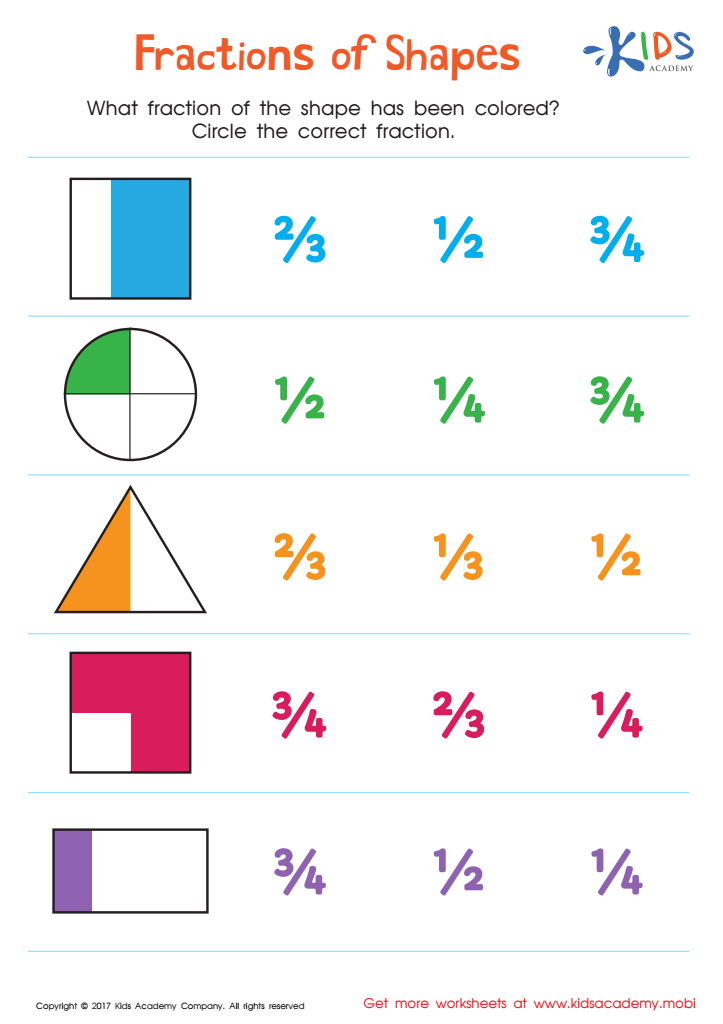
Fractions of Shapes: Math Concept Worksheet
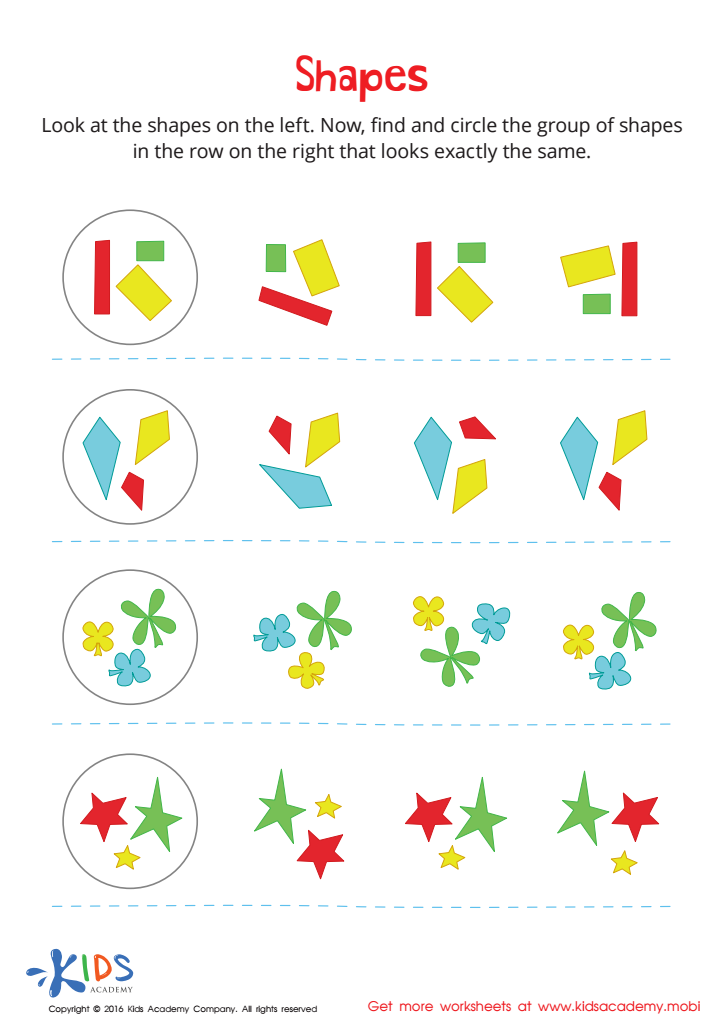
Shapes Worksheet


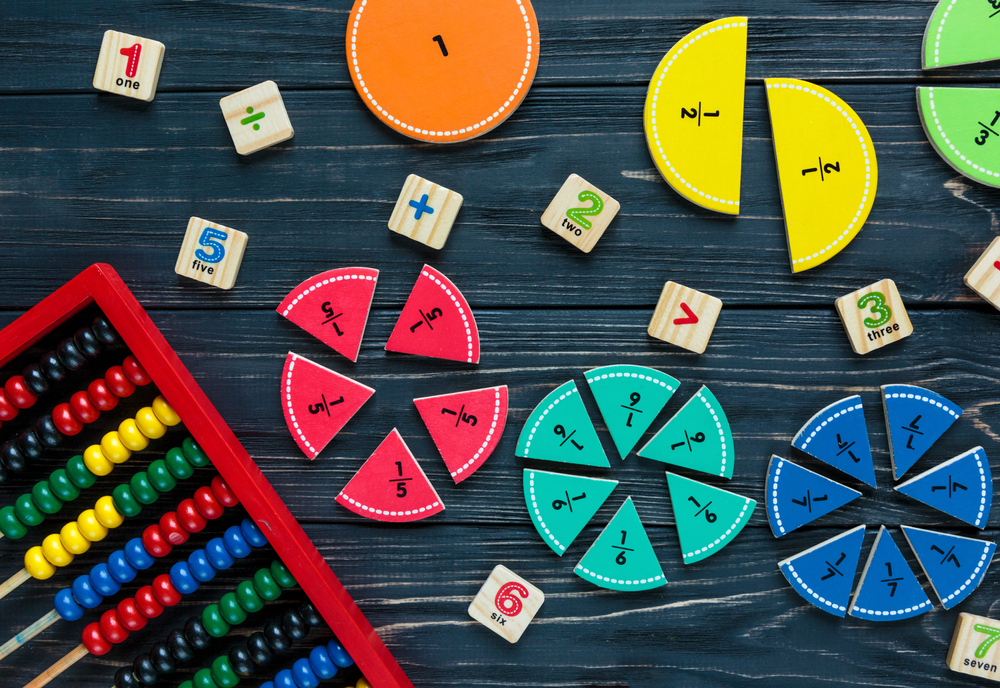



Shape identification is a fundamental skill in early childhood education that lays the groundwork for various cognitive and mathematical concepts. Understanding shapes enhances spatial awareness and promotes problem-solving abilities. When children engage in shape identification challenges, they not only enhance their recognition skills but also develop critical thinking.
For parents and teachers, shape identification exercises offer valuable insights into a child’s developmental progress. These activities can be tailored to a child's interests, making learning more engaging and fun. As children encounter shapes in different contexts, they start recognizing the world around them—transforming everyday experiences, like identifying shapes in nature or home objects, into learning opportunities.
Furthermore, shape identification fosters early math skills, such as sorting, classifying, and measuring. These skills are crucial for later mathematical concepts like geometry and algebra. By incorporating shape identification challenges into learning, parents and teachers can cultivate a solid foundation for mathematical reasoning.
Ultimately, participating in shape identification challenges equips children with the foundational knowledge and skills that support not only academic success but also everyday problem-solving, making it a vital focus for caregivers and educators alike. Fostering this knowledge early on can lead to improved confidence and enthusiasm for learning in the future.








