Explore our dynamic collection of Comparing Objects Math Worksheets designed to make learning fun and interactive! Perfect for early learners, these worksheets help children master essential math skills by comparing sizes, lengths, weights, and more. Each activity is crafted to boost critical thinking and problem-solving abilities while keeping kids engaged. Easy-to-follow instructions and vibrant illustrations ensure a positive and rewarding learning experience. Whether at home or in the classroom, our worksheets are an excellent resource to build a strong foundation in math. Download now and watch your child's confidence grow as they explore the world of comparisons!
Check out this FREE Trial Lesson on Math!

Name the Shape Regardless of Size

Favorites
With answer key
Interactive
  • Comparing objects
  • Math
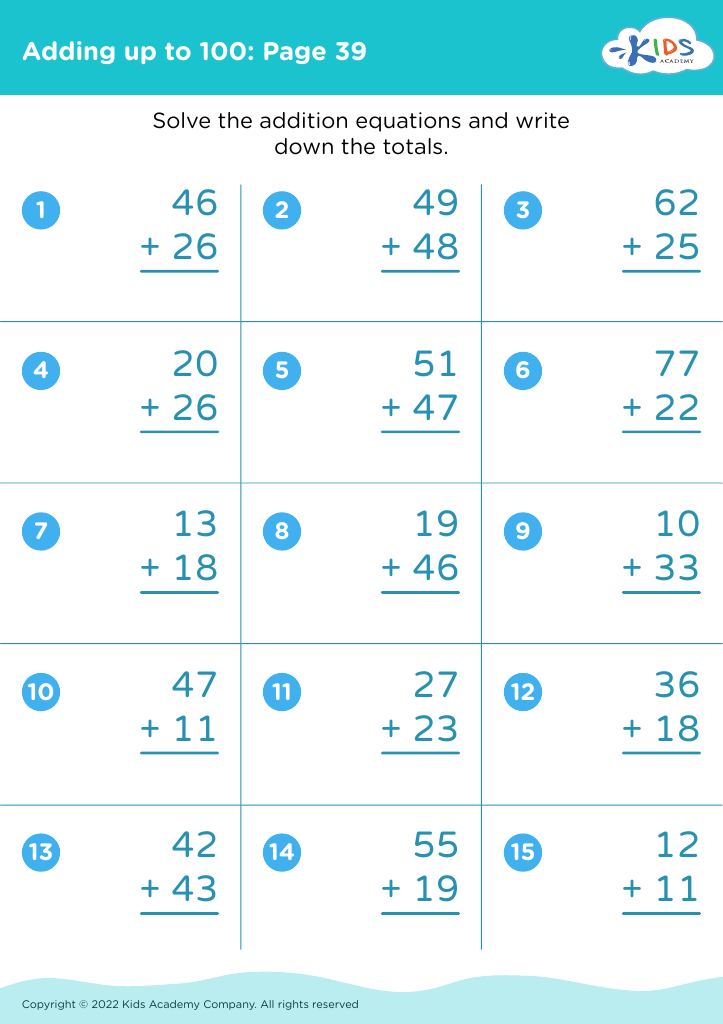
Adding up to 100: Page 39

Adding up to 100: Page 39

Adding up to 100: Page 39
Worksheet
Ordering Size Worksheet

Ordering Size Worksheet

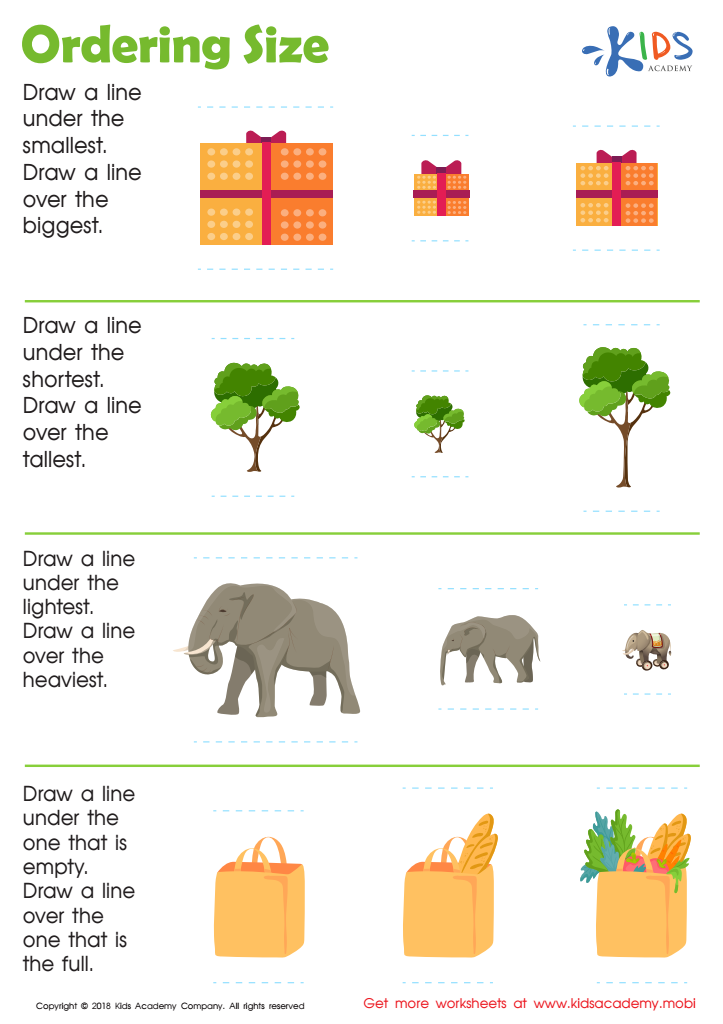
This worksheet helps students practice mathematical vocabulary related to size and quantity. Children look at pictures and draw a line to the objects that are taller, shorter, big, small, light, heavy, empty or full. The teacher can quickly check students' understanding of these measurement terms and then ask for examples of their own.
Ordering Size Worksheet
Worksheet
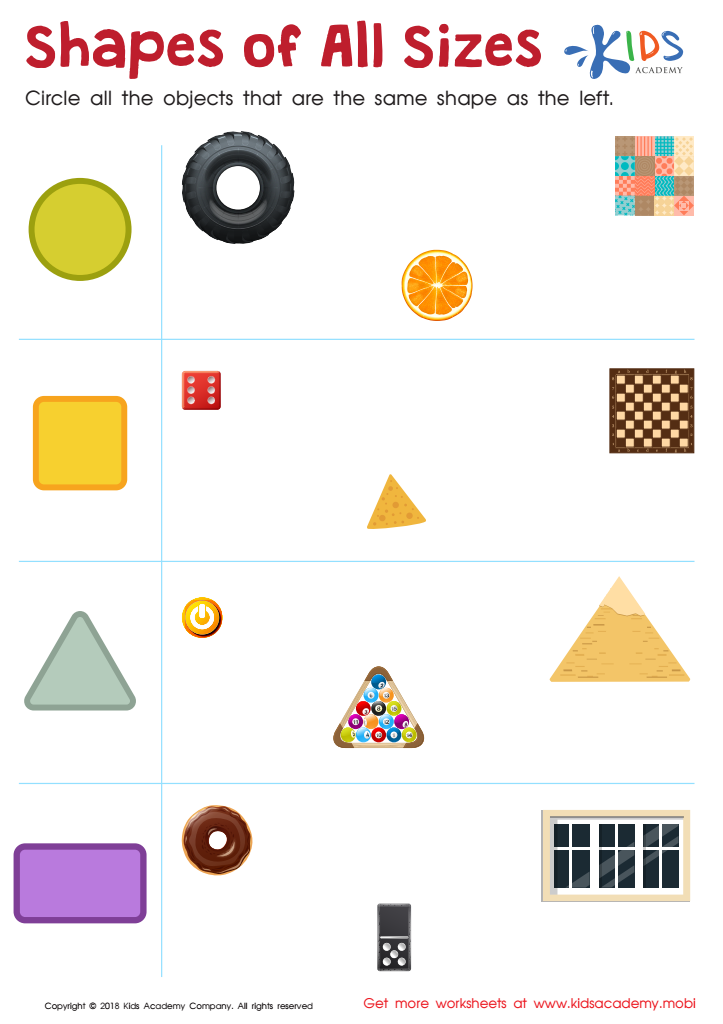
Shapes of All Sizes Worksheet

Shapes of All Sizes Worksheet

Students will have fun comparing basic shapes to familiar objects with this worksheet. It's an excellent way to help them recognize similarities in geometric shapes, building strong foundations for understanding congruence and similarity.
Shapes of All Sizes Worksheet
Worksheet
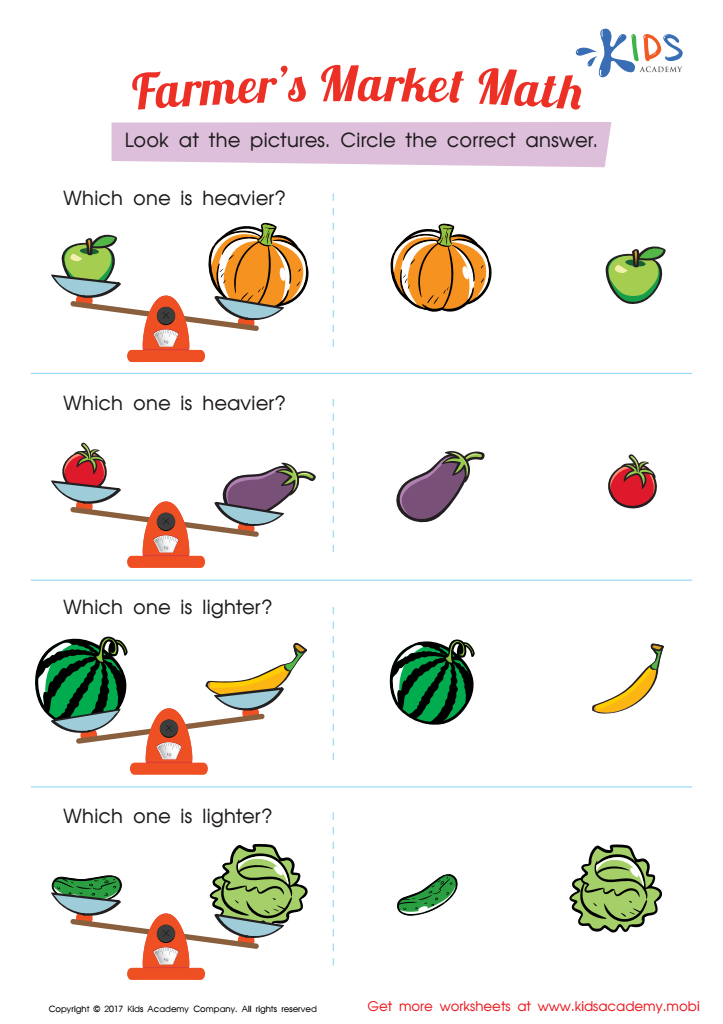
Which one is heavier worksheet

Which One Is Heavier Worksheet
Kindergartners can learn weight easily with this worksheet, featuring images of familiar fruits and veggies. Comparing which one is heavier helps them understand the concept better.
Which One Is Heavier Worksheet
Worksheet
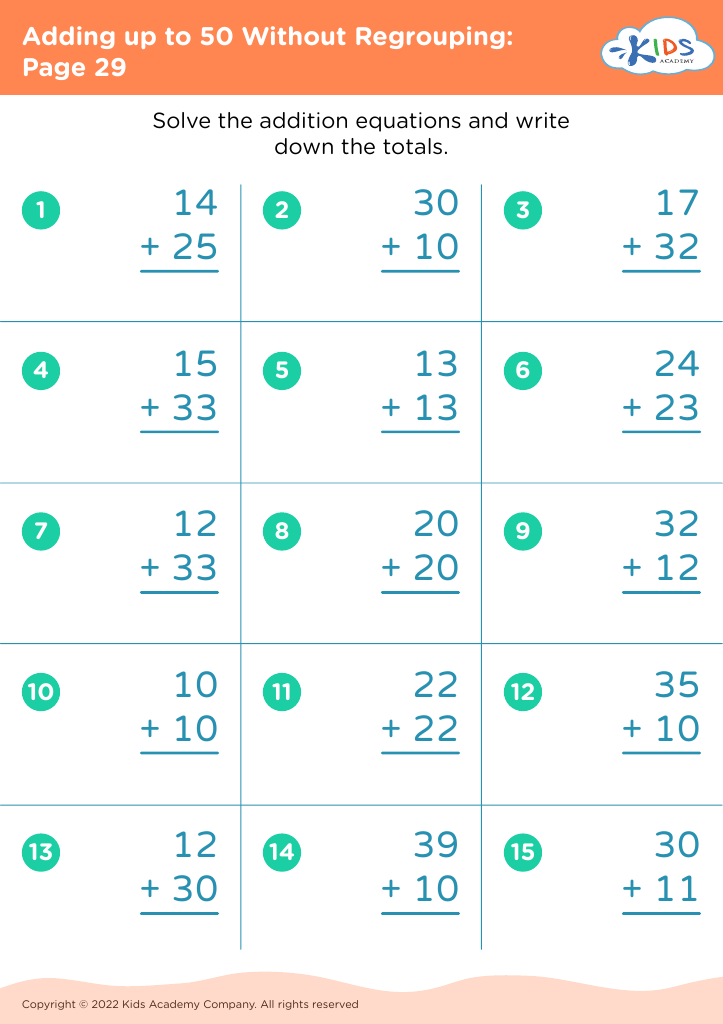
Adding up to 50 Without Regrouping: Page 29
Worksheet
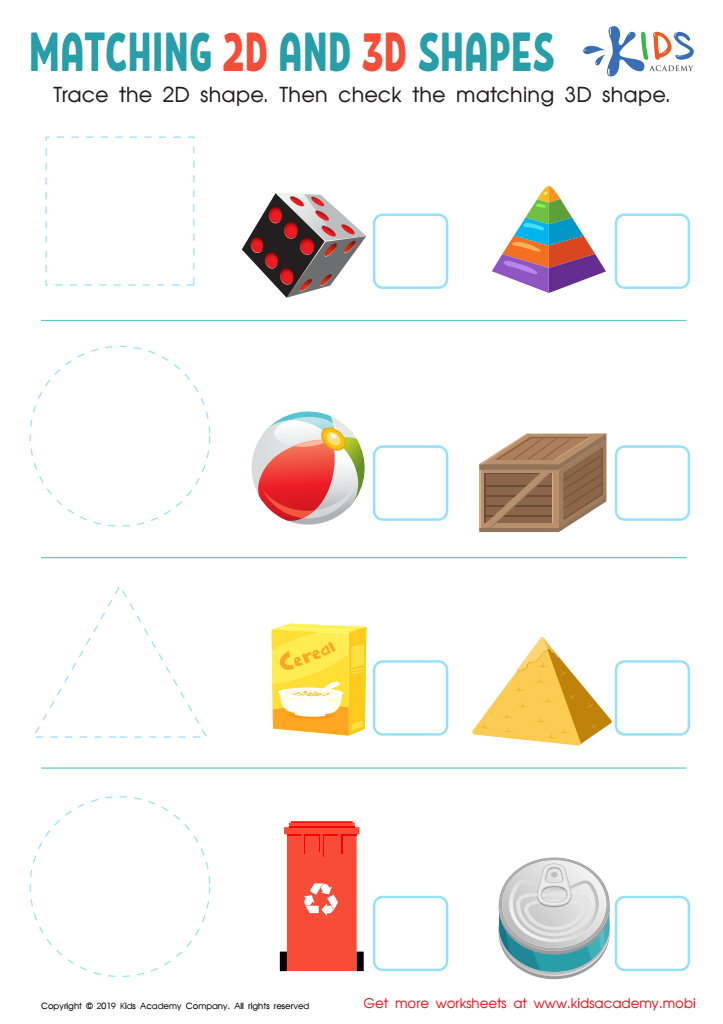
Matching 2D and 3D Shapes Worksheet

Matching 2D and 3D Shapes Worksheet

Before starting this worksheet, ask your kids what shapes they know and point out the 2D and 3D shapes on it. Help your kids trace the 2D shapes and then match them to the 3D versions. It'll be a fun new world for your kids to explore!
Matching 2D and 3D Shapes Worksheet
Worksheet
Heavier or Lighter? Worksheet

Heavier or Lighter? Worksheet

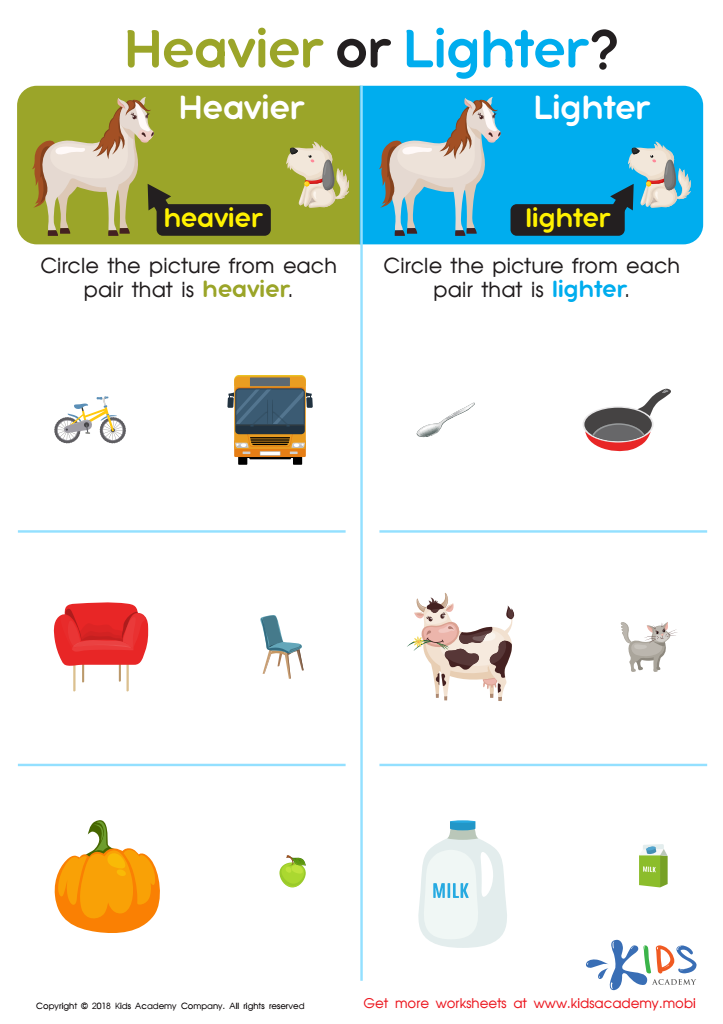
This PDF provides children an opportunity to practice concepts of heavier and lighter with familiar pictures. They must use fine-motor skills to circle the heavier or lighter item in each pair. Picture clues help build a foundation for future, harder concepts. Kids will love this fun worksheet!
Heavier or Lighter? Worksheet
Worksheet
Size Comparison Worksheet

Classifying by Size Sorting Worksheet

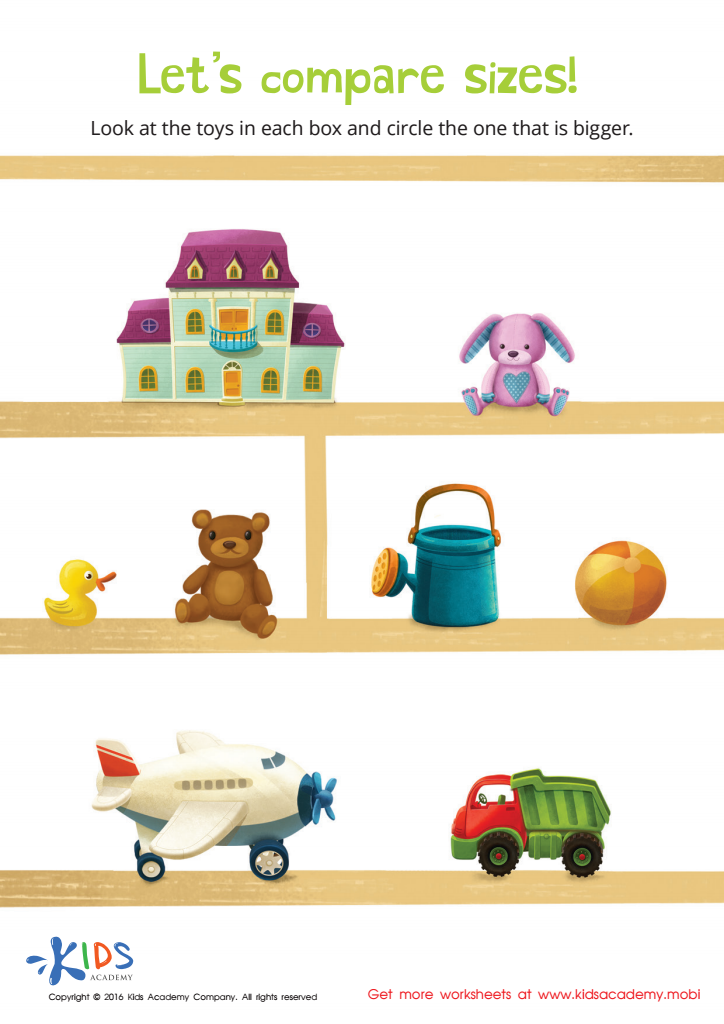
Help your preschooler recognize differences in size using this fun worksheet! Your child will engage in important spatial recognition and problem-solving skills while talking with you about objects that can be small or large. Enjoy the vibrant pictures together!
Classifying by Size Sorting Worksheet

Worksheet


Comparing objects in math is a fundamental skill for early learners that forms the foundation for more complex mathematical concepts. Parents and teachers should nurture this skill as it develops essential cognitive abilities such as critical thinking, problem-solving, and attention to detail. By comparing objects, children learn to identify similarities and differences, categorize items, and understand basic mathematical vocabulary like "taller," "shorter," "heavier," or "lighter."

These comparisons help children grasp the concept of measurement, which is pivotal for math and science. Comparing objects supports the development of number sense because it involves arranging items in a sequence, thereby introducing concepts such as ordering and sequencing—skills vital for understanding numbers and their relationships.

Moreover, hands-on activities in comparing objects engage young learners in active learning, making the experience more engaging and memorable. For parents and teachers, incorporating such activities means fostering an environment that stimulates curiosity and logical thinking. This early intervention can lead to better performance in math as children grow. Caring about and integrating comparing objects into daily learning routines lays a robust groundwork for children’s future academic success, making it a crucial aspect of early childhood education.