
Logical thinking Math Worksheets
20 filtered results
Difficulty Level
Grade
Age
-
From - To
Subject
Activity
Standards
Our Logical Thinking Math Worksheets provide children with challenging, fun activities designed to enhance their problem-solving and reasoning skills. Ideal for fostering analytical thinking, these worksheets cover a range of exercises from pattern recognition and sequencing to logic puzzles and spatial reasoning tasks. Suitable for different educational levels, our resources help students build a strong mathematical foundation while developing critical thinking abilities. Engaging and thoughtfully crafted, these worksheets are perfect for classroom use or at-home practice, encouraging kids to think outside the box and approach math concepts with confidence and enthusiasm. Help your child unlock their full potential in math today!
Favorites
With answer key
Interactive
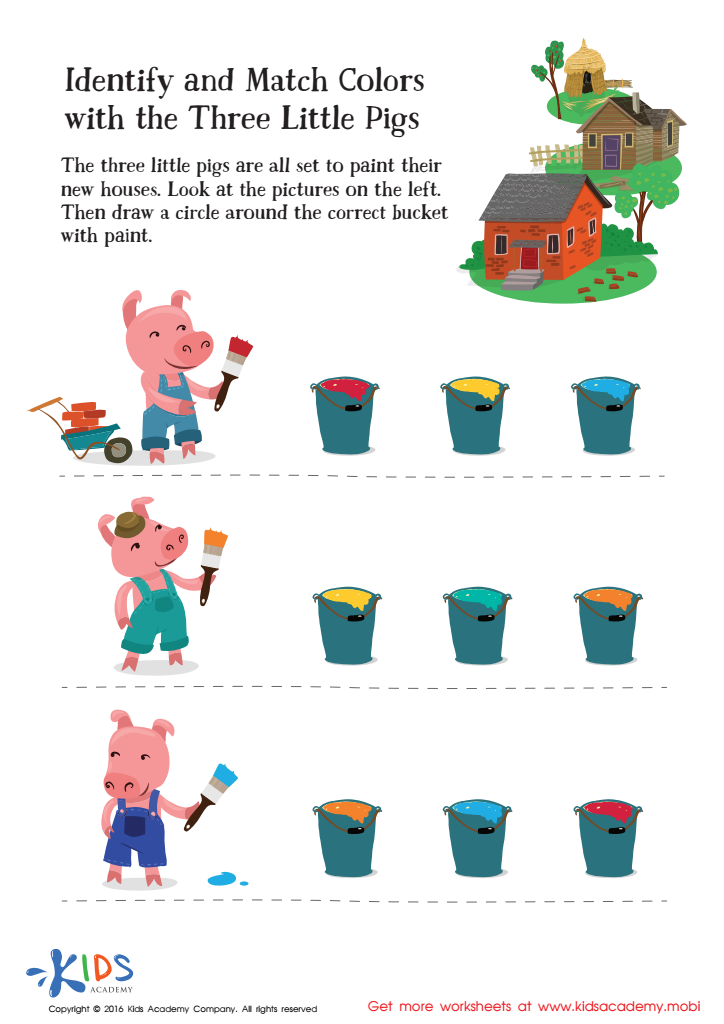
Fairy Tale Worksheet: Identify and Match Colors with Three Little Pigs
Help the 3 Little Pigs find the right color for their houses! This fun worksheet will have your child developing their problem solving and color recognition skills. It's a great way to start building the foundation for advanced logic skills. Plus, they'll love the Three Little Pigs coloring pages.
Fairy Tale Worksheet: Identify and Match Colors with Three Little Pigs
Worksheet
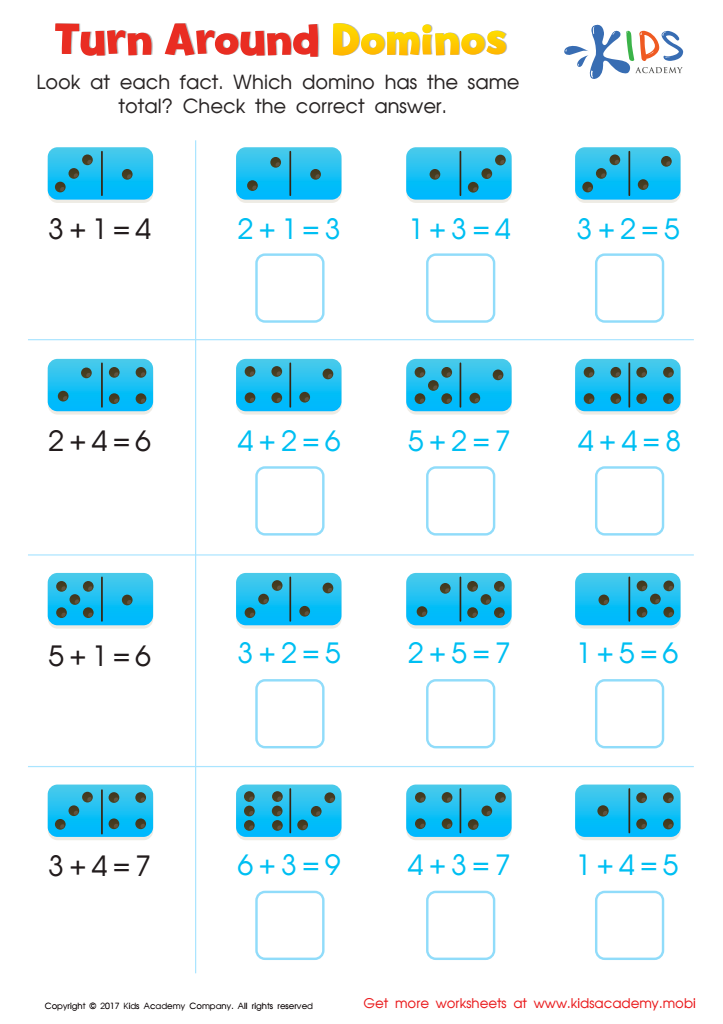
Turn Around Dominos Worksheet
Encourage your child to flex their mental muscles with this math worksheet. Look through the left side's dominos and their values and then check the three boxes on the right. Ask your child if any of the right box's dominos are similar. This requires focus and careful observation.
Turn Around Dominos Worksheet
Worksheet
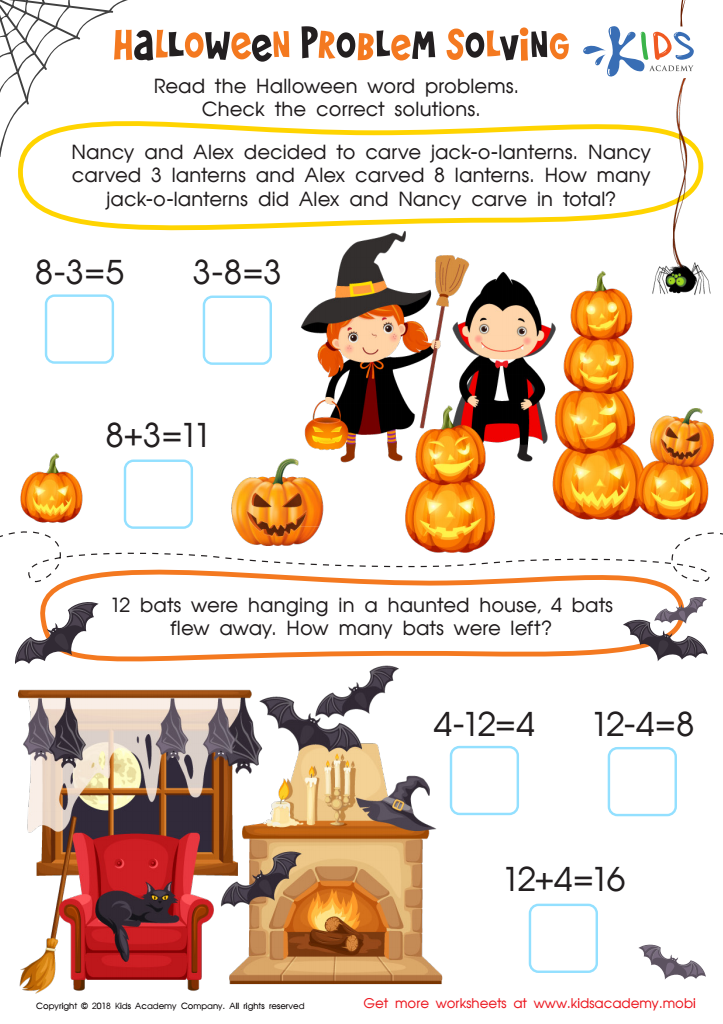
Halloween Problem Solving Worksheet
Halloween math is here! Get your spooky word problems and frightfully cute images with this free PDF worksheet. Read the problems with your little one and focus on the numbers and key phrases. Then match the equation to its solution to complete the page. Calling all ghosts and goblins - have some math fun this Halloween!
Halloween Problem Solving Worksheet
Worksheet
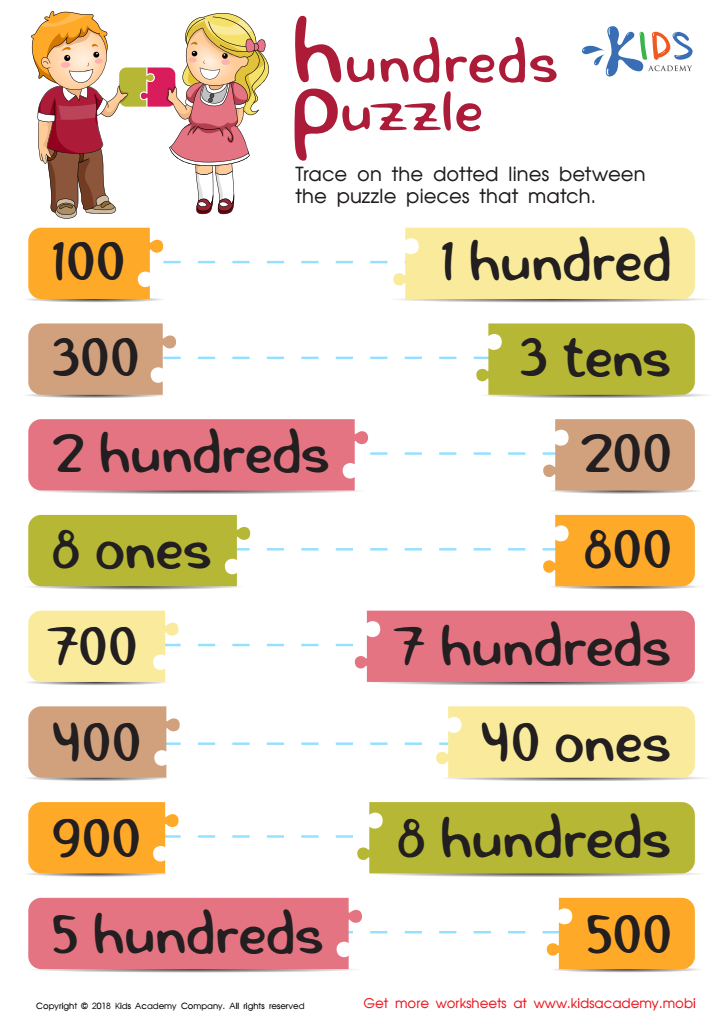
Hundreds Puzzle Worksheet
This tracing sheet can help your child improve their number knowledge, from hundreds to tens. On the left are different numbers, with the same on the right. Ask your child to connect the matching numbers with the dotted lines. Make learning numbers fun with this traceable printout.
Hundreds Puzzle Worksheet
Worksheet
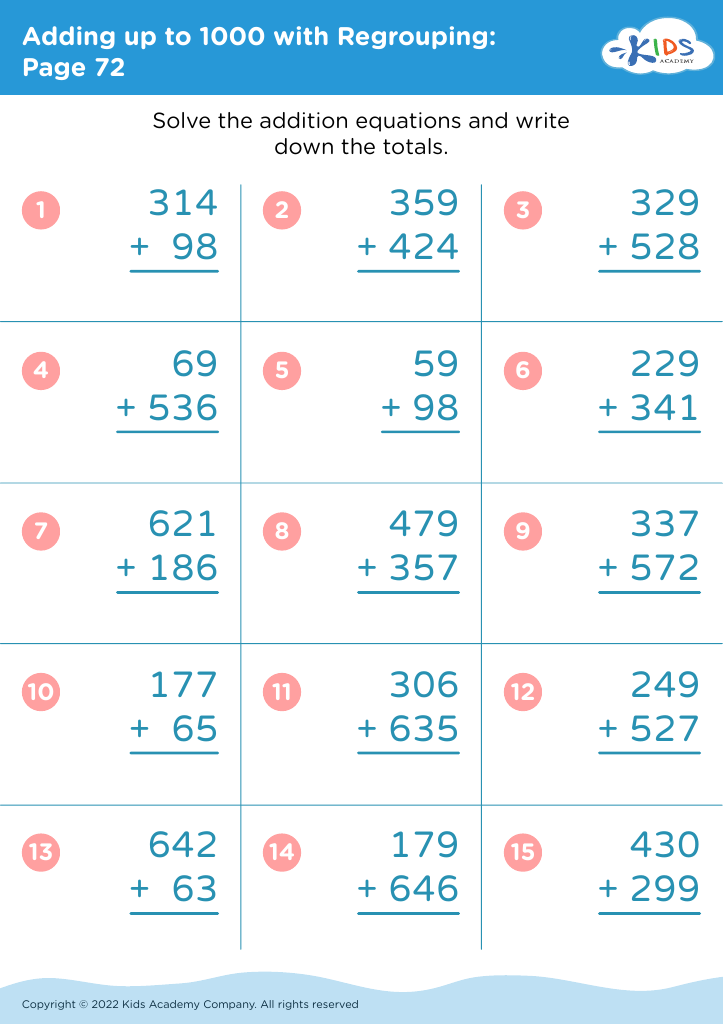
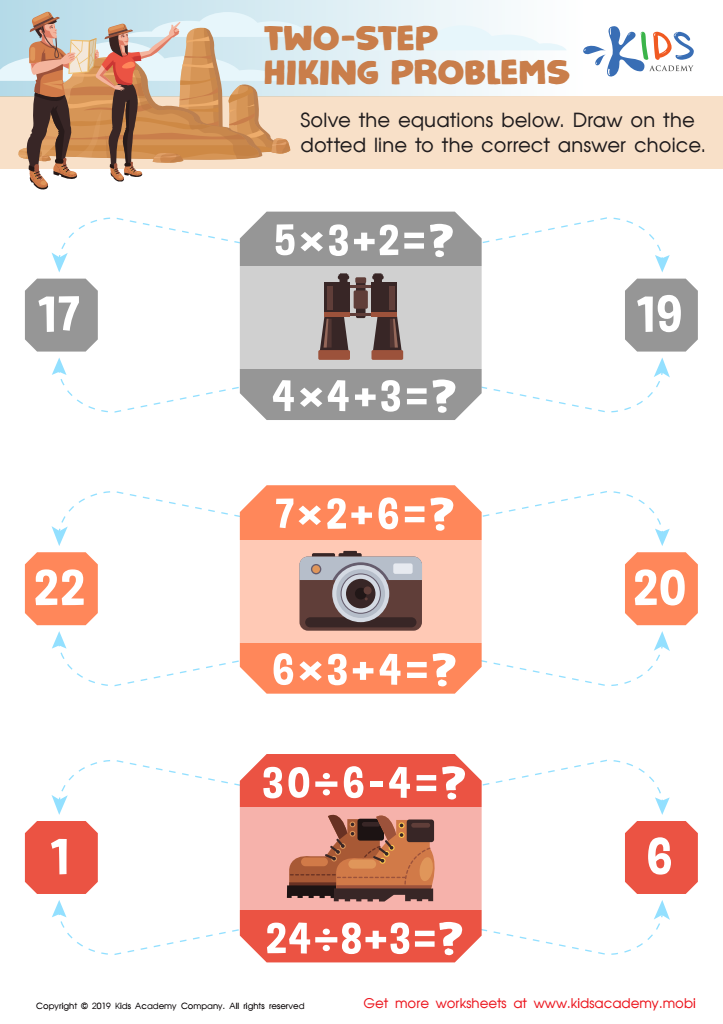
Two-Step Hiking Problems Worksheet
Help your kids ease into math with this worksheet. Solve the three basic equations, then draw on the dotted line to the correct answer. You can help your kids make their journey smoother by guiding them through it.
Two-Step Hiking Problems Worksheet
Worksheet
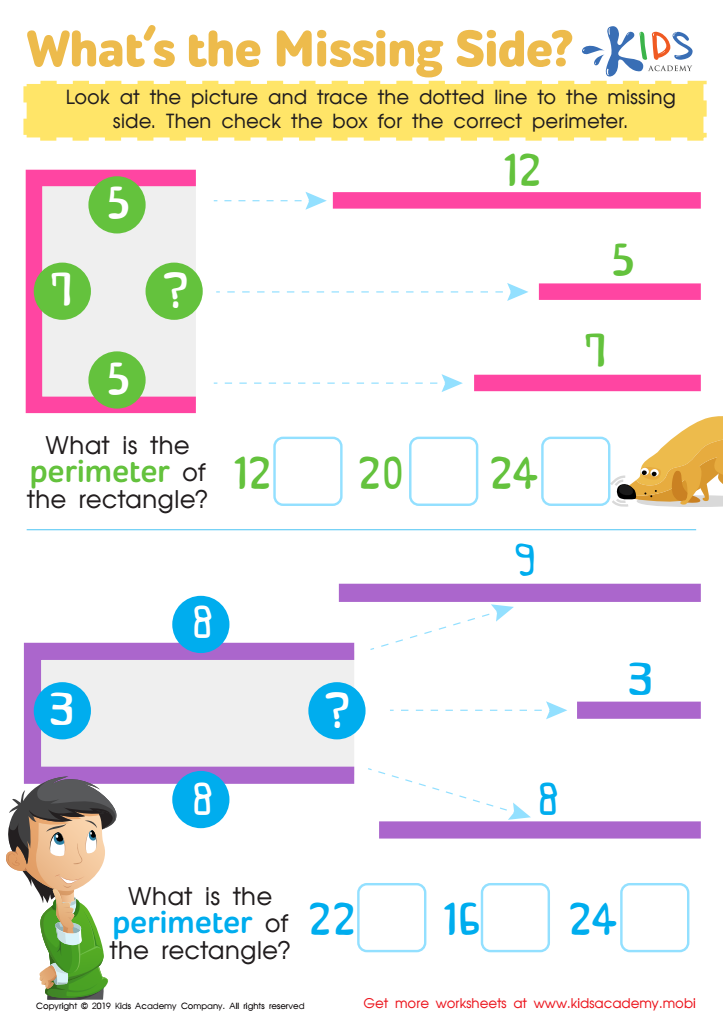
What's the Missing Side Worksheet
Assist your pupils in improving math skills with fun exercises like the tracing sheet. Show them the picture and guide them to trace the missing side. Ask them to check the box of the right perimeter afterwards. Doing this regularly can help them to enjoy and appreciate the subject more.
What's the Missing Side Worksheet
Worksheet
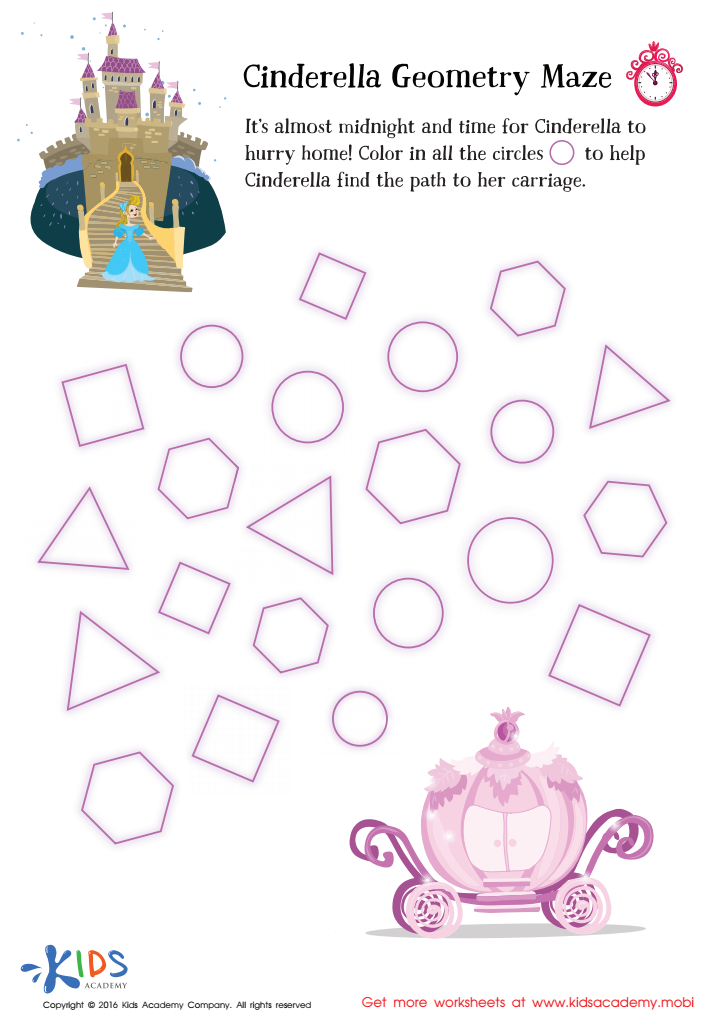
Cinderella Geometry Maze Worksheet
Help Cinderella hurry home! Your preschooler will have fun problem-solving and sorting shapes in this geometric maze. As they shade in the circles, they'll be helping their favorite princess reach her carriage on time. Not only that, but they'll strengthen their logic skills in the process. Get this and other fairy tale mazes to keep them entertained while learning.
Cinderella Geometry Maze Worksheet
Worksheet
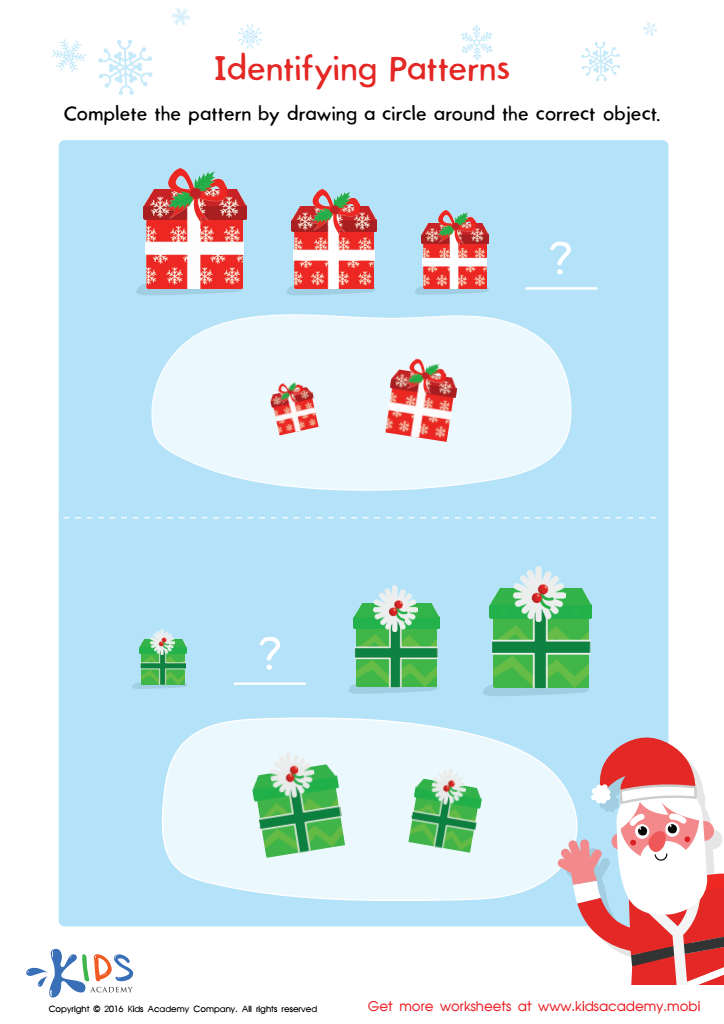
Identifying Patterns Worksheet
Kids can have fun as they learn with this festive worksheet! They'll practice early math skills while identifying patterns with colorful Christmas presents. Have your child get ready for the holidays by finding out which box comes next in the pattern!
Identifying Patterns Worksheet
Worksheet
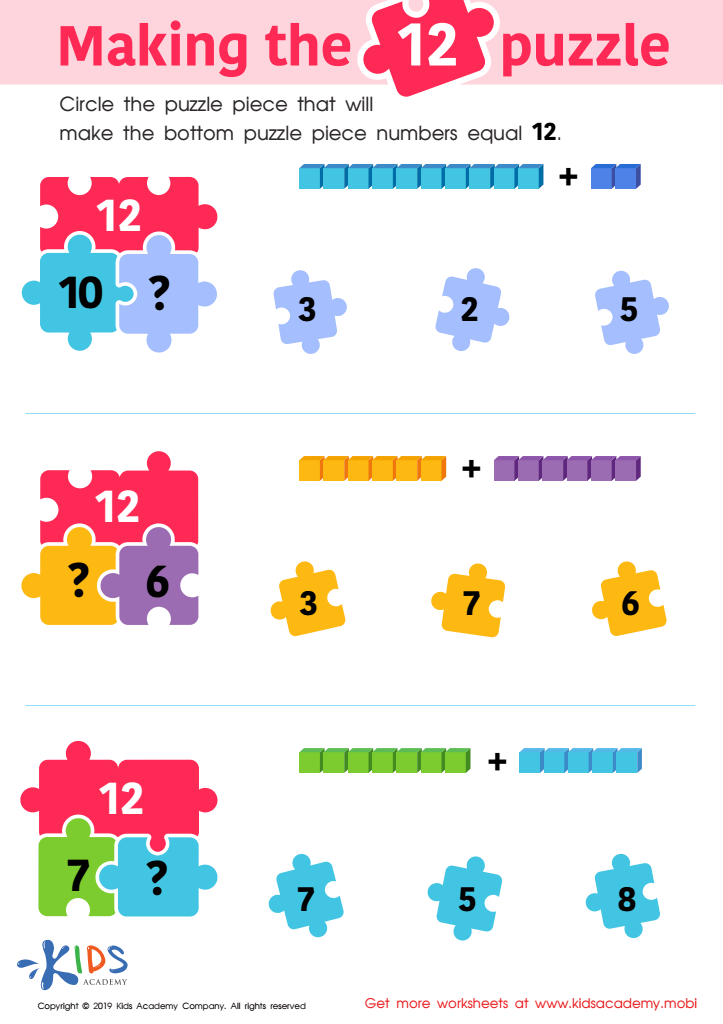
Making the 12 Puzzle Worksheet
Engage preschoolers in learning with this fun and colorful worksheet. Ask them to look at the picture and identify the missing equation on each puzzle piece; then help them solve the problems. When all the puzzle pieces make the bottom numbers equal 12, have them circle it. This is a great way to combine learning and fun!
Making the 12 Puzzle Worksheet
Worksheet
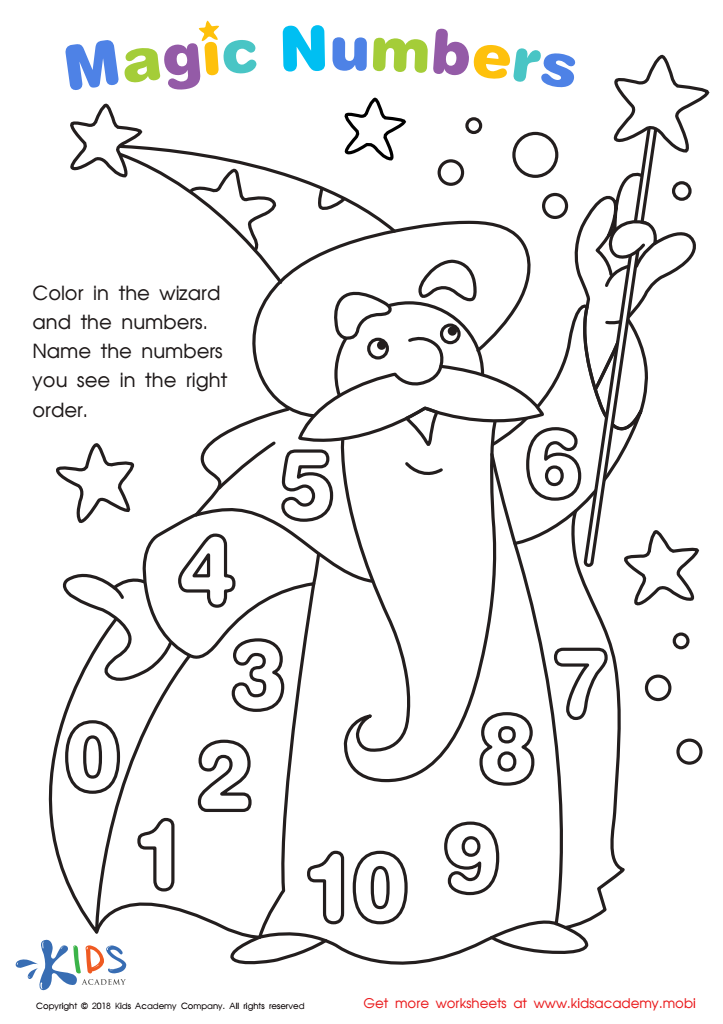
Magic Numbers Worksheet
Does your child have an interest in magic? Here's something they'll love - a coloring sheet featuring a wizard! Ask them to name the numbers from smallest to highest, then let them pick colors to color in the wizard and the numbers. It's sure to excite them!
Download (PDF)
 Assign to My Students
Assign to My Students
Magic Numbers Worksheet
Worksheet
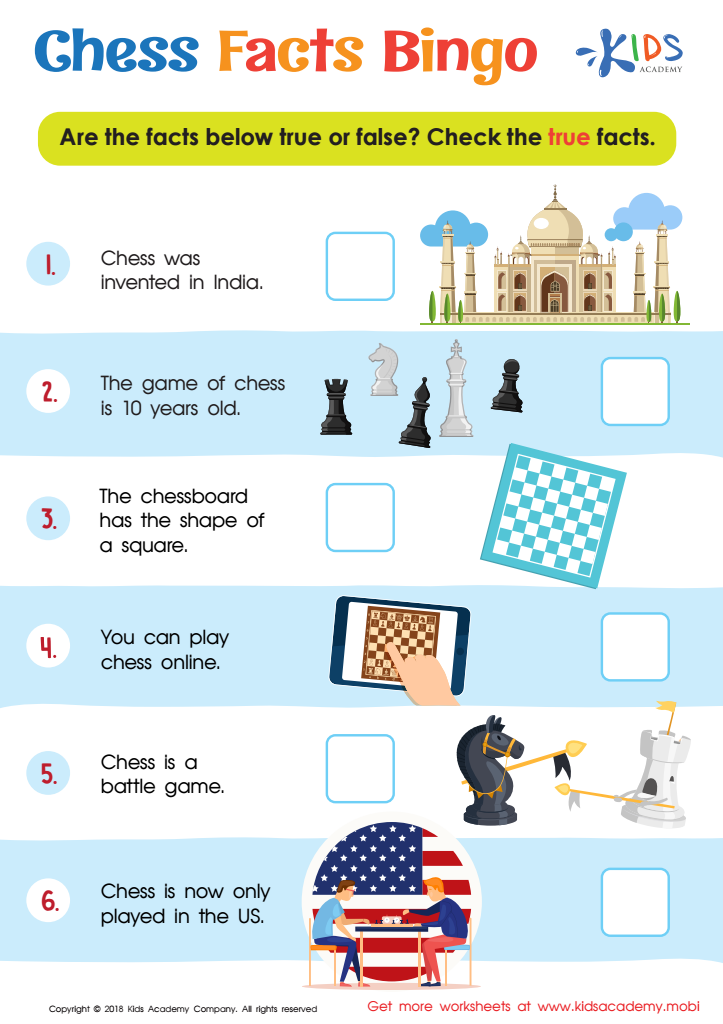
Chess Facts Bingo Worksheet
Help your child assess their knowledge of chess with our simple worksheet. It contains six questions; read them to your child and ask them if the statements are true or false. Once they check the boxes for the true statements, you'll have a better understanding of their understanding of the game.
Chess Facts Bingo Worksheet
Worksheet
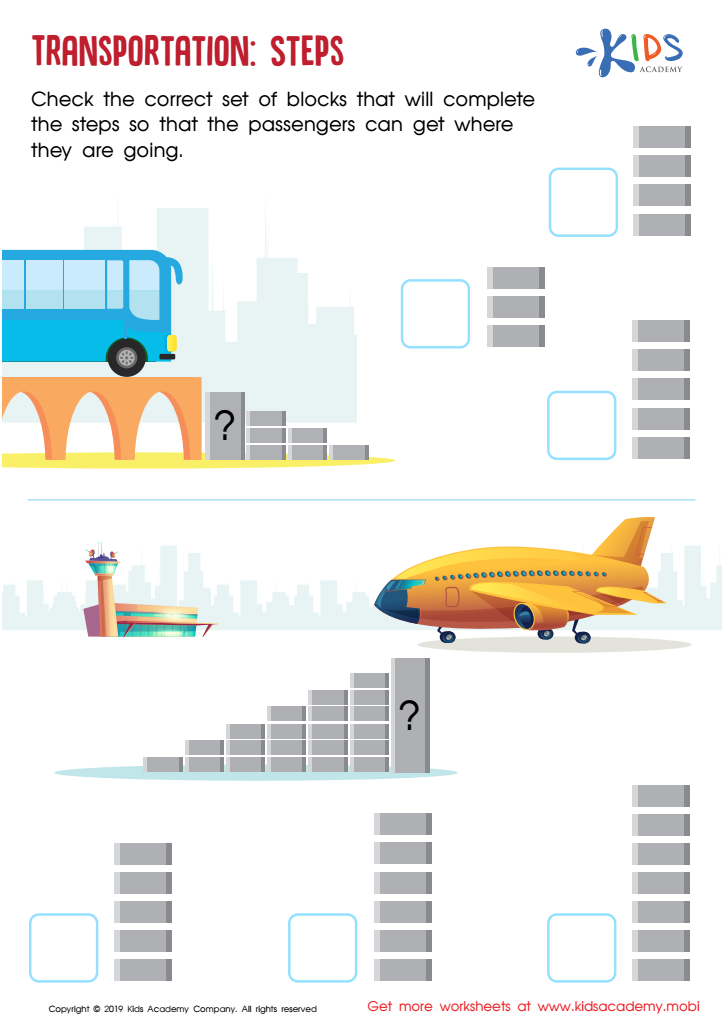
Transportation: Steps Worksheet
Trips are important to all - transportation and its modes have made travelling easier and quicker. Ask your kids to identify the transport in the picture then help them check the right blocks so passengers can reach their destination.
Transportation: Steps Worksheet
Worksheet
Join Kids Academy for Free
Who is primarily going to use this learning content?







Logical thinking in mathematics is crucial because it lays the foundation for critical problem-solving and reasoning skills that are broadly applicable both in academics and daily life. When students develop strong logical thinking skills through math education, they learn to analyze situations, identify patterns, and devise solutions systematically. This way of thinking helps them tackle not only mathematical problems but also everyday challenges more efficiently.
For parents and teachers, fostering these skills is an investment in children's futures. Logical thinking in math teaches persistence, as students learn to approach problems methodically and explore various avenues for solutions before arriving at an answer. It also encourages precision and attention to detail, which are vital in many fields, from science and engineering to finance and technology.
Furthermore, logical thinking strengthens students' abilities to understand complex concepts and make informed decisions. As students advance in their education, subjects such as computer science, physics, and even the liberal arts benefit from a foundation in logical reasoning gained through math.
In essence, by prioritizing logical thinking in math, parents and teachers are equipping children with essential skills that enhance intellectual development, foster independence, and prepare them for real-world success, ensuring they become thoughtful, capable, and resourceful individuals.








