Cognitive Development Normal Geometry Worksheets for Ages 3-6
7 filtered results
-
From - To
"Cognitive Development Normal Geometry Worksheets for Ages 3-6" are expertly designed to foster early cognitive skills in young learners. These engaging worksheets from Kids Academy introduce basic geometry concepts, such as shapes and spatial awareness, while promoting critical thinking and problem-solving abilities. Fun and educational activities focus on pattern recognition, logical reasoning, and fine motor skills, crucial for early childhood development. Ideal for preschool and kindergarten children, these resources make learning an enjoyable adventure. Watch your child’s confidence and enthusiasm grow as they master foundational mathematical skills through play and exploration. Perfect for parents and educators seeking quality learning materials.
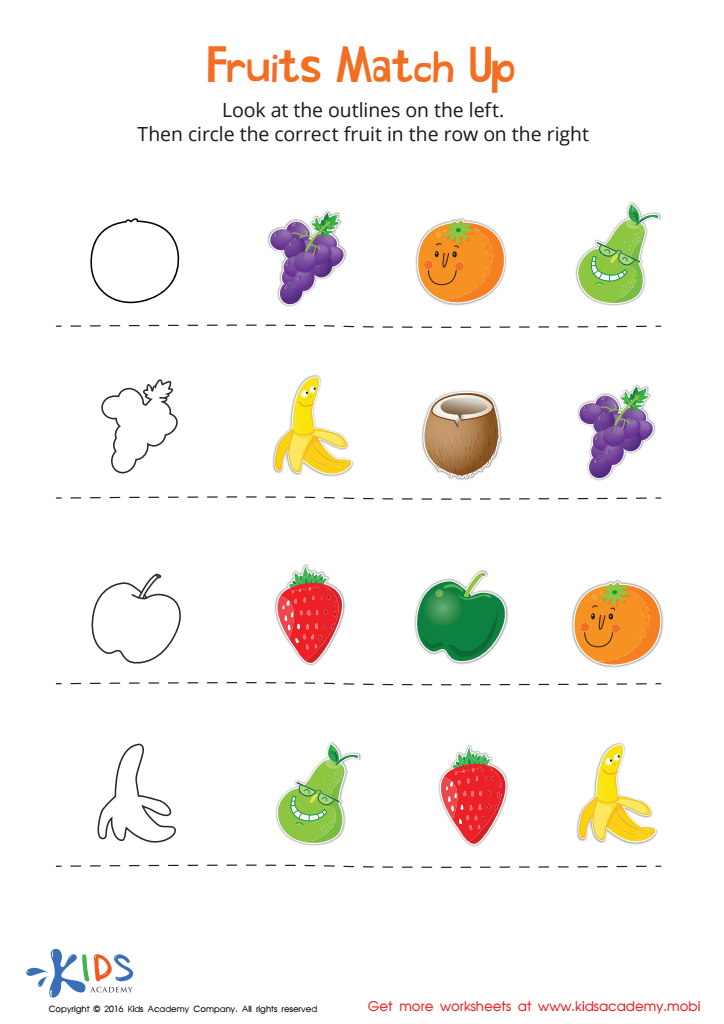
Fruits Match Up Worksheet
 Assign to My Students











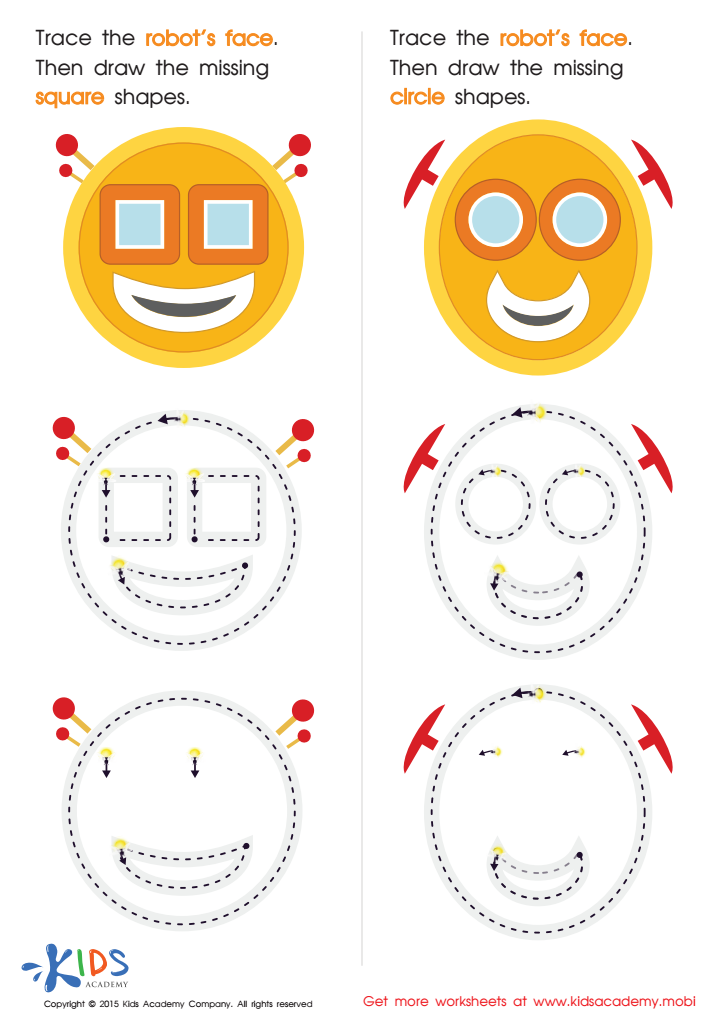
Practicing to Draw Circles And Squares Printable
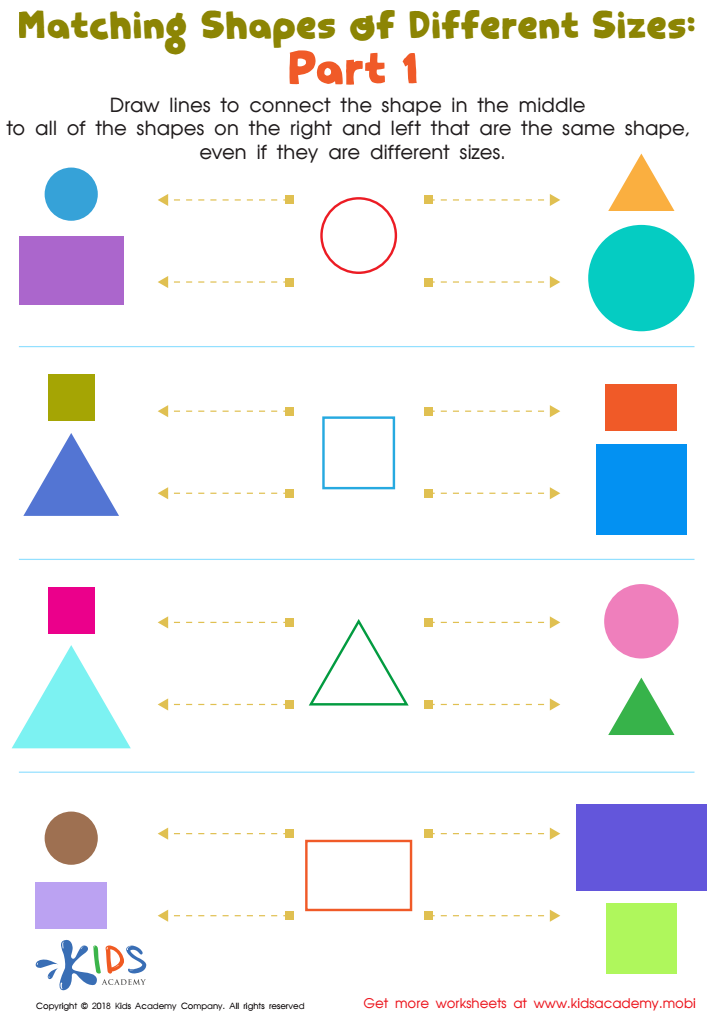
Geometry: part 1 Worksheet
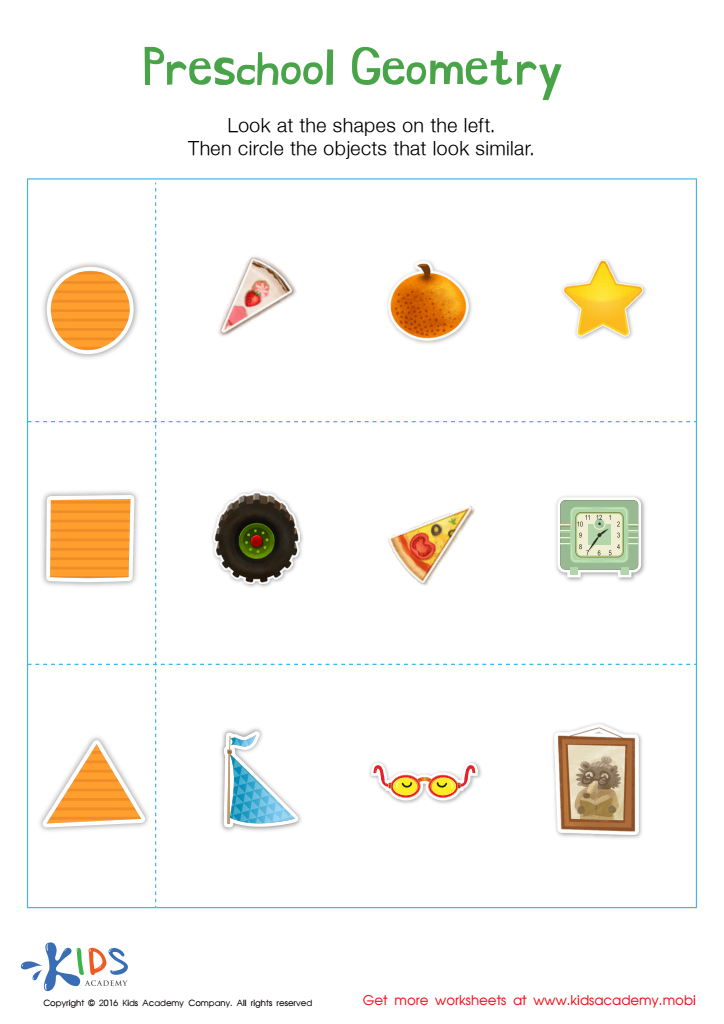
Preschool Geometry Match Up Worksheet
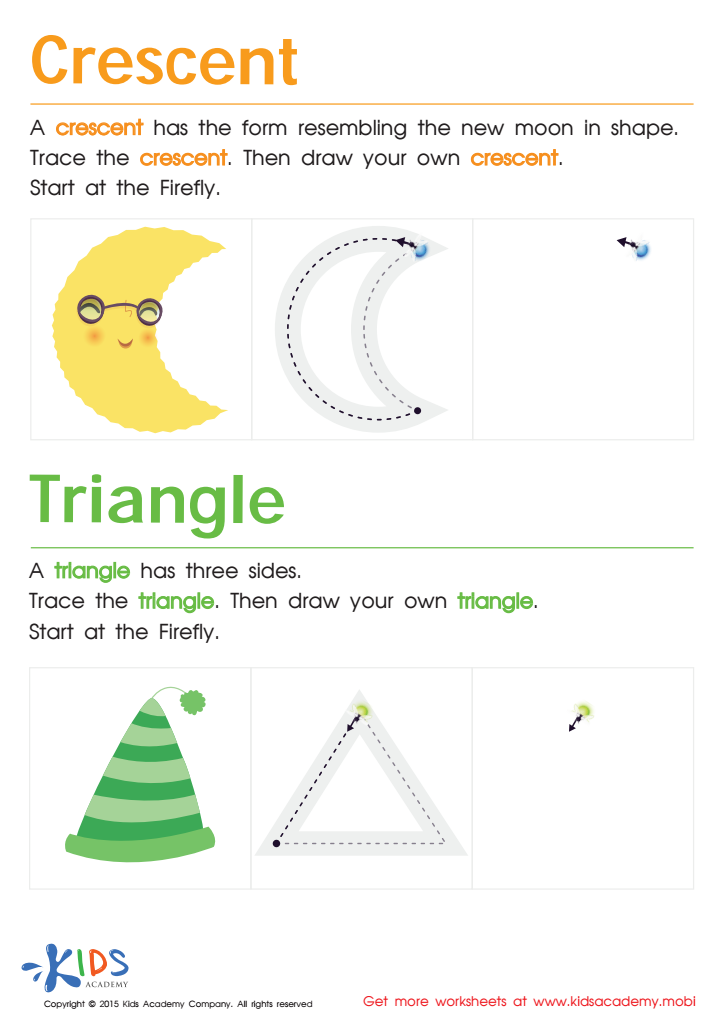
Learning to Draw Crescents And Triangles Worksheet
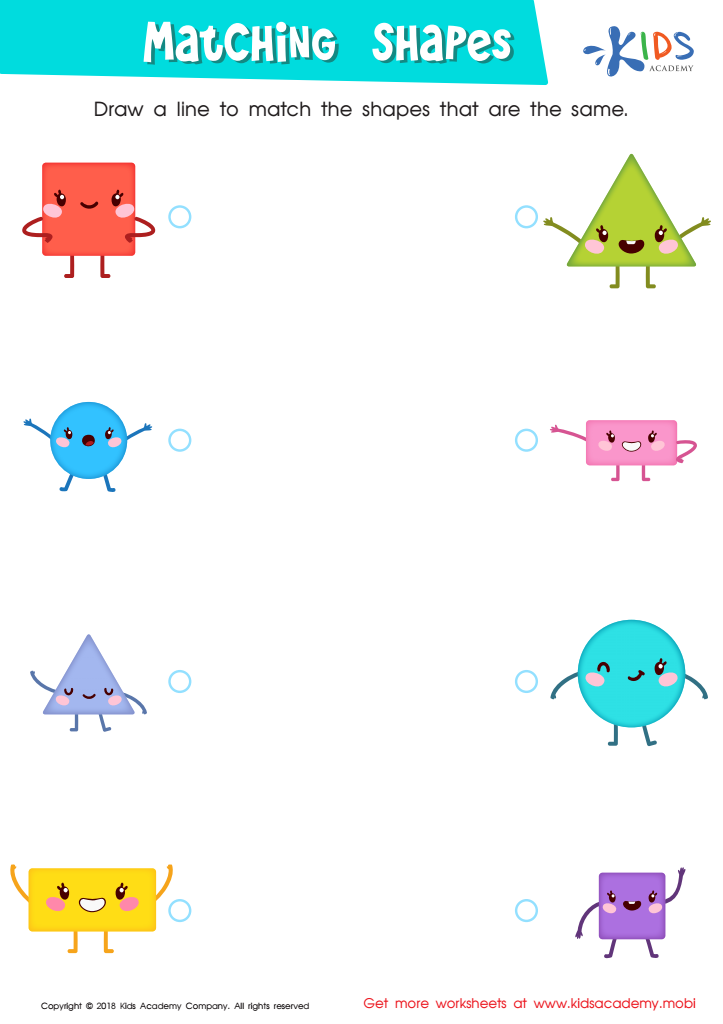
Matching Shapes Worksheet
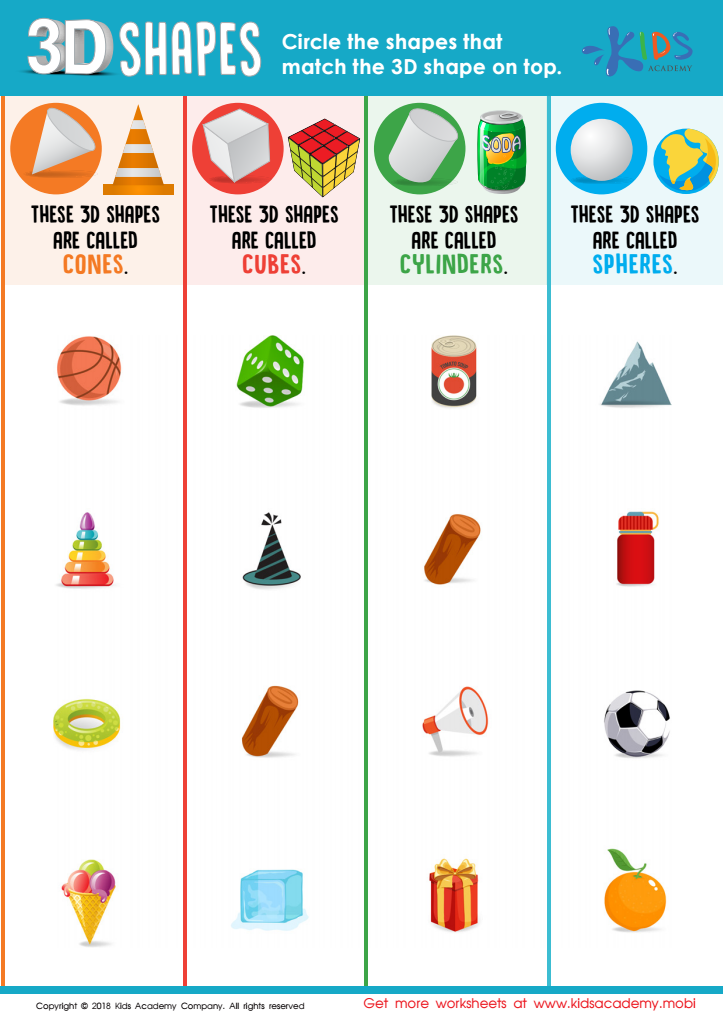
3D Shapes Worksheet








Cognitive development, particularly in understanding normal geometry, is a crucial aspect of a child's growth during ages 3-6. At this formative stage, children develop foundational cognitive skills that set the stage for later academic success and everyday problem-solving abilities. Cognitive development in geometry involves recognizing shapes, understanding spatial relationships, and developing the ability to think in three dimensions—all of which are vital for future mathematical learning and reasoning.
When parents and teachers invest in nurturing geometri-cal understanding in early childhood, they bolster children’s visual-spatial intelligence. This intelligence aids in daily activities as simple as fitting puzzle pieces together or as complex as navigating new environments. Furthermore, early experiences with shapes and spatial reasoning often translate into improved skills in science, technology, engineering, and mathematics (STEM) fields. Engaging children with toys and activities that promote geometric thinking can spark early curiosity and enthusiasm for learning.
Additionally, cognitive development in geometry can enhance language development. When children describe shapes and discuss their properties, they practice important communication skills and build their vocabulary. This holistic approach cultivates a well-rounded development, ensuring that children not only excel in geometry but also become better thinkers and communicators overall. Therefore, fostering cognitive development in geometry between ages 3-6 is an investment in a child's academic and personal growth.








