Basic subtraction skills Normal Math Worksheets for Ages 3-7
3 filtered results
-
From - To
Discover our engaging Normal Math Worksheets designed to help children aged 3-7 master basic subtraction skills! Designed with fun visuals and age-appropriate problems, these worksheets make learning math enjoyable. Kids will practice simple subtraction concepts, enhancing their problem-solving abilities and building confidence in their math skills. Our worksheets cater to different learning styles, ensuring each child can succeed at their own pace. Ideal for classroom use or at-home practice, these resources promote early literacy while laying a strong foundation for future mathematical learning. Explore our collection to empower young learners and make subtraction an exciting part of their education journey!
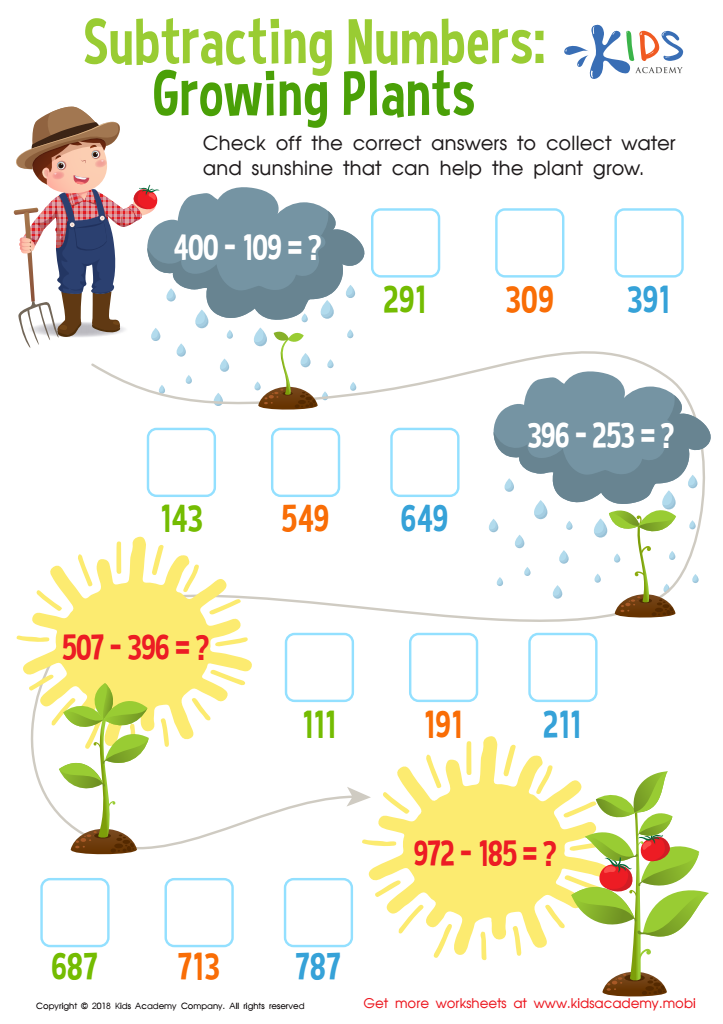
Subtracting Numbers: Growing Plants Worksheet
 Assign to My Students
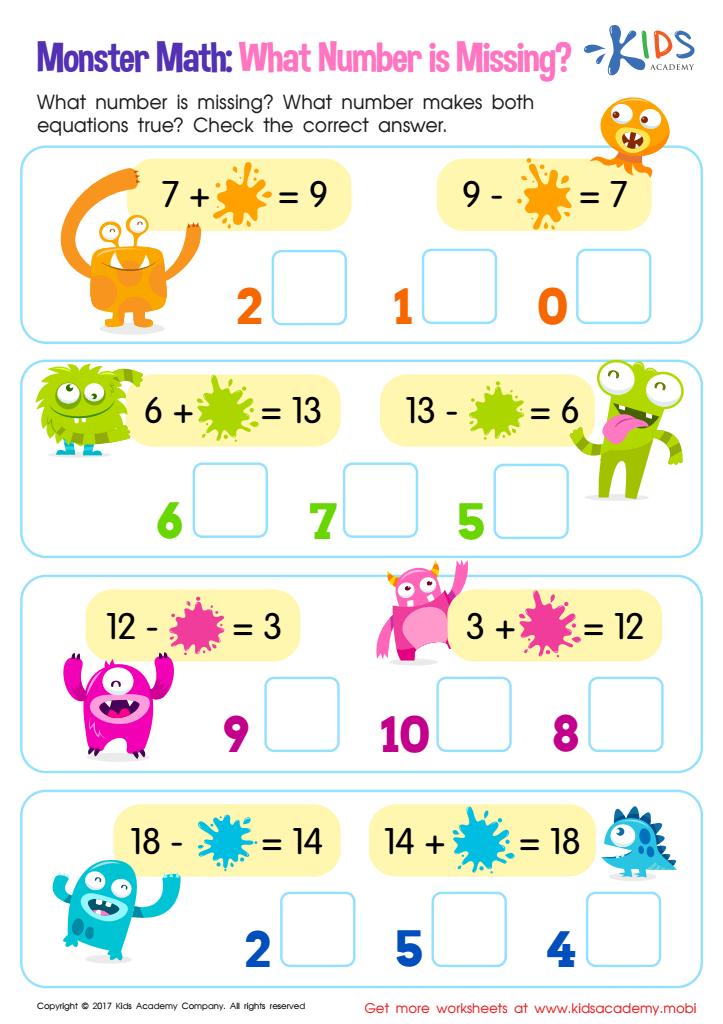
Missing Number: Monster Math Worksheet
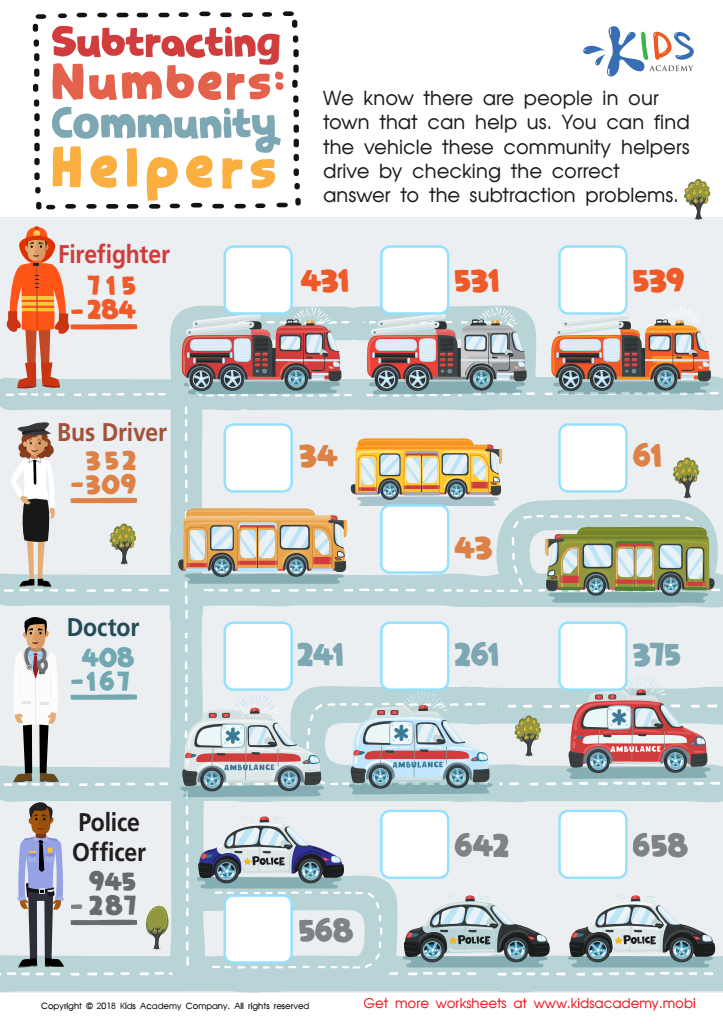
Subtracting Numbers: Community Helpers Worksheet








Basic subtraction skills are vital for children aged 3-7 as they form the foundation for more complex mathematical concepts and contribute to overall cognitive development. Understanding subtraction helps children learn how to analyze situations, solve problems, and make connections. At this young age, children begin to explore the concept of "taking away," which is crucial for grasping the idea of numbers in a dynamic way.
Parents and teachers should prioritize teaching subtraction as it reinforces counting skills, promotes number sense, and fosters logical reasoning. Mastery of basic subtraction enhances children's confidence and encourages a positive attitude toward math, paving the way for future learning. Engaging children in fun and interactive subtraction activities, such as using toys or visual aids, makes learning enjoyable and relatable, accelerating their comprehension.
Moreover, developing these skills early supports critical life skills such as budgeting, measuring, and time management. Subtraction is not only foundational for mathematics but is also integral to daily problem-solving and decision-making situations. By equipping children with essential subtraction skills, parents and teachers empower them to thrive academically and confidently in future learning environments. Investing in these rudimentary skills is key to a child's overall success in both math and life.








