Comparing sizes Normal Math Worksheets for Ages 3-7
3 filtered results
-
From - To
Discover our engaging "Comparing Sizes" Math Worksheets designed specifically for children aged 3-7! These fun and interactive resources help young learners grasp the concept of size differences through colorful visuals and relatable examples. By working through our worksheets, kids will enhance their comparison skills, recognizing which objects are larger, smaller, taller, or shorter. Ideal for preschoolers and early grades, these worksheets promote critical thinking and boost confidence in mathematical abilities. Parents and educators can easily print these materials at home or in the classroom, making learning both enjoyable and accessible. Explore the world of size comparison with our vibrant worksheets today!
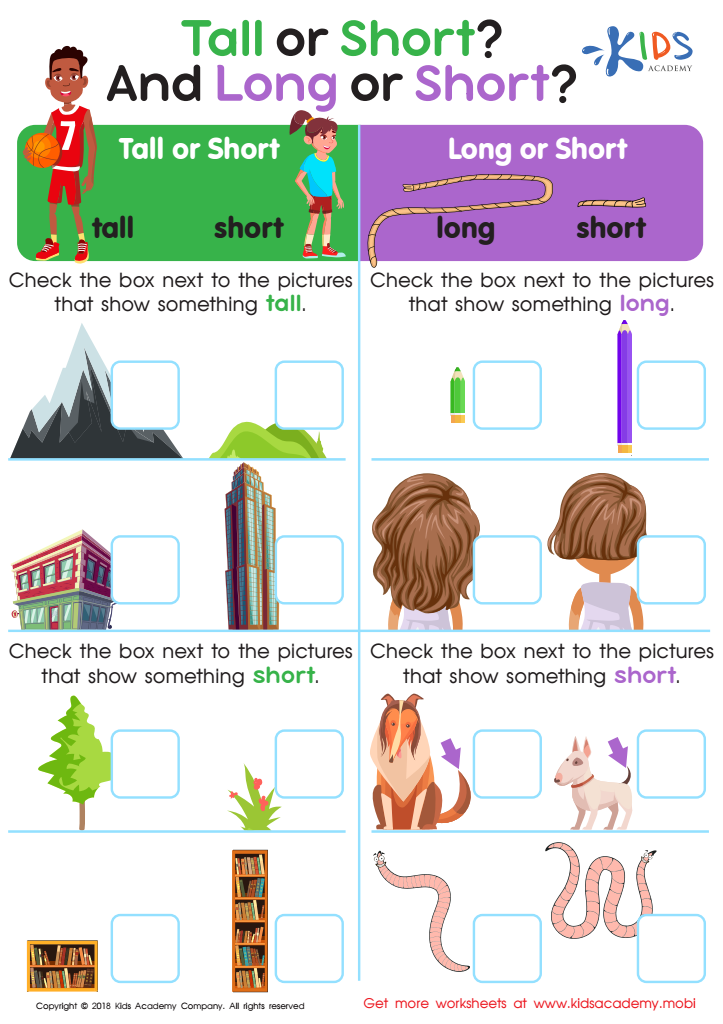
Tall or Short and Long or Short? Worksheet
 Assign to My Students
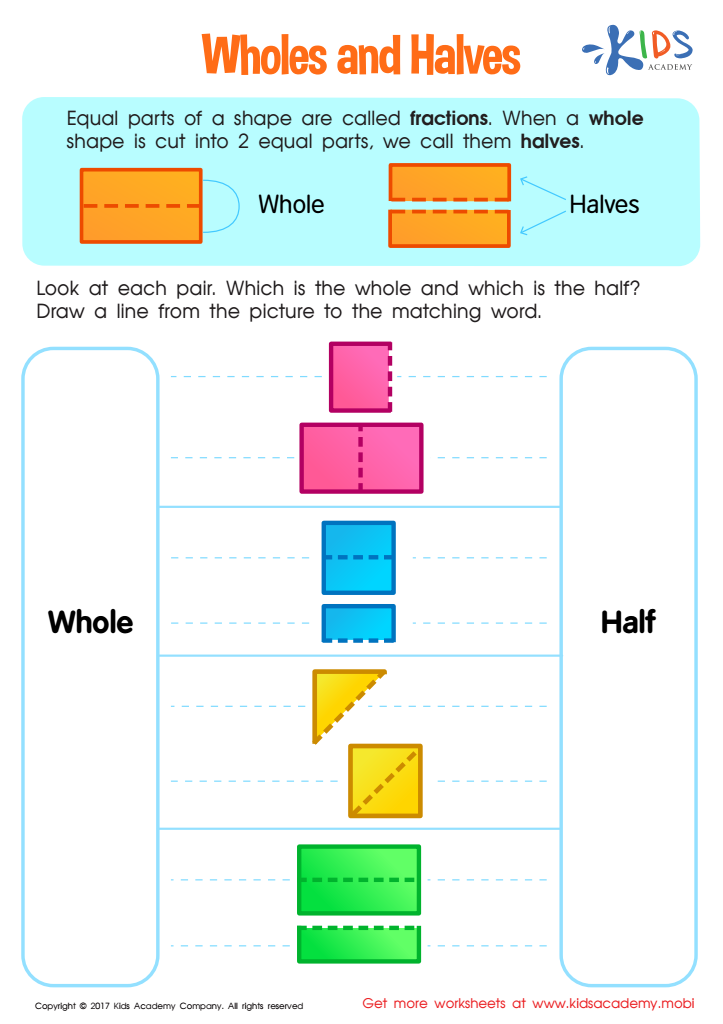
Wholes and Halves Worksheet
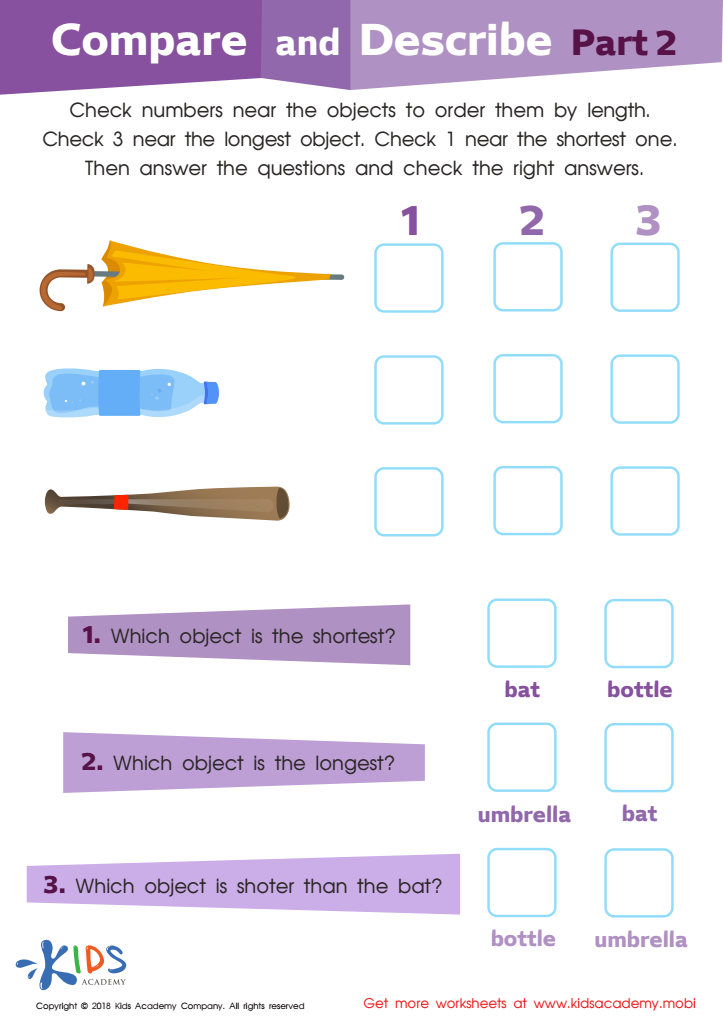
Compare and Describe: Part 2 Worksheet








Teaching young children about comparing sizes is an essential aspect of early math education, especially for ages 3-7. At this stage, children are developing foundational cognitive skills, and understanding size differences enhances their observational and analytical abilities. When children learn to compare sizes, they begin to recognize and categorize objects based on measurable attributes, fostering critical thinking.
Parents and teachers should care about this topic because size comparison serves more than just a mathematical function; it promotes language development. As children describe objects with terms like "bigger," "smaller," "taller," or "shorter," they expand their vocabulary and articulating skills. Additionally, comparing sizes can be integrated into everyday activities, turning playtime into learning opportunities. This not only makes learning enjoyable but also emphasizes the relevance of math in daily life.
Moreover, mastering size comparison lays the groundwork for more advanced mathematical concepts, such as measurement, fractions, and problem-solving later on. Engaging children with hands-on activities and visual aids makes abstract concepts concrete, ensuring that they develop a strong mathematical foundation. Ultimately, early experiences with comparing sizes can foster a lifelong interest in learning and math, equipping children with essential skills for future academic success.








