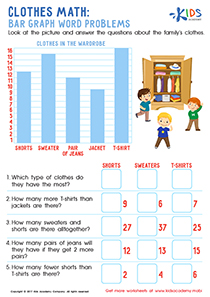
Normal Two-step Word Problems Worksheets for Ages 3-7
13 filtered results
-
From - To
Introduce young learners to essential problem-solving skills with our "Normal Two-step Word Problems Worksheets for Ages 3-7." Designed to engage and challenge, these printable math exercises help children practice basic addition, subtraction, and logical thinking through fun, relatable scenarios. Each worksheet offers simple, child-friendly word problems that require two-step solutions, fostering critical thinking and boosting confidence in math. Perfect for home or classroom use, our worksheets support early math development while keeping kids entertained and focused. Begin your child's math journey today with activities tailored to their budding skills and growing minds.
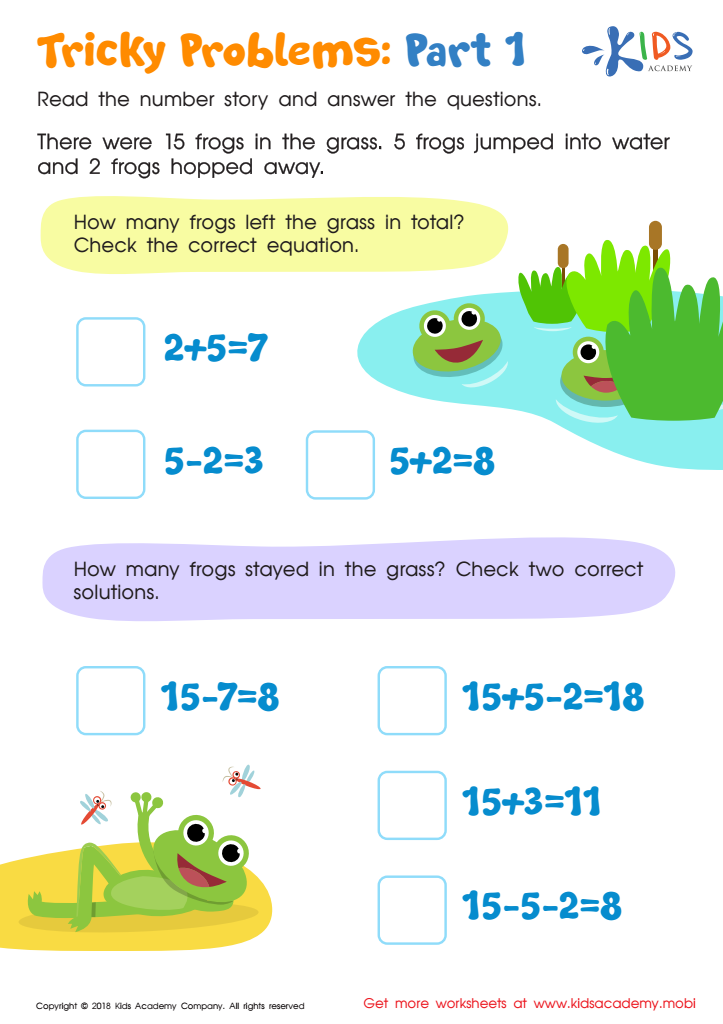
Tricky Problems Worksheet: Part 1
 Assign to My Students
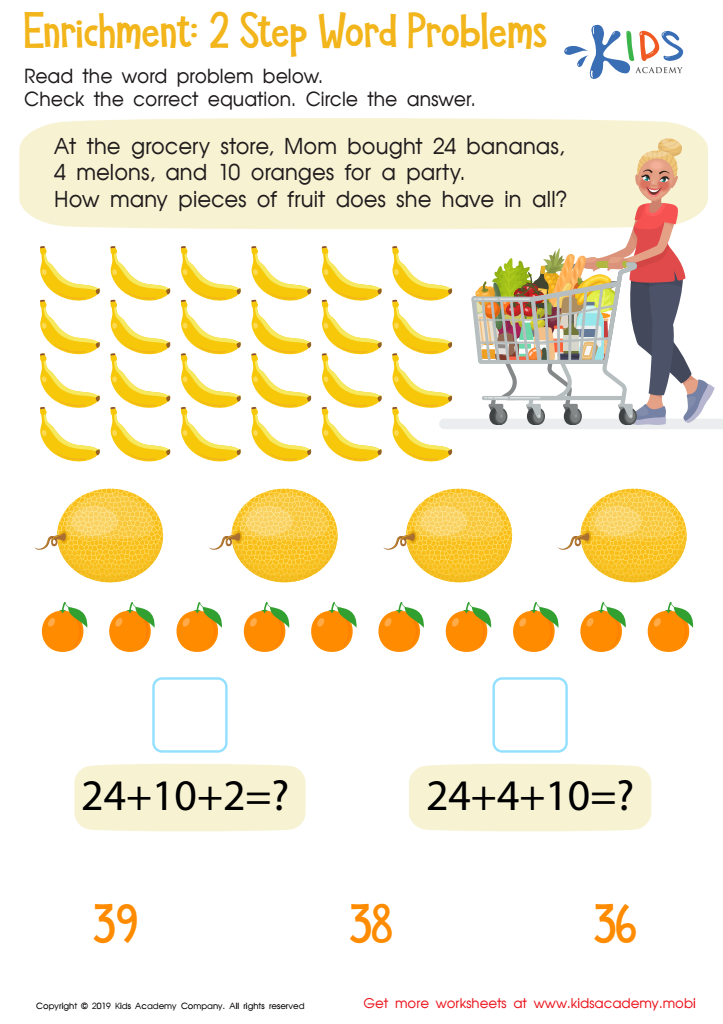
Enrichment -2 Step Word Problems Worksheet
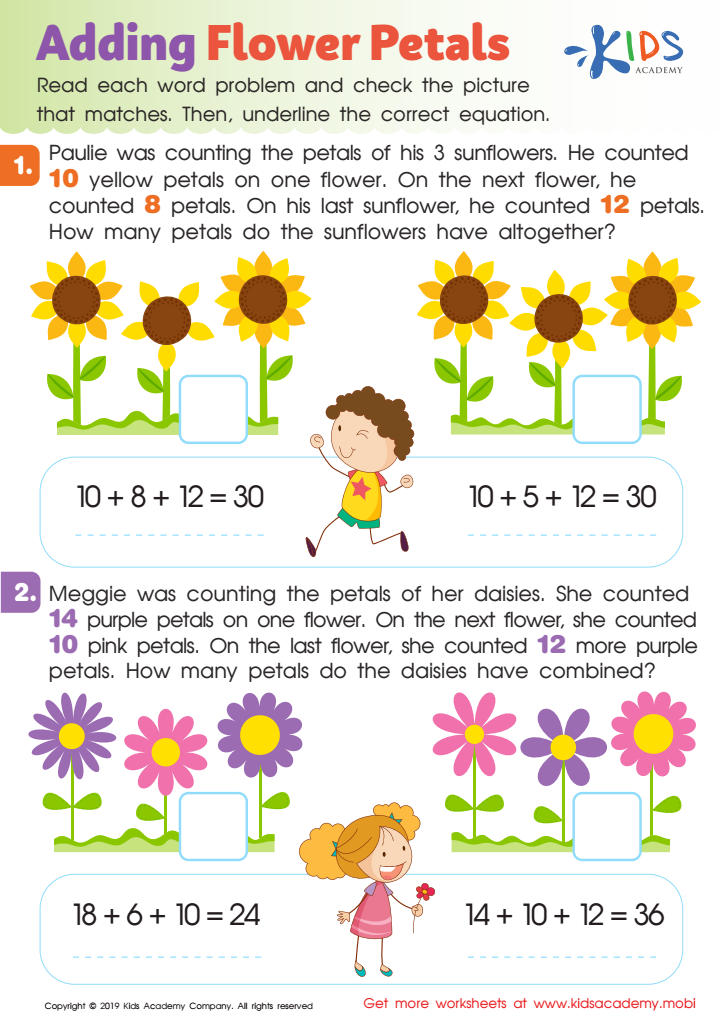
Adding Flower Petals Worksheet
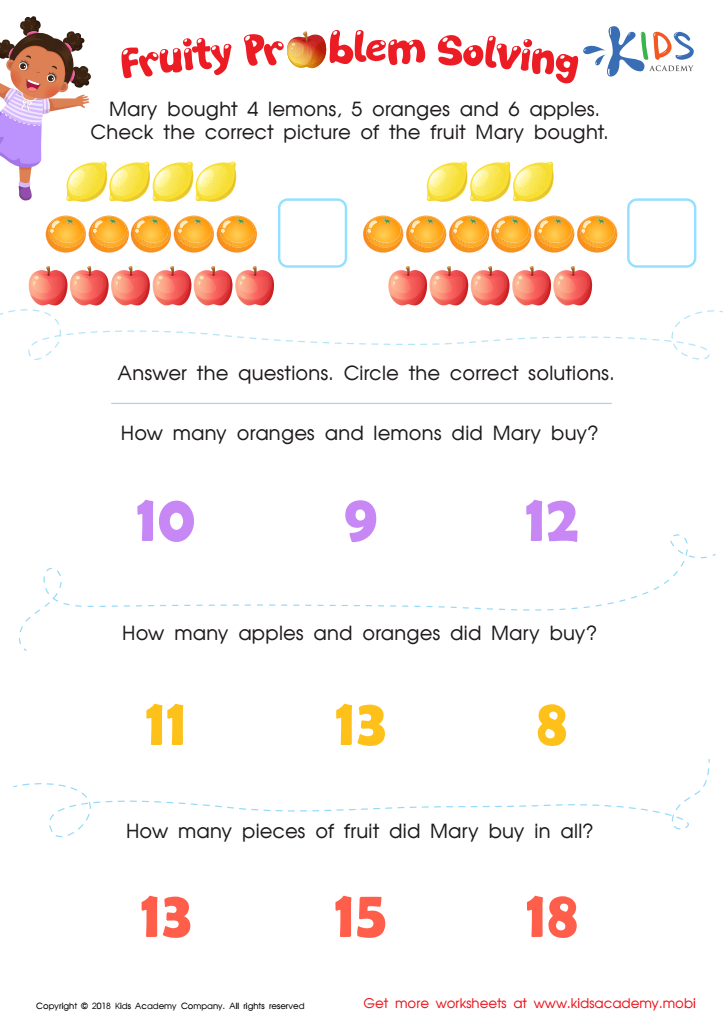
Fruity Problem Solving Worksheet
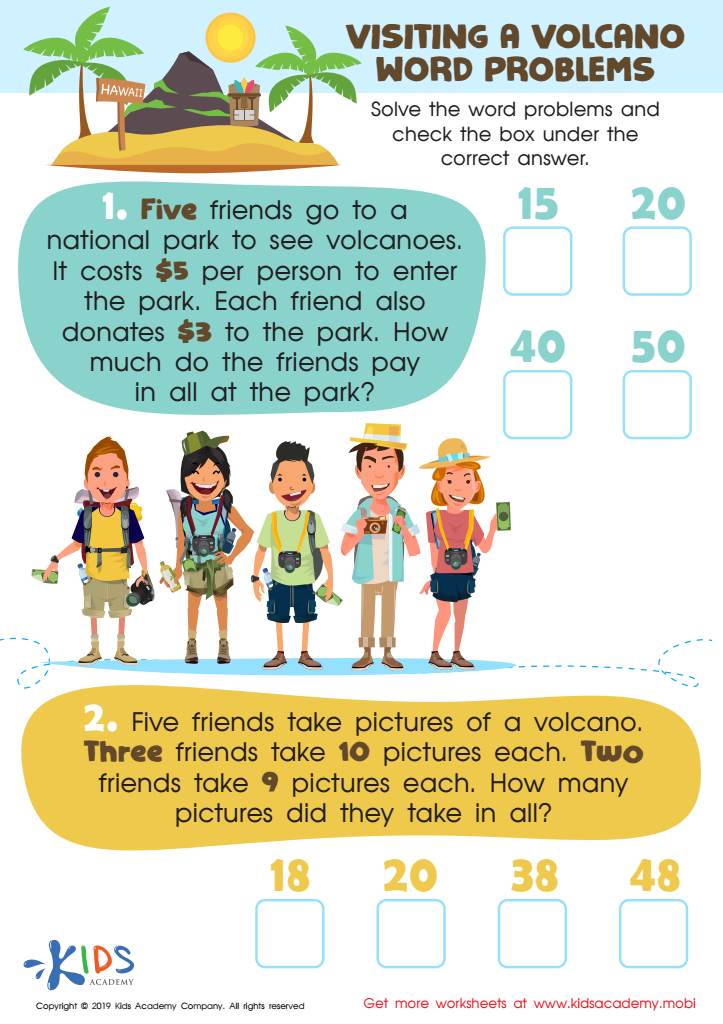
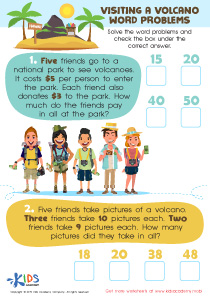
Visiting a Volcano Word Problems Worksheet
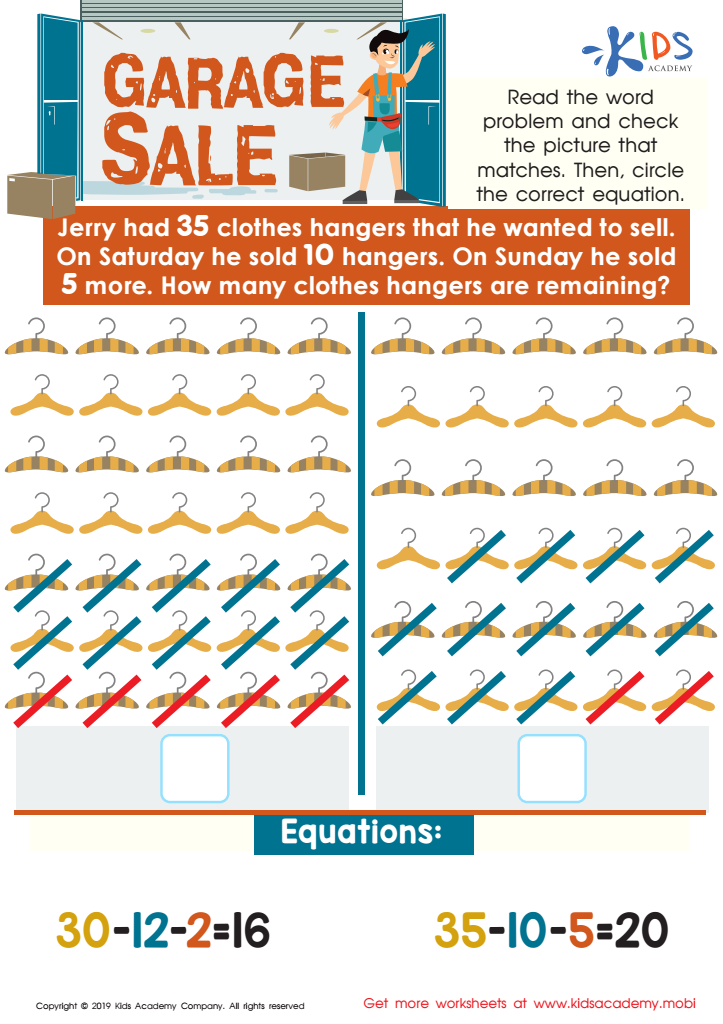
Garage Sale Worksheet
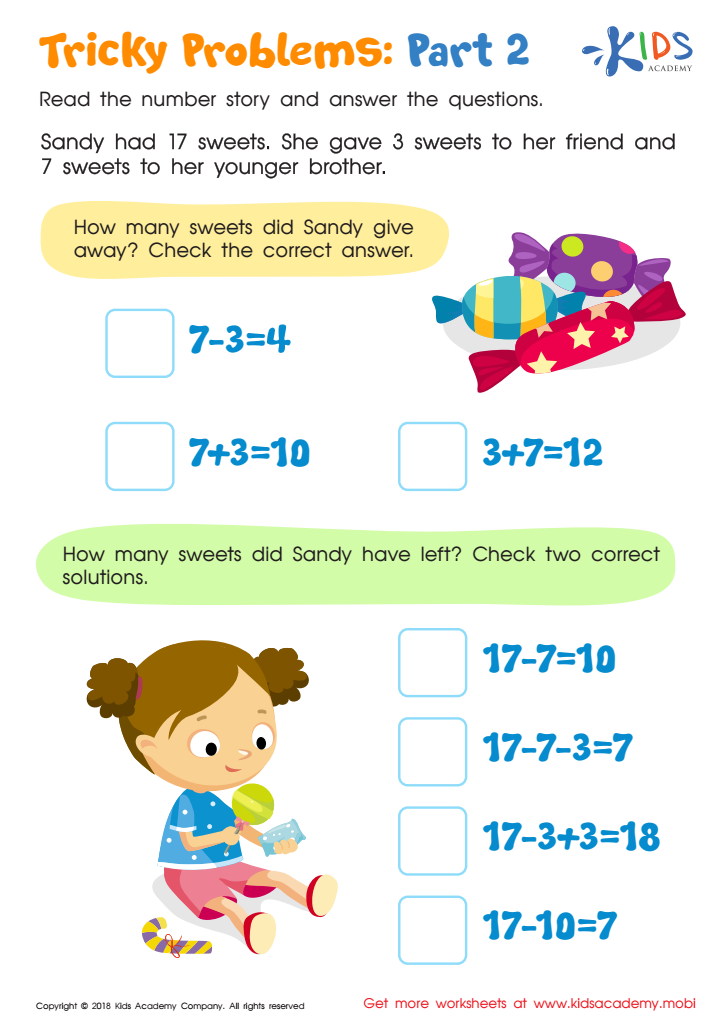
Tricky Problems Worksheet: Part 2
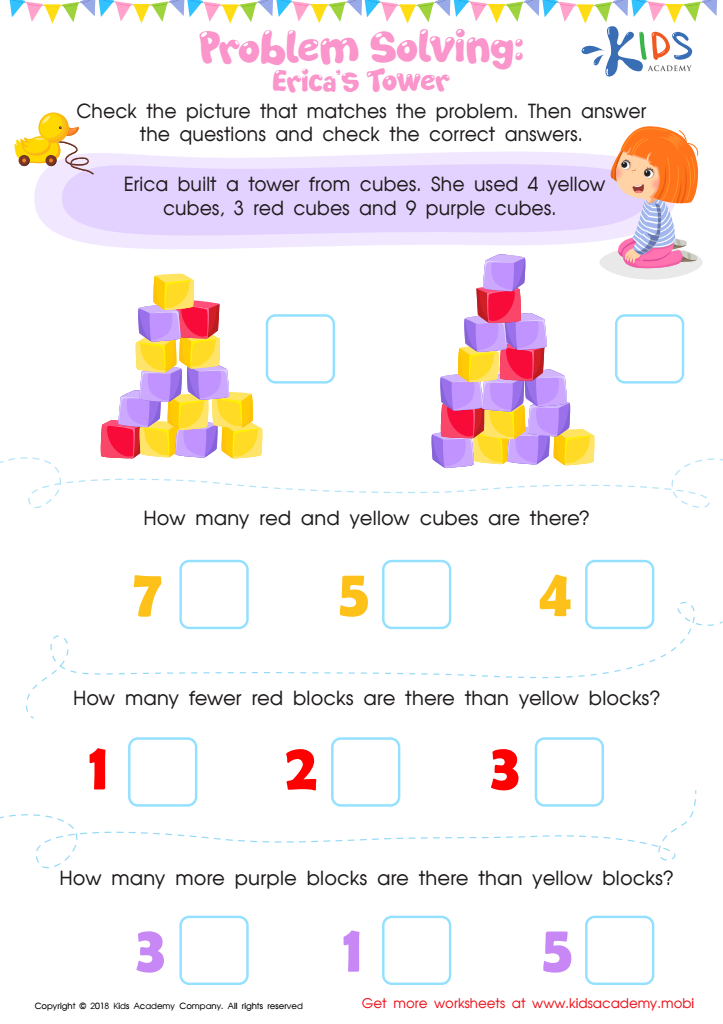
Problem Solving: Erica's Tower Worksheet
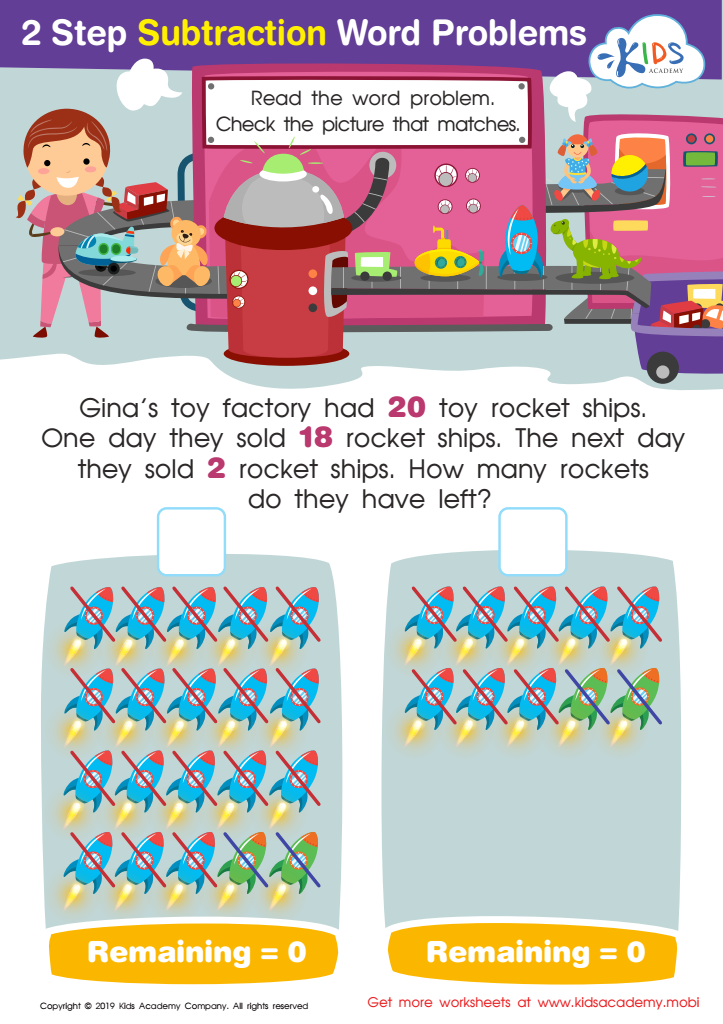
Step Subtraction Word Problems Worksheet
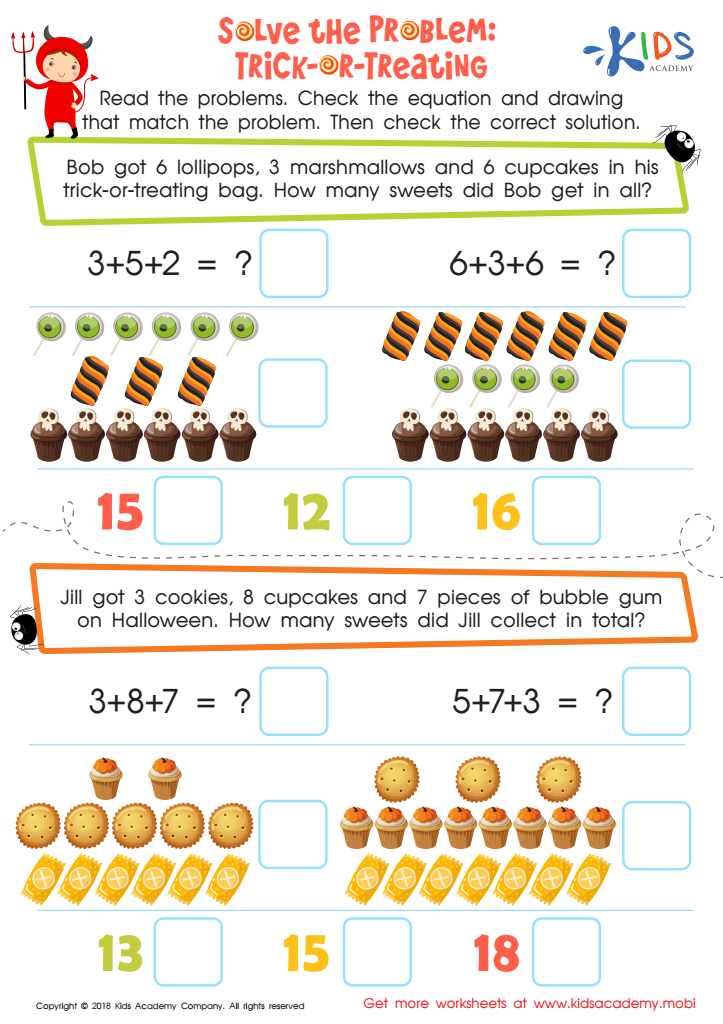
Solve the Problem: Trick–or–treating Worksheet
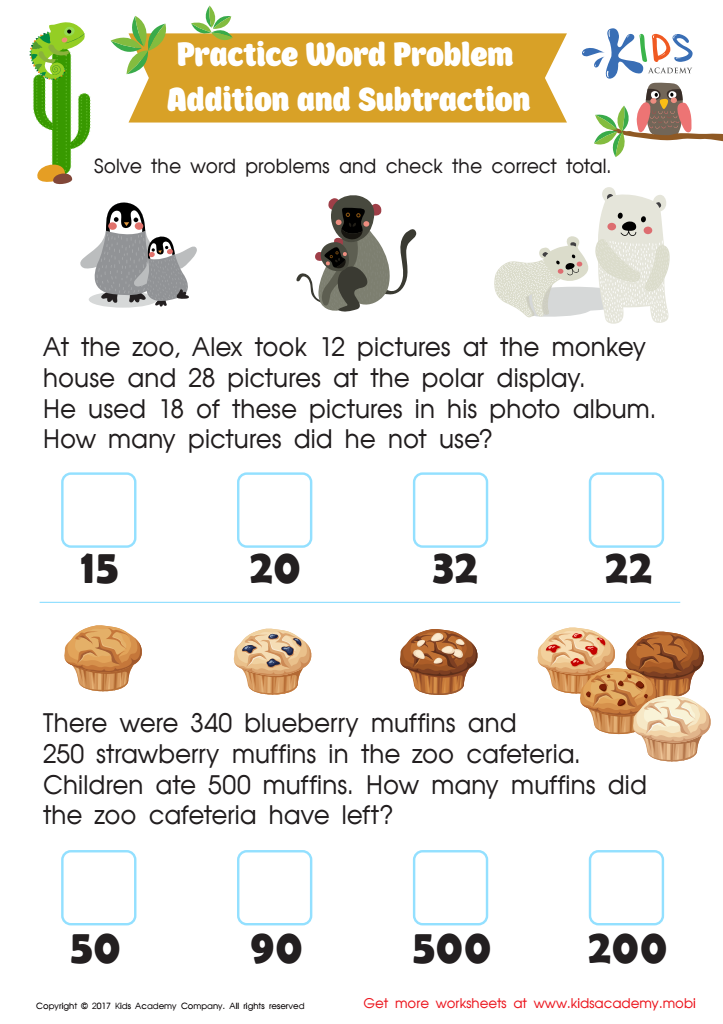
Addition and Subtraction: Word Problems Worksheet
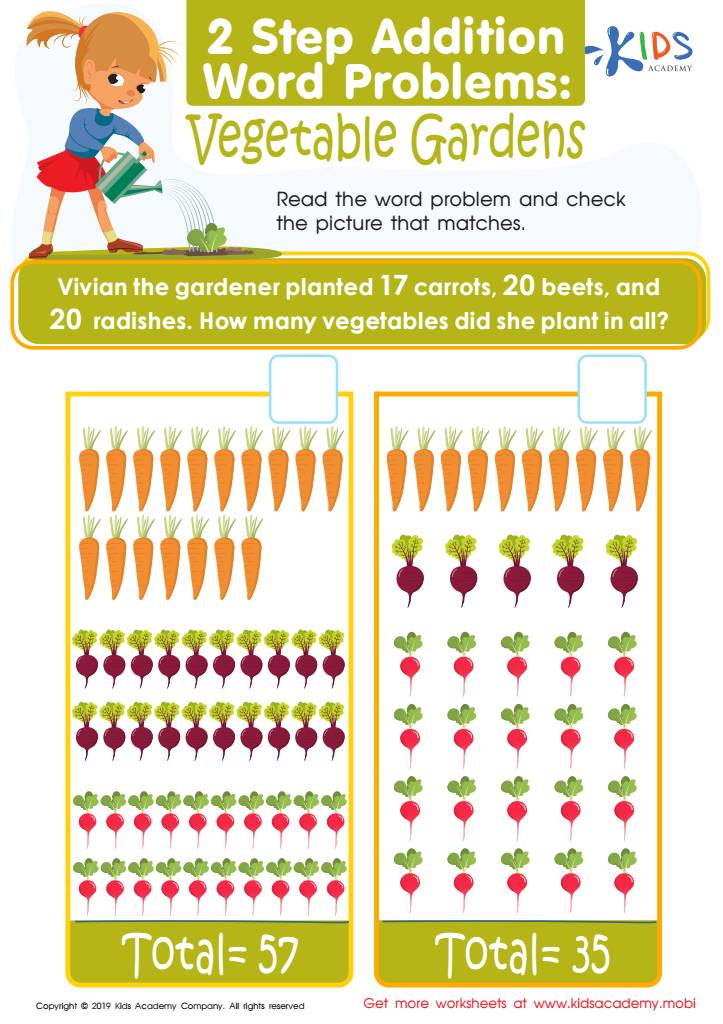
Vegetable Gardens Worksheet
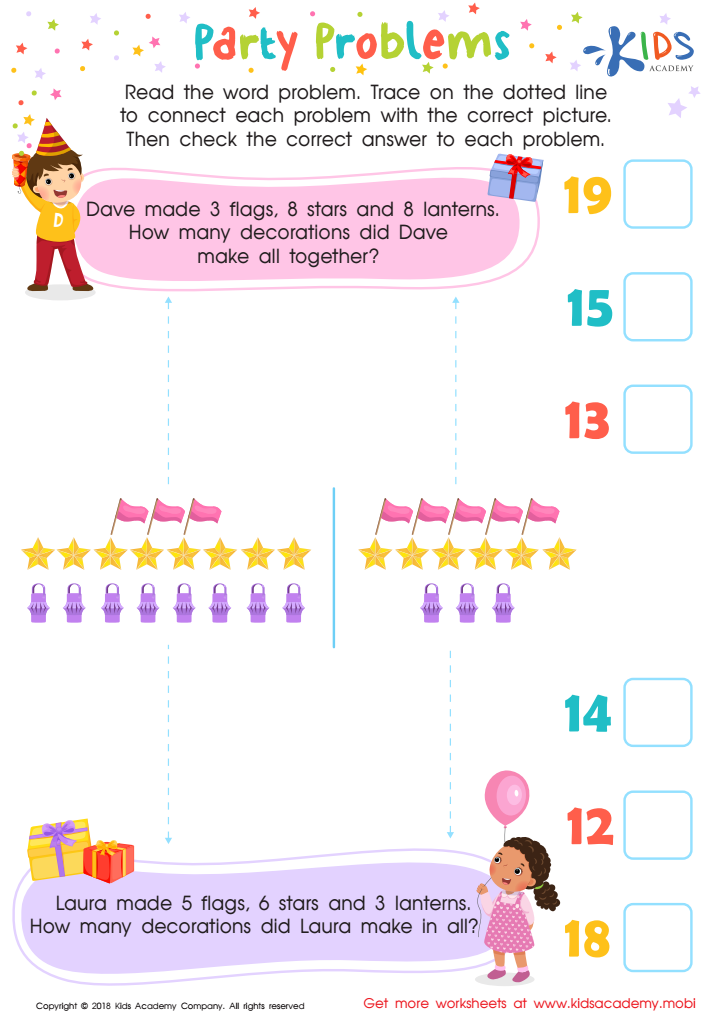
Party Problems Worksheet



Parents and teachers should care about normal two-step word problems for children aged 3-7 because they are essential building blocks for developing critical thinking, problem-solving abilities, and mathematical proficiency in young learners. At this developmental stage, children's brains are incredibly receptive to new concepts and cognitive challenges. Two-step word problems encourage children to follow a logical sequence of actions to find a solution, thereby enhancing their understanding of order and sequence. This type of problem not only fortifies their arithmetic skills—such as addition, subtraction, multiplication, and division—but also strengthens comprehension and reasoning abilities.
Moreover, solving two-step word problems helps kids make connections between mathematics and real-world situations, which fosters a deeper appreciation and understanding of math beyond rote memorization. This practical application encourages children to view math as a useful and integral part of their everyday lives, promoting a positive attitude towards the subject. Additionally, working on these problems improves children's listening and reading comprehension skills, as they must carefully interpret the wording to identify relevant information.
In summary, normal two-step word problems are a crucial, multifaceted educational tool that supports the holistic development of mathematical abilities and cognitive skills in young children, setting a strong foundation for more advanced learning in the future.