Normal Word Problems Worksheets for Ages 3-8 - Page 2
45 filtered results
-
From - To
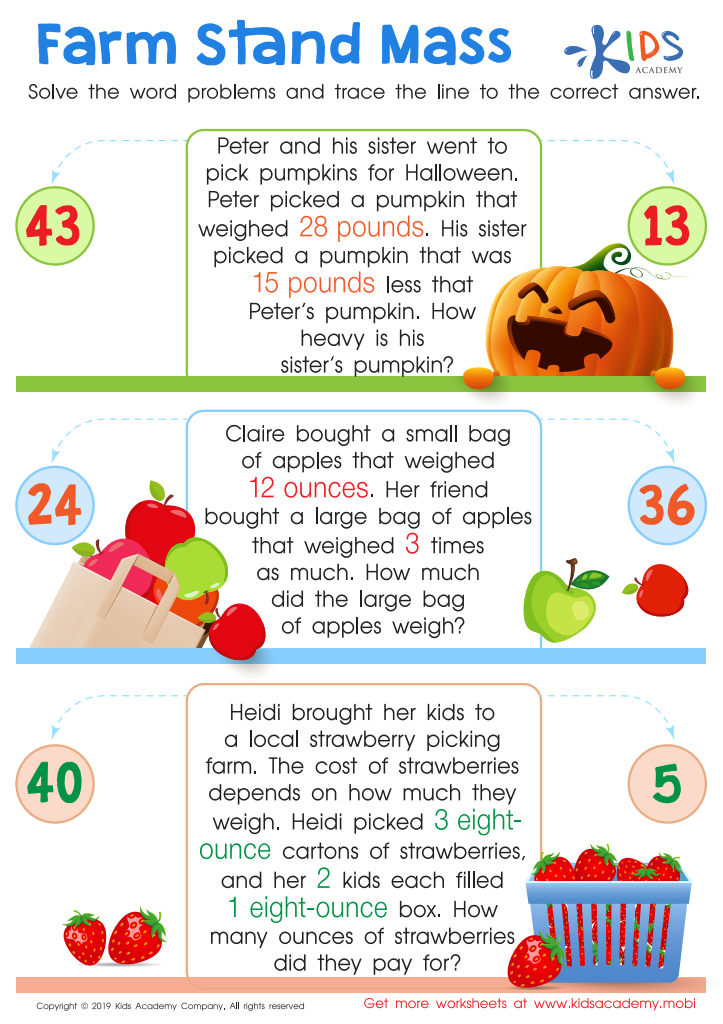
Farm Stand Mass Worksheet
 Assign to My Students
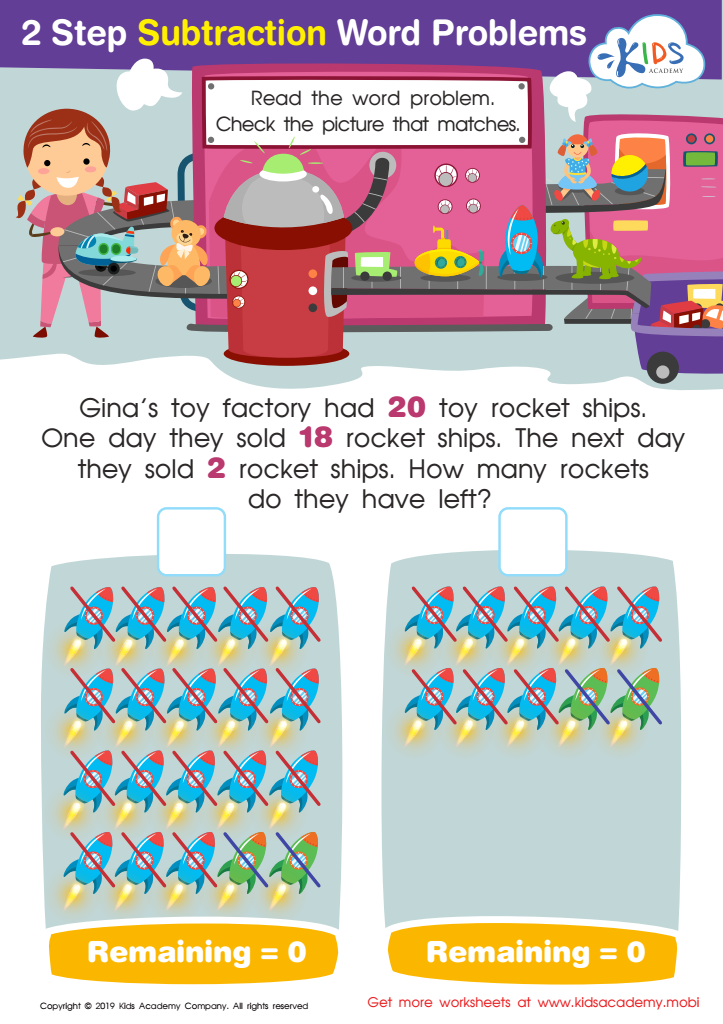
Step Subtraction Word Problems Worksheet
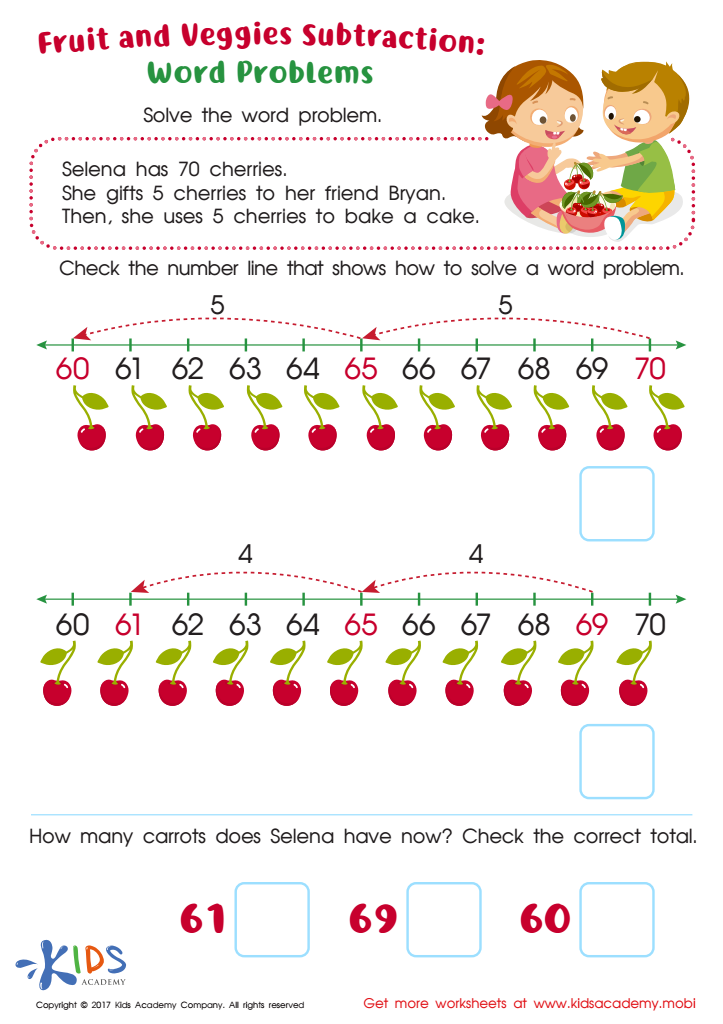
Subtraction Word Problems Free Printable
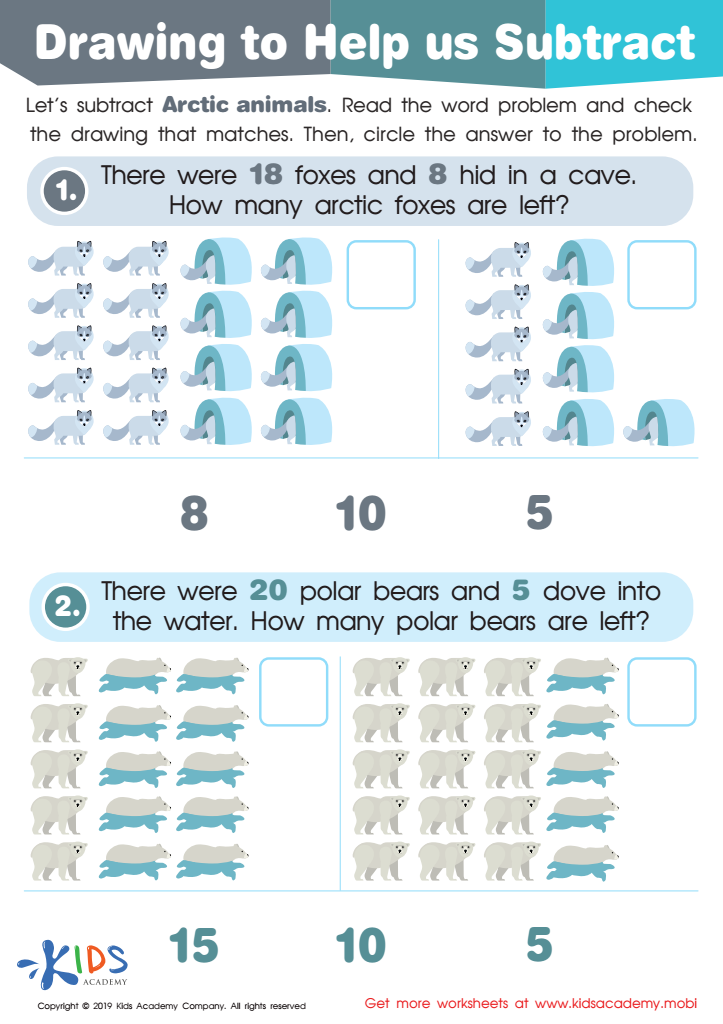
Drawing to Help Us Subtract Worksheet
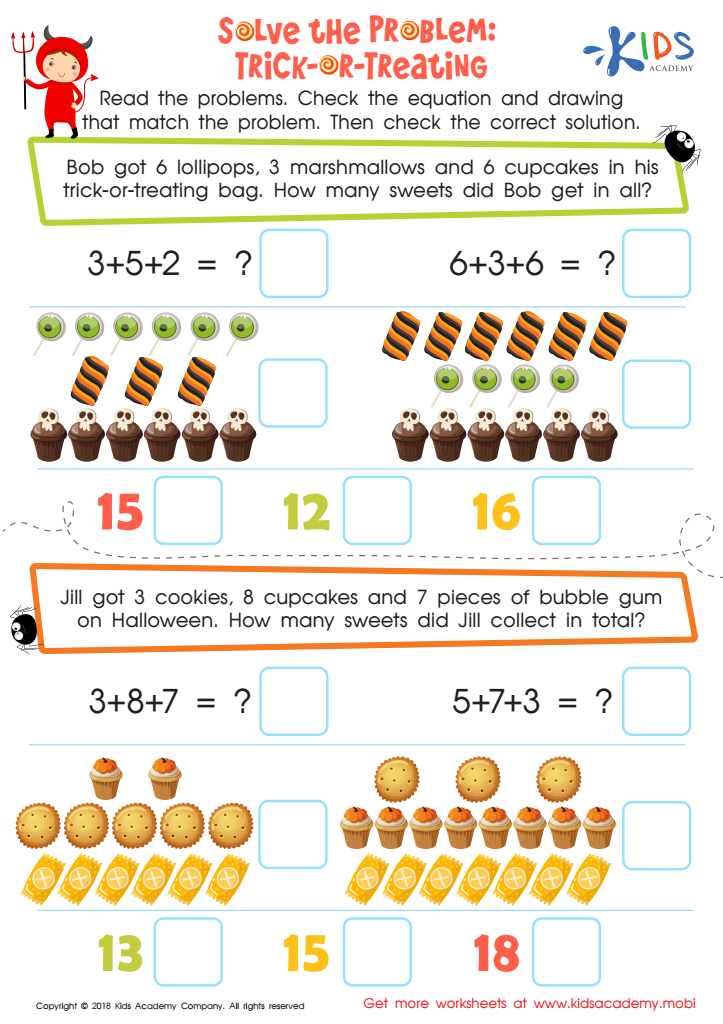
Solve the Problem: Trick–or–treating Worksheet
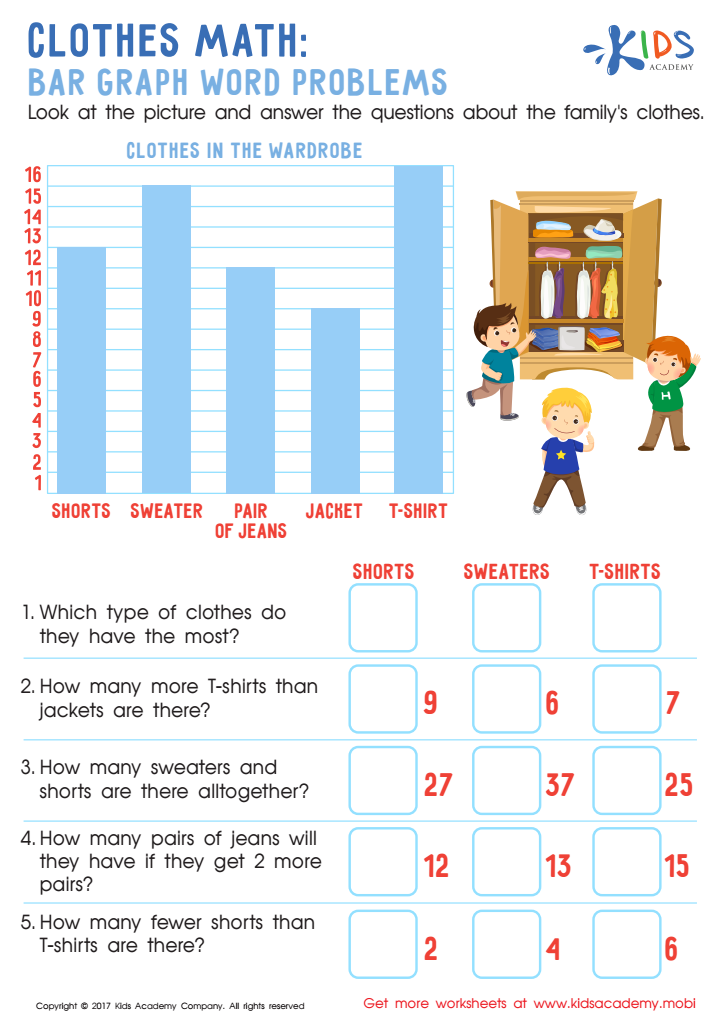
Clothes Math: Bar Graph Word Problems Worksheet
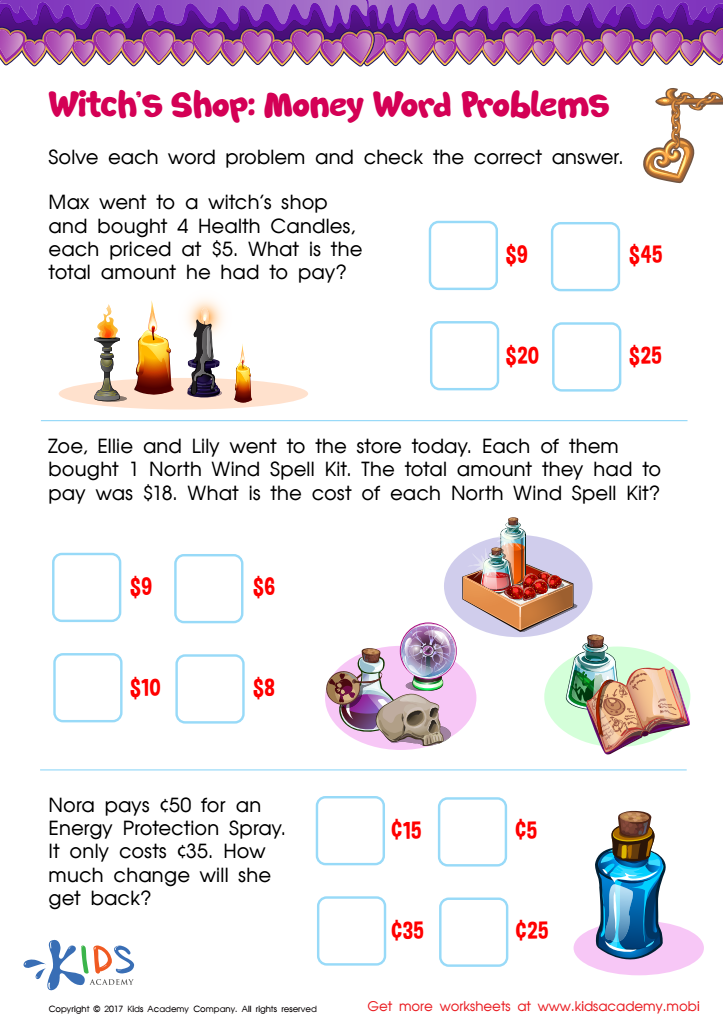
Money Word Problems Printable
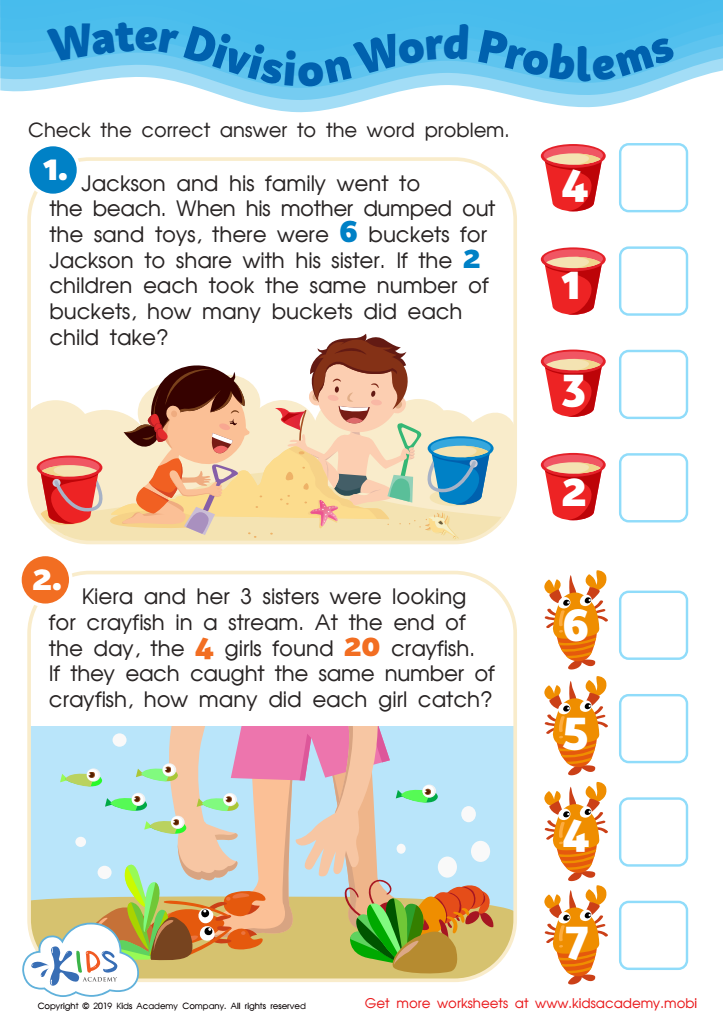
Water Division Word Problems Worksheet
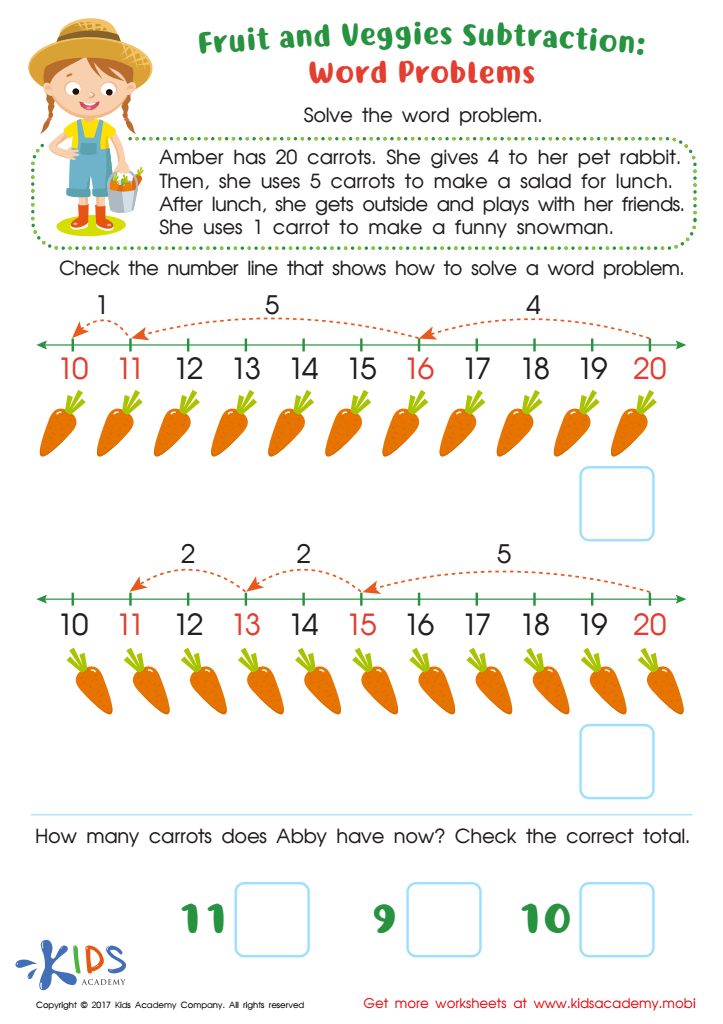
Subtraction Word Problems Printable
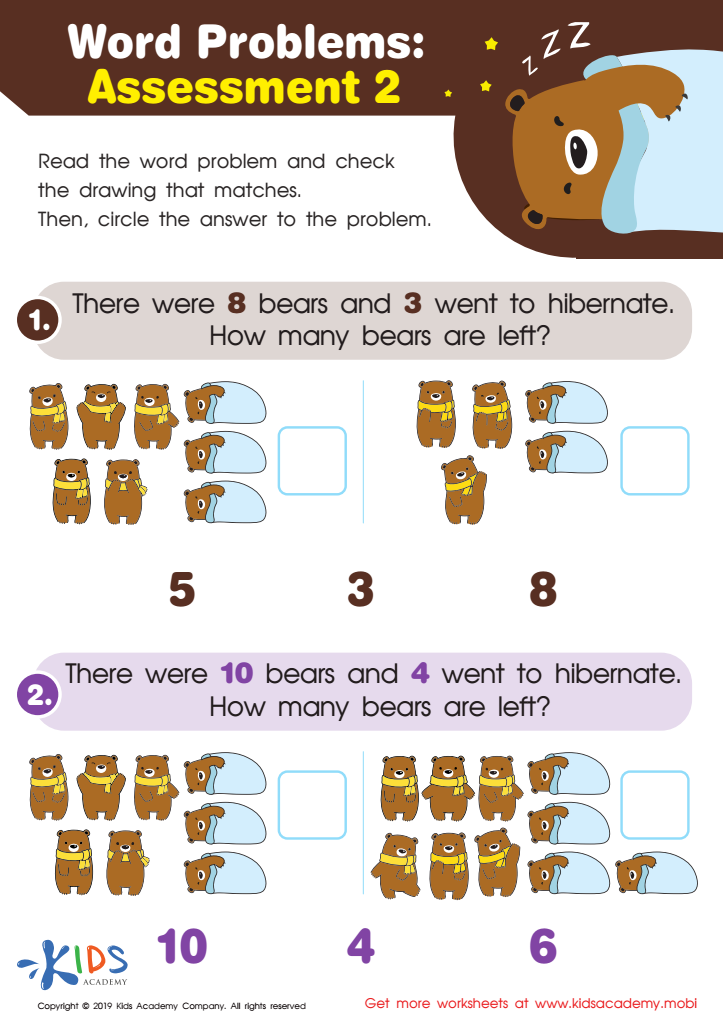
Word Problems: Assessment 2 Worksheet
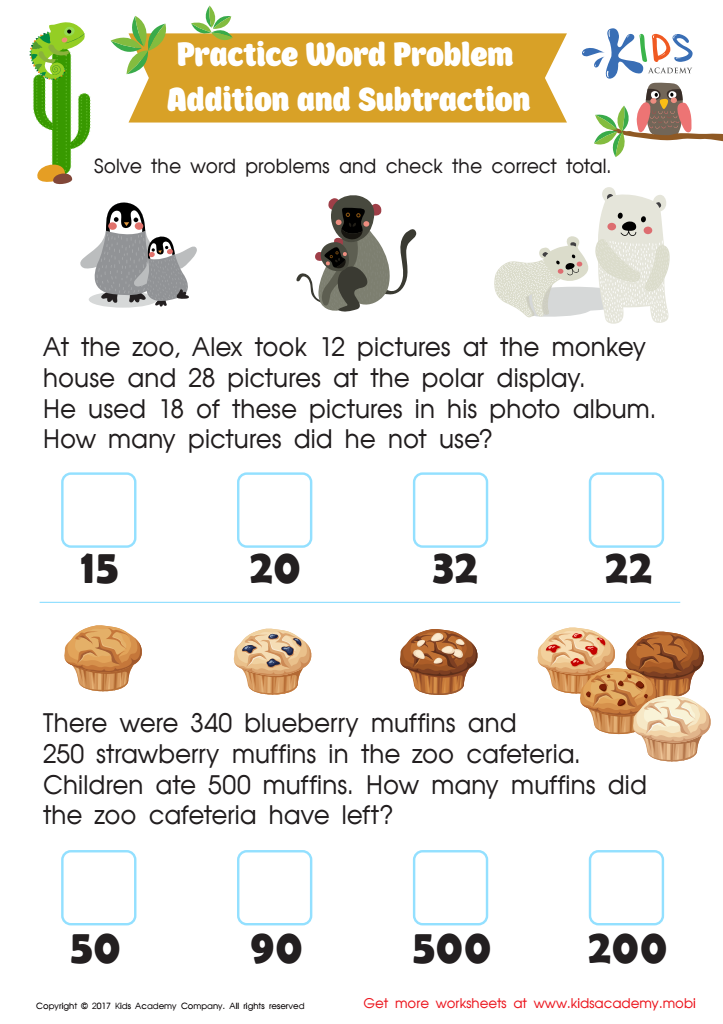
Addition and Subtraction: Word Problems Worksheet
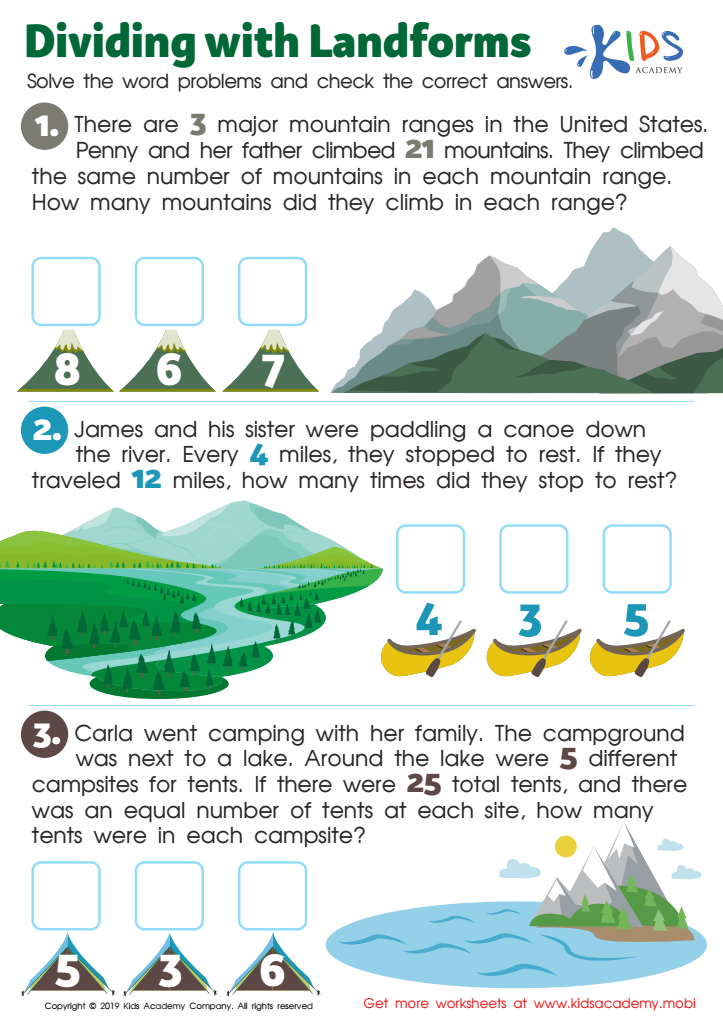
Dividing with Landforms
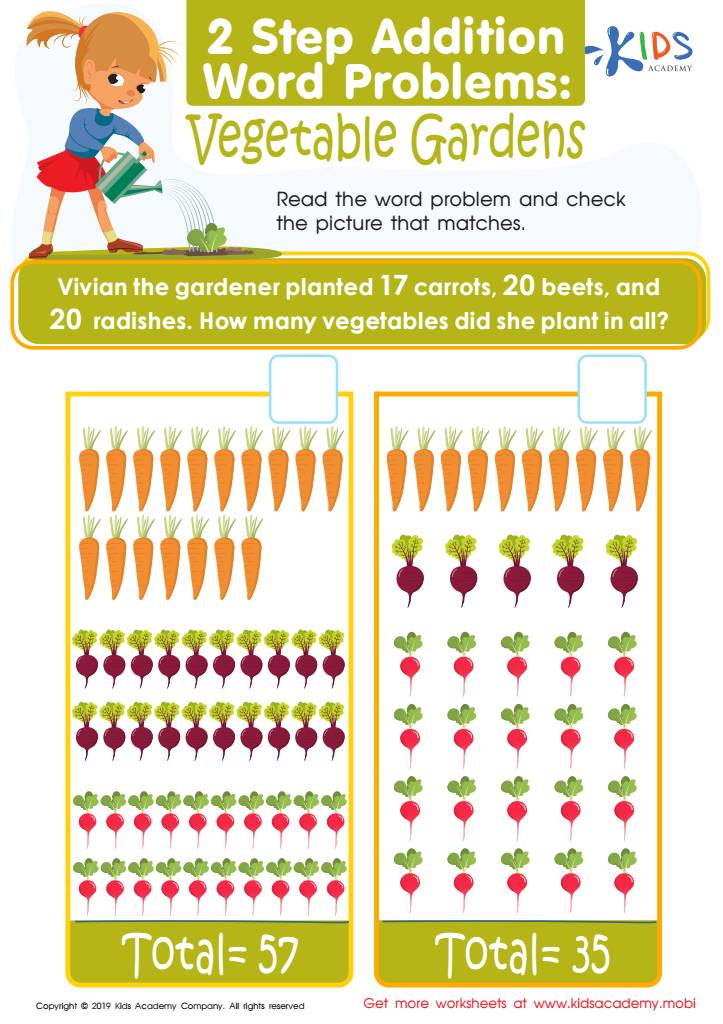
Vegetable Gardens Worksheet
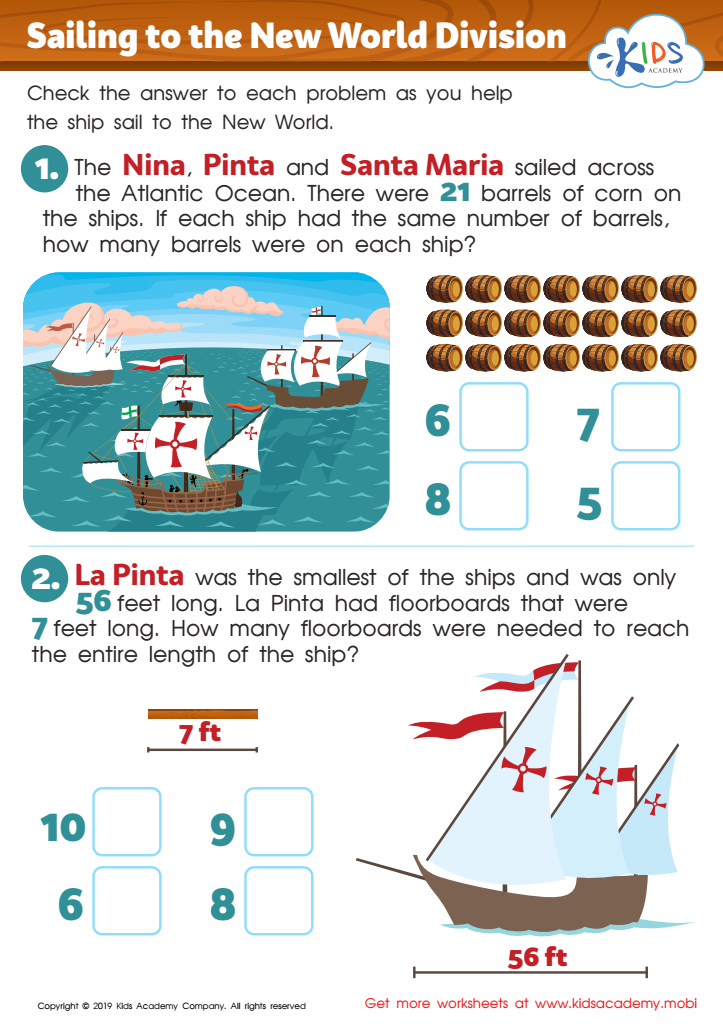
Sailing to the New World Division Worksheet
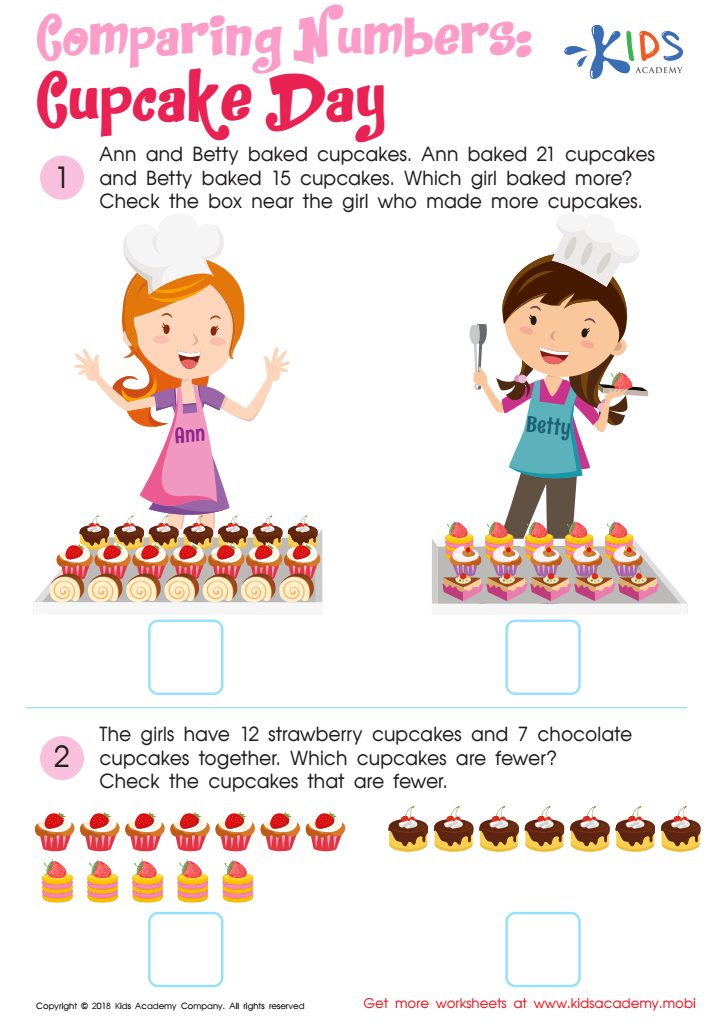
Cupcake Day Worksheet
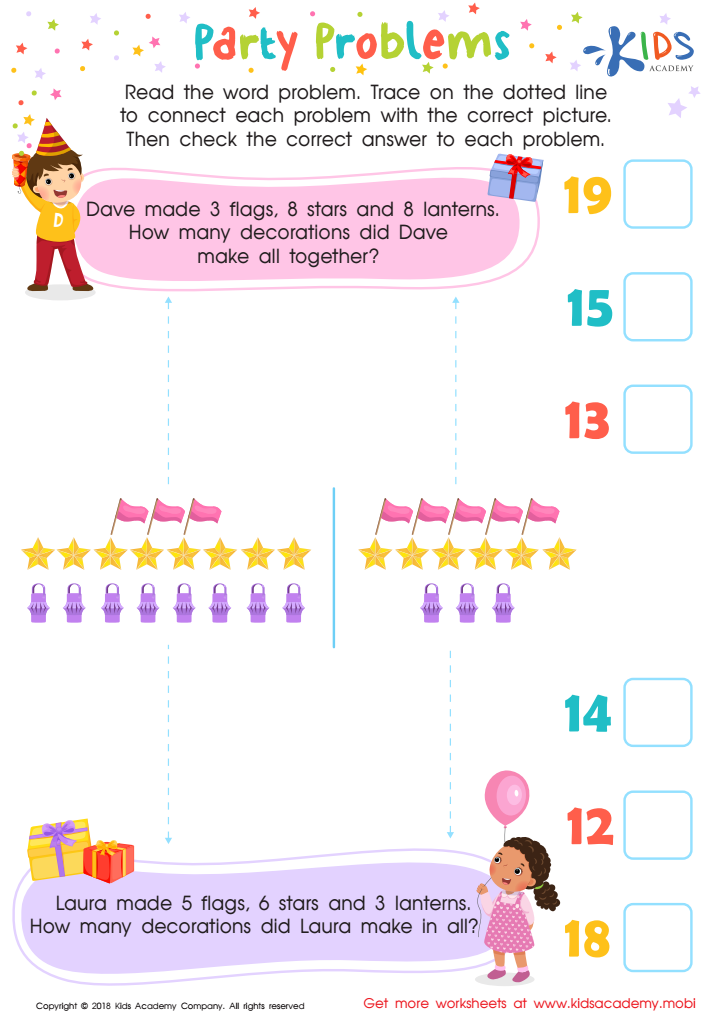
Party Problems Worksheet
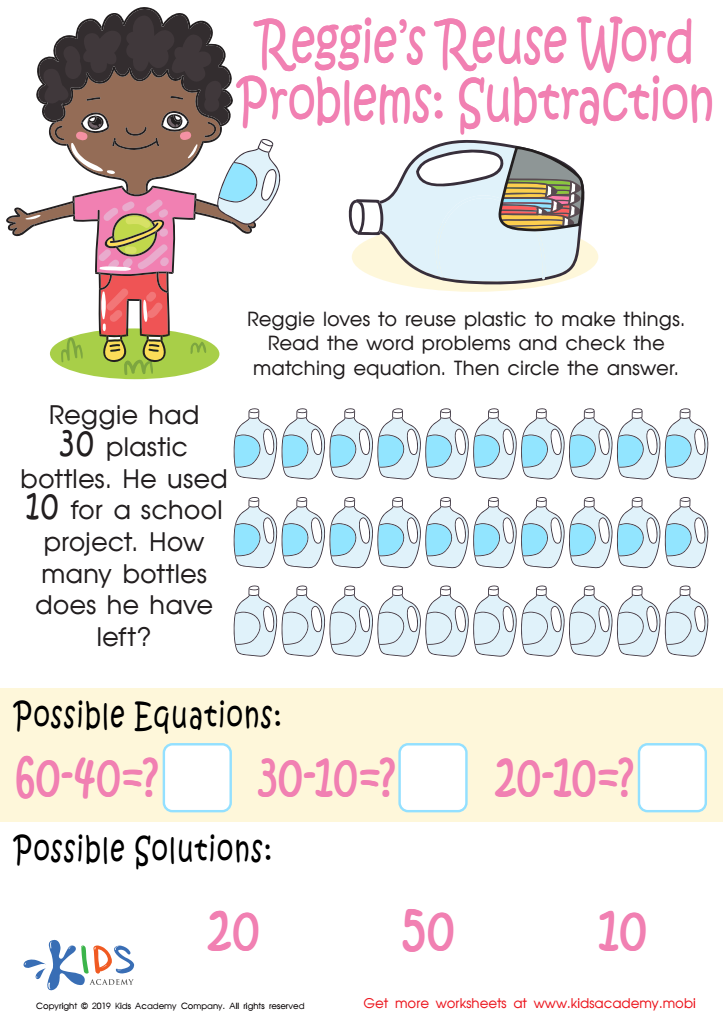
Reggie's Reuse Word Problems: Subtraction Worksheet
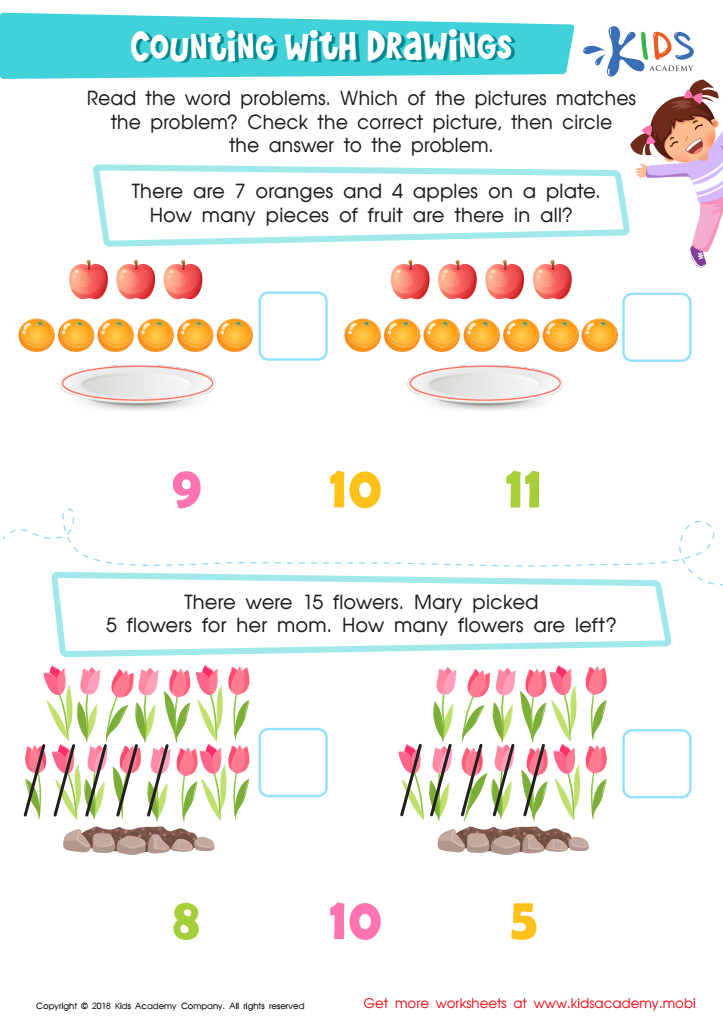
Counting with Drawings:Fruits & Flowers Worksheet
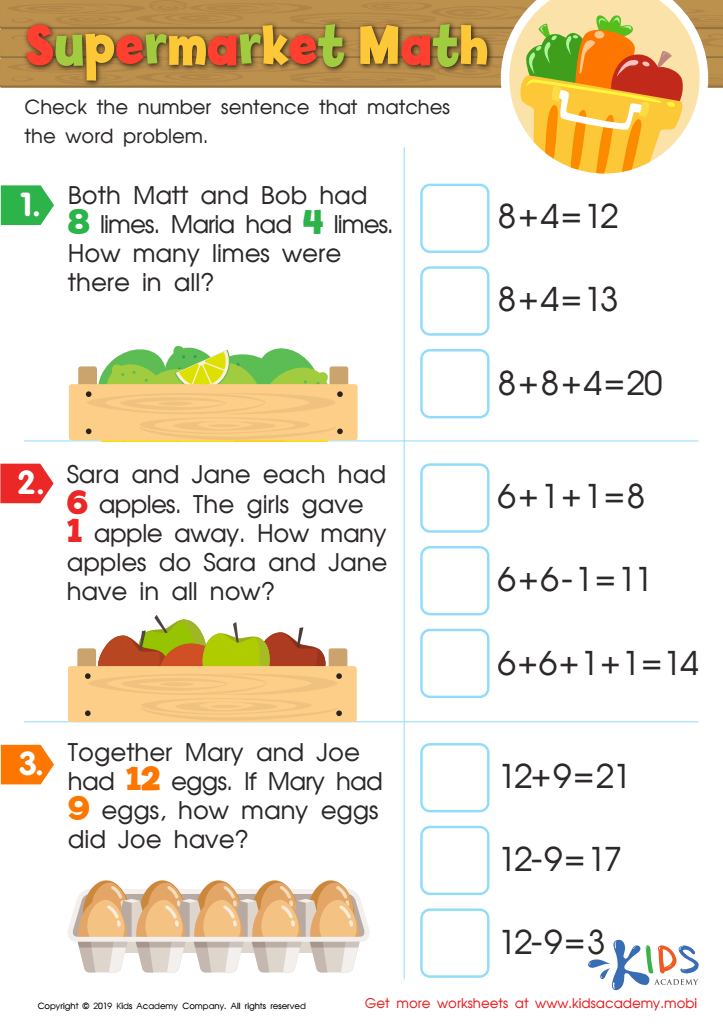
Supermarket Math Worksheet
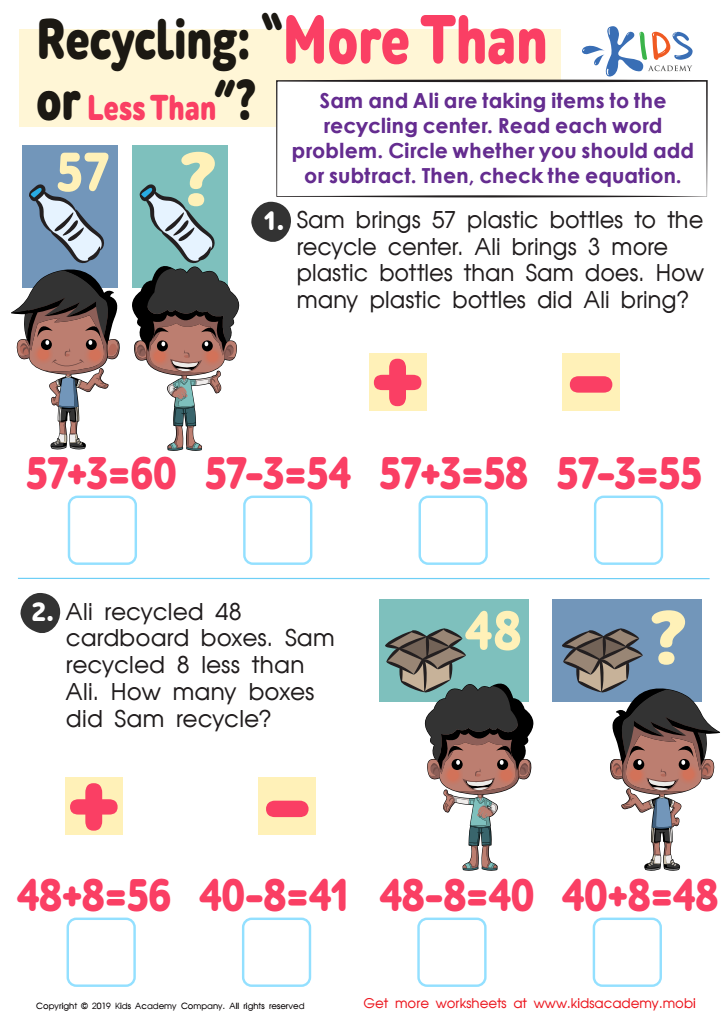
Recycling - More or Less Worksheet
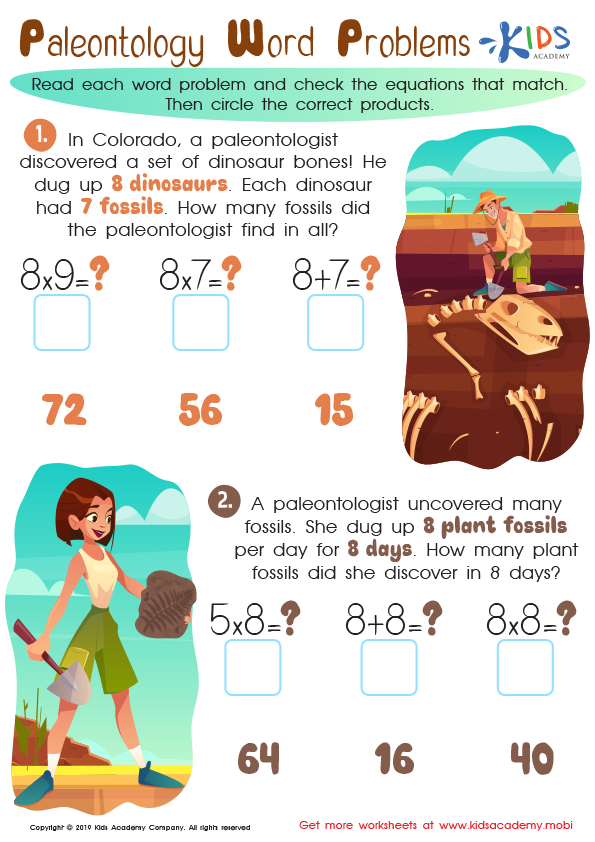
Archeology Word Problems Worksheet







Normal Word Problems are an essential part of early childhood education for children aged 3-8, and both parents and teachers should prioritize them for several reasons. Firstly, these problems enhance critical thinking and problem-solving skills, helping children learn how to analyze a situation and apply mathematical concepts to real-world scenarios. They encourage children to think logically and sequentially, which lays a solid foundation for future mathematical learning.
Additionally, Normal Word Problems foster language development. Children learn to read and comprehend the text, identify keywords, and formulate a strategy to reach an answer. This integrates literacy and numeracy, making learning holistic and engaging.
Moreover, discussing word problems builds communication skills. Children articulate their thought processes and collaborate with peers, which is vital for social development.
Introducing word problems at an early age helps normalize math in everyday life, reducing anxiety associated with the subject later on. It helps children understand the relevance of math beyond textbooks, making it an invaluable skill set.
In summary, Normal Word Problems are more than mere calculations; they serve as a bridge between math and daily life, fostering essential skills in young children that parents and teachers should actively nurture.








