Text analysis Normal Worksheets for Ages 3-9
3 filtered results
-
From - To
Explore our engaging Text Analysis Normal Worksheets for children aged 3-9, designed to enhance literacy skills through fun and interactive activities! These worksheets focus on fundamental reading comprehension and critical thinking skills, providing young learners with the tools to analyze texts effectively. Each worksheet is tailored to different age groups, ensuring age-appropriate challenges for varying abilities. With vibrant illustrations and captivating content, kids will develop a love for reading while mastering essential text analysis skills. Perfect for homeschooling, early childhood education, or supplemental practice, these worksheets will inspire confidence and creativity in every young reader!
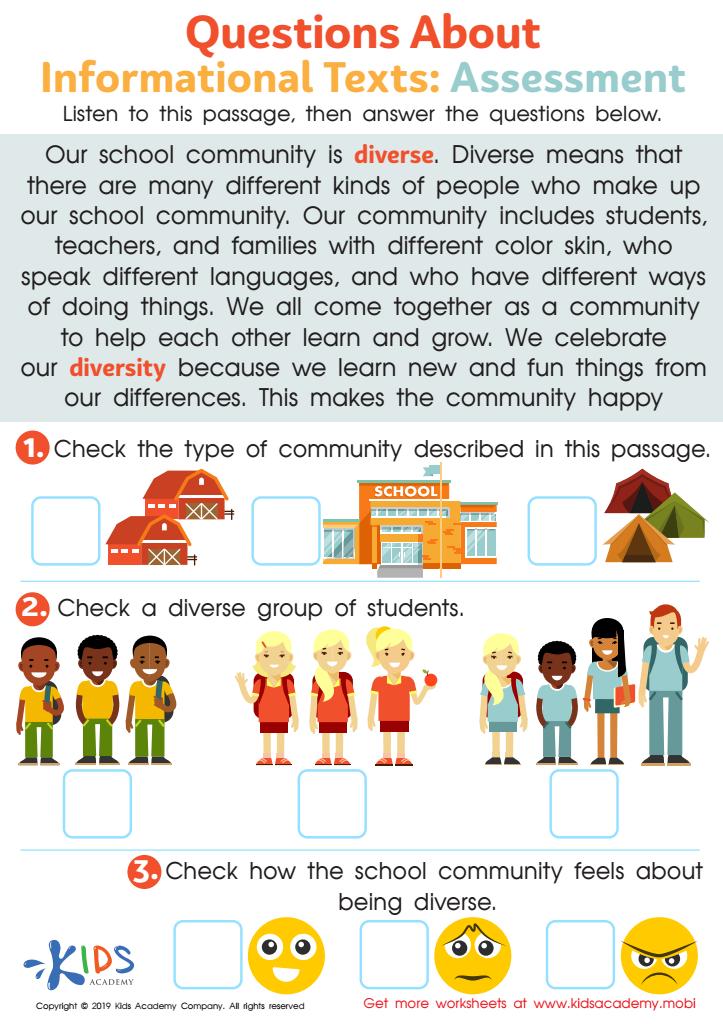
Questions About Informational Texts: Assessment 1 Worksheet
 Assign to My Students
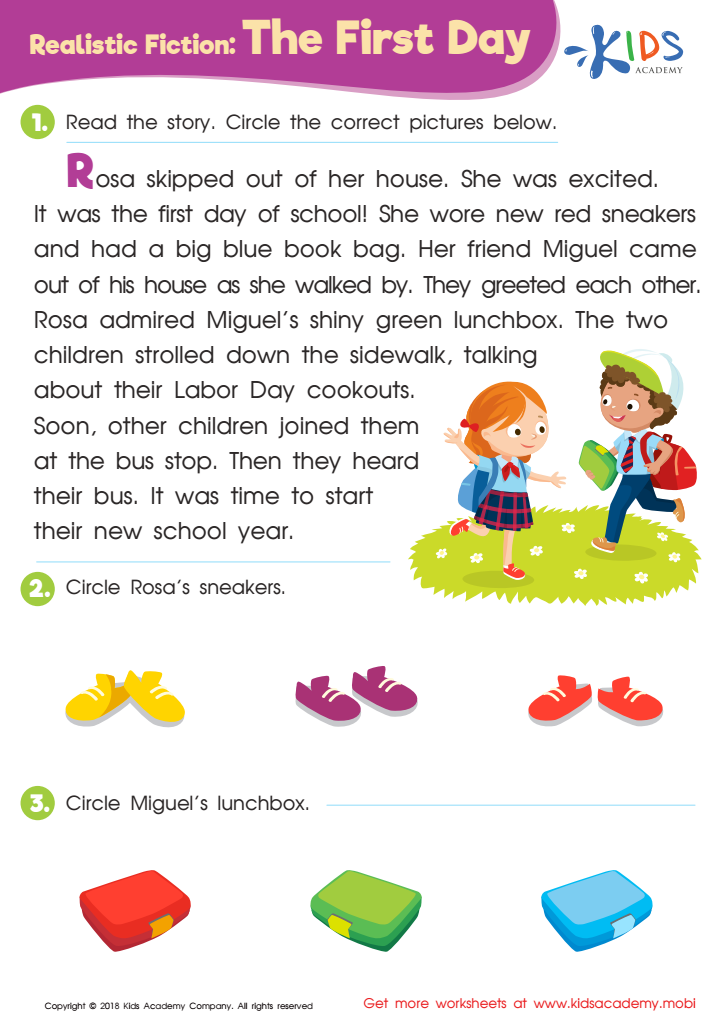
Realistic Fiction: The First Day Worksheet
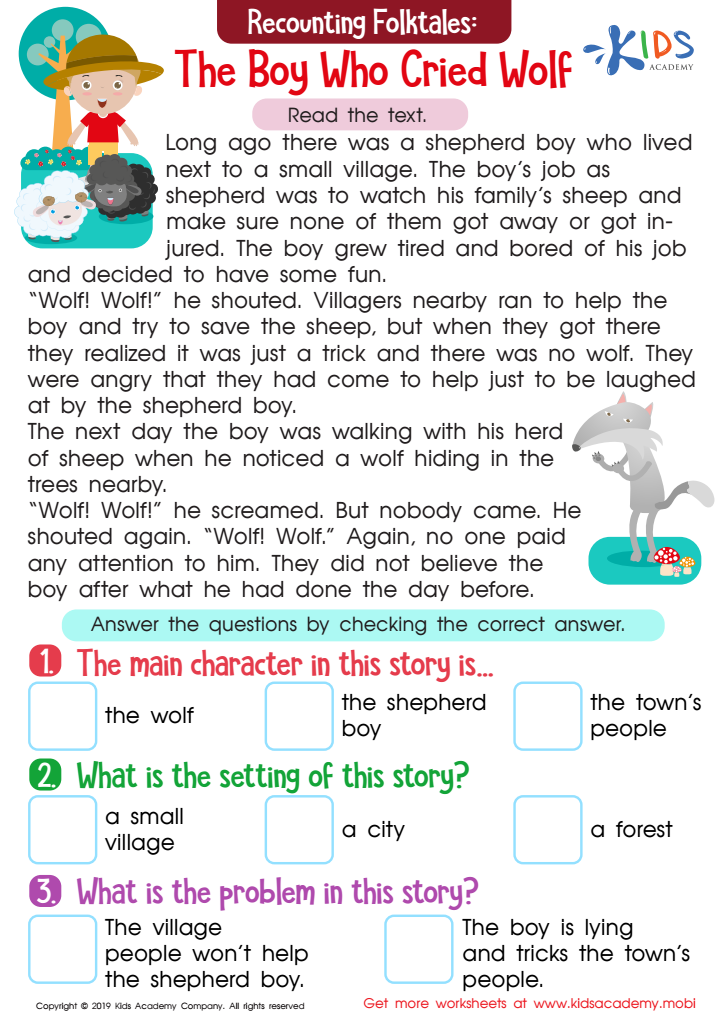
The Boy Who Cried Wolf Part 1 Worksheet








Text analysis is a powerful tool for parents and teachers, particularly for children aged 3-9. This phase of development is crucial, as young learners are building foundational literacy skills. Engaging with text analysis helps educators and caregivers understand how children comprehend and interact with texts, which is vital for fostering reading proficiency.
By examining factors such as vocabulary use, theme identification, and narrative structure, adults can gain insights into a child's cognitive development and reading preferences. This understanding allows for more tailored instruction that meets each child's unique needs, promoting enhanced engagement and motivation. Additionally, text analysis helps identify areas where a child may struggle, enabling early interventions that support skill development.
Parents and teachers who employ text analysis can also encourage children to develop critical thinking and analytical skills at an early age. These skills are not only essential for their academic journey but are also vital in navigating the complexities of information in today’s digital world.
In fostering a love for reading and critical analysis, adults play a key role in shaping confident, capable learners who are equipped to thrive both inside and outside the classroom. Ultimately, text analysis supports holistic development and lays the groundwork for lifelong literacy and learning.








