Counting skills Normal Addition & Subtraction Worksheets for Ages 4-7
20 filtered results
-
From - To
Enhance your child's math abilities with our Counting Skills Normal Addition & Subtraction Worksheets for ages 4-7. Designed to build fundamental arithmetic skills, these engaging worksheets help young learners master basic addition and subtraction through fun, interactive exercises. Ideal for homeschooling or supplemental practice, our expert-crafted resources provide a solid foundation in counting while fostering a love for learning. Watch your child’s confidence grow as they solve problems and develop essential math skills. Discover our free, easy-to-use printable worksheets and set your child on the path to numerical success today!
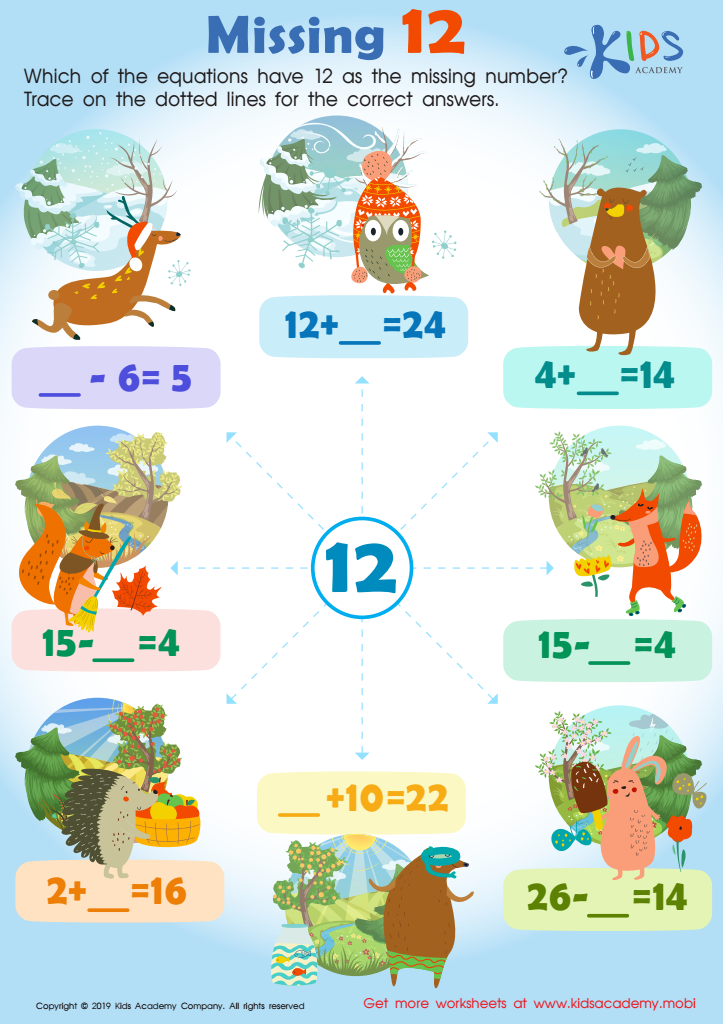
Missing 12 Worksheet
 Assign to My Students
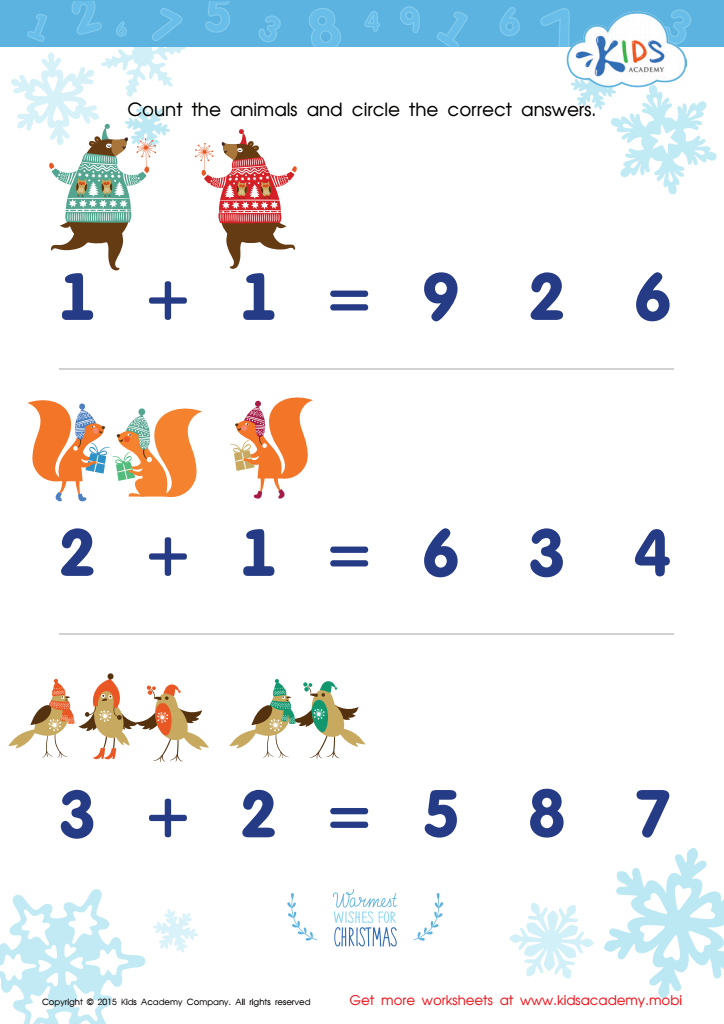
Count Funny Animals Worksheet
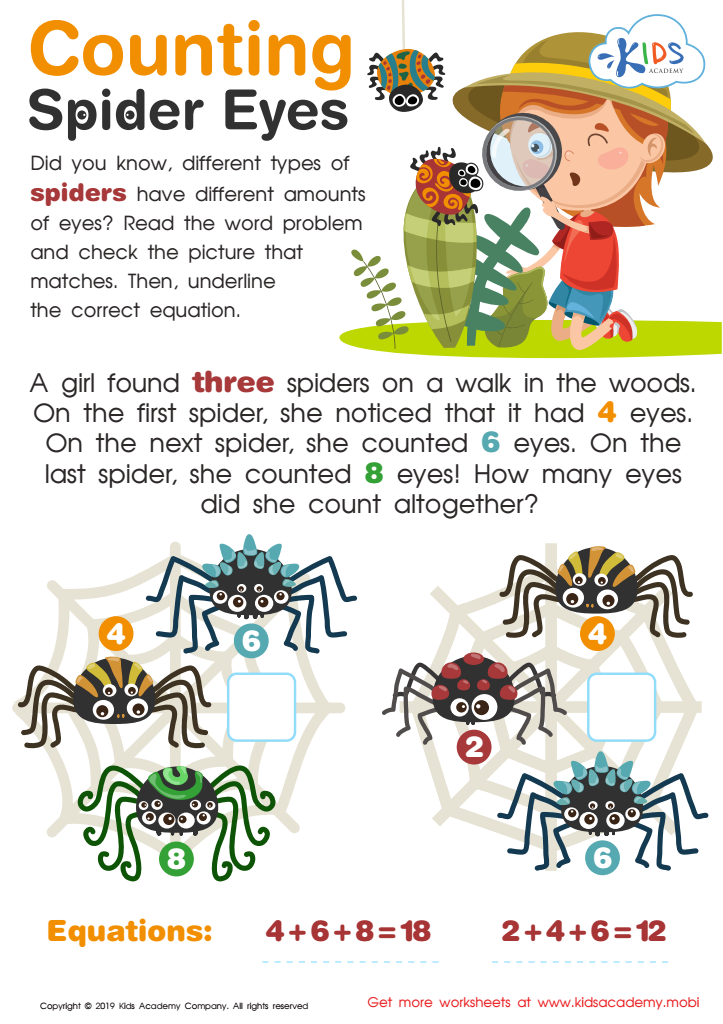
Counting Spider Eyes Worksheet
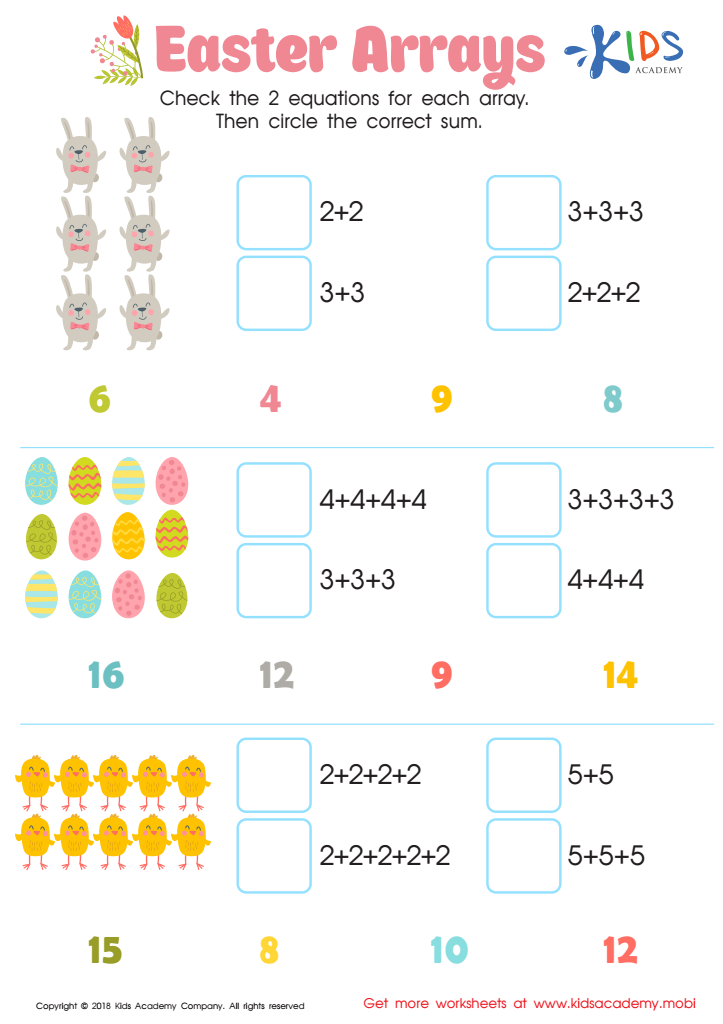
Easter Arrays Worksheet
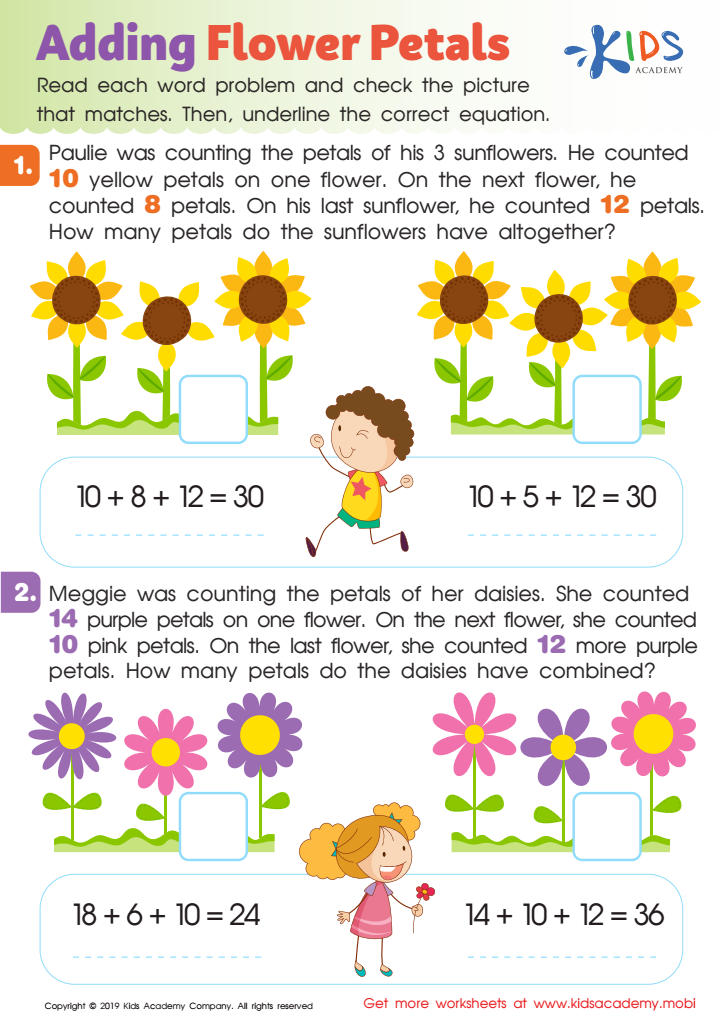
Adding Flower Petals Worksheet
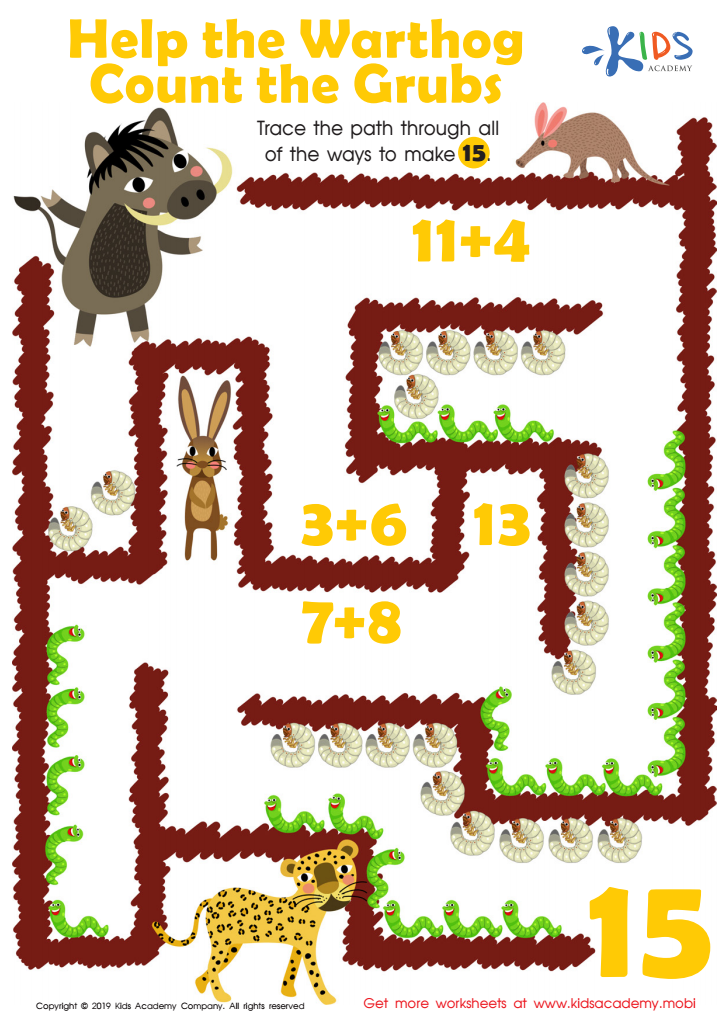
Help the Warthog Count the Grubs Worksheet
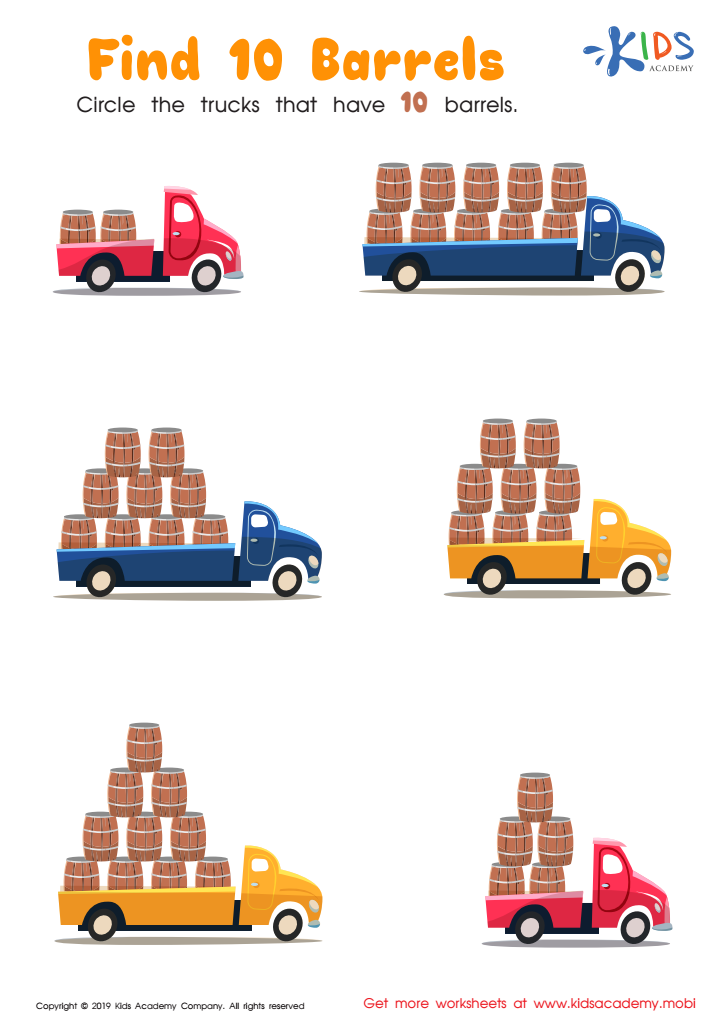
Find 10 Barrels Worksheet
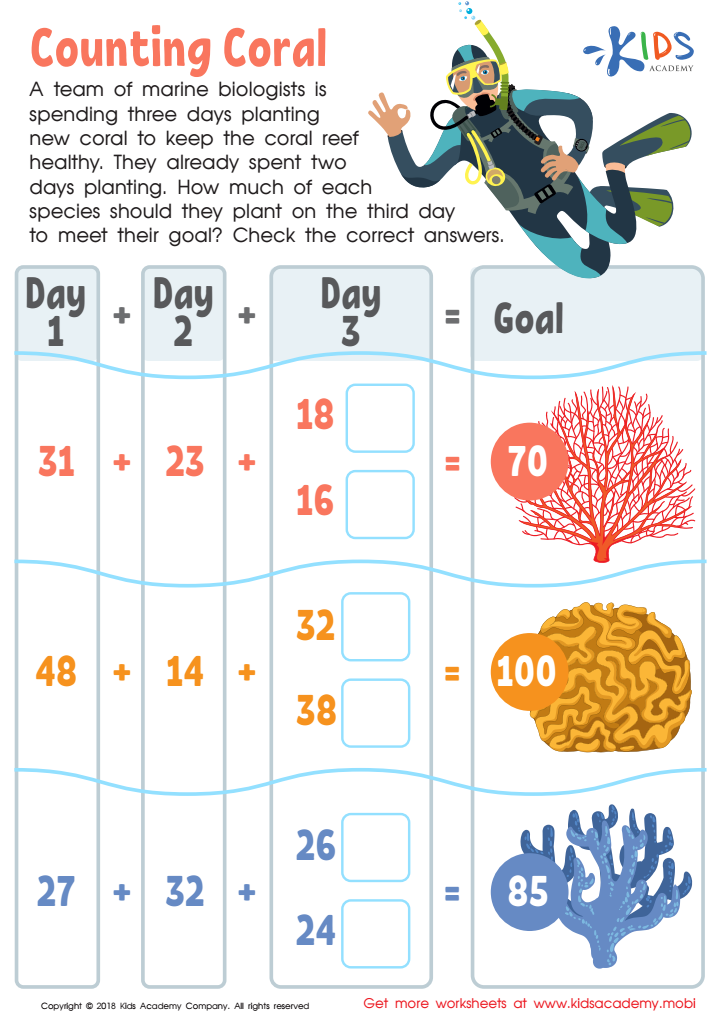
Counting Coral Worksheet
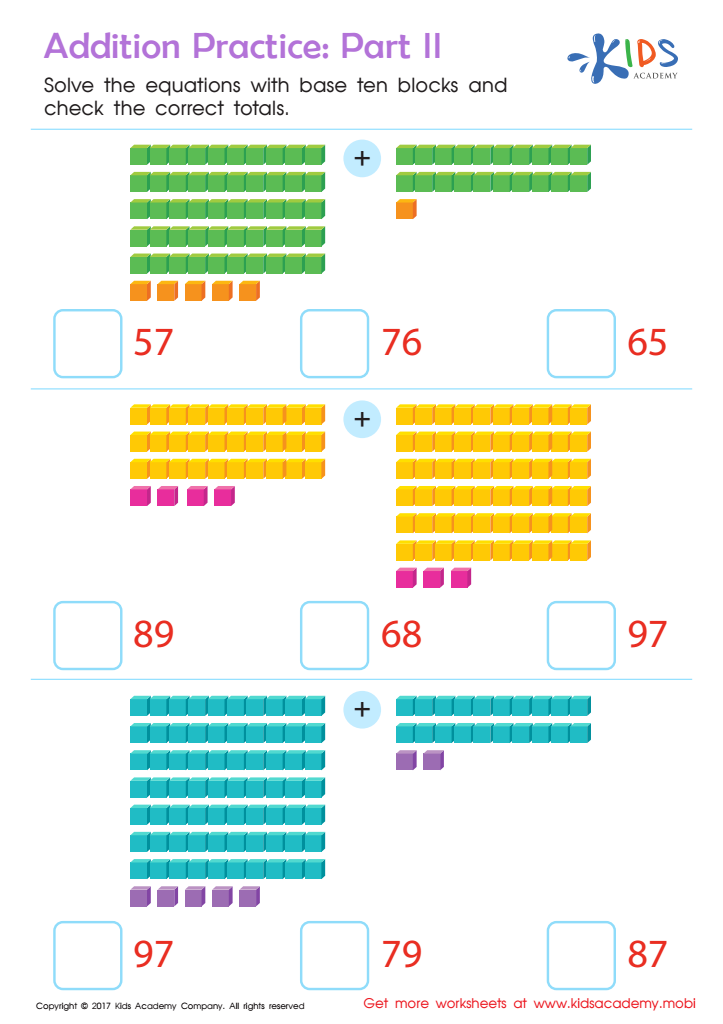
Addition Practice Sheet: Part 2
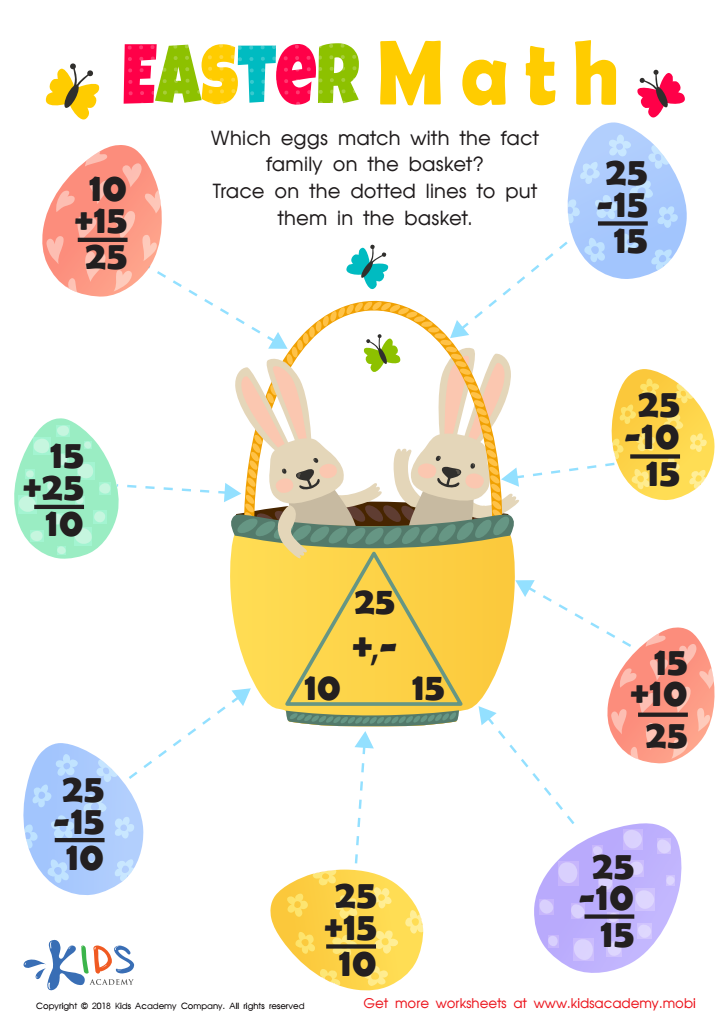
Fact Families: Easter Math Worksheet
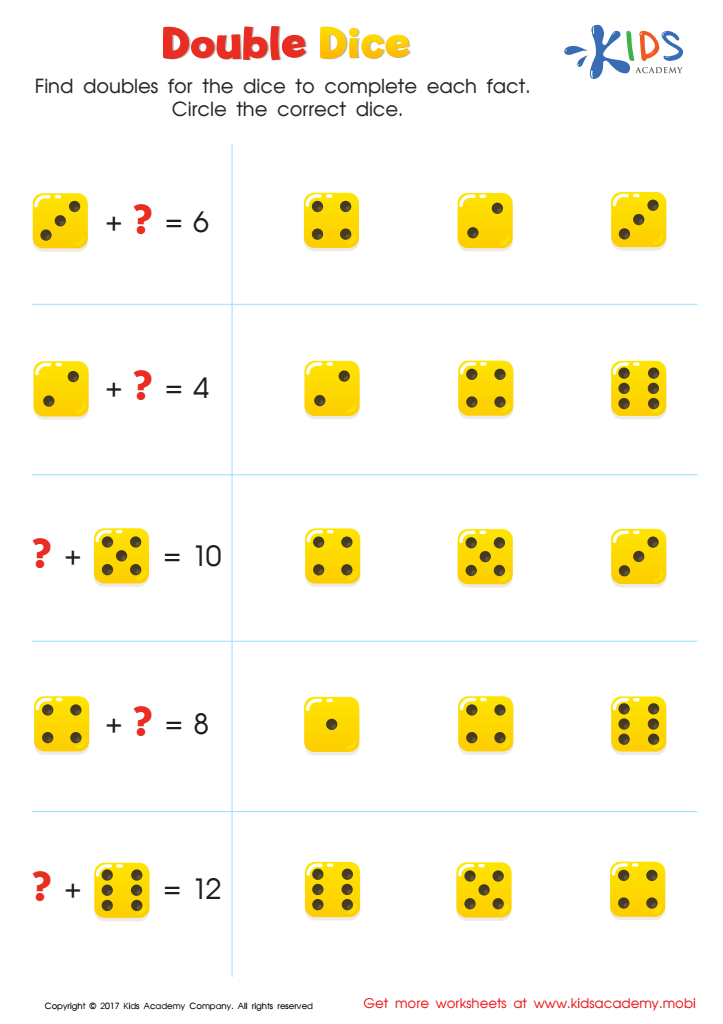
Addition Facts: Double Dice Worksheet
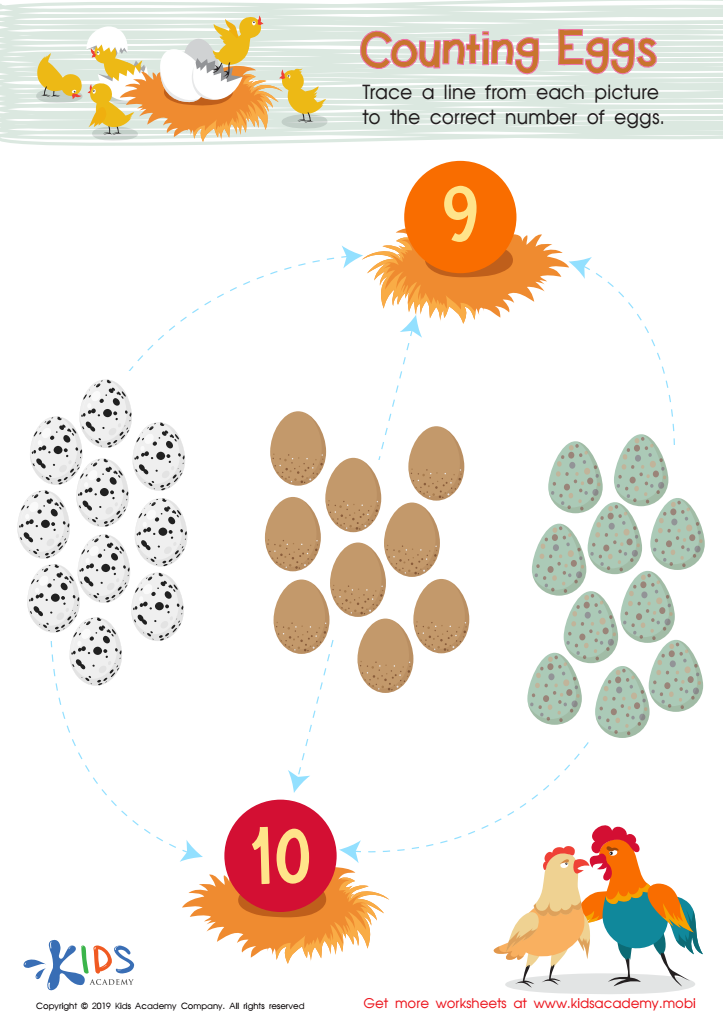
Counting Eggs Worksheet
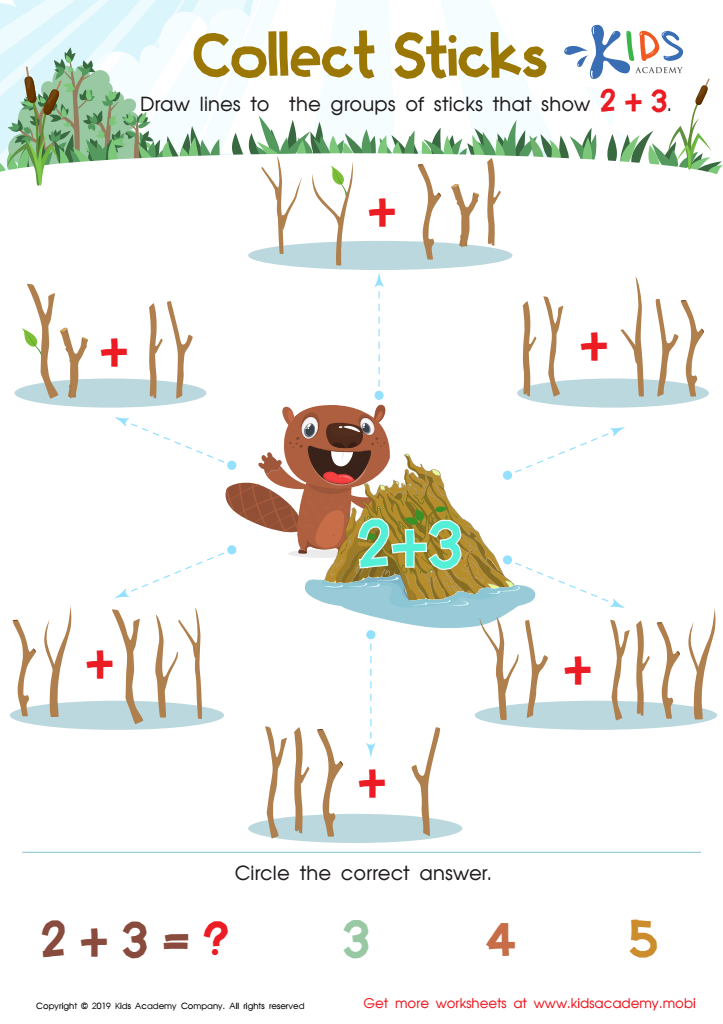
Collect Sticks Worksheet
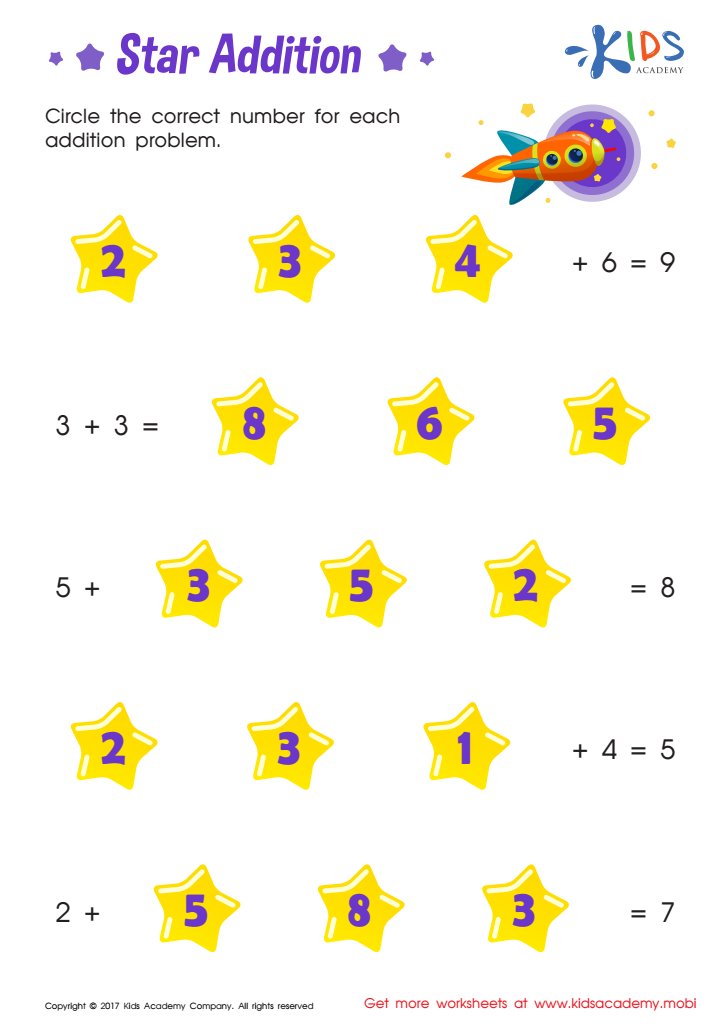
Star Addition Printable
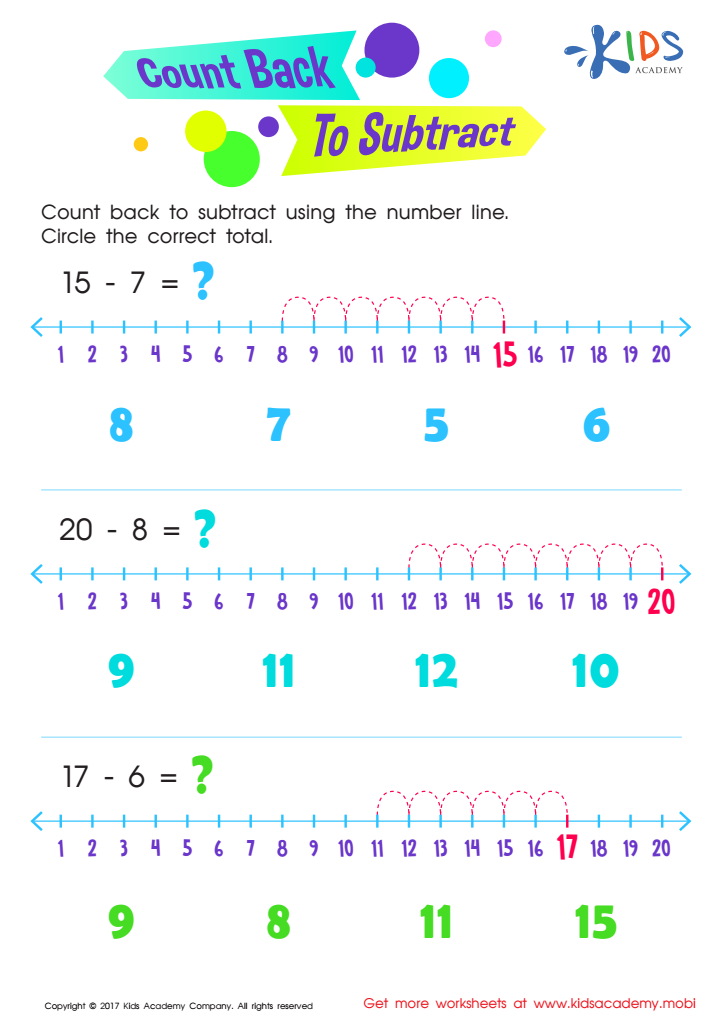
Count Back to Subtract Substraction Worksheet
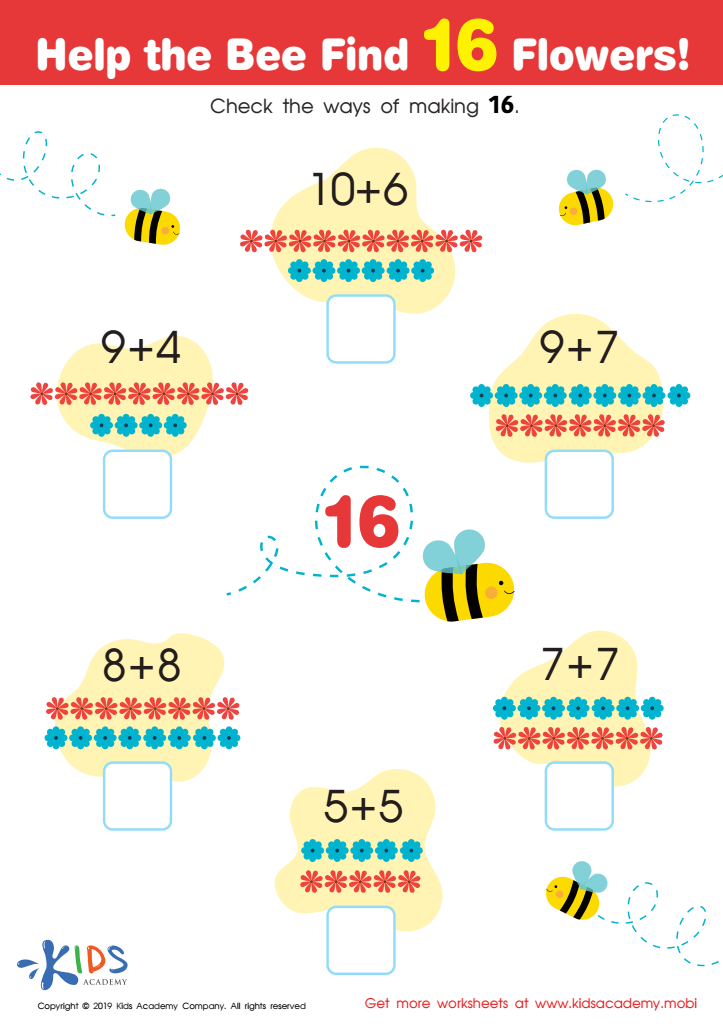
Help the Bee Find 16 Flowers Worksheet
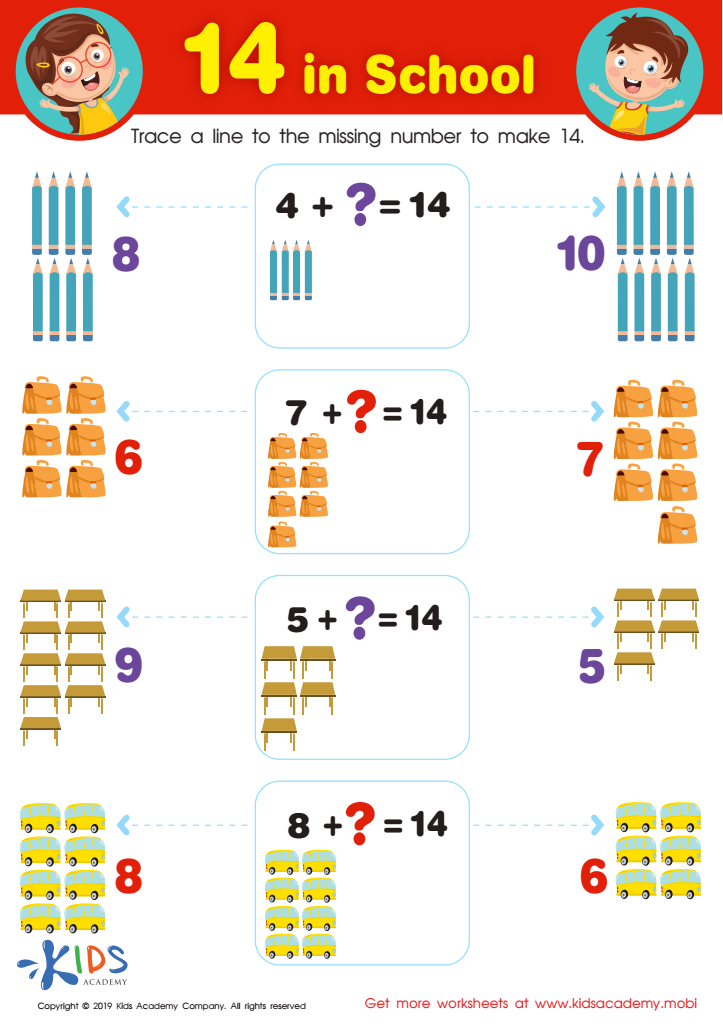
14 in School Worksheet
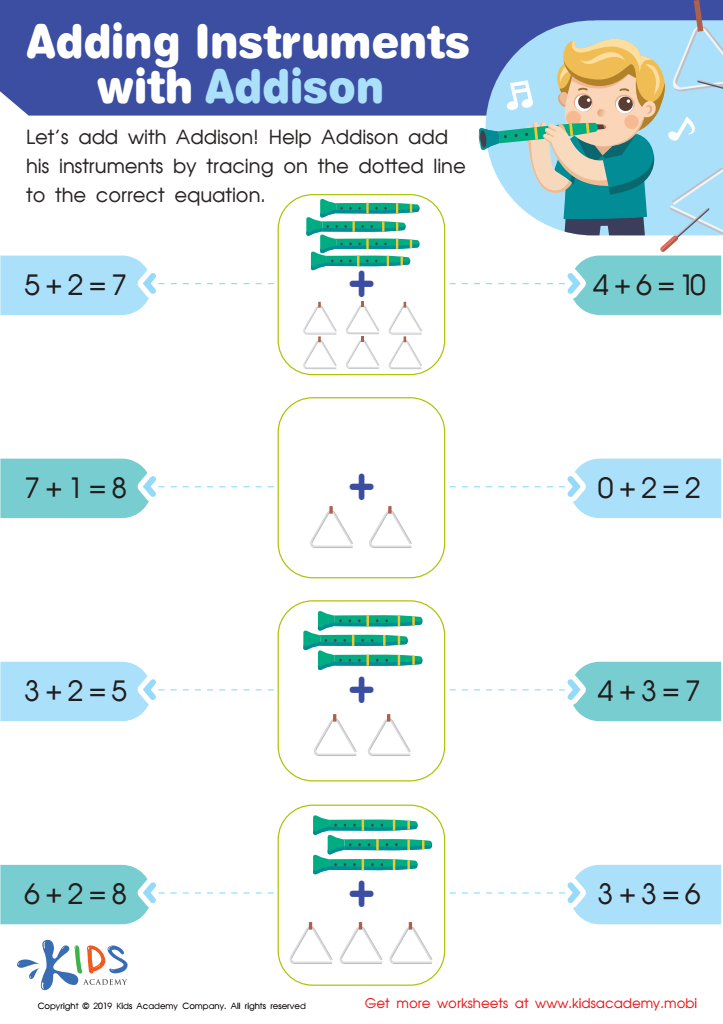
Adding Instruments with Addison Worksheet
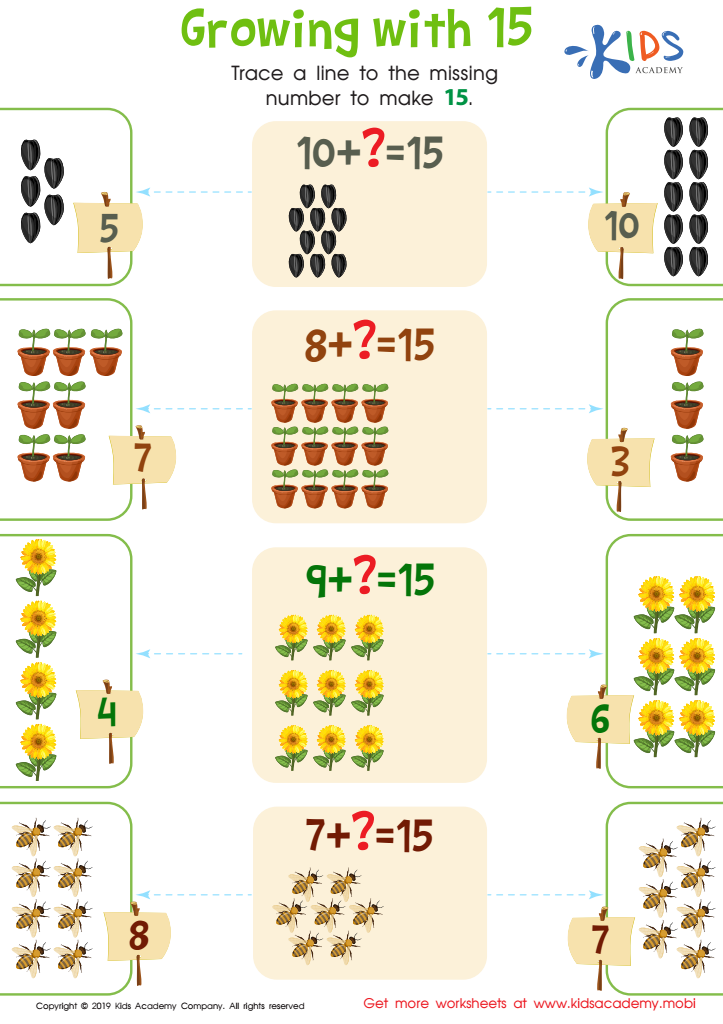
Growing with 15 Worksheet








Counting skills and basic addition and subtraction are fundamental building blocks for ages 4-7, forming the bedrock of mathematical understanding. At this early age, children are highly receptive to learning new concepts, and developing these skills can foster a strong cognitive foundation that will benefit them throughout their educational journey.
Counting teaches children the essential principle of number sequence and one-to-one correspondence, which are necessary for more complex mathematical operations. It also aids in the development of memory, attention to detail, and pattern recognition, enhancing overall intellectual growth. Additionally, proficiency in normal addition and subtraction equips children with the ability to solve practical, everyday problems, such as sharing items equally or understanding basic financial exchanges.
Proactively nurturing these skills can boost a child's confidence and interest in mathematics, a subject that might otherwise seem intimidating later on. For parents and teachers, instilling confidence and competence in basic math at an early age can preempt learning anxieties and academic struggles down the line.
In summary, investing time and effort to develop counting skills and basic arithmetic during early childhood is crucial for cementing foundational math principles, promoting cognitive development, and setting the stage for future academic success and real-world problem-solving abilities.








