Pattern recognition Normal Worksheets for Ages 4-8
13 filtered results
-
From - To
Unlock your child's potential with our Pattern Recognition Normal Worksheets for ages 4-8! Specially designed, these worksheets help young learners develop crucial cognitive skills through fun and engaging activities. Children will enjoy identifying, recreating, and extending patterns with colorful images and sequences. Each worksheet promotes logical thinking, problem-solving abilities, and fine motor skills, all while keeping children captivated and eager to learn. Perfect for classrooms or home learning, these printable worksheets offer a structured approach to enhance your child's pattern recognition abilities. Dive into a world of learning and discovery with Kids Academy today!
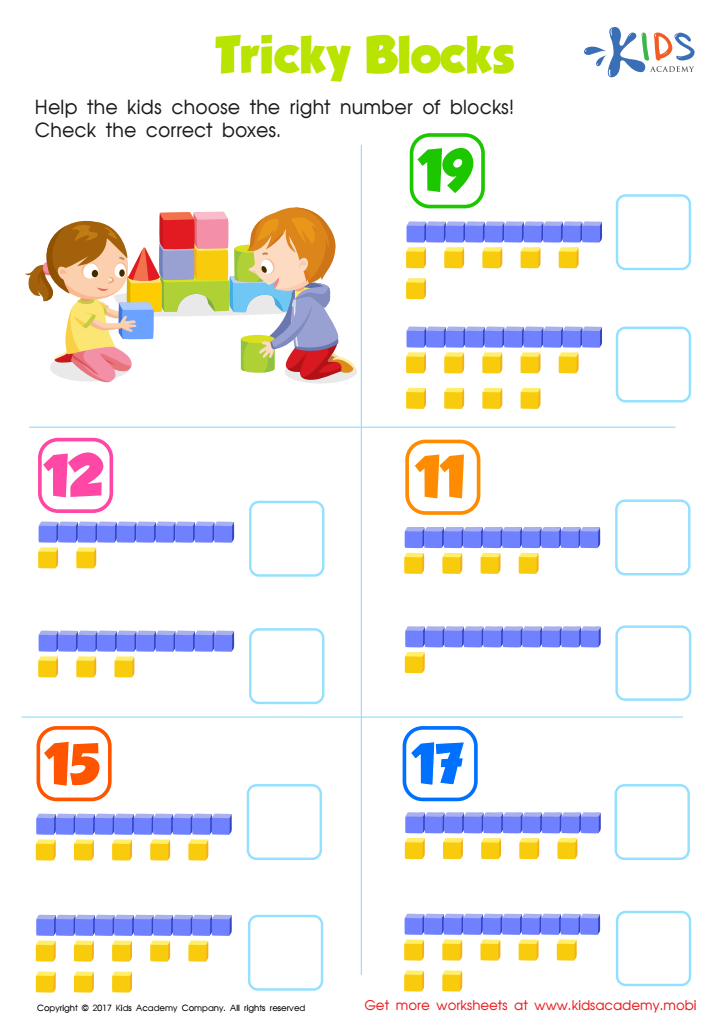
Tricky Blocks Worksheet
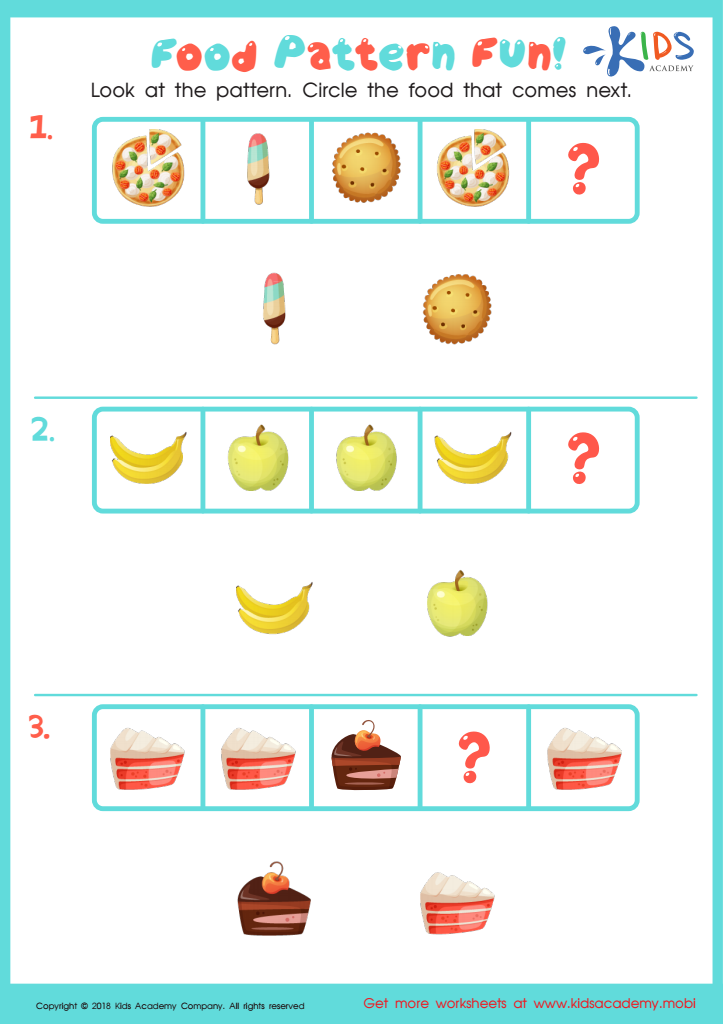
Food Pattern Fun Worksheet
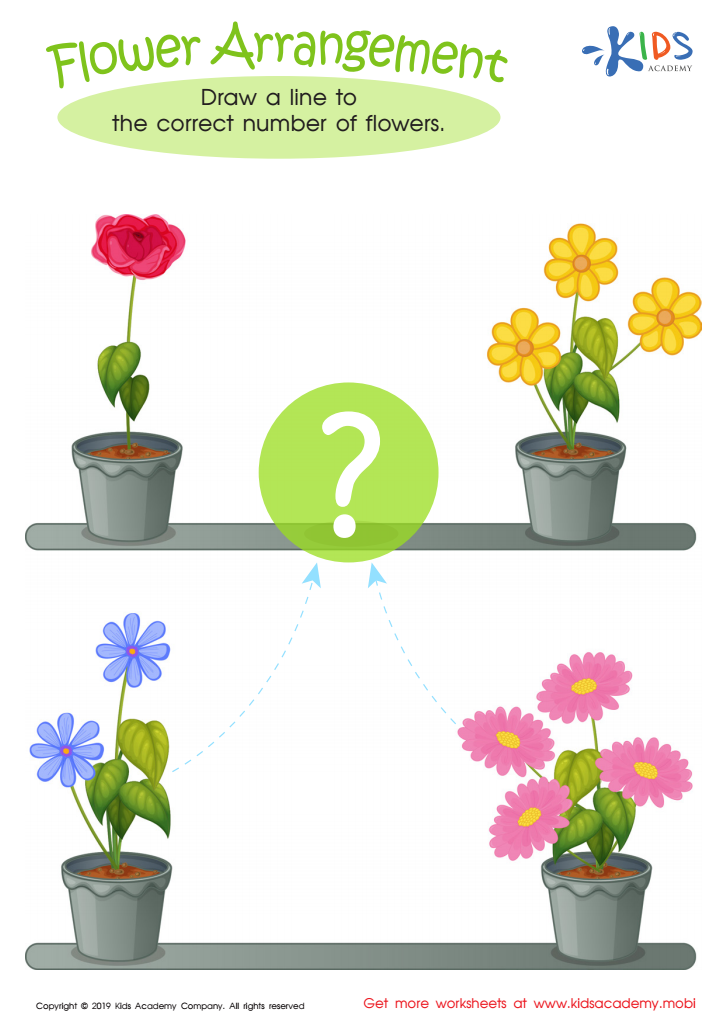
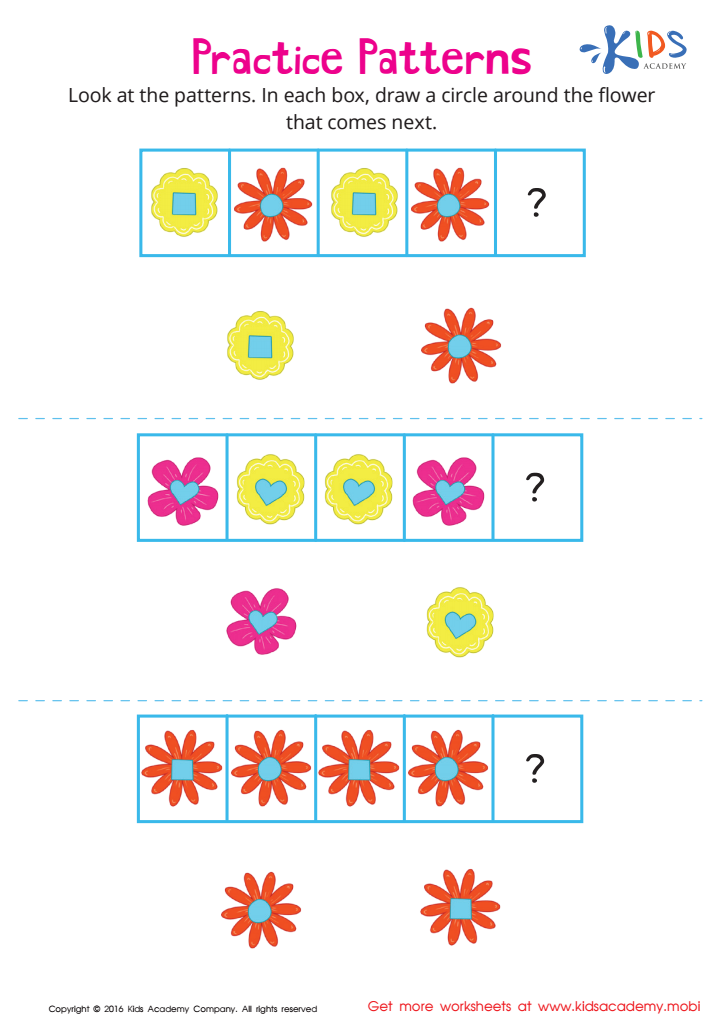
Flower Arrangement Worksheet
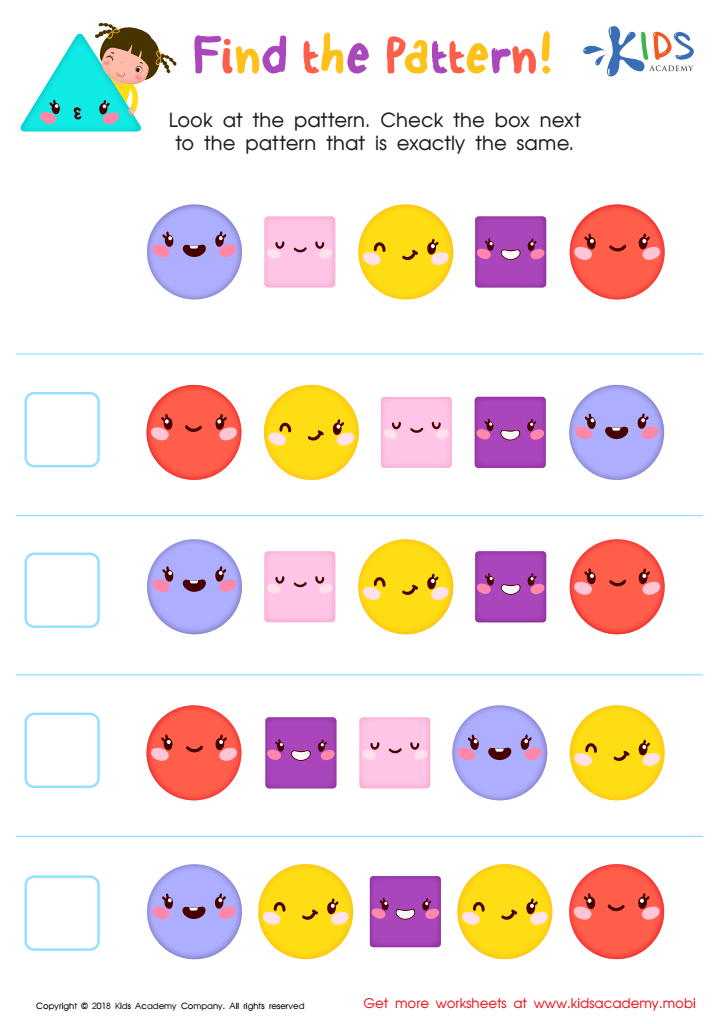
Find the Pattern Worksheet
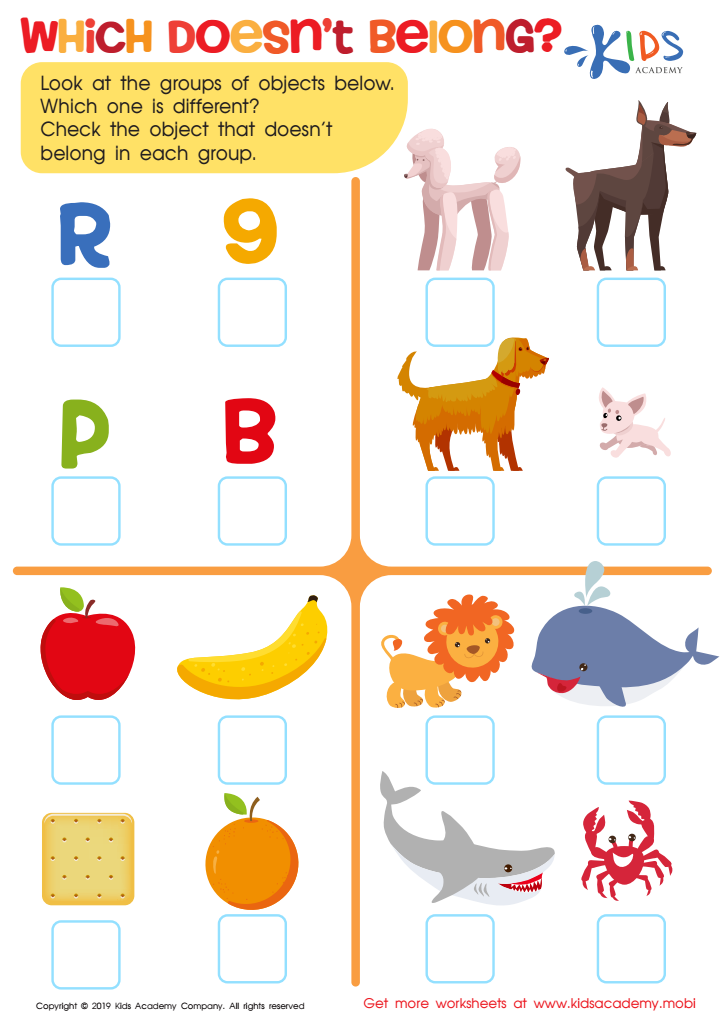
Which Doesn't Belong? Worksheet
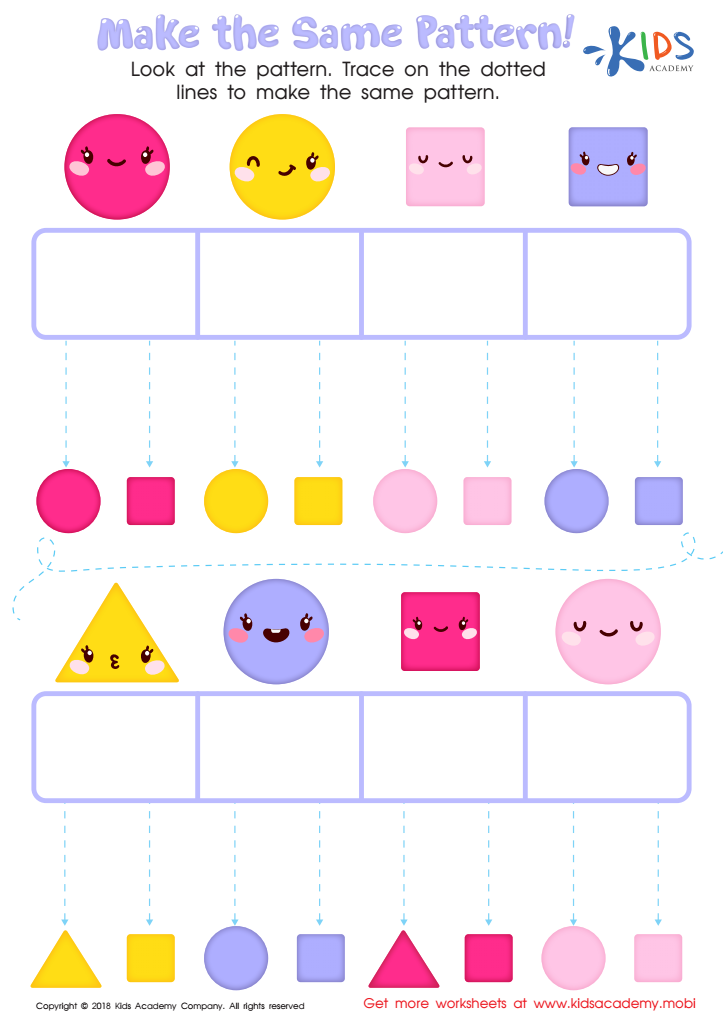
Make the Same Pattern Worksheet
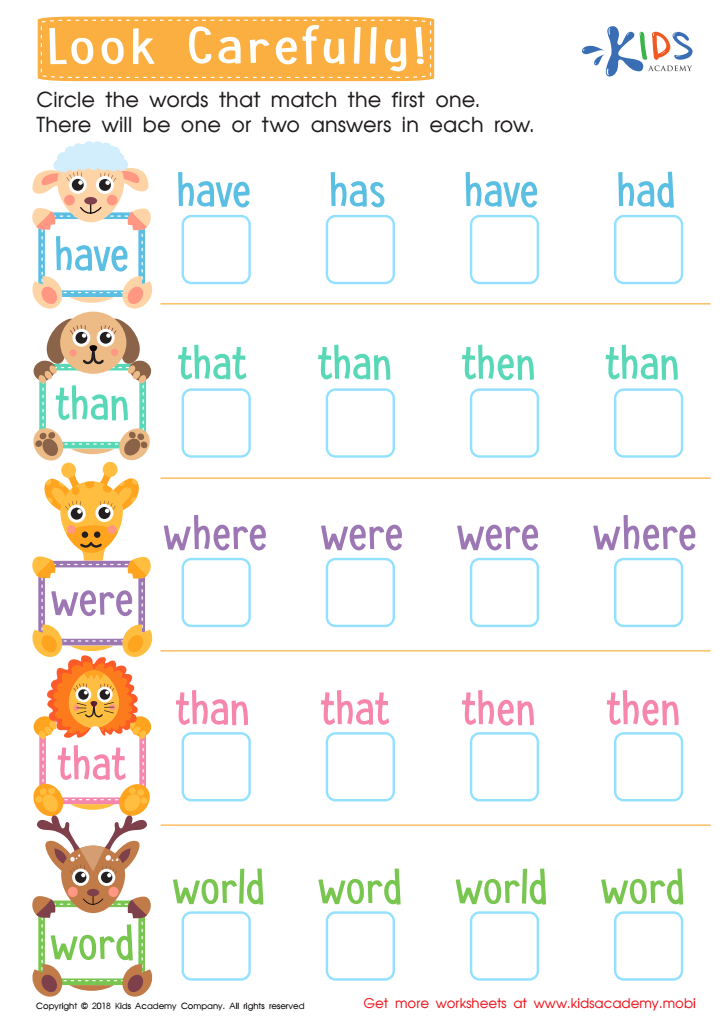
Look Carefully Worksheet
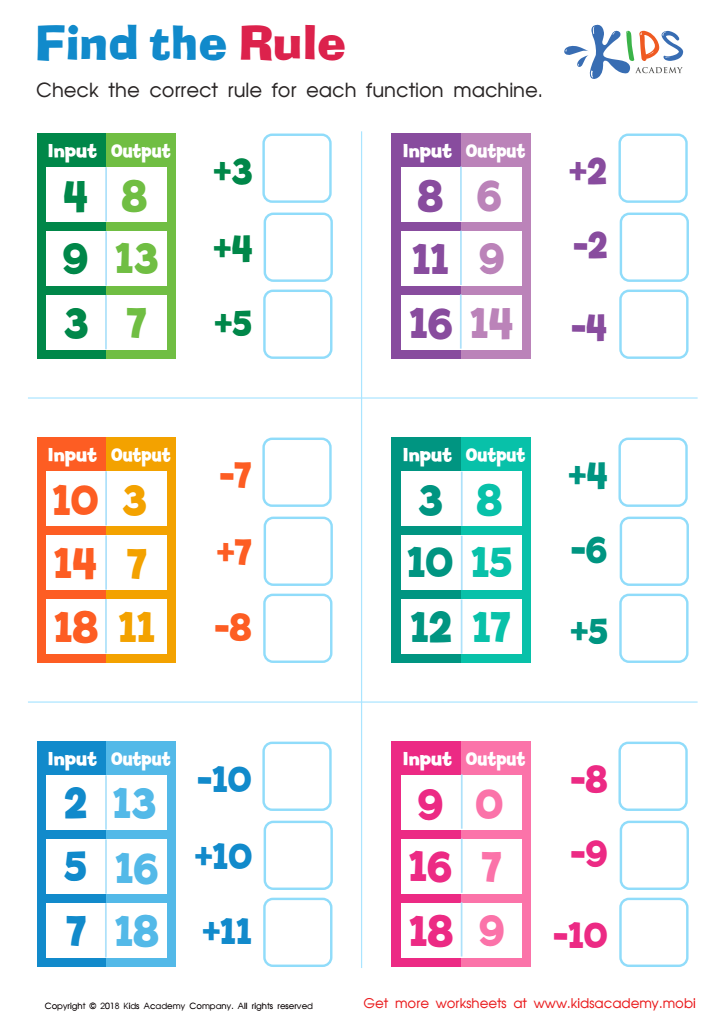
Find the Rule Worksheet
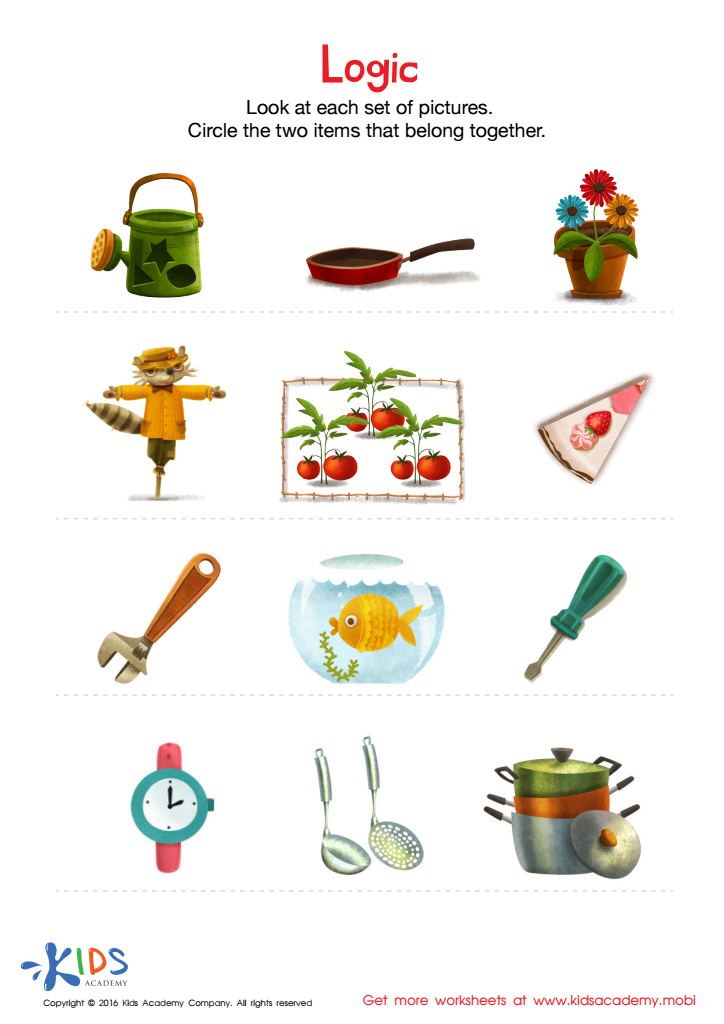
Logic Game Sorting Worksheet
Christmas: Christmas Tree Printable
 Assign to My Students
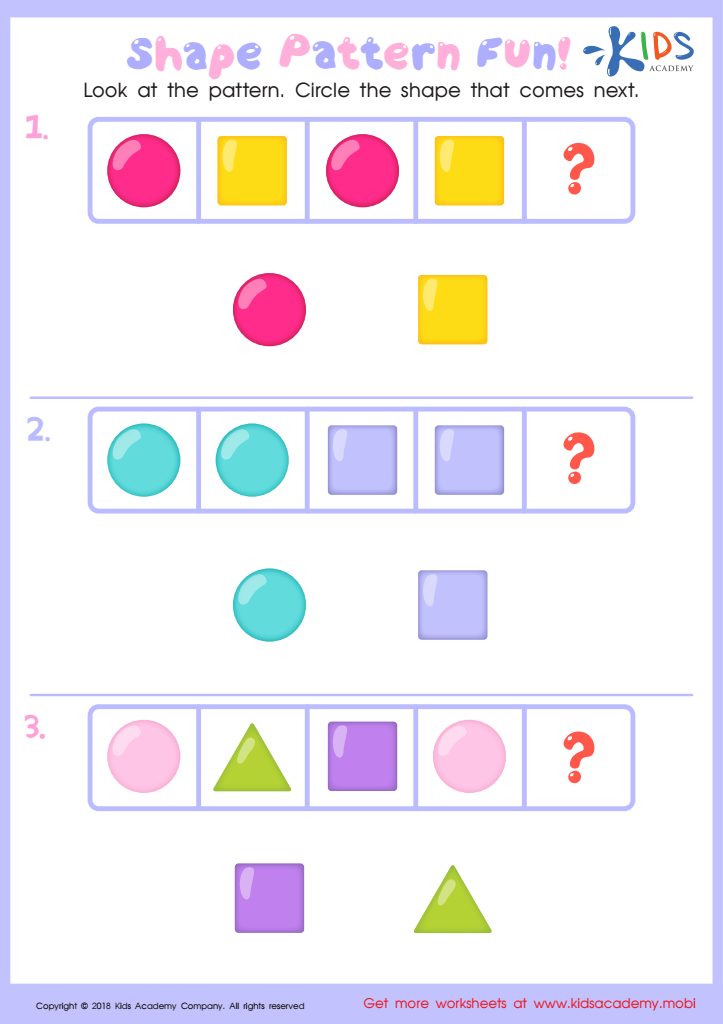
Shape Pattern Fun Worksheet
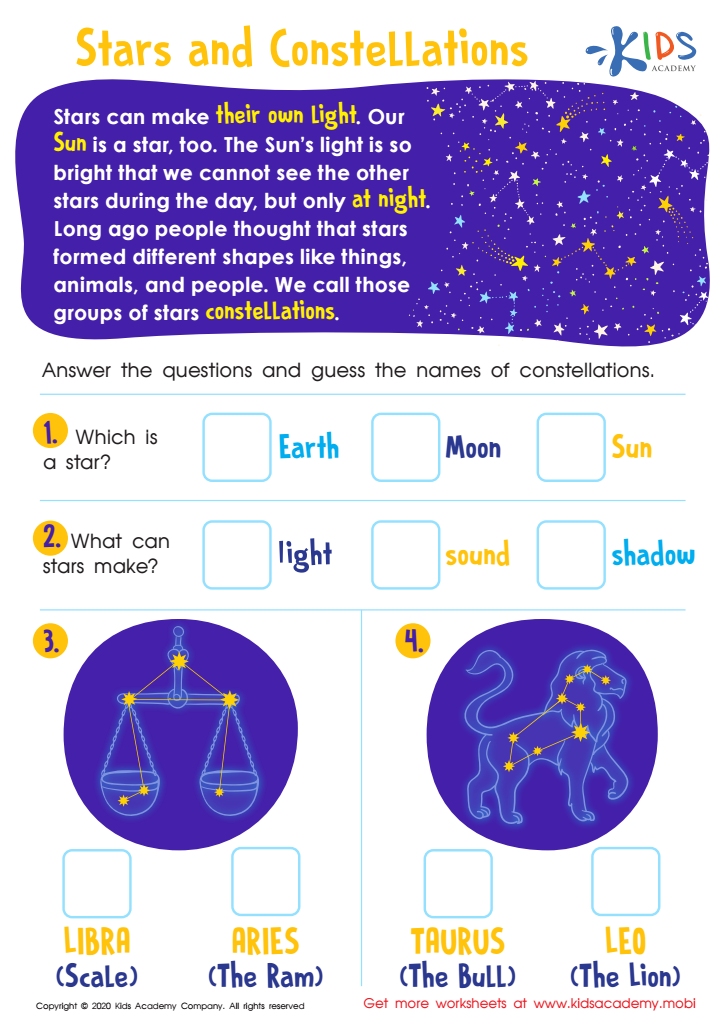
Stars and Constellations Worksheet







Pattern recognition is a crucial skill for children aged 4-8, playing a fundamental role in their cognitive development. Parents and teachers should pay particular attention to fostering this ability because it establishes the groundwork for essential learning areas, such as math, reading, and problem-solving.
For instance, in mathematics, recognizing patterns helps children understand sequences, predict events, and grasp geometric concepts. Identifying patterns is integral for mastering counting, addition, and subtraction, essential building blocks for more sophisticated mathematical operations later on. Similarly, in reading, recognizing letter patterns and word families enhances literacy by enabling children to decode new words, read fluently, and improve comprehension.
Moreover, pattern recognition sharpens critical thinking as children learn to observe, compare, and analyze visual, auditory, and spatial patterns. This skill is not confined to academics alone. It extends to everyday life, helping children make sense of the world and respond to its regularities – from understanding daily routines to recognizing social cues.
By incorporating activities like sorting objects, playing matching games, or exploring rhythms, parents and teachers can create engaging, pattern-rich environments. Prioritizing pattern recognition during these formative years paves the way for future learning success, fostering confidence, curiosity, and intellectual resilience in young learners.








