Critical Thinking Normal Geometry Worksheets for Ages 4-8
5 filtered results
-
From - To
Unlock your child's potential with our "Critical Thinking Normal Geometry Worksheets for Ages 4-8"! These engaging worksheets are designed to enhance critical thinking skills while introducing foundational geometry concepts. Your child will explore shapes, spatial awareness, and problem-solving through fun activities and colorful illustrations. Each worksheet encourages hands-on learning, helping young learners develop analytical skills essential for academic success. Perfect for home or classroom use, our easily printable resources cater to diverse learning styles and abilities. Empower your little ones to think critically and confidently as they embark on their geometry journey! Start nurturing their love for learning today!
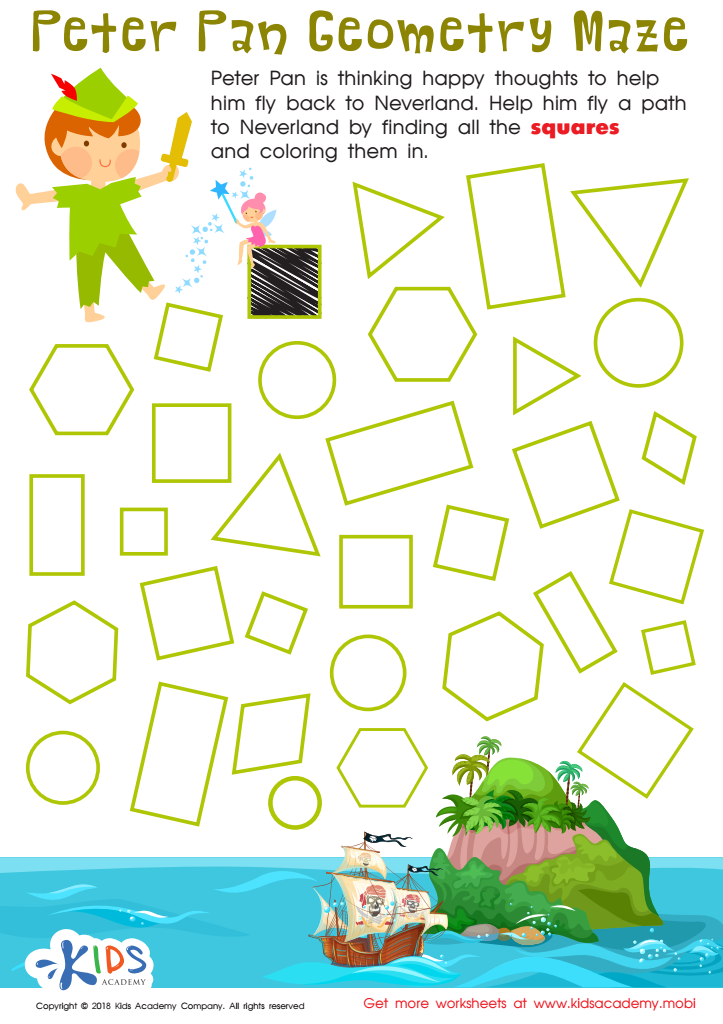
Peter Pan Worksheet
 Assign to My Students











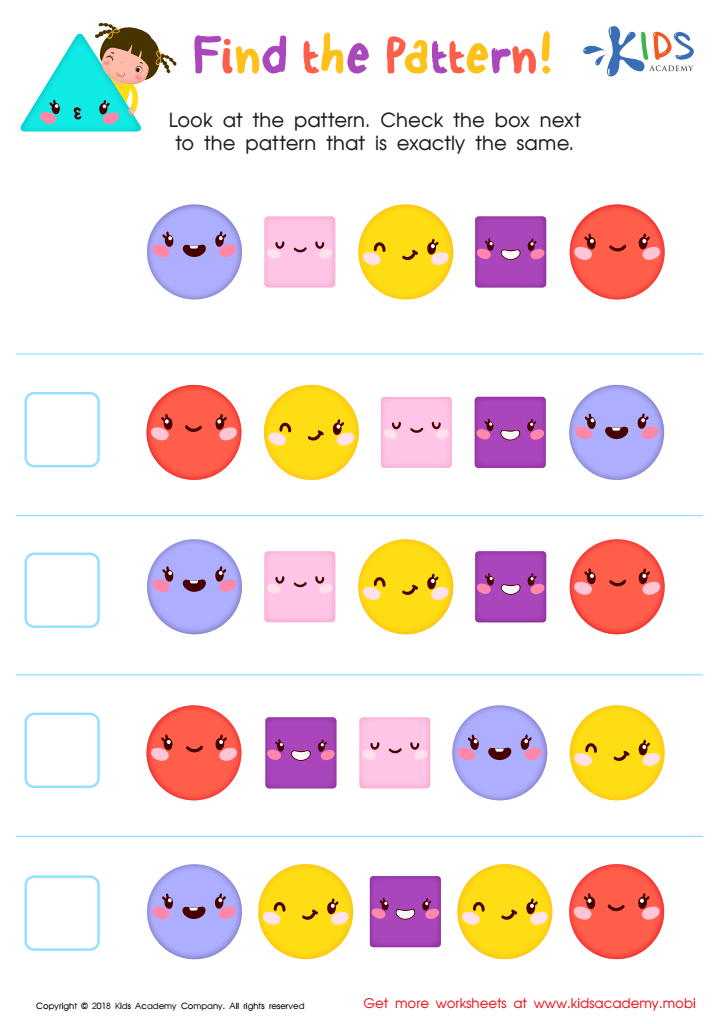
Find the Pattern Worksheet
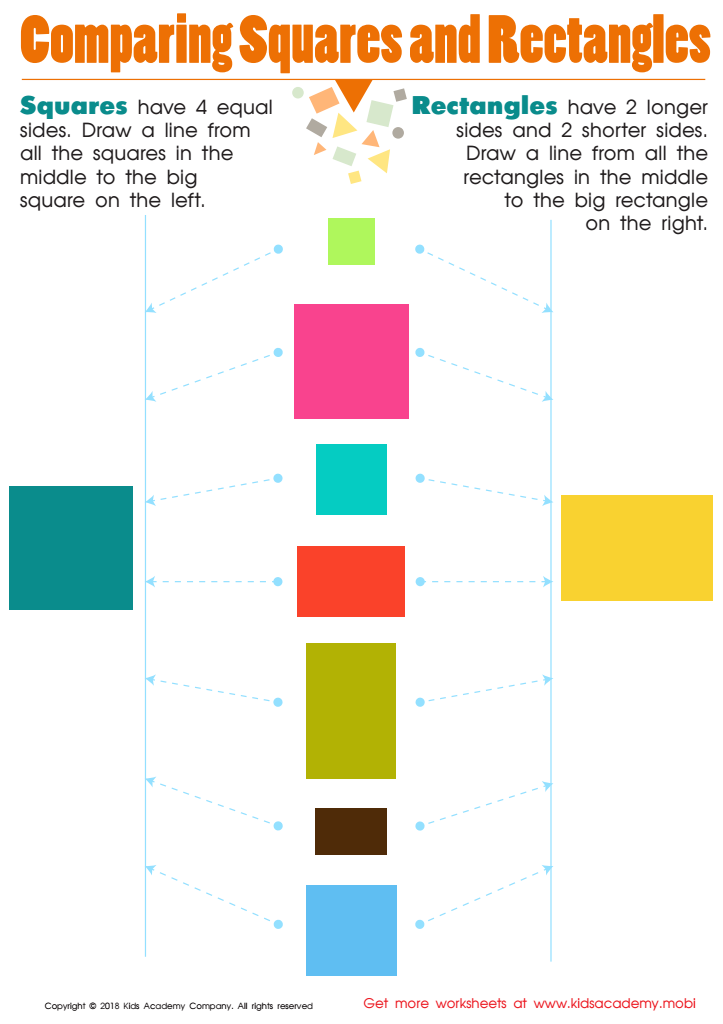
Comparing Squares Rectangles Worksheet
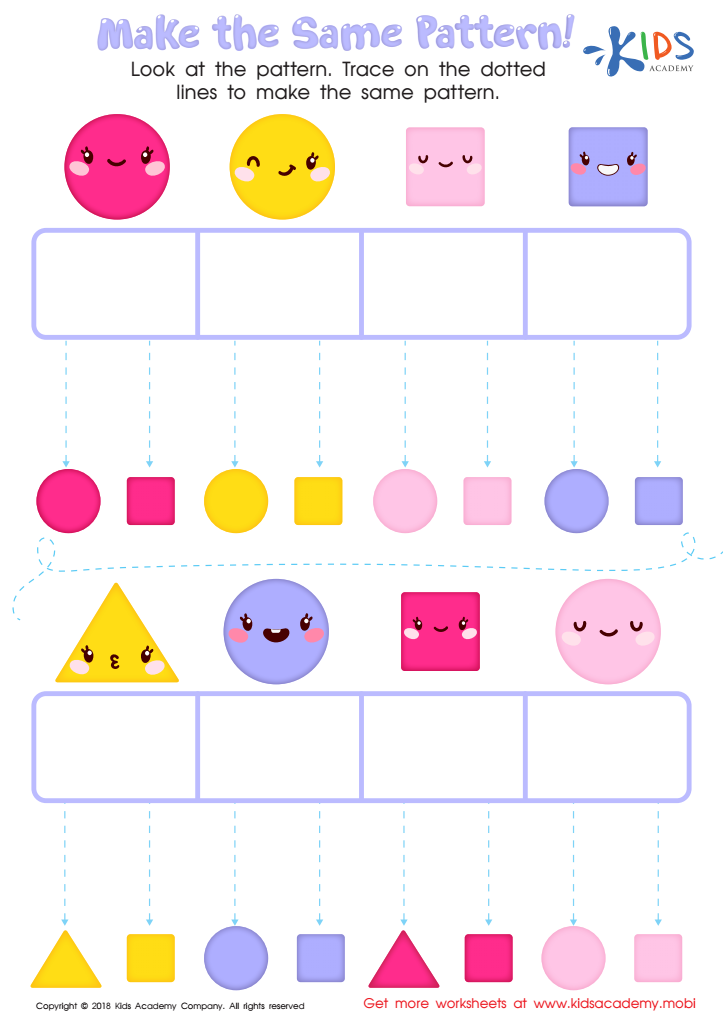
Make the Same Pattern Worksheet
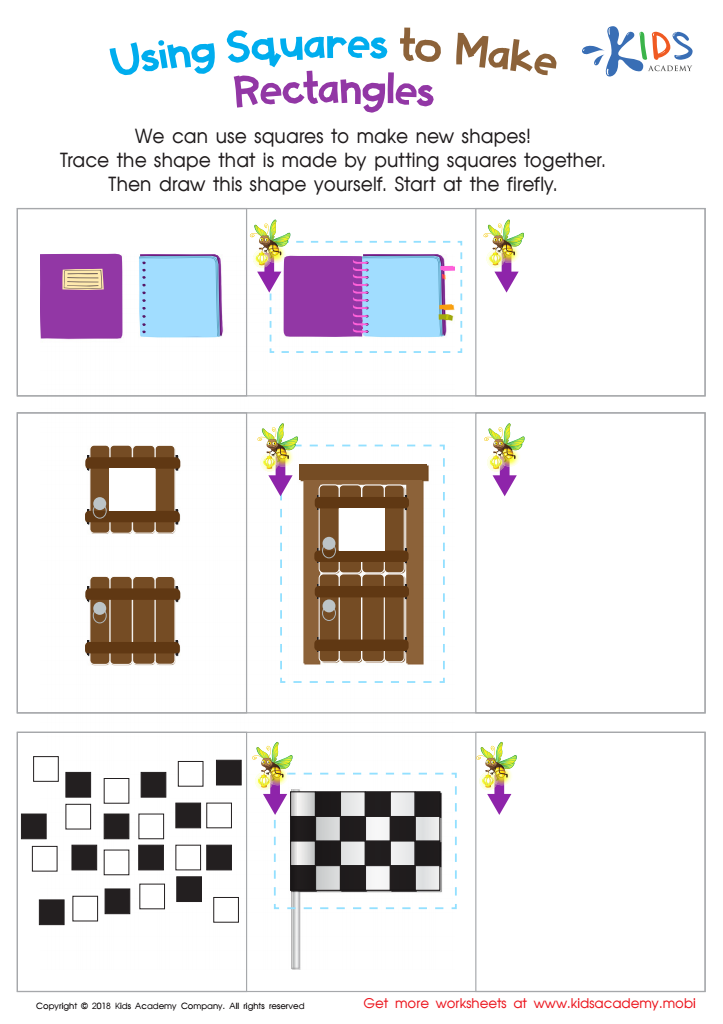
Using Squares to Make Rectangles Worksheet








Critical Thinking Normal Geometry for Ages 4-8 is crucial as it lays the foundation for essential skills in young learners. During these formative years, children are naturally curious and keen to explore their surroundings. Introducing them to geometry not only familiarizes them with shapes and spatial understanding but also cultivates critical thinking skills.
Engaging children in geometry encourages them to identify patterns, solve problems, and make connections between concepts. For instance, recognizing different shapes in their environment or understanding the relationship between objects enhances their analytical abilities. These skills are not only important for math but also transfer to other subjects, developing well-rounded learners who can tackle complex challenges.
Moreover, as today’s world increasingly demands innovative problem-solving and adaptability, fostering critical thinking through geometry prepares children for future academic pursuits and everyday life. This early exposure helps to demystify mathematics, making it less intimidating and more approachable for young minds.
By focusing on critical thinking and geometric concepts, parents and teachers can inspire confidence in children, instilling a love for learning and equipping them with the tools necessary for academic success and lifelong critical engagement with the world around them.








