Understanding fractions Normal Geometry Worksheets for Ages 4-8
6 filtered results
-
From - To
Welcome to our “Understanding Fractions” Normal Geometry Worksheets for ages 4-8! Designed to make learning fun and engaging, these worksheets help young learners grasp the fundamental concepts of fractions through visually stimulating activities. With colorful illustrations and age-appropriate exercises, children will explore partitioning shapes, identifying fractions, and connecting these concepts to everyday life. Our interactive approach fosters critical thinking and helps build a strong mathematical foundation. Perfect for classroom use or at-home learning, these worksheets encourage students to develop confidence in their math skills while enjoying the learning process. Dive into the world of fractions today and watch your child's skills flourish!
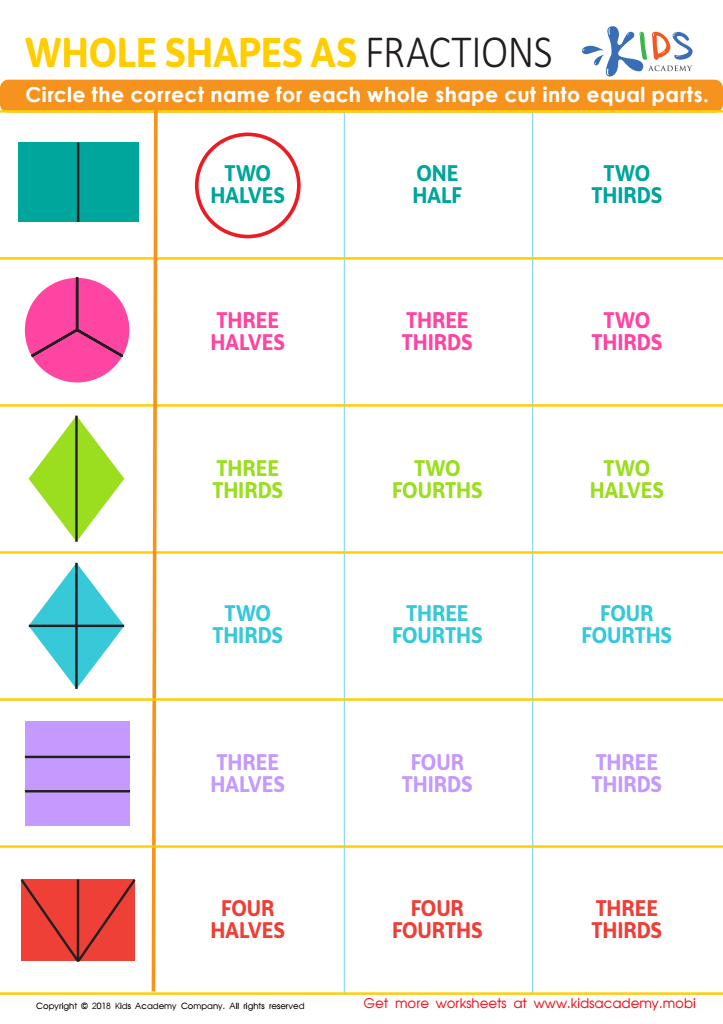
Whole Shapes as Fractions Worksheet
 Assign to My Students











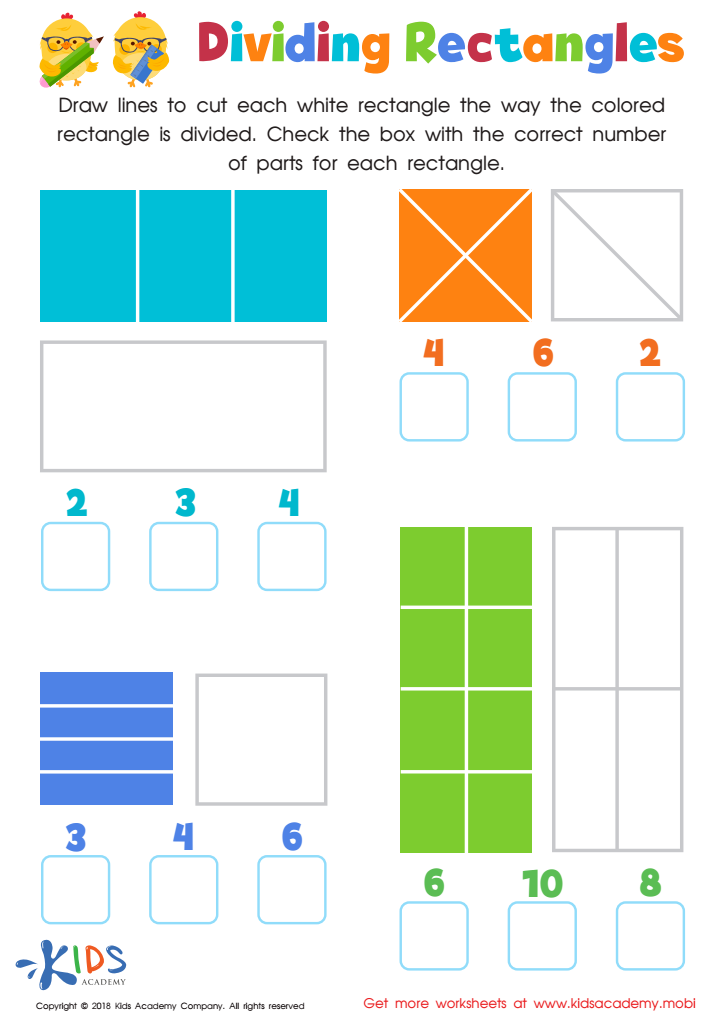
Dividing Rectangles Worksheet
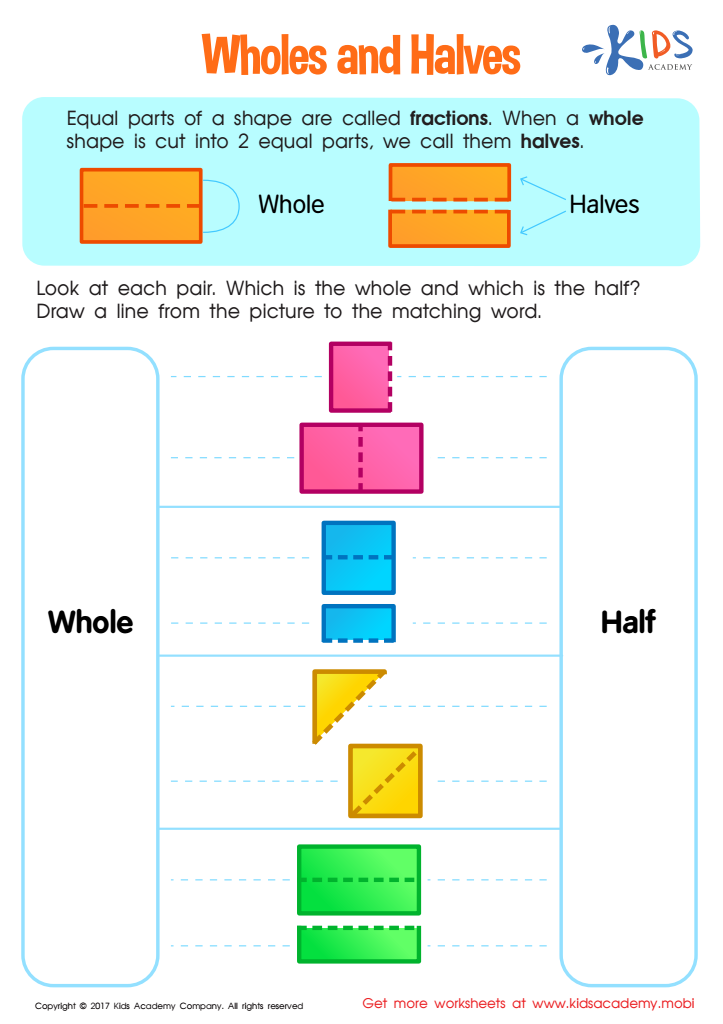
Wholes and Halves Worksheet
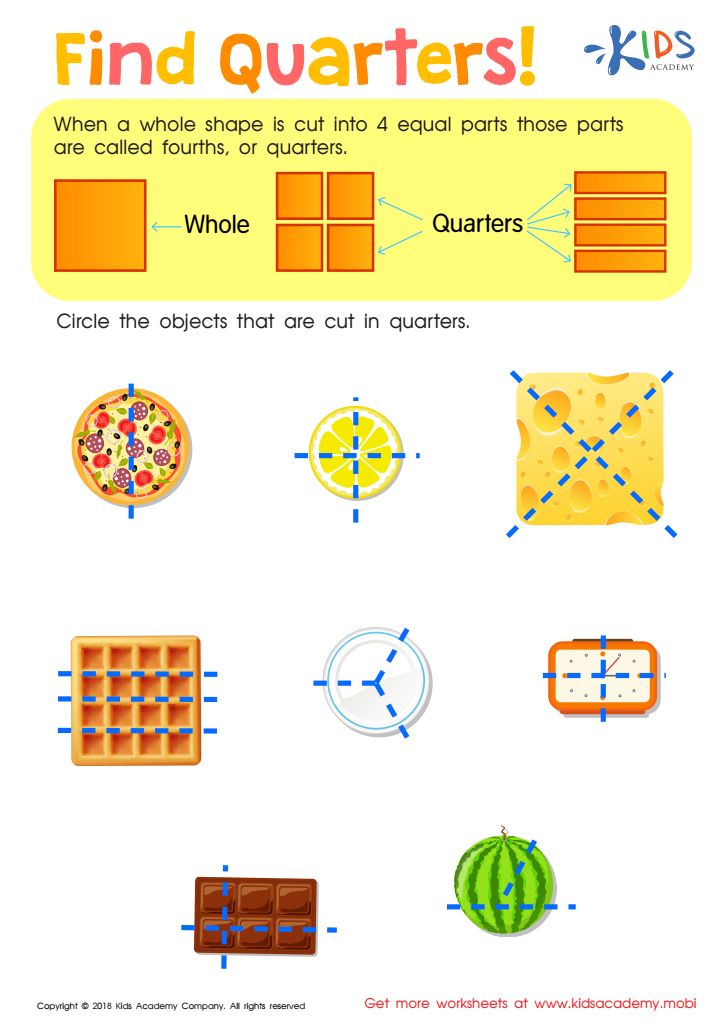
Find Quarters Worksheet
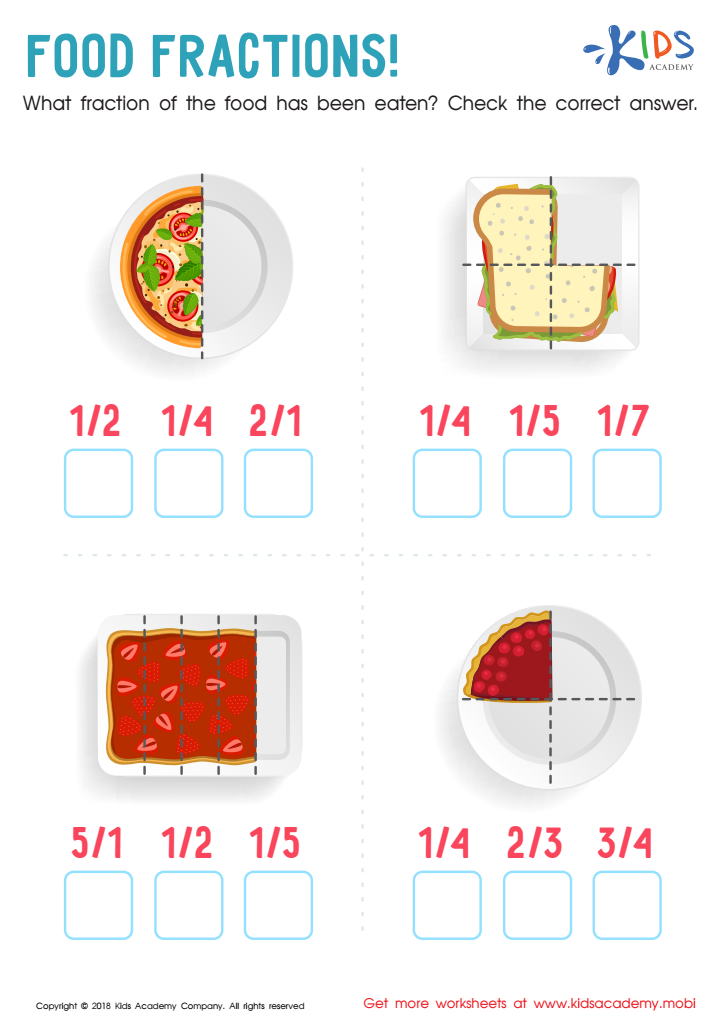
Food Fractions Worksheet
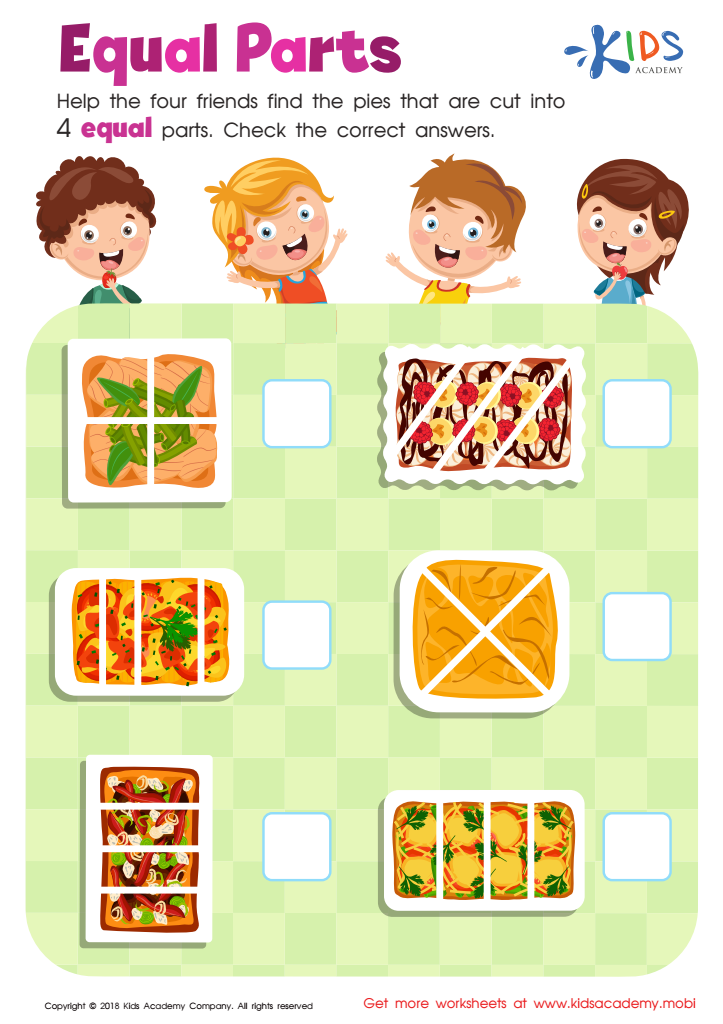
Equal Parts: Food Worksheet








Understanding fractions and basic geometry is vital for children aged 4-8 as it lays the foundation for their mathematical knowledge and cognitive development. At this age, kids are naturally curious and eager to explore concepts that can shape their critical thinking skills. Fractions introduce them to the idea of parts of a whole, enhancing their ability to recognize relationships and make comparisons. This foundational understanding helps children when they encounter more complex math concepts in later grades.
Moreover, normal geometry teaches spatial reasoning, which is essential for everyday activities like navigating spaces or even arts and crafts. Through engaging with shapes and patterns, kids develop observational skills and learn about symmetry, which are key components in both math and science.
Parents and teachers play a crucial role in providing hands-on experiences with these concepts, fostering a love for learning and making mathematics enjoyable. This foundational knowledge not only supports overall academic success but also boosts confidence in young learners. Ultimately, a strong grasp of fractions and geometry sets the stage for a successful journey in mathematics and related fields, making it imperative for educators and caregivers to prioritize these concepts in early education.








