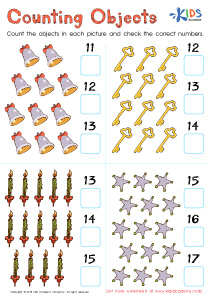
Fine Motor Skills Normal Tracing Numbers Worksheets for Ages 4-8
6 filtered results
-
From - To
Enhance your child's fine motor skills with our Normal Tracing Numbers Worksheets, designed for ages 4-8. These engaging worksheets provide a fun and effective way for young learners to practice number tracing while improving their hand-eye coordination and grip strength. With colorful designs and age-appropriate numbers, children will enjoy sharpening their writing abilities in a playful manner. Perfect for at-home learning or classroom activities, these worksheets support early math comprehension as well. Download our free resources and watch your little ones gain confidence in their writing as they trace and learn with creativity! Ideal for parents and teachers alike!
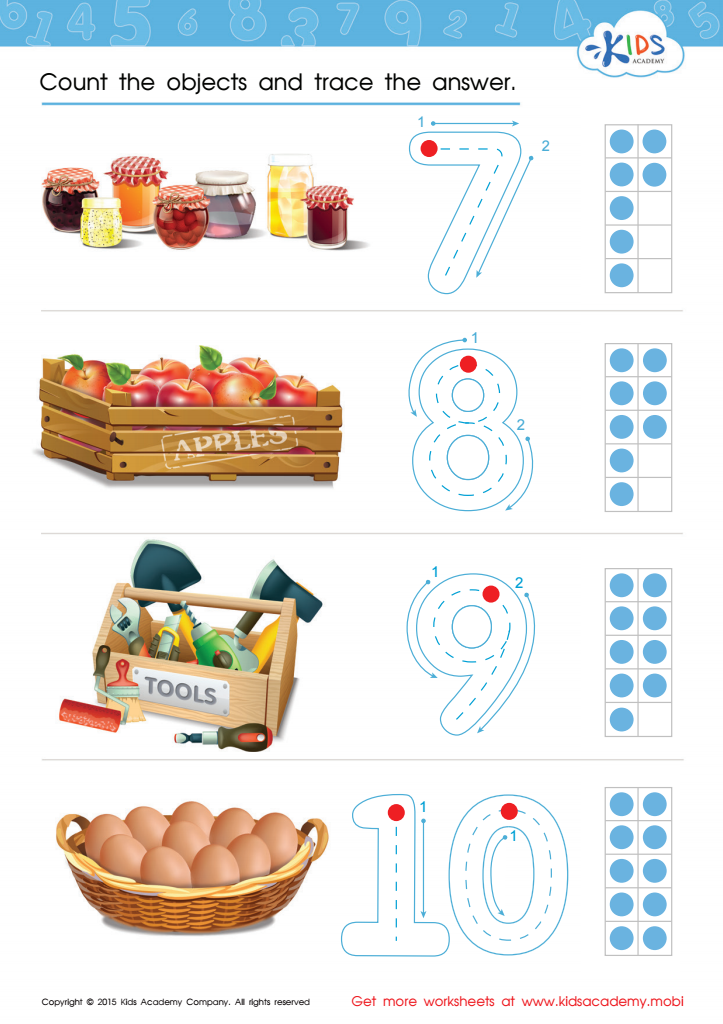
Count and Trace 7 – 10 Worksheet
 Assign to My Students
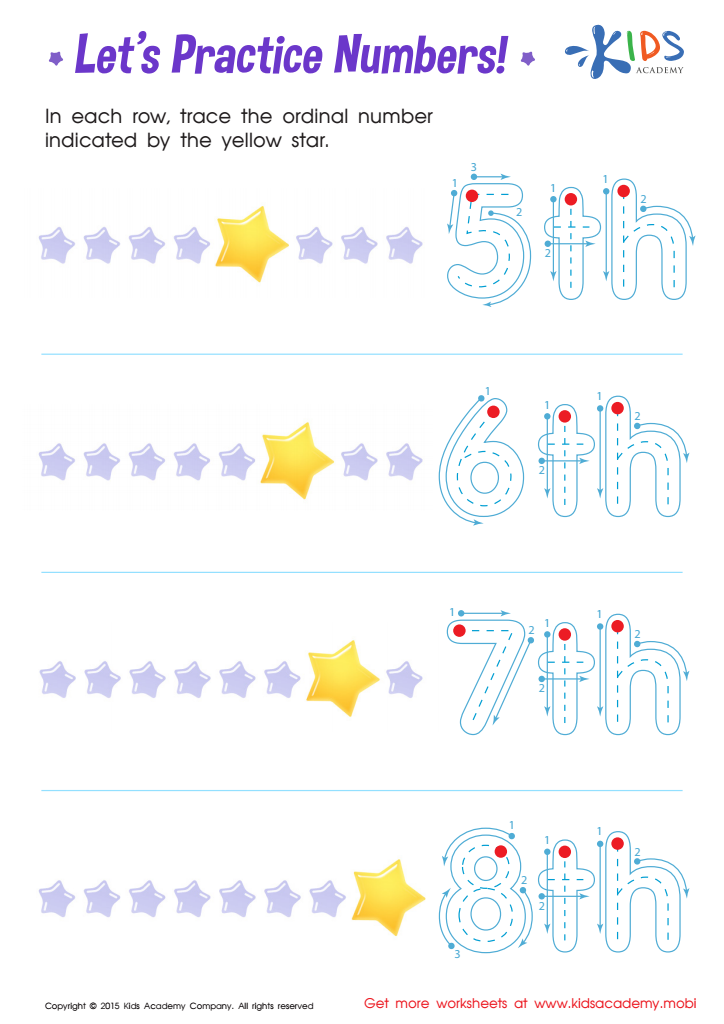
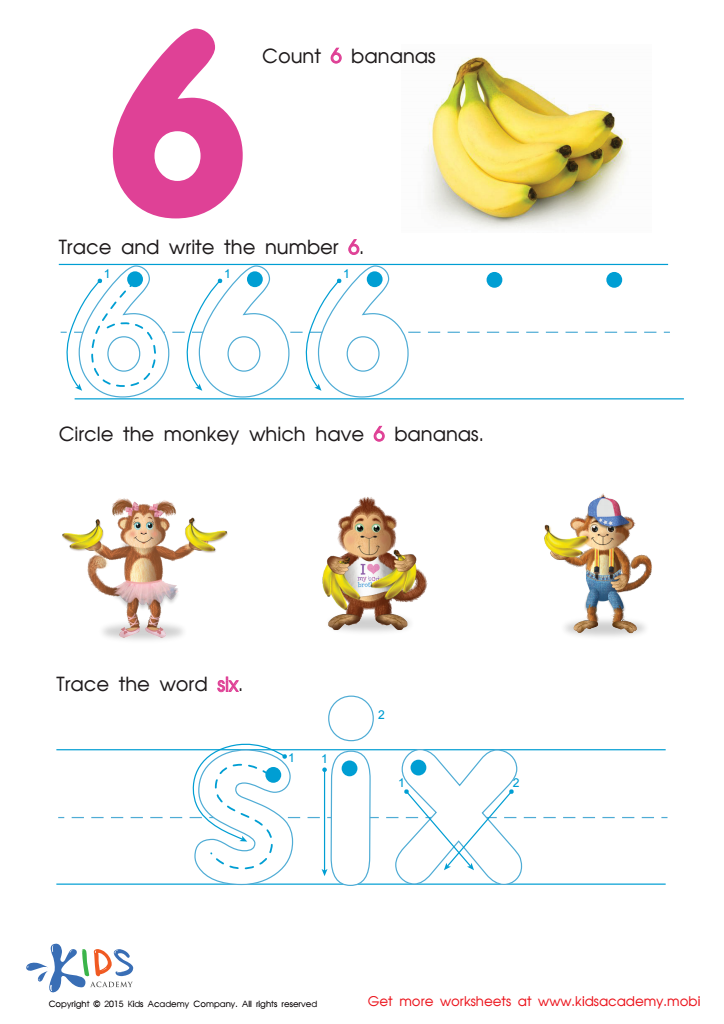
Tracing And Writing Number 6 Worksheet
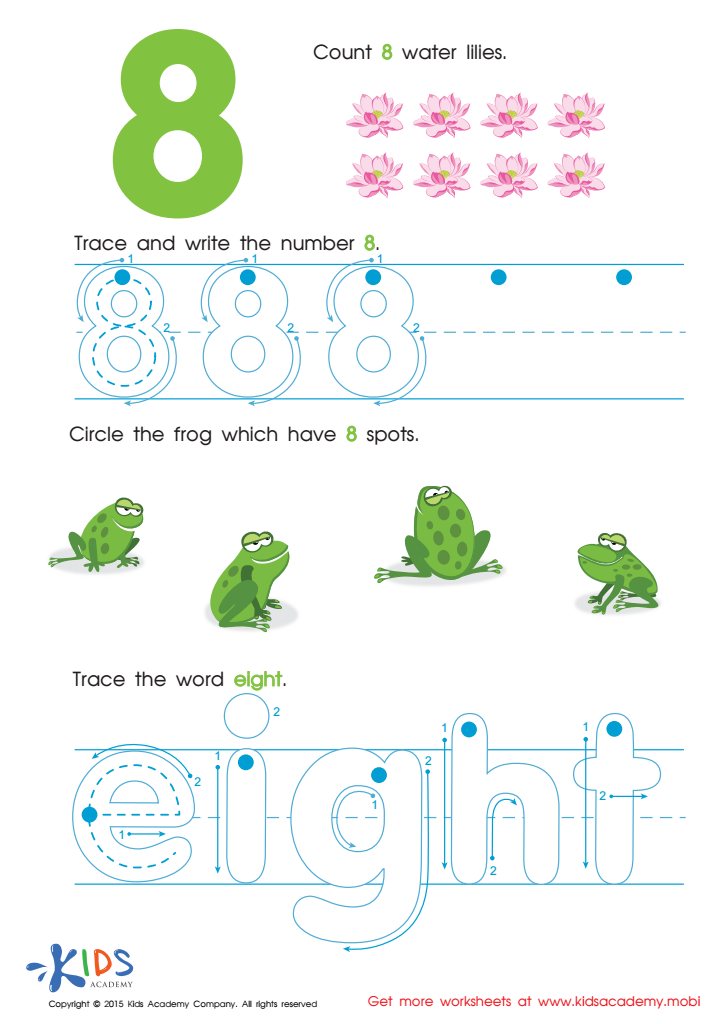
Learn Number 8 Easily Worksheet
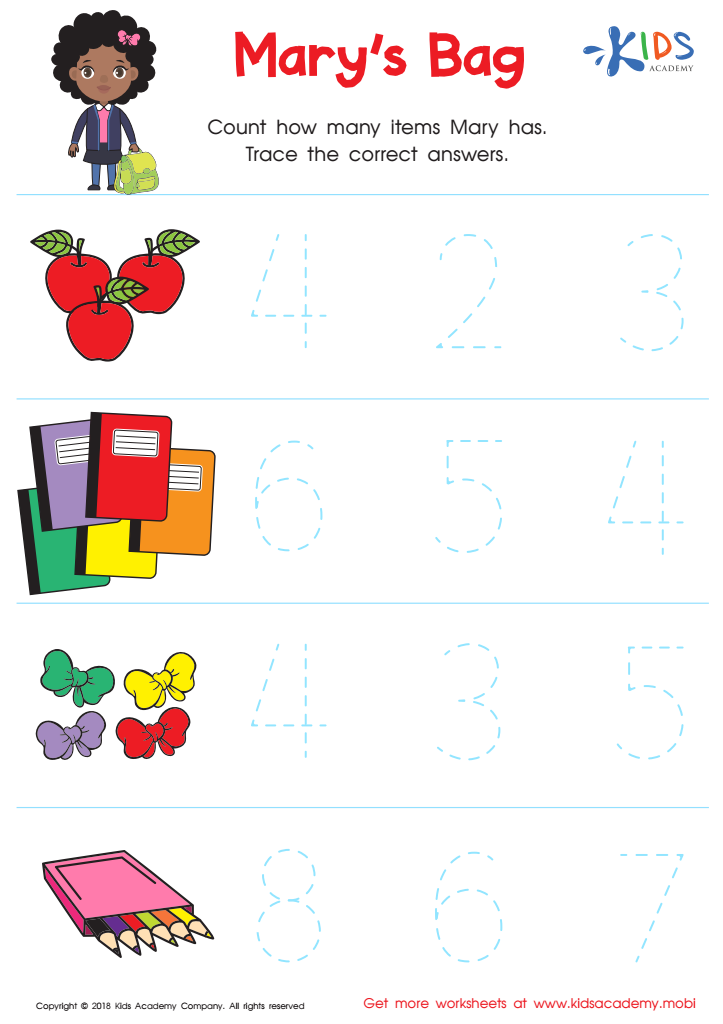
Kindergarten Number Tracing: Mary's Bag Worksheet
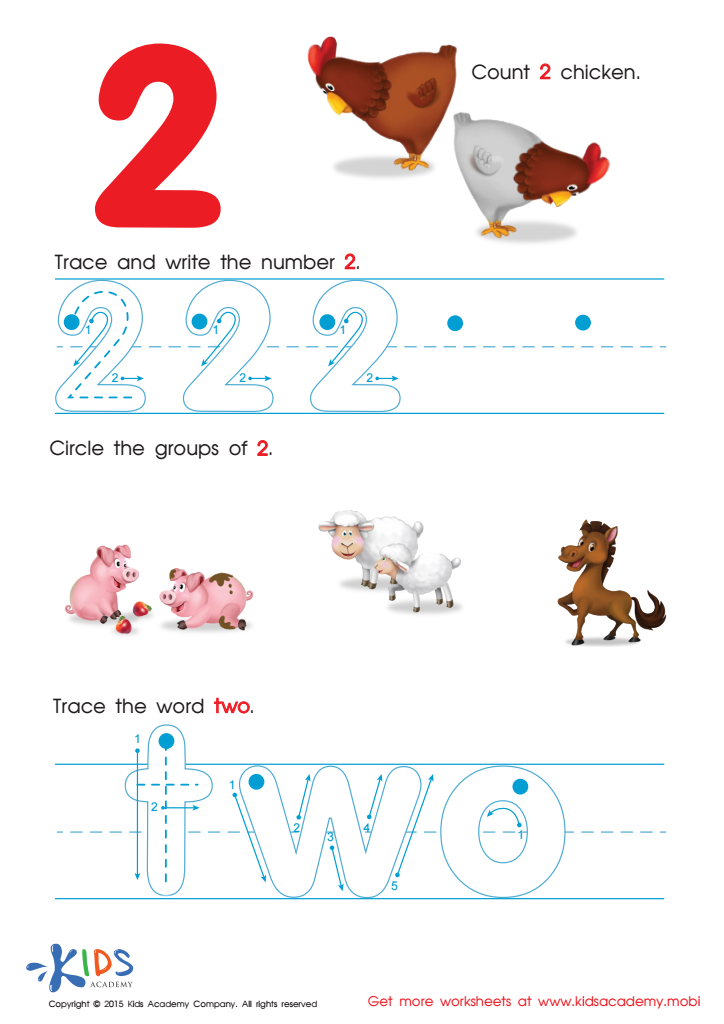
Learn to Write the Number 2 Worksheet








Fine motor skills are crucial for children's overall development, particularly in early education for ages 4-8. Engaging in activities like tracing numbers significantly enhances these skills, which are essential for tasks such as writing, drawing, and everyday self-care.
Firstly, tracing numbers promotes hand-eye coordination, which helps children connect visual input with their motor actions. This coordination is foundational for later learning in mathematics and language arts. Secondly, mastering fine motor skills boosts children's confidence. As they become proficient in tracing, they gain a sense of accomplishment, encouraging them to tackle more complex tasks.
Moreover, practicing normal tracing contributes to the development of muscle strength and dexterity in young children's hands. These skills are vital not only for academic success but also for activities like buttoning shirts, tying shoelaces, and using utensils—everything that affects their independence and self-sufficiency.
Teachers and parents can support this skill development by incorporating fun activities that foster tracing, like worksheets, digital apps, or tactile learning materials. Overall, prioritizing fine motor skills through tracing numbers pays dividends, leading to improved readiness for school, enhanced learning capabilities, and greater independence in children's everyday lives.