Categorizing objects Normal Worksheets for Ages 5-8
4 filtered results
-
From - To
Our "Categorizing Objects" worksheets for ages 5-8 are designed to enhance critical thinking and organizational skills in young learners through engaging activities. By sorting objects based on different criteria, children practice identifying patterns, enhancing their cognitive development. Interactive exercises foster a deeper understanding of similarities and differences among various items, making learning fun and effective. These expertly crafted worksheets align with educational standards, ensuring children build foundational skills for future success. Perfect for classroom use or at-home practice, our worksheets provide a stimulating learning experience that promotes problem-solving abilities while keeping your child engaged and entertained.
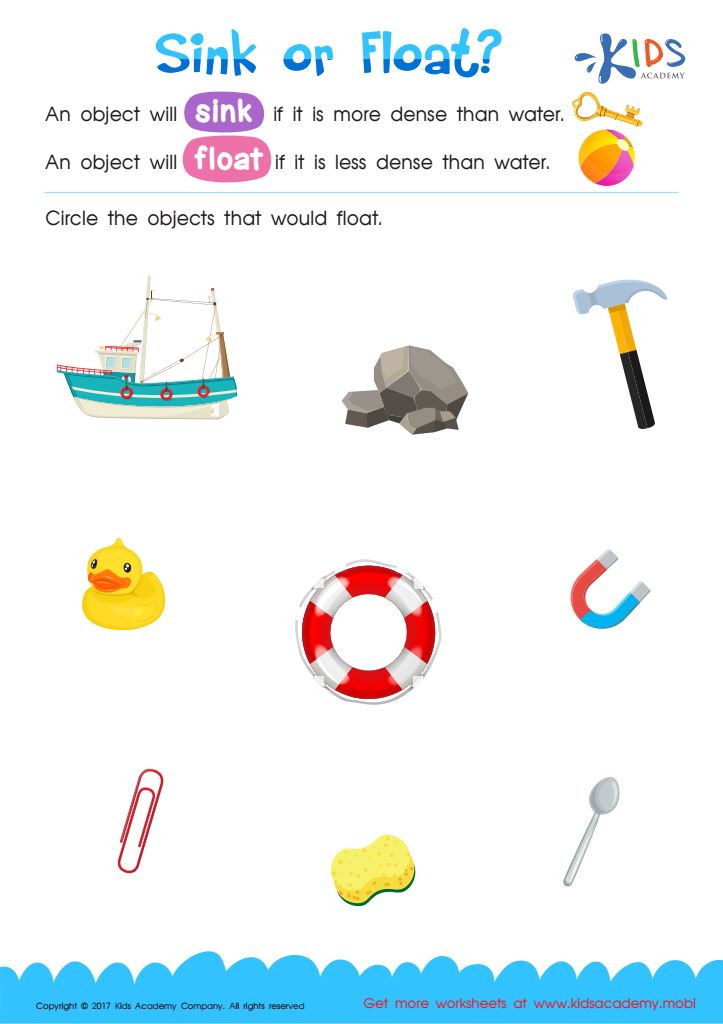
Sink or Float Printable
 Assign to My Students
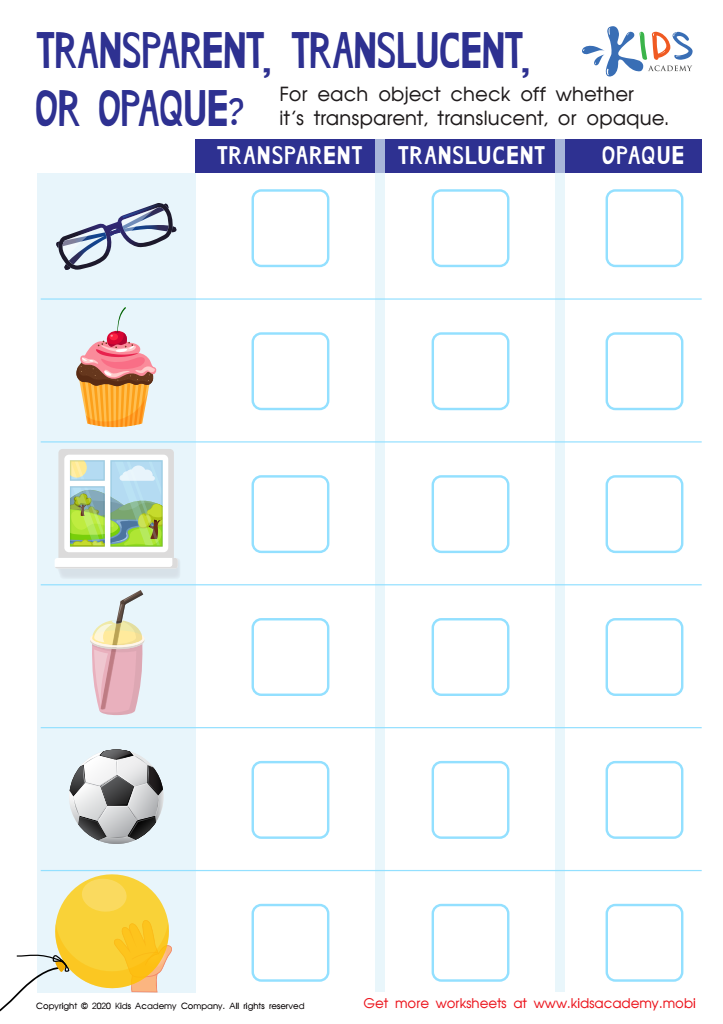
Transparent, Translucent, or Opaque Worksheet
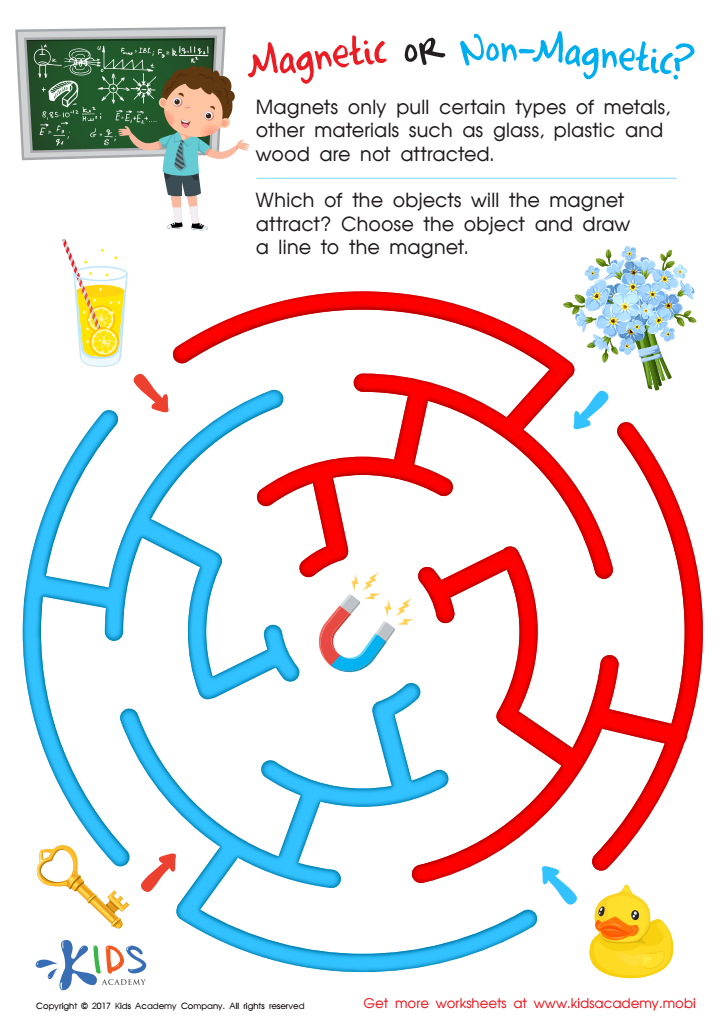
Magnetic or Non–Magnetic Worksheet
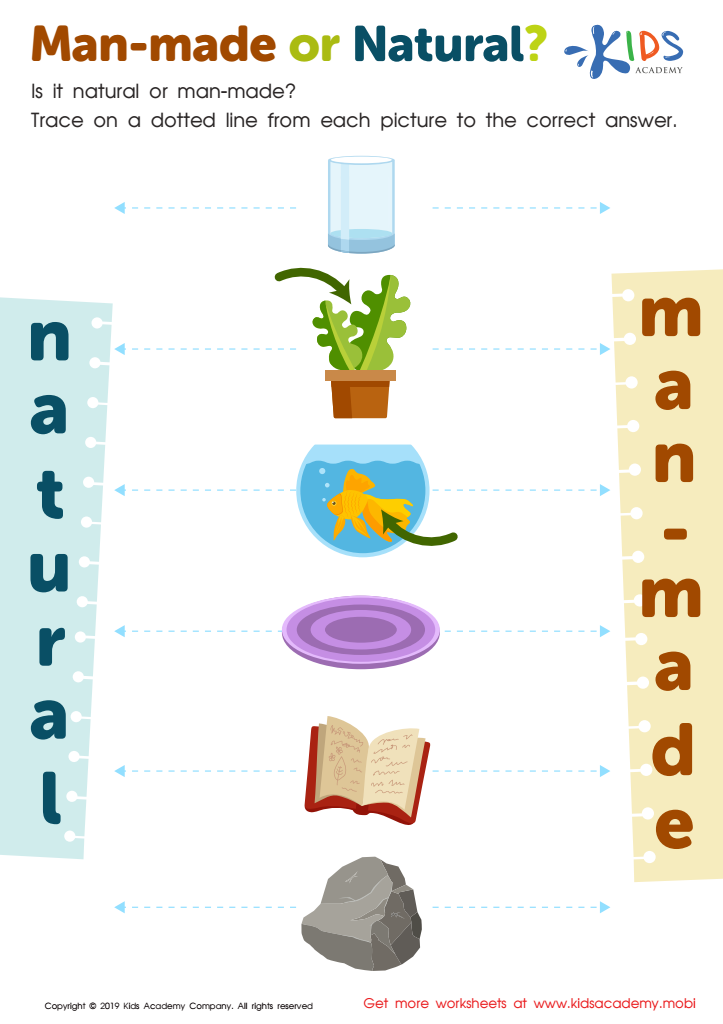
Man-Made or Natural? Worksheet







Categorizing objects is a fundamental skill crucial for the cognitive development of children aged 5-8. At this age, kids are transitioning from concrete to more abstract thinking. Engaging in categorization helps them understand relationships and characteristics among objects, which is foundational for further learning in subjects such as math, science, and reading.
For instance, when children group objects by color, shape, or size, they develop observational skills and critical thinking. These activities encourage them to compare and contrast, recognize patterns, and make connections—all important aspects of problem-solving and critical reasoning.
In terms of language development, categorization aids vocabulary expansion. Describing why certain objects belong together and others do not helps children articulate their thoughts clearly and fosters language precision.
Furthermore, categorizing objects enhances memory and retrieval skills. Organizing information into categories makes it easier for children to remember and access this information when needed. This skill is vital for academic success across various subjects.
For parents and teachers, fostering categorization skills is also an opportunity to meet educational standards and grow a child’s self-confidence. When children successfully sort and categorize, they often feel accomplished, leading to increased motivation and a positive attitude towards learning. Hence, it’s essential to care about and cultivate these skills during their formative years.








