Developing observation skills Normal Worksheets for Ages 5-8
4 filtered results
-
From - To
Enhance your child's observational skills with our engaging Normal Worksheets designed for ages 5-8. These worksheets are crafted to cultivate critical thinking, attention to detail, and creativity. Featuring a variety of fun activities, children will identify patterns, solve puzzles, and engage in games that sharpen their ability to notice and interpret the world around them. Perfect for use at home or in the classroom, our resources promote independent learning while fostering essential skills for lifelong success. Download the worksheets today and watch as your child develops their observation prowess in an enjoyable and interactive way!
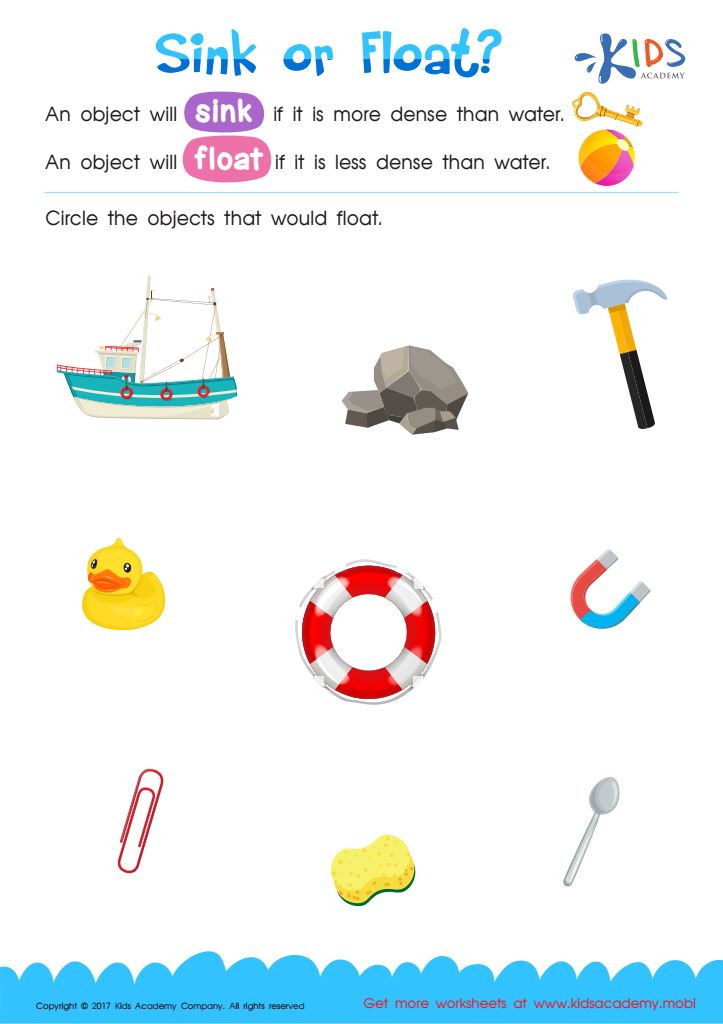
Sink or Float Printable
 Assign to My Students
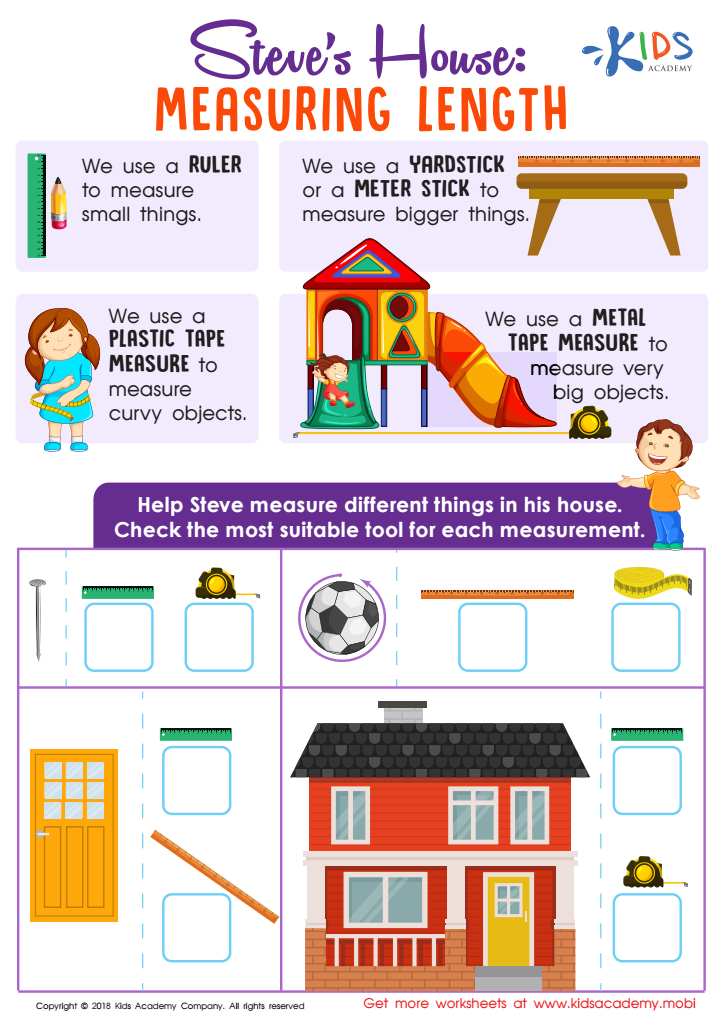
Steve's House: Measuring Length Worksheet
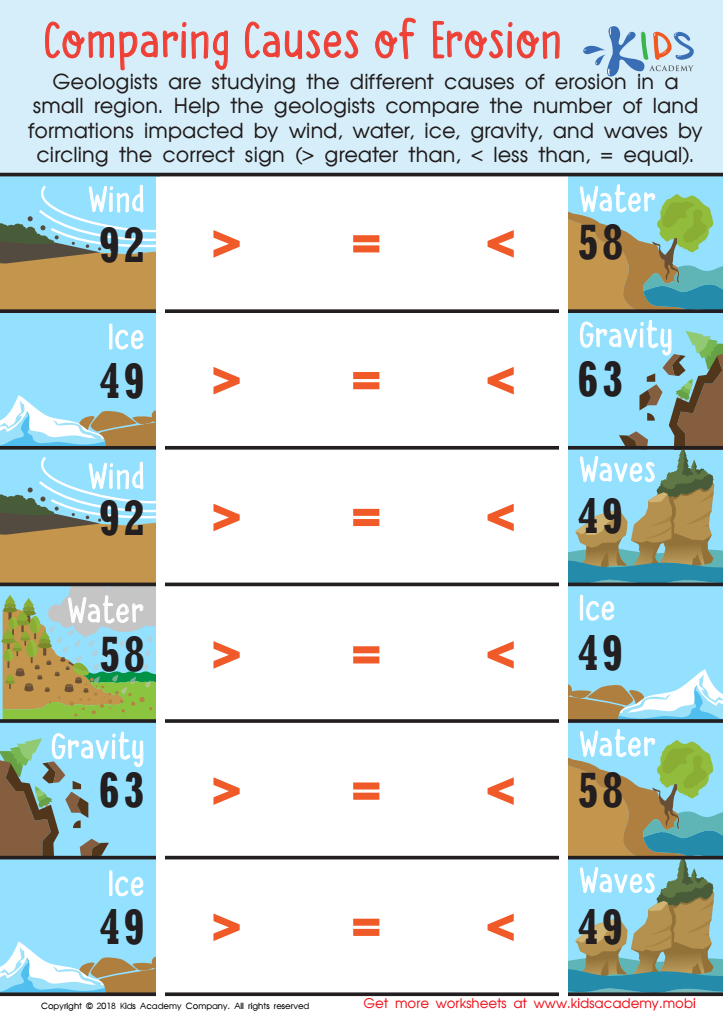
Comparing Causes of Erosion Worksheet
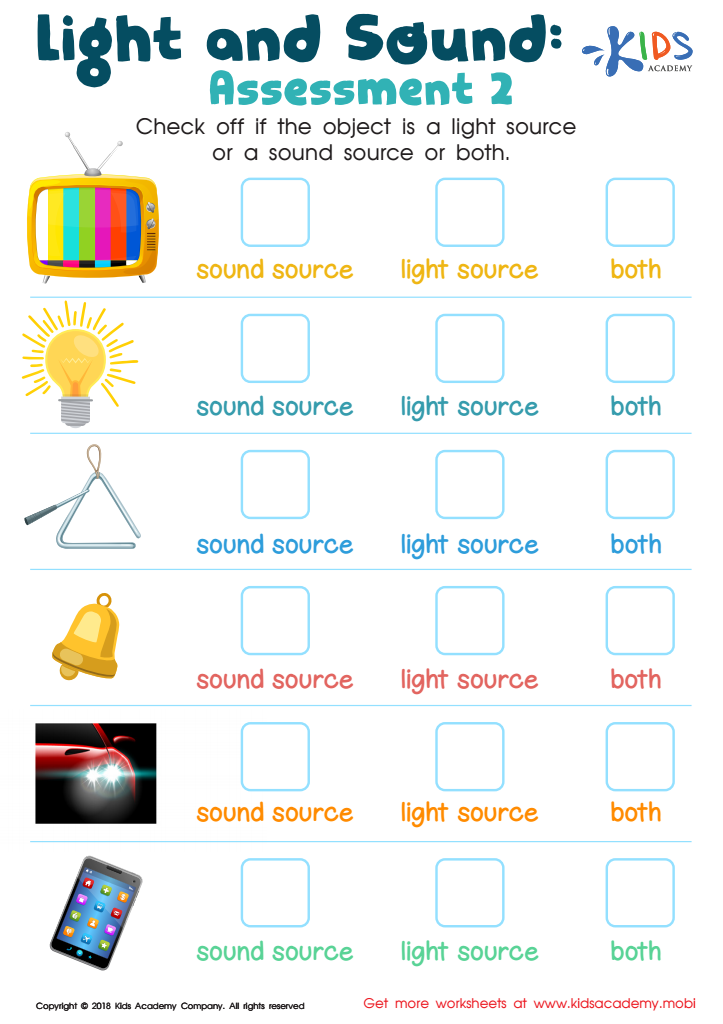
Light and Sound: Assessment 2 Worksheet







Developing observation skills in children aged 5-8 is crucial for several reasons, benefiting both parents and teachers alike. Firstly, strong observation skills foster critical thinking; children learn to not just see, but analyze their environment, enhancing their understanding of the world. Through careful observation, they can categorize objects, identify patterns, and make connections, laying the groundwork for scientific reasoning.
Moreover, observation encourages curiosity. When children actively observe their surroundings, they become more engaged learners, asking questions and seeking information. This inquisitive nature is vital for lifelong learning and problem-solving.
From a social perspective, observing the behaviors and emotions of others helps children develop empathy and improve their interpersonal skills. They become more attuned to non-verbal cues, enhancing their communication abilities.
Furthermore, promoting observation can enhance focus and attention. In today’s fast-paced world filled with distractions, honing these skills enables children to concentrate better in academic and social situations.
For parents and teachers, fostering these skills creates a foundational base that supports academic success and emotional intelligence, ensuring children are prepared for future challenges both in school and in life. Hence, observation skills should be a priority in early childhood education.








