
Identifying differences Normal Worksheets for Ages 5-8
3 filtered results
Difficulty Level
Grade
Age
-
From - To
Subject
Activity
Standards
Discover our engaging "Identifying Differences" worksheets designed specifically for children ages 5-8. These fun, interactive activities help young learners enhance their observational skills while fostering critical thinking. Each worksheet features captivating images where students are challenged to spot subtle differences, making learning both enjoyable and effective. Ideal for classroom settings or at-home practice, these printable worksheets promote concentration and attention to detail. Our resources are tailored to nurture essential learning skills while catering to various learning styles. Perfect for parents and teachers, explore our diverse collection today and watch as your child’s confidence and abilities grow through play-based learning!
Favorites
With answer key
Interactive
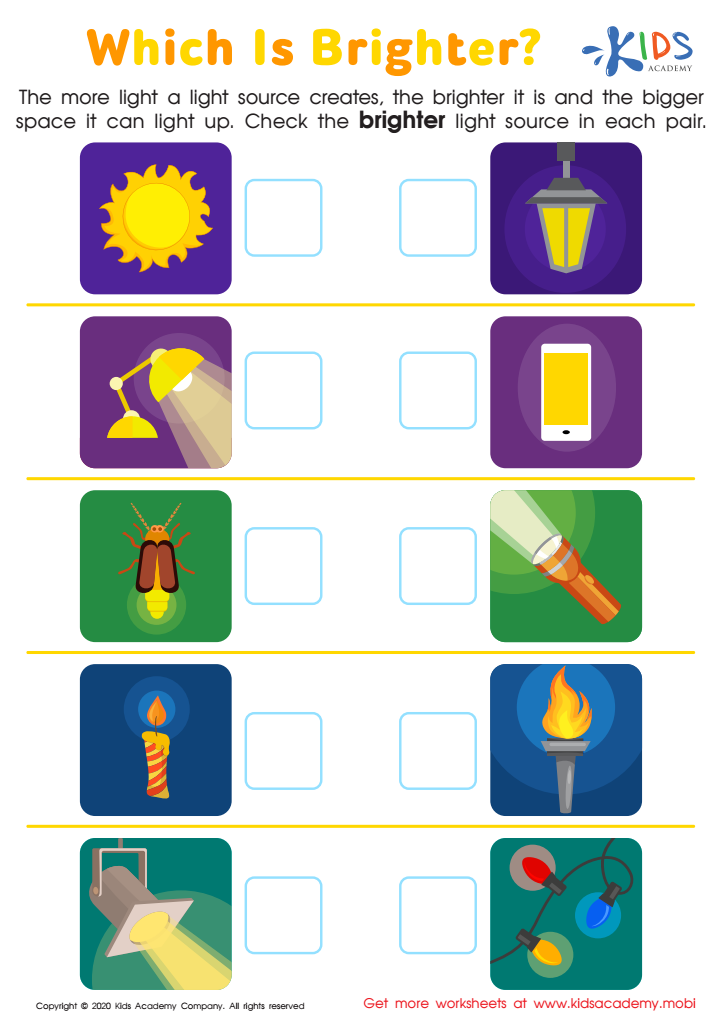
Which Is Brighter? Worksheet
Before the exercise, ask students to recall sources of light. Use this worksheet to explain that the brighter the light source, the more space it can light up. Identify the different light sources in the pictures, then check the brighter light source in each pair. The biggest natural source of light is the sun.
 Assign to My Students
Which Is Brighter? Worksheet
Worksheet
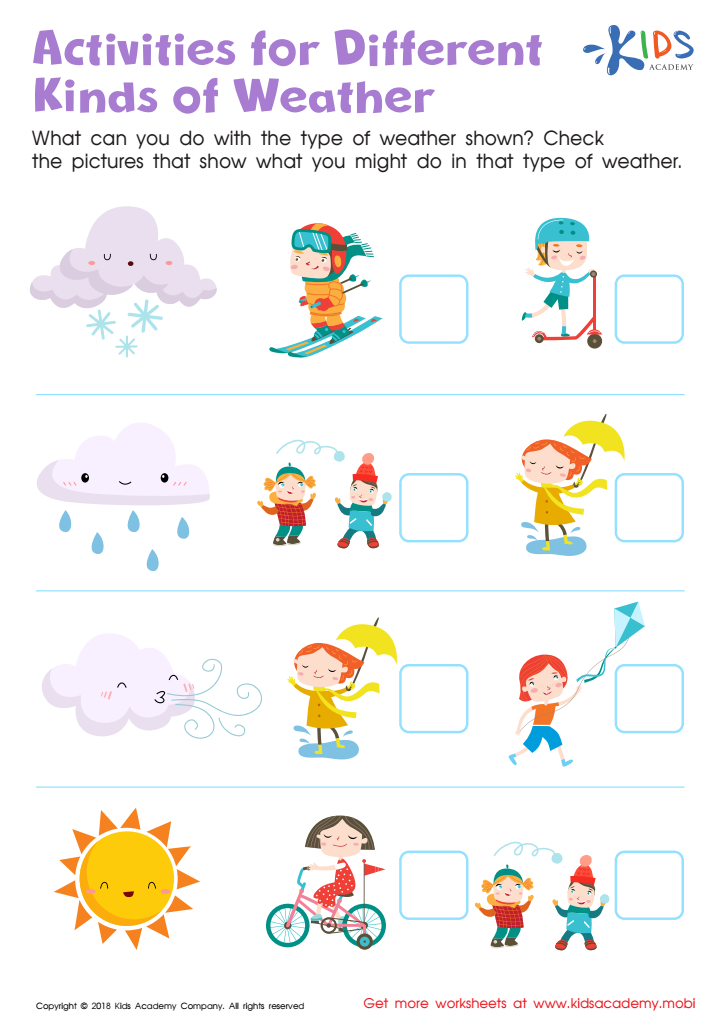
Activities for Different Kinds of Weather Worksheet
Help your child explore the changing seasons with this interactive worksheet. Ask them to name the different seasons and activities associated with each type of weather. Show the pictures and explain what they can do in that kind of weather. Have them check off the activities to help them learn and enjoy the changing seasons.
Activities for Different Kinds of Weather Worksheet
Worksheet
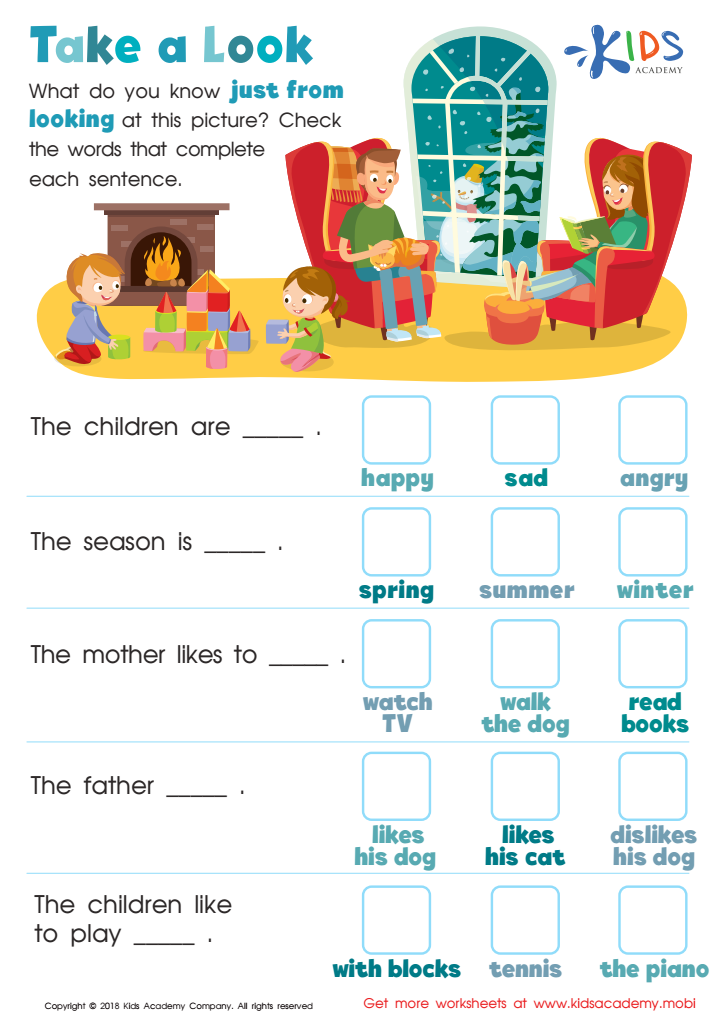
Take a Look - Part 1 Worksheet
Young learners gain understanding when using picture clues when reading. Looking at illustrations can help students learn the meaning of key vocabulary when reading fiction or informational text. Ask your students to look at the worksheet and observe what they can learn from the picture. It's a great comprehension strategy for early readers.
Take a Look - Part 1 Worksheet
Worksheet
Join Kids Academy for Free
Who is primarily going to use this learning content?




.jpg)

Identifying differences in children, particularly for ages 5-8, is crucial for several reasons. During these formative years, children are developing cognitive, social, and emotional skills. Recognizing individual differences, whether in learning styles, abilities, or emotional responses, allows teachers and parents to tailor their approaches. For example, some children may excel in verbal tasks while finding math challenging, or vice versa. Acknowledging these differences helps in creating targeted strategies to support each child's growth, ensuring they do not fall behind or feel discouraged.
Moreover, this awareness fosters an inclusive environment where all children feel valued and understood. Understanding differences can promote empathy among peers and reduce bullying by teaching children to appreciate diversity in abilities and experiences. Additionally, intervention, when needed, can be implemented early, facilitating a child's success and building confidence.
Involving parents in this process is essential; they can provide insights about their child's behavior at home. Collaboration between parents and teachers creates a holistic support system, addressing the unique needs of each child. Ultimately, recognizing and embracing differences prepares children not only for academic success but also equips them with emotional intelligence traits, essential for thriving in a socially diverse world.








