Problem-Solving Skills Normal Addition & Subtraction Worksheets for Ages 5-8 - Page 2
33 filtered results
-
From - To
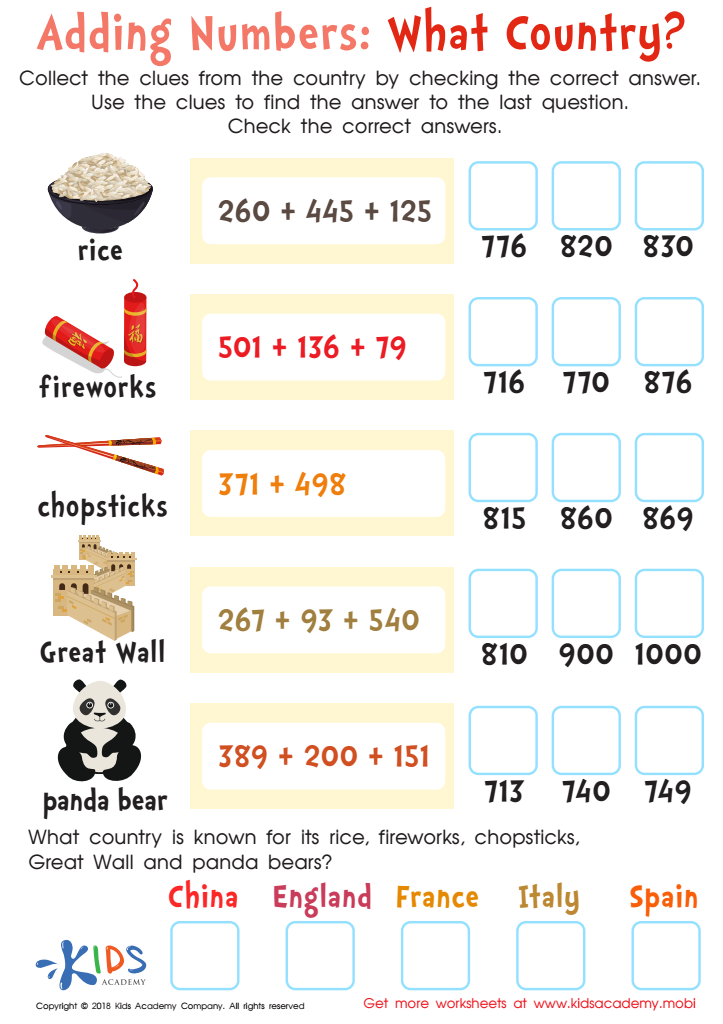
Adding Numbers: What Country Worksheet
 Assign to My Students
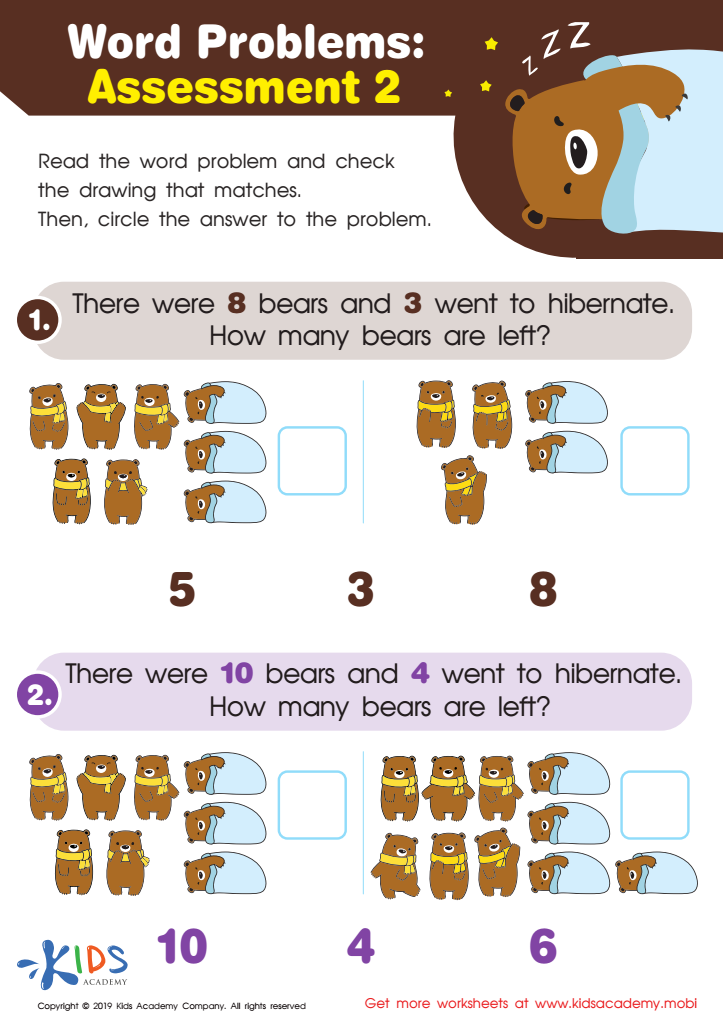
Word Problems: Assessment 2 Worksheet
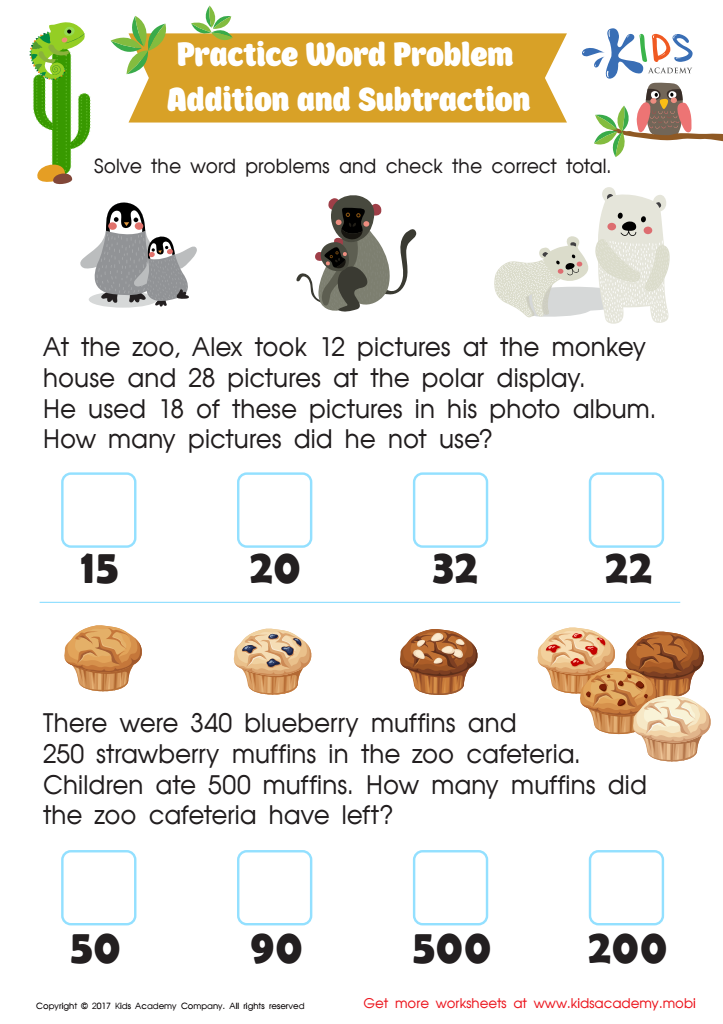
Addition and Subtraction: Word Problems Worksheet
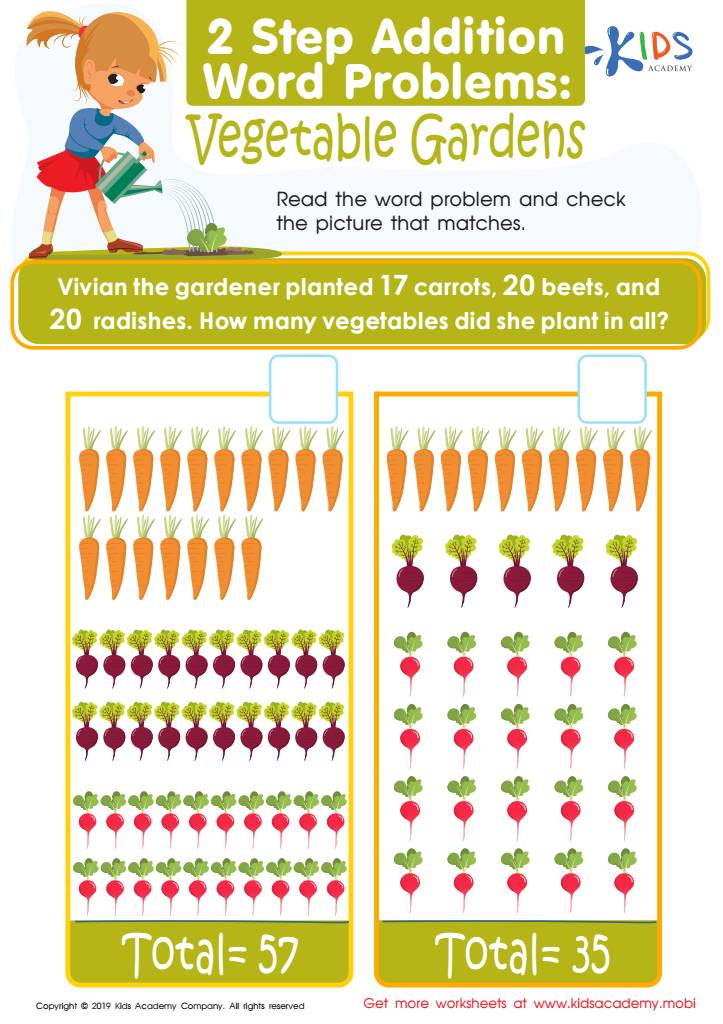
Vegetable Gardens Worksheet
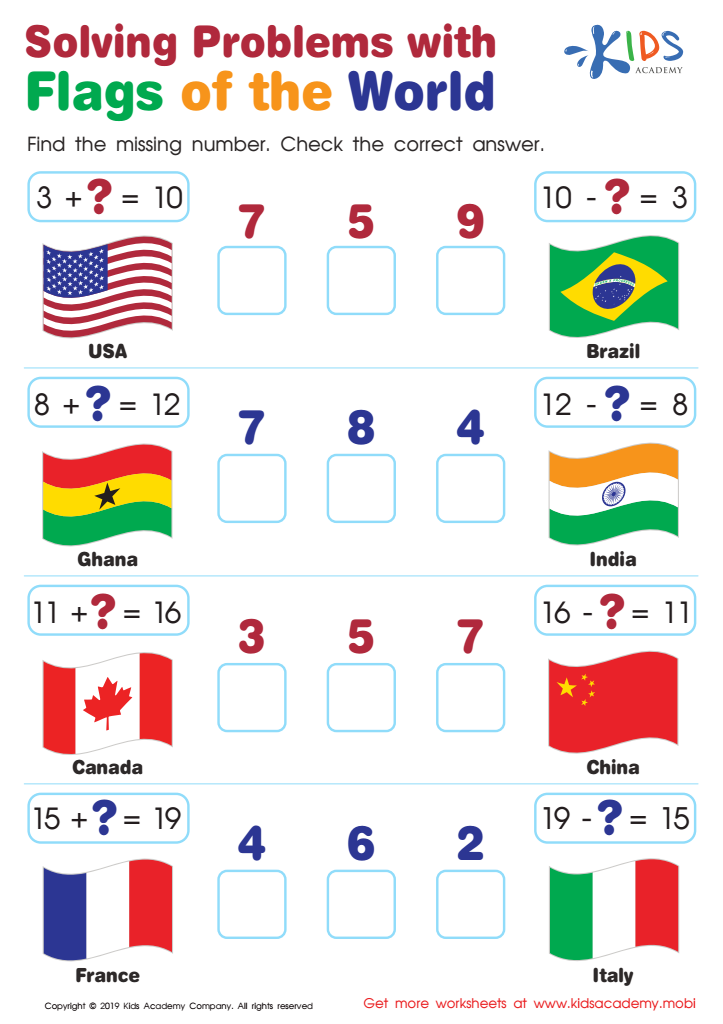
Solving Problems with Flags of the World Worksheet
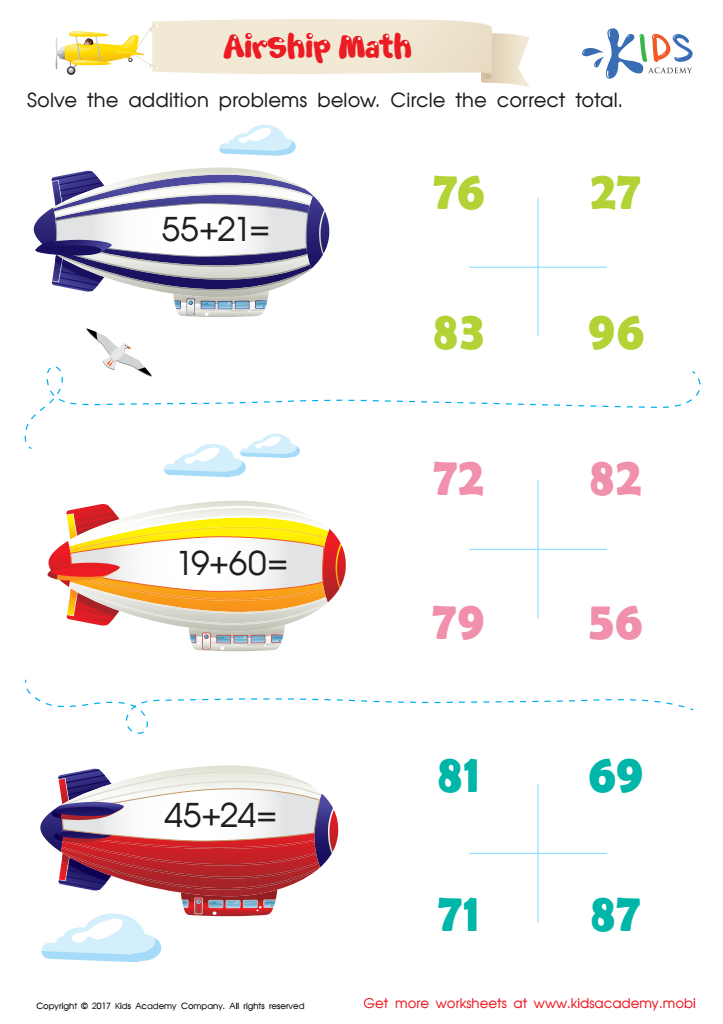
Airship Math Addition Printable
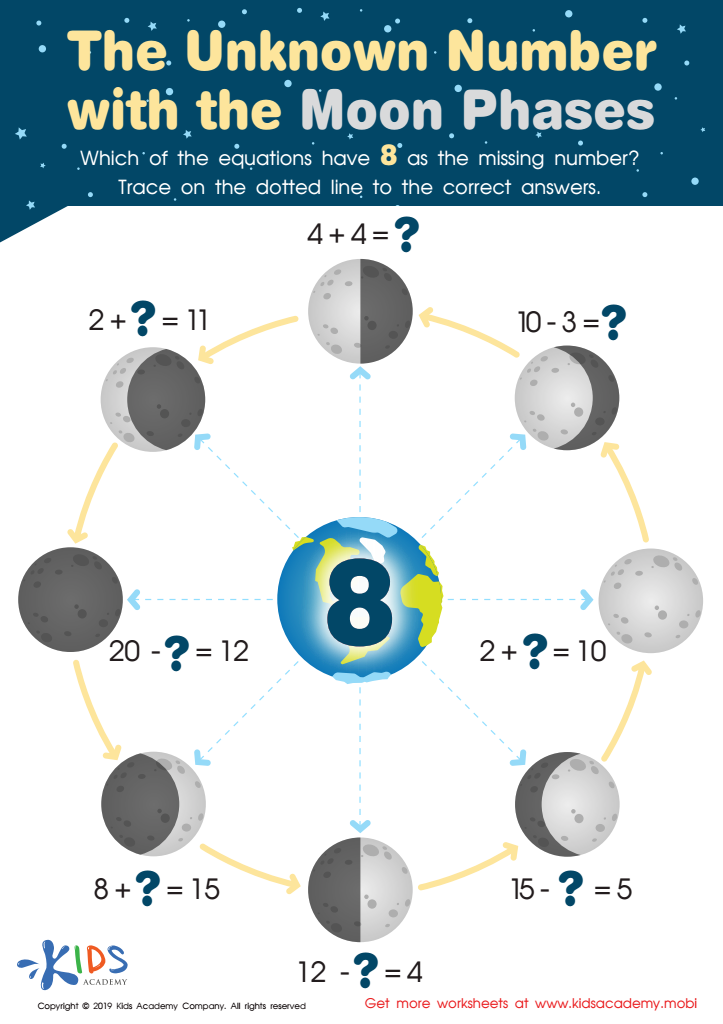
The Unknown Number with the Moon Phases Worksheet
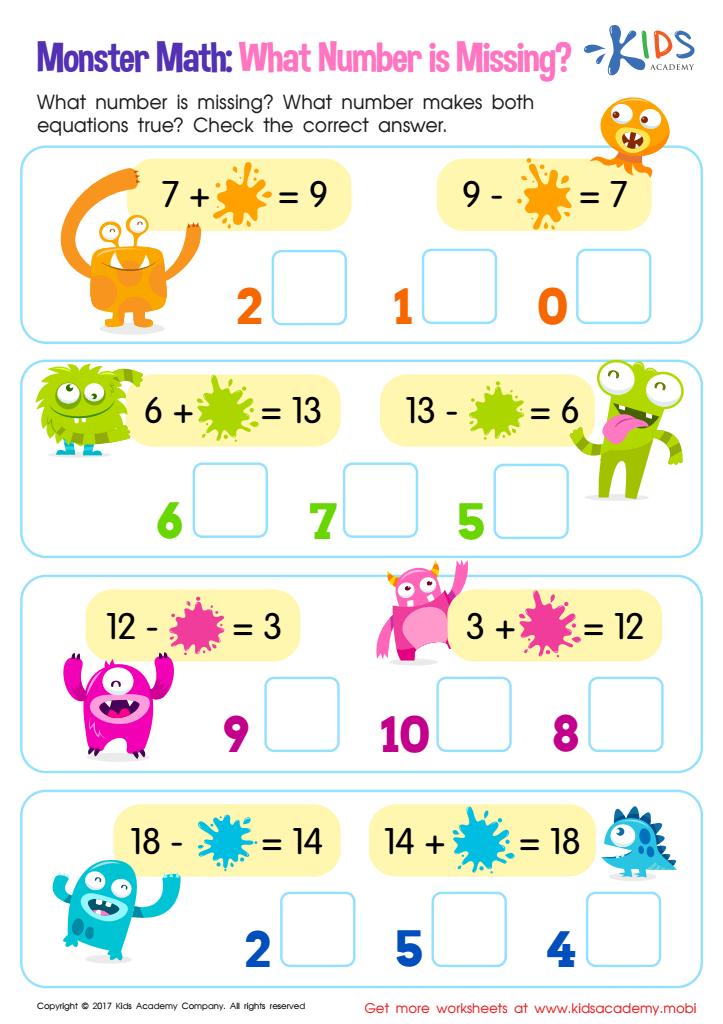
Missing Number: Monster Math Worksheet
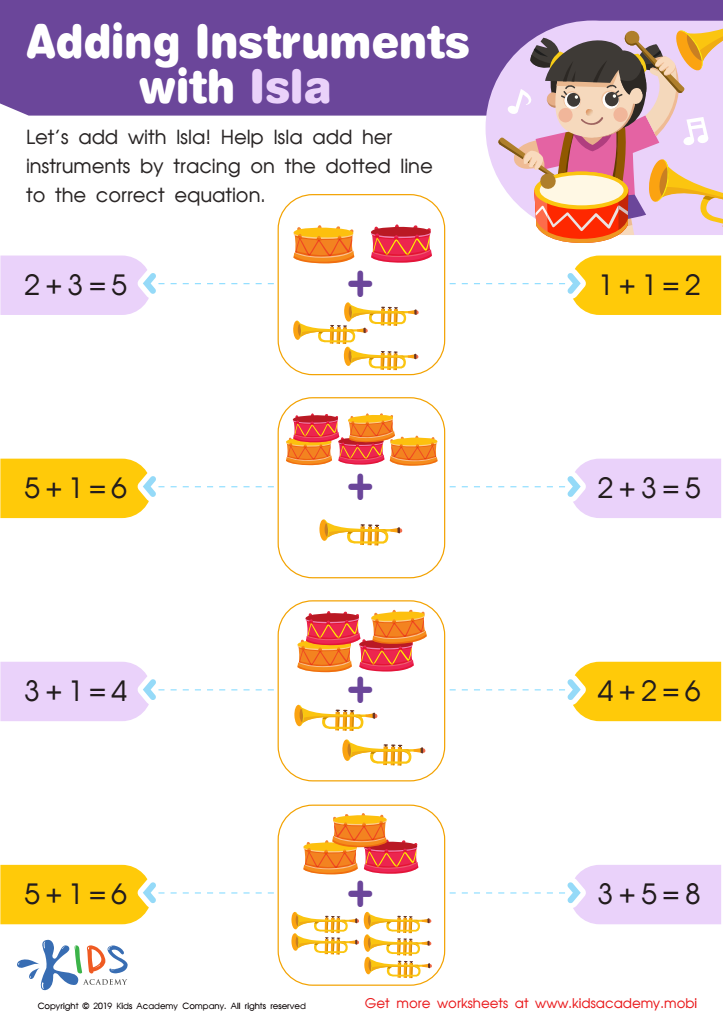
Adding Instruments with Isla Worksheet







Problem-solving skills in normal addition and subtraction are essential for children aged 5-8 as they form the foundation of mathematical competence and critical thinking. During this crucial developmental stage, children are encouraged to explore numbers and relationships, and teachers and parents play a vital role in facilitating this process.
Engaging in problem-solving activities helps children understand mathematical concepts more deeply, promoting mental agility and confidence. When parents and teachers encourage skill practice through hands-on games, relatable scenarios, and visual aids, children develop a love for math and improve their ability to tackle real-life situations.
Additionally, mastering these basic operations aids in the development of analytical thinking and reasoning skills that are foundational for future learning. It encourages perseverance, as children learn to approach challenges with creativity and resilience.
Moreover, children who are proficient in problem-solving are more likely to perform well academically, not just in math but across subjects. Supporting children's early arithmetic skills fosters a sense of achievement, positively influencing their self-esteem. Therefore, active involvement from parents and teachers is essential in nurturing these skills, paving the way for lifelong learners equipped to handle both academic and everyday challenges confidently.








