Normal Comparing Numbers Worksheets for Ages 5-8 - Page 2
32 filtered results
-
From - To
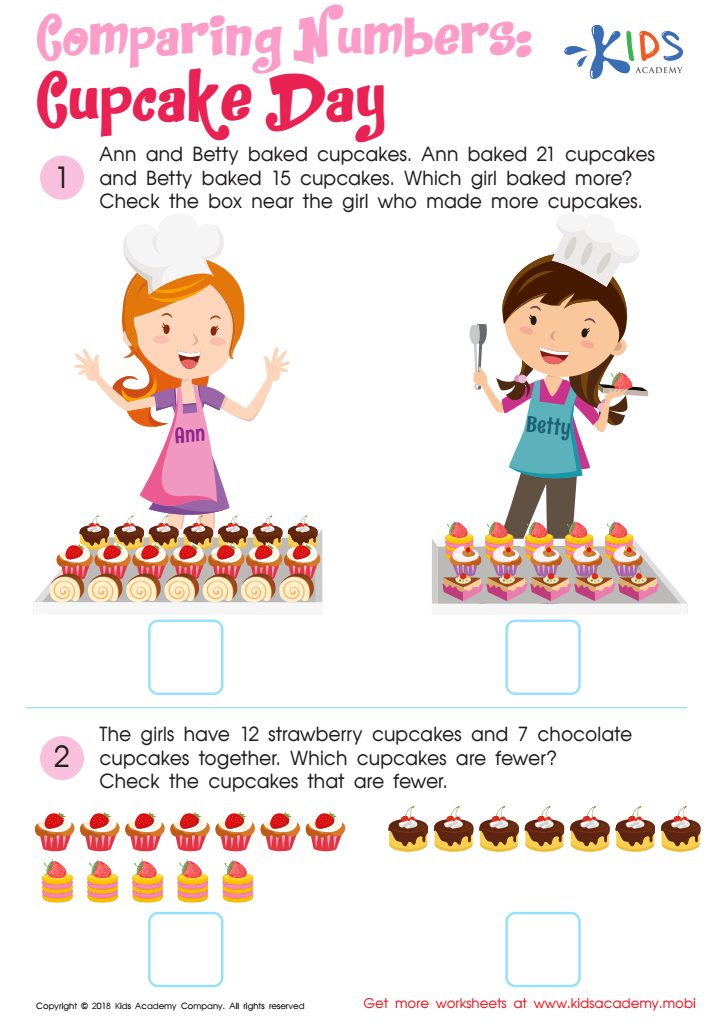
Cupcake Day Worksheet
 Assign to My Students
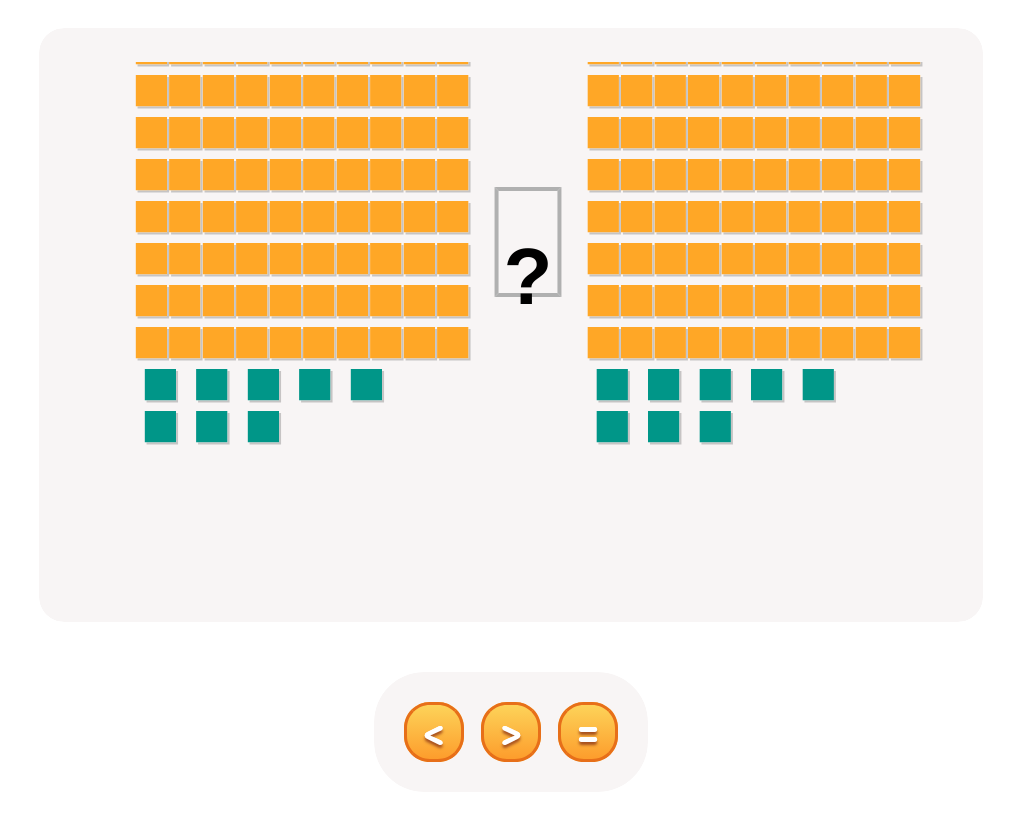

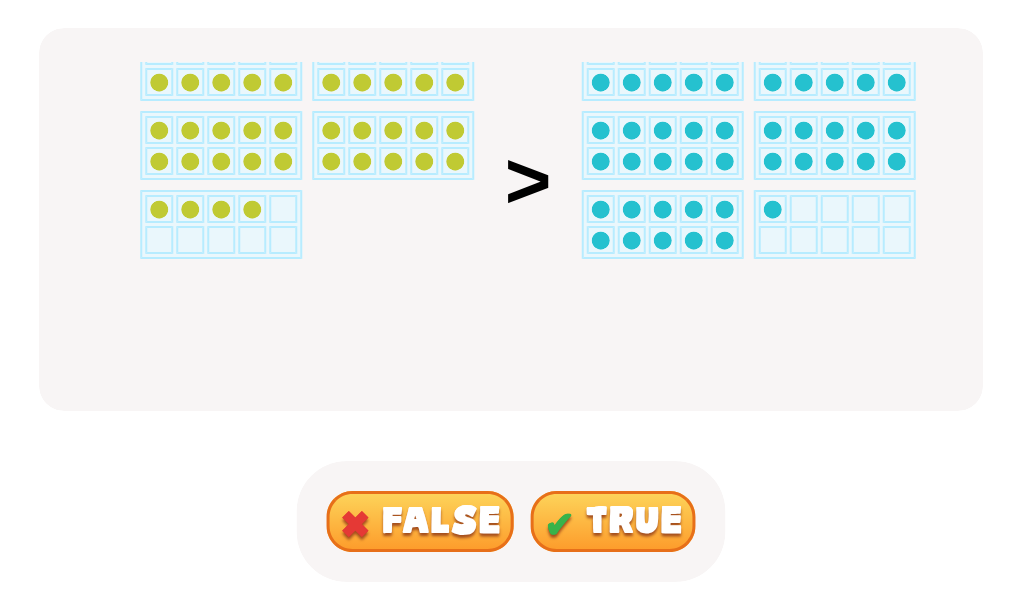
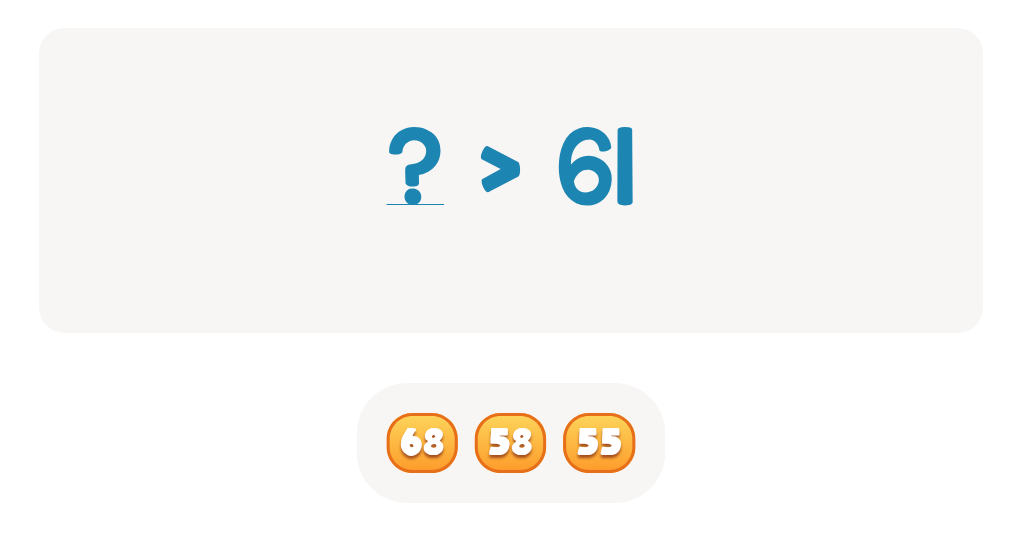
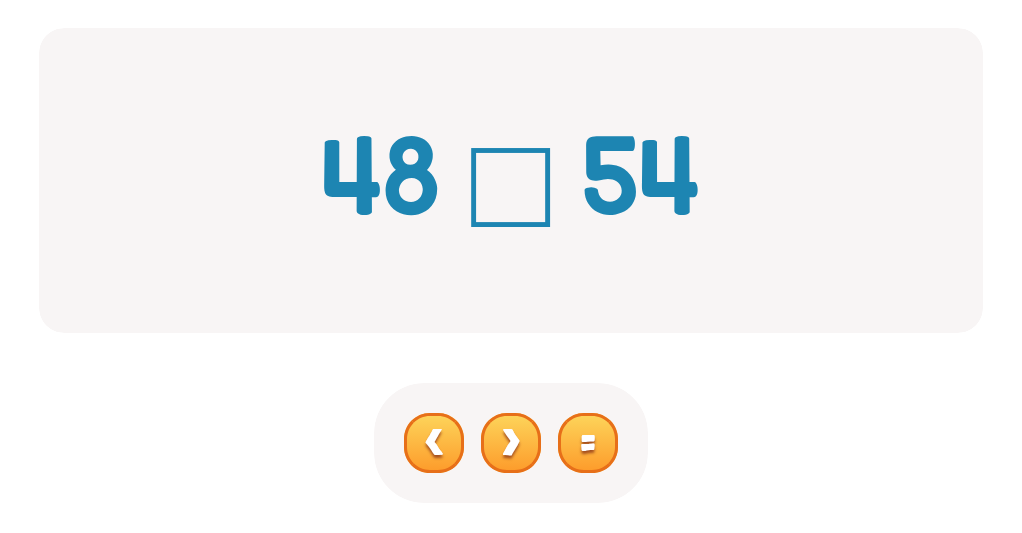
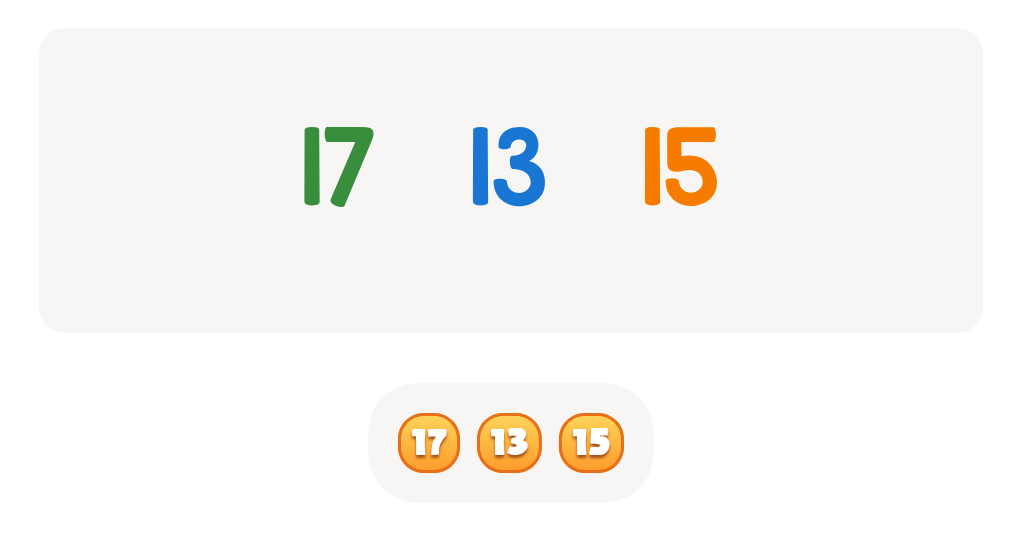
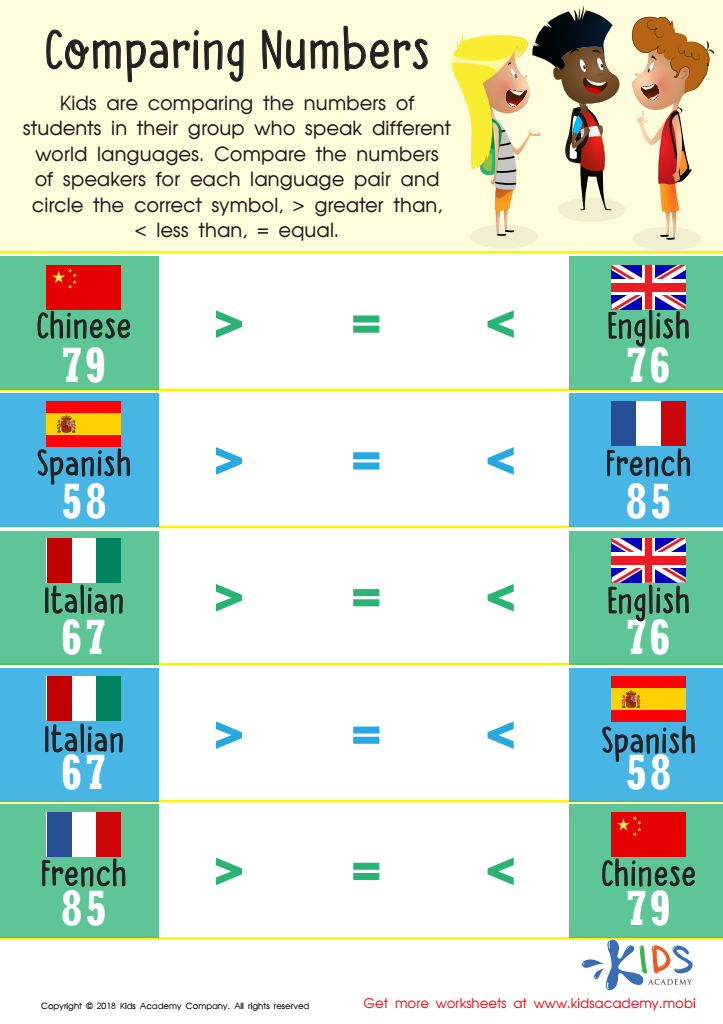
Comparing Numbers Worksheet for 1st Grade
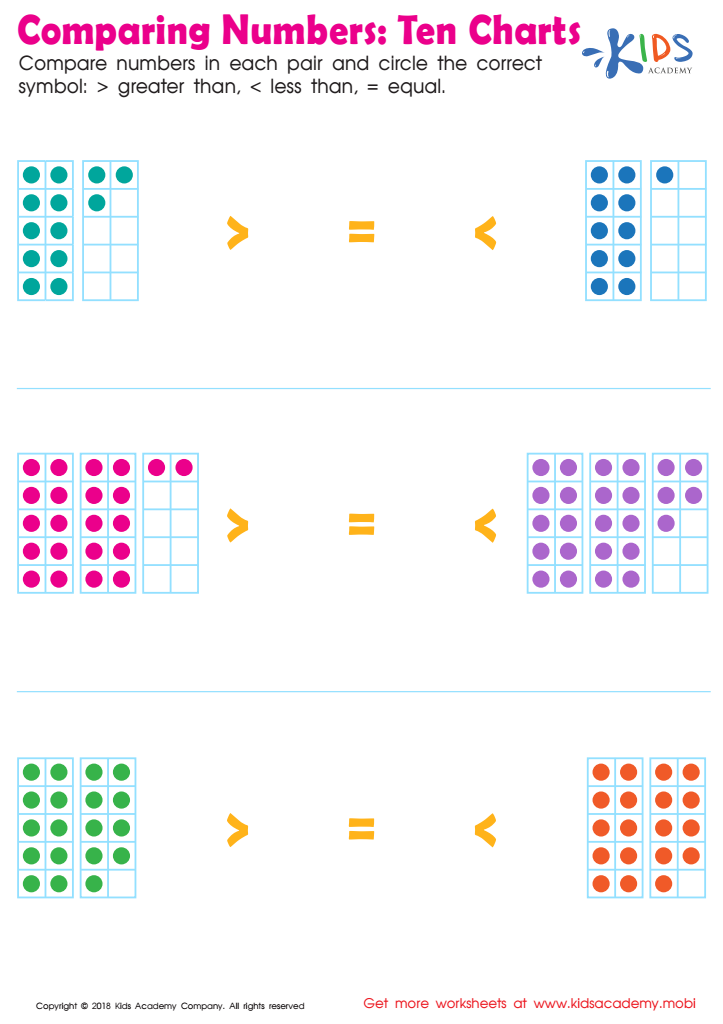
Ten Charts Worksheet
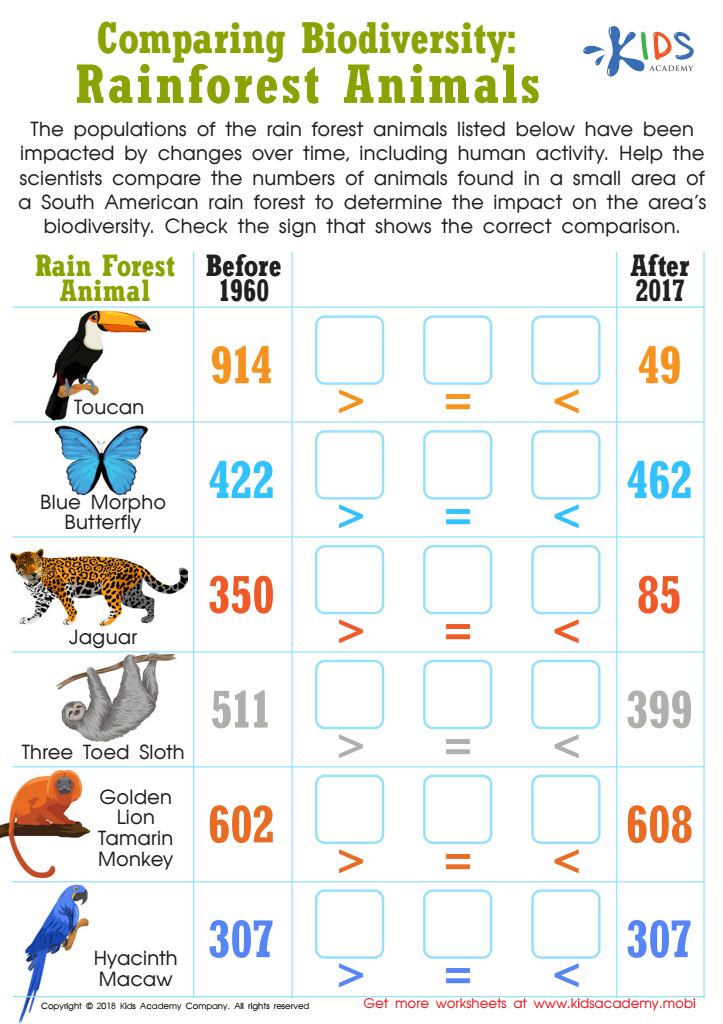
Comparing Biodiversity: Rainforest Animals Worksheet
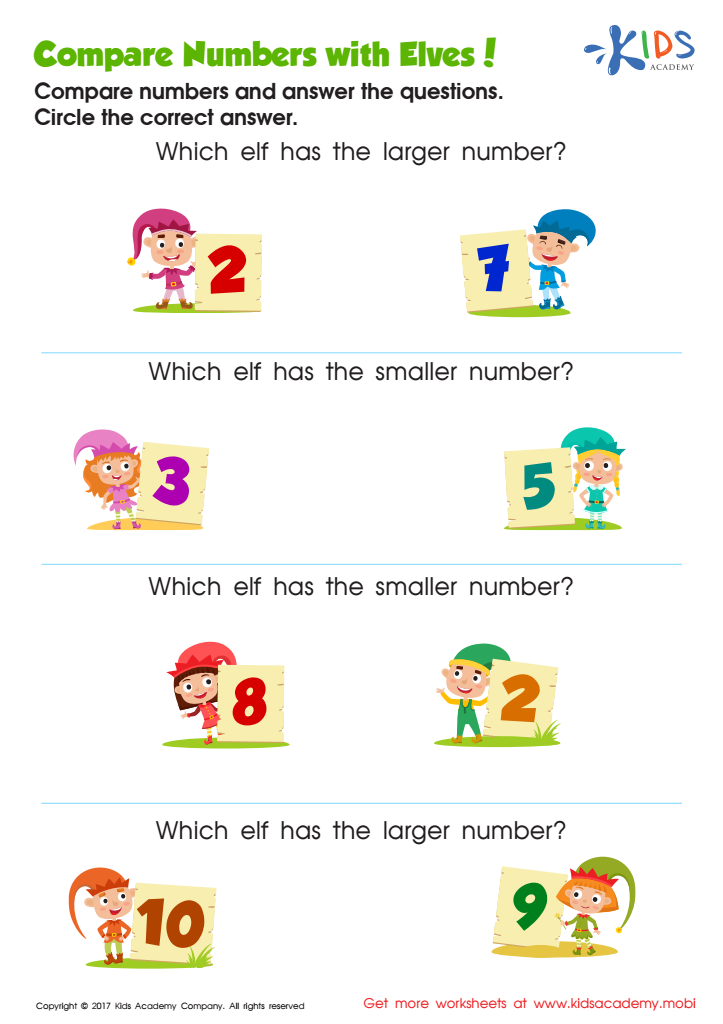
Comparing Numbers Worksheet for Kindergarten
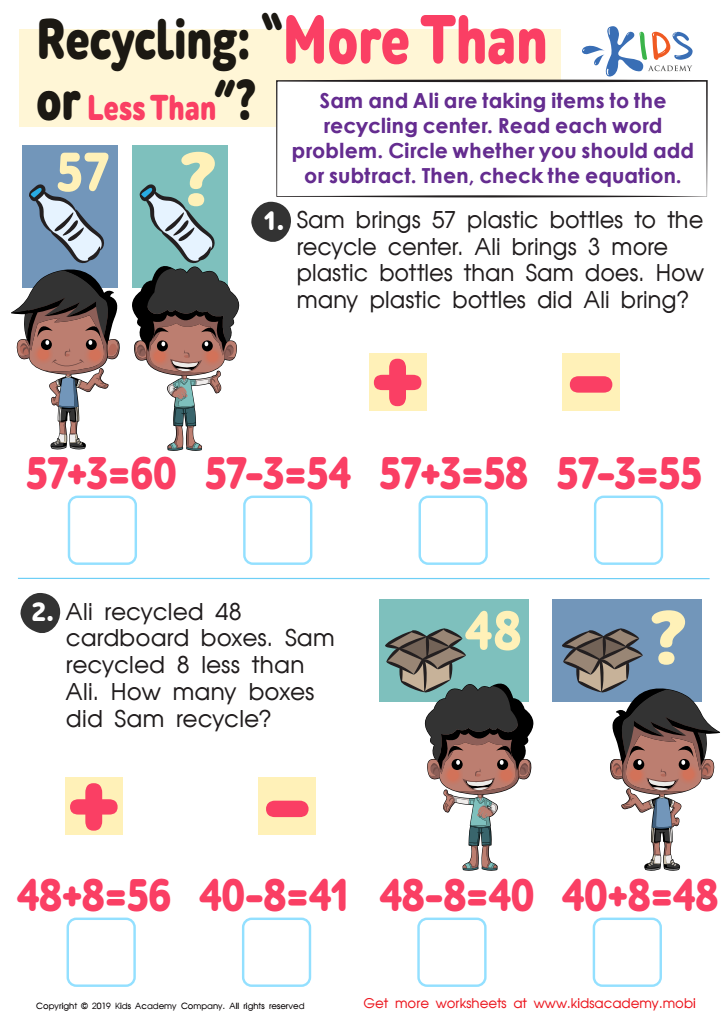
Recycling - More or Less Worksheet
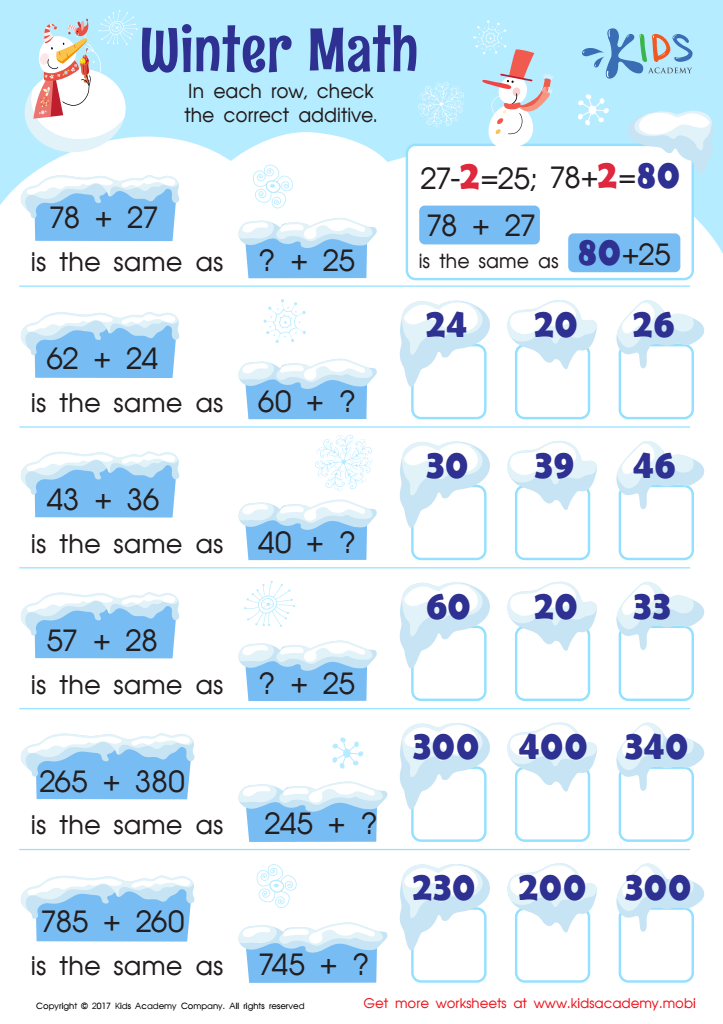
Free Addition Worksheet
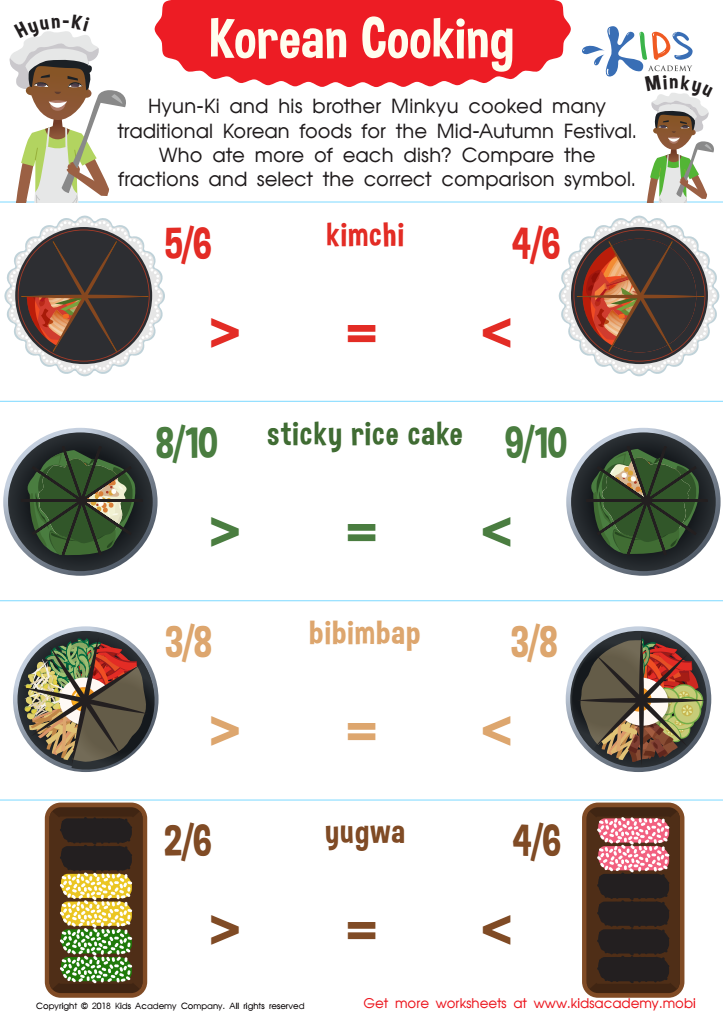
Korean Cooking Worksheet








Understanding how to compare numbers is a fundamental skill for children aged 5-8, as it lays the groundwork for their future mathematical learning. For parents and teachers, nurturing this skill is essential for several reasons.
First, recognizing differences between numbers helps children develop a sense of quantity and numerical order. For instance, knowing that 7 is larger than 5 helps in everyday activities such as counting objects, comparing quantities, and understanding sequences.
Second, comparing numbers aids in decision-making skills. Imagine a child choosing whether they have more crayons or candies. This logical comparison helps them solve practical problems, making everyday tasks easier.
Moreover, the ability to compare numbers is a precursor to more complex mathematical concepts like addition, subtraction, and understanding place value. It’s an entry point to grasp the basics of arithmetic operations. For example, grasping that 4 is less than 6 makes understanding why 4+2 equals 6 more intuitive.
Lastly, these early math skills boost cognitive development, promoting critical thinking and analytical skills. Those foundational abilities are not just limited to mathematics; they enhance overall academic performance, leading to improved self-confidence and a positive attitude towards learning.
Ensuring children grasp how to compare numbers equips them with a vital tool that strengthens their overall cognitive framework and academic competency.