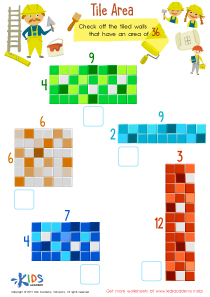
Understanding base ten Normal Numbers Worksheets for Ages 5-8
3 filtered results
-
From - To
Unlock your child's potential with our "Understanding Base Ten Normal Numbers Worksheets" designed specifically for ages 5-8. These engaging resources will help young learners grasp the concepts of base ten through fun activities and exercises. By using visual aids and practical examples, children will develop a solid foundation in counting, place value, and number representation. Our worksheets promote critical thinking and foster a love for mathematics, making learning enjoyable. Perfect for classroom use or homeschooling, these materials are tailored to support the unique learning styles of early graders. Empower your child with essential math skills today!
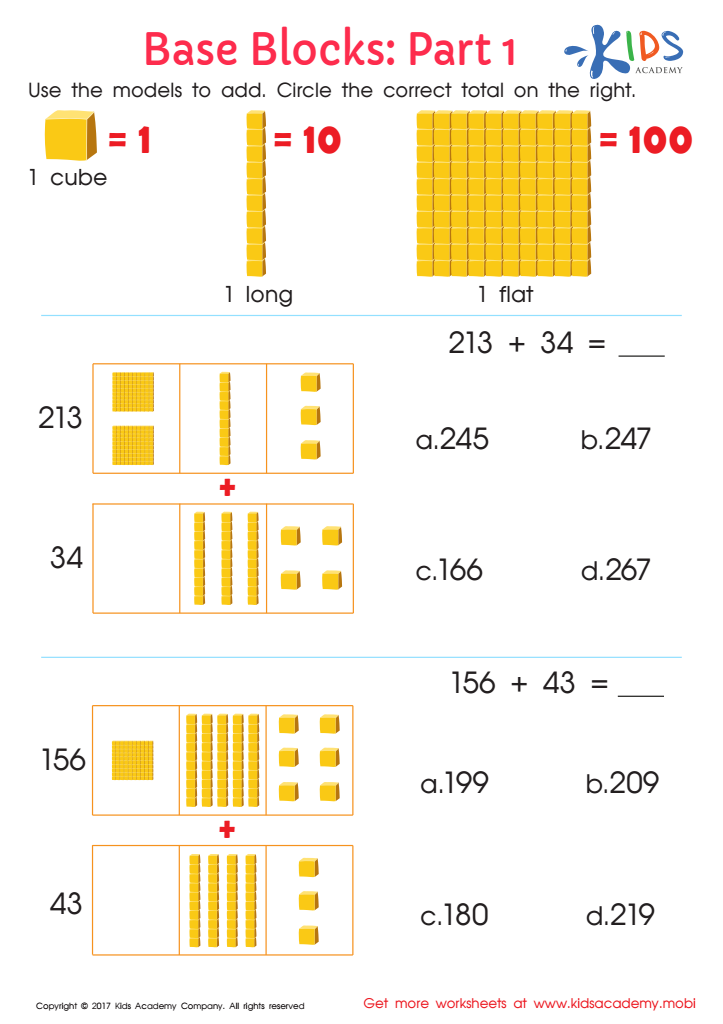
Base Ten Blocks Worksheet: Part 1
 Assign to My Students
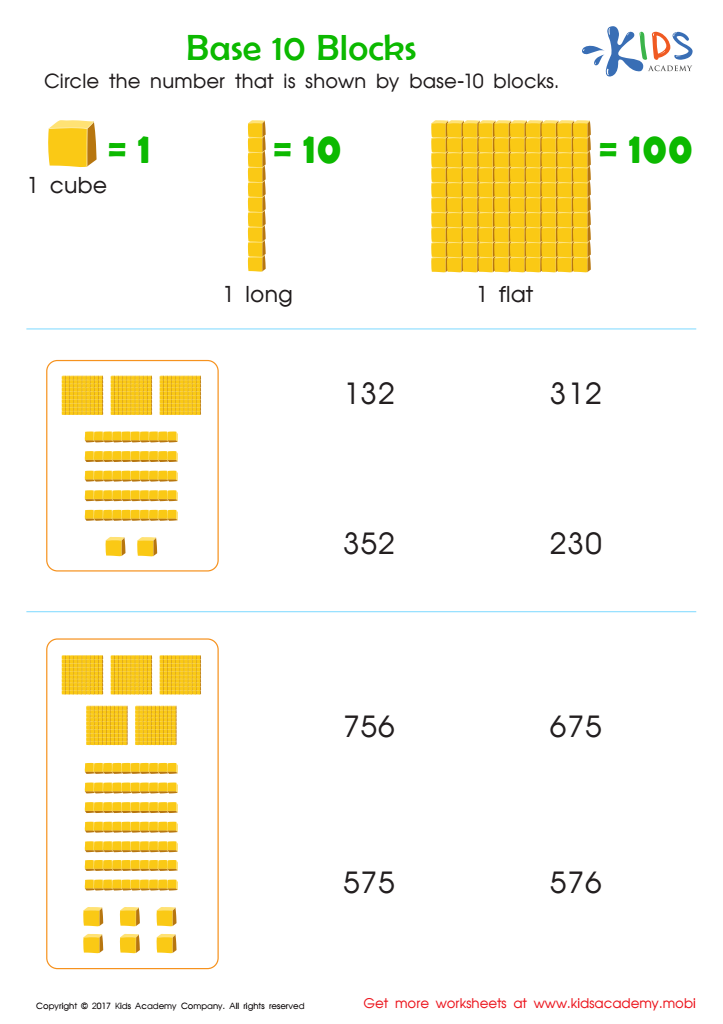
Base Ten Blocks Worksheet
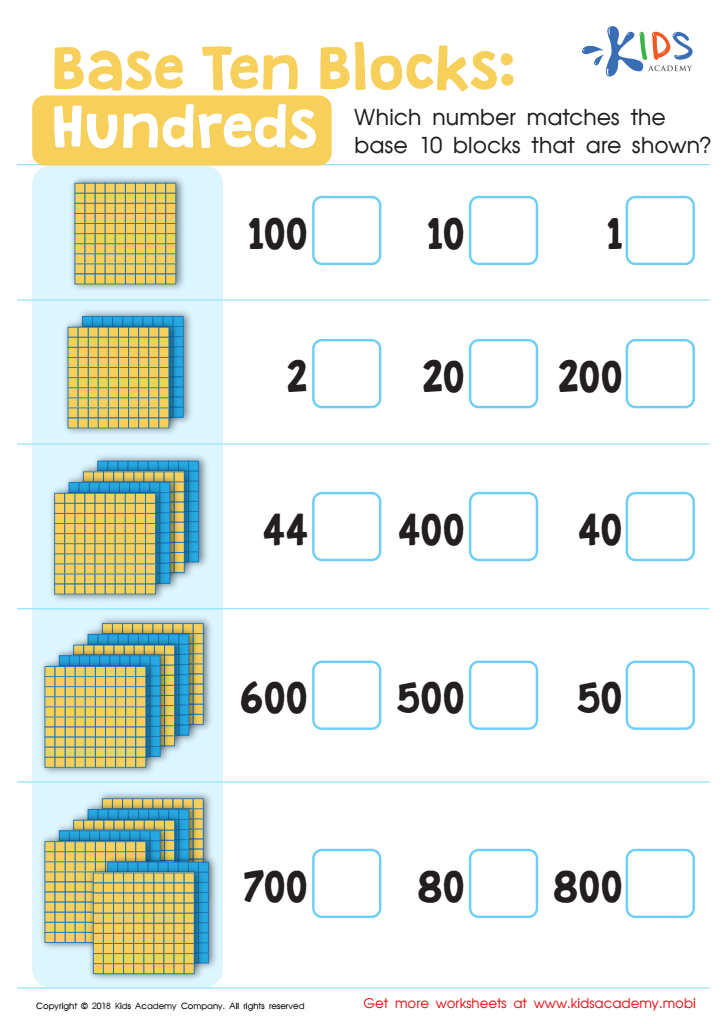
Base Ten Blocks: Hundreds Worksheet








Understanding base ten and normal numbers is crucial for children aged 5-8 as it lays the foundation for their mathematical learning. At this age, children are developing key cognitive skills, and their grasp of base ten concepts fosters number sense, enhances their ability to perform operations, and encourages critical thinking.
Base ten is the numeration system we use daily, and comprehension of this framework promotes clarity in counting, addition, and subtraction. For example, learning to group numbers into tens and ones helps children efficiently organize and manipulate quantities, preparing them for more complex mathematical operations.
Teachers and parents should be aware of this early developmental milestone, as it informs effective teaching strategies and home-based activities. Engaging children in activities involving blocks, place value games, and visual aids accelerates their understanding and retention of concepts. Moreover, proficiency in base ten supports children as they transition to more advanced topics like multiplication, division, and algebraic thinking in later grades.
In addition, fostering a strong number sense early on cultivates confidence and a positive attitude toward math, essential attributes for lifelong learning. By caring about and emphasizing base ten concepts, adults empower children to succeed in their mathematical journey.