Comparing sizes Normal Math Worksheets for Ages 5-8
3 filtered results
-
From - To
Welcome to our "Comparing Sizes" Math Worksheets designed for children ages 5 to 8! These engaging and interactive worksheets help young learners develop essential skills in comparing and understanding different sizes. Through a variety of fun activities, kids will enhance their critical thinking and analytical abilities as they identify which objects are bigger, smaller, taller, or shorter. Each worksheet is designed with vibrant illustrations and age-appropriate exercises to keep children motivated and excited about learning. Perfect for home or classroom use, our worksheets provide an effective way to reinforce early math skills, making learning both enjoyable and educational. Let's explore the world of sizes together!
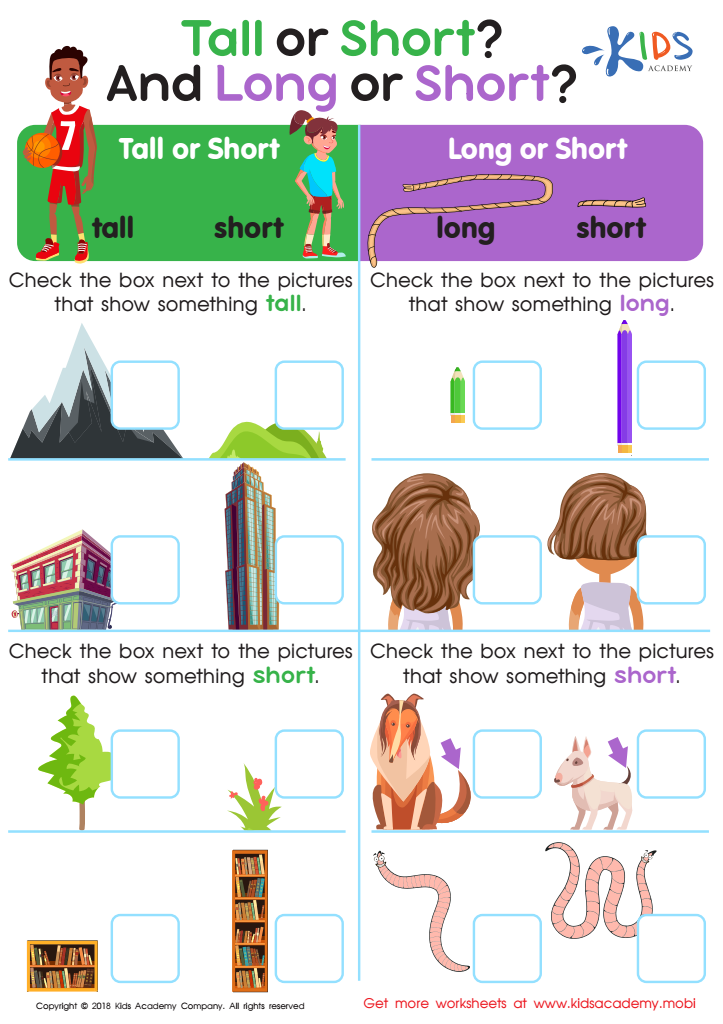
Tall or Short and Long or Short? Worksheet
 Assign to My Students
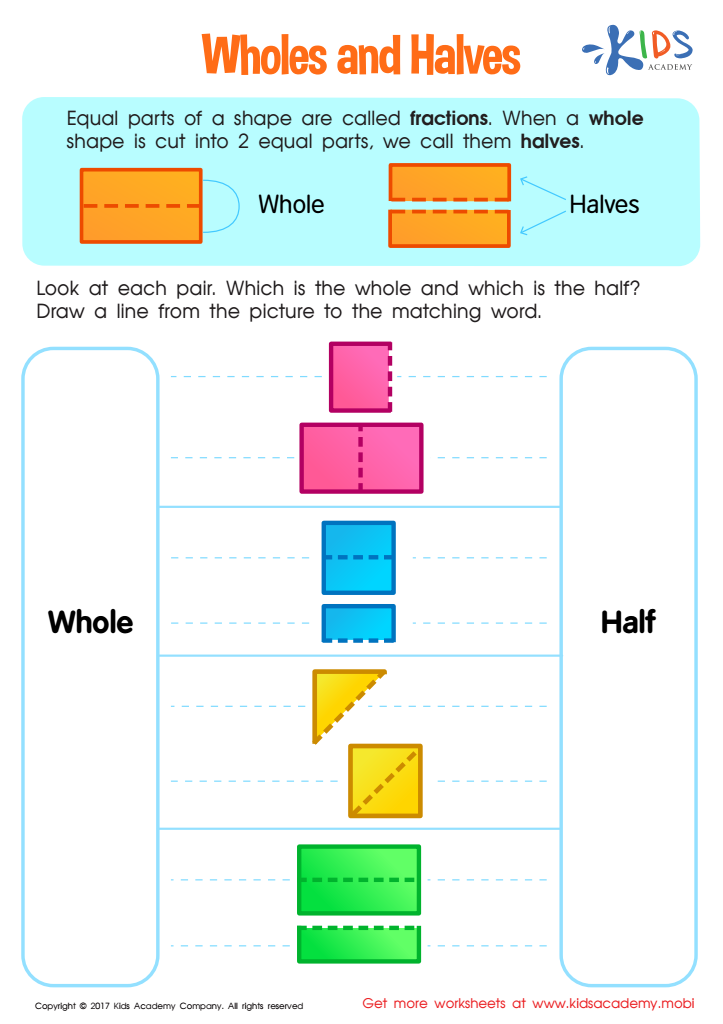
Wholes and Halves Worksheet
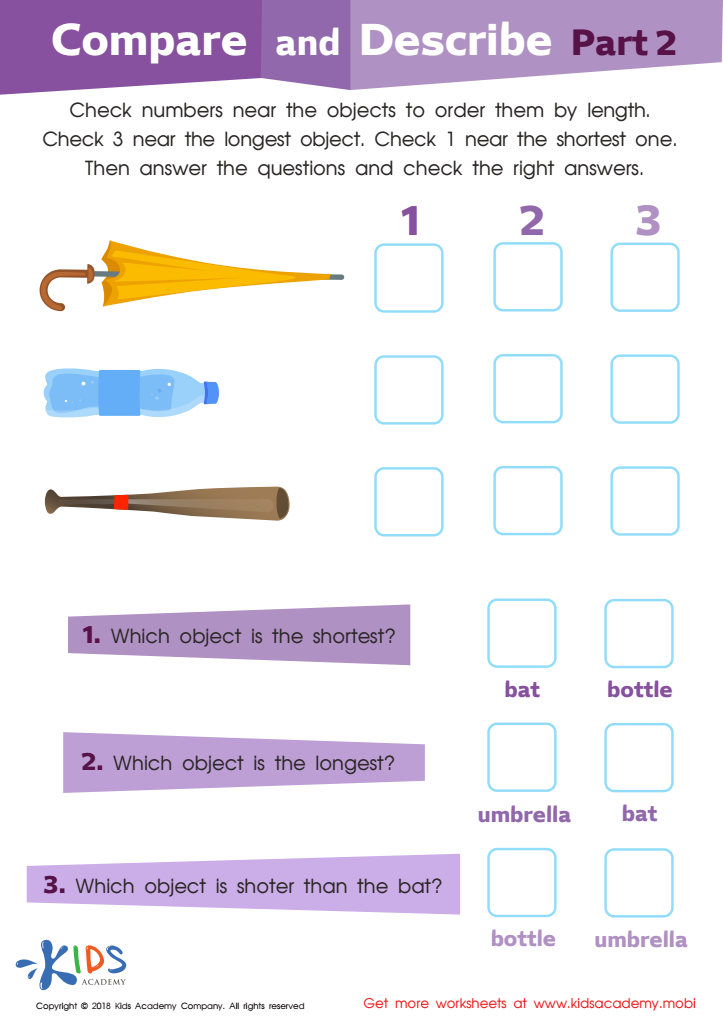
Compare and Describe: Part 2 Worksheet






Comparing sizes is a fundamental math concept that plays a crucial role in a child's cognitive and social development. For parents and teachers of children aged 5 to 8, fostering an understanding of size comparisons lays the groundwork for essential mathematical skills, including measurement, spatial reasoning, and problem-solving.
At this age, children are naturally curious and eager to explore their environment. Engaging them in activities that involve comparing sizes—such as using common objects, toys, or even pictures—helps develop both their quantitative thinking and their vocabulary. This strengthens critical thinking skills by encouraging them to analyze, categorize, and articulate their observations.
Furthermore, size comparison activities promote cooperative learning, enhancing social skills as children collaborate and discuss their findings. As children learn to compare sizes, they also build confidence in their mathematical abilities, paving the way for success in more complex math concepts in the future.
Ultimately, by prioritizing size comparison in learning, parents and teachers not only enhance academic skills but also nurture essential life skills, such as observation, reasoning, and communication. These foundational experiences contribute to a child's overall growth, ensuring they are well-prepared for future challenges in both mathematics and daily life.








