Problem-Solving Skills Normal Word Problems Worksheets for Ages 5-8
18 filtered results
-
From - To
Discover engaging "Problem-Solving Skills Normal Word Problems Worksheets for Ages 5-8" designed to enhance your child's mathematical abilities. These worksheets from Kids Academy offer a wide range of scenarios, fostering critical thinking, logical reasoning, and real-world math application. Perfect for young learners, they progress from simple addition and subtraction to basic multiplication and division, ensuring comprehensive learning. Interactive and fun, the worksheets keep kids motivated while developing their problem-solving skills. Ideal for use at home or in the classroom, these expertly crafted resources support parents and teachers in building a strong math foundation for early learners.
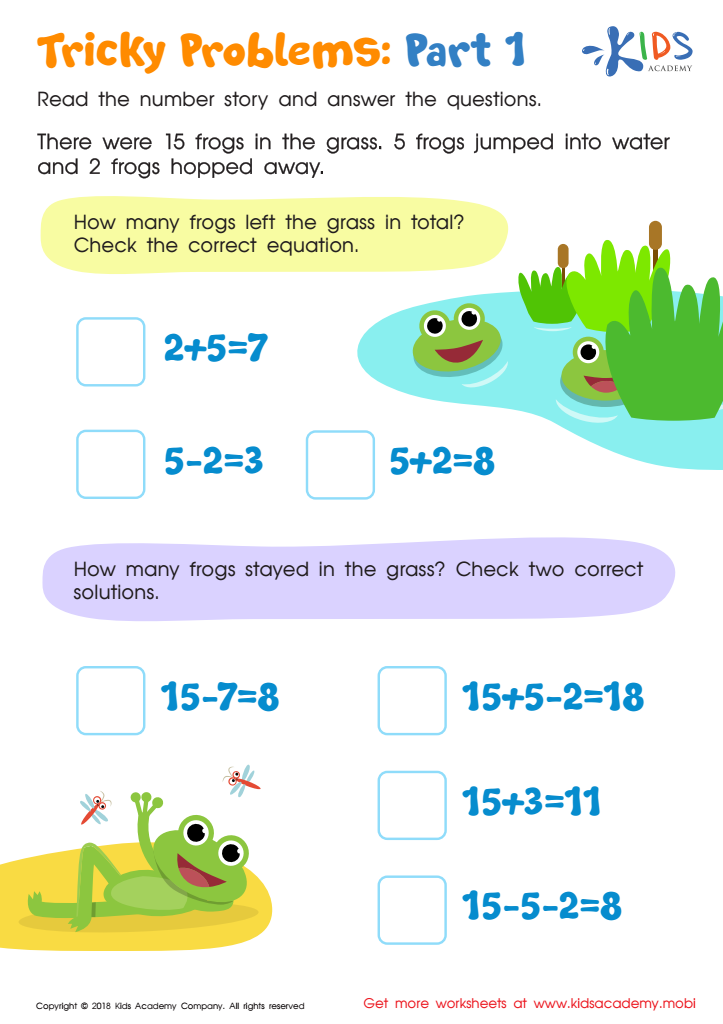
Tricky Problems Worksheet: Part 1
 Assign to My Students
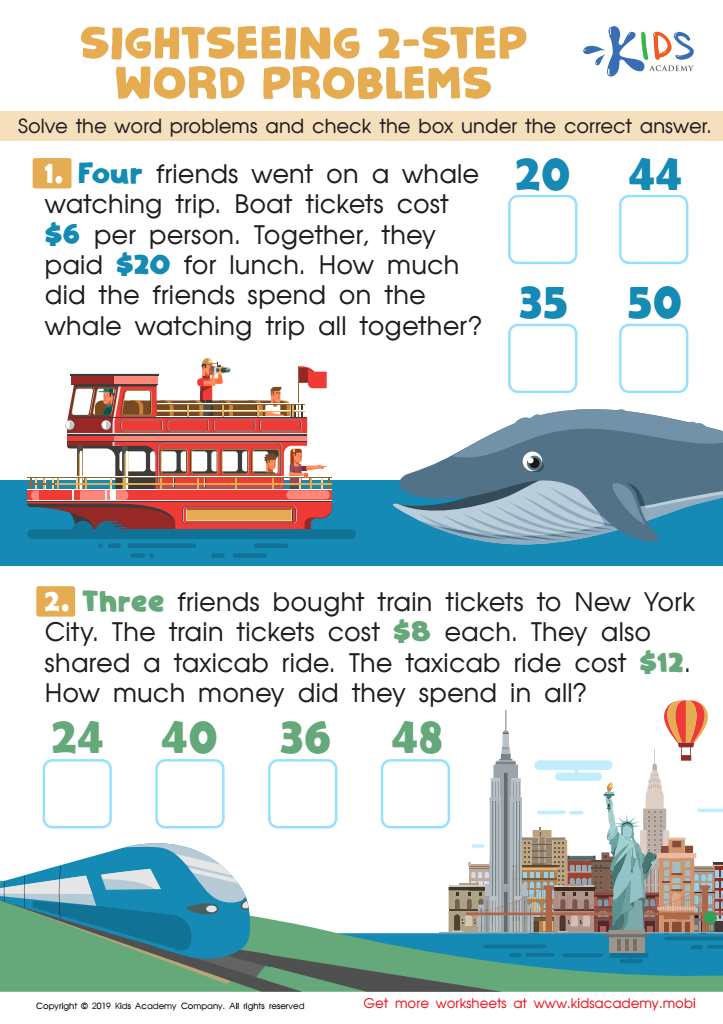
Sightseeing 2-Step Word Problems Worksheet
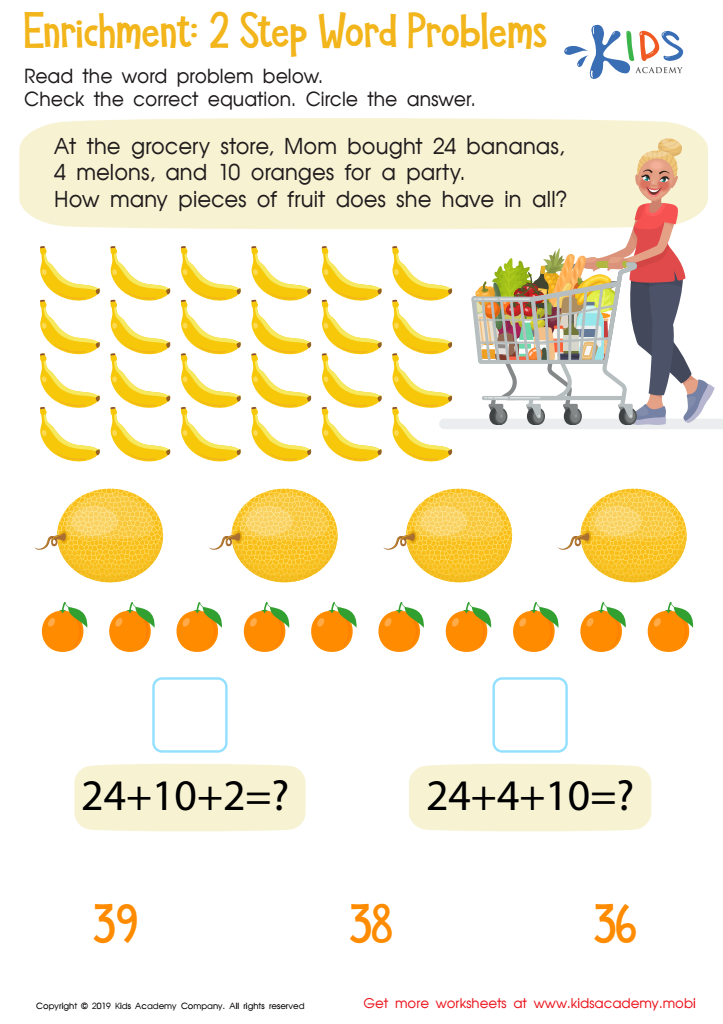
Enrichment -2 Step Word Problems Worksheet
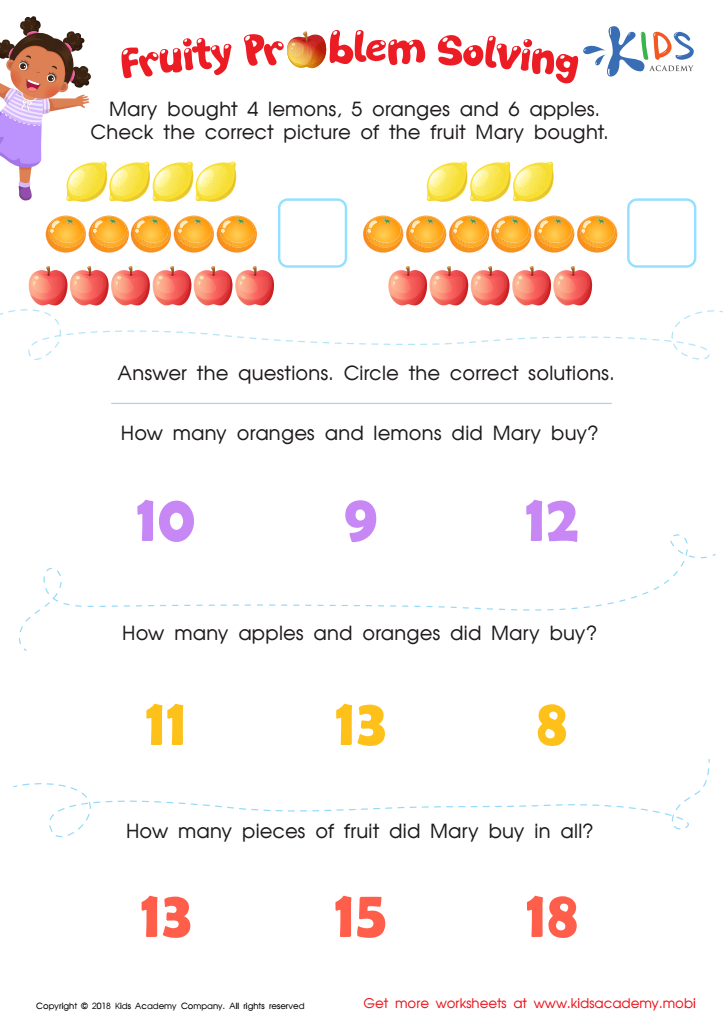
Fruity Problem Solving Worksheet
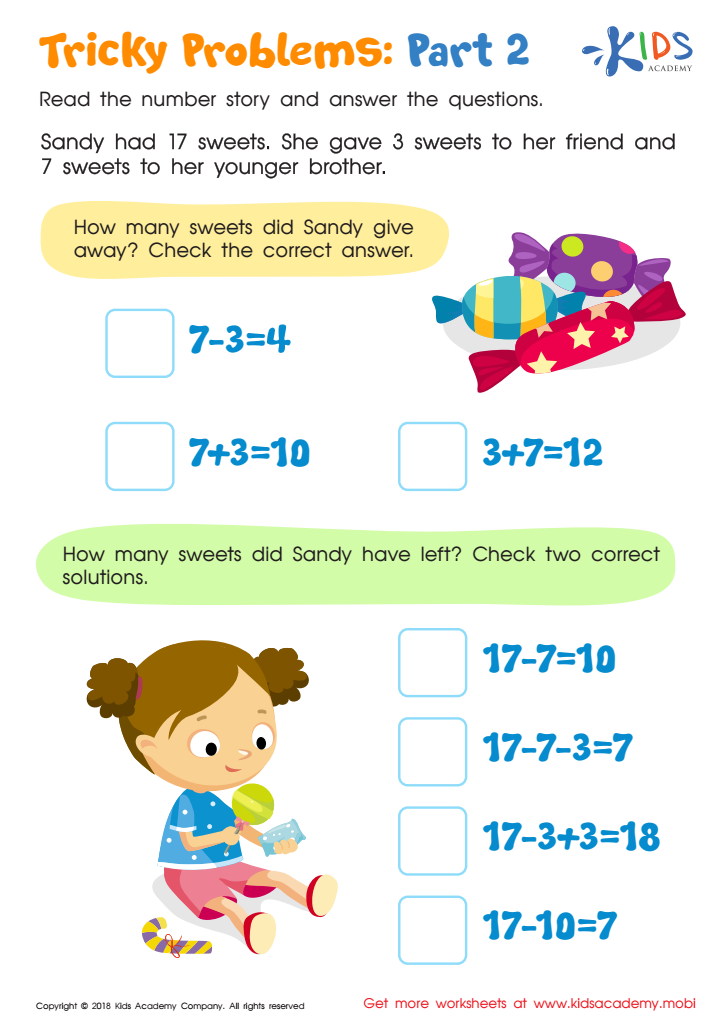
Tricky Problems Worksheet: Part 2
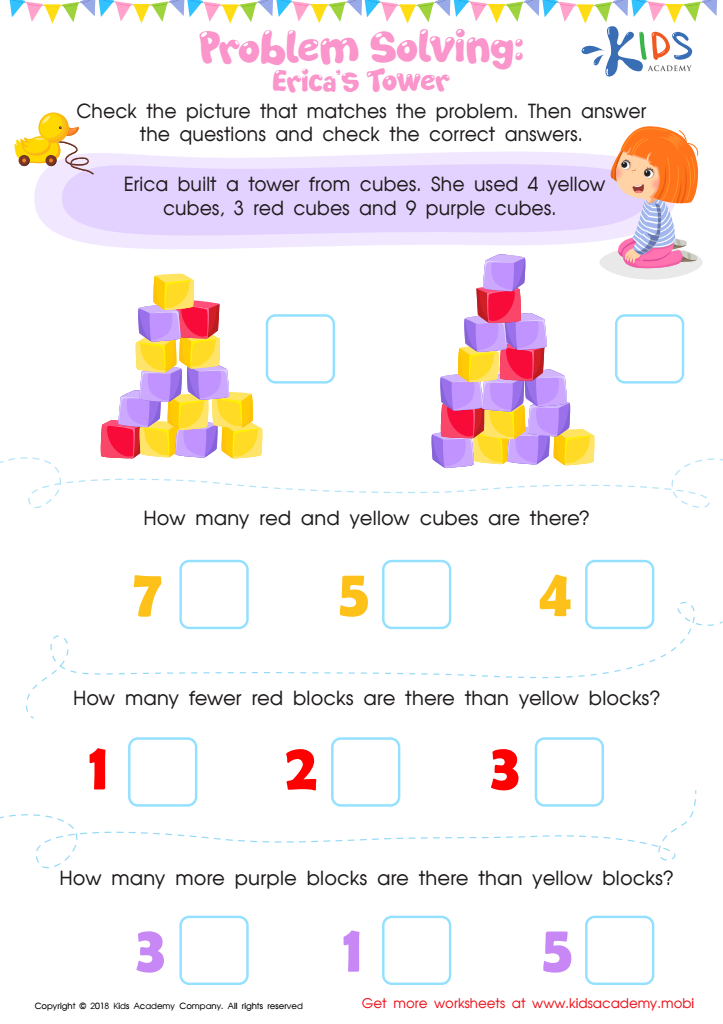
Problem Solving: Erica's Tower Worksheet
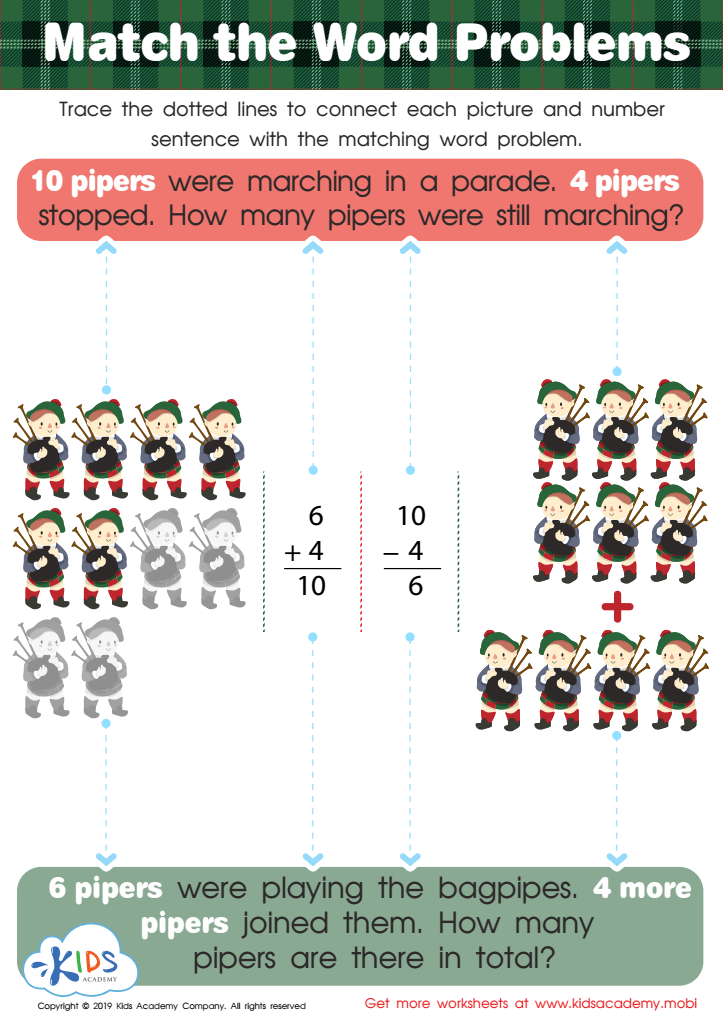
Match the Word Problems Worksheet
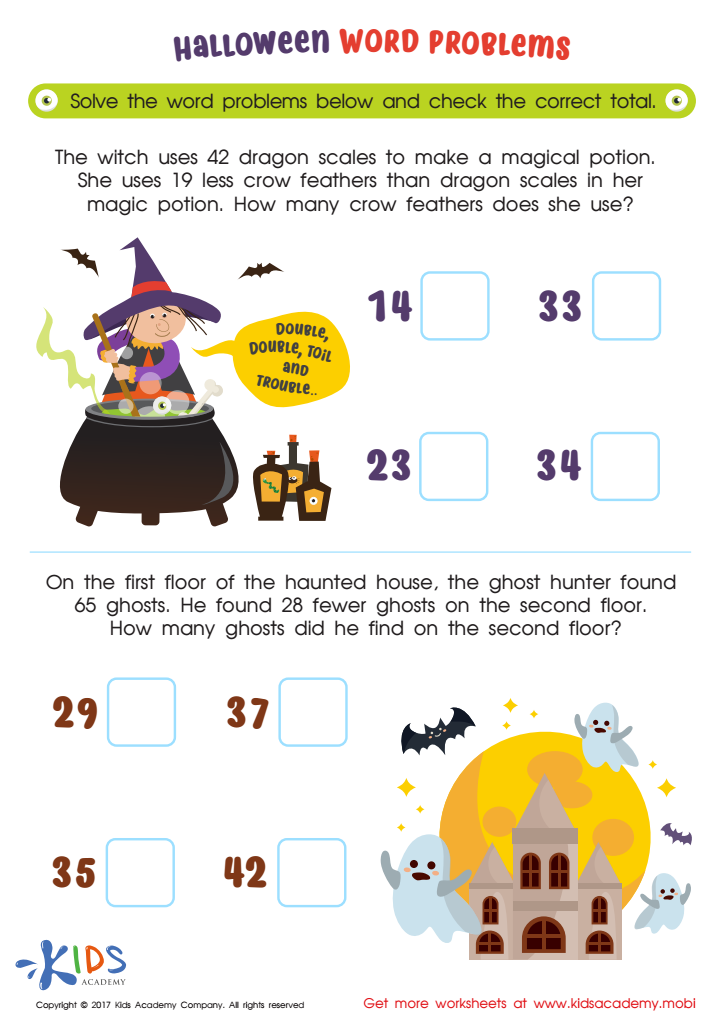
Halloween Word Problems Printable
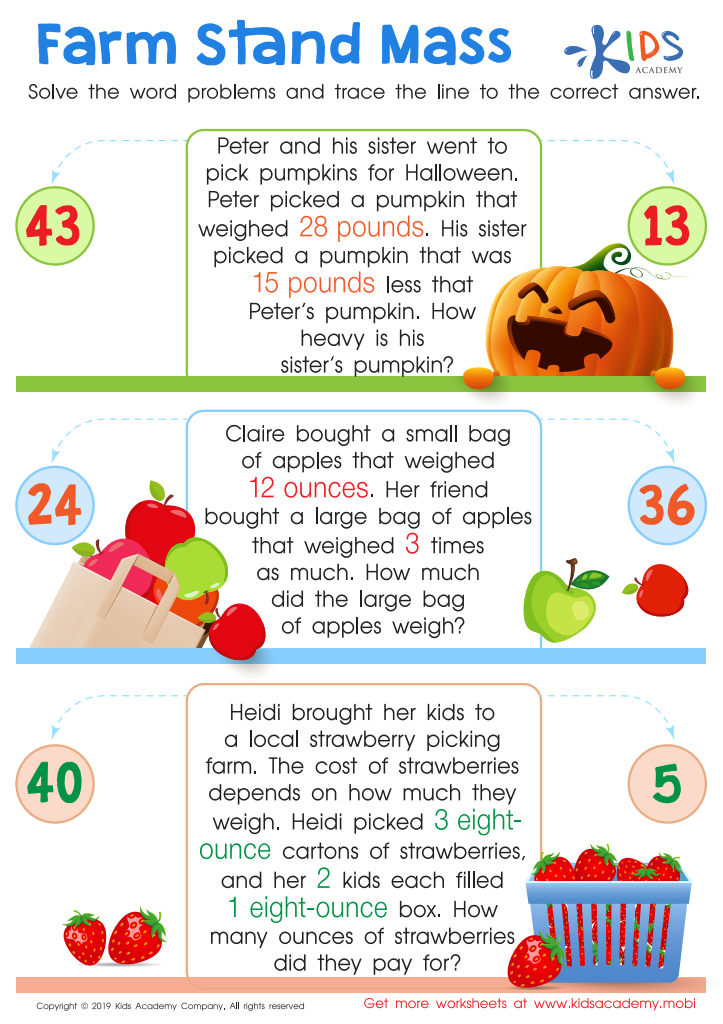
Farm Stand Mass Worksheet
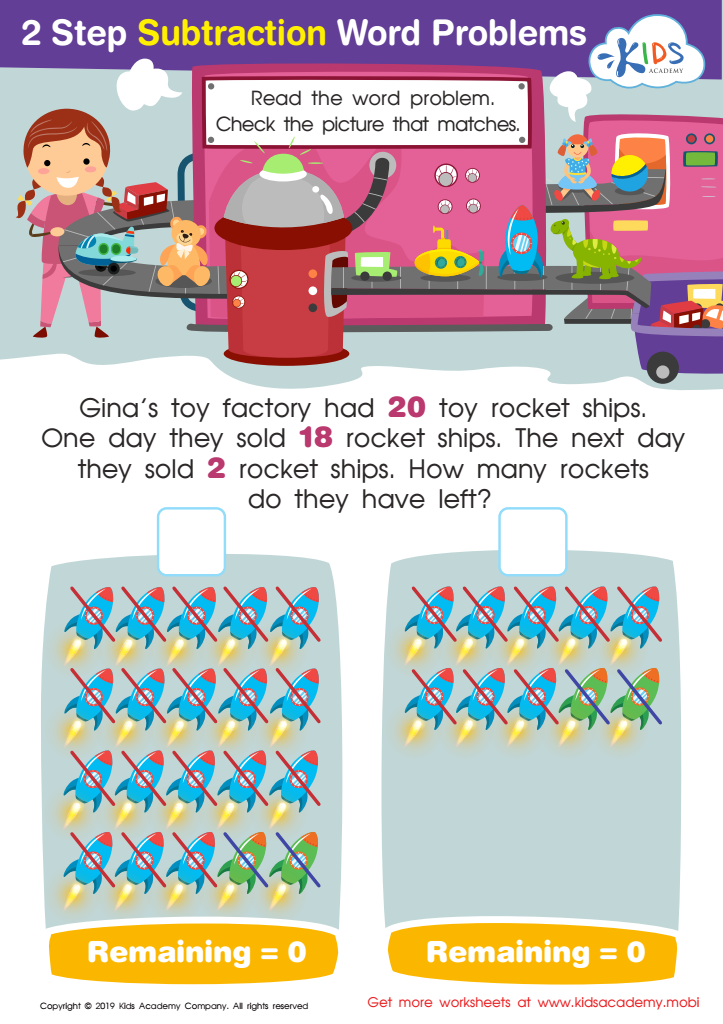
Step Subtraction Word Problems Worksheet
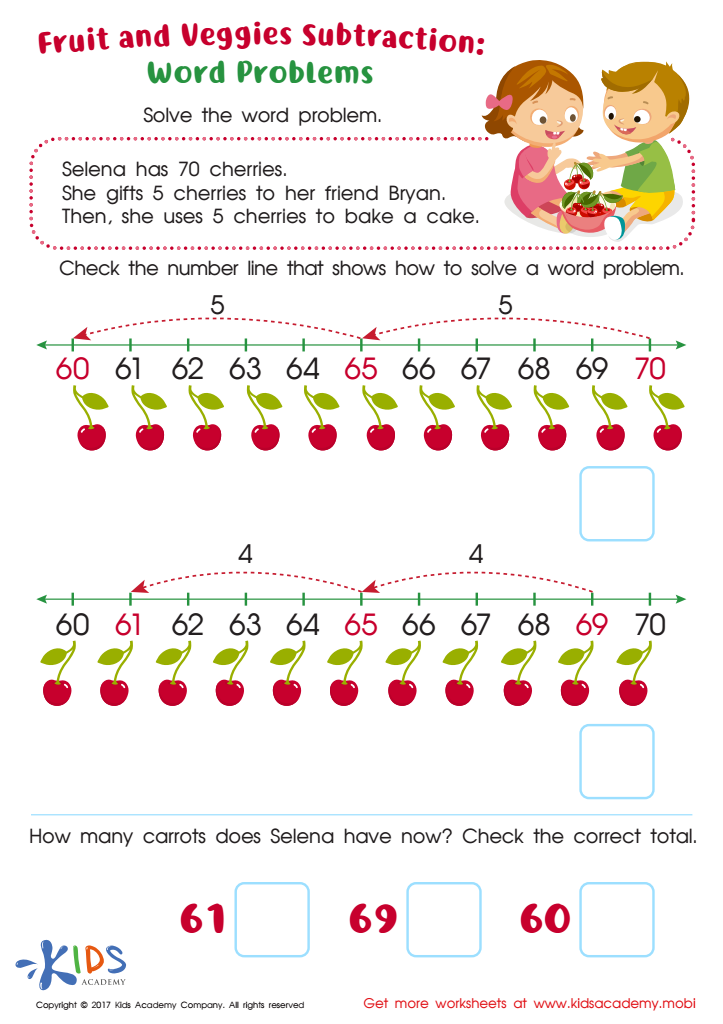
Subtraction Word Problems Free Printable
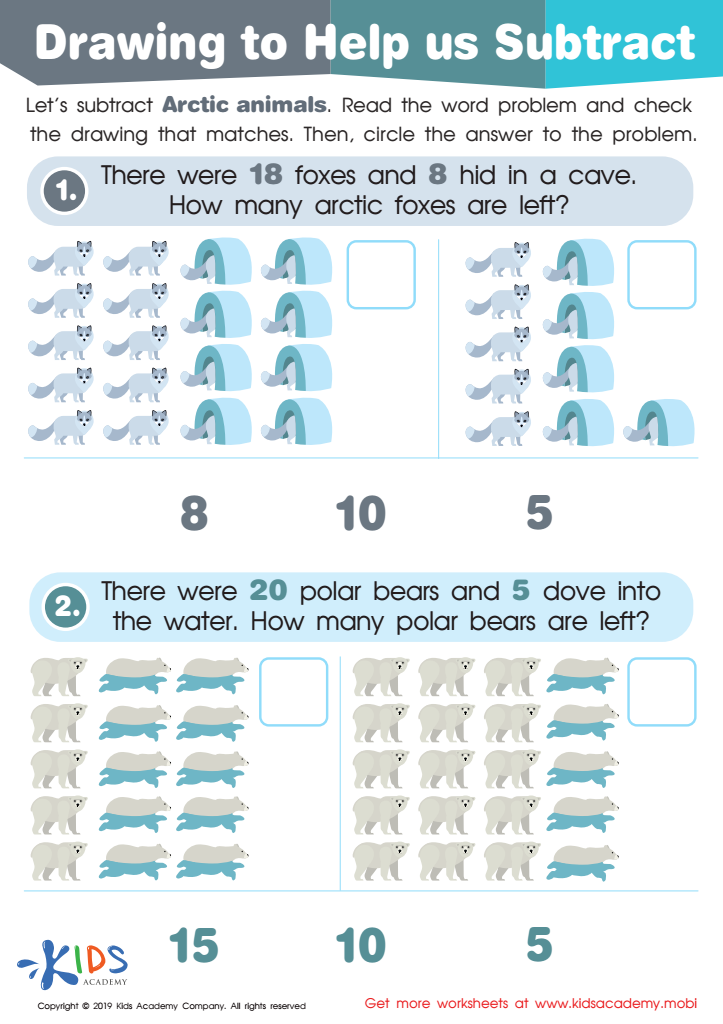
Drawing to Help Us Subtract Worksheet
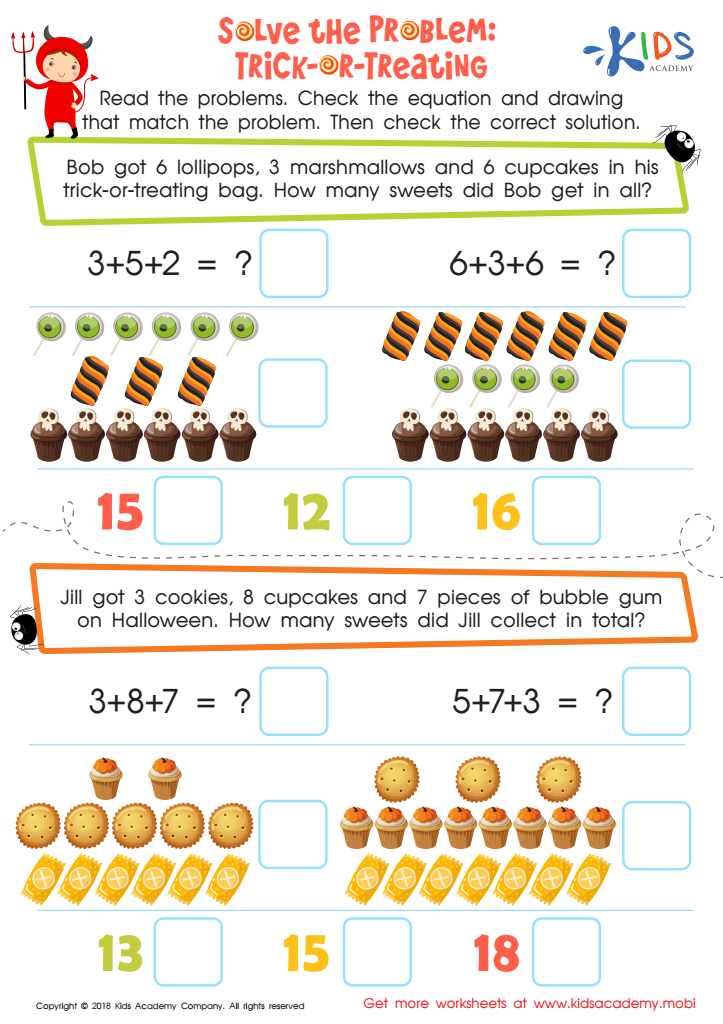
Solve the Problem: Trick–or–treating Worksheet
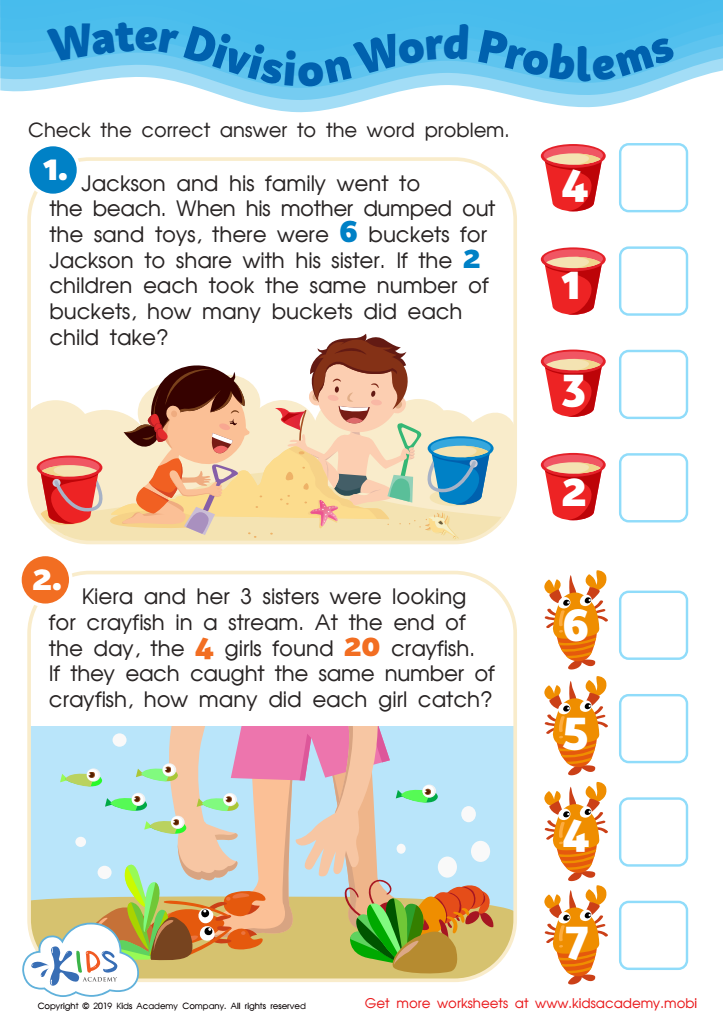
Water Division Word Problems Worksheet
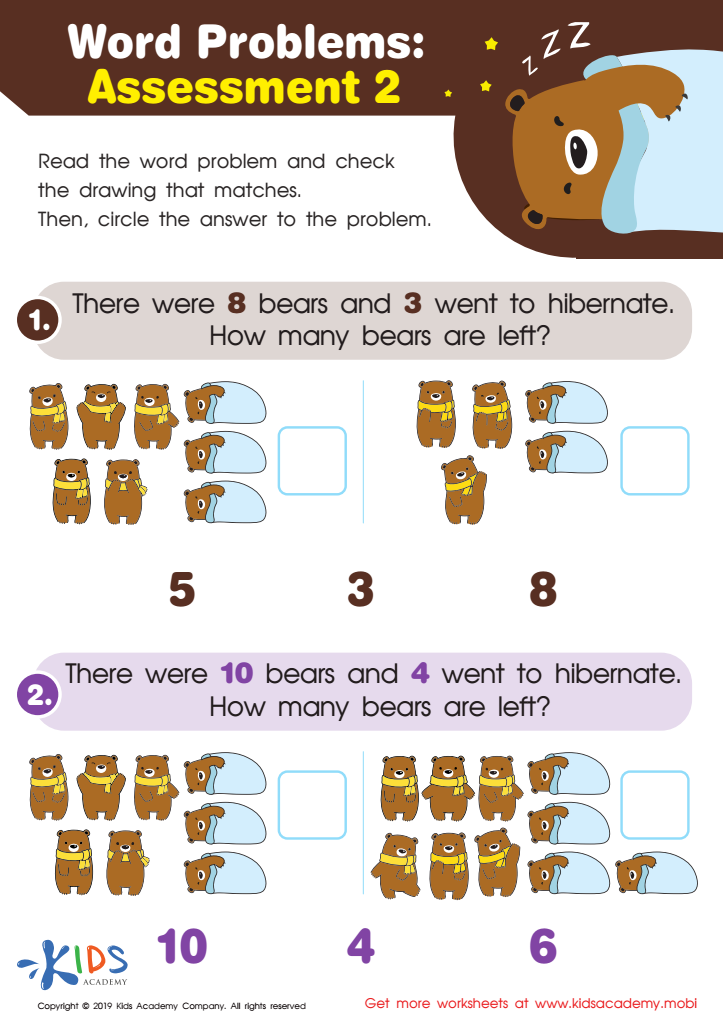
Word Problems: Assessment 2 Worksheet
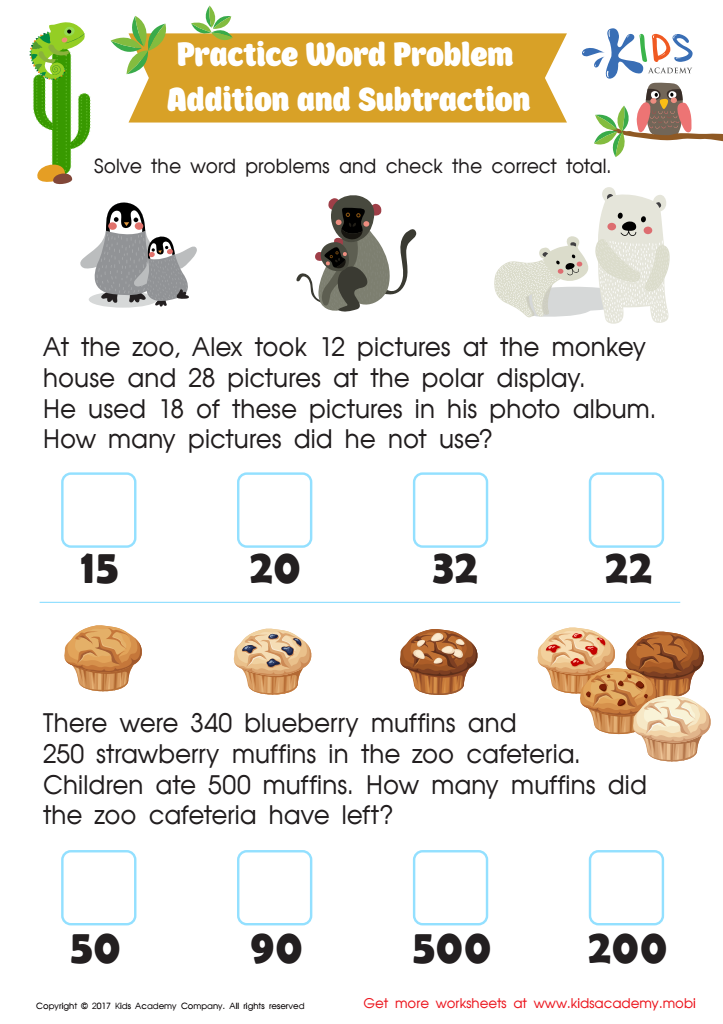
Addition and Subtraction: Word Problems Worksheet
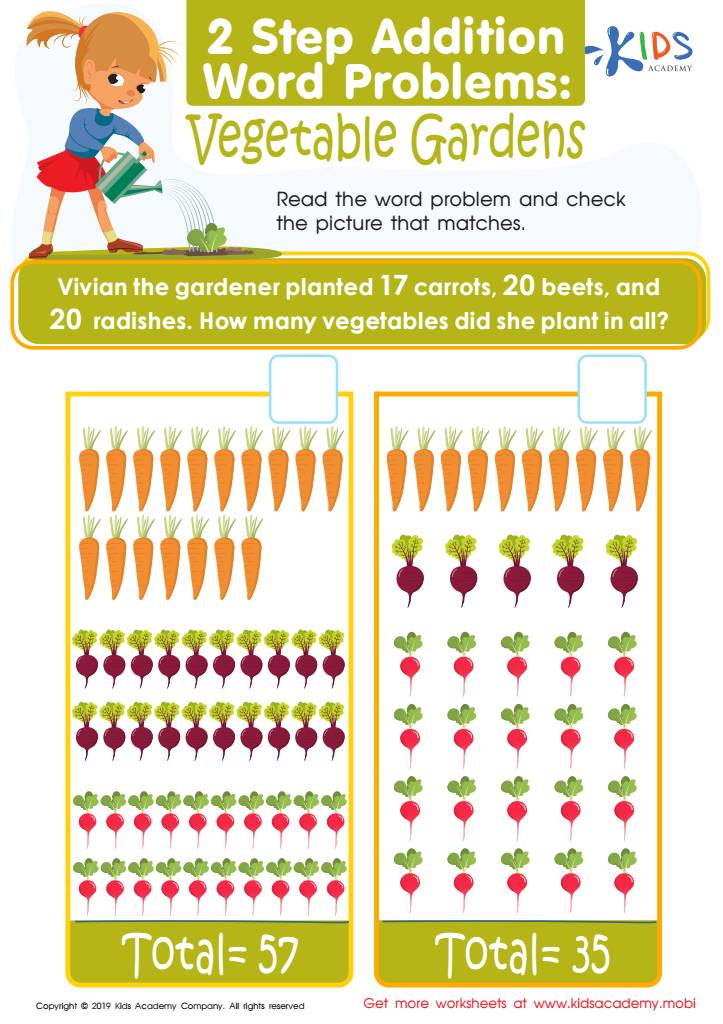
Vegetable Gardens Worksheet
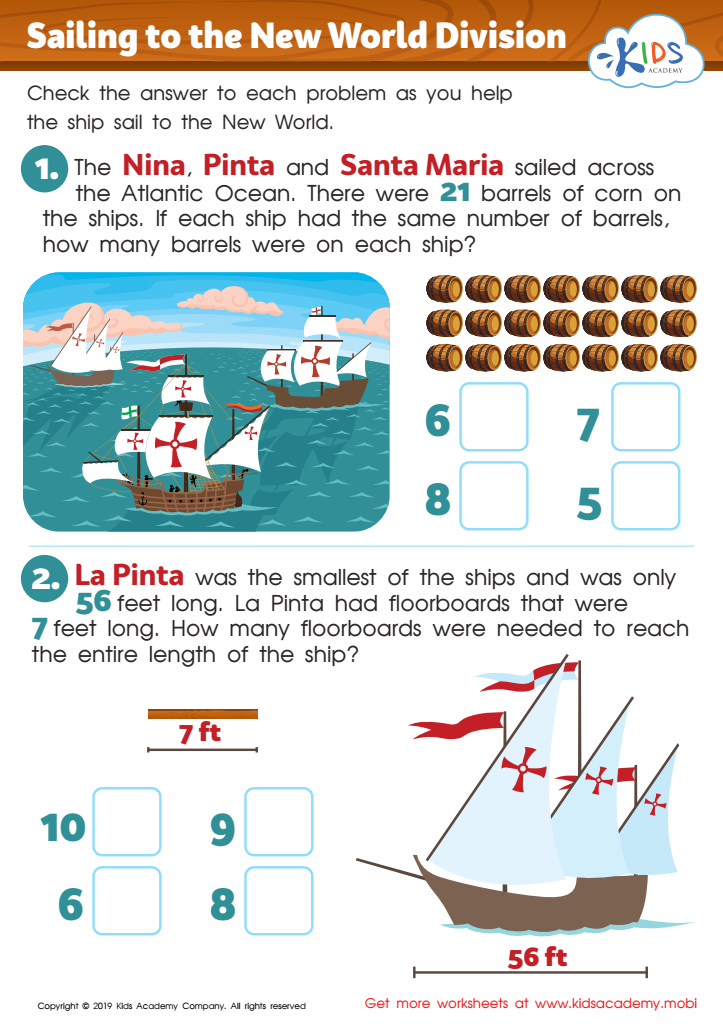
Sailing to the New World Division Worksheet








Problem-solving skills are a fundamental aspect of cognitive development in children aged 5-8, directly influenced by engaging with normal word problems. Both parents and teachers should prioritize these skills because they lay the groundwork for critical thinking, creativity, and independence in children.
Exposing young learners to word problems helps them understand and interact with real-life situations, allowing them to apply mathematical concepts practically. This connection between abstract numbers and real-world application reinforces comprehension and retention. As children decipher word problems, they practice logical reasoning and enhance their ability to think sequentially and develop systematic approaches to finding solutions.
These skills transcend classroom learning, fostering resilience and adaptability in daily challenges. Children learn to analyze problems, consider multiple solutions, and make informed decisions, traits valuable in any field of study and later life situations.
For teachers, it translates to a more engaged and versatile classroom environment where critical thinking is encouraged. Parents who support problem-solving exercises at home bolster their child’s confidence and enthusiasm for learning, ensuring a holistic development that combines academic and life skills. Ultimately, these abilities contribute to the overall cognitive and emotional growth of children, forming a well-rounded foundation for future learning and development.








