Normal Multiplication Worksheets for Ages 5-9 - Page 2
46 filtered results
-
From - To
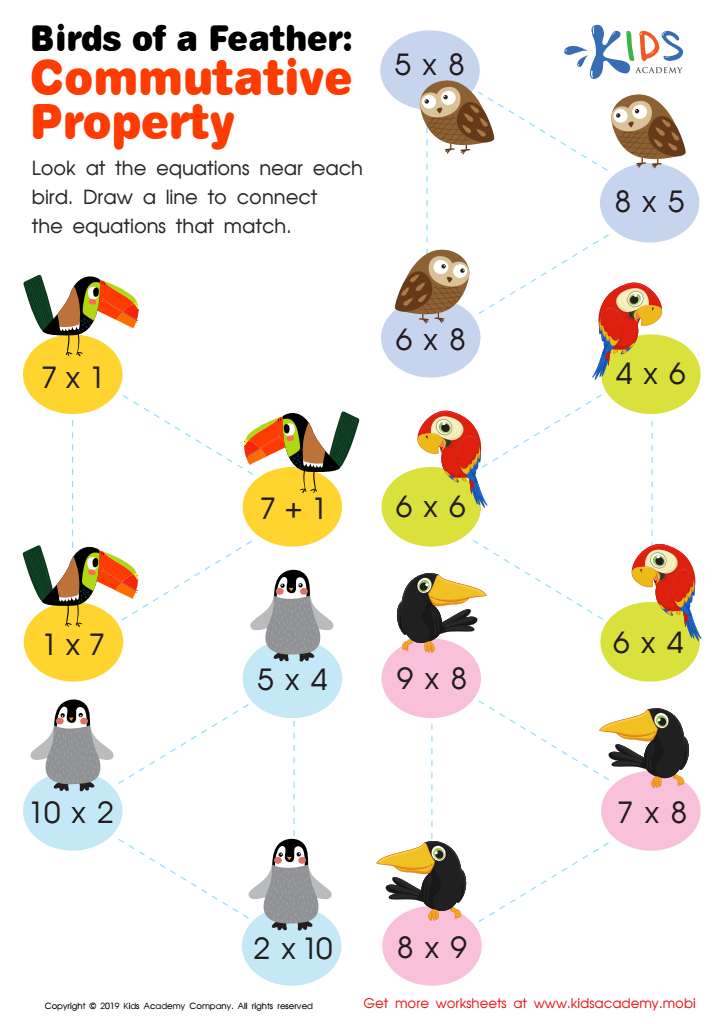
Birds of a Feather: Commutative Property Worksheet
 Assign to My Students
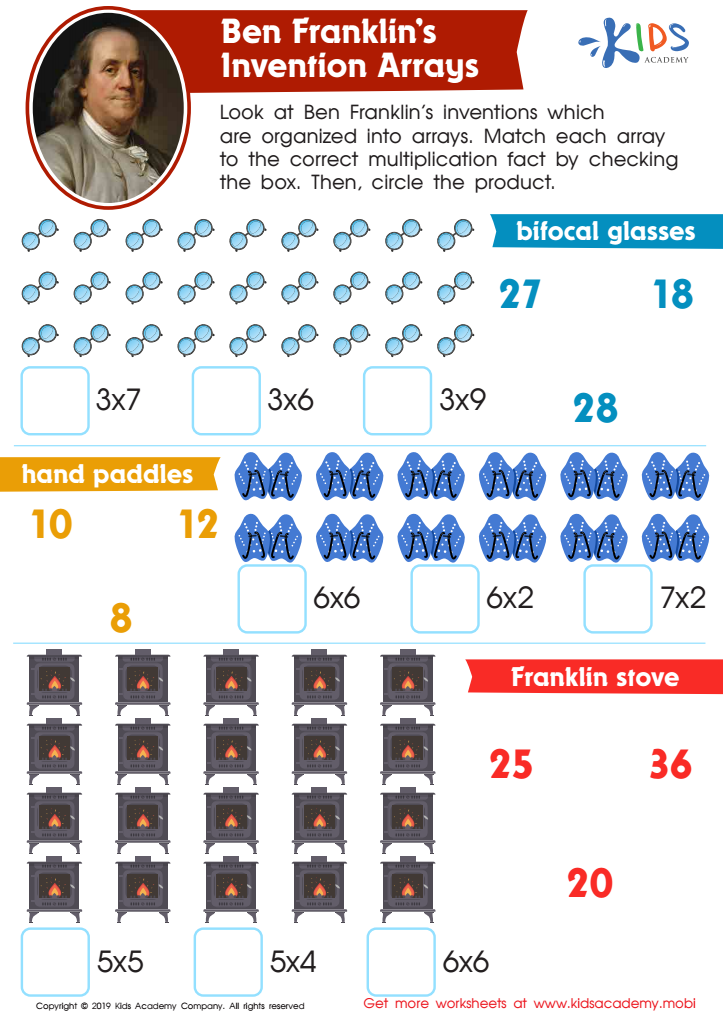
Ben Franklin’s Invention Arrays Worksheet
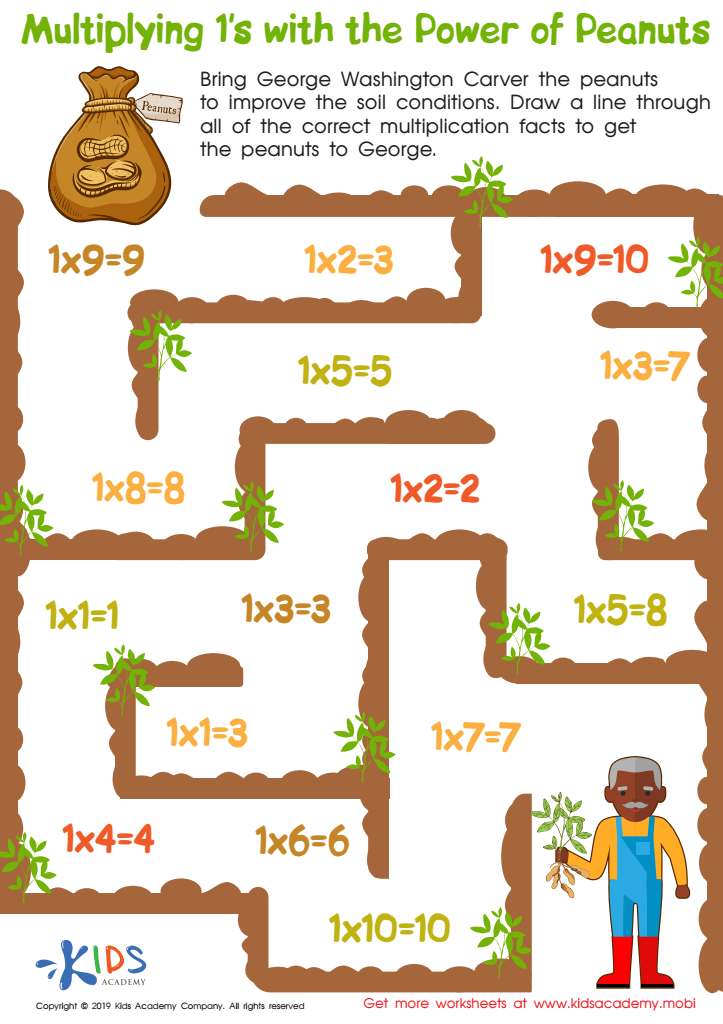
Multiplying 1’s With the Power of Peanuts Worksheet
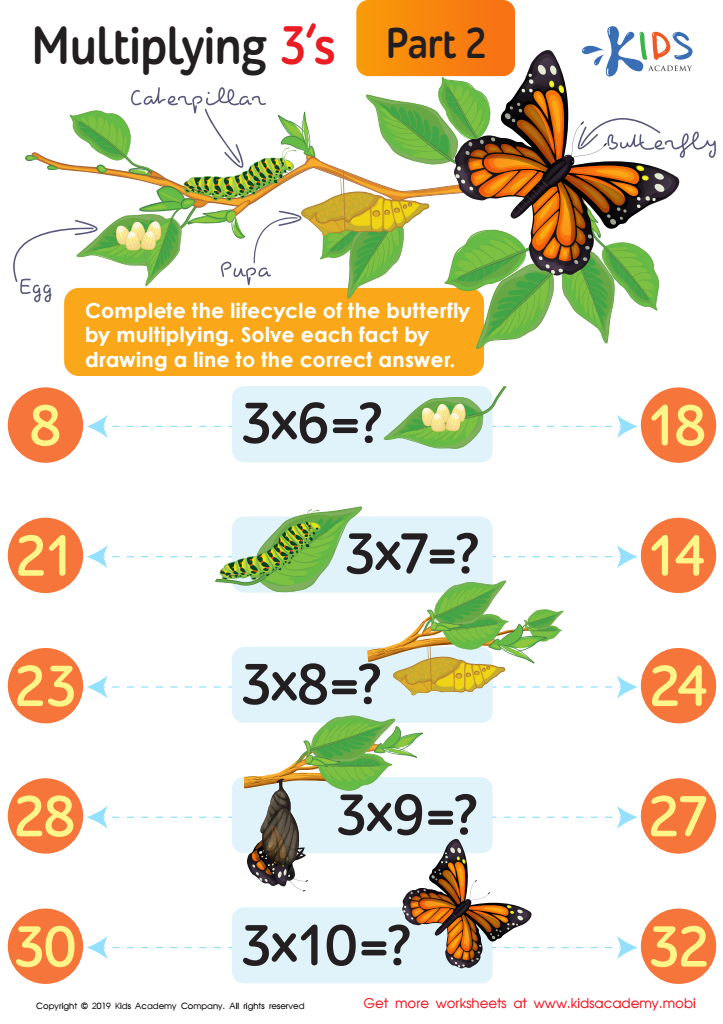
Multiplying 3s Part 2 Worksheet
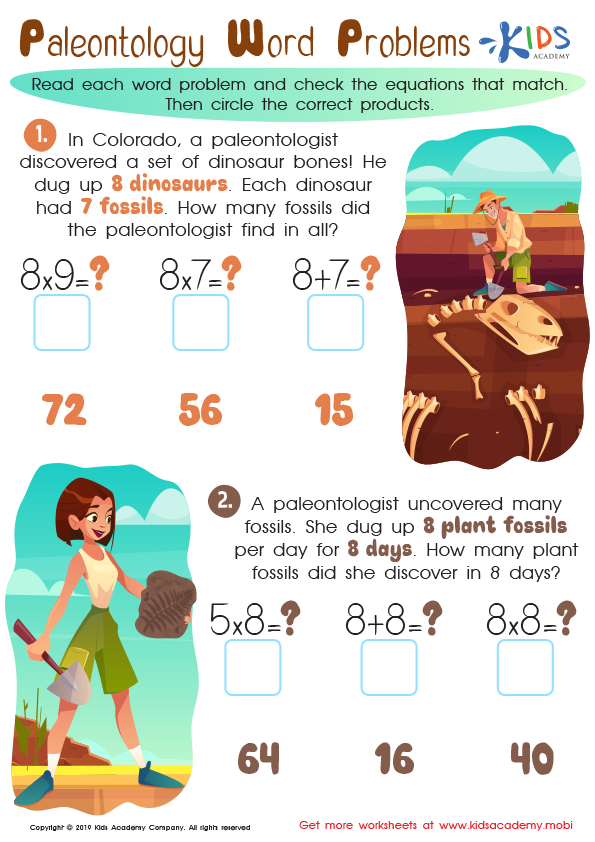
Archeology Word Problems Worksheet
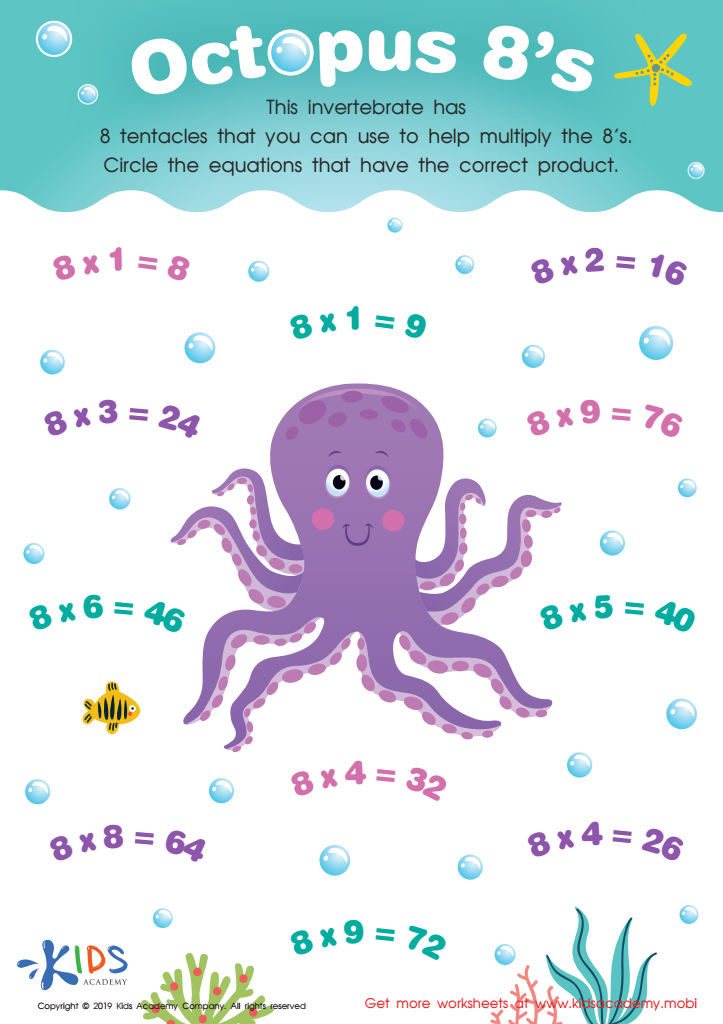
Octopus 8’s Worksheet
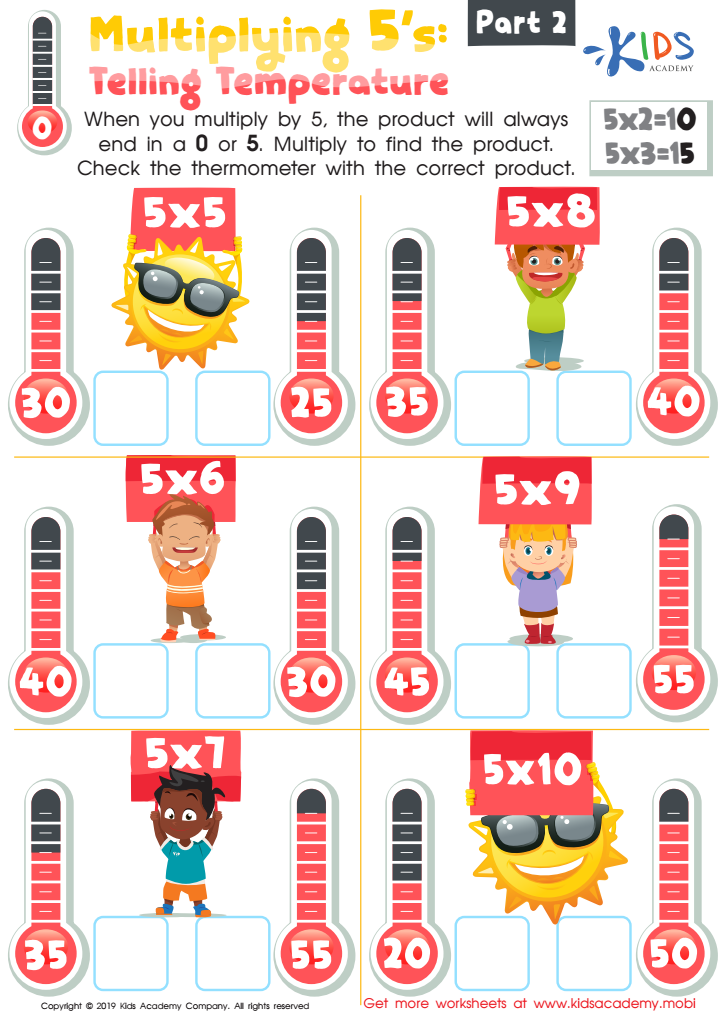
Multiplying 5’s: Telling Temperature Part 2 Worksheet
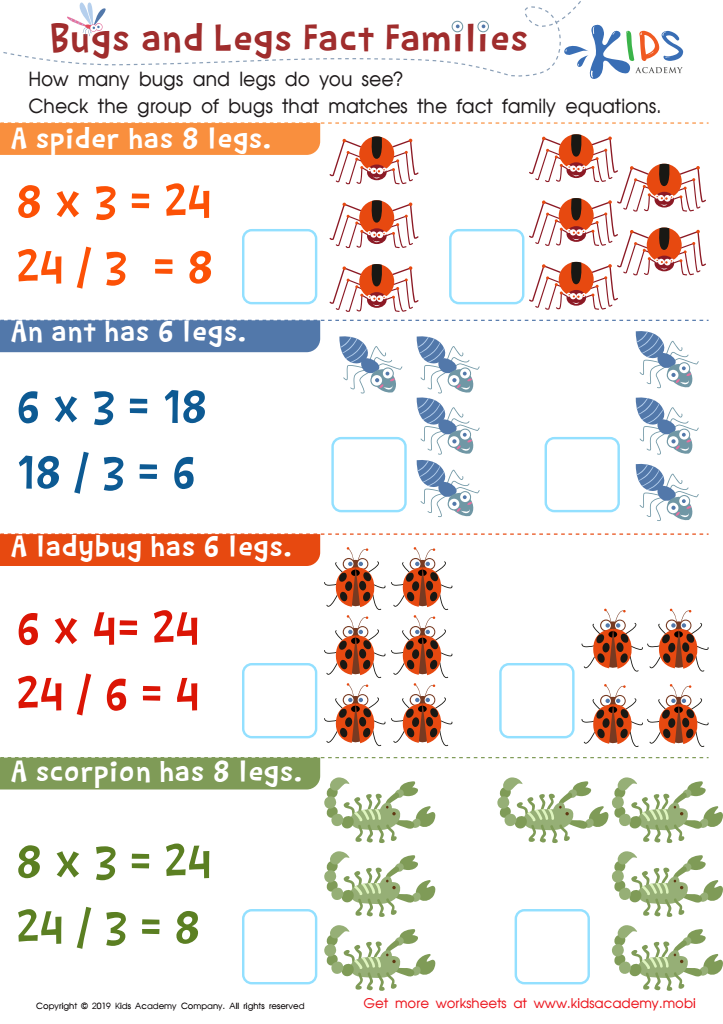
Bugs and Legs Fact Families Worksheet
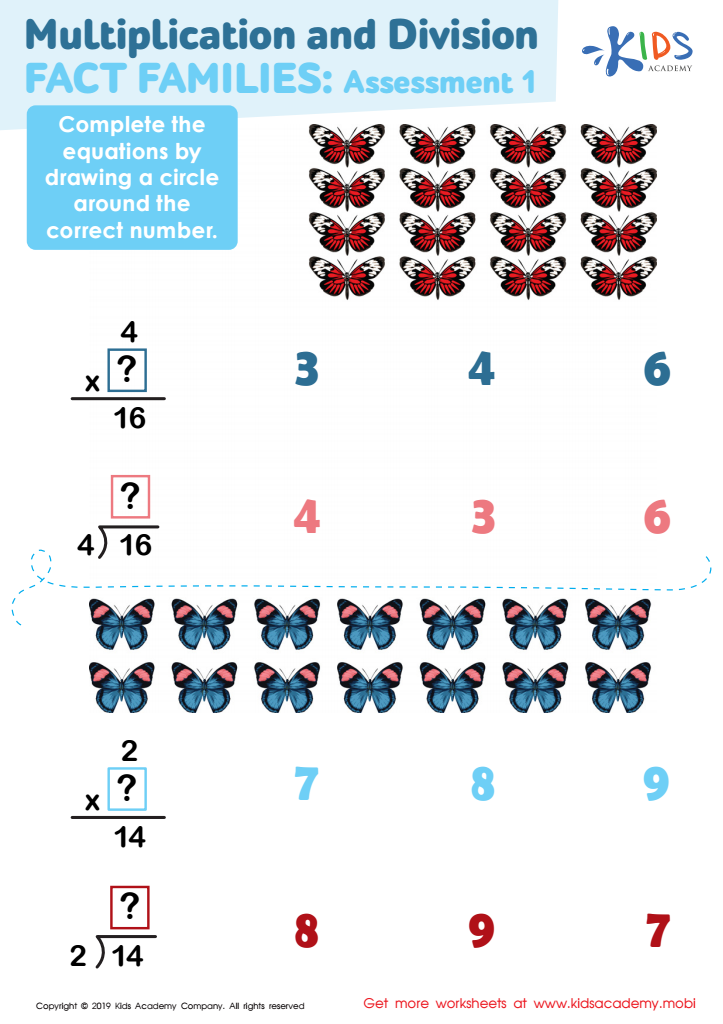
Multiplication and Division Fact Families Assessment 1 Worksheet
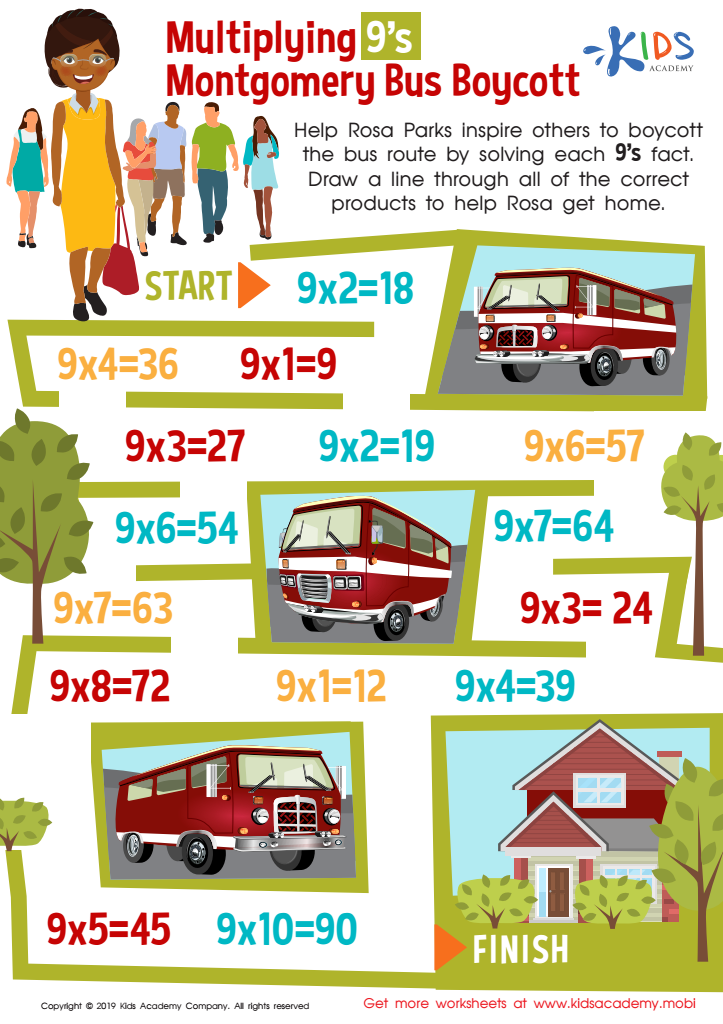
Multiplying 9’s Montgomery Bus Boycott Worksheet
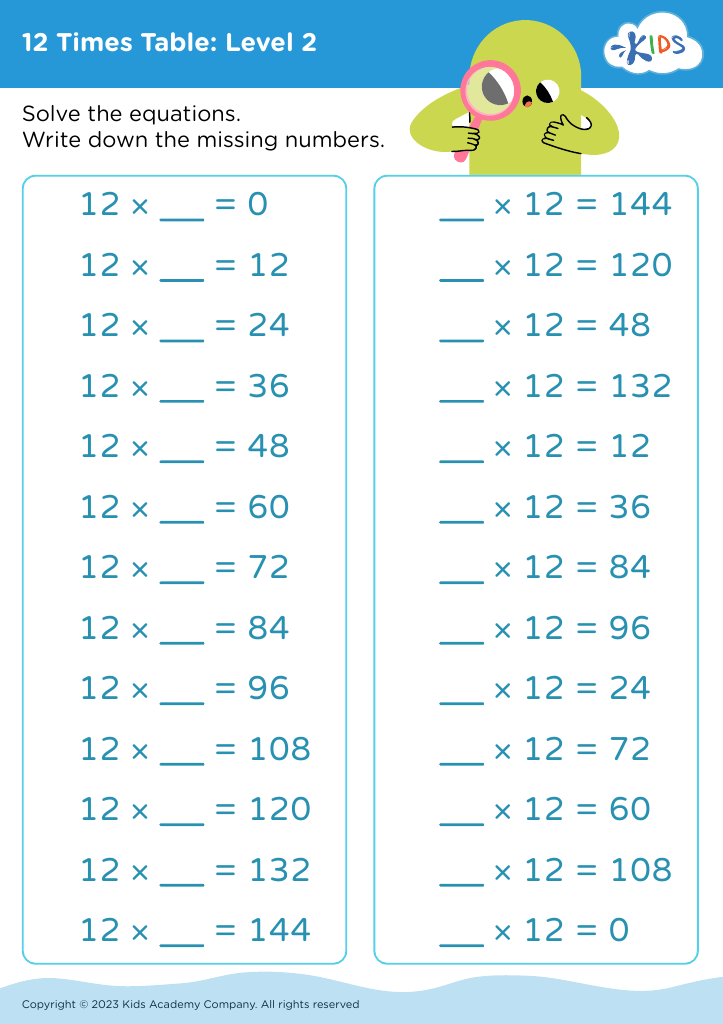
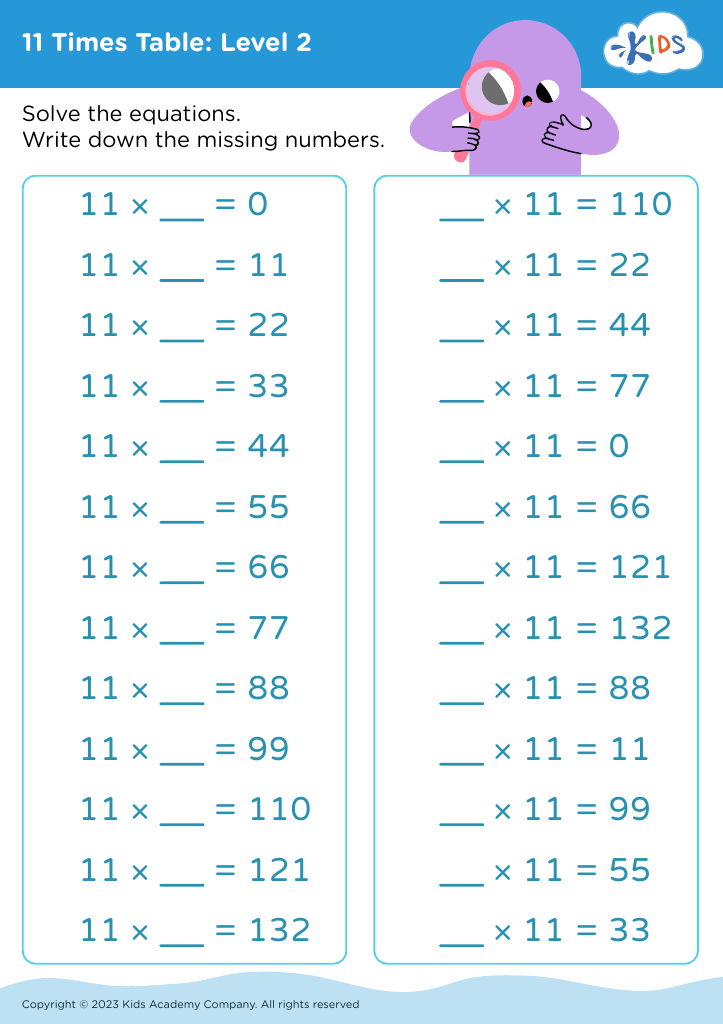
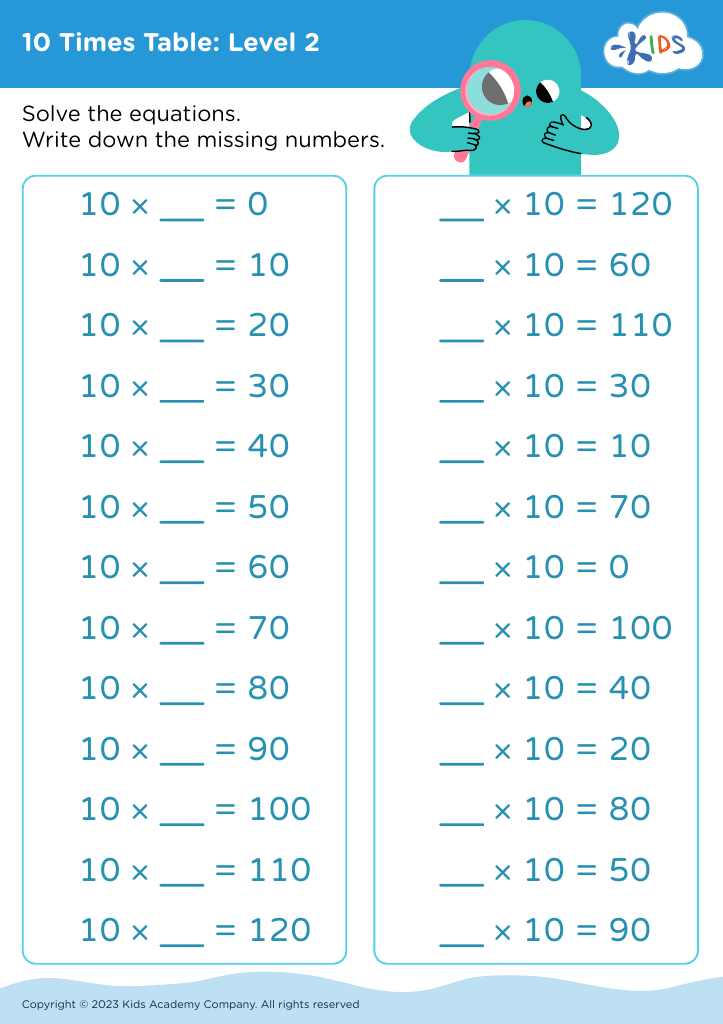
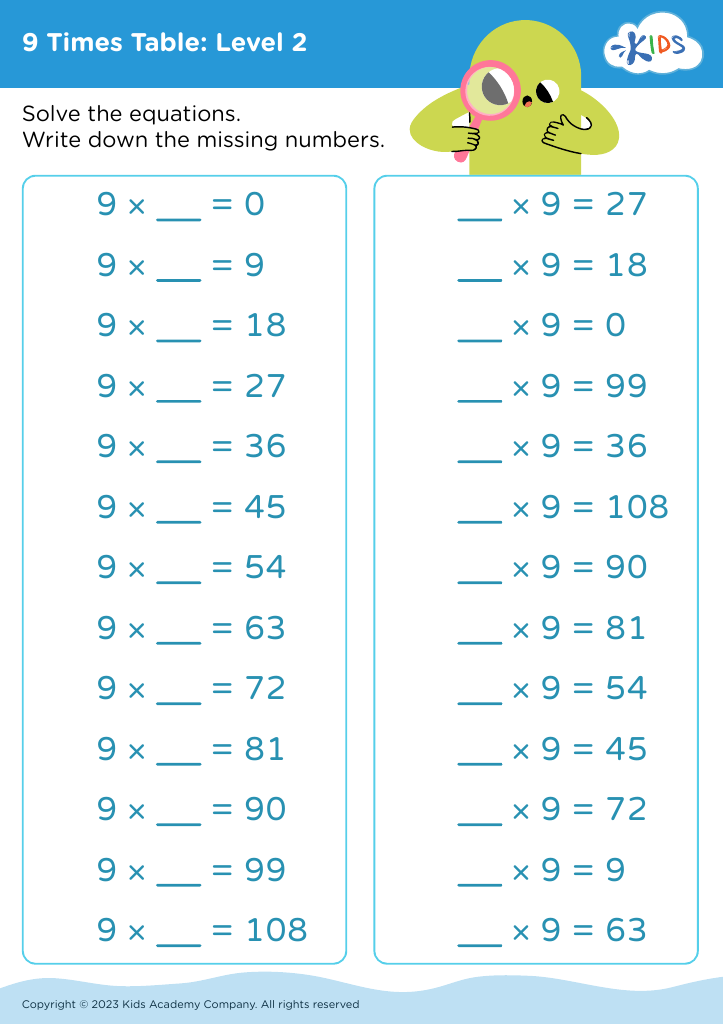
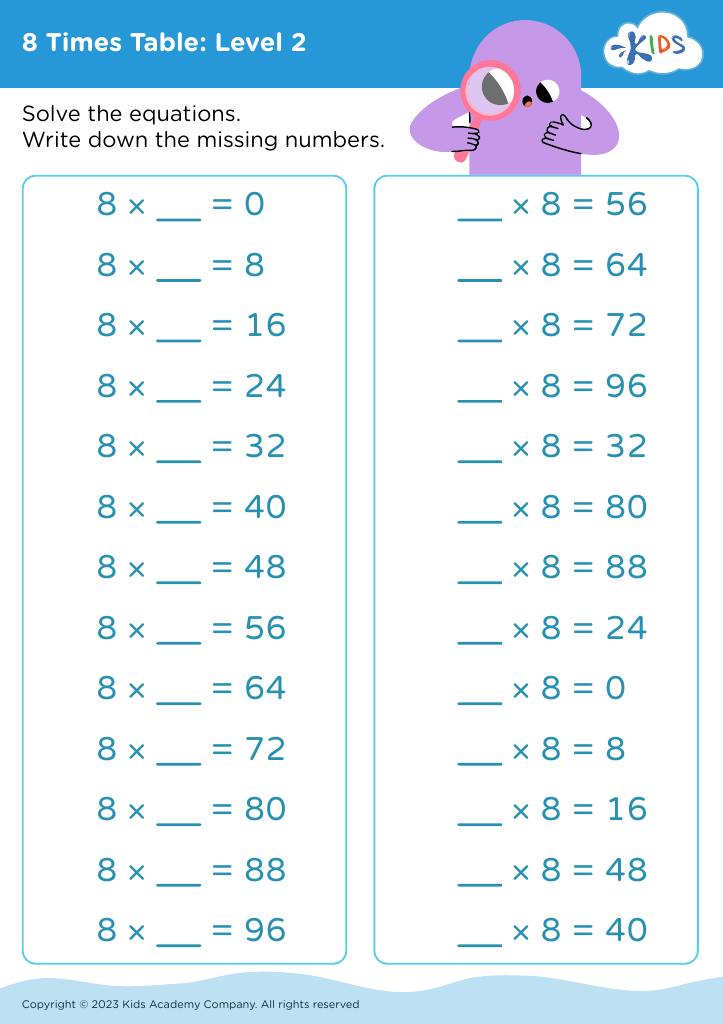
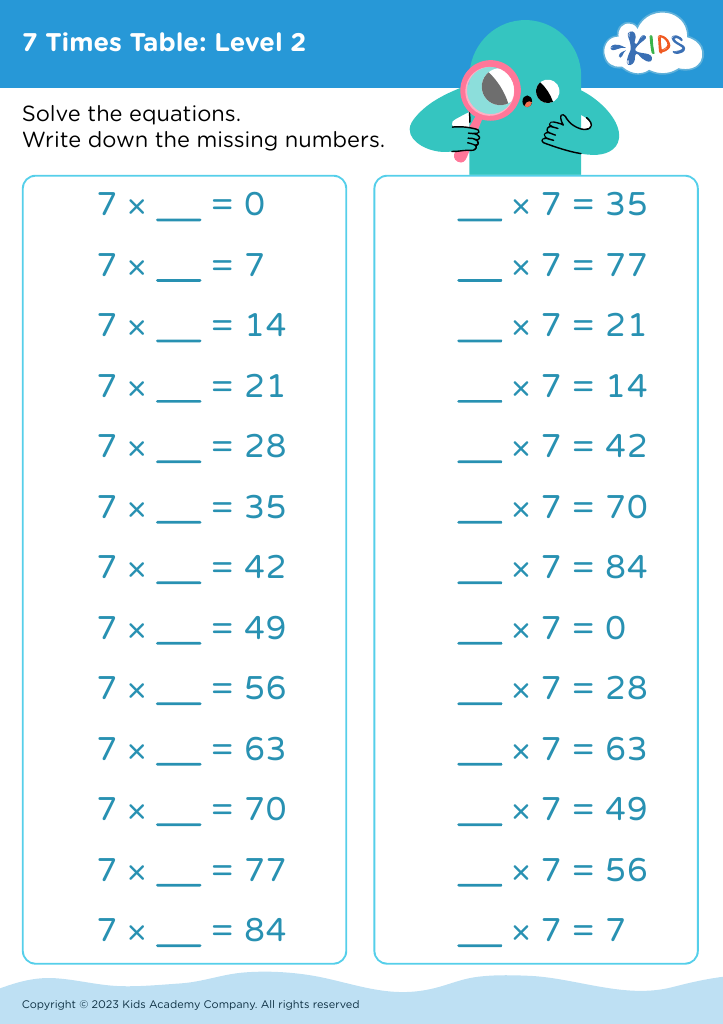
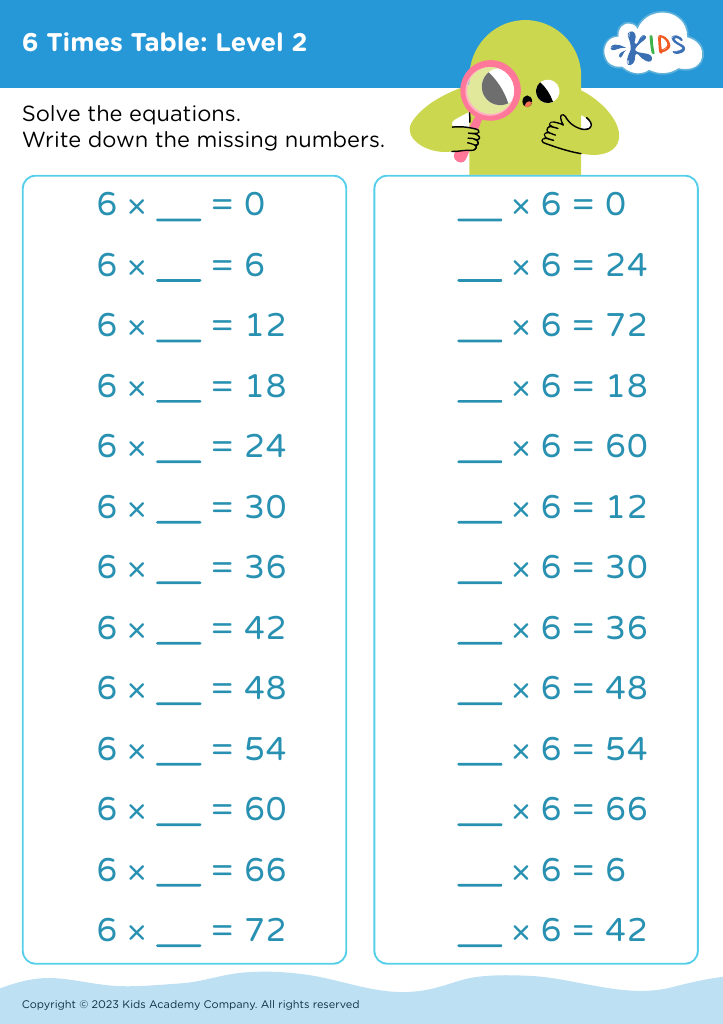
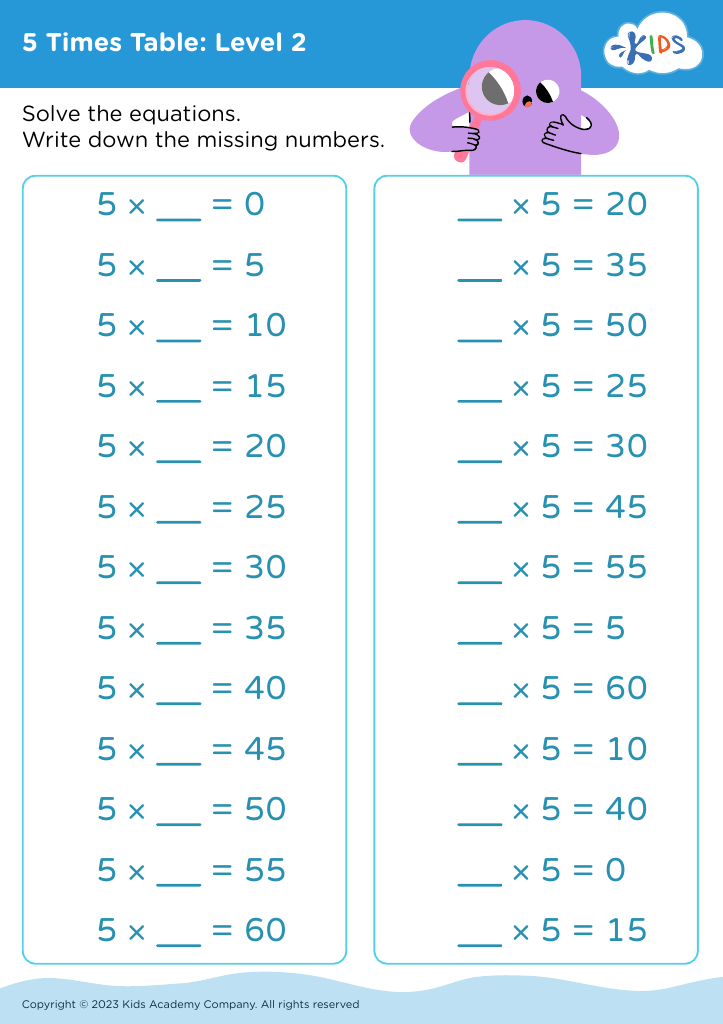
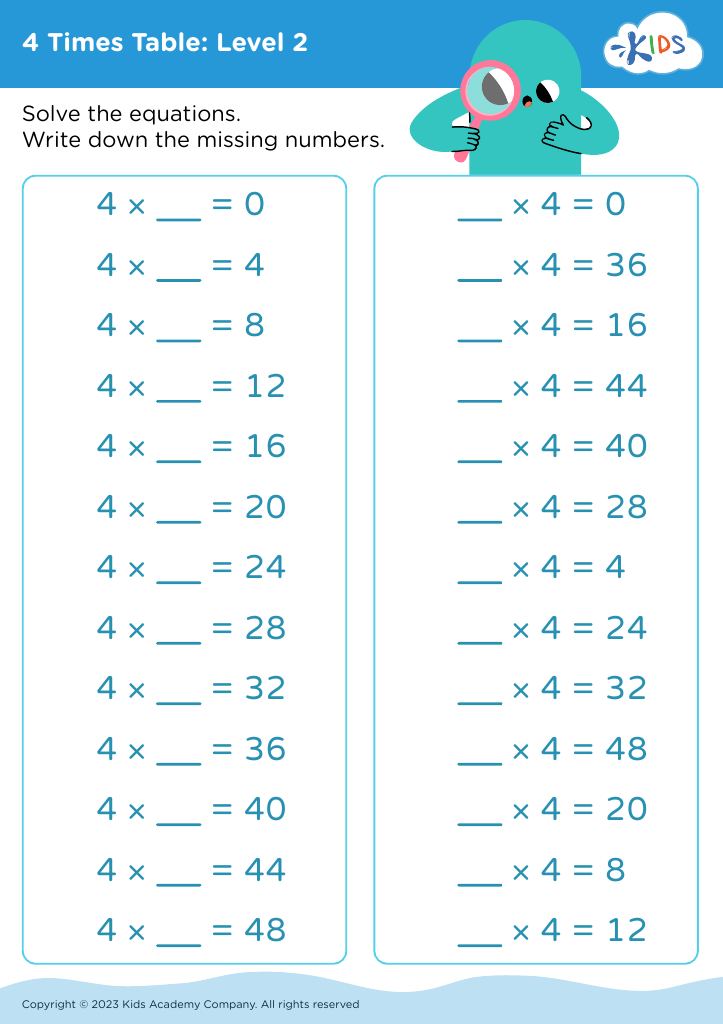
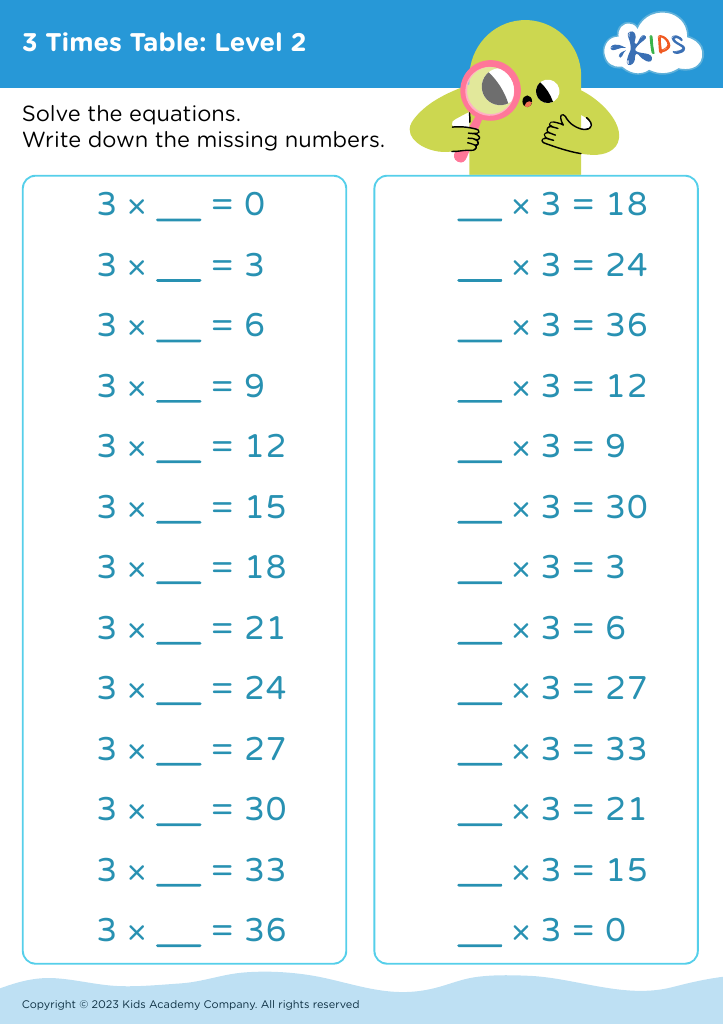
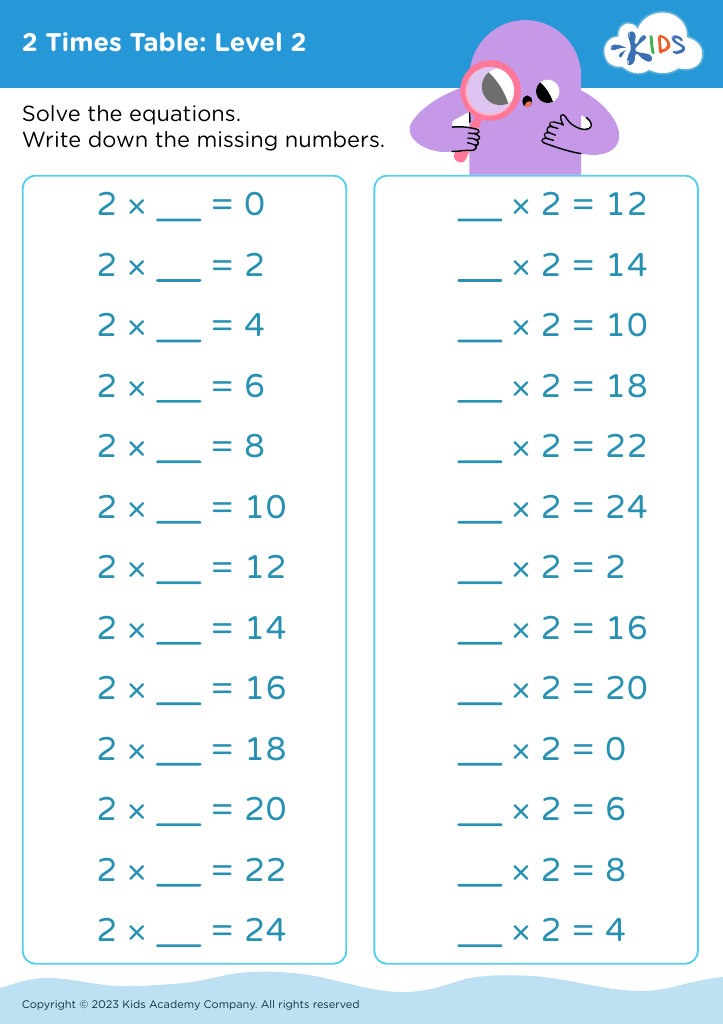
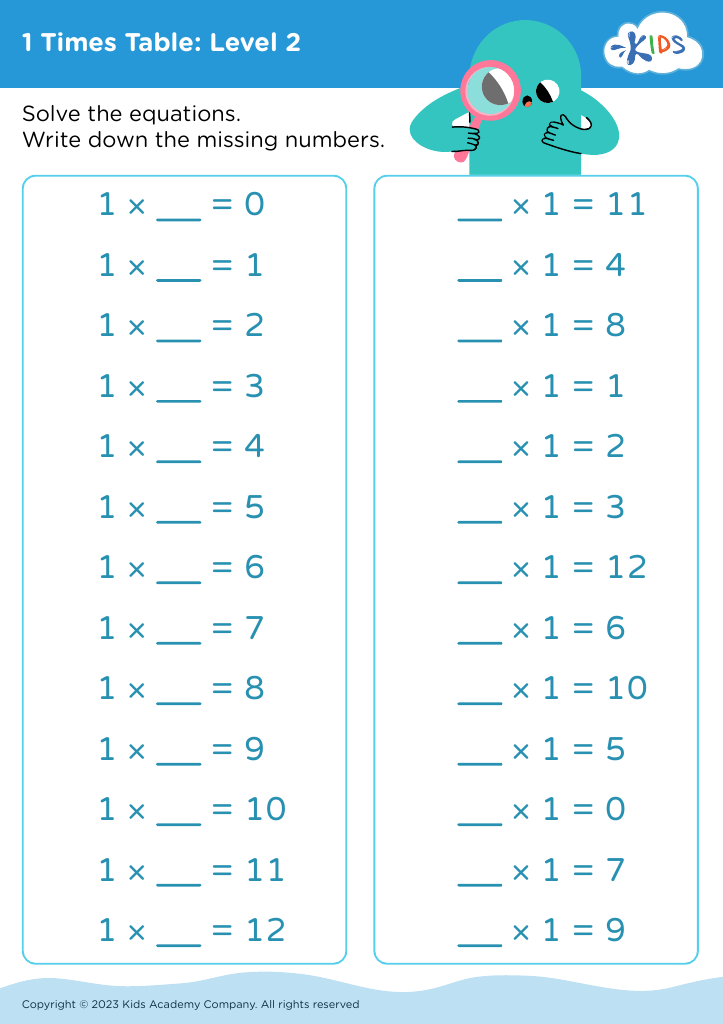


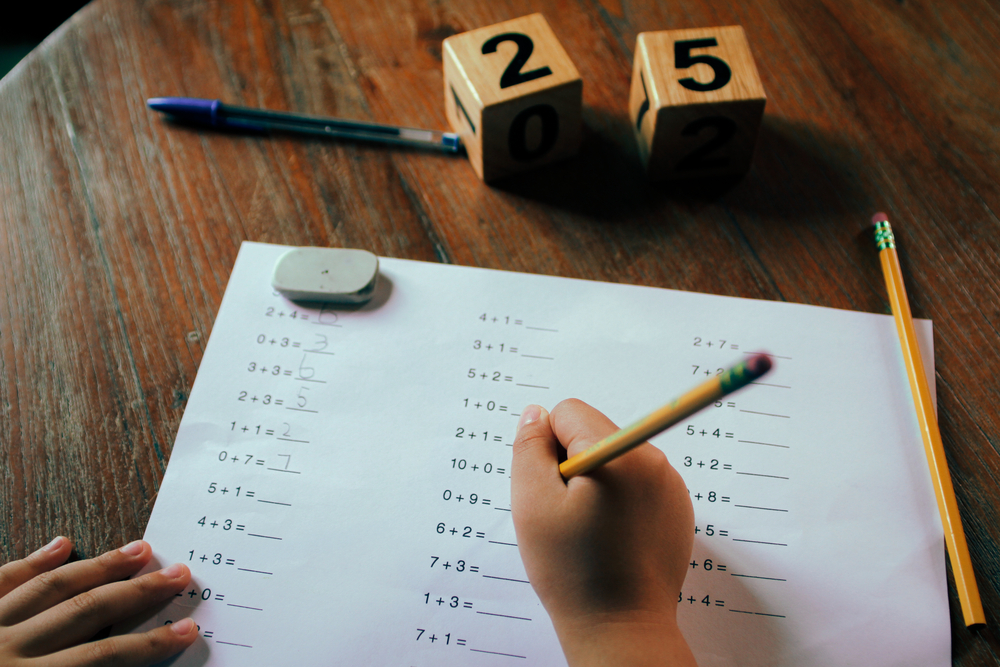





Normal multiplication, or basic multiplication, is a foundational mathematical skill that is crucial for children aged 5-9. Understanding multiplication not only helps children develop their number sense but also lays the groundwork for more advanced math concepts, including division, fractions, and algebra. During these formative years, children are particularly receptive to learning new concepts; establishing a solid grasp of multiplication can significantly enhance their overall mathematical confidence and competence.
Parents and teachers should prioritize this skill as it fosters critical thinking and problem-solving abilities. Recognizing that multiplication is essentially repeated addition helps students connect different mathematical concepts. When children learn to multiply, they also develop their ability to make predictions and solve real-life problems — skills that extend beyond the classroom.
Additionally, early mastery of multiplication can reduce anxiety toward math. Children are more likely to view math positively if they proceed confidently through early instances of problem-solving. Overall, by supporting the understanding of normal multiplication, parents and teachers empower children not just to succeed in math, but to appreciate its relevance in everyday life, encouraging a lifelong enthusiasm for learning and discovery.








