Normal Skip Counting Worksheets for Ages 5-9
11 filtered results
-
From - To
Discover our engaging Skip Counting Worksheets designed for children aged 5-9! These worksheets, curated by educational experts, make learning fun and interactive. They help young learners grasp the concept of skip counting effortlessly, building a strong foundation for future math skills. With colorful illustrations and a variety of exercises, these printables ensure that kids remain engaged while they practice counting by 2s, 5s, 10s, and more. Ideal for both classroom and at-home learning, our Skip Counting Worksheets support kids in mastering patterns and sequences, enhancing their mathematical confidence and preparing them for more advanced arithmetic concepts. Download now!
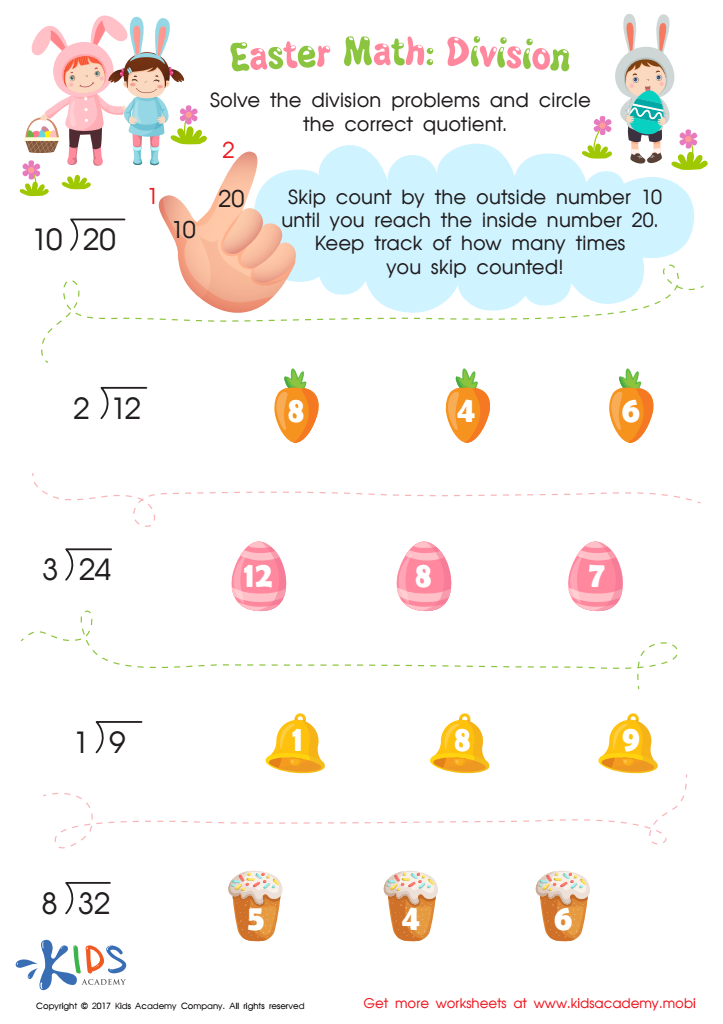
Division Worksheet
 Assign to My Students
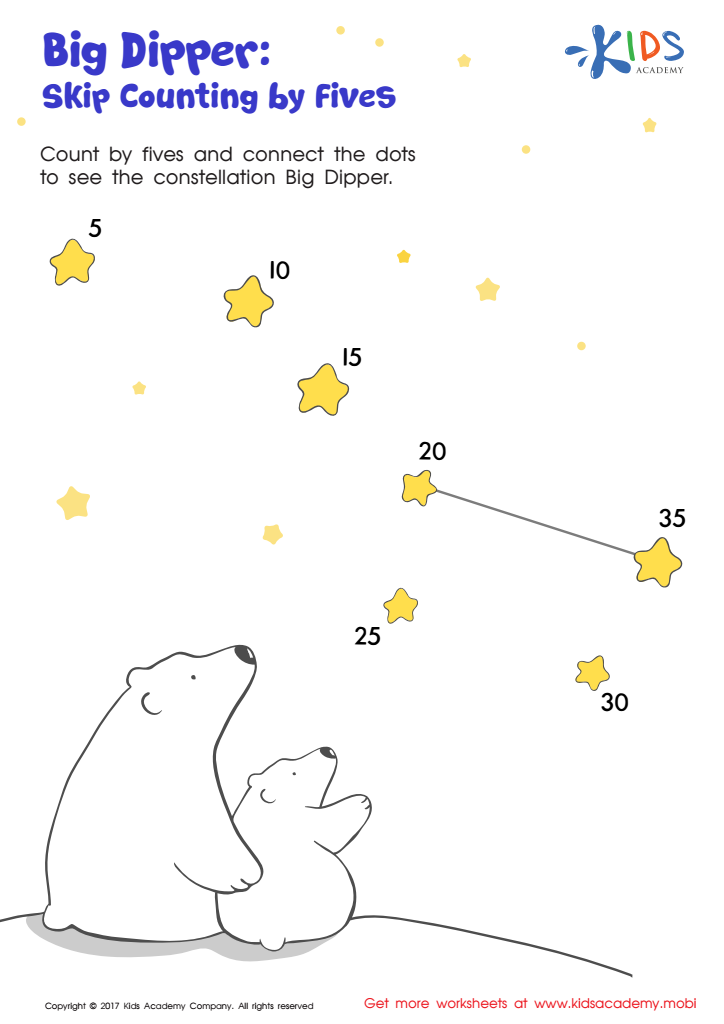
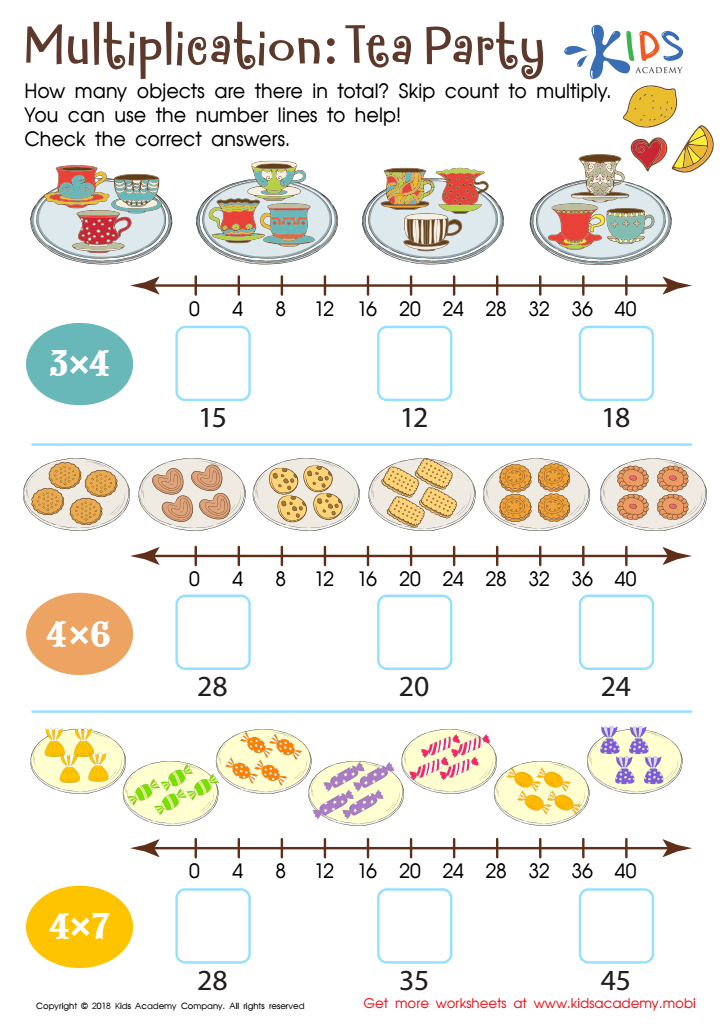
3rd Grade Math Worksheet Multiplication
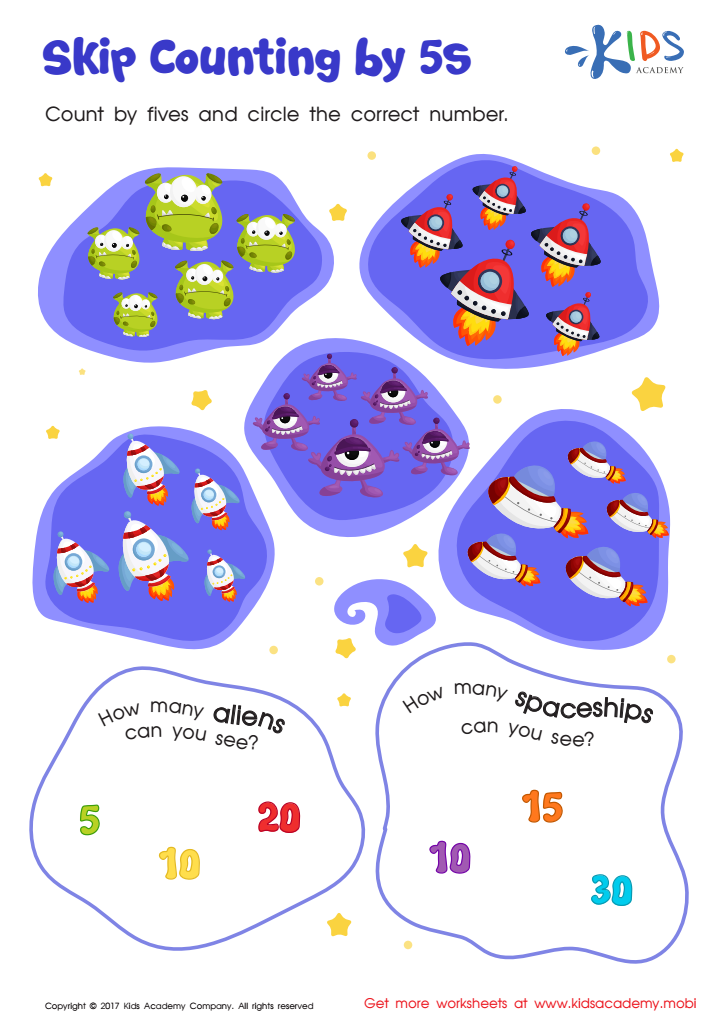
Skip Counting by 5s: Aliens and Spaceships Printable
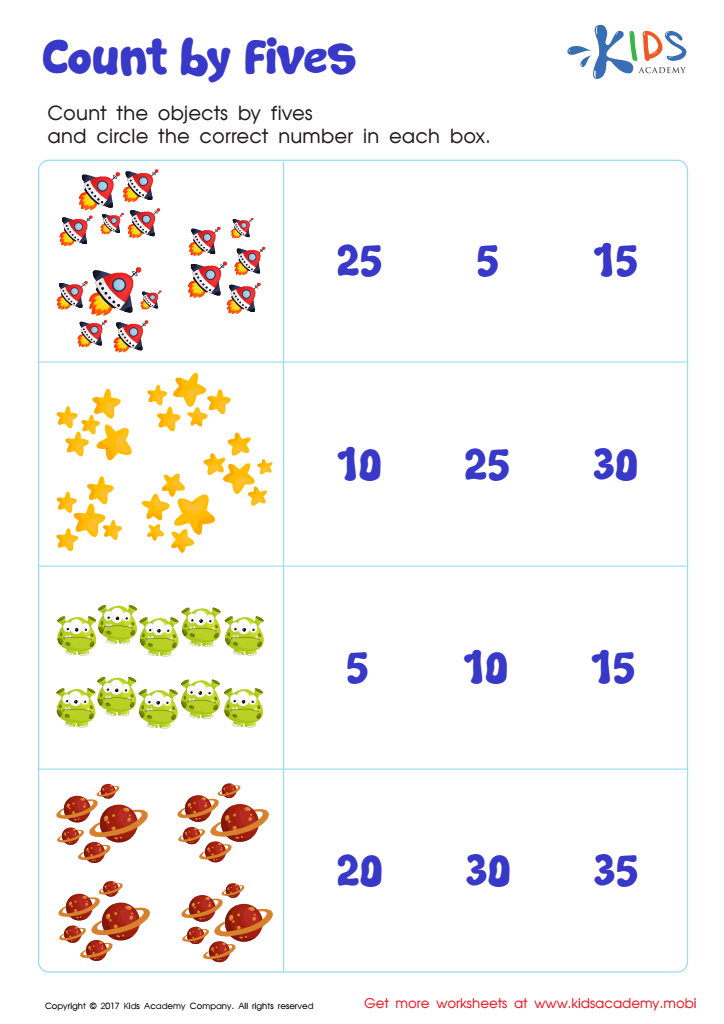
Skip Counting by 5s: Space Math Printable
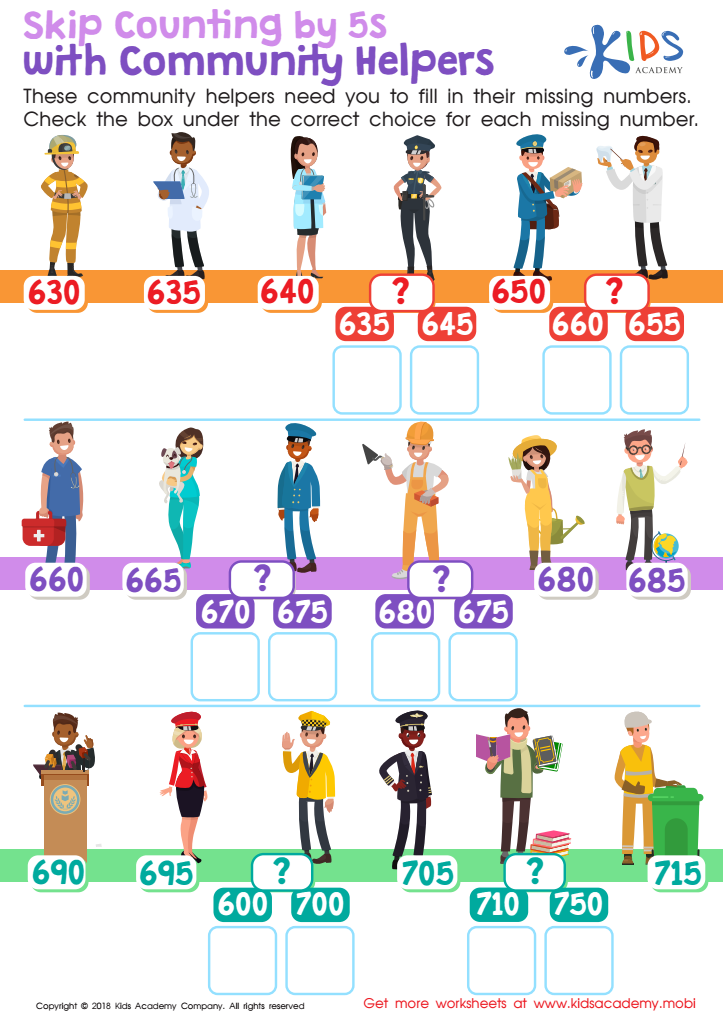
Skip Counting by 5s With Community Helpers Worksheet
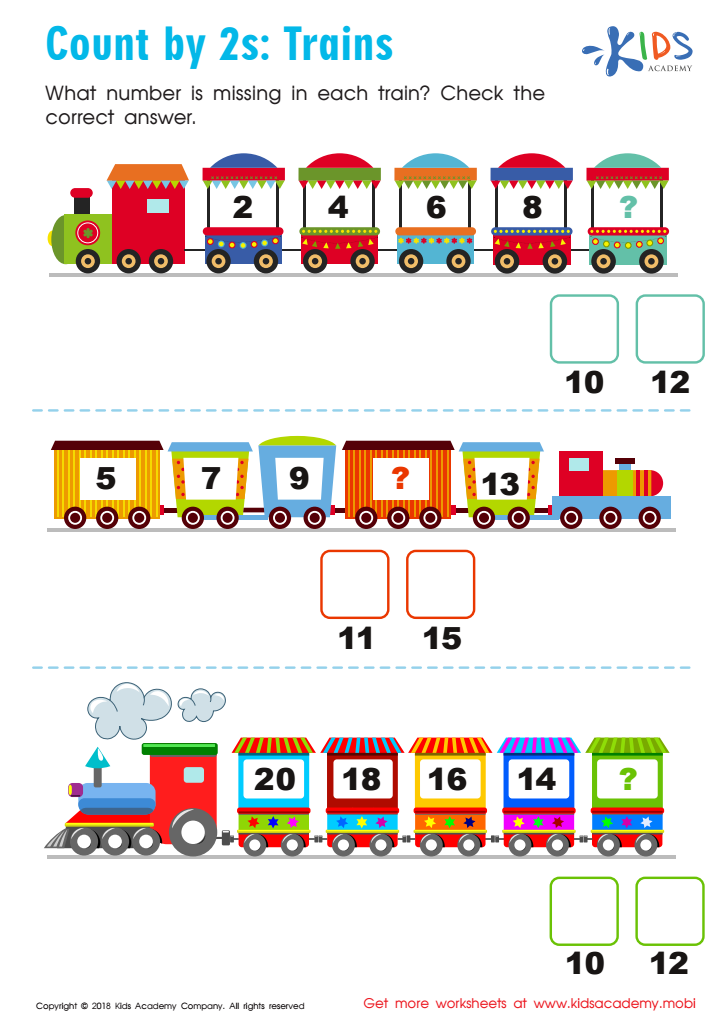
Count by 2's: Trains Worksheet
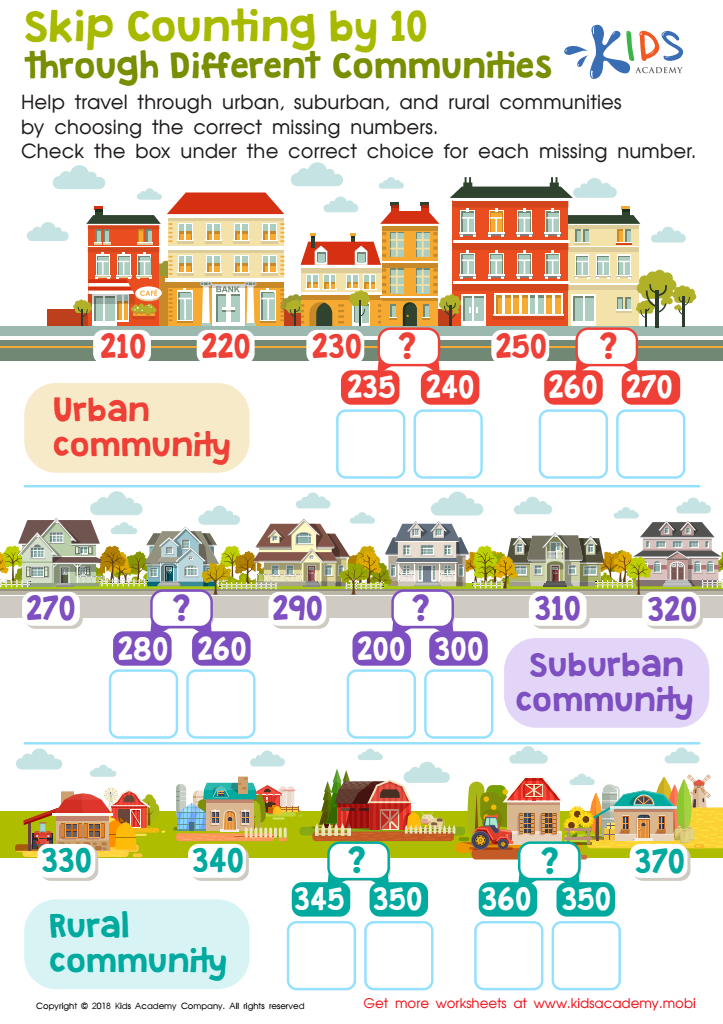
Skip Counting by 10 through Different Communities Worksheet
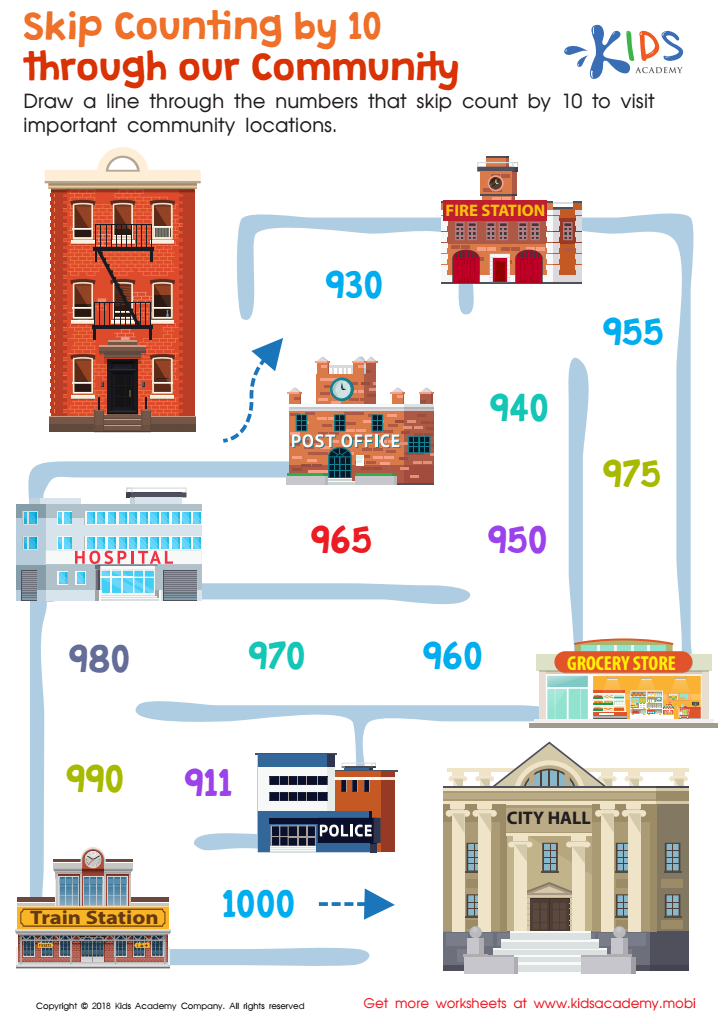
Skip Counting by 10 Through Our Community Worksheet
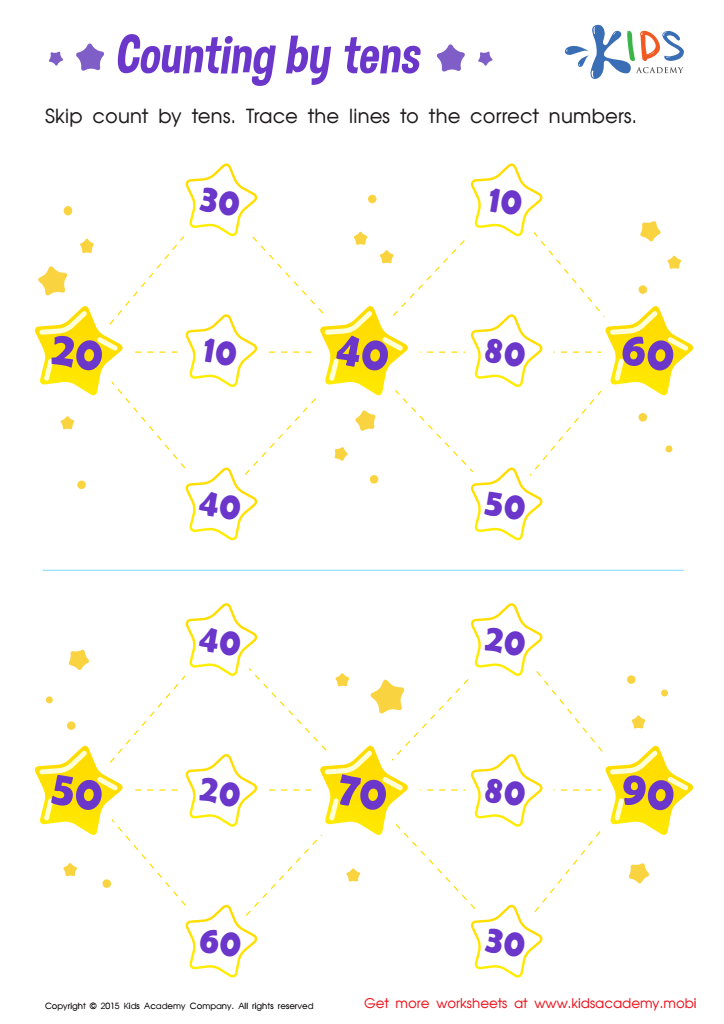
Learn Dozens: Counting by Tens Printable
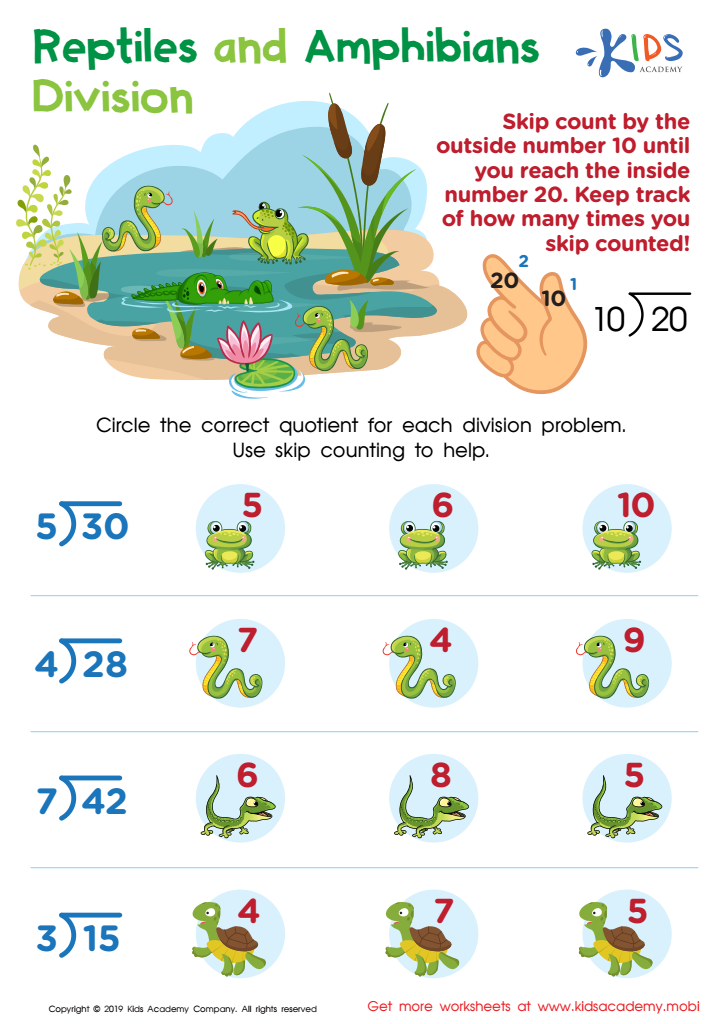
Reptile and Amphibians Division Worksheet








Normal skip counting is a foundational math skill essential for children ages 5-9. Skip counting involves counting forward or backward by numbers other than one, such as by twos, fives, or tens. This skill is crucial for several reasons:
-
Foundation for Multiplication and Division: Skip counting helps children understand the concepts of multiplication and division. For example, counting by fives lays the groundwork for multiplying by five or dividing by five later on.
-
Enhances Number Sense: It deepens children's understanding of number relationships and builds a sense of patterns within the number system. This awareness is crucial for grasping more complex mathematical concepts.
-
Time and Money Skills: Skip counting by fives affects how well children tell time on an analog clock and manage coins and currency, as many denominations are based on fives, tens, and twenties.
-
Boosts Confidence: Mastering skip counting enhances math fluency and bolsters confidence. Children feel more capable of tackling math problems, which supports a positive attitude towards learning.
-
Problem-Solving Abilities: Understanding patterns from skip counting promotes logical thinking and problem-solving, essential for academic success in different subjects.
Given its broad benefits, both parents and teachers should nurture and emphasize skipping counting skills, enhancing their child's overall mathematical development and preparing them for future educational challenges.








