Normal Color Words Worksheets for 5-Year-Olds
8 filtered results
-
From - To
Welcome to our engaging Normal Color Words Worksheets for 5-Year-Olds! Designed to make learning fun, these worksheets introduce children to basic color vocabulary through vibrant activities. Perfect for young learners and ESL students, our resources help kids recognize and identify colors while enhancing their language skills. Activities encourage creativity, allowing children to express themselves as they color, match, and associate words with visuals. Whether at home or in the classroom, these worksheets support early education by building a strong foundation in language development. Explore our printable collection today and spark your child's love for colors and words!
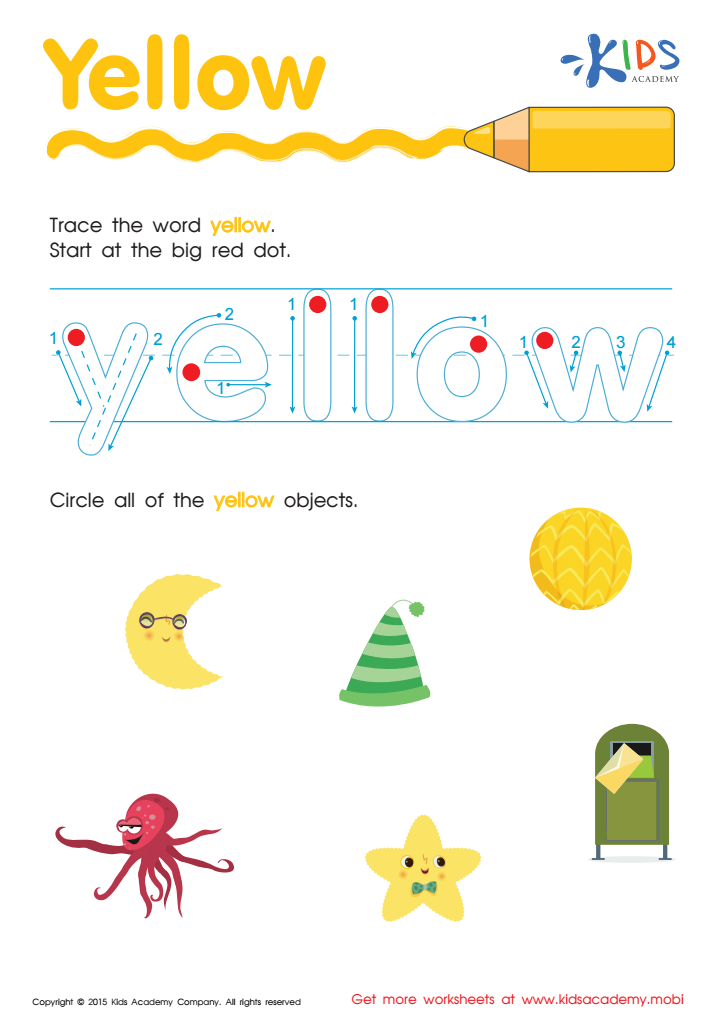
Yellow Tracing Color Words Worksheet
 Assign to My Students
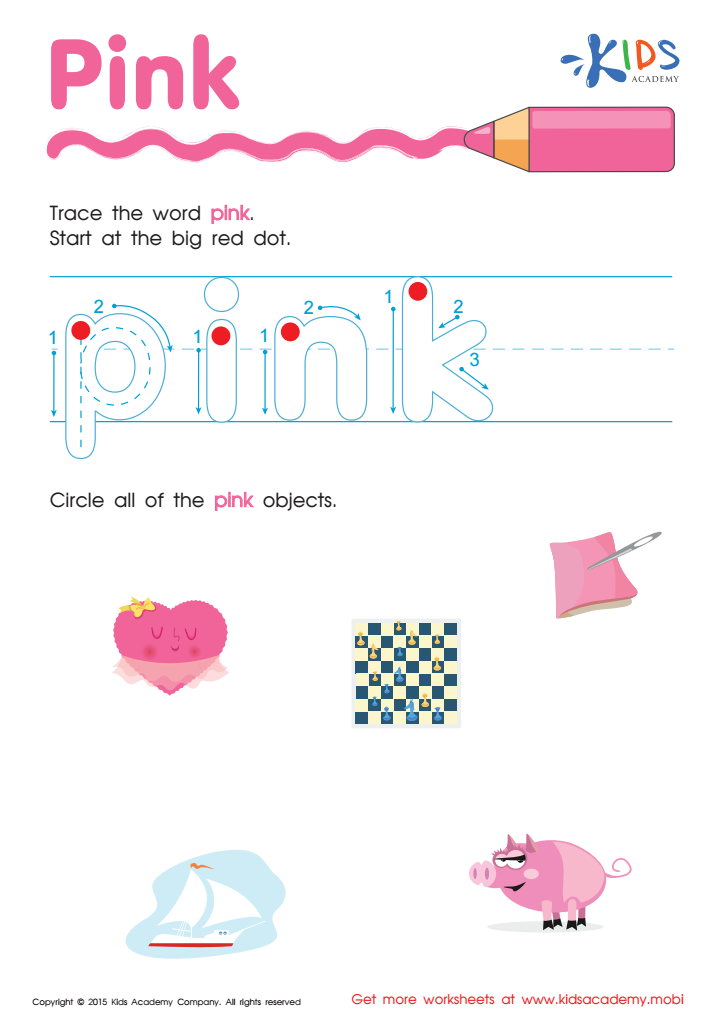
Pink Tracing Color Words Worksheet
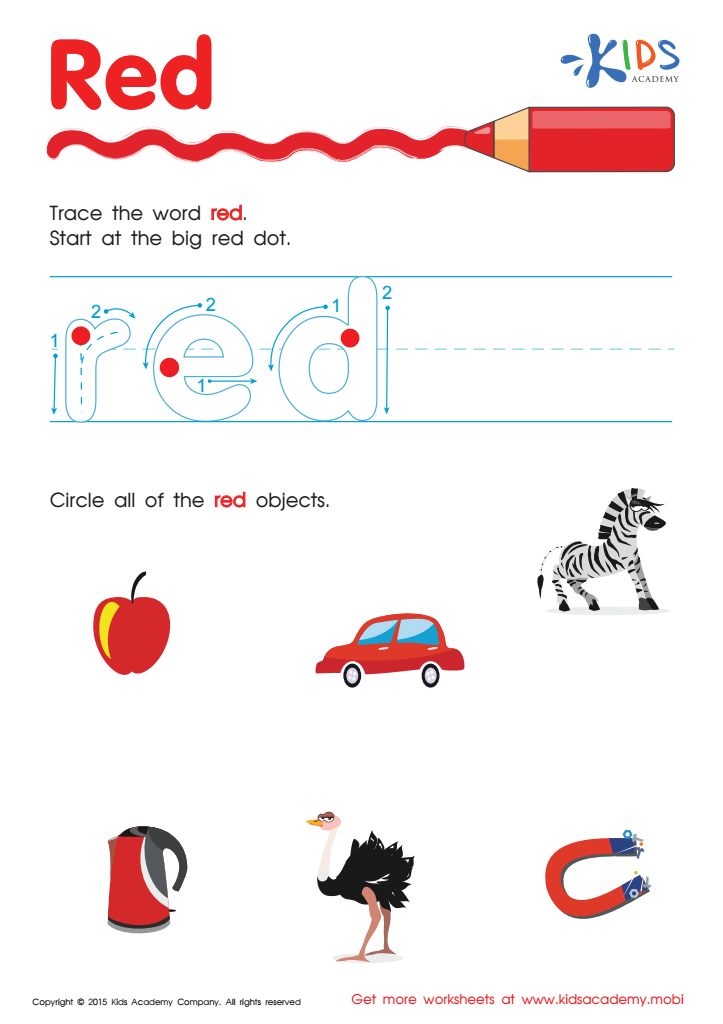
Red Tracing Color Words Printable
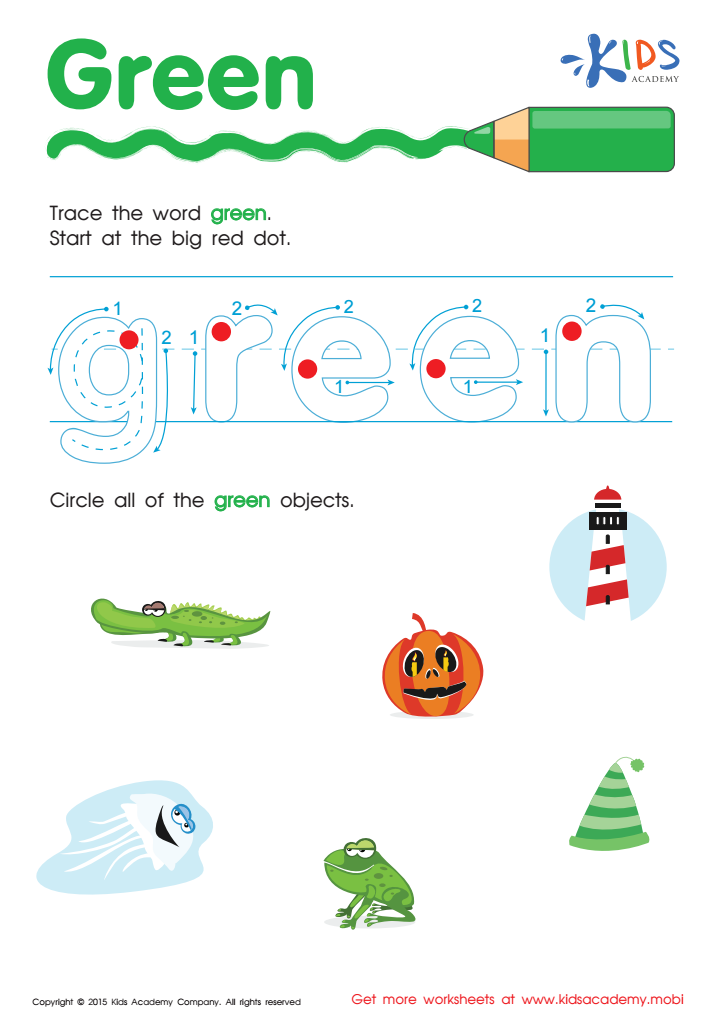
Green Tracing Color Words Worksheet
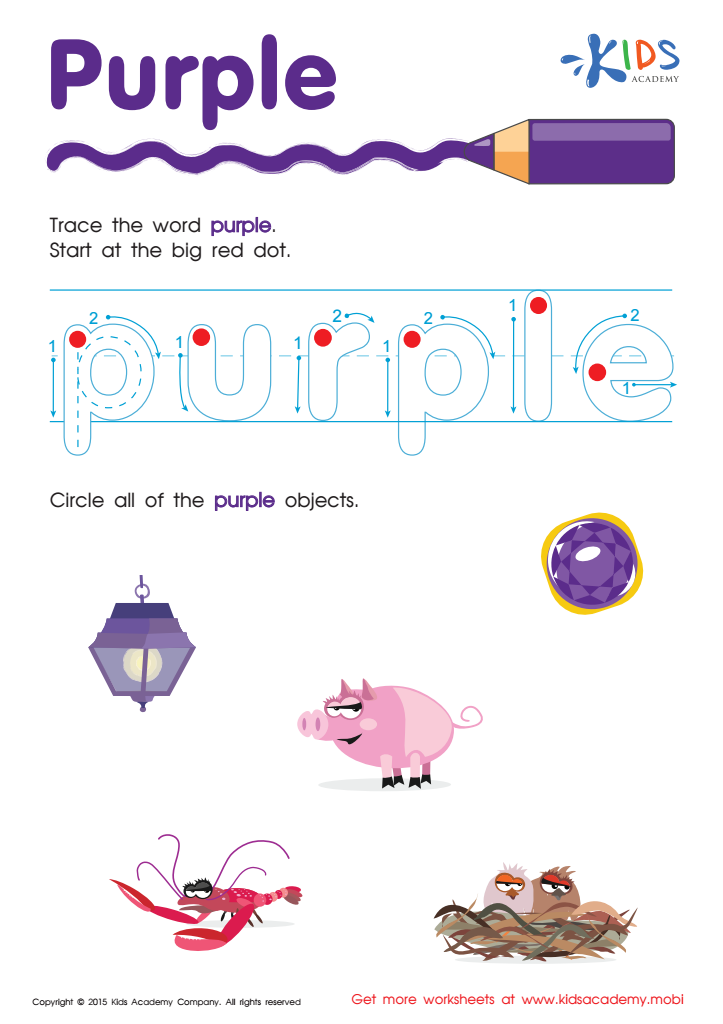
Purple Tracing Color Words Worksheet
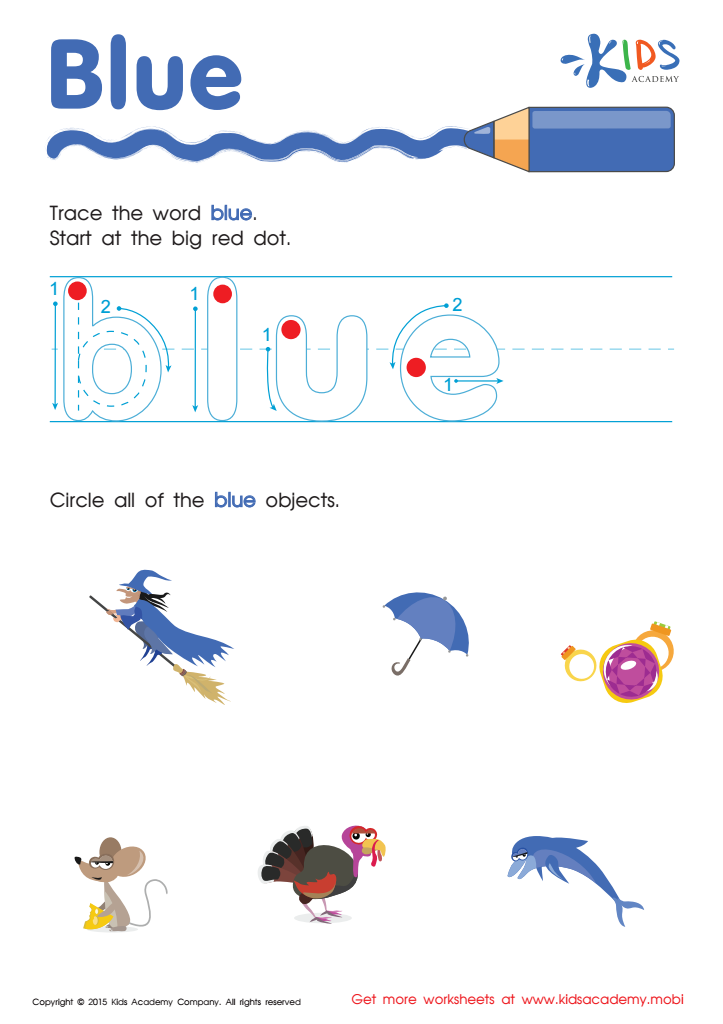
Blue Tracing Color Words Printable
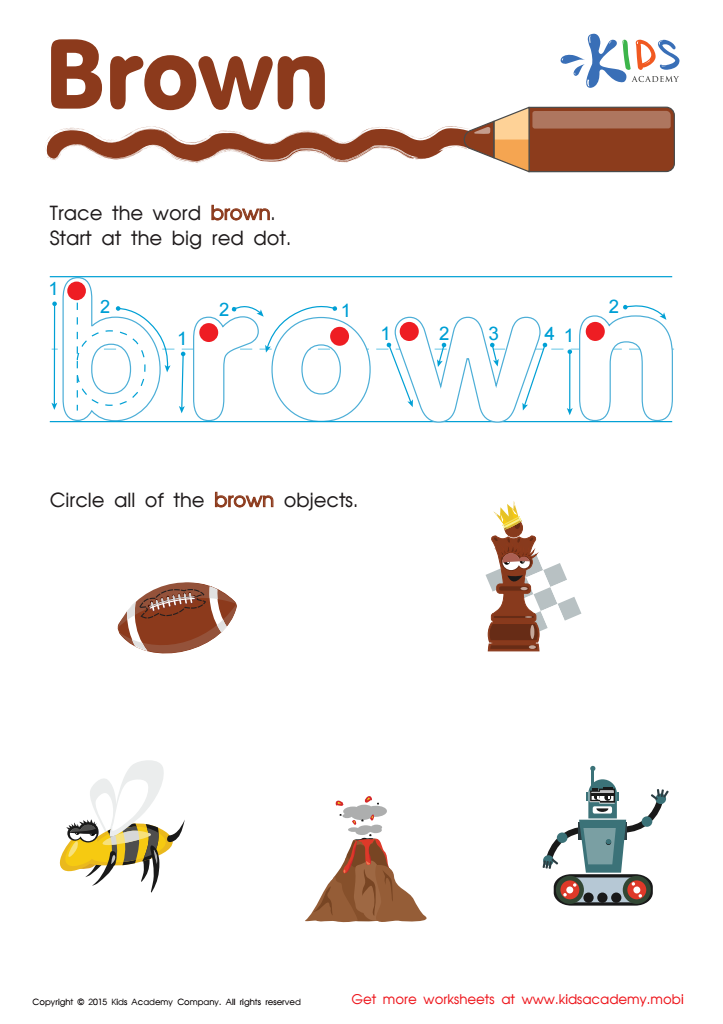
Brown Tracing Color Words Worksheet
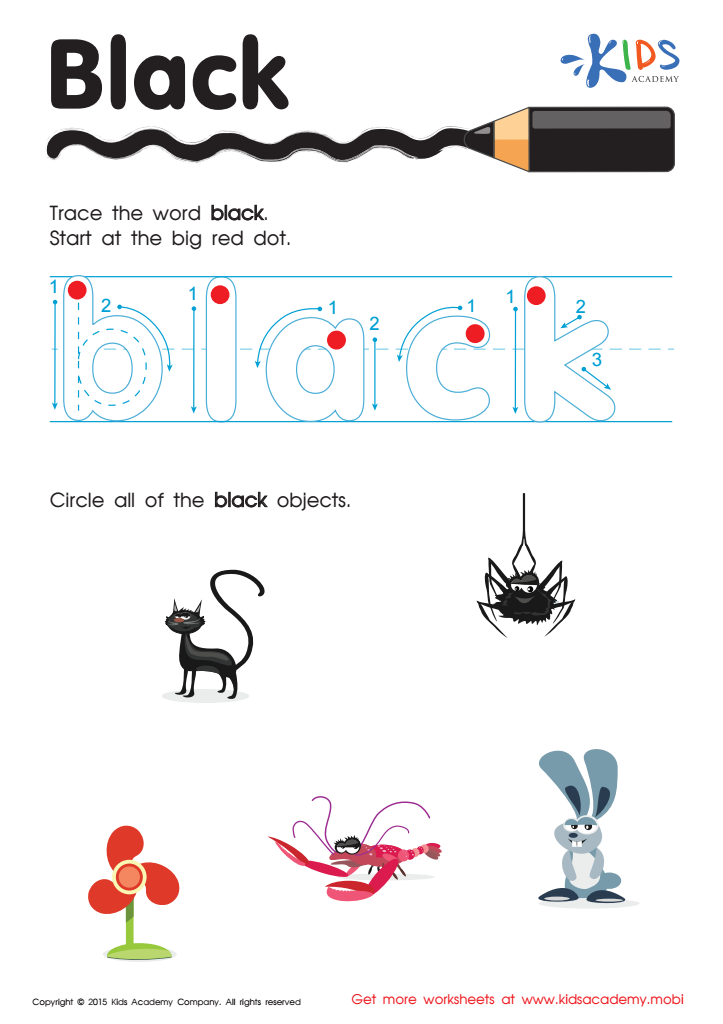
Black Tracing Color Words Printable



Normal Color Words, which include basic colors like red, blue, yellow, green, etc., are foundational vocabulary for 5-year-olds. Understanding and using these words is crucial for several reasons. First, they play a significant role in early language development. Children learn to categorize and describe their world, enhancing their communication skills. This vocabulary aids their ability to express thoughts and feelings, fostering emotional intelligence.
Moreover, recognizing and naming colors boosts cognitive skills. It helps with concepts such as sorting, matching, and comparing—critical components of early math learning. When children identify colors in their surroundings, they develop observational skills that are essential for learning.
Additionally, colors are often associated with emotions and experiences, providing a bridge for children to articulate their feelings. For instance, they might describe a blue sky as calm or a bright red apple as exciting.
By prioritizing Normal Color Words, parents and teachers support the holistic development of children. Engaging them in activities involving colors, whether through art, play, or stories, nurtures a love for learning and enhances their understanding of the world around them. This understanding ultimately lays the groundwork for more complex skills in reading, math, and social interaction as children grow.








