Filters

7 filtered results

Clear all filters
Favorites
With answer key
Interactive

7 filtered results

Difficulty Level

Grade


Foster your child's early math abilities with our Counting Skills Normal Addition Worksheets designed for 5-year-olds. Kids Academy provides engaging and educational printable worksheets that focus on basic addition using fun and interactive techniques. Each worksheet aims to enhance counting skills and boost confidence in young learners. Perfect for both classroom environments and at-home learning, these worksheets incorporate colorful visuals and simple equations, making math an enjoyable experience. Start building a strong mathematical foundation and stimulate your child's interest in numbers and arithmetic with our expertly crafted resources.

Check out this FREE Trial Lesson on Addition for age 5!

Making 16

Favorites
With answer key
Interactive
  • 5
  • Counting skills
  • Addition
  • Normal
Math PDF Worksheet: Count Funny Animals

Count Funny Animals Worksheet

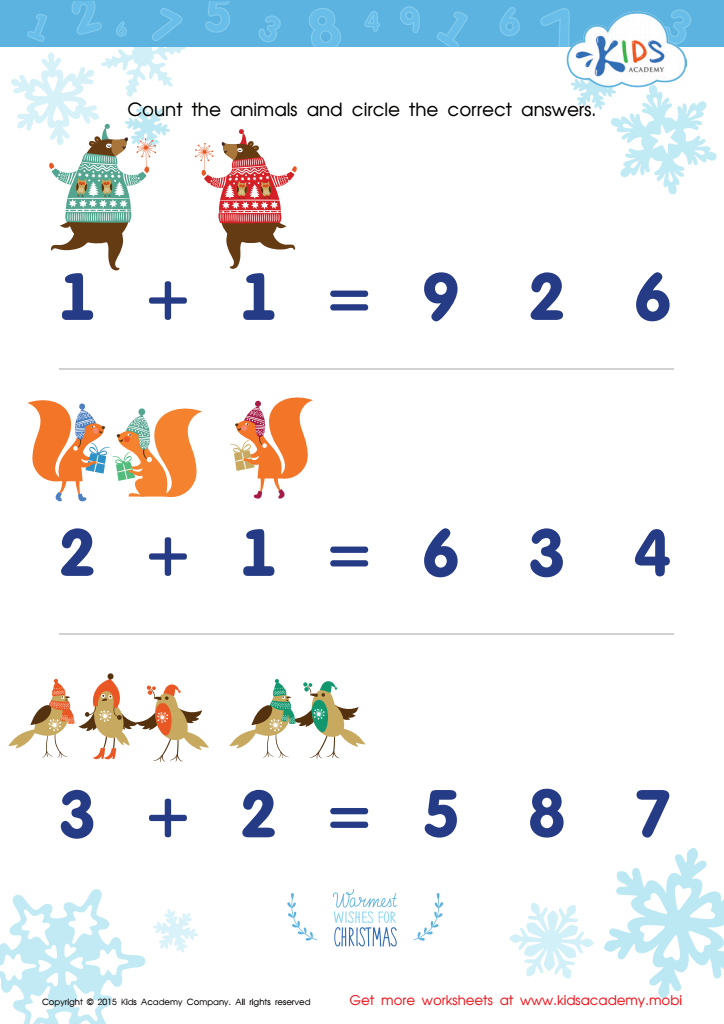
Get your kid in the Christmas spirit with this festive addition worksheet! They'll have fun counting the colorful animals and writing in the numbers. Our graphic layout makes it easy for them to visualize and solve the task. Print it out and help your kid keep their math skills sharp this winter with Kids Academy!
Count Funny Animals Worksheet
Worksheet
Adding Flower Petals Worksheet

Adding Flower Petals Worksheet

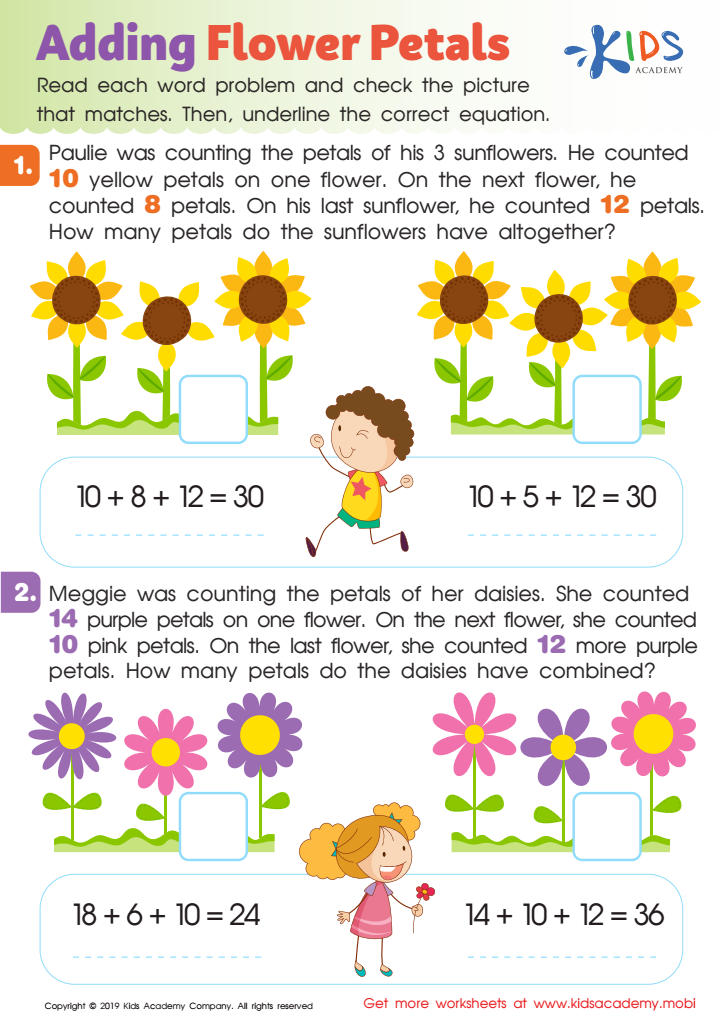
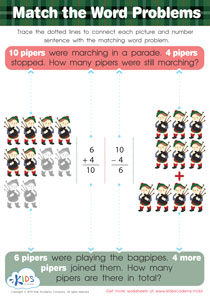
This free worksheet helps little mathematicians learn to understand word problems. They'll read each one and match it to the corresponding picture. Important info is highlighted, teaching kids to look for key info when solving problems. Then they'll underline the correct number equation that matches the picture. A great way to practice problem-solving skills!
Adding Flower Petals Worksheet
Worksheet
Help the Warthog Count the Grubs Worksheet

Help the Warthog Count the Grubs Worksheet

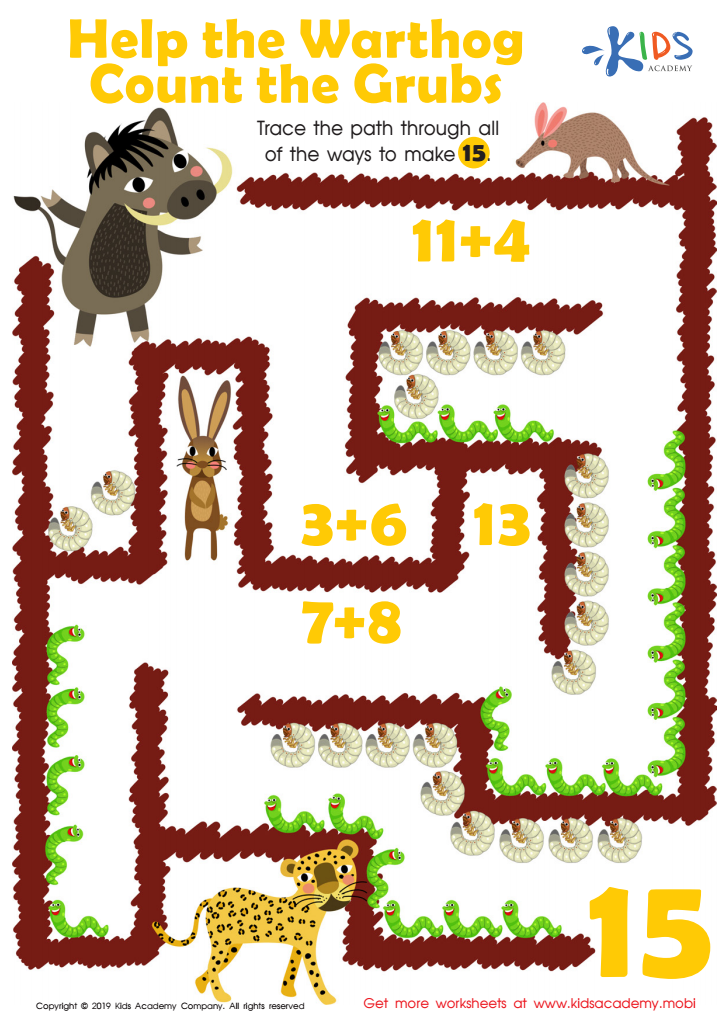
Test your kids' knowledge of wild animals. Ask them to name some they know, then have them identify the animals on this worksheet. If they can't, take the time to tell them the names. Finally, trace the warthog's path through the maze by solving the equations and going through paths that make 15.
Help the Warthog Count the Grubs Worksheet
Worksheet
Collect Sticks Worksheet

Collect Sticks Worksheet

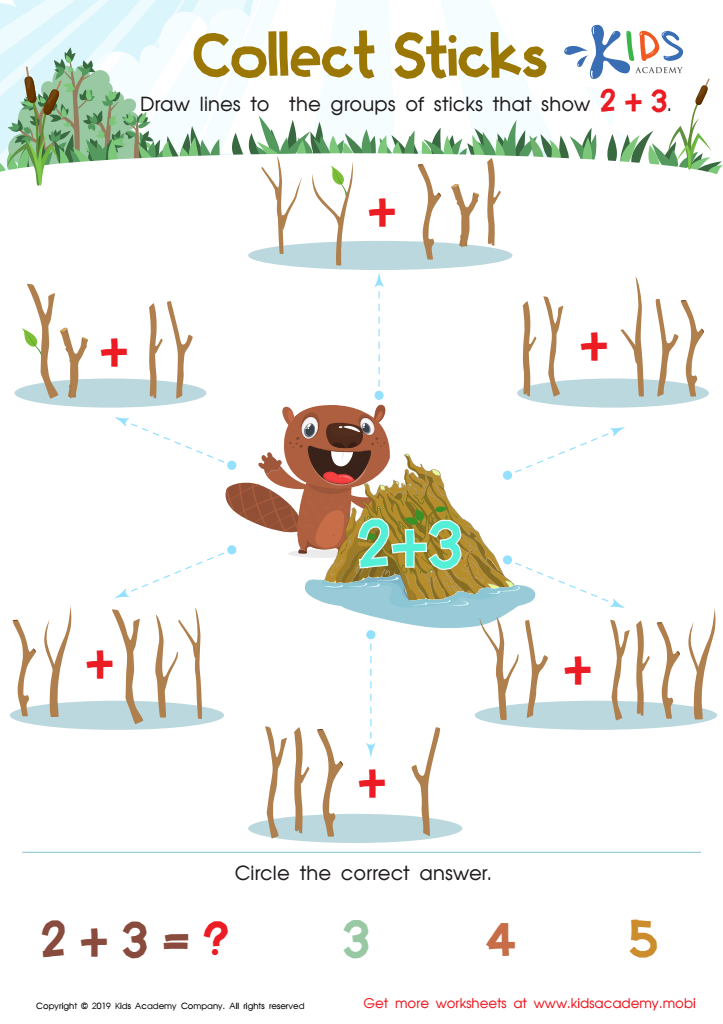
Let math be fun for your kids with a simple and colorful worksheet exercise. Addition and subtraction can be daunting, but you can make it enjoyable with exercises like this one. Get them to draw lines to the groups of sticks that show 2+3 and watch them light up.
Collect Sticks Worksheet
Worksheet
Help the Bee Find 16 Flowers Worksheet

Help the Bee Find 16 Flowers Worksheet

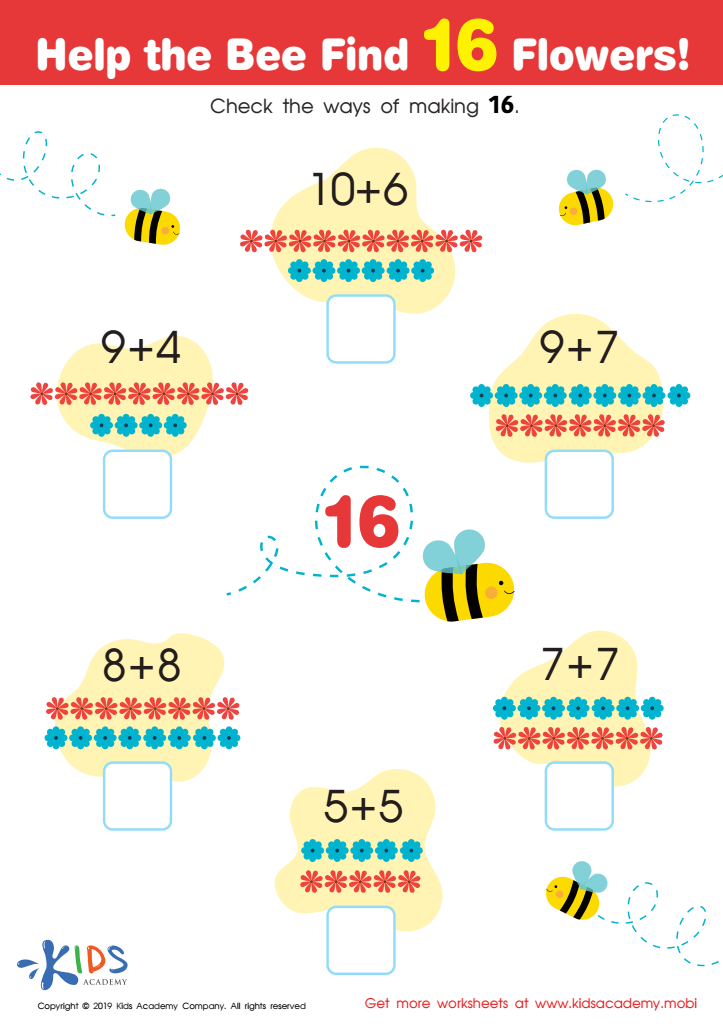
Ask your students to count as high as they can. Show them that different numbers can equal the same figure with examples like 2+2=4 and 3+1=4. Ask for more examples, then help the bees find 16 flowers by checking the ways of making 16.
Help the Bee Find 16 Flowers Worksheet
Worksheet
14 in School Worksheet

14 in School Worksheet

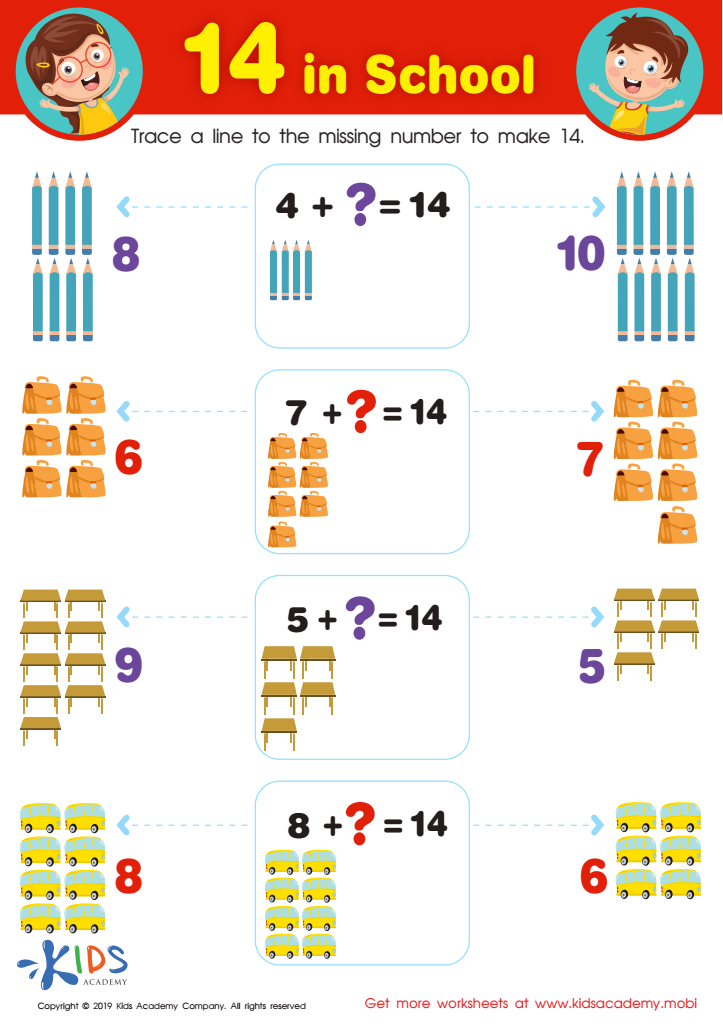
Remind your kids that adding different sets of numbers can give the same total (e.g. 2+3=5, 4+1=5). Ask them for more examples. Afterwards, work through the exercise. Help them count the objects and trace a line to the missing number that makes the total 14.
14 in School Worksheet
Worksheet
Growing with 15 Worksheet

Growing with 15 Worksheet

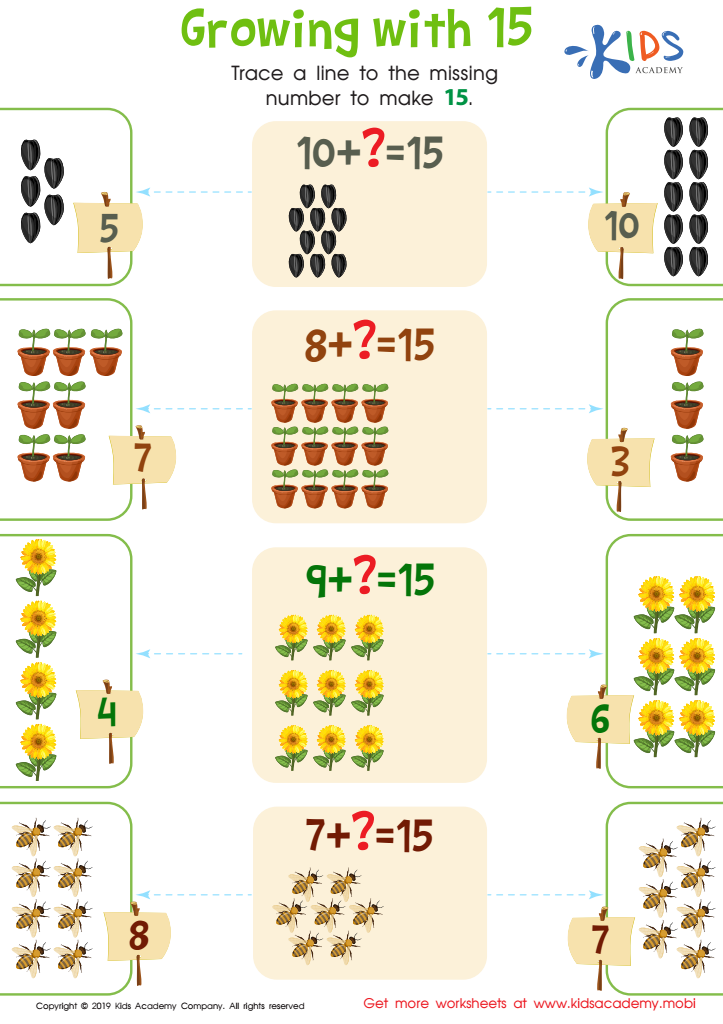
Remind your kids that adding different sets of numbers can give the same total (e.g. 2+3=5, 4+1=5). Test their understanding by asking them for more examples. Move onto the worksheet: count objects, then trace the line to the number making a total of 15.
Growing with 15 Worksheet
Worksheet


Counting skills and basic addition (often referred to as "normal addition") are crucial for 5-year-olds and hold significant value for both parents and teachers. During these formative years, children develop the foundational skills needed for future academic success, particularly in mathematics.

Understanding counting helps children grasp the fundamental concept of numbers and their sequence, which is the basis for all higher arithmetic operations. By learning to count objects, children enhance their number recognition abilities and improve their one-to-one correspondence skills, ensuring they can match numbers to actual quantities accurately. This process forms the cornerstone for understanding addition and subtraction, which are pivotal operations in any math curriculum.

Introducing basic addition at this age promotes cognitive development and problem-solving skills. When children learn to add, they begin to understand the ideas of increasing and combining quantities, which mirrors real-world scenarios like sharing and distributing resources. This early practice in logical thinking can translate into more complex reasoning abilities in the future.

Moreover, developing these numeracy skills boosts a child’s confidence and fosters a positive attitude toward mathematics. As children experience success with counting and addition, they build a growth mindset that encourages persistence, curiosity, and enjoyment in learning. In summary, counting skills and normal addition lay the groundwork for mathematical literacy, critical thinking, and lifelong learning.