Problem-solving abilities Normal Math Worksheets for Ages 6-7
11 filtered results
-
From - To
Boost your child's problem-solving skills with our carefully designed normal math worksheets tailored for ages 6-7. At Kids Academy, we provide engaging and interactive exercises that challenge young learners to think critically and solve problems effectively. These printable worksheets cover essential math concepts, enhance logical thinking, and improve decision-making abilities. Perfect for classroom use or at-home learning, our activities incorporate fun elements that motivate and inspire kids. Help your child build a solid mathematical foundation with resources trusted by educators and parents. Empower your young learner with the tools they need for academic success and a lifelong love for math!
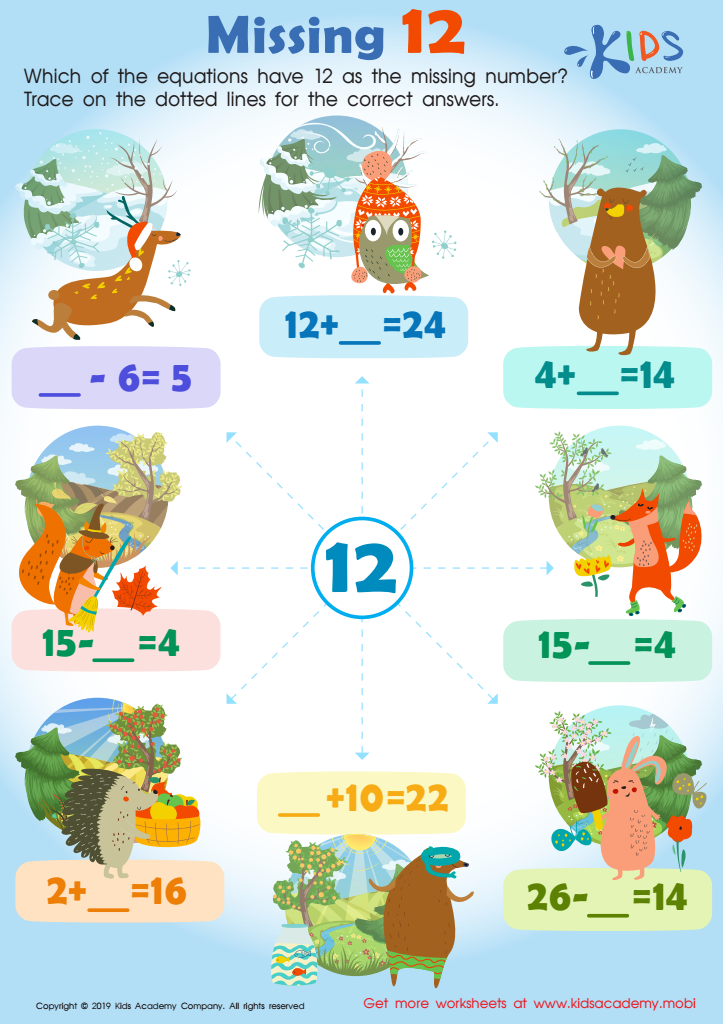
Missing 12 Worksheet
 Assign to My Students
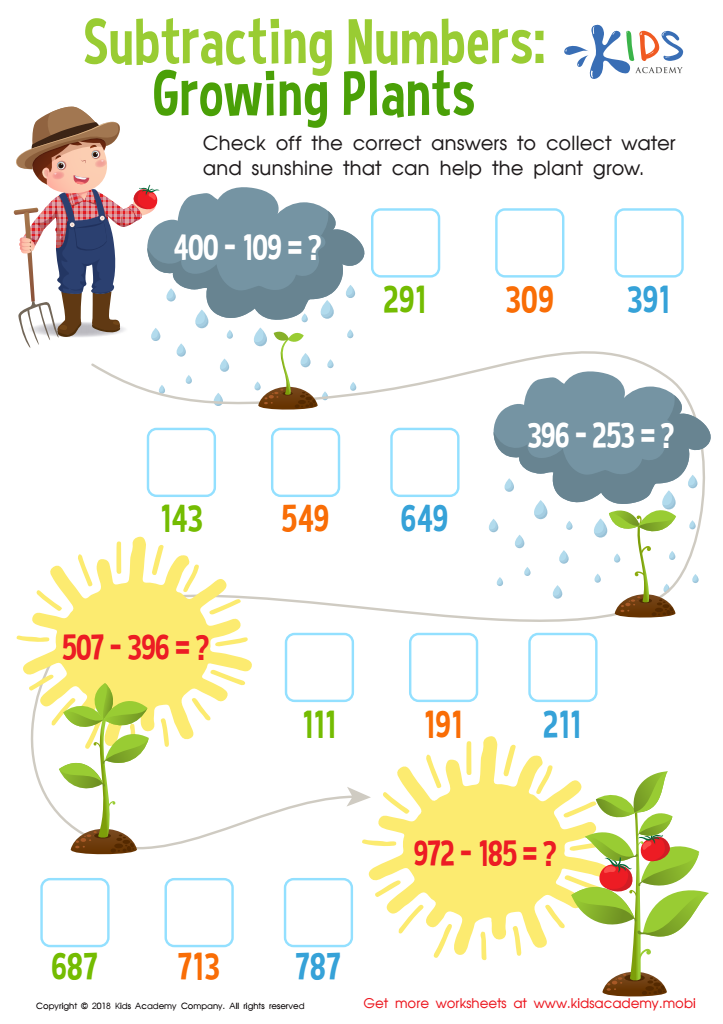
Subtracting Numbers: Growing Plants Worksheet
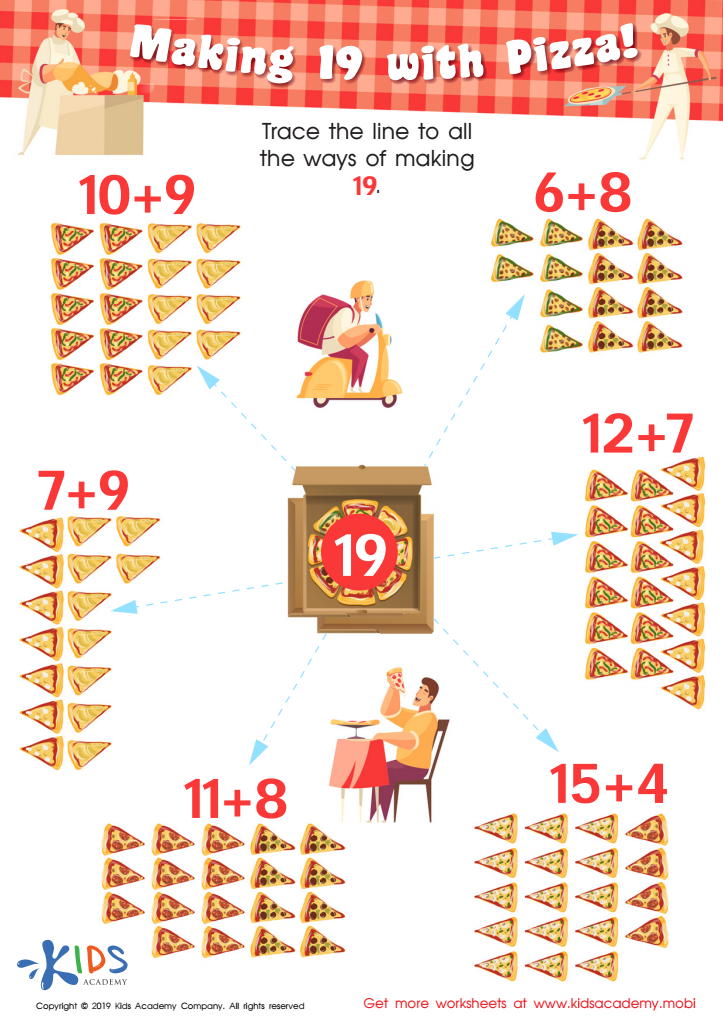
Making 19 with Pizza! Worksheet
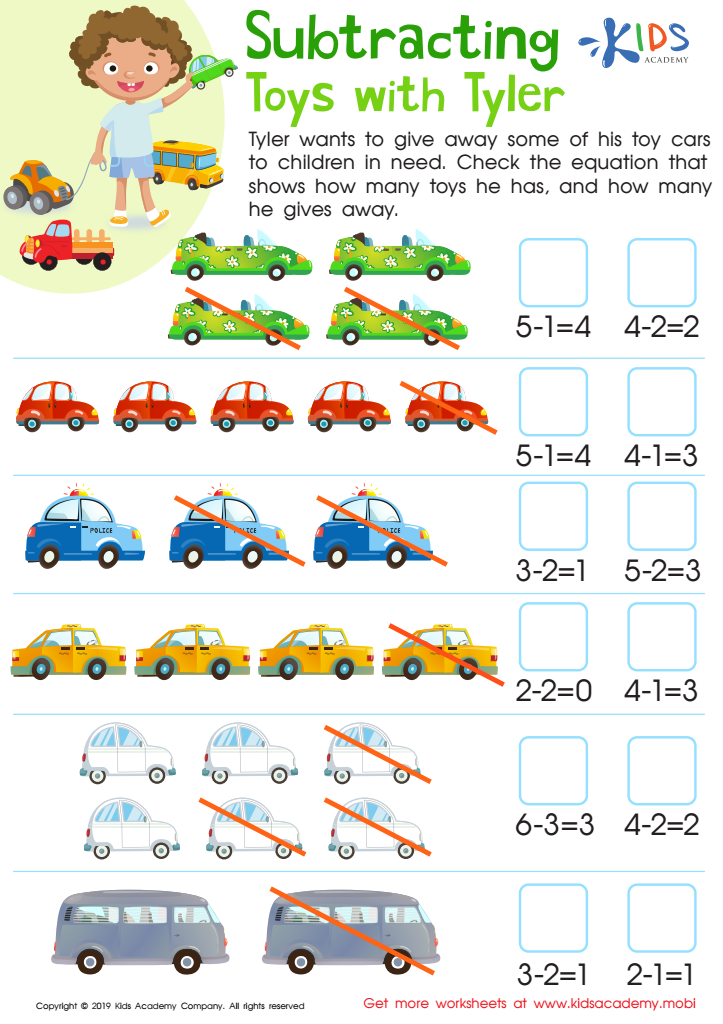
Subtracting Toys with Tyler Worksheet

Adding at the Hospital Worksheet
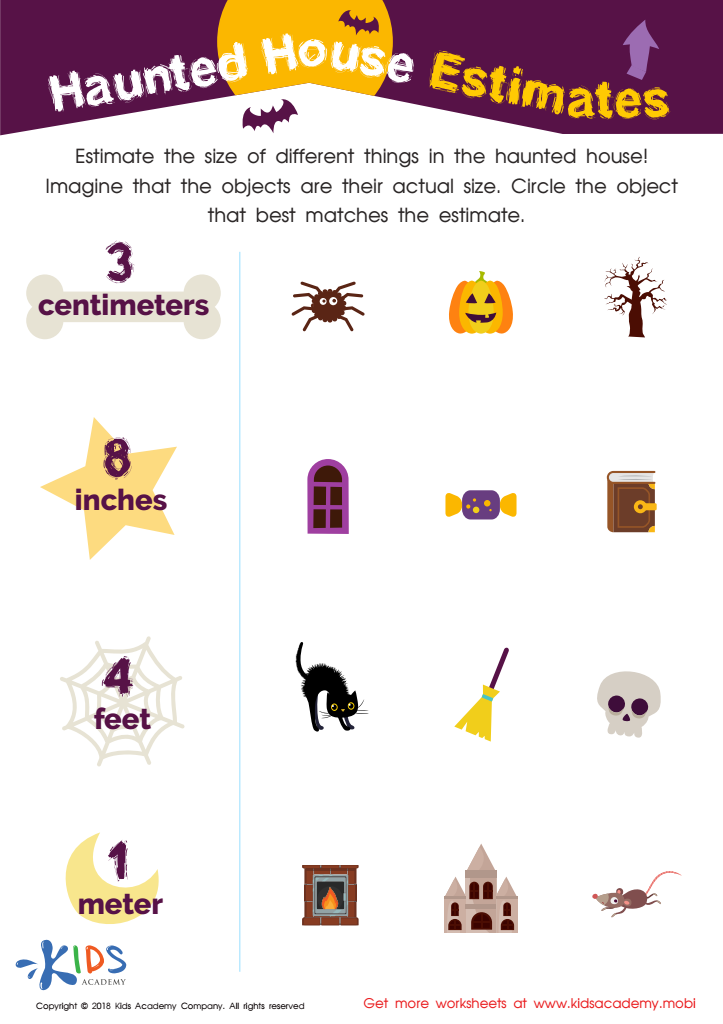
Haunted House Estimates Worksheet
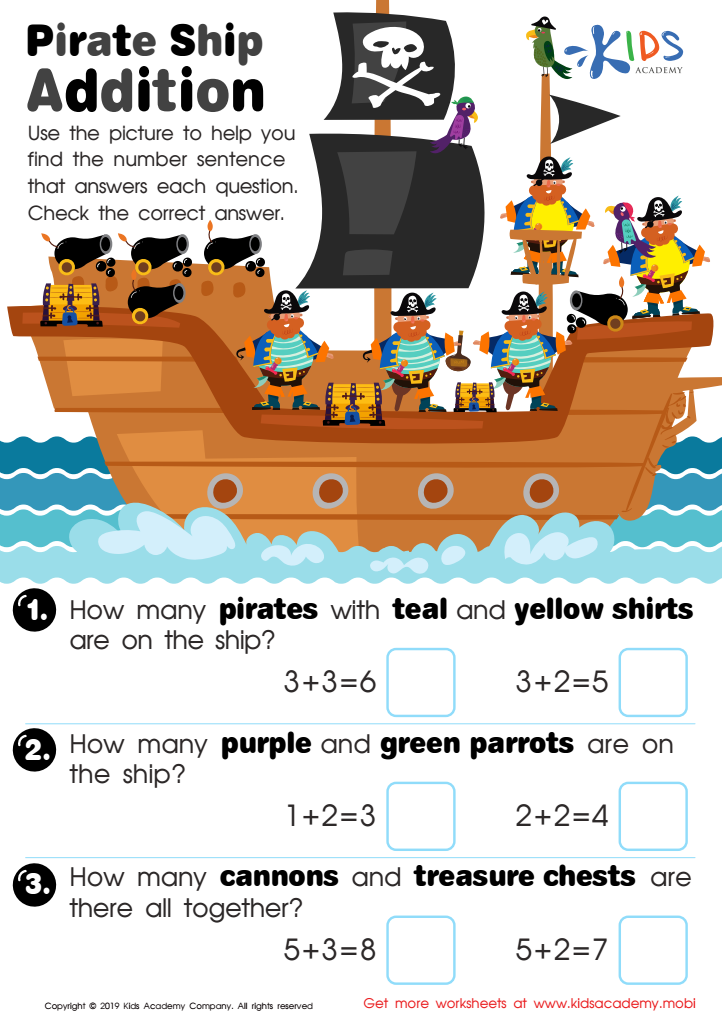
Pirate Ship Addition Worksheet
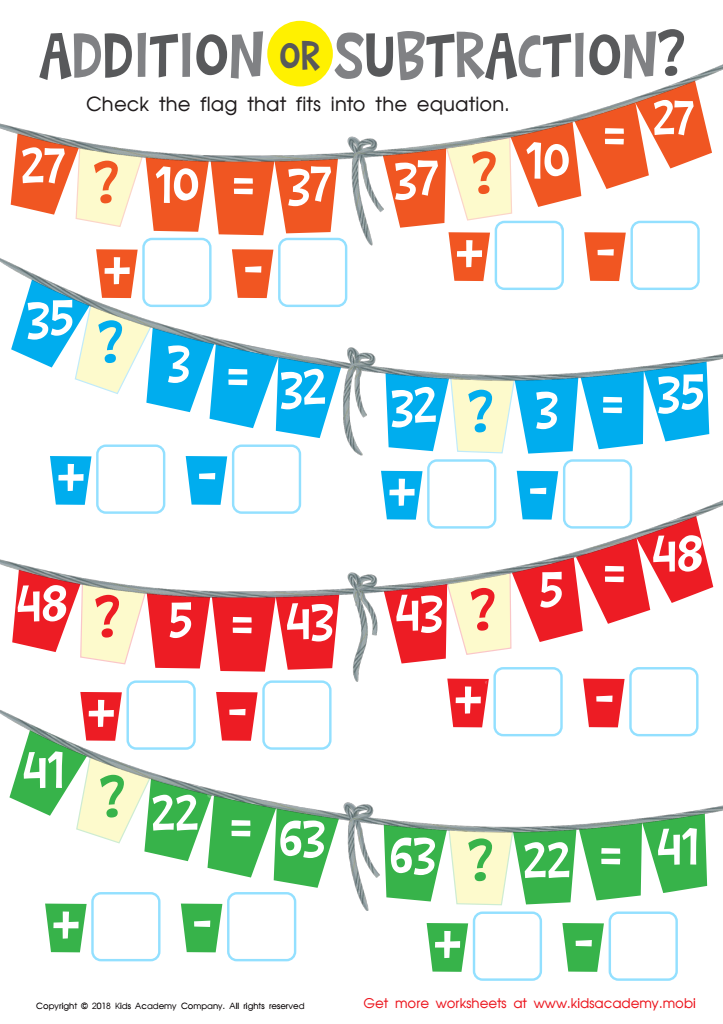
Addition or Subtraction? Worksheet
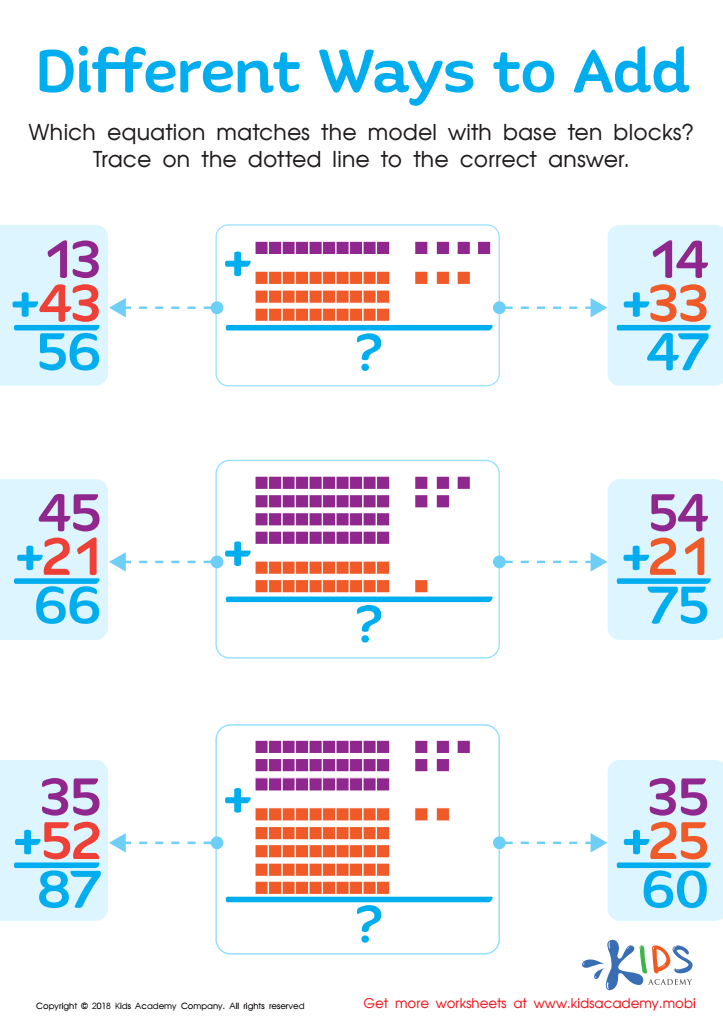
Different Ways to Add Worksheet
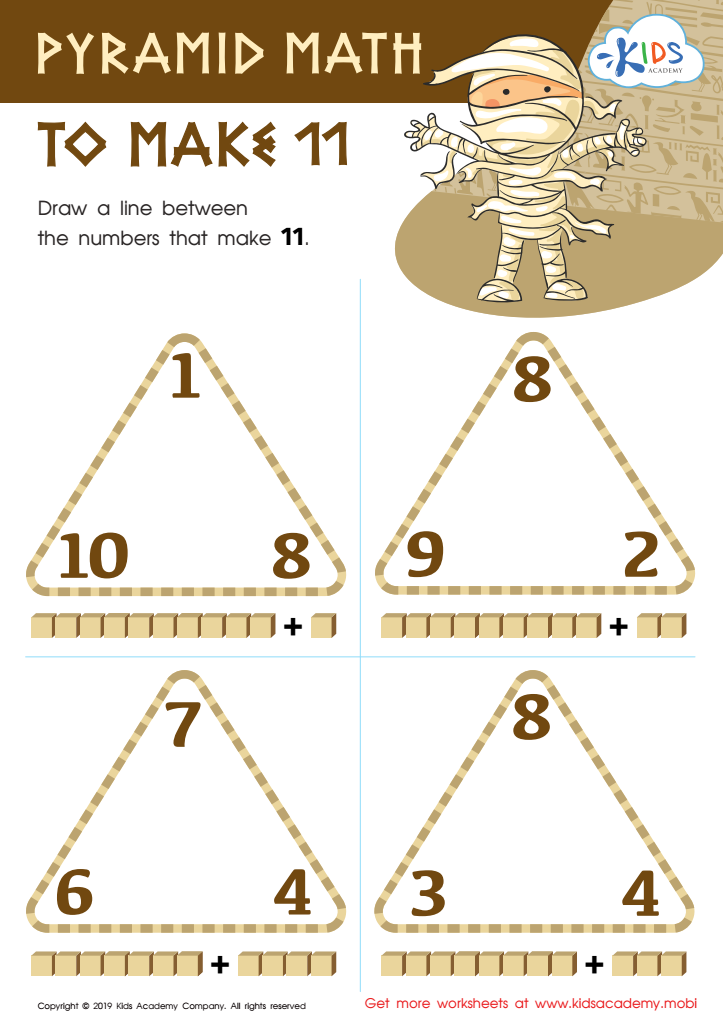
Pyramid Math to Make 11 Worksheet








Problem-solving abilities in mathematics are crucial for children aged 6-7, as they form the foundation for critical thinking, logical reasoning, and academic success. At this developmental stage, kids are transitioning from simple counting to more complex operations like addition and subtraction. Encouraging problem-solving in normal math scenarios helps them understand that math is not just about numbers but about thinking through challenges to find solutions.
First, problem-solving enhances cognitive development, enabling children to make connections between concepts and apply what they've learned to new situations. This builds resilience and adaptability, skills valuable in academic and real-world settings. For instance, figuring out how many apples are left if three are eaten from a basket of ten fosters mental arithmetic, sequencing, and comprehension.
Second, fostering these skills early cultivates a positive attitude towards learning and boosts confidence. When children see that they can solve problems independently, they carry that self-belief into other areas of their education. This positive reinforcement fuels a lifelong love for learning and curiosity.
Finally, collaborative problem-solving in math, such as group activities, enhances social skills and teamwork. Children learn to communicate ideas, listen to others, and build upon shared knowledge. Therefore, parents and teachers should prioritize developing problem-solving abilities to provide a strong educational and social foundation for children.








