Visual perception improvement Normal Math Worksheets for Ages 6-7
4 filtered results
-
From - To
Boost your child's visual perception skills with our engaging Math Worksheets designed for ages 6-7! Tailored to enhance key skills, these worksheets incorporate fun and interactive exercises that promote visual discrimination, spatial awareness, and pattern recognition. As kids work through the colorful activities, they develop essential problem-solving abilities that aid their overall math comprehension. With clear instructions and diverse challenges, our worksheets create a stimulating learning environment. Ideal for home or classroom use, these exercises ensure that children build confidence in their math skills while having fun. Transform math learning into an enjoyable adventure and watch your child flourish!
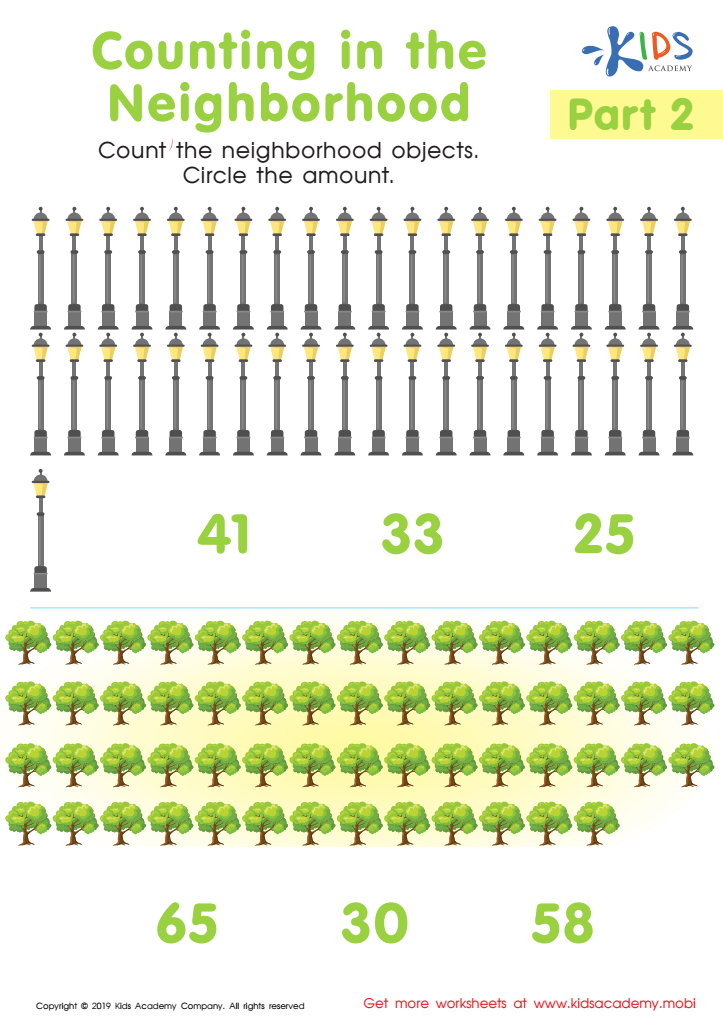
Counting In The Neighborhood Part 2 Worksheet
 Assign to My Students
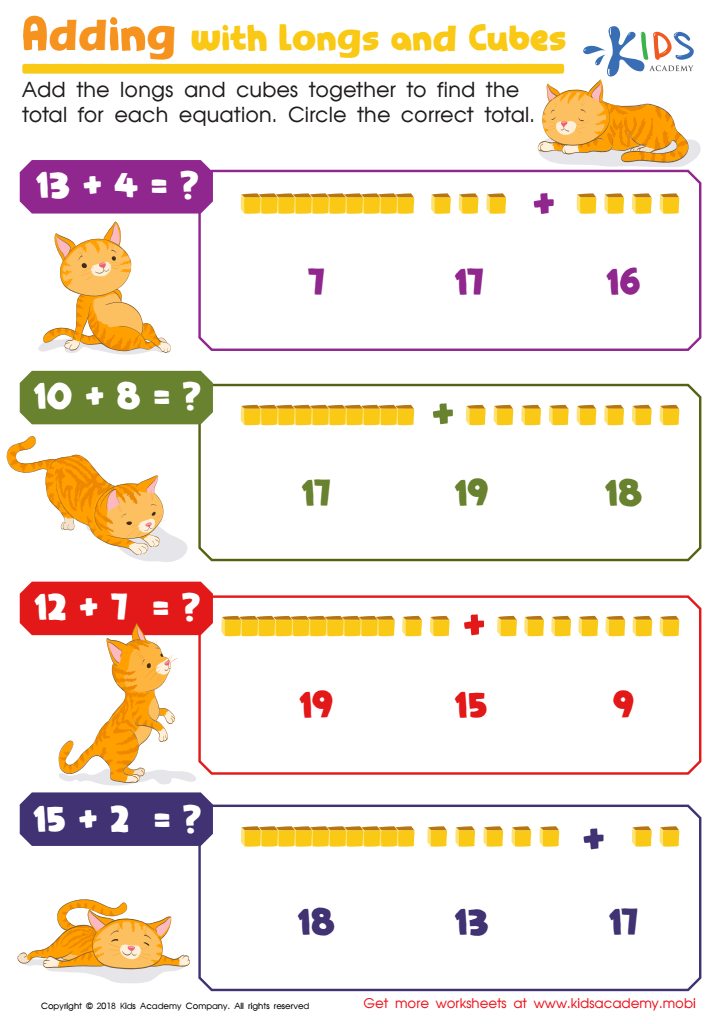
Adding With Longs and Cubes Worksheet
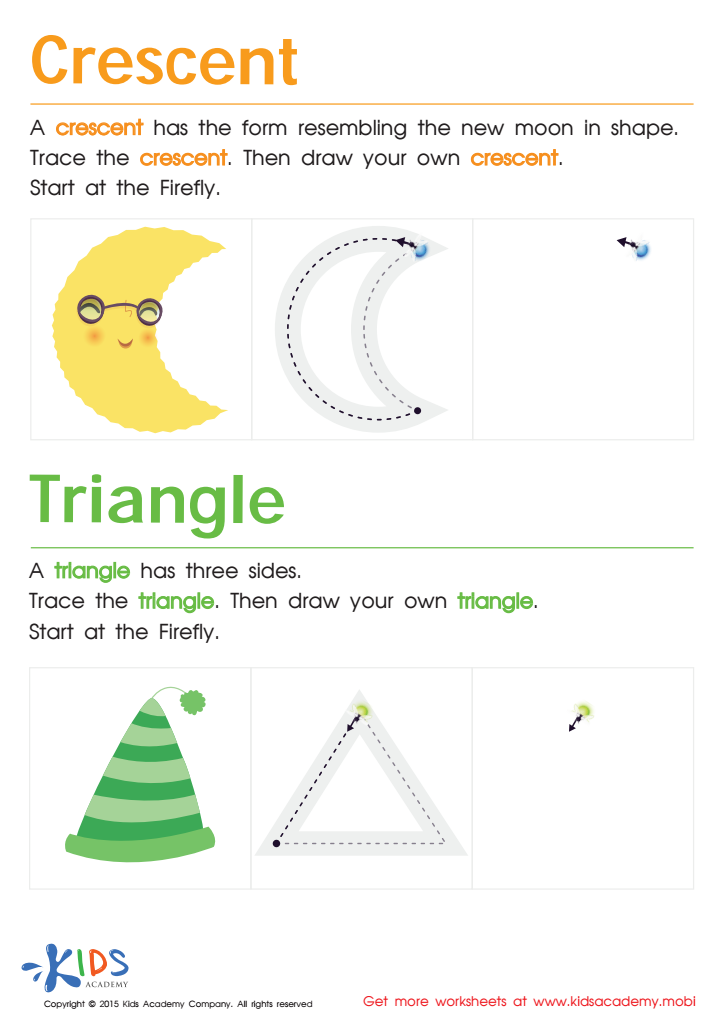
Learning to Draw Crescents And Triangles Worksheet
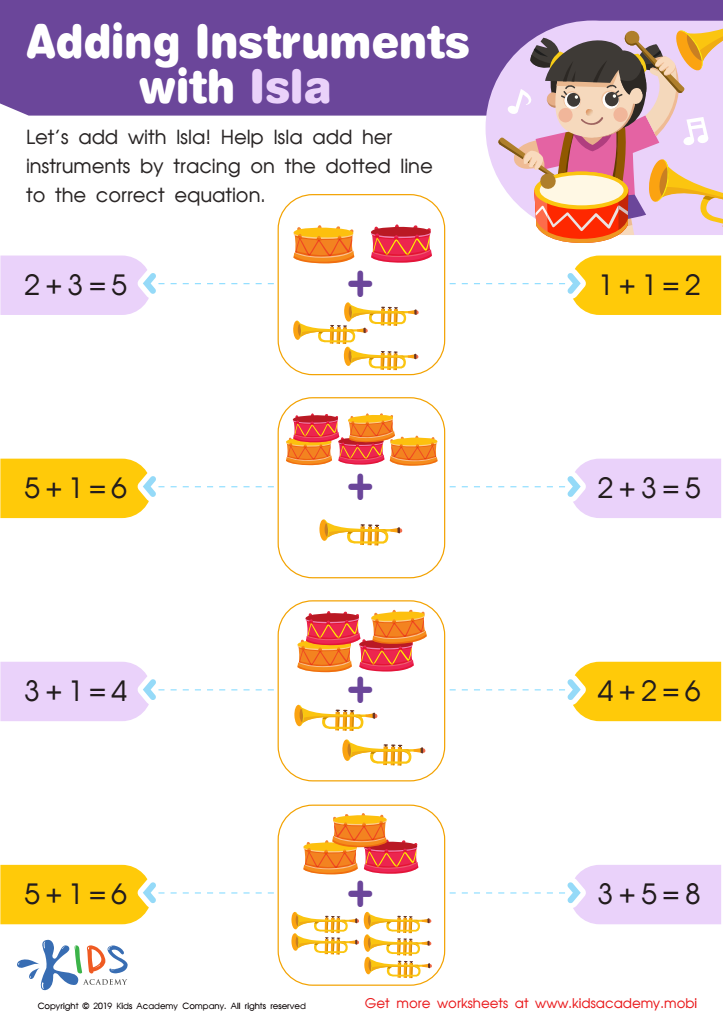
Adding Instruments with Isla Worksheet






Visual perception is a crucial skill for children, particularly in the ages 6 to 7, when foundational learning takes place. It involves the ability to interpret and understand visual information, which directly influences a child's ability to grasp mathematical concepts, such as recognizing shapes, understanding spatial relationships, and following multi-step instructions.
For parents and teachers, fostering visual perception can significantly enhance a child's learning experience. Improved visual perception skills enable children to identify patterns, comprehend numbers and symbols with greater ease, and solve problems more accurately. During this formative stage, engaging activities that promote these skills—like puzzles, sorting games, or visual worksheets—can lead to heightened engagement and motivation in math.
When visual perception is nurtured, children are better equipped to excel not only in math but also across other subjects, laying a strong foundation for future academic success. Moreover, strong visual perceptual skills contribute to overall confidence and independence in learning environments. By prioritizing visual perception improvement, parents and teachers can advocate for a holistic educational approach, ensuring that children develop the skills necessary for effective learning and personal growth. Ultimately, enhancing these skills provides children with the tools needed for lifelong learning and success.








